Beyoncé Renaissance Tour Looks: Chrome, Couture and the Silver Summer
Renaissance Dressing: Silver Was the Whole Point
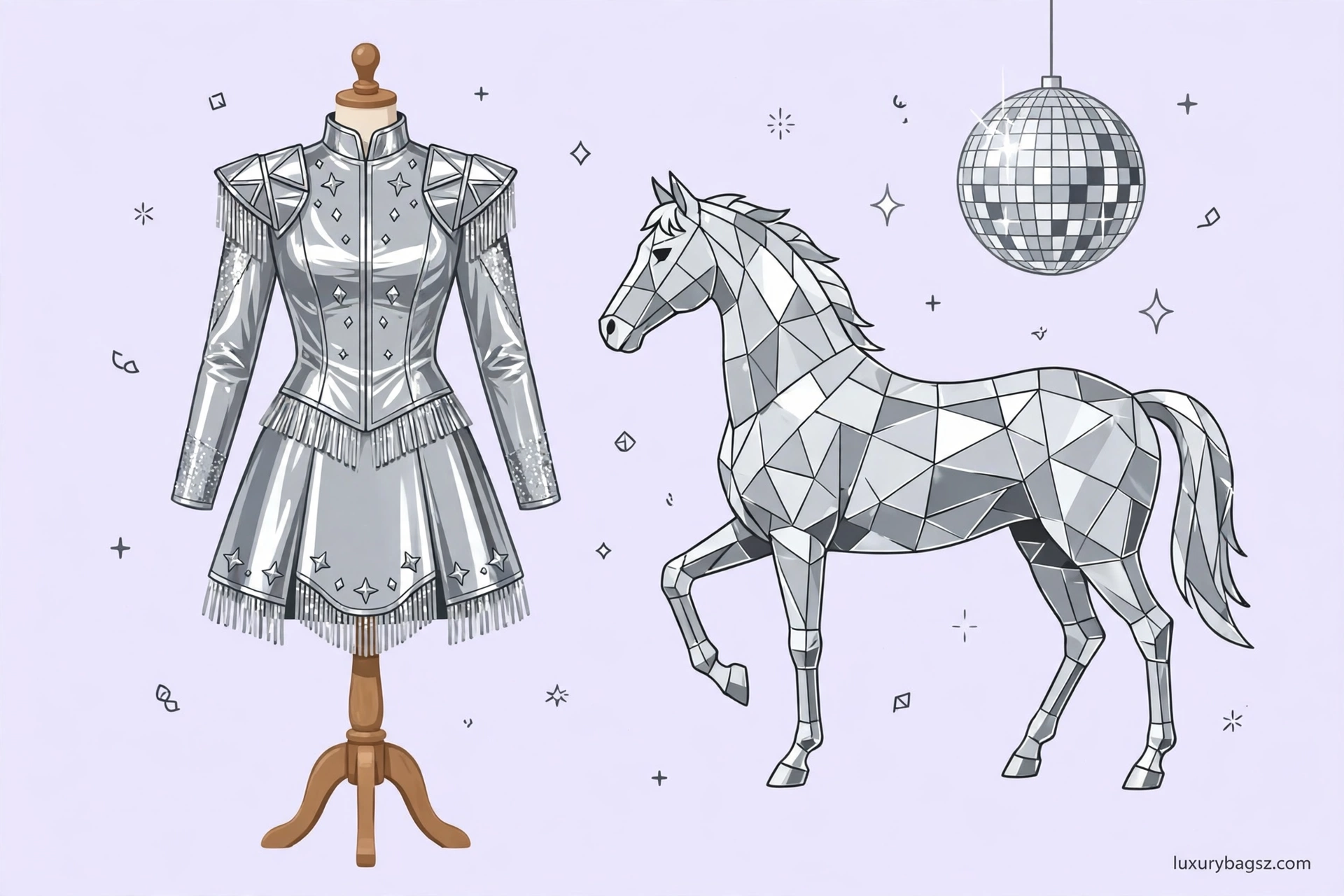
The Renaissance World Tour wardrobe, first seen in Stockholm in May 2023, was built on one commanding idea: the future dressed as a disco. Chrome, silver, crystal and mirror finishes ran through custom look after custom look. Reports counted well over a hundred outfits across the run, yet the themes stayed disciplined: robotic couture, disco glamour, the bee emblem of her fandom, and ballgown grandeur. That discipline is why the tour's fashion is still readable at a glance.
Key Takeaways
- Silver and chrome formed the tour's uniform, on stage and then in the audience.
- The Loewe bodysuit printed with hands became the run's most reproduced image.
- A Mugler bee look turned her fandom's nickname into couture theatre.
- Balmain built a couture line with her, one look per album track.
- Host cities and dates were honoured with local and themed designer choices.
- Fans were asked to wear silver, and turned concerts into silver seas.
A Wardrobe Run Like a Fashion House
Most tours fix a wardrobe early. Renaissance kept designing: new custom looks debuted across the run, so each city received photographs the previous city had not seen. Stylist and costume teams including Shiona Turini coordinated a roster that mixed giant houses with smaller labels, all briefed inside the same chrome-disco world. The scale was part of the message. An album about Black queer ballroom and dance culture deserved costuming with couture ambition, not merchandise thinking. Crucially, every look had to survive choreography at stadium distance: embellishment dense enough to sparkle from the back row, construction strong enough to dance in.
Sound and staging shared the wardrobe's language: a mirrored horse, robotic arms and vast screens extended the chrome world beyond her body, so each costume looked like part of a machine built for joy.
The Opening Statement in Stockholm
The tour opened in Stockholm with a custom Alexander McQueen crystal-embroidered bodysuit and matching boots, a jewelled armour that announced the standard instantly. Early European shows layered the themes quickly: an iridescent David Koma look, sculptural Mugler pieces, and the first appearance of the hands motif that would define the tour. Opening-night dressing is a thesis statement, and this one argued that Renaissance would treat every concert as a couture show that happened to have a setlist. Photographs from that first night travelled so widely that later cities arrived already dressed in silver, answering a wardrobe they had only seen on screens.
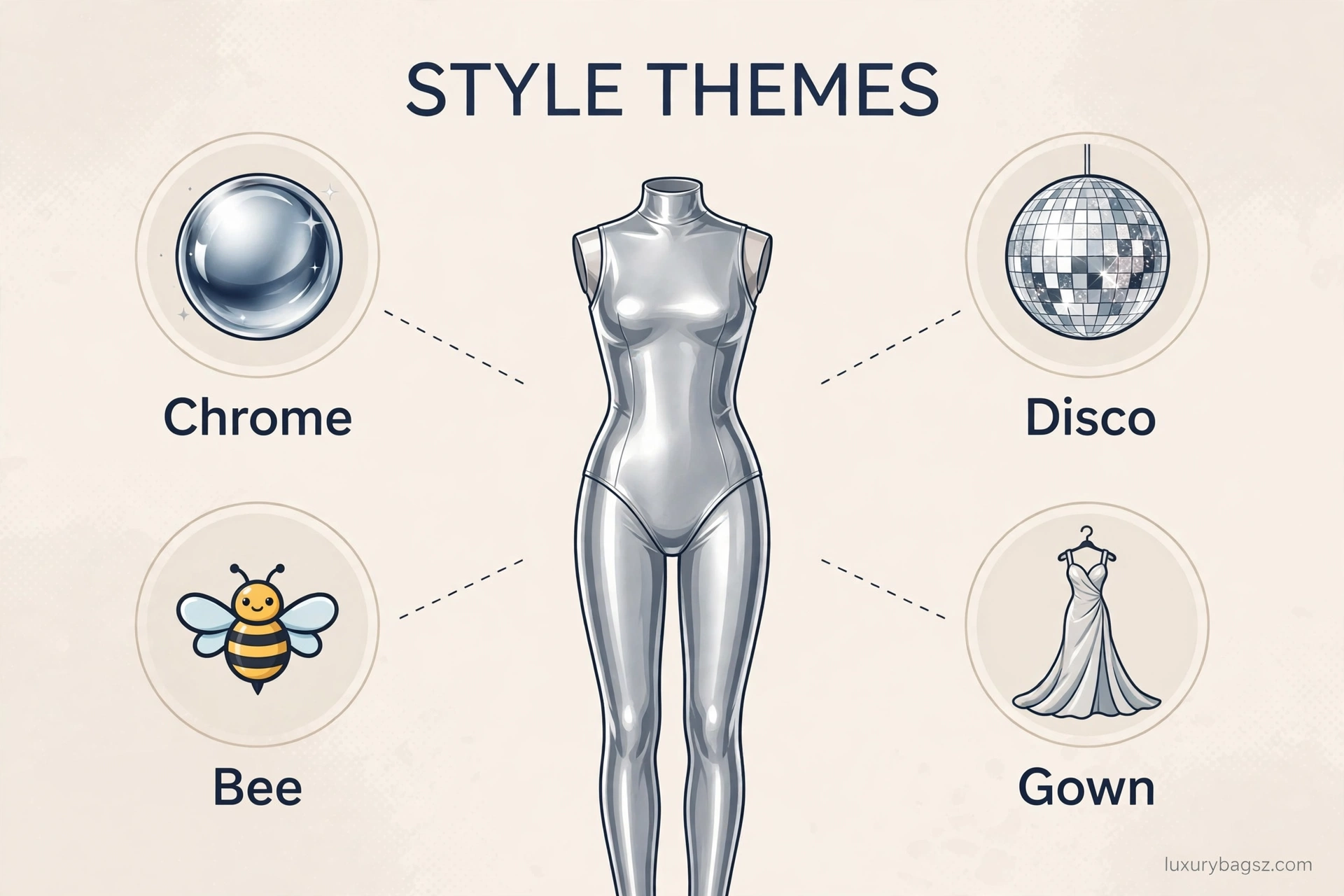
The opening bodysuit's jewelled construction set the labour standard: custom embroidery and crystal work at couture level, repeated across a run of stadium dates rather than saved for a single gala.
Chrome, Mirror and the Loewe Hands
The signature garment became a custom Loewe bodysuit decorated with trompe-l'oeil hands, their red nails placed across the body like an embrace made of jewellery. It appeared in more than one colourway across the run, and its wit summarised the tour: surreal, luxurious and instantly legible in a thumbnail photograph. Around it, mirror and chrome pieces multiplied: a hand-assembled silver mirror dress widely reported as Rabanne, metallic corsetry and reflective catsuits under moving lights. Our metallics fashion trend guide shows how that same finish moved from this stage into ordinary party rails within a season.
Silver also solved a filming problem beautifully. Against dark staging and coloured light, reflective surfaces hold the eye at any distance, which is why the cheapest seat still received a sparkling show.
The Bee, the Ballgown and the Balmain Line
For one celebrated look she became her own emblem: a custom Mugler bee ensemble in black and yellow with antennae, honouring the BeyHive fandom by name and colour. At the opposite register came grandeur: crystal-covered gowns, including a custom Balenciaga finale gown reported to carry thousands of rhinestones, worn with opera gloves. Balmain's creative director Olivier Rousteing went furthest, building an entire couture line with her in which each look answered one track on the Renaissance album. That range, joke to jewel to gown, is the wardrobe's real signature. The tour refused to choose between camp and couture, and billed both at full price.
The Balmain line blurred tour and runway deliberately: looks built per track were later presented as a couture story in their own right, giving the wardrobe a second life beyond the concerts themselves.
Cities, Dates and Designers With Meaning
The wardrobe kept a diary. In Amsterdam for Juneteenth she wore looks exclusively by Black designers, a programming choice widely reported and praised at the time. Other stops honoured place: local and national designers appeared in the cities that raised them, turning the tour into a travelling showcase as well as a concert. Smaller labels shared bills with the giants, gaining the kind of global photograph that advertising cannot buy, which broadened the run's fashion legacy considerably. For followers of the wardrobe, guessing the next city's new look became a sport of its own, and the styling team clearly played along.
Local casting extended beyond clothes: dancers and the show's ballroom-rooted staging carried the album's homage to dance culture, and the wardrobe's shine framed that tribute rather than replacing it.
The Night Fans Became Part of the Wardrobe
Before the shows around her birthday in Virgo season, Beyoncé asked fans to wear silver, and audiences complied so completely that crowd photographs look like part of the set. Silver hats, chrome boots, mirror dresses and disco accessories flooded stadiums, and retailers reported runs on metallic party pieces through that summer. The request completed the tour's fashion loop: stage set the theme, social photographs spread it, and the audience arrived wearing the proof. Our night luxe trend edit caught the same after-dark shine settling into evening dressing. Few tours have managed that transfer. Renaissance did it with a single colour instruction, which is a styling lesson in itself: clarity scales.
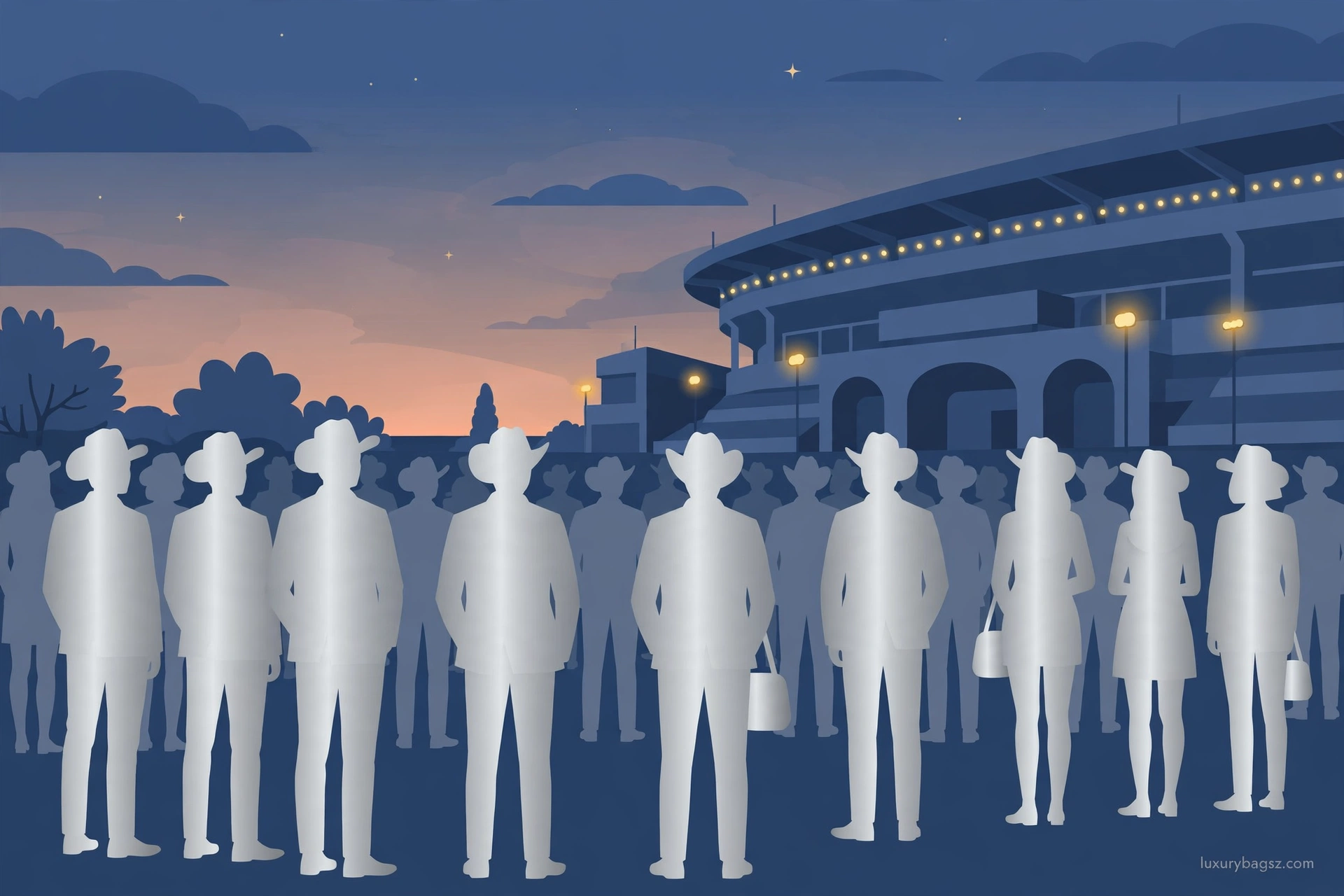
Retail felt the silver summer immediately: metallic bags, boots and party dresses sold through as fans prepared outfits, a measurable high-street echo of a single styling decision made on stage.
Borrowing Renaissance Shine for Real Evenings
Take the uniform rule: one silver or chrome piece worn with black. A metallic skirt, mirror bag or silver boot does the work without a costume effect. Take the footwear rule next: this wardrobe lived in statement boots and heels, the territory of our guide to iconic designer womens shoes, where one strong shoe finishes a plain outfit. Take the fit rule last: every stage look was sculpted close, whatever its size. At human scale, tailored metallics read expensive; baggy shine reads fancy dress. Add a single disco note, a mirrored accessory or glittering eye, and stop. The tour's discipline was thematic, not maximal, and that is exactly why it copied so well.
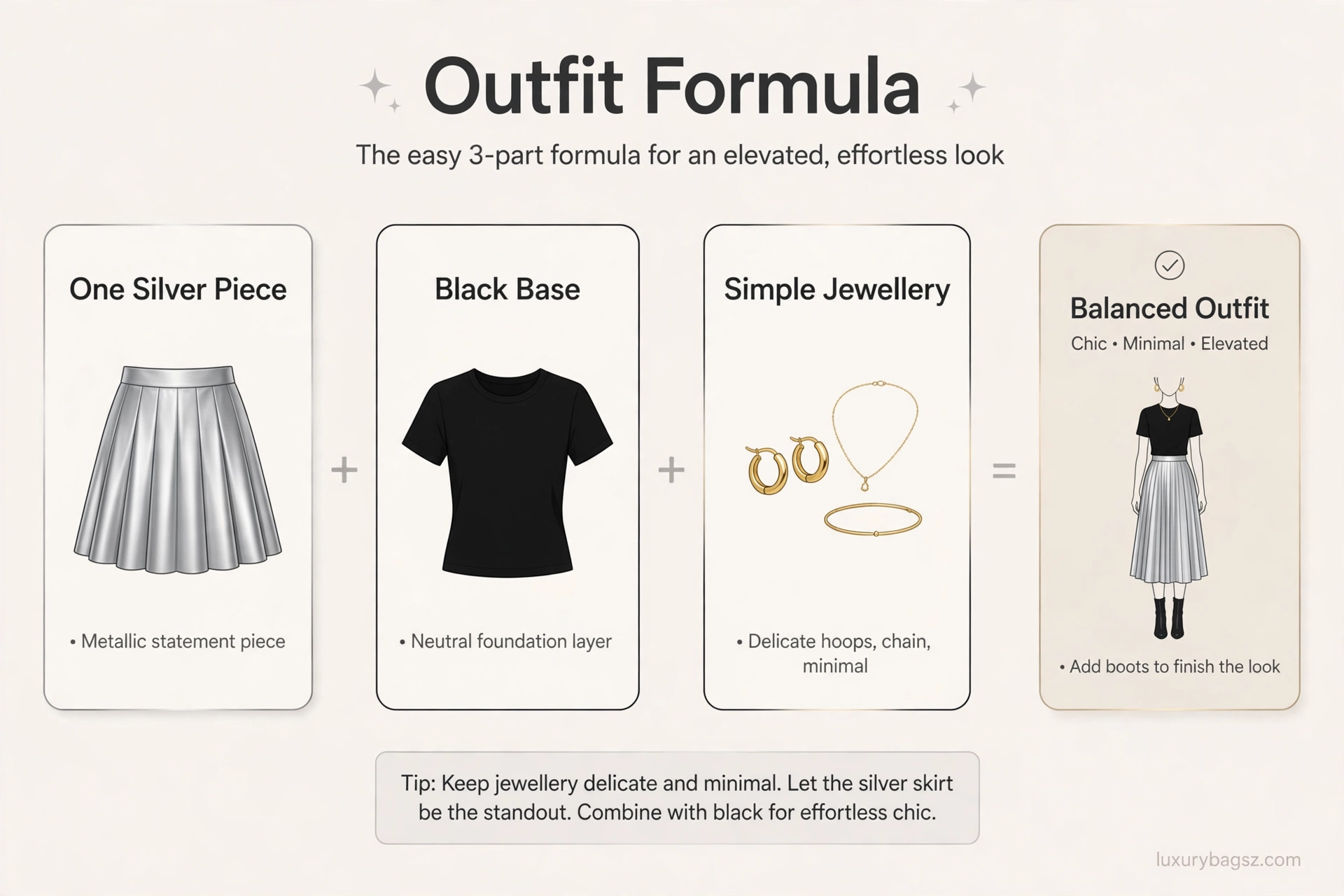
At human scale the theme also flatters widely: silver near the face brightens most skin tones, and a metallic shoe with black tailoring is the simplest evening upgrade in this entire guide.
The Legacy: A Tour That Dressed Its Audience
Renaissance reset expectations for what a tour wardrobe can do: run like a couture calendar, credit its makers, honour its cities and recruit its audience as cast. It also proved the commercial physics of a clear theme. One colour, endlessly varied, generated a summer of retail, photography and imitation that a mixed wardrobe could not. Designers who dressed the run, from heritage houses to new names, gained a permanent line in their histories, much as the album gained one in pop. When later tours announce silver, chrome or disco briefs, they are working in a room this wardrobe built, and everyone in fashion knows whose room it is.
The concert film carried the wardrobe to audiences who never held a ticket, and its fashion is now part of the tour's permanent record, studied the way earlier generations studied great runway shows.
Frequently Asked Questions
When and where did the Renaissance Tour wardrobe debut?
The tour opened in Stockholm in May 2023, where a custom crystal Alexander McQueen bodysuit set the chrome and couture standard for the whole run.
What is the Loewe hands bodysuit?
A custom Loewe bodysuit decorated with trompe-l'oeil hands with red nails, worn in more than one colourway. It became the tour's most reproduced single image.
How many outfits were there?
Reports across the run counted well over a hundred looks, with new custom pieces debuting in city after city rather than one fixed wardrobe throughout.
What was the bee outfit about?
A custom Mugler black-and-yellow bee ensemble with antennae, created as a tribute to her fandom, the BeyHive, and worn during the tour's European dates.
Did Beyoncé really design a line with Balmain?
Yes. Balmain's Olivier Rousteing built a Renaissance couture line with her, with looks answering individual album tracks, alongside her many other tour pieces.
Why did fans wear silver?
At her request for shows around her birthday in Virgo season, audiences wore silver and chrome, turning crowd photographs into part of the tour's visual story.
Who styled the tour?
A team including stylist and costume designer Shiona Turini coordinated the wardrobe, mixing major houses with smaller and local labels inside one theme.
What did she wear for Juneteenth in Amsterdam?
Looks exclusively by Black designers, a widely reported programming choice that used the wardrobe to mark the date with intention.
How can I copy the look for a party?
One chrome or silver piece with a black base, a statement boot or heel, and one disco detail. Keep the fit tailored and the theme singular.
Why is this wardrobe considered important?
It ran like a couture season, credited its designers, honoured its host cities and dressed its audience too, setting a standard later tours now follow.
Summary: One Colour, Total Commitment
The Renaissance wardrobe is a lesson in thematic discipline: silver and chrome, varied through couture, camp and grandeur, until a whole summer dressed itself in answer. Borrow the clarity before the shine, one theme held firmly, and even a modest party outfit gains its force.