Metallics Fashion Trend: Silver, Gold and the Finishes That Make Shine Wearable
Shine, Treated as a Fabric: Metallics in Brief
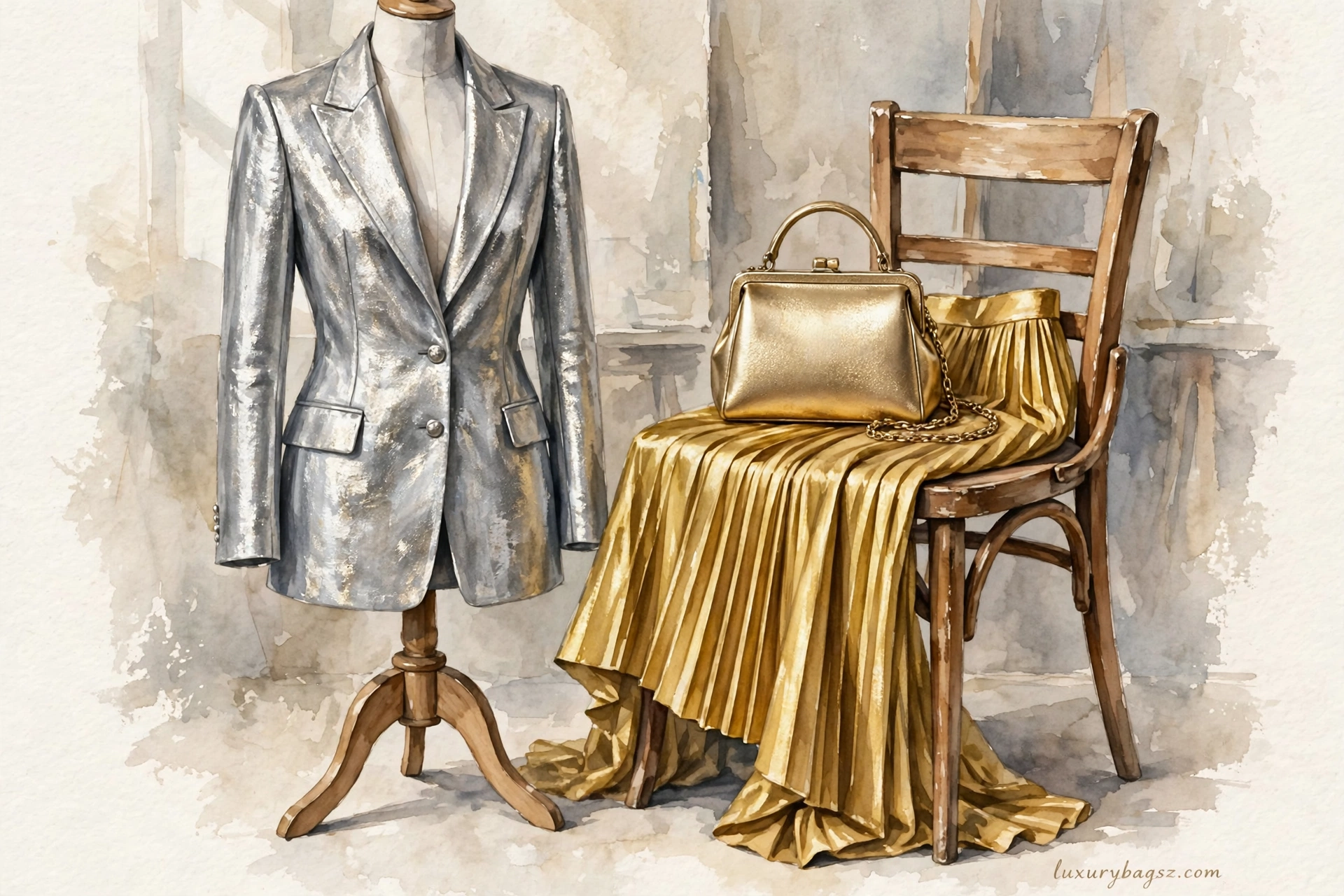
Metallics are not a colour but a family of finishes — lamé, sequins, foil-coated knits, metallic leathers and liquid-look satins — that reflect light instead of absorbing it. Silver leads the current cycle, gold is its warm eternal rival, and bronze, pewter and coloured metallics fill the supporting cast. The wearable secret is dosage and company. One metallic piece against matte, ordinary clothes — a silver skirt with a grey knit, a gold bag with black tailoring — looks modern and expensive. Shine stacked on shine is where the trend gets its fancy-dress reputation.
Key Takeaways
- Metallics are finishes, not colours: lamé, sequin, foil, coated leather and more.
- Silver suits cool tones and daylight; gold suits warm tones and evening light.
- One metallic piece per outfit, partnered with matte basics, is the golden rule.
- Bags and shoes are the easiest entry and the best value per wear.
- Metallic coatings can crack and rub — buy quality and store pieces uncreased.
- Mixed metals work when one clearly dominates and finishes are similar.
Where Metallics Sit Now
Metallics have completed the journey from party-only to all-hours: silver trousers with trainers at noon, a gold knit at the office party, metallic ballet flats as a neutral. Evening keeps its claim — our Night Luxe trend guide uses shine as one budgeted surface — but daytime is the cycle's new territory. The shift happened because the finishes softened. Brushed, cracked and satin-metallic surfaces reflect less aggressively than mirror foil, so a metallic piece can finally behave like a normal garment with confidence. Silver is the headline finish of the moment, helped by its neutrality: it pairs with black, white, grey, denim and pastels. Gold's turn always follows, because warmth photographs beautifully in winter light.
The Finishes, One by One
Lamé is woven with metallic threads: fluid, drapey, the classic evening cloth. It snags and can tarnish, so it belongs on pieces worn occasionally and stored carefully. Sequins are applied shine — discs sewn onto a base cloth. They give the strongest light-play and the heaviest weight, and they shed; check density and stitching before buying at any price. Foil and coated finishes print or bond a metallic layer onto knit, jersey or leather. They are the softest, most daytime-friendly family, and the most perishable: coatings crack at fold and rub points over time. Metallic leather — foil-finished or metallised hides — makes the bags, shoes and jackets of the trend. Good metallic leather flexes without flaking; poor versions crackle at the first bend, which is a shop-floor test worth doing.
Silver: The Cool Neutral
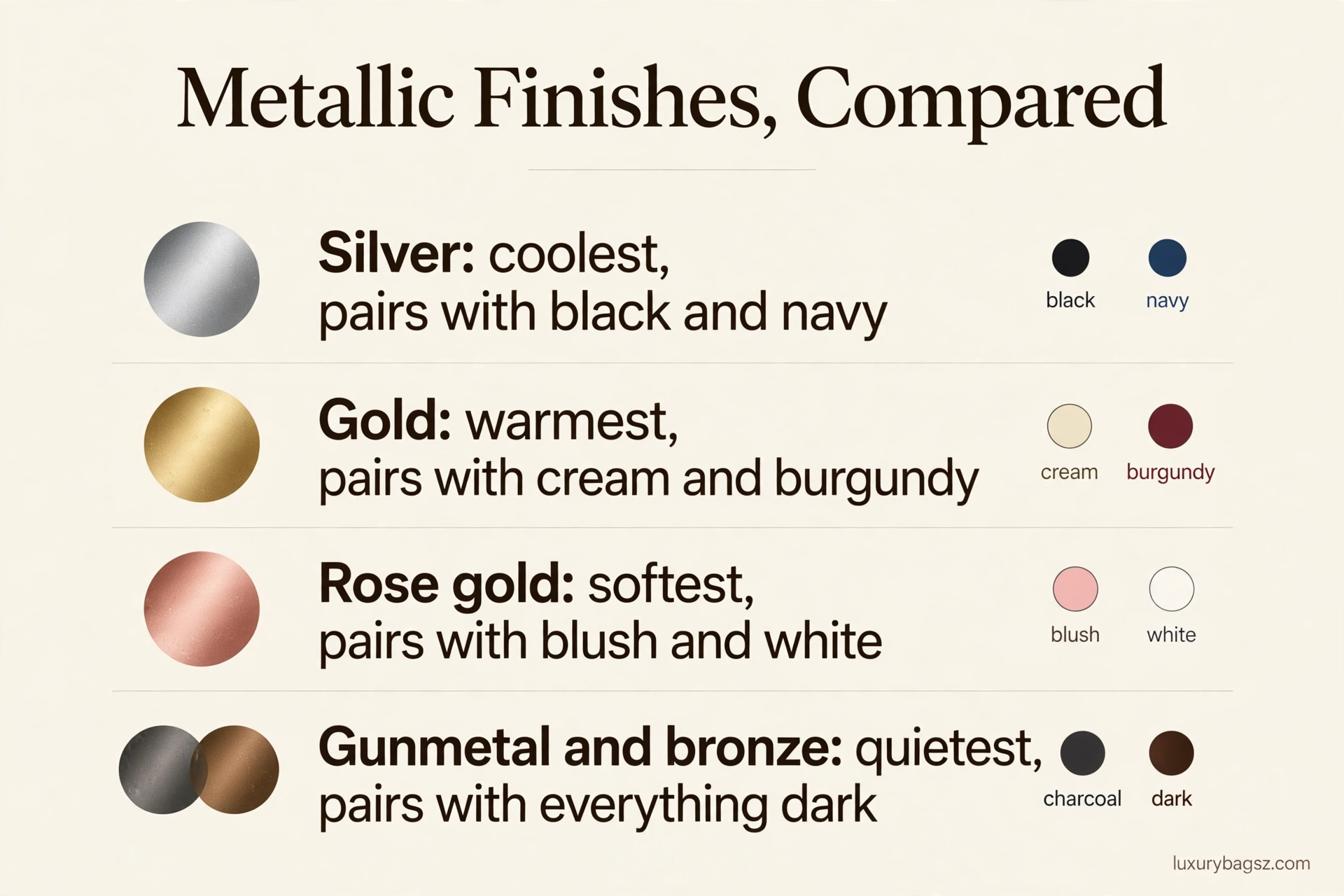
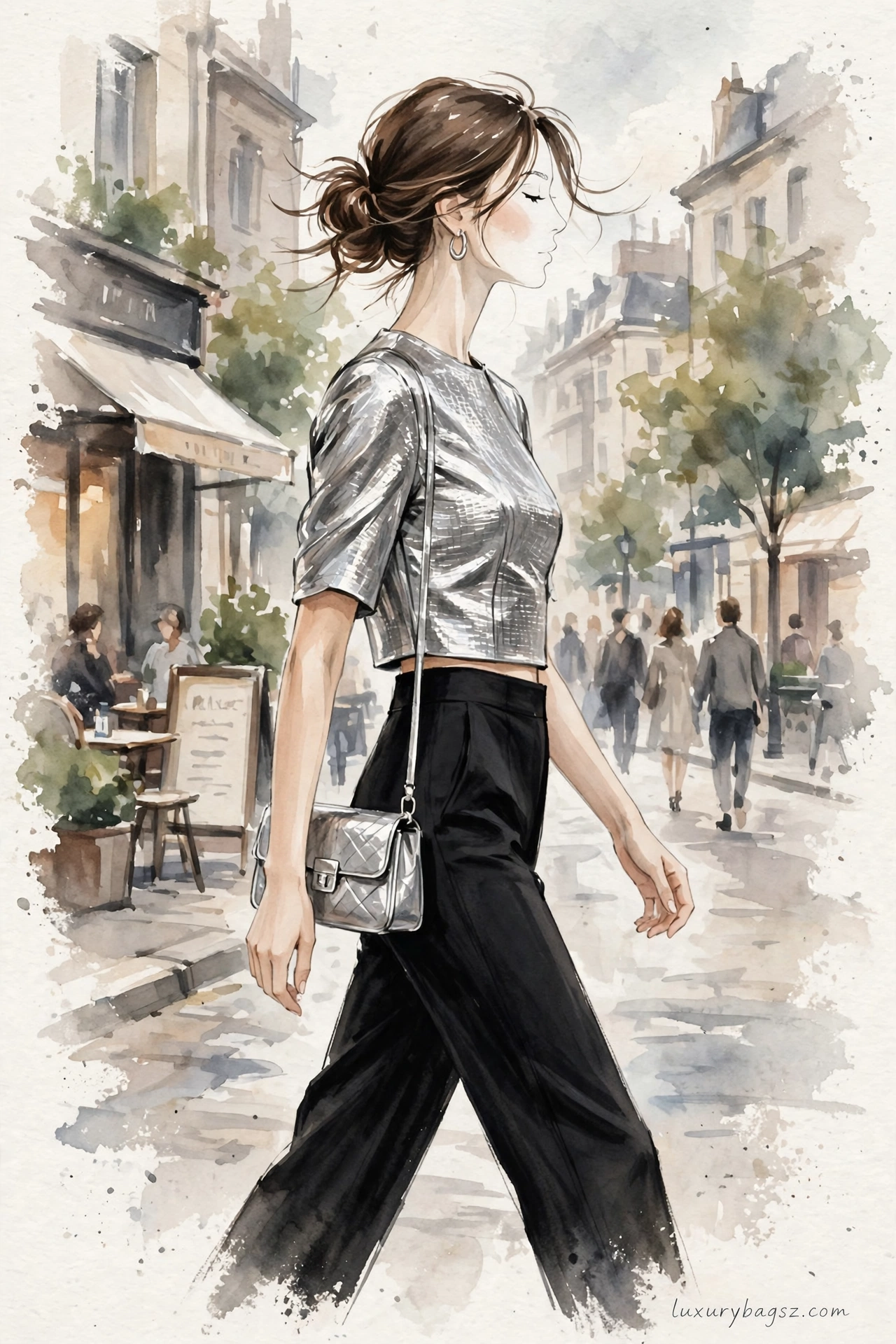
Silver is the easiest metallic to wear because it behaves like a light grey with ambition. Silver trousers or a pleated skirt partner white shirts, grey knits, navy tailoring and all denim without a colour decision anywhere. In daylight, choose brushed or satin silver over mirror chrome, which can look harsh at noon. In the evening the rule reverses: brighter silver earns its keep under artificial light. Silver shoes and bags are the trend's gateway pieces, functioning as neutrals with everything including other trends — a silver flat can be the hardest-working shoe in a summer wardrobe.
Gold, Bronze and the Warm Metals
Gold metallics range from pale champagne to deep antique gold. Pale gold is the most wearable clothing shade — nearly a warm neutral — while rich yellow gold belongs on smaller areas: a knit, a skirt, a shoe, a bag. Bronze and copper flatter warm skin and autumn palettes, and pewter is silver's moodier brother for those who find chrome too bright. Coloured metallics — red, green, blue foils — are the fashion risk of the family; buy them small. Our sculptural gold jewellery guide shows gold's other life as jewellery, and our method for how to mix gold and silver jewellery applies to metallic clothes too: let one metal dominate by area.
Dosage: Accent, Piece or Full Metal
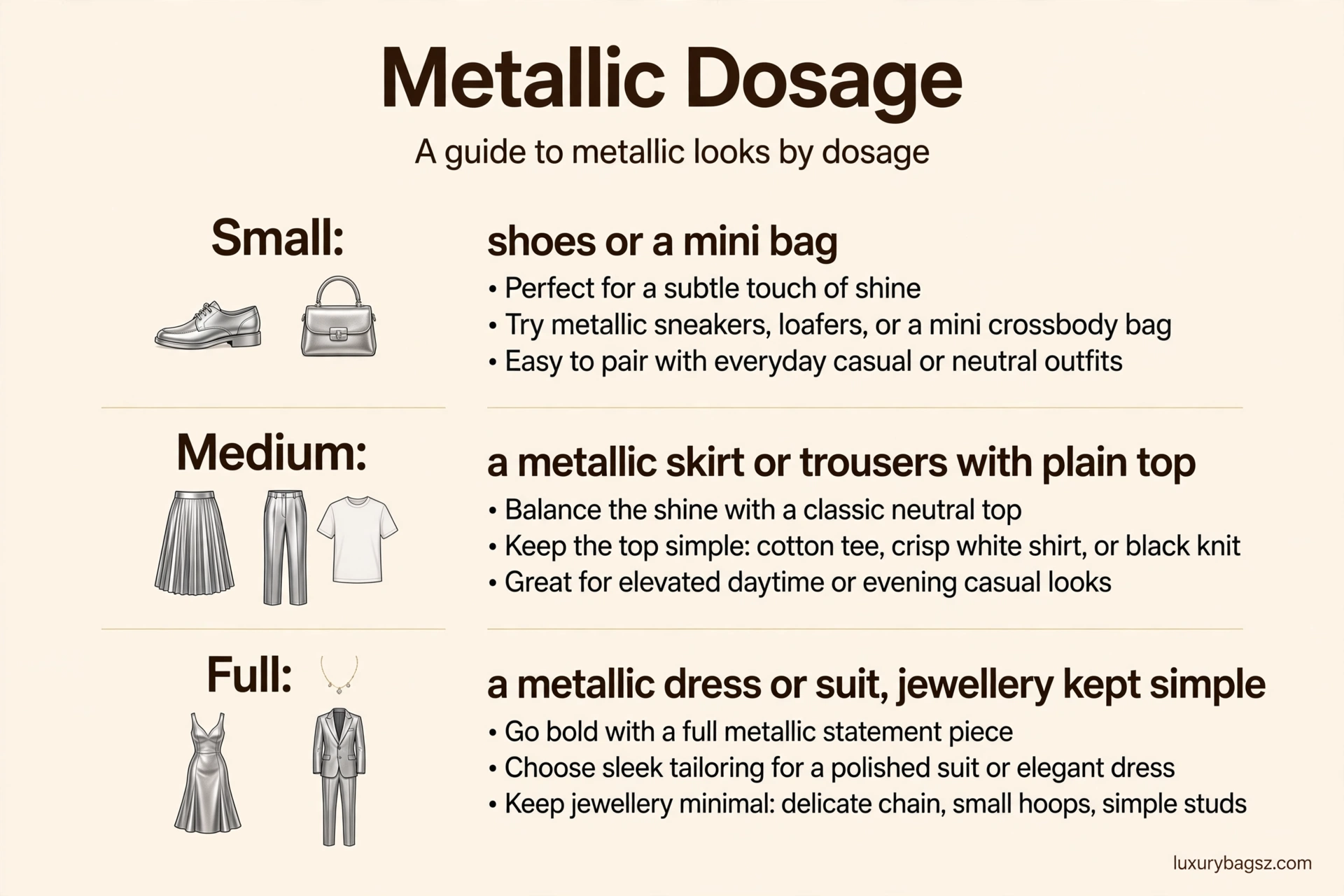
Accent dosage — bag, shoe, belt or jewellery only — suits metal beginners and conservative settings, and delivers most of the trend's pleasure for the least money and risk. One-piece dosage — a metallic skirt, trouser, knit or jacket with matte partners — is the trend's sweet spot and its most photographed form. Everything else in the outfit should be quiet in colour and surface. Full metal — a lamé dress or a sequinned suit — is evening armour and should be worn as such: simple hair, minimal jewellery, no other shine competing. It is glorious twice a year and exhausting as a habit.
Bags and Shoes: The Smart Money
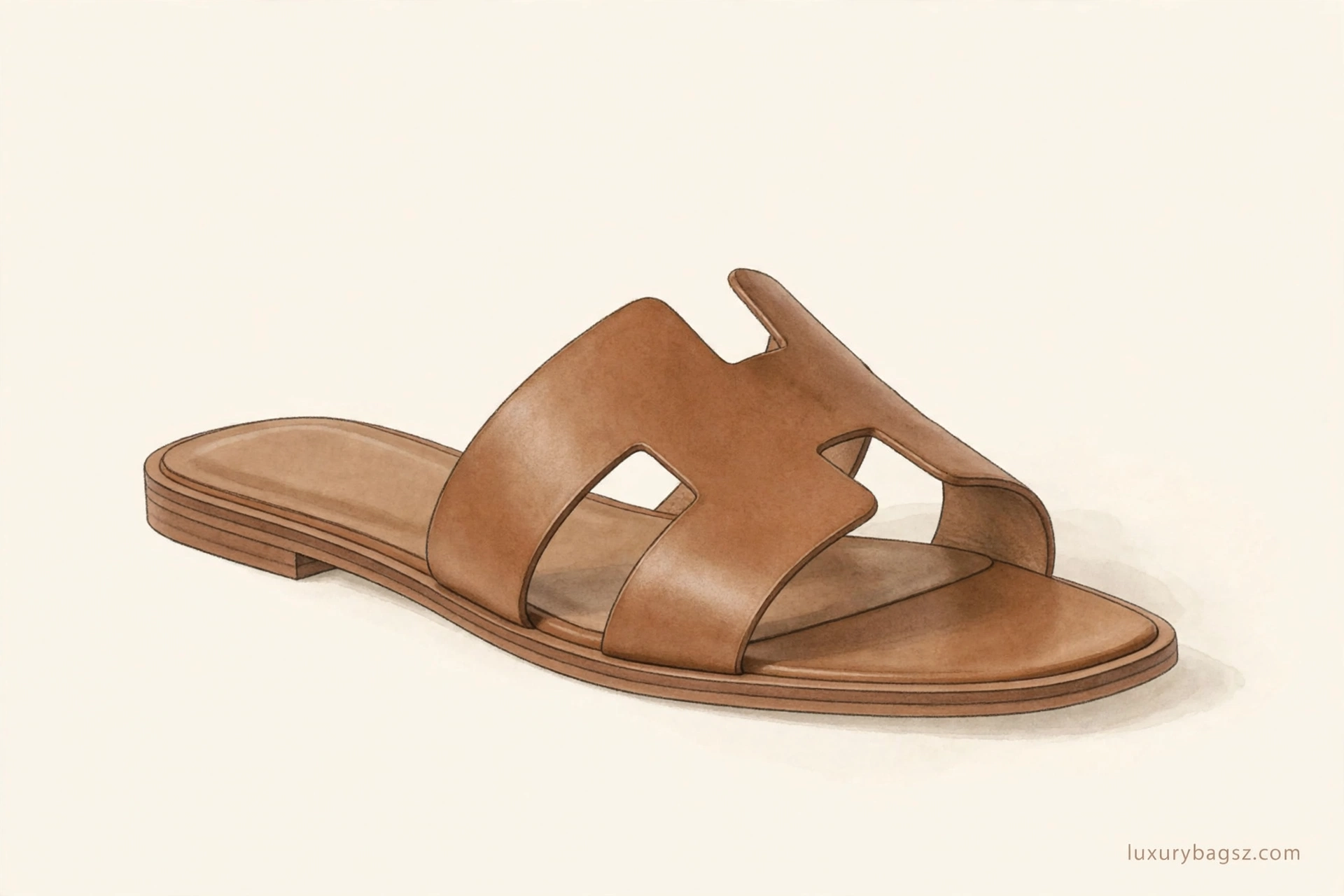
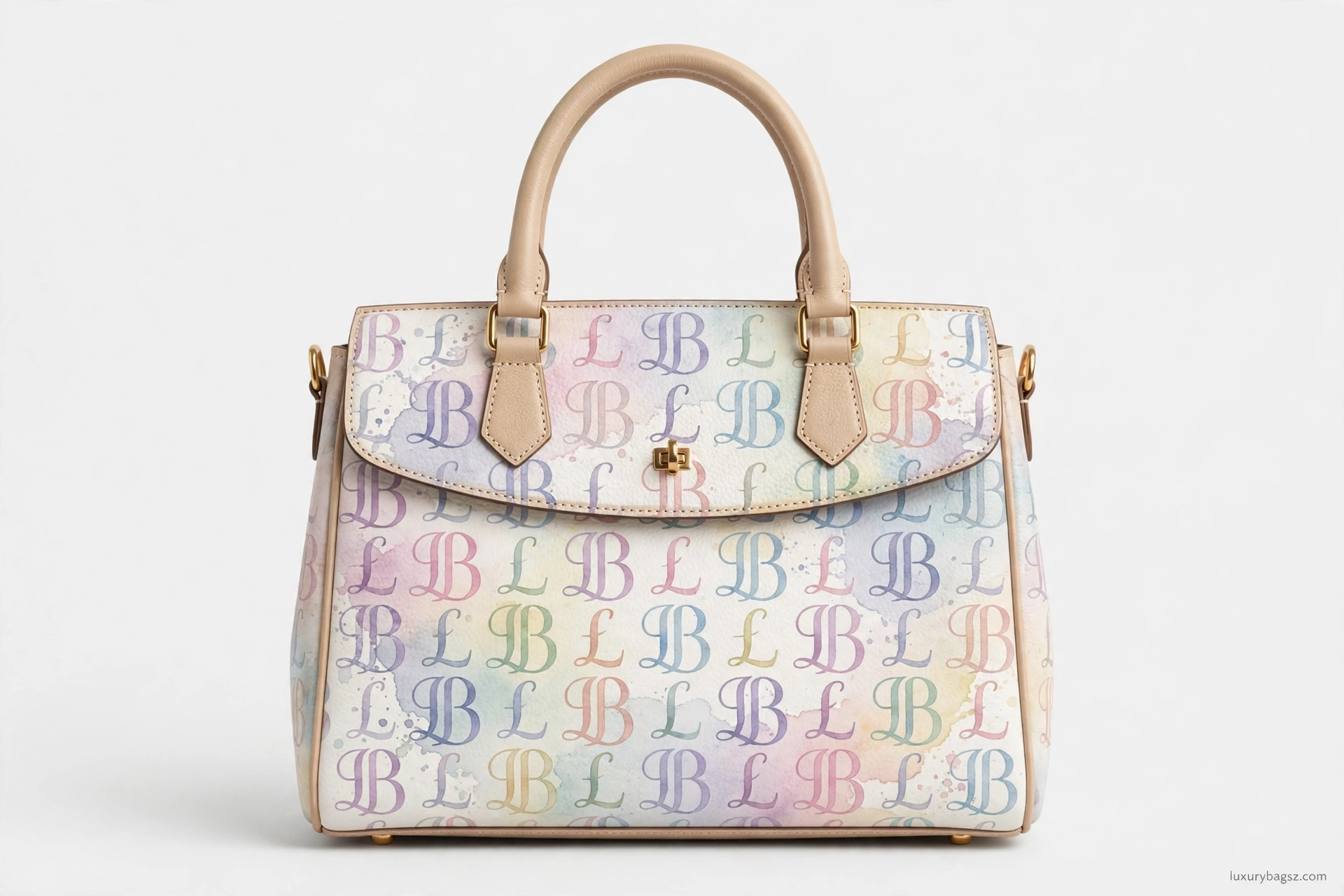
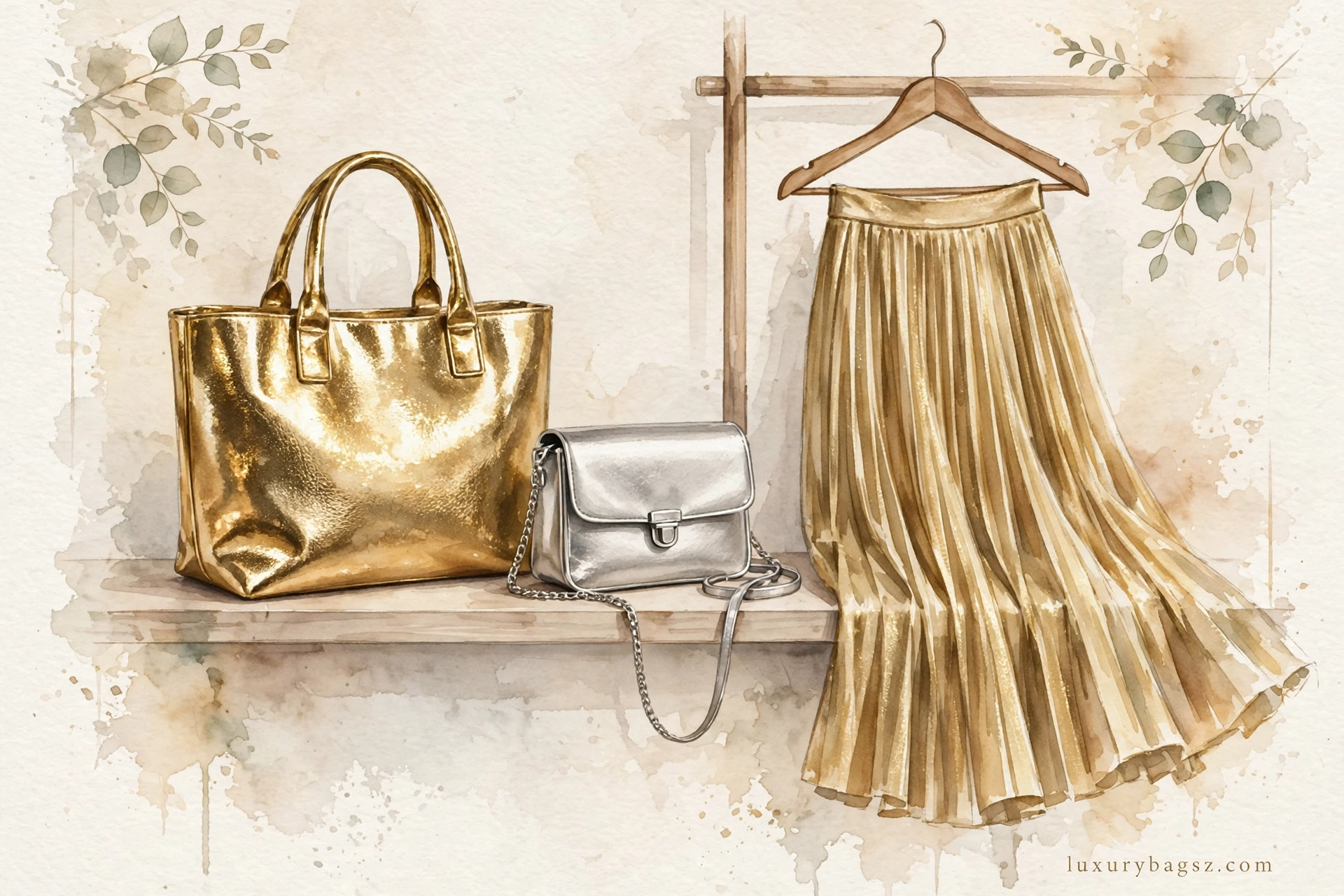
Metallic bags solve two problems at once: they are the outfit's shine and its most durable metallic purchase, because leather carries foil finishes better than cloth carries coatings. Our edit of designer party bags includes the metallic minis that anchor evening looks, but the modern buy is the daytime metallic: a silver or soft-gold shoulder bag carried with jeans and knitwear. Metallic shoes — flats, loafers, trainers, sandals — work as neutrals and lift plain outfits for the price of a shoe you needed anyway. Check flex points before buying: crease a display shoe gently and watch for cracking or flaking.
Care: Keeping the Shine Alive
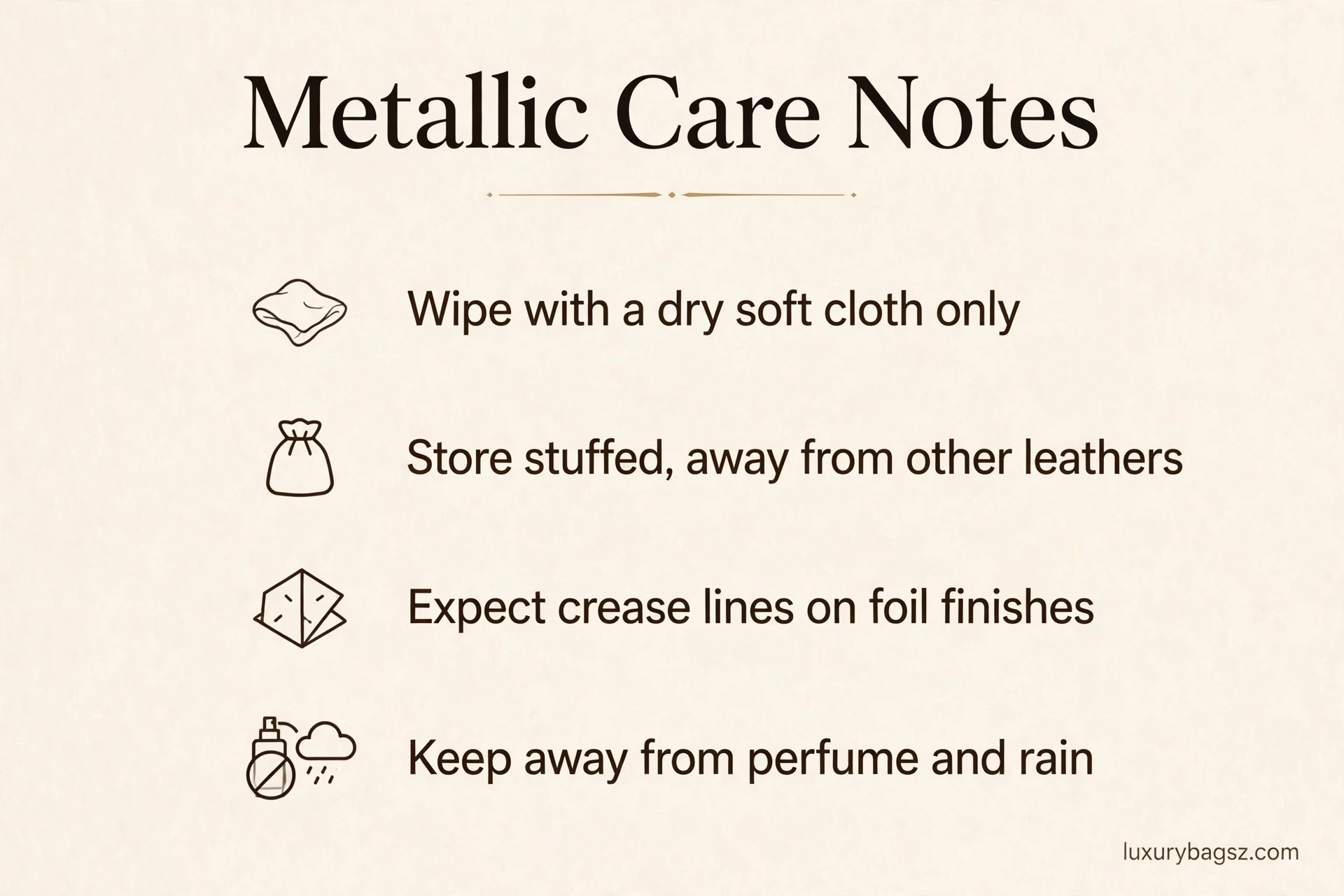
Store metallic pieces uncreased and unhurried: coatings crack along hard folds, so hang lamé and foil knits, stuff metallic bags, and never stack heavy items on sequins. Clean cautiously. Many metallic finishes are specialist-clean only, and home washing can strip foil from knit entirely. Spot-clean leather with a dry cloth and keep metallics away from perfume sprays and abrasive straps. Rest metallic shoes and bags between wears to let coatings settle, and touch up scuffed metallic leather with matching metallic cream rather than ordinary polish, which dulls the finish it is meant to save.
Buying Metallics That Last
Pay for the finish, not the label alone: at every price, flex the fabric, rub a hidden area, and inspect coatings under bright light for pinholes, bubbles or uneven tone. Choose classic shapes in metallic — a straight trouser, a pleated skirt, a simple bag — because the finish already supplies the novelty. A novelty shape in a novelty finish dates twice as fast. Pre-owned metallics need the crack check most of all: bends at elbows, knees, bag corners and shoe vamps tell the truth. A clean, uncracked pre-owned piece is a bargain; a cracked one is a countdown.
Frequently Asked Questions
Can metallics be worn during the day?
Yes — that is the current cycle's main idea. Brushed silver or soft gold in a normal shape, partnered with matte basics like knitwear, denim or tailoring, reads modern rather than dressy. Save mirror finishes and sequins for evening.
Which is more versatile, silver or gold?
Silver, for most wardrobes: it pairs with black, white, grey, navy, denim and pastels, and silver shoes and bags act as neutrals. Gold is warmer and richer for evening, autumn palettes and warm skin tones.
Can I mix silver and gold in one outfit?
Yes, if one metal clearly dominates and the second appears in a small area — silver clothing with a gold bag, for example. Similar finishes help: brushed with brushed, polished with polished. Equal areas of both usually look accidental.
Do metallic coatings crack?
They can, especially foil on knit and cheap metallic leather, at fold, bend and rub points. Quality coatings flex for years. Test before buying by gently bending the material, and store pieces uncreased to extend their life.
What is the best first metallic purchase?
A bag or a pair of shoes in silver or soft gold. Both work as neutrals, carry the trend fully, survive more wears than clothing, and cost less per use than a metallic garment you will wear occasionally.
How do I stop a metallic outfit looking like costume?
Use one metallic piece, keep its shape classic, and surround it with matte, ordinary clothes. The contrast is the style: a silver skirt with a grey sweater looks expensive; the same skirt with a sequinned top looks themed.
Are sequins a metallic?
Functionally yes: they are applied metallic discs and the strongest finish in the family. They are also the heaviest and most delicate, shedding with wear, so reserve them for pieces you will wear a few times a year.
Do metallic bags go with everything?
Silver and pale gold bags come close — they sit happily with evening dress, tailoring and denim. Very bright or coloured metallic bags are statements, and should be styled as the outfit's single shining piece.
How should metallic clothes be cleaned?
Follow the label strictly; many are specialist-clean only. Never machine-wash foil knits, keep metallic leather away from water and sprays, and spot-clean with a dry or barely damp cloth between proper cleans.
Will metallics date badly?
Classic shapes in silver and gold rotate back every few years and have done for decades, so they date slowly. Coloured foils and novelty shapes date fastest. Buy the finish in a shape you would wear in black, and it will keep returning to fashion — and to your outfits.
Summary: Shine Once, Shine Well
Metallics reward restraint and quality: pick your metal — silver for cool versatility, gold for warmth — pick your finish honestly, and wear one shining piece against calm, matte clothes. Start with a bag or shoes, test coatings before you pay, store everything uncreased. Shine treated as a fabric, not a costume, is one of the most durable pleasures a wardrobe can own.