Taylor Swift Eras Tour Outfits: A Wardrobe That Tells Ten Stories
Ten Albums, Ten Wardrobes: The Eras Idea in Brief
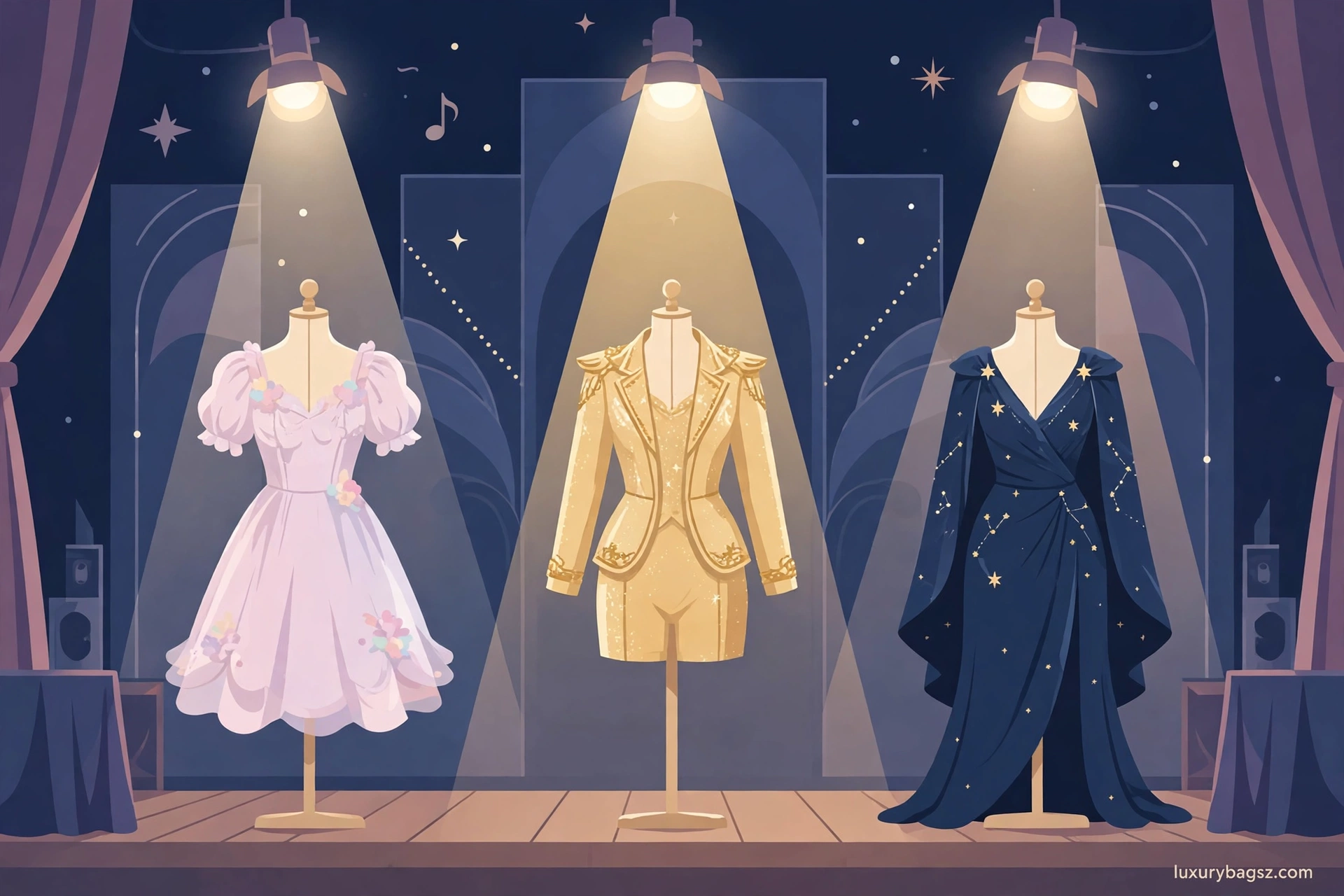
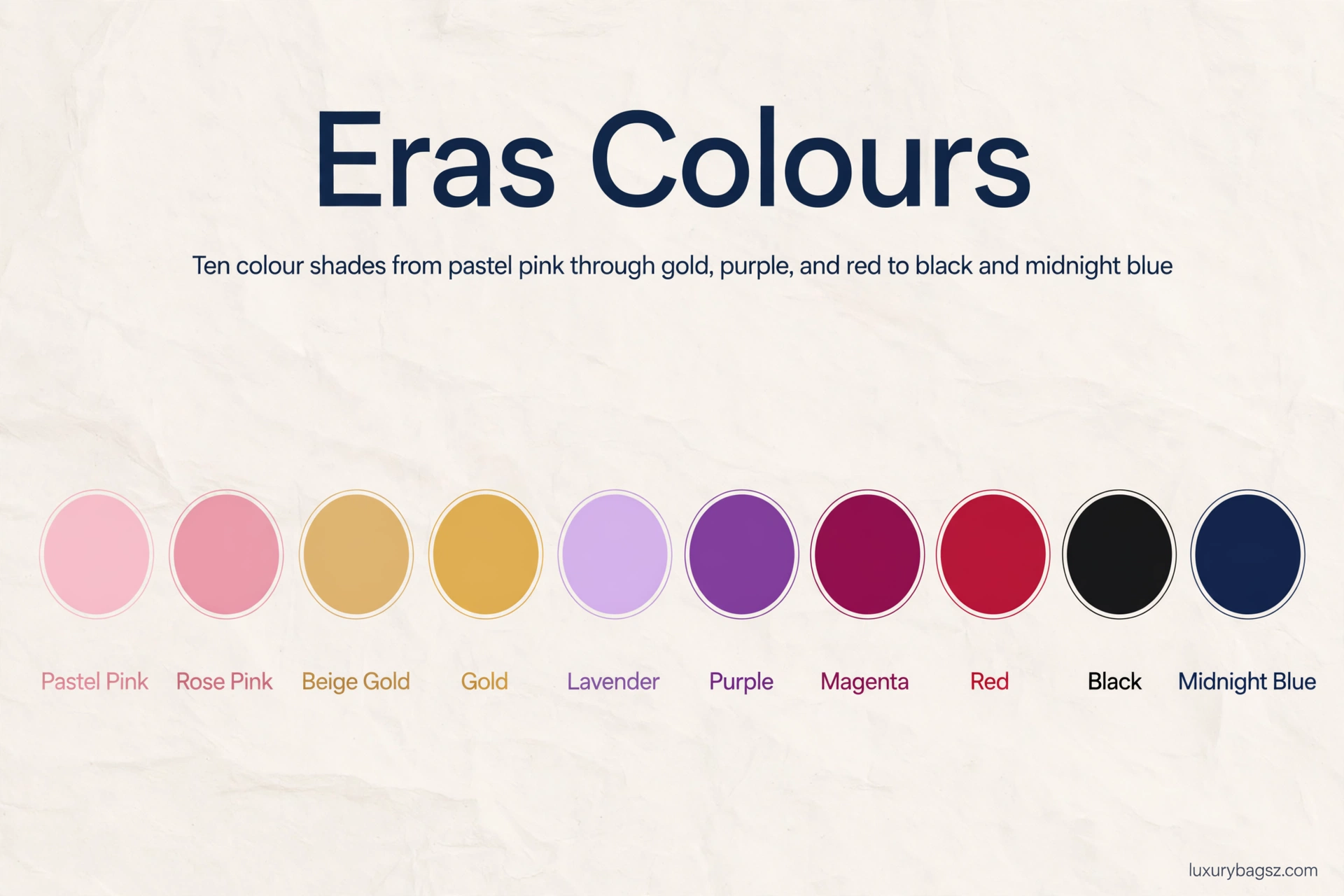
The Eras Tour wardrobe works because each album era gets its own visual world: pastel sparkle for Lover, gold fringe for Fearless, a black-and-red snake bodysuit for Reputation, flowing woodland gowns for Folklore and Evermore, and midnight sparkle to close. Fans did not just watch the costumes; they dressed in them. Understanding each era's theme explains both the stage pictures and the sea of themed outfits in every audience photograph from the tour.
Key Takeaways
- Each era on stage has a fixed colour story and one signature garment type.
- Lover opens in pastel sequins; Fearless answers with gold fringe and movement.
- Reputation is the visual outlier: one black asymmetrical snake bodysuit.
- Folklore and Evermore slow the show down in flowing, layered gowns.
- Midnights closes in deep blue sparkle, echoing the album's night theme.
- Fans borrowed the system by choosing one era and dressing inside its colours.
How the Wardrobe Was Built
A tour spanning ten albums needed instant recognition: the audience had to know which era had begun from the first costume, before a lyric landed. Working with stylist Joseph Cassell Falconer, the wardrobe was widely reported as custom-built by major houses, with multiple colour variants of key looks across the tour's long run. Sequins and crystals were functional, not decorative. In stadium light, dense embellishment reads from the furthest seats, where plain cloth would simply disappear. Boots grounded almost every era, many of them custom-made, because three hours of choreography demands footwear built like sports equipment in couture clothing.
Rehearsal practicality shaped the glamour: quick-change layers, zips placed for speed and duplicates of key pieces, because a three-hour show cannot stop for a broken strap. The polish audiences saw was logistics wearing sequins.
Lover and Fearless: Pastel Light, Then Gold
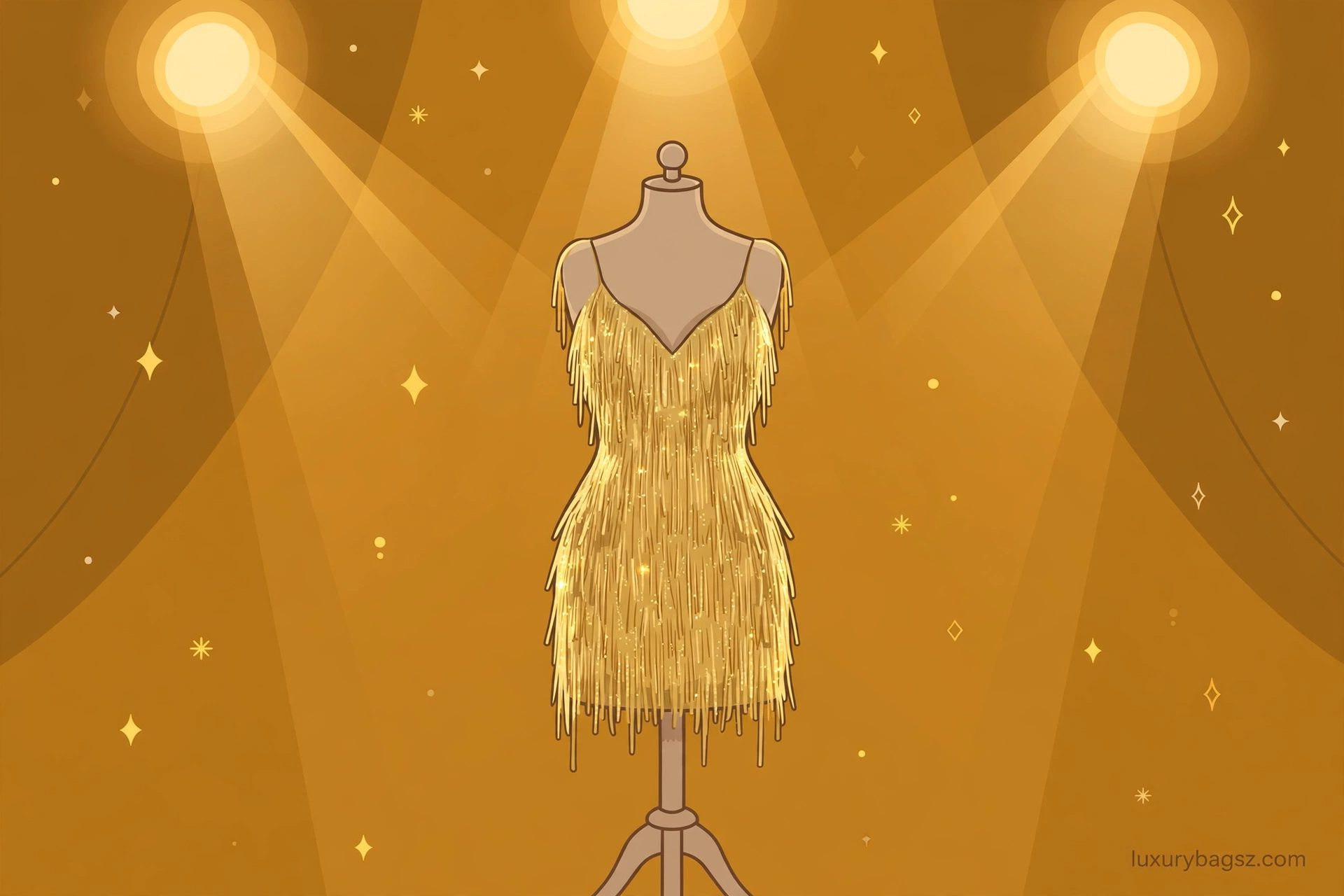
The show opened with Lover in a pastel sequined bodysuit, widely reported as Versace, paired with sparkling knee boots: romance rendered as sunrise colours and shine. A blazer version of the look appeared for The Man, a neat tailoring joke inside the sparkle, and variants in different pastel mixes appeared as the tour travelled. Fearless followed in gold: a fringed, shimmering dress, widely reported as Roberto Cavalli, that deliberately echoed her early tours while upgrading the finish. Fringe was the era's engine. Every spin multiplied the light, turning a simple silhouette into movement the whole stadium could read.
Colour variants were also a kindness to fans attending twice. A Lover bodysuit in a new pastel mix or a Speak Now gown in a fresh shade made a second night feel premiered, not repeated, and rewarded the keenest eyes in the building.
Speak Now, Red and 1989: Fairytale to Pop Polish
For Speak Now, the Enchanted moment called for a full ballgown, in rotating colours across the run, the tour's one true fairytale silhouette. Red mixed nostalgia with pop: sequined tops, high-waisted shorts and a knowing update of the striped-shirt-and-hat look from the 22 video, played as a wink to longtime fans. The 1989 era sharpened everything into a sparkling two-piece, crop top and skirt in bright jewel colours, matching that album's clean, metropolitan pop. Together the three middle eras chart her own history in cloth: princess, romantic, then pop star, each announced in a single glance.
The Speak Now ballgown carried the show's purest nostalgia: the album of her late teens dressed as a fairytale, while the woman wearing it had long outgrown the story. That contrast is why the moment landed emotionally.

Reputation: The One Unchanging Look
Reputation arrived in black: an asymmetrical bodysuit with a red snake winding across it, widely reported as Roberto Cavalli, worn with dark boots. Famously, this was the era that stayed fixed while others gained variants, a decision fans read as fitting the album's defiant, take-it-or-leave-it mood. The one-legged cut and snake motif quoted the original Reputation tour while tightening the design into something more sculptural and severe. In a show built on colour changes, the unchanging black look became the loudest statement of all: this era does not negotiate.
Boots deserve their own credit line: custom pairs in era colours, built for choreography, tied the anthology together. However the dress changed, the silhouette's foundation stayed recognisably hers from the first song to the last.
Folklore and Evermore: The Wardrobe Breathes Out
The sister albums slowed the spectacle. Flowing, layered gowns in cream, green and rust tones replaced bodysuits, and the staging turned to cabins, trees and candlelight. The Folklore gowns, widely reported as Alberta Ferretti designs, used soft tiers and sleeves that moved like water when she played piano or walked the runway stage. Evermore leaned autumnal: a mustard-toned dress for one chapter and a green velvet cloak for Willow, the wardrobe's most theatrical single garment. Readers who love that softer sparkle will find its everyday cousin in our metallics fashion trend guide, where shine is dosed for real clothes rather than stadiums.
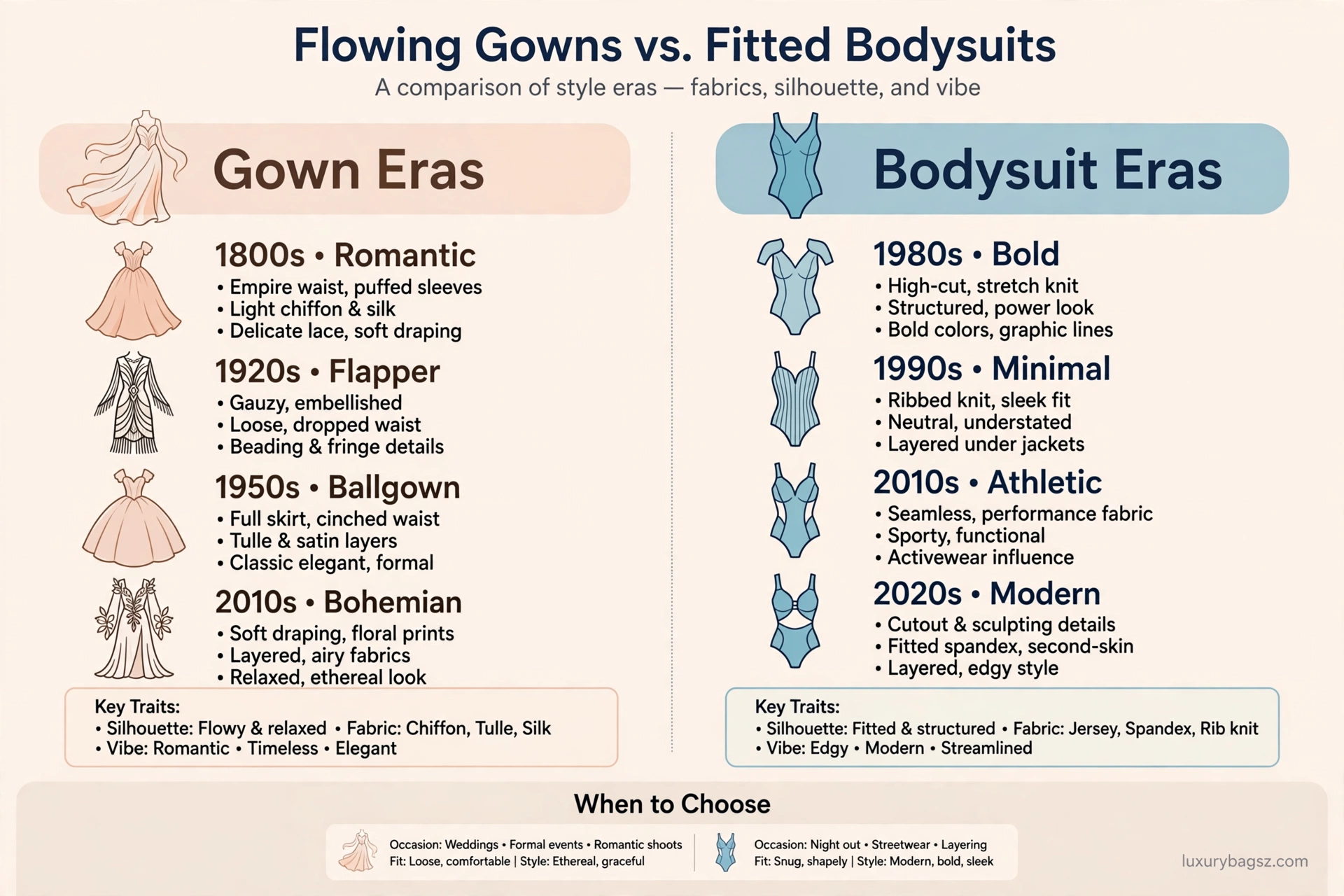
The acoustic surprise songs came with their own softer dresses, often ruffled and romantic, signalling a pause in the spectacle. Even spontaneity had a costume, which tells you how completely the wardrobe was planned.
Midnights and the Closing Sparkle
The final era dressed the night itself: deep blue sequins, a midnight-toned bodysuit under a lavender faux-fur style coat for one song, and shimmering fringe for the close. The coat moment mattered. Removing a plush lavender layer to reveal midnight sparkle gave the show's last act its own small reveal, echoing the album's sleepless glamour. Ruffled and tiered romantic details elsewhere in the show connect to the wider return our ruffles trend guide tracks in ordinary party dressing. The Tortured Poets chapter, added later in the run, brought a contrasting white, corseted, literary look, widely reported as custom Vivienne Westwood, with lyrics printed on the skirt.
Merchandise and high-street copies followed each era's colours within weeks, proof of the cerulean principle in pop form: stage sparkle becomes ordinary party dressing faster now than at any time in fashion history.
How Fans Turned Wardrobe Into Participation
Audiences adopted the era system as a dress code: pick an album, wear its colours, add one signature detail, from Fearless gold to Reputation black. The system worked because it is a formula anyone can run cheaply: colour first, silhouette second, one prop-like detail last, like a hat, a cloak or a fringed jacket. Friendship bracelets completed the uniform in the stands, a fan-made accessory economy that became as photographed as the stage wardrobe itself. For summer parties, the same borrow-one-era logic appears in miniature across our summer fashion trends edit: one theme, worn with conviction, beats a mixed outfit every time.
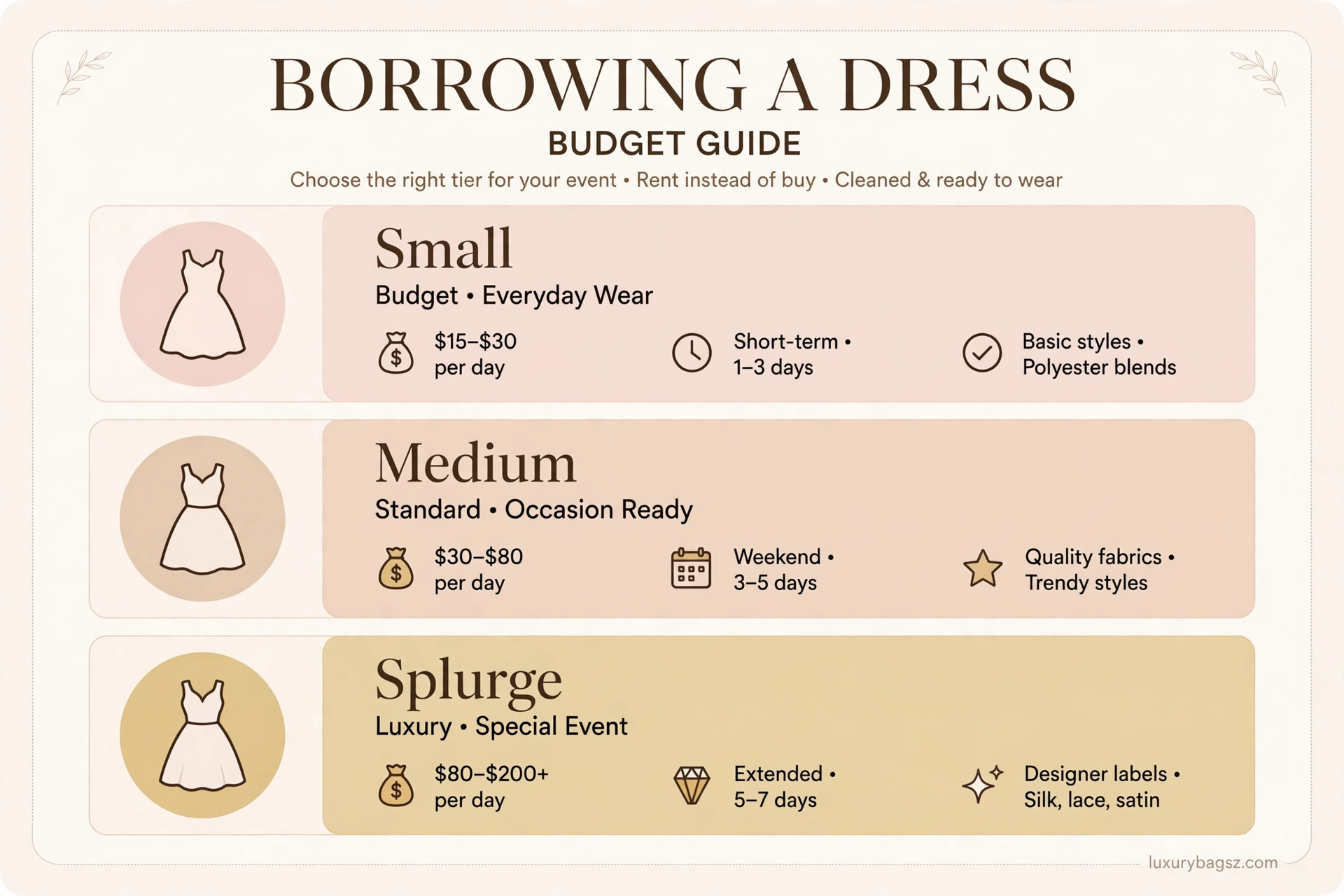
Borrow the era method for fancy dress and it never fails: commit fully to one chapter, colour, silhouette and detail aligned. Half of one era plus half of another reads as neither, on stage or at a party.
What the Eras Wardrobe Changed in Tour Dressing
Earlier stadium tours usually chased one continuous image. Eras proved a wardrobe could be an anthology instead, with costume changes acting as chapter headings. It also set a new standard for variant looks: multiple colourways of the same design kept photographs fresh across a two-year run and rewarded repeat attendance. Designers gained a rare showcase, with custom stage pieces discussed like runway looks and credited in mainstream coverage, not only fan accounts. Above all, the wardrobe made fashion part of the ticket's value. People planned outfits for months to answer the stage, and that conversation is now built into how big tours are staged.
The tour film froze the wardrobe into a permanent record, which is why these looks keep recruiting new fans. Costume, like the albums, became a catalogue people collect in order and argue about lovingly.
Frequently Asked Questions
How many outfit changes were in the Eras Tour show?
The set was built around one wardrobe world per era, with well over a dozen looks across the full show once variants and added chapters are counted.
Who styled the Eras Tour wardrobe?
Stylist Joseph Cassell Falconer is credited with shaping the tour wardrobe, working with major design houses on custom pieces and multiple colour variants.
What did Taylor Swift wear for the Lover era?
A pastel sequined bodysuit with sparkling knee boots, widely reported as Versace, plus a tailored blazer version for The Man. Colours varied across the run.
Why did the Reputation outfit never change?
By design, fans and reporters noted it as the one fixed look. The unchanging black snake bodysuit matched the album's defiant mood and became a talking point.
What are the Folklore and Evermore outfits like?
Flowing, layered gowns in soft or autumnal colours, with sleeves, tiers and a green velvet cloak for Willow. They slow the show into a woodland mood.
Which look closed the show?
Midnights: deep blue and midnight sparkle, including a lavender plush coat removed to reveal a sequined look beneath, matching the album's night theme.
How did fans dress for the Eras Tour?
By era: choosing one album's colours and signature detail, such as gold fringe, black snake-era styling or pastel sparkle, often finished with friendship bracelets.
Were the costumes the same in every city?
The era designs stayed consistent, but many looks had colour variants that rotated across dates, which is why photographs from different cities show different shades.
Can I borrow an era theme for a party?
Yes: choose one era, dress inside its colour story, and add a single signature detail. The formula scales from stadium dressing to a birthday outfit easily.
Why did the wardrobe matter so much?
Because the tour's concept was autobiography. The costumes were the fastest way to tell ten stories in one night, and fans answered by wearing the stories back.
Conclusion: Costume as Chapter Headings
The Eras wardrobe endures as the tour's second setlist: pastel, gold, black, woodland and midnight, each colour a chapter the audience could read at a glance. Borrow its method for any themed dressing, one world at a time, fully committed, and the outfit will always make sense.