Best Vacation Bags and Travel Picks: Totes, Crossbodies and Carry-Ons
Three Bags Cover Almost Every Holiday: Vacation Picks in Brief
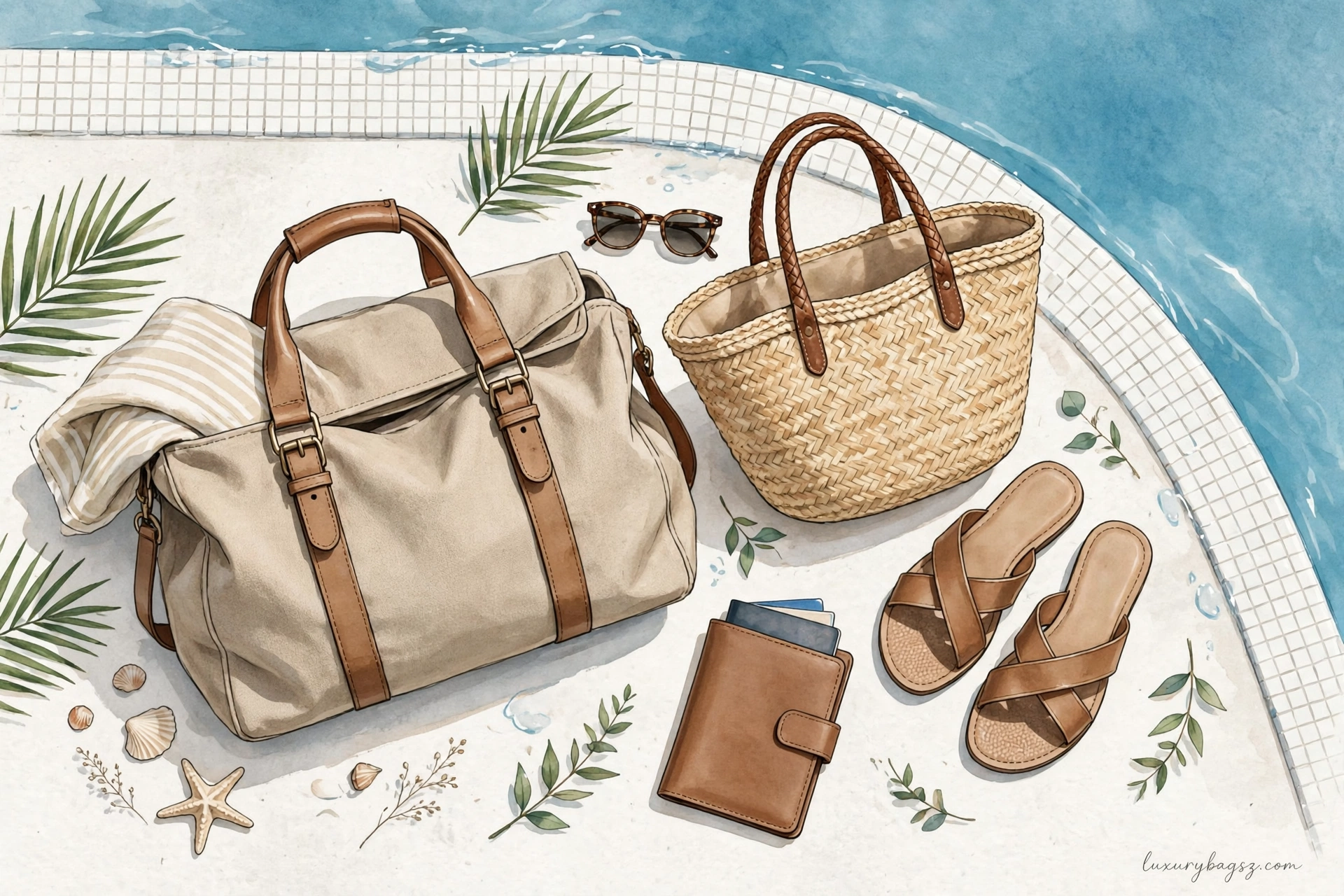
The vacation bag set that works is three pieces: a roomy tote for travel and beach days, a zip-top crossbody for sightseeing, and a small evening bag. Add a cabin case you can lift and a pouch set inside it, and every trip type from beach week to city break is covered without overpacking bags. This guide matches bags to trip types, gives honest what-fits guidance, and covers the materials and security checks that matter away from home.
Key Takeaways
- Pack three bags: tote, zip-top crossbody and a small evening piece.
- Canvas, raffia and coated fabrics beat fine leather for beach and pool days.
- A zip closure is the single most useful travel feature on any bag.
- The tote should fit under a seat or fold into the case as a spare.
- Crossbody first for cities: hands free, valuables in front, pickpocket-resistant.
- Buy for the trip you take yearly, not the safari you might take once.
Start With the Trip, Not the Bag
Beach weeks, city breaks and resort stays ask different things of a bag. Sand, water and sun punish fine leather; cobbles and crowds punish open totes. List your trip's real days: travel day, exploring days, beach or pool days, and evenings out. Each day type maps to one bag role. If most holidays mix all four, the three-bag system below covers you. If your trips are single-mode, buy deeply for that mode instead. Weight matters more on holiday than at home. A bag that feels fine in a shop becomes a burden at mile six of a old-town climb.
Match the system to the trip shape. A single-resort week leans on the beach bag; a multi-city tour leans on the crossbody; a wedding trip swaps the evening mini for something smarter and keeps the rest. The three roles stay constant — carry, explore, evening — and only the emphasis moves. That is why the system survives very different holidays without new purchases.
The Three-Bag System Explained
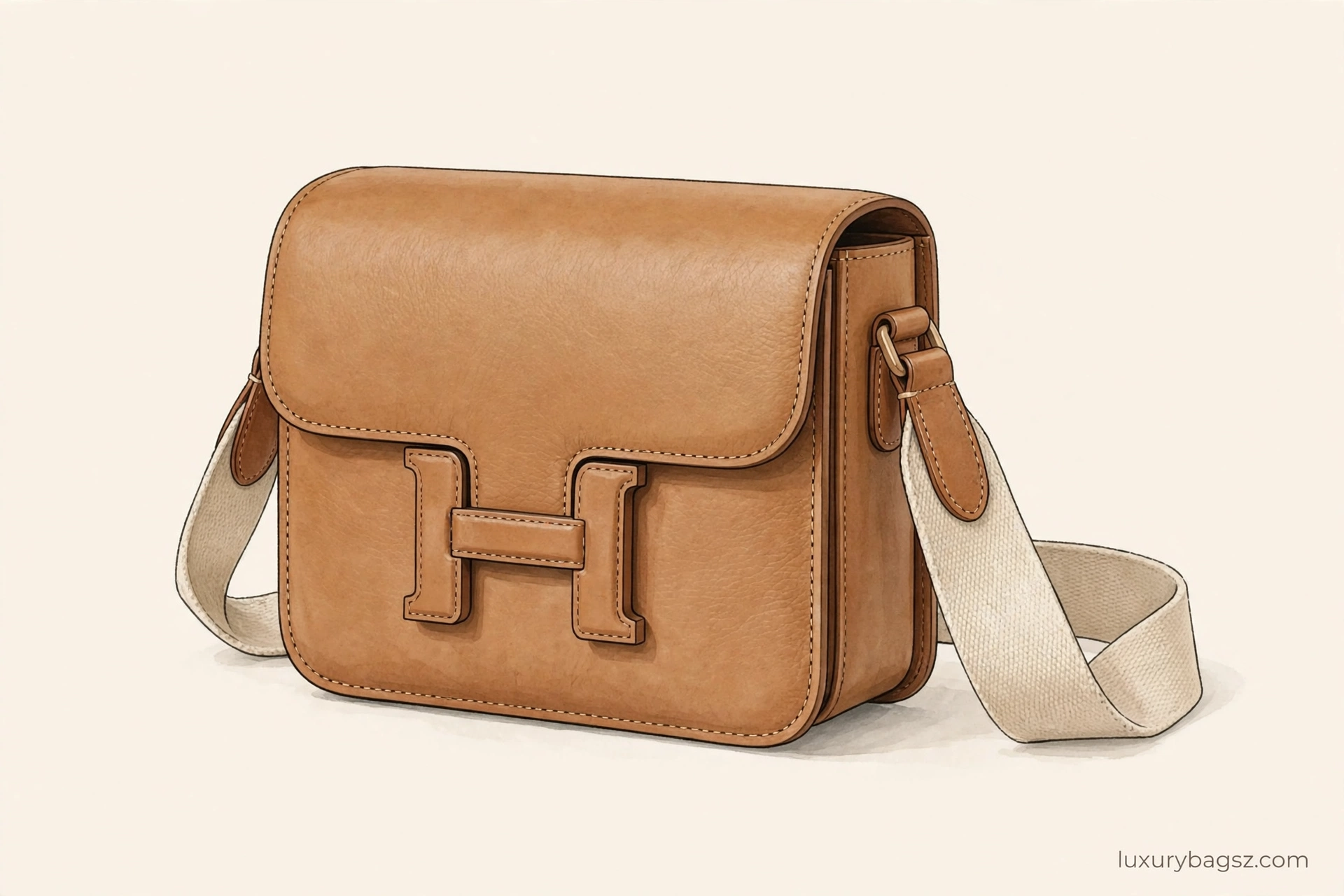
Bag one is the tote: travel-day carry, beach bag and shopping bag in one. It must zip or fasten, fit a jumper and a bottle, and shrug off sand. Bag two is the crossbody: passport, phone, cards and camera, worn in front, zipped shut. This is the bag that actually guards your holiday. Our wider round-up of the best travel handbags adds more shapes for travellers who want a single do-everything piece. Bag three is small and pretty: evenings only, phone and lipstick, ideally one that packs flat inside the tote on travel days.
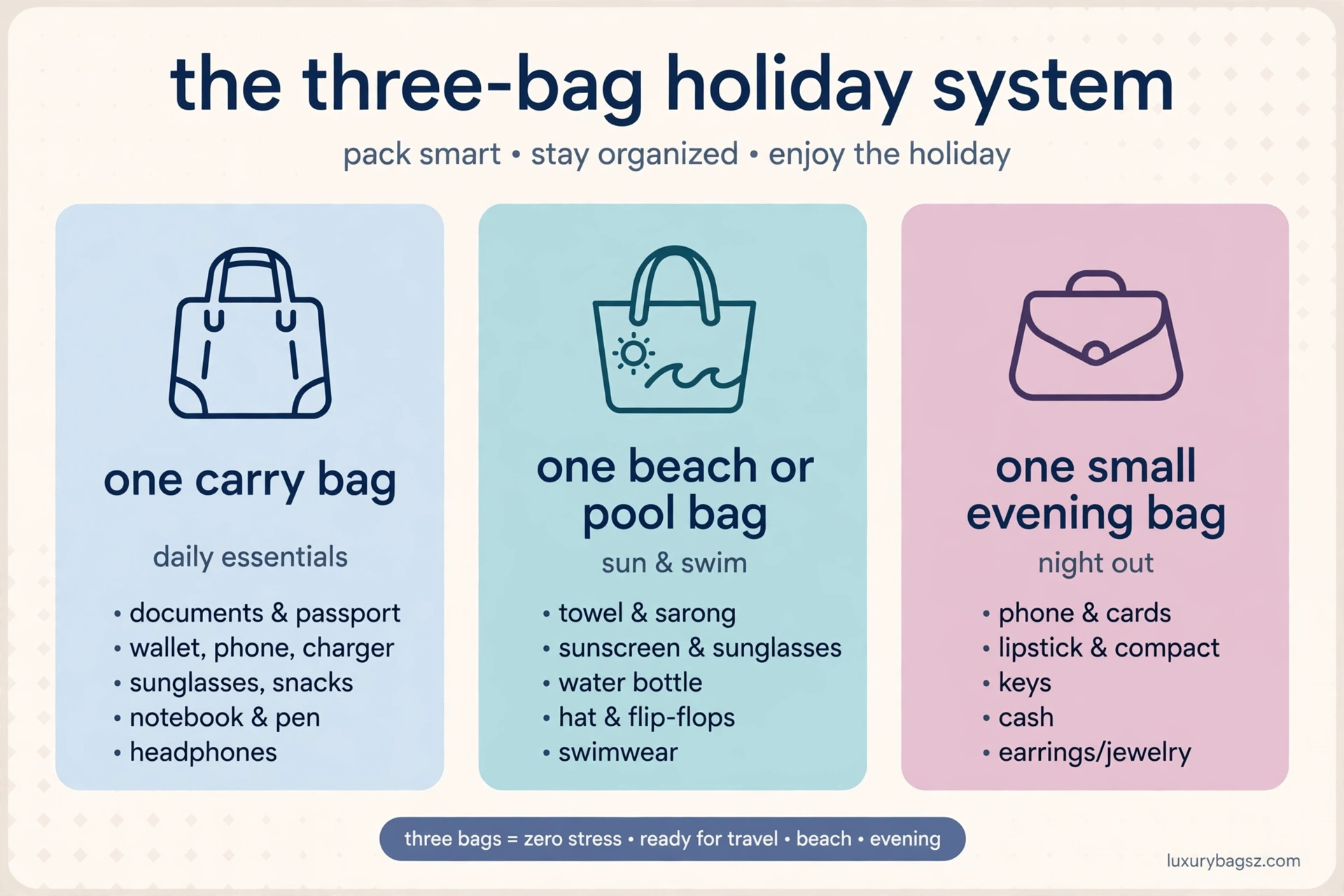
Pack the bags, not just in them. The evening mini travels flat inside the weekender, the crossbody sits inside the tote as a packing cube, and the beach bag folds around soft clothes. Three bags nested this way take almost no extra room, which is the honest answer to the usual objection that a three-bag system sounds like luggage in itself.
Beach and Pool Days: Materials That Forgive
Raffia, straw and woven totes are the beach standard for good reason: sand shakes out, splashes dry, and the look suits the setting exactly. Our edit of designer straw bags covers the shapes that hold a towel without swallowing the whole lounger. Coated canvas is the practical rival: wipeable, light and tougher around wet swimwear. Keep one pouch inside for phone and keys, sealed against sand. Leave delicate leather at the hotel. Sunscreen, salt water and hot leather are a permanent-stain combination no cleaner fully reverses. Size the beach bag to your real load: towel, book, bottle, sun cream and a change of clothes for children if they travel with you. A bag filled past its seams ages in one trip. A zipped inside pocket earns its place here too. Phones, room keys and cash should not ride loose in an open tote among wet towels and sand.
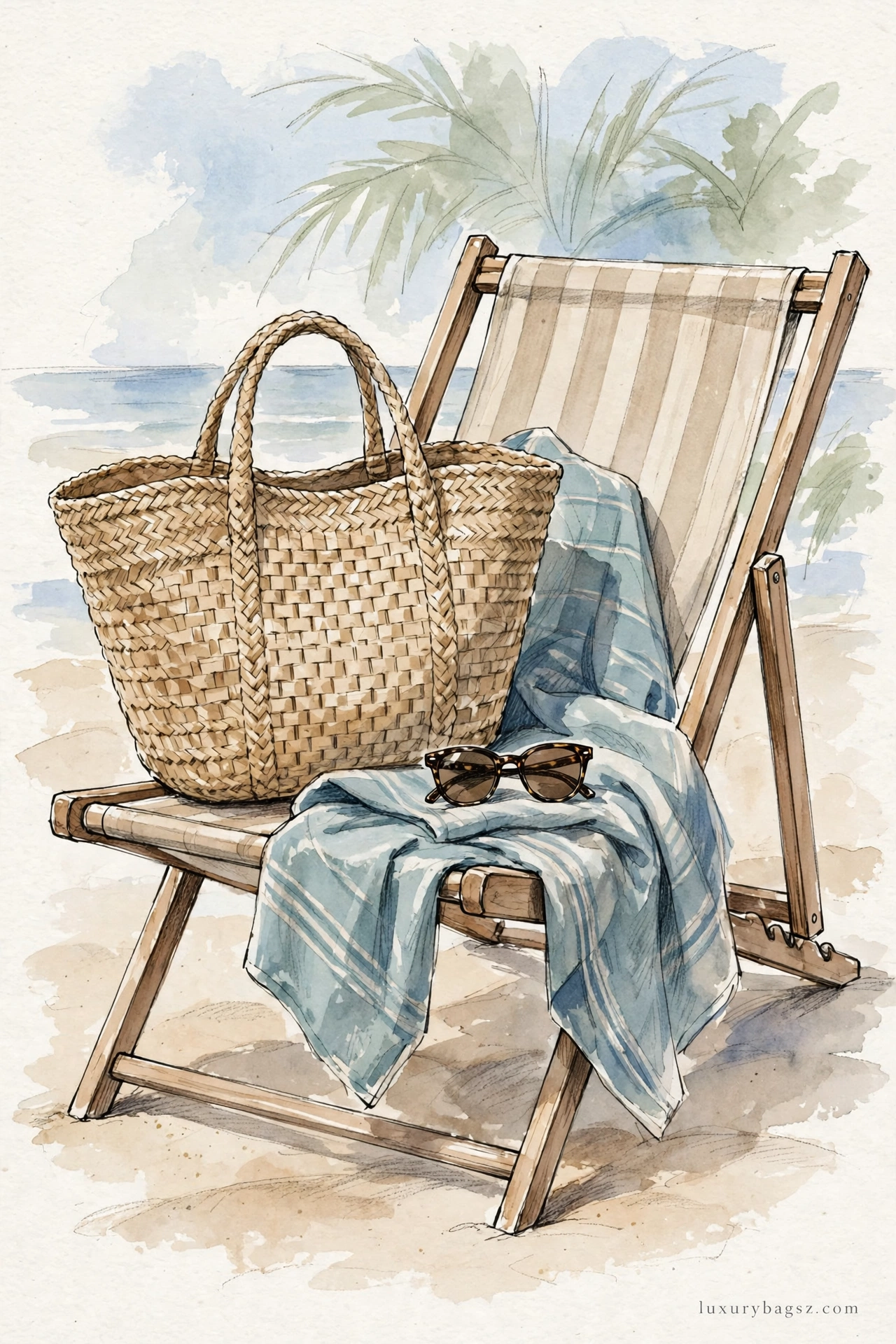
Know the difference between your woven options. Raffia is a palm fibre, light and naturally textured, and it dislikes being crushed. Straw is stiffer and cheaper, and frays at the edges. Woven cotton and canvas sit between them and wash better than either. For a bag that must survive being sat on, stuffed and rained on once, coated canvas beats every natural weave.
City Exploring: Security and Comfort First
In cities, the crossbody rules: zip top, adjustable strap, worn high and in front in crowds, with cards in an inside zipped pocket. Choose a strap that does not cut by afternoon and a size that swallows a small water bottle. Comfort failures ruin more sightseeing than fashion ones. Backpacks suit day hikes and family trips, but in busy streets the crossbody keeps valuables where your eyes are. Many travellers carry both, by day type. Colour helps: a mid-tone bag that shrugs off scuffs and dust will look better on day six than white or pale suede ever will.
Security features matter more than style in a crowd. Look for a main zip that closes fully, an interior zipped pocket for documents, and a strap long enough to wear the bag in front of your body on busy transport. In the most crowded sights, keep the crossbody under a light jacket or cardigan. None of this requires an ugly bag — it requires choosing the right details.

What Fits: Honest Capacity by Bag
A holiday mini fits a phone, cardholder, lipstick and keys, and nothing else should be promised of it. Plan evenings around that limit. A medium crossbody fits phone, purse, sunglasses case, small bottle and a paperback. A large tote fits towels, change of clothes and market finds. The fold-flat hero here is the Longchamp Le Pliage bag, which travels inside a case and returns carrying the shopping. Test capacity with your own contents before a trip, not with shop tissue. Holiday packing surprises are best had at home, calmly.
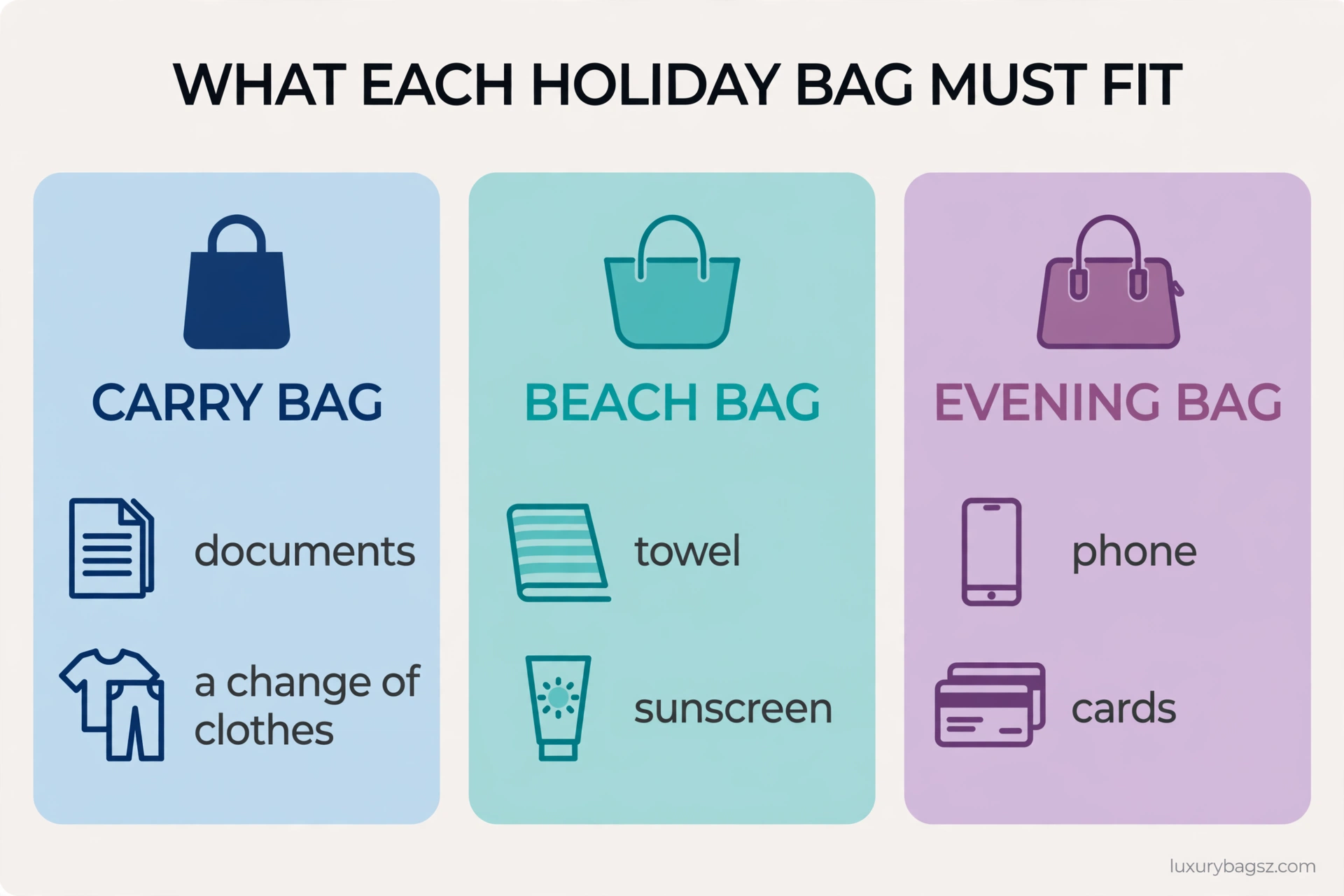
Capacity claims lie politely, so test with your own objects before the trip. A bag that swallows a paperback but not your sunglasses case will annoy you daily. The crossbody should take phone, card case, sunglasses and a small sunscreen without distorting its shape; the tote should close — or nearly close — over a towel, because an open tote on a lounger collects sand and other people's curiosity.
Resort and Evening: Small, Polished, Easy
Resort evenings want the mini to feel dressed: metallic leather, a neat clutch or a small chain bag that lifts plain holiday dresses. Because it packs flat and weighs little, one good evening bag serves every trip. Choose the colour against your holiday wardrobe, not your home one. Wicker and raffia minis suit resort settings beautifully and cost less to risk around sand and cocktails than fine leather does. Keep jewellery and the evening bag in hand luggage always. Checked bags get delayed; dinners, rudely, do not wait for lost luggage. One colour story helps the whole set work harder: choose the mini in a tone that appears in your holiday shoes or a scarf, and three bags suddenly style six evenings. If space is tight, drop the second evening option before the crossbody. Evenings forgive repetition; sightseeing never forgives an insecure or aching bag.

The evening bag earns its place by disappearing. At a resort it should hold the room key card, phone and lip balm, hang from a wrist or a fine chain, and survive being set down on restaurant tables nightly. Metallic leather and woven finishes forgive the scuffs of travel better than pale satin, which is why satin minis are better saved for weddings at home.
The Cabin Case and the Travel-Day Setup
Your case should lift, loaded, without drama, and fit the cabin rules of the airlines you actually fly. Wheels that roll straight save real energy. Inside, pouches do the organising: one for tech, one for liquids, one for small valuables that moves into the tote at the gate. For short luxury trips, our Louis Vuitton Keepall guide covers the classic soft cabin bag and its sizes. Travel-day dress code for bags: tote on the case handle, crossbody on you, passport reachable without setting anything down. Practise the system at home.
Personal-item rules vary by airline and fare, and they are enforced most strictly on the cheapest tickets. Measure your weekender against the smallest allowance you regularly fly, not the largest, and keep the bag soft-sided enough to compress. A beautiful bag that has to be checked at the gate, at a fee, stops being a carry bag and becomes an expensive lesson.
A small repair kit earns its corner of the case: a travel sewing kit, a spare bag strap if yours is detachable, and a soft cloth for salt and sunscreen smears. Most holiday bag damage is minor and immediate — a loose stitch, a sticky zip — and a two-minute fix on the day beats a repair bill and a ruined favourite in the month after you return.
Care on the Road: Sand, Sun and Small Repairs
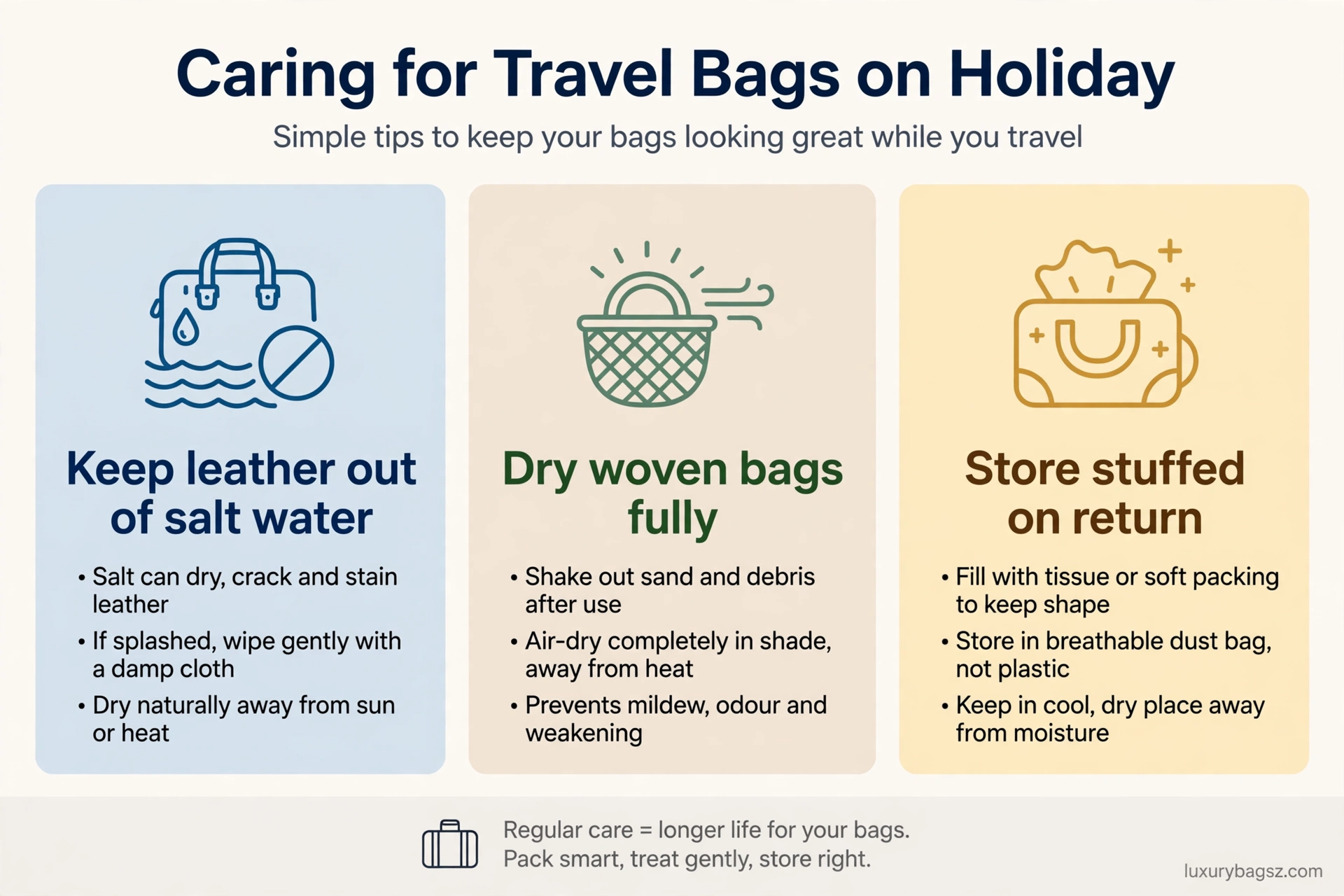
Shake sand out daily and never store a damp bag in a closed case; mildew on holiday moves faster than at home and marks canvas and leather alike. Keep bags out of direct sun when resting. Heat and glare fade colours and dry leather, and poolside chairs are harsher than they look. Pack a tiny kit: a soft cloth, a few plasters for strap rub, and a spare pouch that can become an emergency bag if a zip fails. Back home, empty, air and clean each bag before storing. Trips end better when the bags are ready for the next one, not ageing in their souvenirs.
Frequently Asked Questions
How many bags should I pack for a holiday?
Three covers most trips: a tote, a zip-top crossbody and a small evening bag. Add a fold-flat spare if you plan serious shopping.
What is the best bag material for the beach?
Raffia, straw and coated canvas forgive sand and splashes best. Keep fine leather for evenings, away from sunscreen and salt water.
Is a crossbody really safer in cities?
Yes, worn in front with a zip closure. It keeps valuables in sight and hands free, which is the combination that defeats most petty theft.
What size tote works as a personal item?
It must fit under the seat on your airline, so check their published dimensions. Structured totes often fail; soft, squishable ones pass more easily.
Can one bag do the whole holiday?
A medium zip-top crossbody plus a fold-flat tote handles most trips. Pure single-bag travel works only if evenings are casual and days are simple.
Should I take an expensive bag on holiday?
Take one you can relax with. Hotel safes, hand luggage discipline and insurance details matter more than the label; never check valuables in hold luggage.
How do I stop sand ruining a bag?
Use a sealed pouch for small items inside the beach bag, shake the bag out daily, and air it before packing. Never zip a damp bag into a case.
What fits in a holiday evening mini?
A phone, cardholder, lipstick and keys. If your phone is large, test it before the trip; mini bags vary more than their names suggest.
Are backpacks good vacation bags?
For hiking, family days and train travel, yes. In crowded city streets, pair one with a small front-worn pouch for passport and cards.
How should I pack bags inside a case?
Nest them: evening mini inside the tote, tote laid flat or folded, crossbody worn. Stuff hollow bags with soft clothes to hold their shape.
Conclusion: Tote, Crossbody, Mini — Then Enjoy the Trip
Vacation bags succeed as a system: a forgiving tote for travel and sand, a secure crossbody for exploring, and one small evening piece that packs flat. Match materials to the trip, test what fits at home, and the bags stop being luggage worries and start being part of the holiday.