

Best Travel Handbags: Designer Picks for Flights, Security and Sightseeing
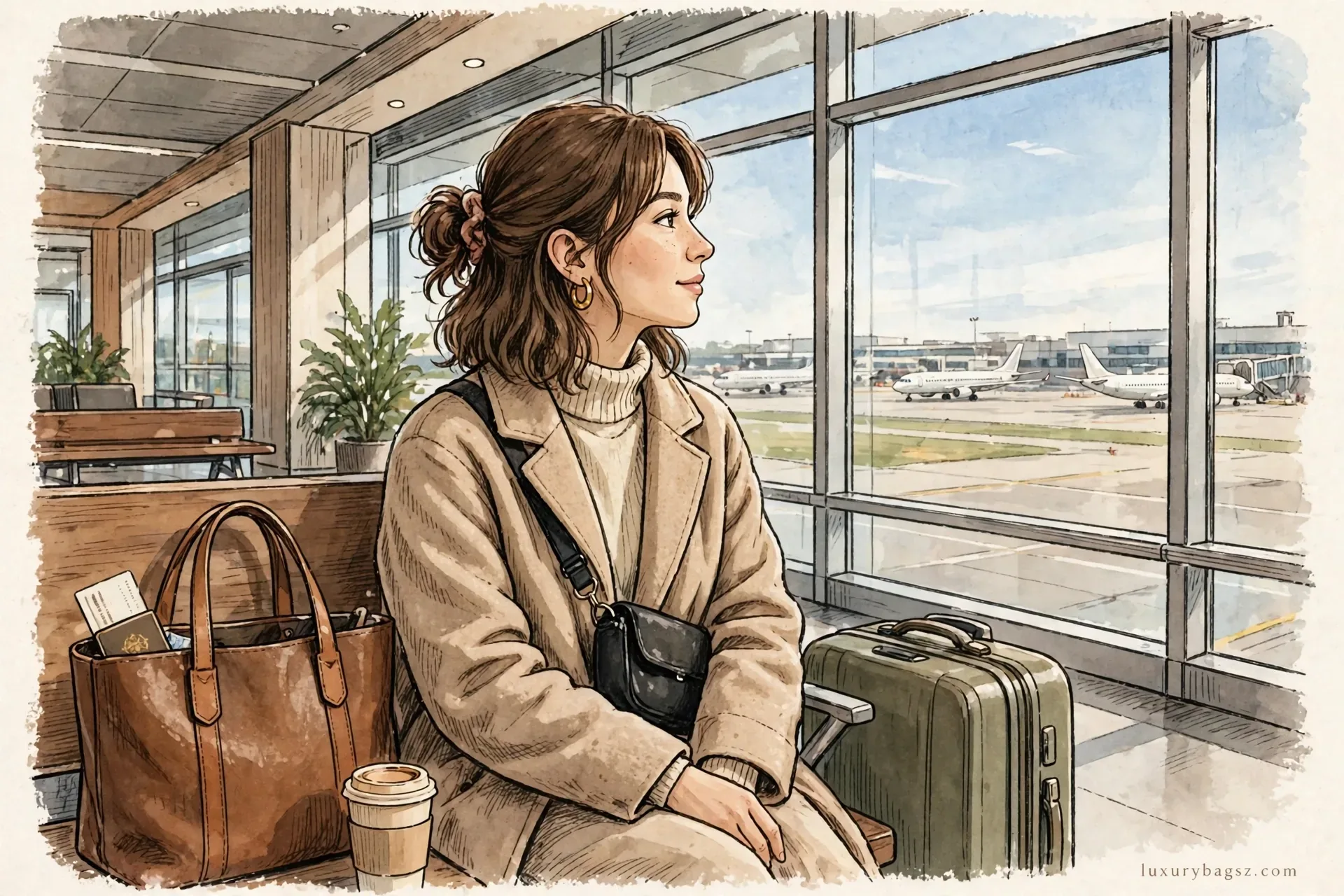
Travel Handbags in Brief: Light, Zipped and Easy to Carry
The best travel handbag is light before you pack it, closes with a zip, and can be worn across the body when your hands are busy. For most trips, that means a foldable nylon tote as your main bag, plus a small secure crossbody for sightseeing days. Skip open totes, heavy leather and bags with fiddly clasps when you travel. Airports, stations and crowded streets reward simple shapes, secure pockets and straps that stay put while you move.
Key Takeaways
- Choose a light bag with a full zip closure as your main travel handbag.
- A foldable tote, such as the Le Pliage style, works as both cabin bag and spare bag.
- Wear valuables in a crossbody kept at the front of your body in crowds.
- Nylon and coated canvas shrug off rain, spills and airport floors better than lambskin.
- Check personal-item size limits for your airline before you pack.
- Pack a small pouch system inside, so the bag stays organised at security.
What Makes a Handbag Good for Travel
Weight comes first. A leather tote that feels fine empty can become a burden once a laptop, a bottle and a book go inside, especially on long walks through terminals and old towns. Closure comes second. A full zip keeps your belongings inside when the bag goes through scanners, under seats and into overhead lockers, and it makes casual dipping much harder in crowds. Our Longchamp Le Pliage bag guide shows why foldable nylon became the traveller's default. It is light, roomy and forgiving, and it folds into a spare bag inside your suitcase. Finally, think about carry options. Top handles plus a long strap give you choices when one shoulder tires, and a strap that detaches makes the bag easier to pack flat.
Sizes: Personal Item, Day Bag and Weekender
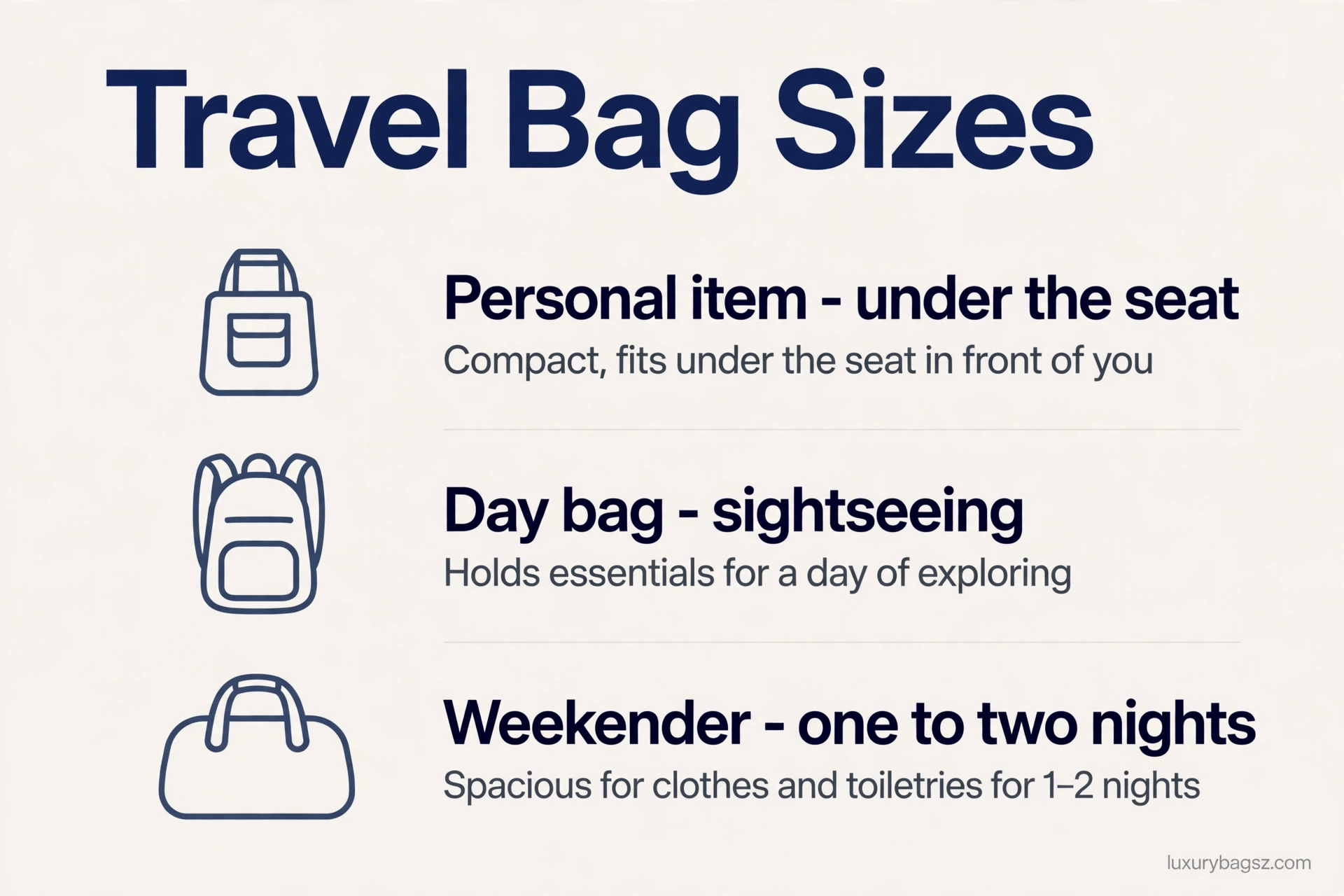
Personal-item bags sit under the seat and typically measure roughly 40 x 30 x 15 cm or less, though airlines vary. Always check your own airline's limits, since budget carriers are strictest. Day bags for sightseeing should hold a phone, a small wallet, sunglasses, sunscreen and a light layer. Anything larger invites overpacking, and your shoulders will pay for it by mid-afternoon. Weekender handbags bridge the gap for one or two nights. They hold a change of clothes, a wash bag and shoes, but they must still feel manageable when carried through a station. Measure your bag at home, including handles and wheels of contents pushed outwards. Soft bags bulge, and a bag that fits the sizer empty may fail it when fully packed.
The Best Main Bags for Flights
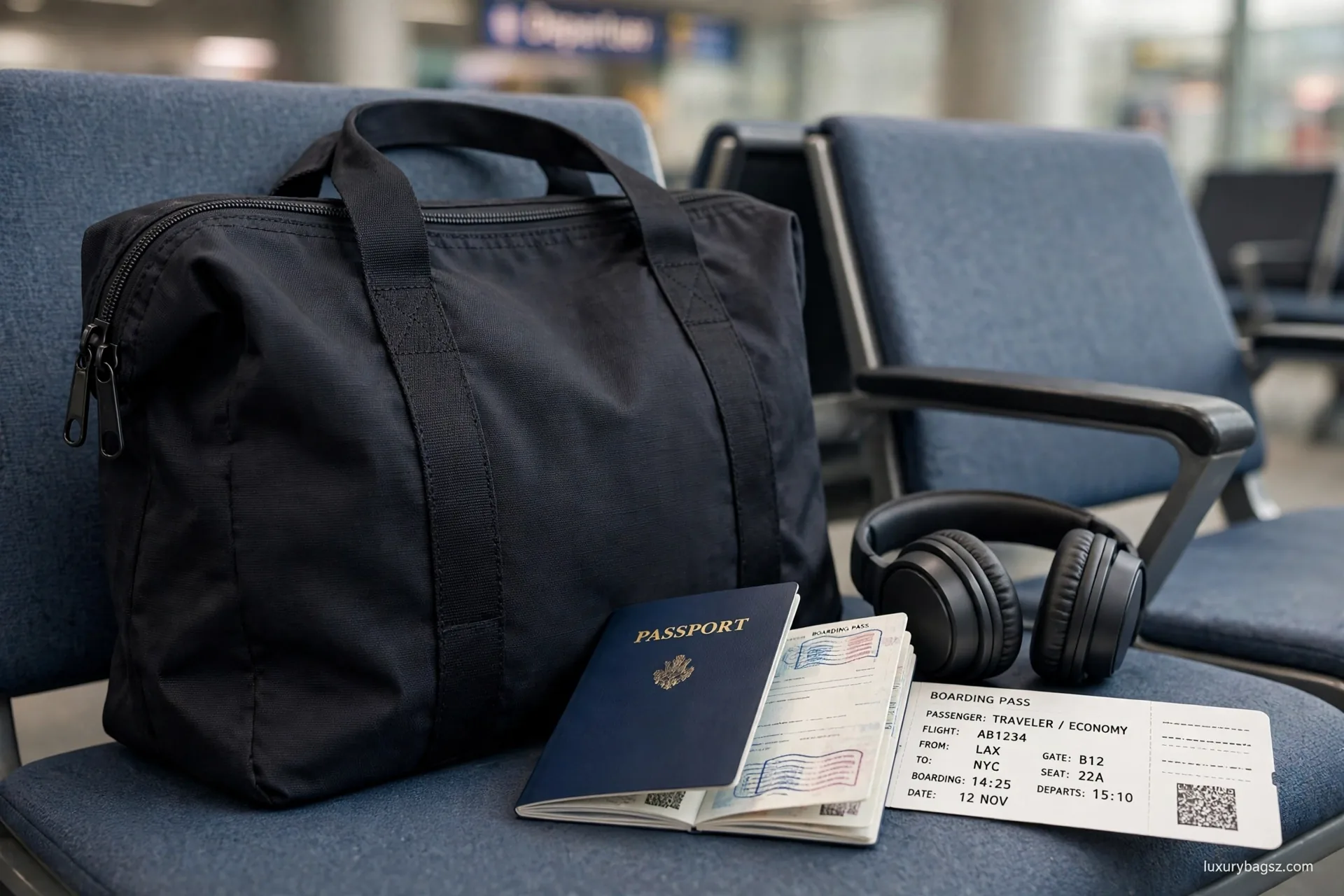
For cabin travel, a zipped nylon or coated canvas tote is hard to beat. It slides under seats, wipes clean after spills and weighs little, leaving your allowance for what you pack. Larger trips call for a proper travel bag alongside your handbag. Our Louis Vuitton Keepall guide covers that classic duffle format, which pairs well with a smaller personal-item handbag. The Neverfull style shows the appeal and the risk of the open tote. Our Louis Vuitton Neverfull sizes guide gives sizes, but for travel choose the zipped alternatives or add a zipped insert. Leather totes can work for business travel, where appearance matters and journeys are short. Choose grained leather, keep the load light, and expect to baby it more than nylon.
Crossbody Bags for Sightseeing Days
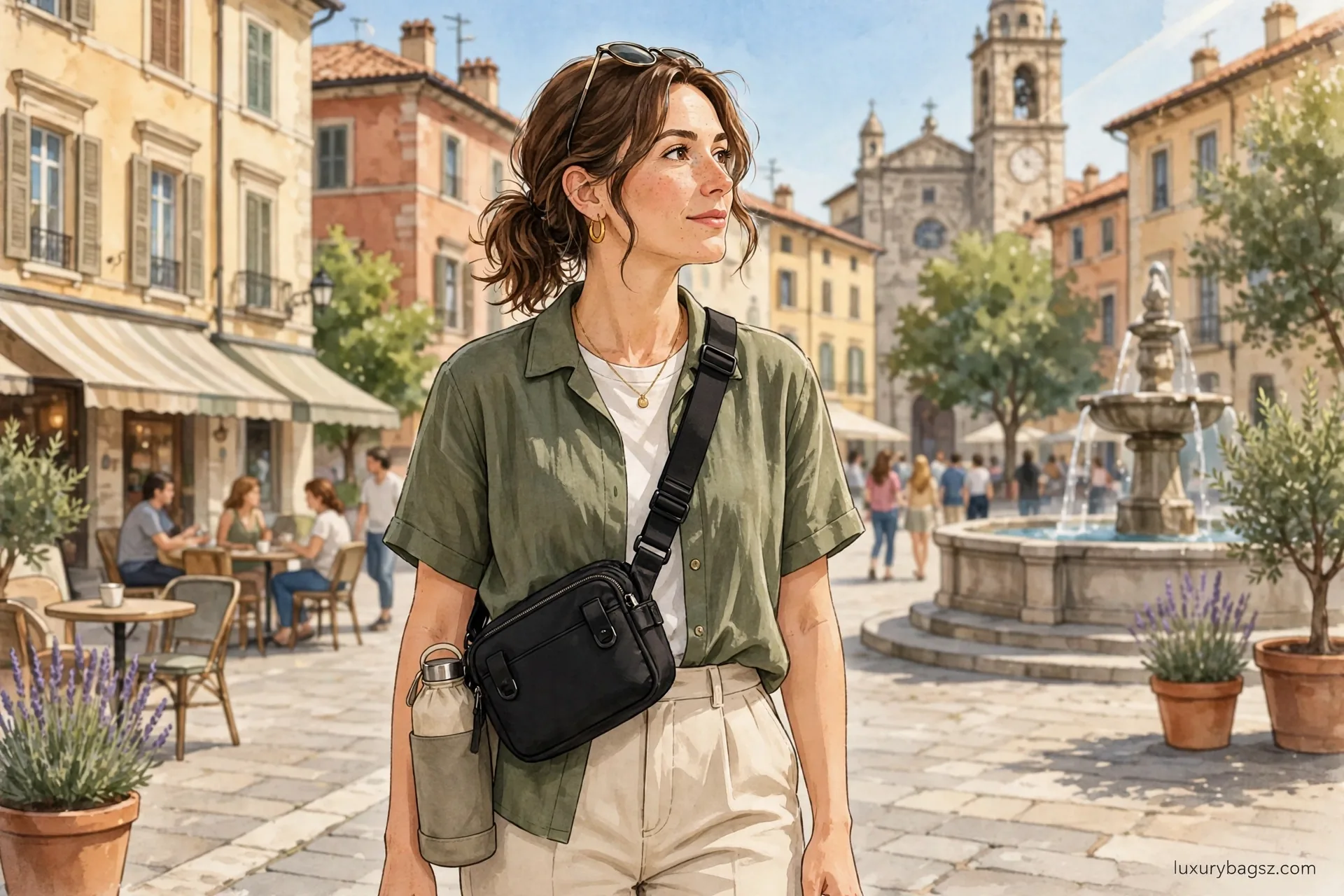
A crossbody is the safest sightseeing bag. Worn at the front, with a zip closure, it keeps your phone and cards close while your hands stay free for maps, cameras and gelato. Choose a medium size that lies flat against the body. Bulky bags swing, catch on turnstiles and invite bumping in crowds, while a flat profile moves with you. Look for an interior zip pocket for your passport or backup card, and keep only daily money in the easy-access part. Splitting valuables between pockets limits any loss. The Le Pliage family also offers small crossbody styles in the same light nylon. The video with this guide looks at the Le Pliage tote in detail, and its travel logic applies across the range.

Materials That Survive Travel
Nylon is the travel champion: light, rain-tolerant and easy to wipe clean. Dark colours hide airport grime, and leather trims keep the look polished rather than sporty. Coated canvas is the next best choice, resisting scratches and showers well. It weighs more than nylon but keeps its shape better, which suits smarter trips and work travel. Full leather looks best and ages well, but it shows rain spots and scuffs from security trays. If you travel with leather, choose grained finishes and pack a dust bag for protection. Our designer bags under $1500 guide includes several travel-friendly styles at sensible prices, since a travel bag should be used hard, not guarded nervously.
Security Habits That Protect Your Bag
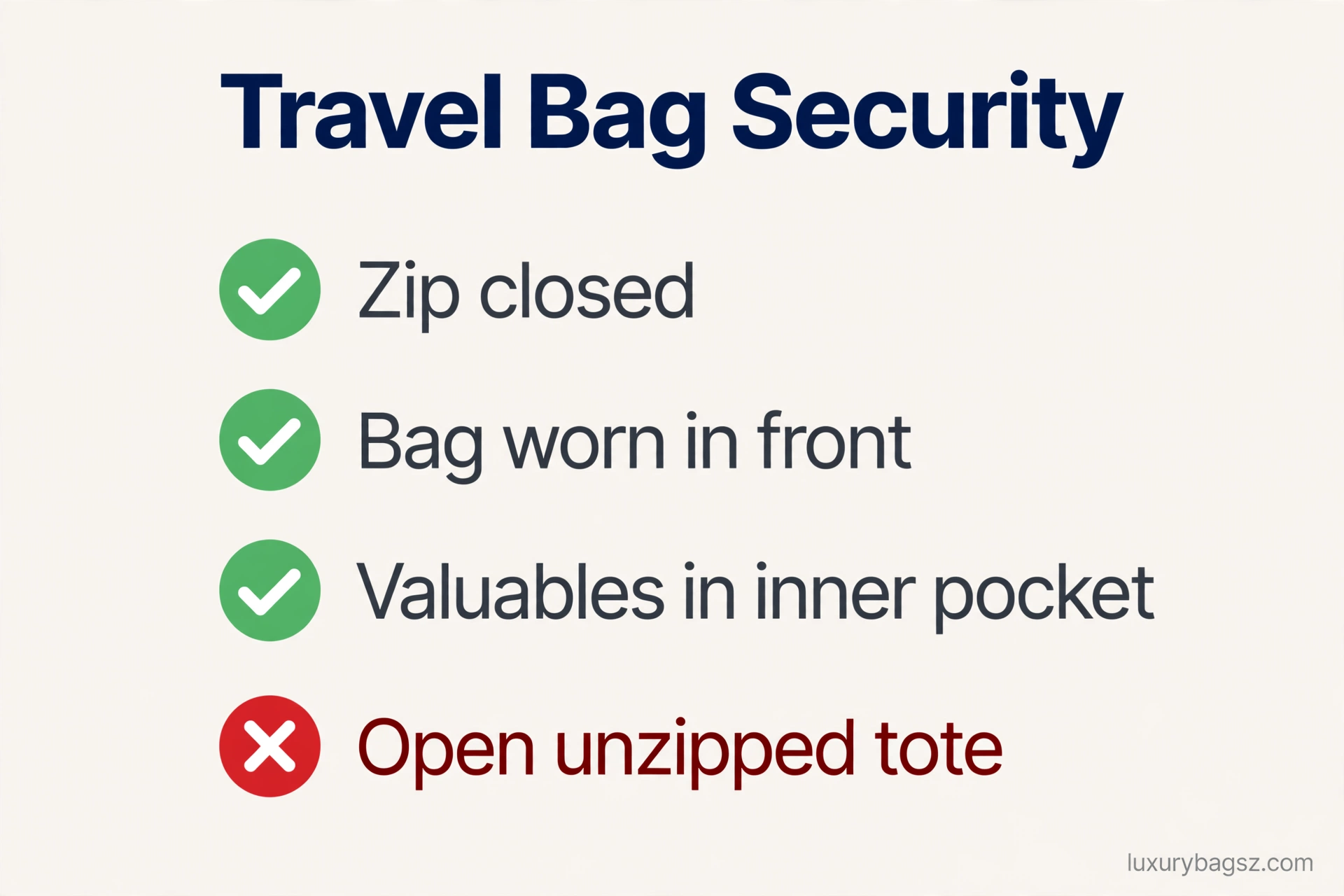
Keep the zip closed and the bag in front of you in queues, markets and public transport. Most travel theft is opportunistic, and a closed, front-worn bag removes the easy chance. Never hang your bag on the back of a café chair or leave it on the floor by your feet. Keep it on your lap, between your feet with a strap looped, or on your shoulder. Use hotel safes for spare cards and your passport when local rules allow you to carry a copy. Your day bag should hold only what that day genuinely needs. Photograph your bag and its contents list before you travel. If anything is lost or stolen, those records speed up insurance claims and replacement decisions considerably.
Packing and Caring for Travel Bags
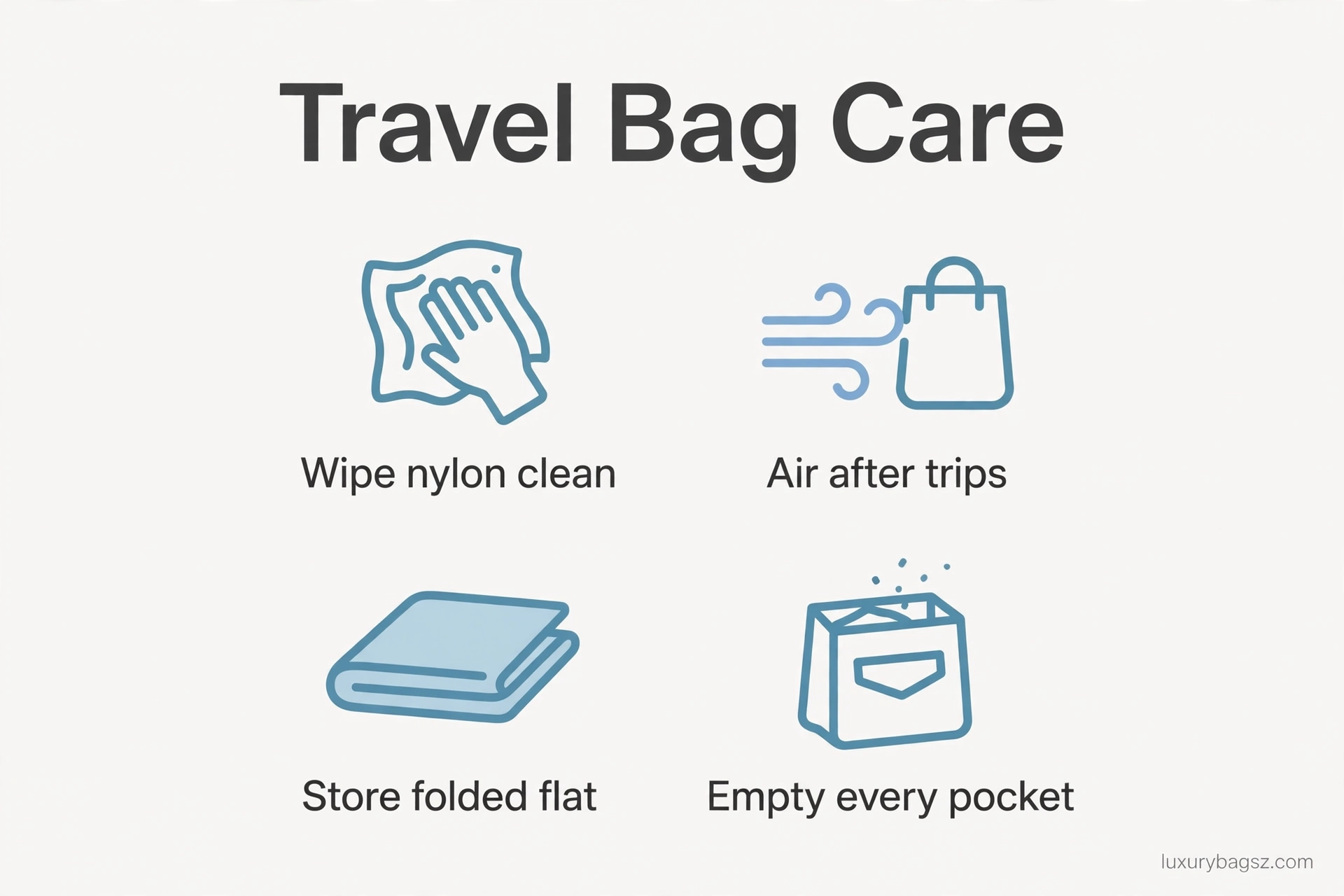
Pack in pouches: one for tech cables, one for liquids, one for small essentials. Pouches stop the frantic security rummage and make swapping bags at your destination simple. Our nylon bag care guide covers washing and stain care in full. In short, wipe spills promptly, air the bag after trips and store it clean. For foldable bags, store them folded only for short periods between trips. Long storage folded can set creases, so unpack, smooth the shape and store flat or lightly filled at home. Leather travel bags need a wipe with a soft, dry cloth after trips and a rest between uses. Rotating bags on longer tours gives each one time to air and recover its shape.
Building a Two-Bag Travel System
The simplest system pairs one zipped tote or weekender with one flat crossbody. The tote handles flights and transfers, while the crossbody handles every sightseeing day and evening. Choose both in the same colour family, so they look deliberate together. Black, navy or dark tan travel sets mix easily with most holiday wardrobes and hide wear well. Add one foldable spare inside your suitcase for shopping or beach days. It costs almost no space and saves buying a disposable bag at your destination. Test the full system on a day trip before a big holiday. You will quickly learn which strap length, pocket order and pouch layout actually works for the way you travel.
Frequently Asked Questions
What is the best handbag for travel?
A light, zipped nylon tote is the best all-round choice, paired with a small crossbody for sightseeing. The tote handles flights, while the crossbody keeps valuables secure in crowds.
Is an open tote safe for travel?
It is riskier than a zipped bag, since items can fall out and hands can dip in. If you use one, add a zipped insert or pouch for valuables and keep the bag closed against your body.
What size handbag counts as a personal item?
Limits vary by airline, but roughly 40 x 30 x 15 cm is common. Always check your airline's current rules, and remember that soft bags are measured when packed, bulges included.
Should I travel with a leather bag?
You can, especially for short business trips, but grained leather only. Nylon and coated canvas cope better with rain, spills, security trays and being placed on floors.
How do I keep my passport safe while sightseeing?
Carry it in an interior zip pocket of a front-worn crossbody, or leave it in the hotel safe where rules allow a copy. Never keep it loose in an open outer pocket.
Is the Longchamp Le Pliage good for travel?
Yes. It is light, roomy, zipped and foldable, which makes it a cabin bag, a day bag and a spare shopping bag in one. Leather versions look smarter but weigh more.
What should a sightseeing bag hold?
A phone, a small wallet, sunglasses, sunscreen, lip balm and a light layer at most. If you routinely carry more, your bag is too big for comfortable all-day walking.
How do I stop my bag being stolen in a café?
Keep it on your lap or between your feet with a strap looped around your leg or chair leg. Never hang it on the chair back or place it behind you out of sight.
Can a designer bag be a travel bag?
Yes, if it is light, zipped and made from nylon, coated canvas or grained leather. Delicate lambskin and open, heavy designs are better left for occasions at home.
How do I clean a travel bag after a trip?
Empty it fully, shake out crumbs, wipe nylon or canvas with a damp cloth, and air it before storing. Wipe leather with a soft, dry cloth and store it in its dust bag.
Conclusion: Travel Light, Zip Everything
A great travel handbag disappears into your trip: light on the shoulder, closed at the top and quick to organise at security. Build the simple two-bag system, tote plus crossbody, and most journeys become easier. Choose dark, forgiving materials, test the sizes against your airline's rules, and your handbag will work as hard as you holiday.






