Why Louis Vuitton Is Successful: Heritage, Craft and the No-Discount Rule
Why Louis Vuitton Succeeds at a Glance
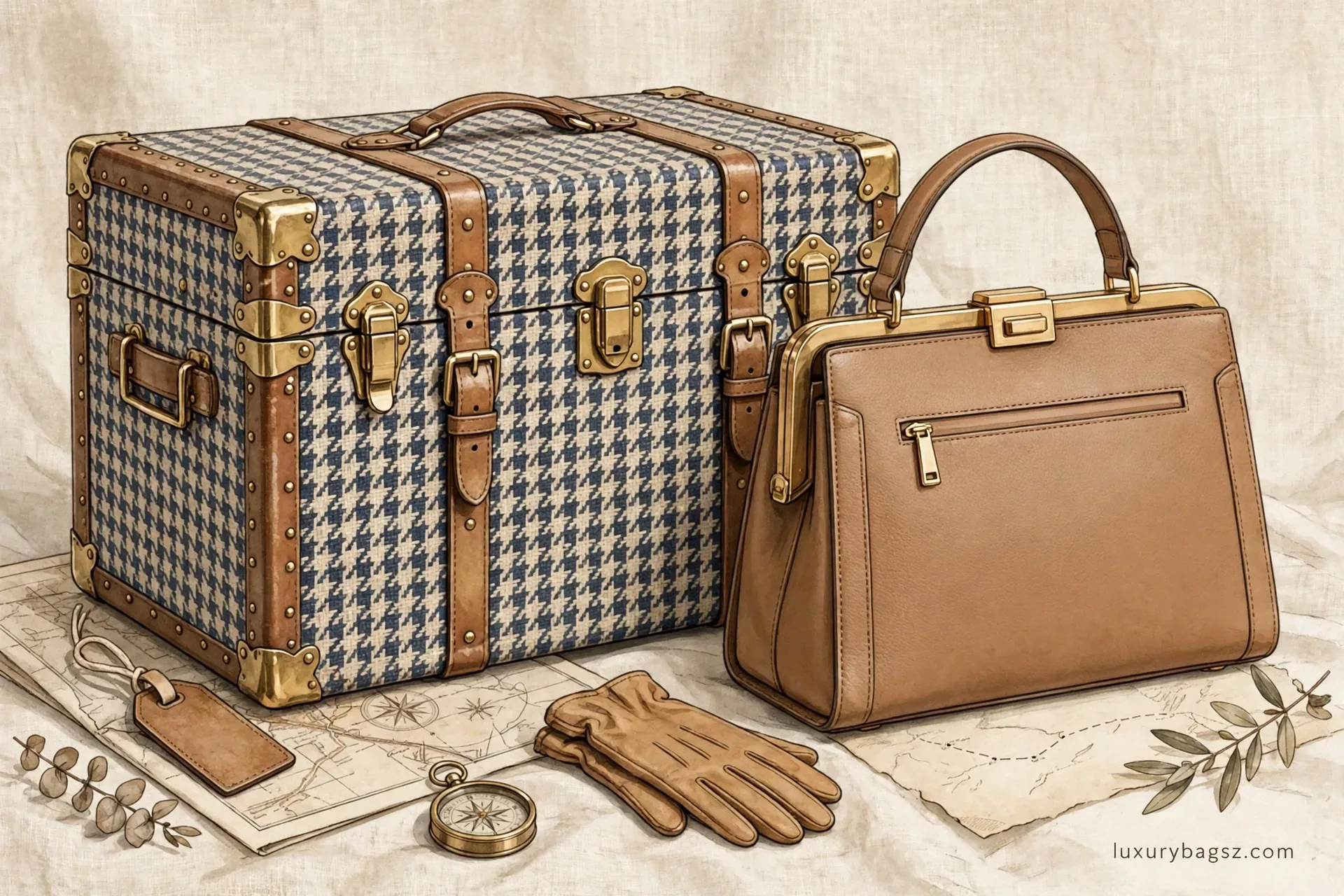
Louis Vuitton succeeds because it sells more than bags. It sells a story of travel, craft and status that has stayed consistent since 1854. That story, backed by tight control of stores and prices, keeps demand high.
The house began as a trunk maker in Paris. Its flat-topped, stackable trunks solved a real travel problem, and its canvas patterns later fought counterfeits. Over time, bags, ready-to-wear, shoes and watches joined the range without breaking that travel identity.
This guide explains the strategy in plain terms. It covers heritage, craft, pricing, stores, collaborations and risks. It also notes where popular claims are disputed, so you can judge the brand with clear eyes.
Key Takeaways

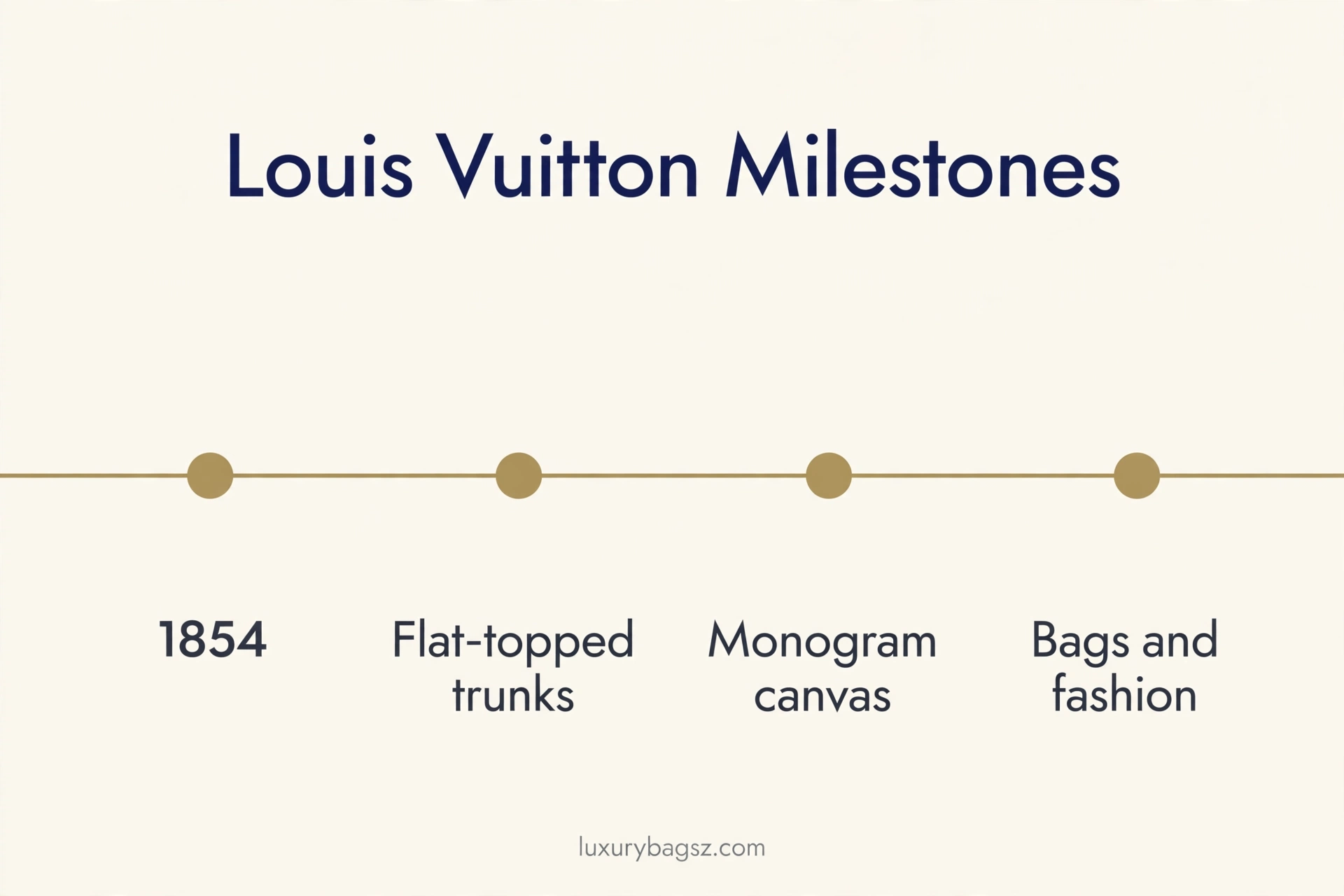
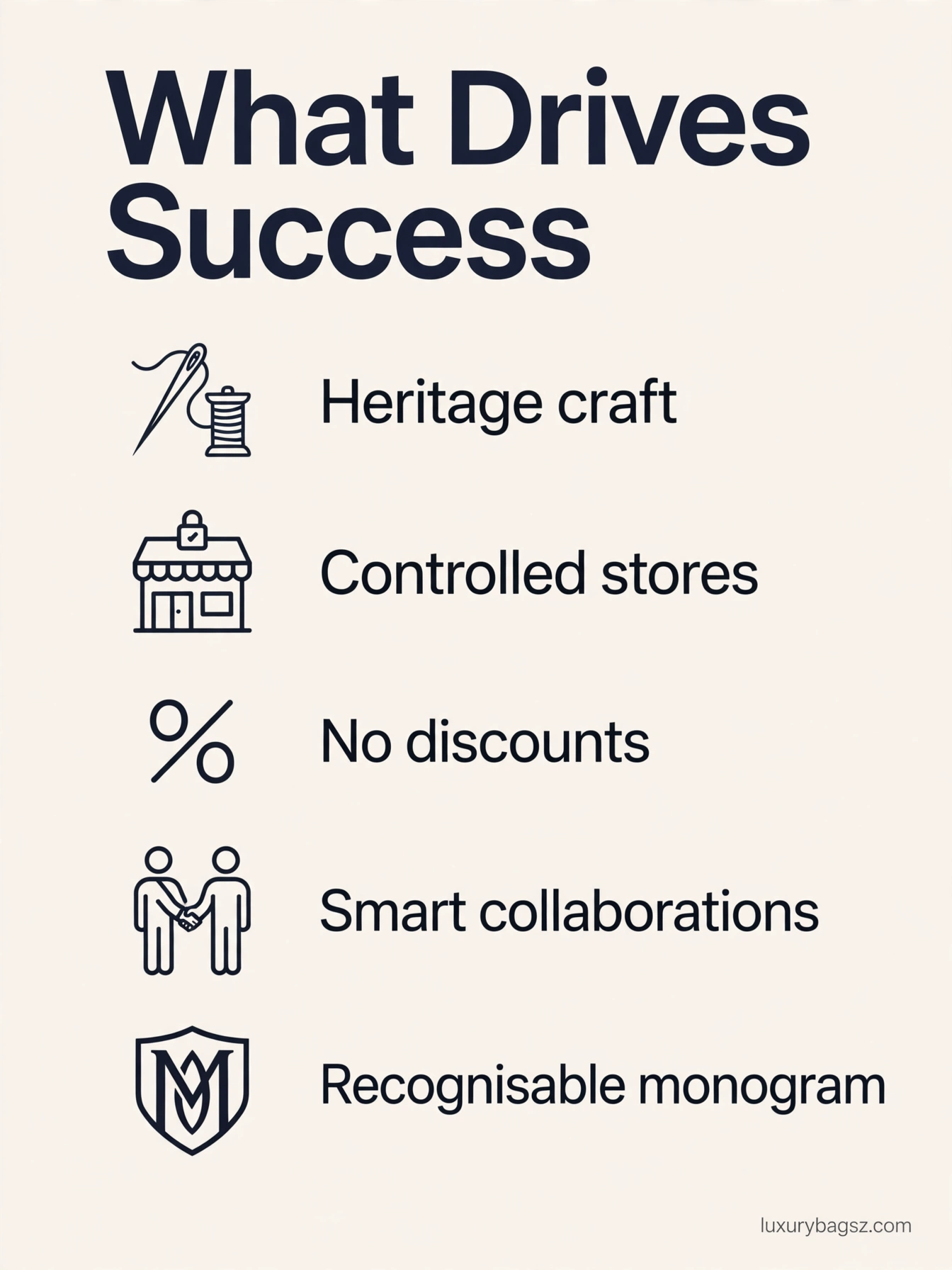
- Louis Vuitton began in 1854 as a Paris trunk workshop founded by Louis Vuitton.
- The flat-topped trunk and later the monogram canvas gave the house a practical edge and a recognisable mark.
- The brand avoids public sales and discounts, which protects perceived value and resale prices.
- Controlled, brand-owned stores let Louis Vuitton set prices, service and presentation worldwide.
- Collaborations with artists and designers keep a heritage house feeling current for new buyers.
A Practical Beginning in Travel
Louis Vuitton opened his Paris workshop in 1854, after years as a trunk maker and packer. Travel at the time meant long journeys by train and ship, with large wardrobes to protect. His flat-topped trunks stacked neatly, unlike rounded stagecoach trunks.
That practical edge mattered. Wealthy travellers, including Empress Eugénie, became clients, and the house gained a reputation for sturdy, well-made luggage. Lightweight, coated canvas replaced heavy leather on many trunks, adding durability.
The full brand story is told in the history of Louis Vuitton guide. The key point here is simple: success began with solving a customer problem, not with a logo. That problem-solving habit still shapes the house today.
The Monogram as Protection and Identity
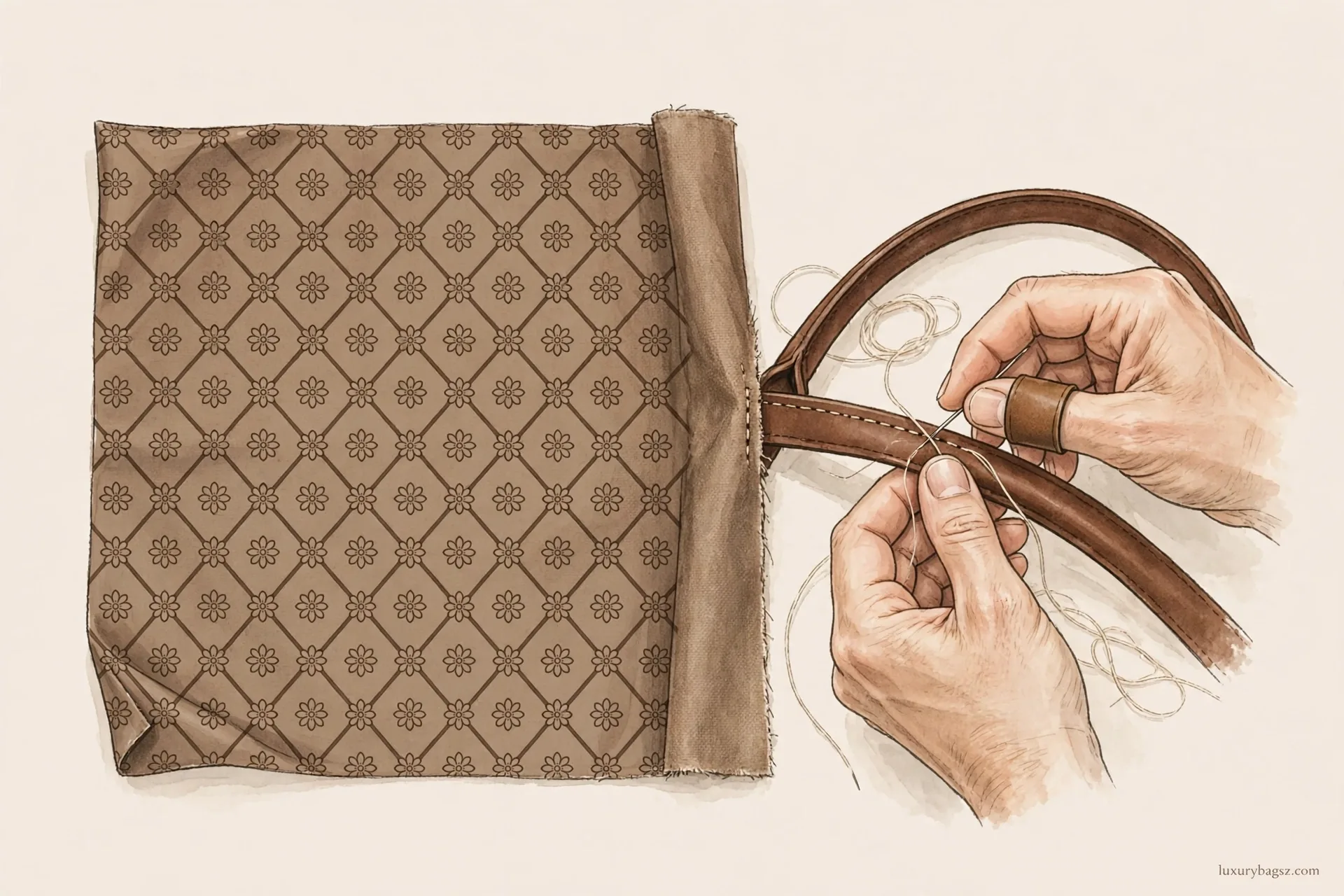
Counterfeits threatened the house almost from the start. In 1896, Georges Vuitton, son of the founder, introduced the monogram canvas. Its interlocking initials and floral motifs were hard to copy at the time, and they gave the brand a distinct look.
Over decades, that protective pattern became a luxury symbol in its own right. Today the monogram appears on bags, accessories and ready-to-wear, instantly signalling the house. The Louis Vuitton Monogram history guide traces its design and later versions.
This shift shows a wider lesson. A functional detail can become an identity if it is used consistently. Louis Vuitton kept the monogram central, while refreshing it through colour, material and collaboration.
From Luggage House to Fashion House
For much of its history, Louis Vuitton was mainly a luggage and leather-goods house. That changed in 1997, when Marc Jacobs became creative director and launched ready-to-wear. Shoes, clothing and accessories followed, turning the house into a full fashion brand.
Later creative leaders kept that momentum. Virgil Abloh brought streetwear energy to menswear, while Pharrell Williams later took the menswear role. Each era added new buyers without abandoning classic bags, which still anchor sales.
The Louis Vuitton brand guide covers bags, prices and buying checks in detail. For strategy, the point is balance: new ideas attract attention, while classic pieces protect revenue and trust.
Control of Stores, Prices and Service
Louis Vuitton sells mainly through its own stores and website, not through many outside retailers. This control lets the house set prices, train staff and present products in a consistent way worldwide. It also limits grey-market stock and confusion.
Pricing discipline is central. The house is famous for avoiding public sales, seasonal discounts and outlet stores. Unsold stock is reported to be destroyed rather than discounted, though the house rarely confirms exact practices. Treat that claim as widely reported, not officially proven in detail.
The effect is clear either way: buyers rarely wait for a sale, since none is expected. That habit protects both new prices and pre-owned values, which in turn makes a first purchase feel safer.
Classic Bags That Carry the Business
Classic bags remain the engine of the house. The Speedy, Neverfull and Keepall appear in many wardrobes because they are practical, recognisable and easy to style. Their coated canvas also suits daily use better than delicate leather for many buyers.
The Louis Vuitton Speedy sizes guide shows how one shape spans small to large, with different carrying options. That range helps the house serve first-time buyers and long-term collectors at once.
Entry pieces also matter. Small leather goods, belts and fragrances let younger buyers join the brand before they can afford a large bag. This ladder keeps the customer base growing across generations.
Collaborations That Refresh Heritage
Collaborations have kept Louis Vuitton current without breaking its identity. Takashi Murakami added playful colour to the monogram, Yayoi Kusama added dots, and Stephen Sprouse added graffiti lettering. Each project created urgency and press coverage.
Artist projects work because they respect the base product. A classic bag shape stays, while print or colour changes for a limited run. Collectors chase the limited version, while regular buyers still trust the classic version.
Celebrity and cultural links work the same way. Runway shows, music links and film placements keep the house visible to new audiences. The risk is overexposure, which the house manages through limited runs and high prices.
Risks and Honest Limits
Success does not mean perfection. High prices have pushed some buyers away, especially as costs rise faster than wages in many markets. Saturation is another risk: when a monogram is everywhere, it can feel less special.
Sustainability claims also draw scrutiny. Coated canvas is durable, yet luxury production still uses resources and global shipping. Buyers who care about ethics should check materials, repair options and pre-owned routes before buying.
Counterfeits remain a constant threat, despite legal action and authentication checks. Buying from official stores or trusted pre-owned sellers, with proof and checks, remains the safest route for any high-value piece.
Scale Without Discounting: The Money Behind the Myth
The commercial results are the strategy’s report card. LVMH does not publish Louis Vuitton’s own revenue, yet analysts who model the group consistently estimate the single brand’s sales at comfortably above twenty billion euros a year, which would make one label larger than most entire luxury groups.
That scale funds everything else in this article: the landmark stores, the artist collaborations, the shows that function as global advertising. Success compounds, because the biggest brand can outspend rivals on the very visibility that keeps it biggest.
Scale also explains the discipline. A brand selling at this volume through its own stores does not need wholesale partners, seasonal clearances or outlet channels to move stock. Each refusal that looks like snobbery from outside is, from inside, simply what the numbers allow.
The honest caveat belongs here too: recent group reporting has shown softer fashion and leather-goods demand in some markets as economic conditions cooled, a reminder that even the strongest luxury engine cycles with the wider economy rather than floating above it.
Repair and Aftercare: Keeping Bags in Service for Decades
An under-discussed pillar of the model is what happens after the sale. Louis Vuitton offers repair services for its bags and luggage, replacing handles, zips, linings and hardware, and many pieces return to use for decades. A house willing to mend a thirty-year-old bag is making a statement about what its products are.
Repairability feeds the whole system. It strengthens resale, because a worn classic can be refreshed rather than retired. It builds loyalty, because the store relationship continues long after purchase. And it quietly justifies new prices: durability you can service is a different promise from durability you must simply trust.
Pre-owned buyers benefit directly, and should ask about repair history and future eligibility when judging a piece. A bag the house will still service carries a practical advantage no photograph shows, and it is one reason the classic shapes hold their following generation after generation.
Flagships, Exhibitions and the Store as Theatre
Louis Vuitton treats its biggest stores as cultural buildings, not shops with stock. Flagships commission art, host exhibitions and anchor entire shopping districts, so that visiting the store is an experience people describe to others. The marketing budget hides inside the architecture.
Travelling exhibitions of the house’s trunks and collaborations extend the same idea beyond retail: they teach the heritage story to audiences who may not buy for years, planting the brand early. Museums and galleries lend authority that advertising cannot purchase outright.
For the strategy, the lesson is patience. Louis Vuitton invests in being famous and respected at a level below conscious shopping, so that when a buyer finally can afford a bag, the choice feels pre-made. Few brands can afford that timescale; fewer still sustain it for over a century.
Craft as Evidence: Workshops and Skilled Hands
Strategy claims need physical proof, and the proof is the making. The house produces through its own workshops, with trained artisans cutting, assembling and finishing bags whose stitching, edge painting and hardware fitting are checked piece by piece. Consistency across thousands of bags, year after year, is the craft claim that actually matters commercially.
Honesty requires a footnote the marketing skips: modern production blends hand skill with machine assistance, as it does across the industry, and workshop locations span several countries rather than one romantic Paris atelier. Buyers should value the verifiable part, which is quality control tight enough that two Speedys bought a decade apart feel like the same product.
That consistency is itself a success factor. A customer replacing a worn bag, or a pre-owned buyer comparing generations, meets the standard they remember. Brands that let quality wander spend their marketing rebuilding trust; Louis Vuitton spends its repeating a promise it keeps.
Digital Reach on Its Own Terms
The house was not the fastest luxury brand online, but it arrived on its own terms: e-commerce runs through its own website, shows are streamed globally, and social channels present campaigns with the same control the stores exercise over shelves. Nothing appears in a discount aggregator, ever.
Digital reach solves the brand’s oldest tension, between visibility and exclusivity. Millions can watch a show, follow a launch and learn the codes, while the purchase itself stays gated by price and channel. Desire is broadcast; access is not.
Younger buyers meet the brand here first, often years before their first purchase, which connects this pillar back to the entry-product ladder: the audience is built long before the wallet is. In strategy terms, the internet became Louis Vuitton’s largest shop window and its strictest door at the same time.
The Pre-Owned Market as a Free Sales Force
A striking modern pillar is one the house does not run: the resale market. Classic Louis Vuitton bags circulate heavily on pre-owned platforms, where the best shapes hold strong prices, and every one of those listings advertises the brand to a new owner at no cost to the house.
Strong resale changes the psychology of buying new. A customer paying full price in store knows the piece is not worthless the day it leaves, which lowers the perceived risk of the purchase more effectively than any discount could, and without the damage discounts do.
Resale also recruits. Many collectors start with a pre-owned Speedy, learn the quality first-hand, and trade up to new pieces later. The second-hand market, often framed as luxury’s enemy, functions for this brand as its widest showroom and its quietest recruitment office.
The condition is discipline: resale strength exists only because supply, pricing and quality were controlled for decades first. It is a dividend paid on every earlier pillar in this article, not a strategy a new brand can switch on.
Two Creative Engines: Stability in Womenswear, Stars in Menswear
The house runs its two fashion lines on deliberately different clocks. Womenswear has enjoyed long creative stability, with Nicolas Ghesquière in place since 2013, building a recognisable silhouette season after season. Menswear has rotated through headline names, from Virgil Abloh to Pharrell Williams, each arrival itself a global news event.
The split is strategic. Stability in the larger, bag-carrying business protects the classics and the customers who fund the house. Star rotation in menswear manufactures cultural moments, recruits young male buyers, and generates the street energy that the collaborations chapter described.
Crucially, neither engine is allowed to endanger the centre. Creative directors change prints, proportions and shows; the monogram, the classic shapes and the pricing discipline stay untouched. Designers work inside a frame the brand owns, which is why the house survives its stars, and even grows through replacing them.
Frequently Asked Questions
1. When was Louis Vuitton founded? Louis Vuitton founded his Paris trunk workshop in 1854. The house grew from luggage into leather goods, fashion, shoes, watches and more over the following century.
2. Why does Louis Vuitton never go on sale? Avoiding sales protects perceived value. If buyers expect a discount, they wait, and resale prices fall. A no-discount stance keeps both new and pre-owned prices steadier.
3. What is the monogram canvas? It is a coated canvas pattern introduced in 1896, with interlocking LV initials and floral motifs. It began as an anti-counterfeit design and became the house's most famous mark.
4. Who owns Louis Vuitton? Louis Vuitton is part of LVMH, the luxury group formed by the merger of Moët Hennessy and Louis Vuitton in 1987. Bernard Arnault leads LVMH as chairman and chief executive.
5. Why are Louis Vuitton bags so expensive? Prices reflect brand value, controlled distribution, craft, materials and marketing, not material cost alone. Buyers also pay for status, service and expected resale strength.
6. Do Louis Vuitton bags hold their value? Classic styles often hold value well on the pre-owned market, though results vary by style, condition and colour. No bag should be bought purely as a guaranteed investment.
7. What was Marc Jacobs' role? Marc Jacobs became creative director in 1997 and launched ready-to-wear for the house. His tenure helped turn a luggage house into a full fashion brand.
8. Does Louis Vuitton destroy unsold stock? That practice is widely reported, but the house does not publish full details. Treat it as a reported policy rather than a confirmed, quantified fact.
9. Which Louis Vuitton bag should a first buyer choose? A Speedy or Neverfull suits many first buyers for size, durability and resale. Check sizes in person, since canvas bags feel different from leather bags in daily use.
10. Is Louis Vuitton still growing? LVMH reports group revenue, not Louis Vuitton alone, so exact brand sales are estimates. Recent group reports show fashion sales facing softer demand in some markets, a normal cycle for luxury.
Final Verdict: Control, Craft and Consistency
Louis Vuitton succeeds through a rare mix: a true travel heritage, a recognisable mark, tight store and price control, and collaborations that refresh without confusion. Each part supports the others.
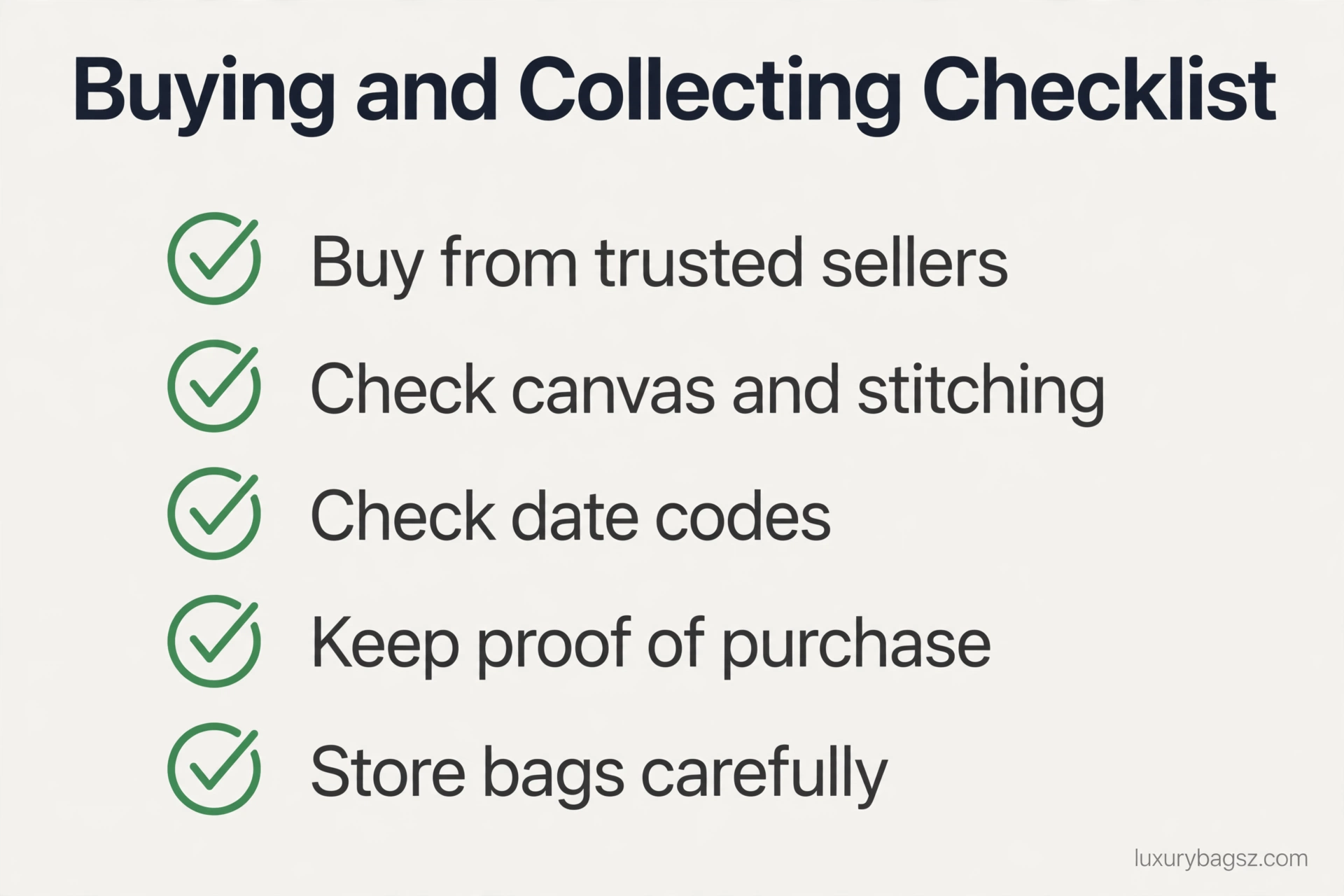
For buyers, the lesson is practical. Choose a classic shape, buy from a trusted source, and care for it well. That approach captures the best of the brand, without chasing every limited release.