

Festive Party Dresses: The Formula That Works for Every Event
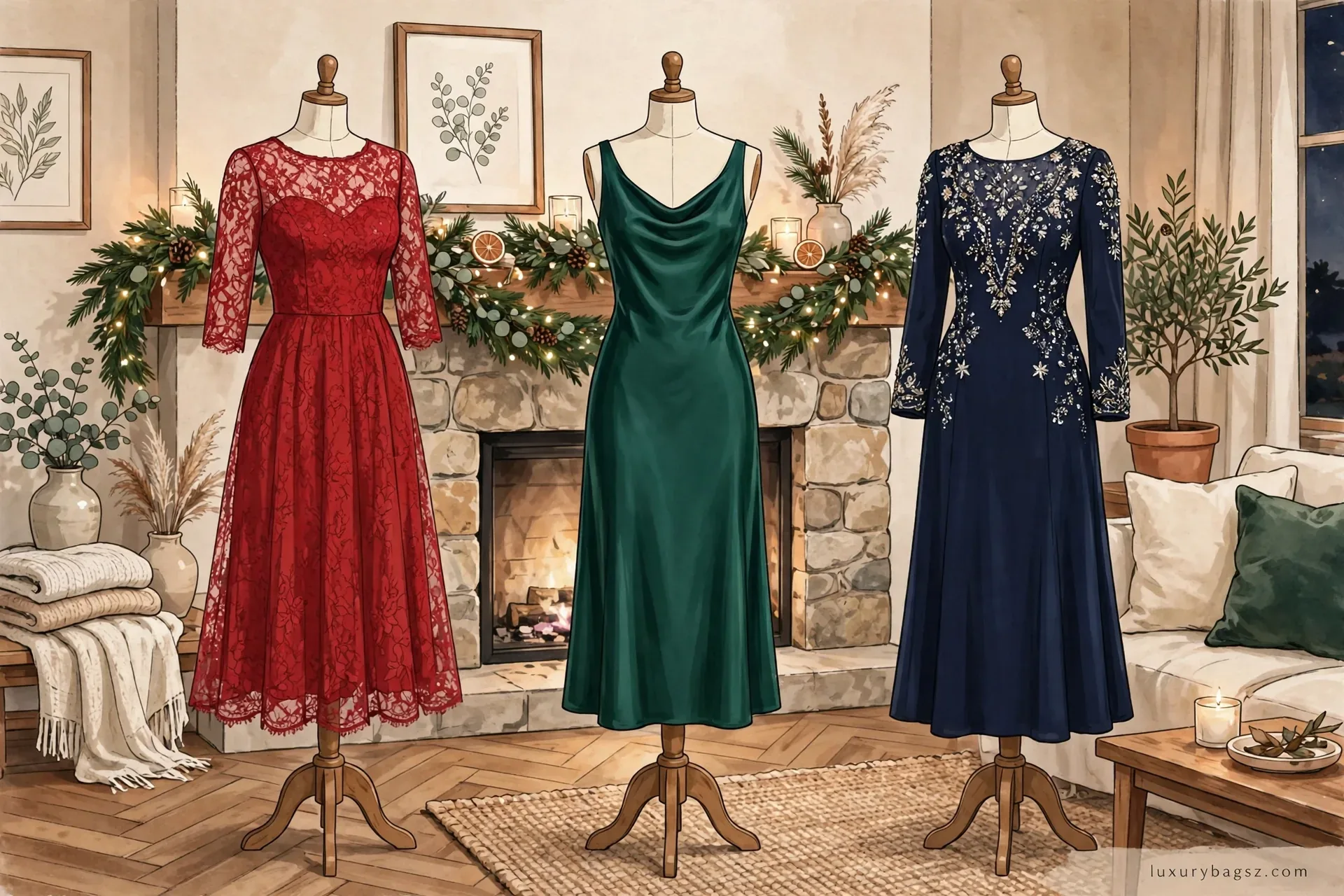
The Festive Formula: Four Decisions, Every Event Sorted
Every festive party dress that works follows the same formula: one rich colour, one source of shine, one forgiving shape, one finishing piece. Get those four right and the same dress covers the office party, the family dinner and the drinks night without looking repeated. The formula beats buying per event. Most people face four to six festive occasions in a season; one excellent dress, restyled, outperforms five anxious purchases — and it is already hanging in your wardrobe when the surprise invitation lands.
Key Takeaways
- Formula first: rich colour, one shine source, forgiving shape, one finishing piece.
- Velvet, satin and crepe repeat best; full sequin is a headline, not a workhorse.
- Red, emerald, burgundy and navy carry the season; black is the safe base.
- Shapes with room at the waist survive long dinners and second helpings gracefully.
- Restyle with shoes, bag and hair — the dress stays, the frame changes.
- Buy in October or November; by mid-December the good sizes are gone.
Why a Formula Beats a Shopping Spree
Festive invitations arrive in a rush and expire fast, which is exactly how wardrobes fill with dresses worn once. A formula turns the season into one decision made calmly, then repeated with variations. It also travels across years. A dress chosen by formula — right colour, right shine, kind shape — does not depend on this season's trend, so it returns next December without looking dated. Start by naming your actual season: list the events you truly expect. Two dinners and a drinks night need a different dress from a ball and three office parties, and honesty here saves real money. The formula also protects your mornings after. A dress that needs no apology, no emergency steaming and no special underwear is a dress you will reach for gladly when the third invitation of the week arrives.
The Four Steps, In Order
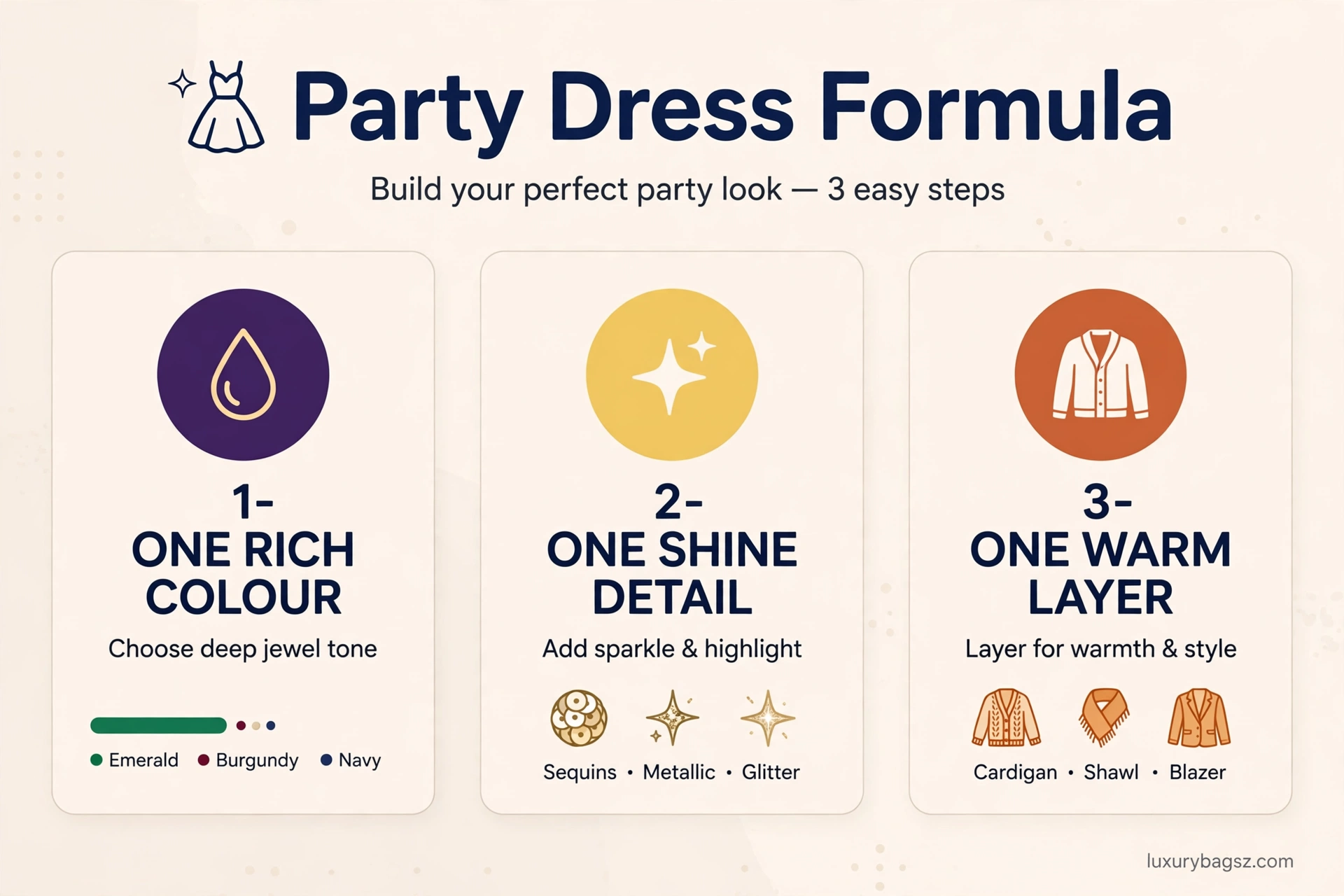
Step one, colour: pick from the rich end of the palette — red, emerald, burgundy, navy, deep plum. These shades look festive under warm indoor light and flatter winter skin. Step two, shine: choose exactly one source. It might be the fabric itself, a metallic shoe, a jewelled bag or statement earrings. Two sources compete; three become costume. Step three, shape: forgiving at the waist — wrap, A-line, fit-and-flare or a column with stretch. Step four, the finish: the bag, shoe or hair detail that makes this wearing different from the last one.
Fabrics That Repeat Well
Velvet is the season's workhorse: warm, rich in colour, kind to every body, and happy at a pub lunch or a smart dinner. It is the fabric to buy if you buy only one festive dress. Satin is the glow option — fluid, light-catching and elegant — but it shows marks and needs care between wears. Crepe is the understated professional: matte, fluid and endlessly restylable. Sequin is the headline act. Wonderful for the biggest night of the season, harder to repeat at the following week's dinner, which is why it sits after the workhorses in this order. Knit dresses deserve an honourable mention for home-based events. A fine ribbed knit in a jewel colour with metallic thread somewhere in the mix is warm, comfortable and quietly festive.
Dressing the Formula Up and Down
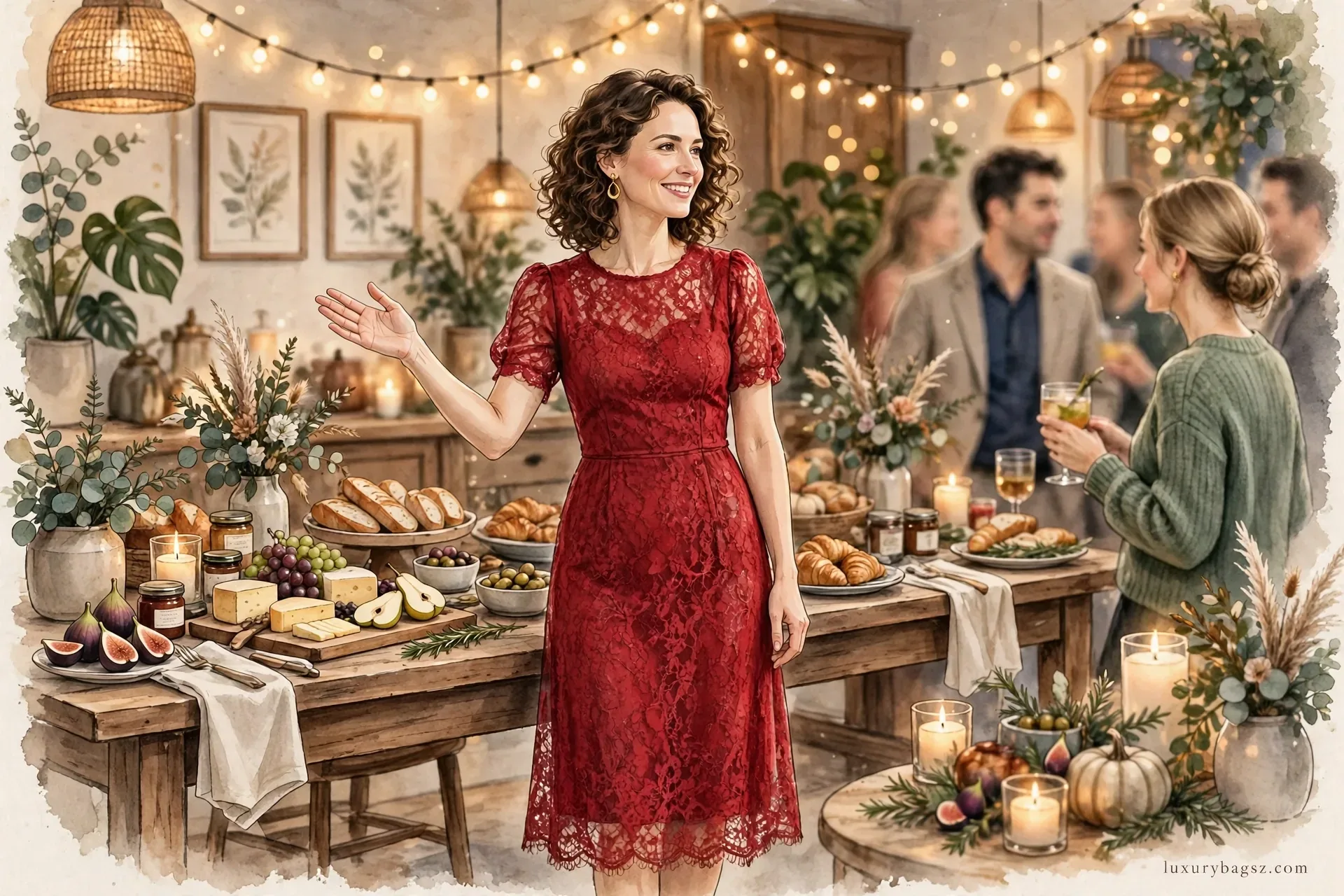
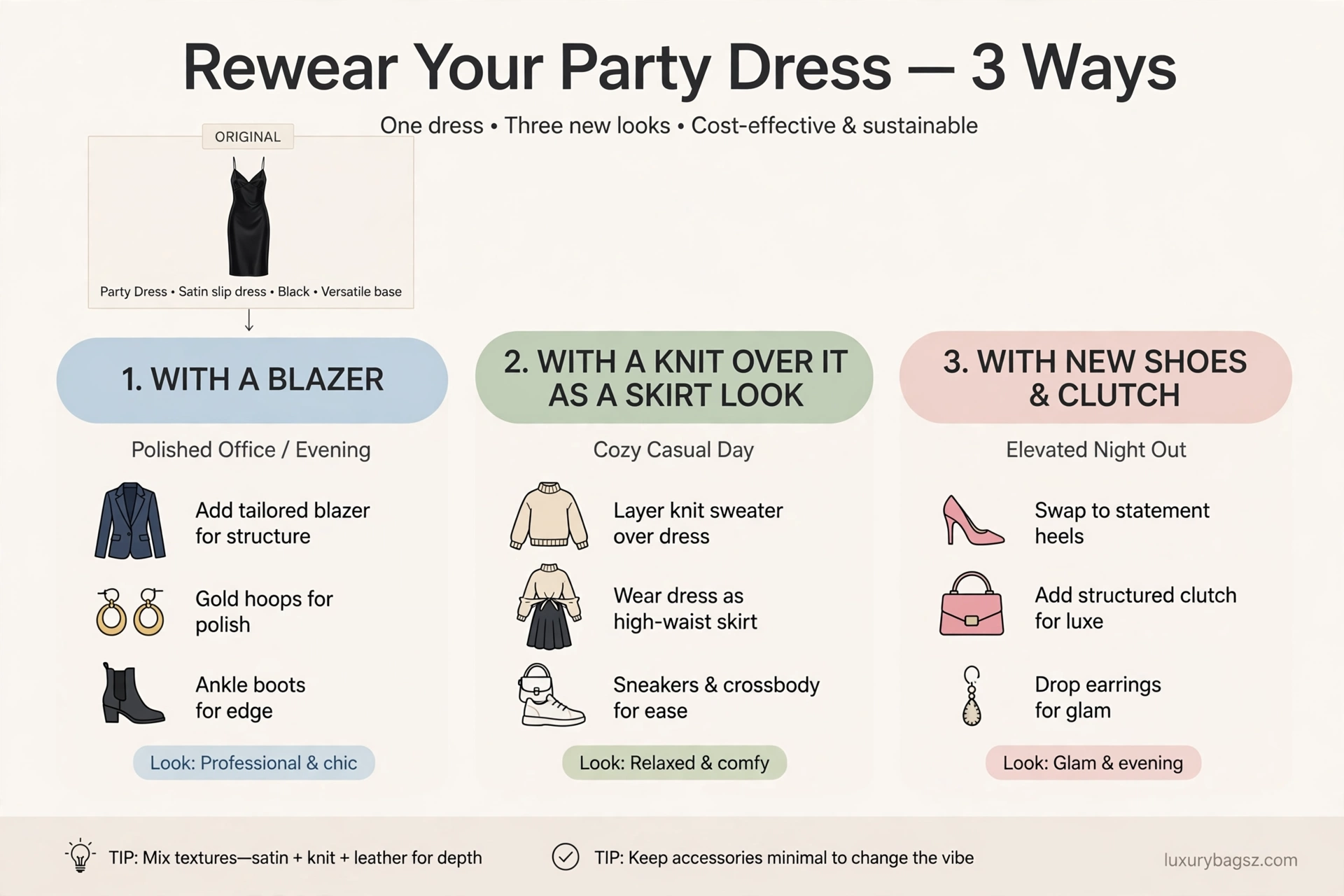
The same dress moves two dress codes in either direction with accessories. Heels and a clutch raise it; flat boots and a fine knit worn over it lower it into family-lunch territory. Bags do heavy lifting here: a small structured clutch from the edit of designer party bags reads as evening, while a soft shoulder bag reads as daytime. Hair and make-up are the cheapest restyle of all. A dress seen with loose hair and soft make-up in week one reads entirely differently with a sleek bun and a red lip in week three. Layers restyle too. A cropped jacket, a fine cardigan with jewel buttons or a scarf at the neck changes the neckline story of a dress, which is the part photographs actually remember.

Matching the Dress to the Event
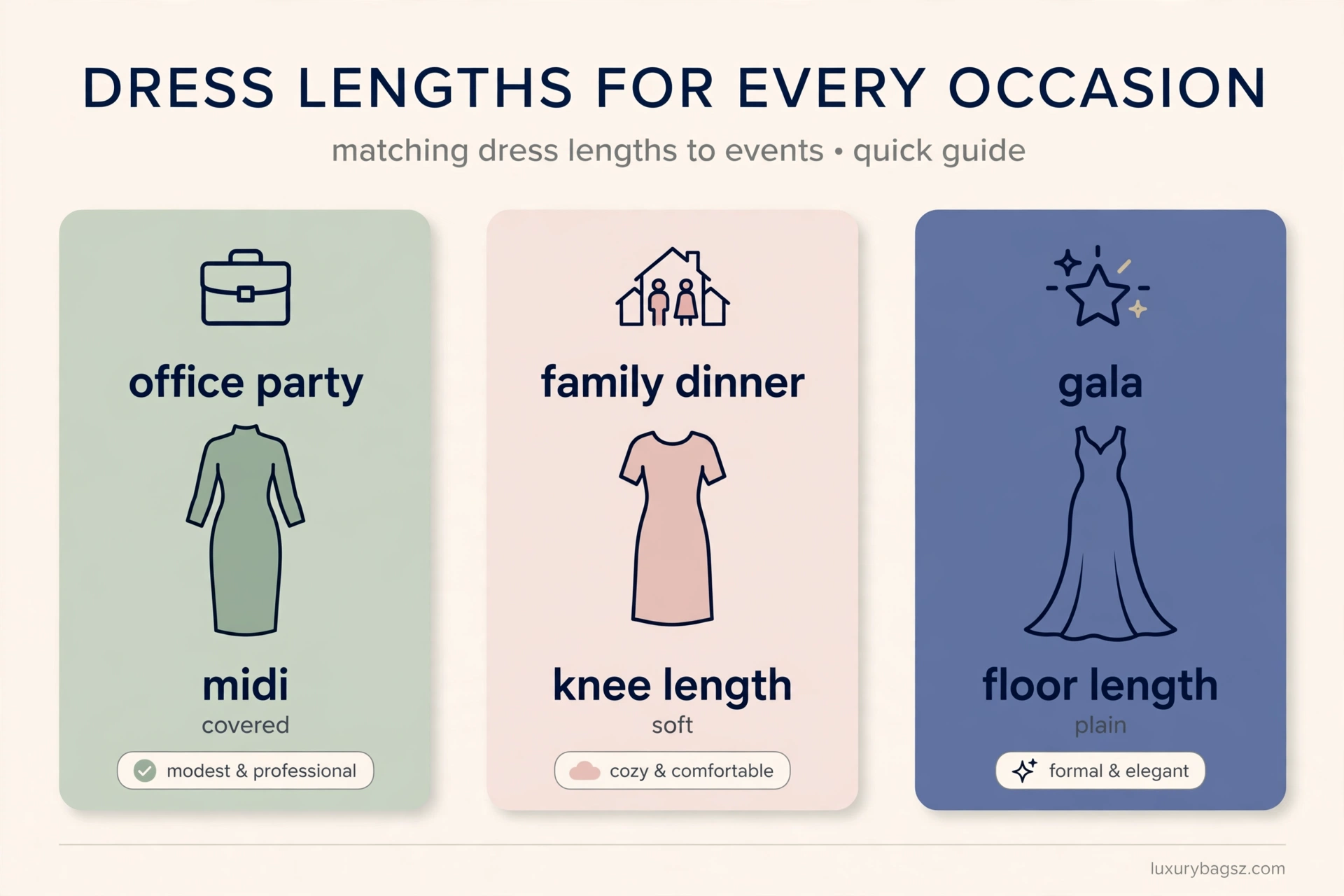
Office parties ask for the covered version: sleeves or a layer, a hem at the knee, shine kept to accessories. You will see these people on Monday; dress like it. Dinners want comfort engineered in — a waist that forgives a full meal and a fabric that survives four hours in a chair. Drinks nights and parties are where shine can lead. The season's finale has its own rules, covered in our guide to designer party dresses for New Year's Eve, where the formula gets its most glamorous outing.
Hosting, Guesting and Photographs
If you are hosting, choose the dress you can cook, answer doors and bend to an oven in. An apron over satin is a real strategy; velvet with sleeves rolled is another, and both beat a dress that needs babysitting. As a guest at someone's home, comfort and warmth matter more than impact: houses run colder than venues, and you may be sitting on a sofa arm by pudding. Photographs favour saturated colour and a defined waist. Pale, shiny fabrics under flash can wash a whole outfit out, so test your dress in one flash photo at home before the big night. Seating is the last hosting detail: dresses with very full skirts need chairs, not benches, and strapless dresses plus low sofas are a combination nobody enjoys. Choose for the room you will actually be in.

Prices, Timing and the Rewear Ledger
Expect typical festive designer dresses from around £140 to £500, with velvet and crepe in the middle of the band and sequin or silk at the top. Buy between October and mid-November for full size ranges. Judge cost by the season's ledger: a £260 dress worn five times costs £52 a wear and falling. The £90 panic buy worn once is the expensive dress in the wardrobe. Care between wears decides whether the ledger keeps improving; the routine in how to care for designer clothing keeps velvet pile and satin sheen alive across seasons.
The Two-Dress Season, If You Want One
Most seasons need one dress. If yours is heavy — six or more events, overlapping circles — add a second in a different colour and shine level: velvet for dinners, satin or sequin for parties. Keep the two in different families so restyling never blurs them into one memory. Emerald velvet plus black satin covers almost every invitation ever printed. Whichever you buy, keep the receipts of your own season: note what you wore where. Next December's calmest shopping trip starts with that list, not with a panic scroll. And if the season turns out quieter than expected, nothing is wasted. A formula dress waits well; it is the trend-led panic buys that expire before their second outing.
Frequently Asked Questions
What makes a dress read as festive?
Rich colour, a touch of shine and fabrics with depth — velvet, satin, crepe. Add warm indoor light and the combination reads as celebration without any novelty extras.
Can one dress really cover a whole season?
Yes, if it is a classic shape in a rich colour and you restyle the frame: shoes, bag, hair and jewellery. Most guests remember the overall impression, not repeat dresses.
Which colour is most versatile for festive events?
Burgundy and navy repeat best across dinners, offices and parties. Red is the most joyful; emerald is the most photographed. Black works everywhere with the right shine added.
Is it acceptable to rewear a dress to events with the same people?
Completely — and increasingly normal. Restyle it clearly, own it calmly, and remember that a great dress seen twice beats a mediocre new one every single time.
What fabric suits a long sit-down dinner?
Velvet or crepe with a forgiving waist — wrap, A-line or fit-and-flare cuts. Avoid tight satin and anything that needs adjusting each time you stand up.
How much shine is too much?
When the dress, shoes, bag and earrings all shine at once. One source is elegant, two can work if one is quiet, three tips the outfit into fancy dress.
When do festive dresses sell out?
The best sizes in popular colours move from late November. Shopping in October or early November gives full choice; January sales are for next year's dress, bought calmly.
What shoes work with most festive dresses?
A metallic or black heeled sandal, a court shoe in a matching depth, or dressy flat boots for home events. Buy the shoe that suits your most formal expected event.
Can a festive dress be worn outside the season?
Yes: a burgundy velvet dress works at winter weddings and dinners until spring, and a black satin dress is an all-year evening piece once the festive styling comes off.
How do I store a festive dress until next year?
Clean or air it properly, store in a cloth bag away from light, and keep velvet uncrushed. One careful January hour returns a dress that looks new next December.
Summary: One Formula, a Whole Season
Rich colour, one shine, a forgiving shape and one finishing piece — run every festive invitation through those four decisions and the season dresses itself. Buy the workhorse dress early, restyle it boldly, store it kindly, and December stops being a shopping emergency.






