

Runway Collection Reports: How Dior Cruise, Burberry and Chanel Métiers d’Art Work
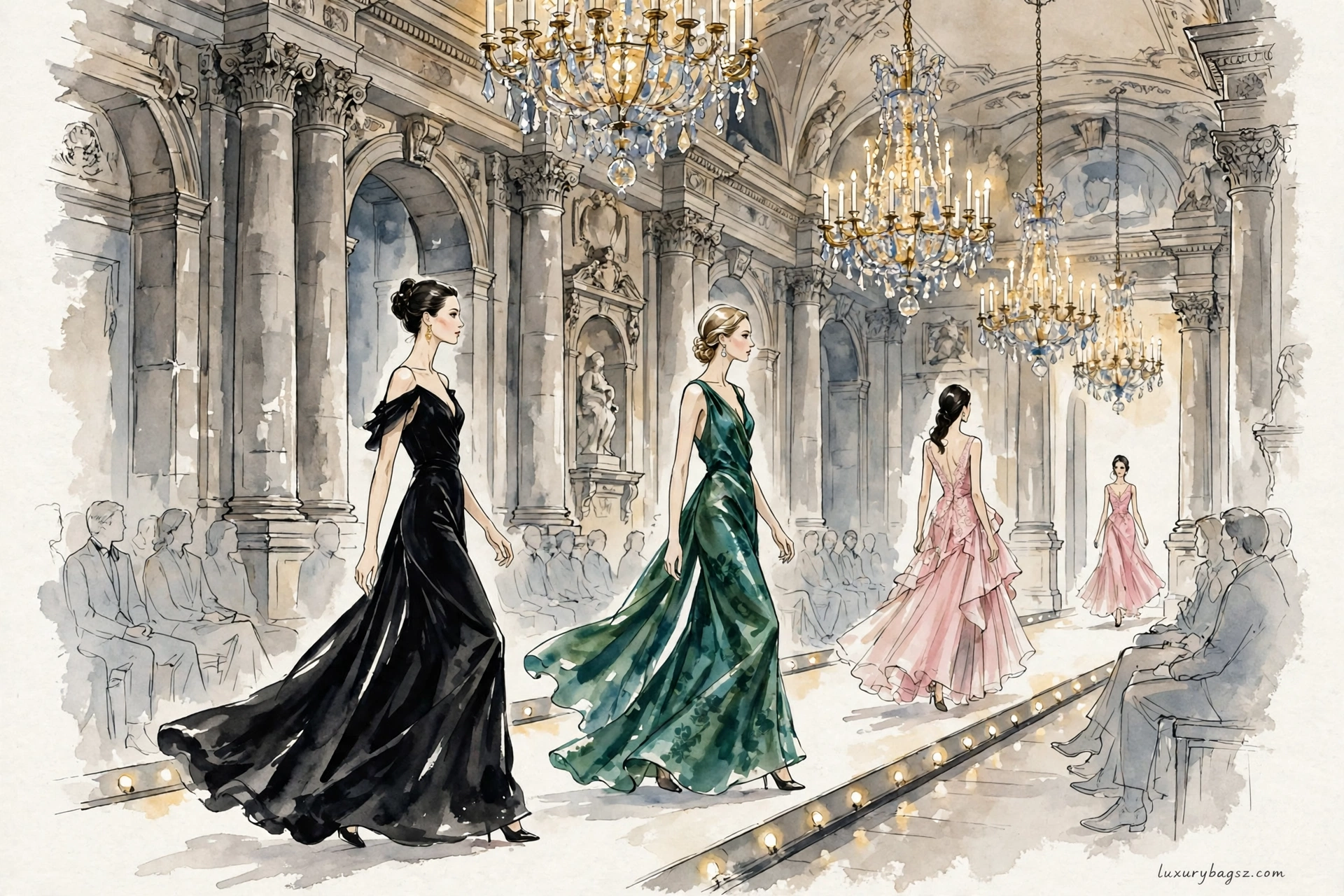
Collection Reports in Brief: One House, One Story, Told in Full
A runway collection report covers a single house's show in depth: the setting, the clothes, the craft and the commercial plan behind it. Dior Cruise, Burberry's big shows and Chanel Métiers d'Art are the formats that define the genre. These reports matter because the travelling and craft shows now launch whole seasons. A cruise collection can sit in stores for months, longer than the main lines either side of it.
Key Takeaways
- Collection reports go deep on one house, unlike trend reports that scan whole weeks.
- Cruise and resort shows travel to destination cities and sell across two seasons.
- Chanel Métiers d'Art exists to honour the specialist ateliers the house owns.
- Burberry's reports centre on British identity: the trench, the check and live spectacle.
- The set is part of the message, but the bags and coats are the commercial payload.
- Read reports for era and intent: who designed it, for which store season, and why there.
What a Collection Report Actually Does
A trend report compares dozens of shows. A collection report slows down for one, walking through the looks in order and explaining the references behind them. That depth catches things a round-up misses: a repeated bag shape, a new heel, a fabric the house is quietly betting a season's orders on. Our Paris Fashion Week trend report shows the scanning method; this piece covers the opposite habit, staying with a single stage until it makes sense. Reports also record the era. Years later, they are how readers date a designer's period at a house and judge whether it was rising or fading.
The Extra Calendar: Cruise, Pre-Fall and Métiers
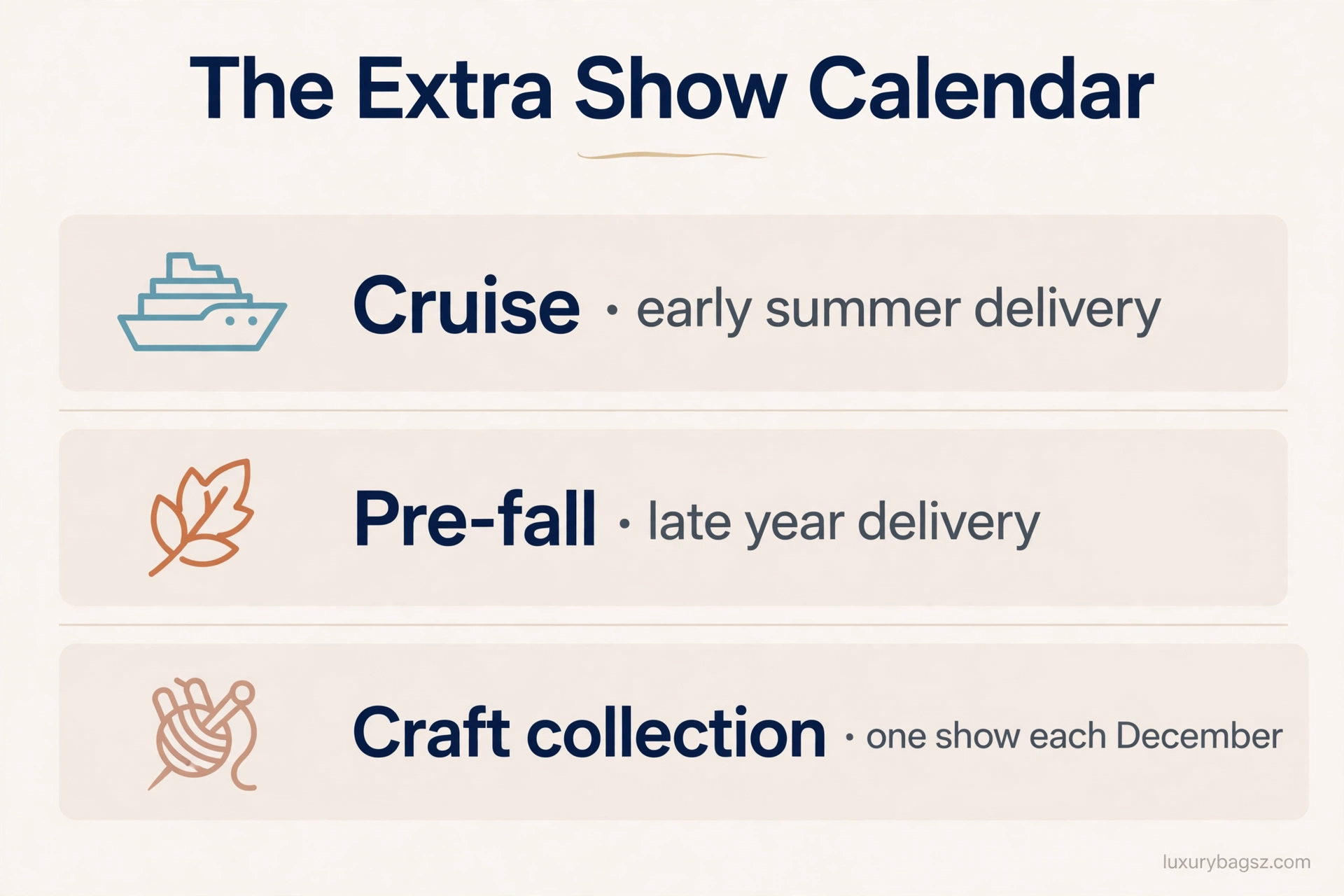
Between the two main seasons sit the extra collections. Cruise, also called resort, was built for wealthy winter travel and now anchors the warm-weather store calendar. Pre-fall plays the same role at the other end of the year, delivering wearable clothes that bridge the main lines and often sell with little discounting. Chanel's Métiers d'Art stands apart: one collection a year dedicated to the craft ateliers, shown each December in a city linked to the house's story. These extra shows grew because stores need new deliveries more often than twice a year. The spectacle is real, but the delivery schedule is the reason.
Dior Cruise: The Travelling Show
Dior's cruise shows are famous for place. The house has staged them in settings from historic palaces to desert landscapes, dressing the collection in the host city's craft and colour. Under Maria Grazia Chiuri, the format gained a clear method: work with local artisans, put their skills in the clothes, and let the setting shape the story. Our detailed look at Dior runway shows under Maria Grazia Chiuri traces how that approach developed across her seasons at the house. For shoppers, cruise Dior means embroidered dresses, book totes and sandals that arrive in store as winter ends and sell steadily through the summer.


Burberry: The British Set Piece
Burberry's big shows work like national theatre: a vast venue, live music in many eras, and the trench and check retold for a global audience watching online. The house pioneered the streamed, shop-aware show, at one famous stage letting customers order personalised blanket ponchos straight from the finale. Reports on Burberry therefore track two stories at once: the clothes, and the retail experiment wrapped around them each season. For background on the house beyond the runway, our guide to what to know about Burberry covers its history, check and key products in full.
Chanel Métiers d'Art: Craft Takes the Bow
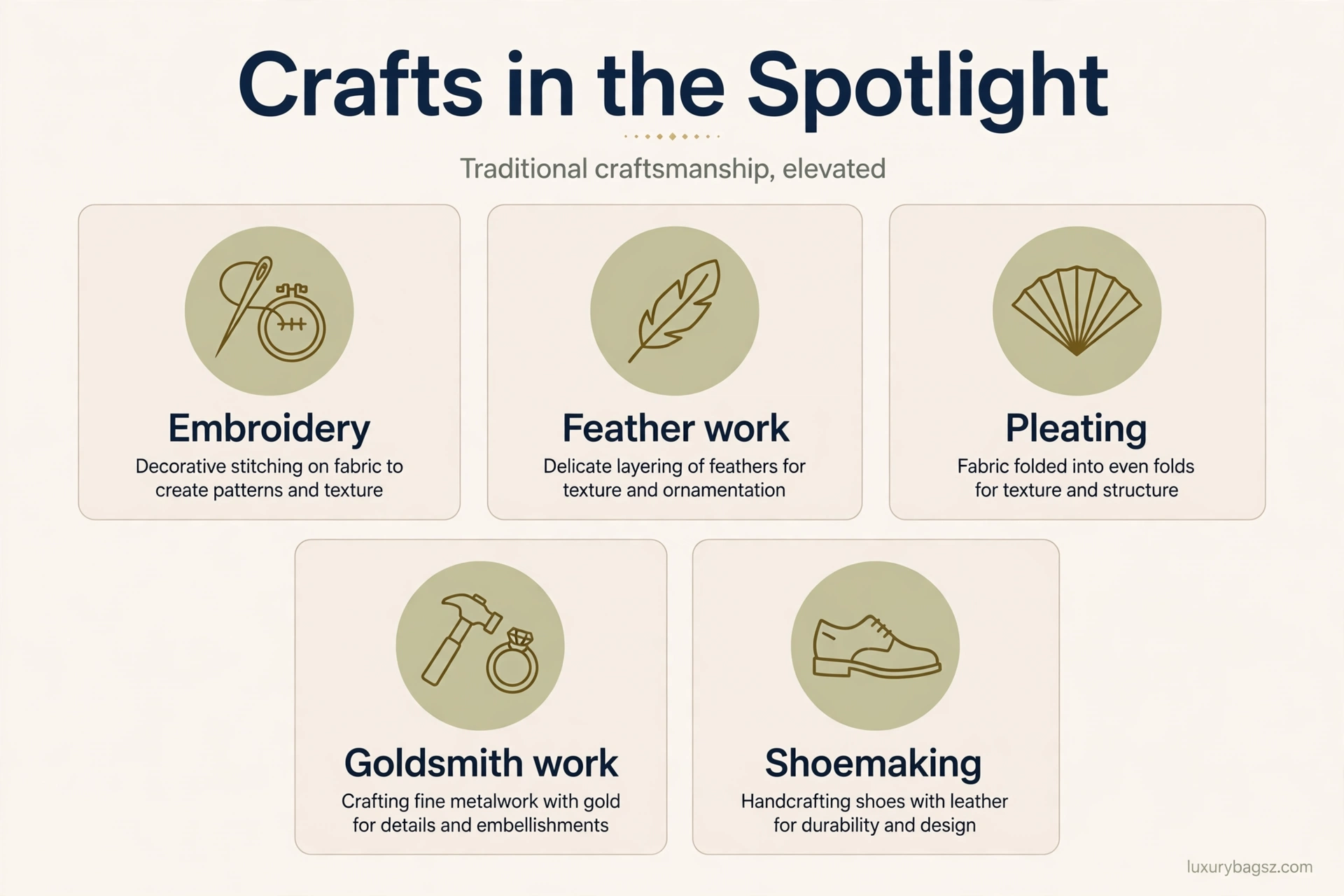
Métiers d'Art is Chanel's annual tribute to the specialist houses it owns: embroiderers, feather workers, pleaters, goldsmiths and shoemakers among them. Each edition travels, and the host city shapes the clothes. Past editions have drawn on places from Edinburgh to Dallas, Bombay to Salzburg, always filtered through tweed and craft. The point is preservation as much as fashion. By giving the ateliers a headline collection, Chanel keeps rare hand skills employed, visible and commercially valued. Our archive story on the Chanel Blizzard Dubai episode shows the other side of travelling Chanel shows: the client spectacle that surrounds the craft.
Sets, Guests and the Business Underneath
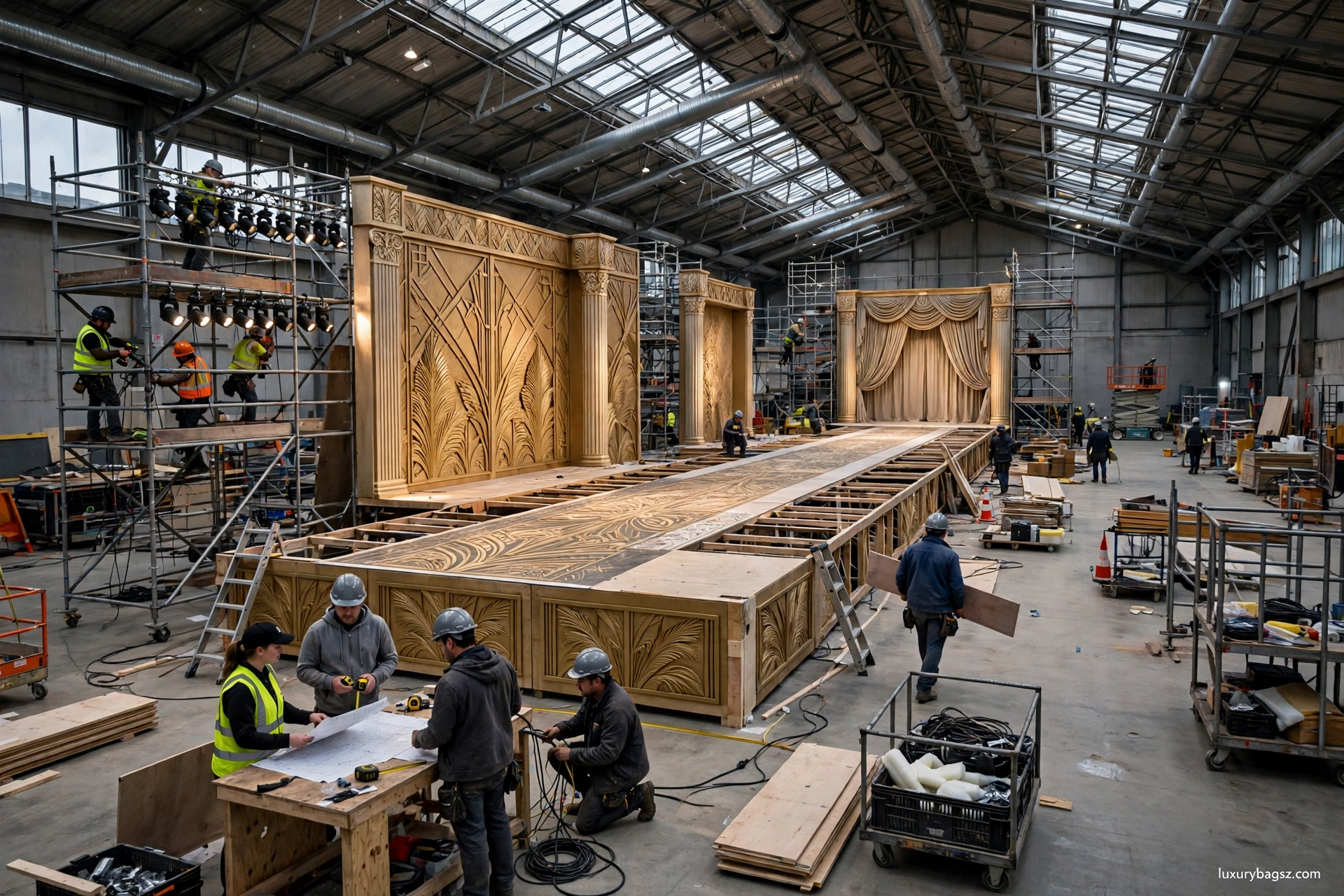
Big single-house shows are built like film sets, sometimes over weeks, for a performance of fifteen minutes. The set tells the audience how to feel before a look appears. Guests are cast as carefully as models. The front row is a house's public family, and reports name it because those faces will carry the clothes for months. Underneath sits the order book. Buyers attend these shows to place the orders that fill stores, and the most repeated looks are usually the ones with real money behind them. A good report holds all three layers together: the dream on stage, the names in the seats and the rail of clothes that will actually be sold.
How a Single Show Launches a Bag
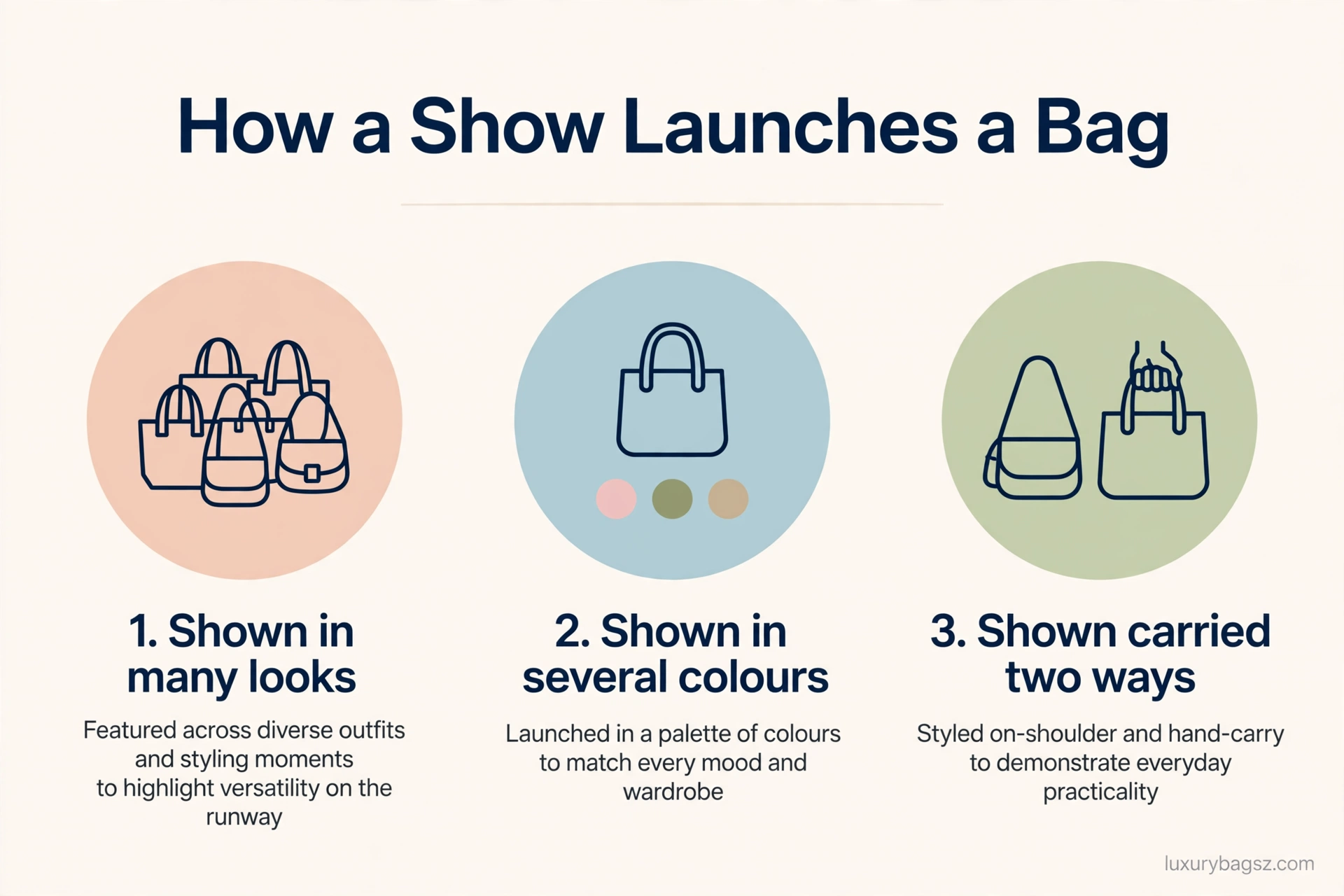
Houses use these headline shows to launch bag families, because one stage, one night and global coverage give a new shape instant recognition. The method is repetition: the bag appears in many looks, in several colours and sizes, carried by hand and shoulder so every way of using it is photographed. Cruise and Métiers bags often become the season's longest sellers, arriving early and staying in store while main-season pieces rotate around them. When a report lingers on one bag, pay attention. That focus usually mirrors the house's own plan for where the season's accessory money should go.
How to Read a Collection Report Well
Check three facts first: the designer, the collection type and the store season it feeds. A cruise report and a couture report describe different commercial worlds. Separate the set from the clothes. Praise the theatre, then ask what you would wear, carry or buy if the lights and music were removed. Watch for the repeated pieces. In a single-house report, repetition is the house telling you its priorities, and those pieces are the safest buys. Finally, file the report by era. Collection reports become the record by which design careers are judged, and reading them in sequence is the fastest fashion education there is.
Frequently Asked Questions
What is a runway collection report?
A detailed account of one house's single show: the setting, the looks in order, the craft and references, the guests and the pieces the house is backing commercially.
What is a cruise or resort collection?
An extra collection between the main seasons, created for winter travel originally and now a major store delivery. Big houses stage cruise shows in destination cities worldwide.
What makes Chanel Métiers d'Art different?
It is built to honour the specialist craft ateliers Chanel owns, such as embroidery, feather work and pleating. One edition shows each year in a city tied to the house's story.
Why do houses stage shows in faraway cities?
Place becomes part of the collection: local craft, colour and architecture shape the clothes, and the journey itself generates the global coverage these launches need.
How does Burberry use its big shows?
As British set pieces and retail experiments. Burberry pioneered streaming and shop-from-the-show ideas, including personalised pieces offered straight after a finale.
Are cruise clothes good value?
Often, yes. Cruise pieces are designed to sell across a long store season, usually in wearable shapes, and they discount less erratically than headline runway items.
How can I spot the bag a house is pushing?
Count appearances. A new bag shown in many looks, colours and sizes, and featured heavily in the report, is the house's planned accessory focus for the season.
Who writes collection reports?
Fashion journalists and critics for magazines, newspapers and specialist sites, alongside the houses' own show notes. Reading two reports of one show gives the fullest picture.
Do these shows affect resale values?
Yes. Pieces from famous editions, especially craft-led Métiers d'Art items and cruise bags from strong years, hold a clear story that resale buyers recognise and pay for.
Should I buy straight after reading a report?
Rarely at once. Note the repeated pieces, wait for store delivery, try them properly, and let the first rush pass. The planned icons are usually still available.
Reading a Collection Like a Checker
Collection reports reward slow reading: one house, one city, one set of hands making the clothes. Learn how cruise travels, how Burberry stages Britain and how Métiers d'Art honours craft, and every future show becomes easier to judge.
Slow reading and slow checking are the same discipline. In more than ten years of examining bags, I have learned that the detail everyone skims — a stitch count, an engraving, a date code — is usually the detail that decides. Read a collection report that way and you will start to see which bags a house truly believes in, long before the resale market agrees.






