Ramadan Dresses: Modest Evening Dresses for Iftar and Eid Nights
Start With the Shape: Ramadan Dresses in Brief
The best Ramadan dresses are long, loose and lovely: kaftan dresses for iftar at home, satin or crepe maxis for visits, and embellished abaya dresses when the evening calls for more. Sleeves, a comfortable waist and cloth that breathes matter more than decoration. Choose two dresses for the month — one plainer, one dressier — in colours that share shoes and a bag. That small rotation covers family iftars, restaurant evenings and the first Eid celebrations without a wardrobe crisis.
Key Takeaways
- Kaftan dresses are the Ramadan staple: flowing, comfortable and instantly festive.
- Satin and crepe maxis dress up with jewellery; chiffon layers keep evening looks light.
- A comfortable waist is non-negotiable on evenings that begin with a feast.
- Lining decides quality: an unlined pale dress rarely survives evening light gracefully.
- Two dresses, shared accessories, cover the whole month for most women.
- Buy early: Ramadan capsules in popular sizes sell out before the month peaks.
What Makes a Dress a Ramadan Dress
Length, ease and coverage define the type. A Ramadan dress reaches the ankle or floor, offers sleeves or pairs with a layer, and leaves room to sit, eat and visit for hours in comfort. That is a styling brief, not a restriction, and day-to-evening dressing builds around them. The dresses themselves carry the month because nights are when Ramadan is social. Fabric weight matters too. Evenings can start warm and end cool, so a dress that takes a shawl or an open abaya over it earns double duty.
The Five Styles Worth Owning
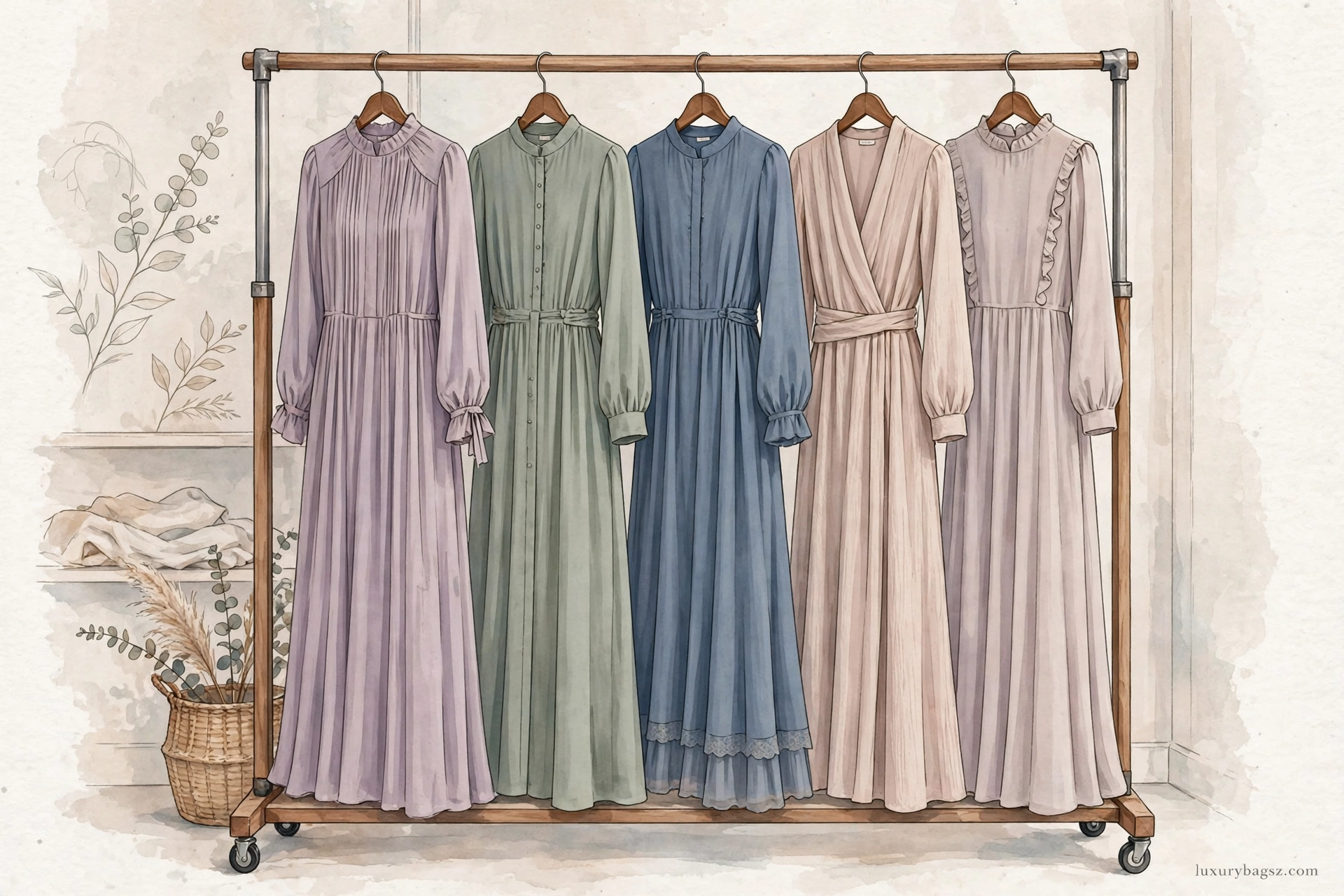
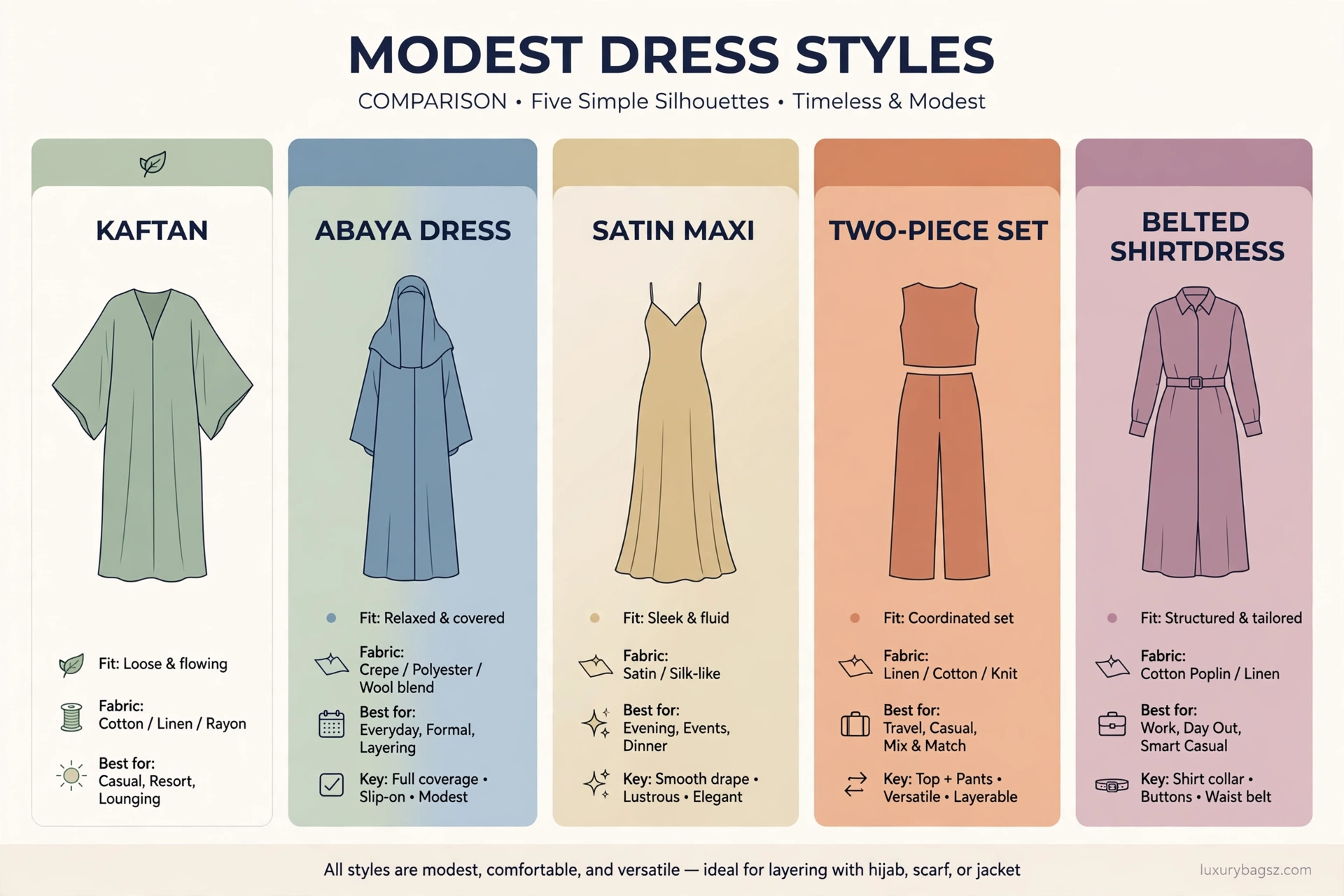
The kaftan dress leads: a straight, flowing shape, plain for home iftars or embroidered for grander nights. The abaya dress follows, cut like a coat-dress with detail at the cuff and hem. The satin maxi is the dress-up option, while the two-piece — long skirt and tunic top — suits women who prefer separates. Our season edit of Ramadan luxury fashion and gifts shows how these dresses sit inside the wider capsule wardrobe. A wrap or belted shirtdress in a modest length rounds out the five for daytime visits, when a full evening dress would feel overdressed at a family lunch.
Kaftan Dresses: The Signature Piece
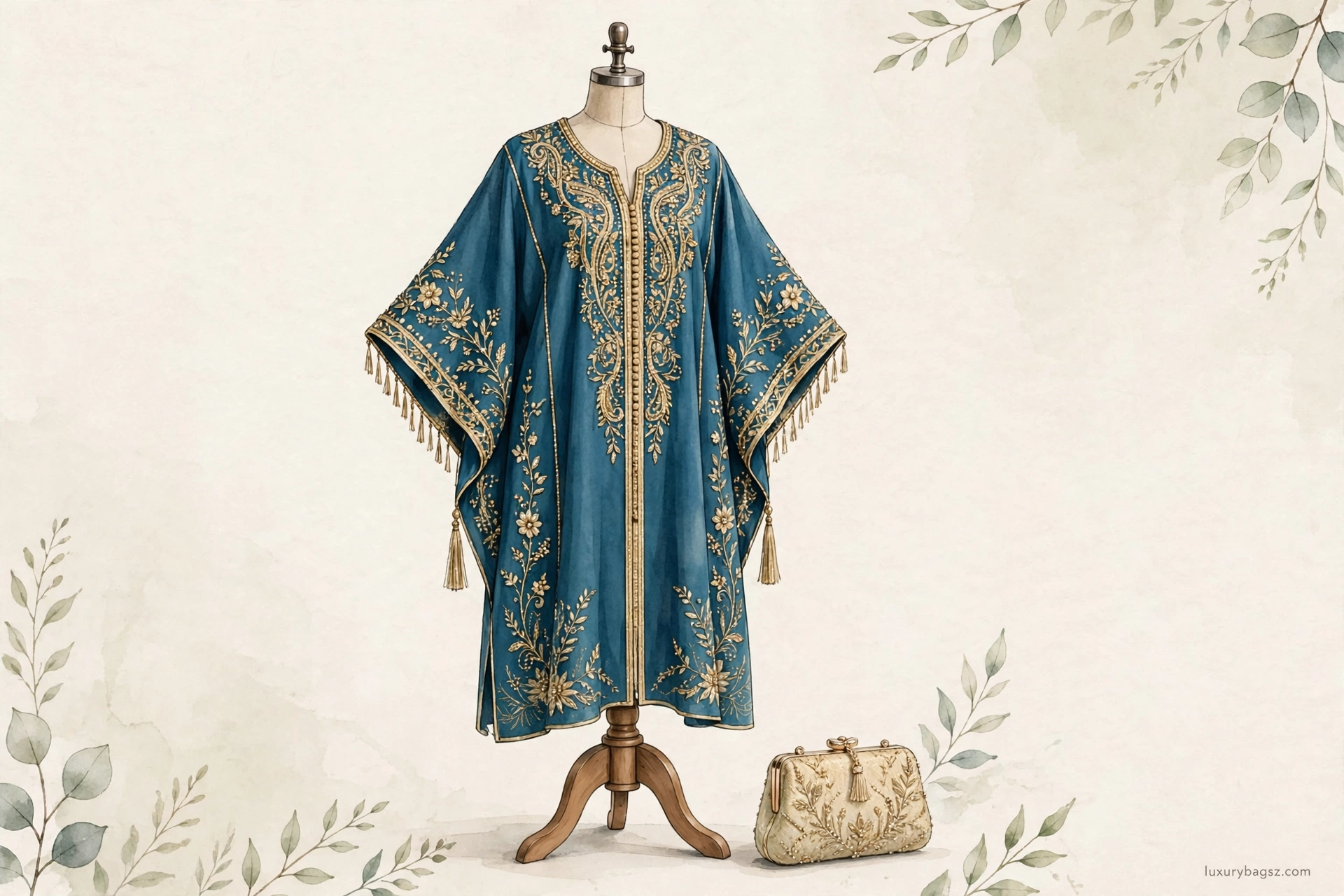
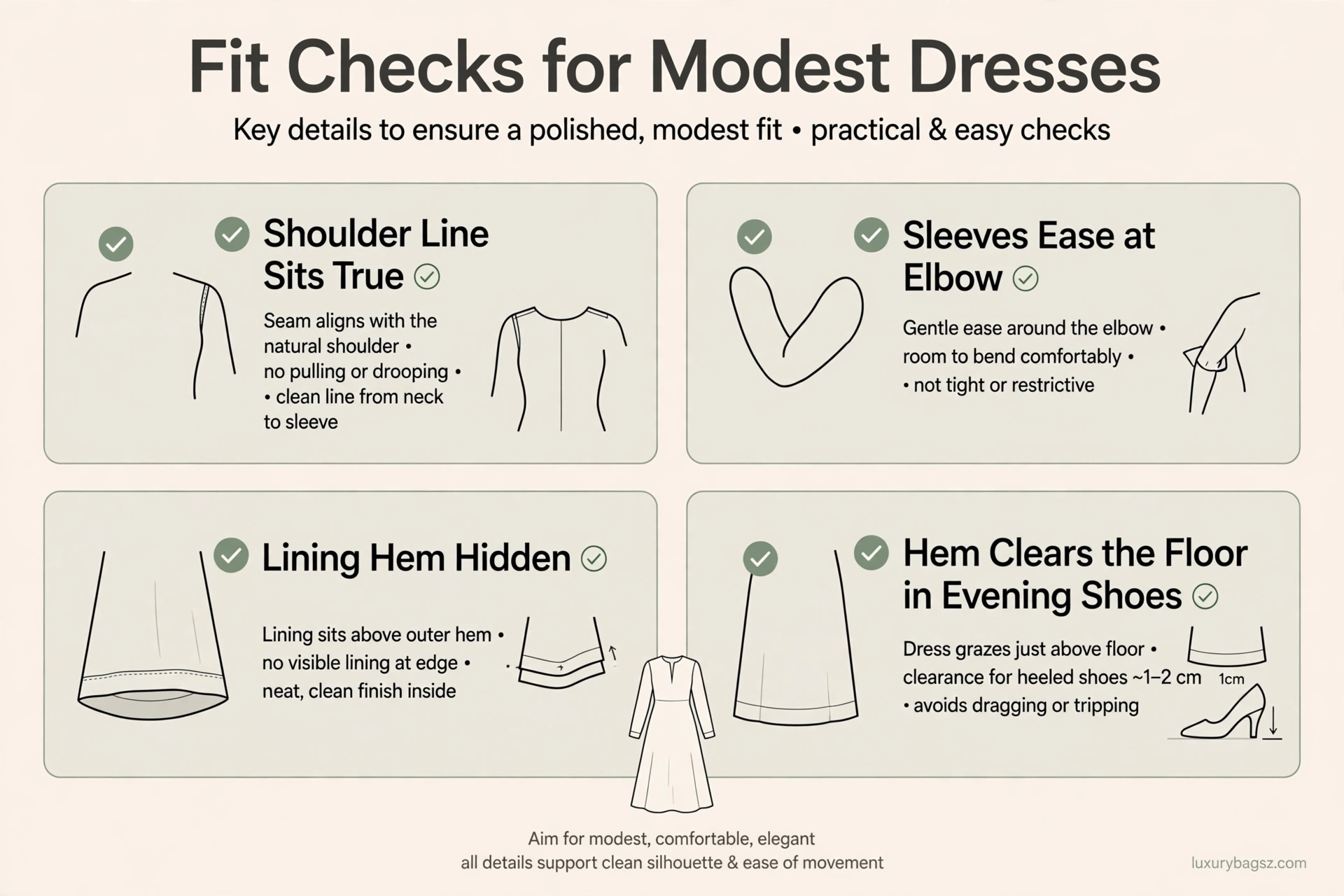
A kaftan's ease is its luxury. With no waist to negotiate after iftar and sleeves that move gracefully, it is the dress women reach for most across the month, at home and at hotels alike. Plain silk or crepe kaftans in ivory, sage or dusk blue take jewellery beautifully. Embroidered versions in deeper colours need almost nothing added — flat jewelled sandals and a clutch complete them. Fit check: the shoulder line should sit true and the hem should clear the floor in your evening shoes. A kaftan that pools is a trip hazard on stairs and in crowded halls.
Price bands help planning. Simple crepe and cotton-blend dresses from regional labels sit at the accessible end, silk kaftans in the middle, and hand-embellished evening pieces at the top, where the handwork sets the price. Buy for the evenings you actually have: a woman attending two home iftars needs comfort and washability more than a hotel-grade beaded gown, however beautiful it looks on the rail.
Satin, Chiffon and the Dressier End
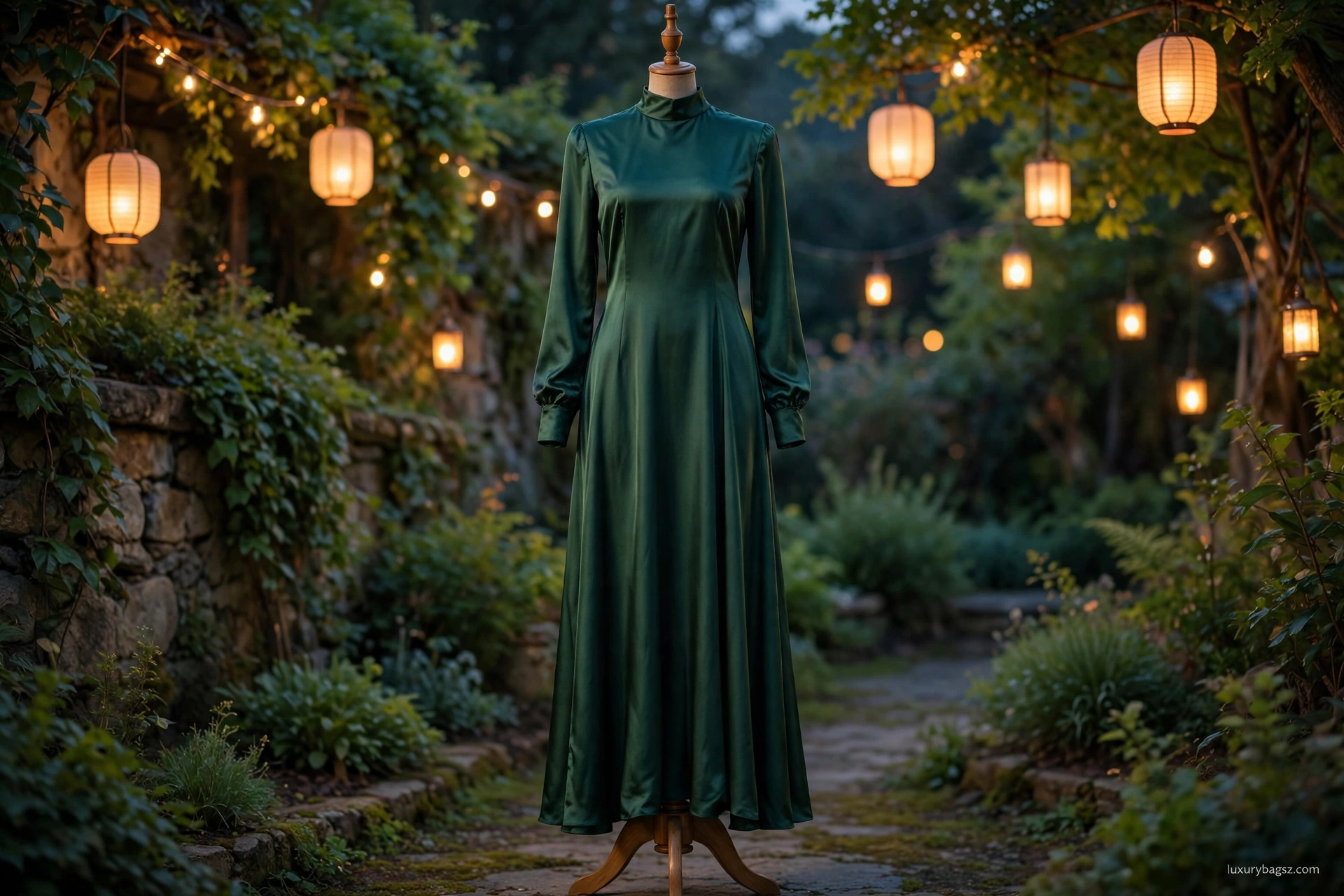
Satin maxis bring the shine Ramadan evenings love. As our piece on why a satin dress is a wardrobe staple explains, bias-cut satin moves like water and photographs beautifully in warm light. Chiffon dresses with a solid lining give float without exposure, and suit layered looks with a fine cardigan or shawl. Crepe sits between the two: matte, fluid and forgiving, the safest choice for a long night. Velvet appears in cooler seasons and air-conditioned grandeur, but choose it only where evenings are genuinely cold; in Gulf heat it is a short-photograph dress, not an all-night one.
Fabrics for Warm Evenings
Breathability decides whether a dress is worn once or weekly. Natural silk, cotton-silk blends and light crepe let air move; heavy synthetics trap the heat of a crowded room. Our summer dresses guide ranks warm-weather fabrics in detail, and the same order applies here: natural fibres first, lined chiffon second, dense polyester last. Check the lining fibre as well as the shell. A silk dress lined in heavy synthetic loses its cooling advantage exactly where the cloth touches the skin.

Colours the Season Loves
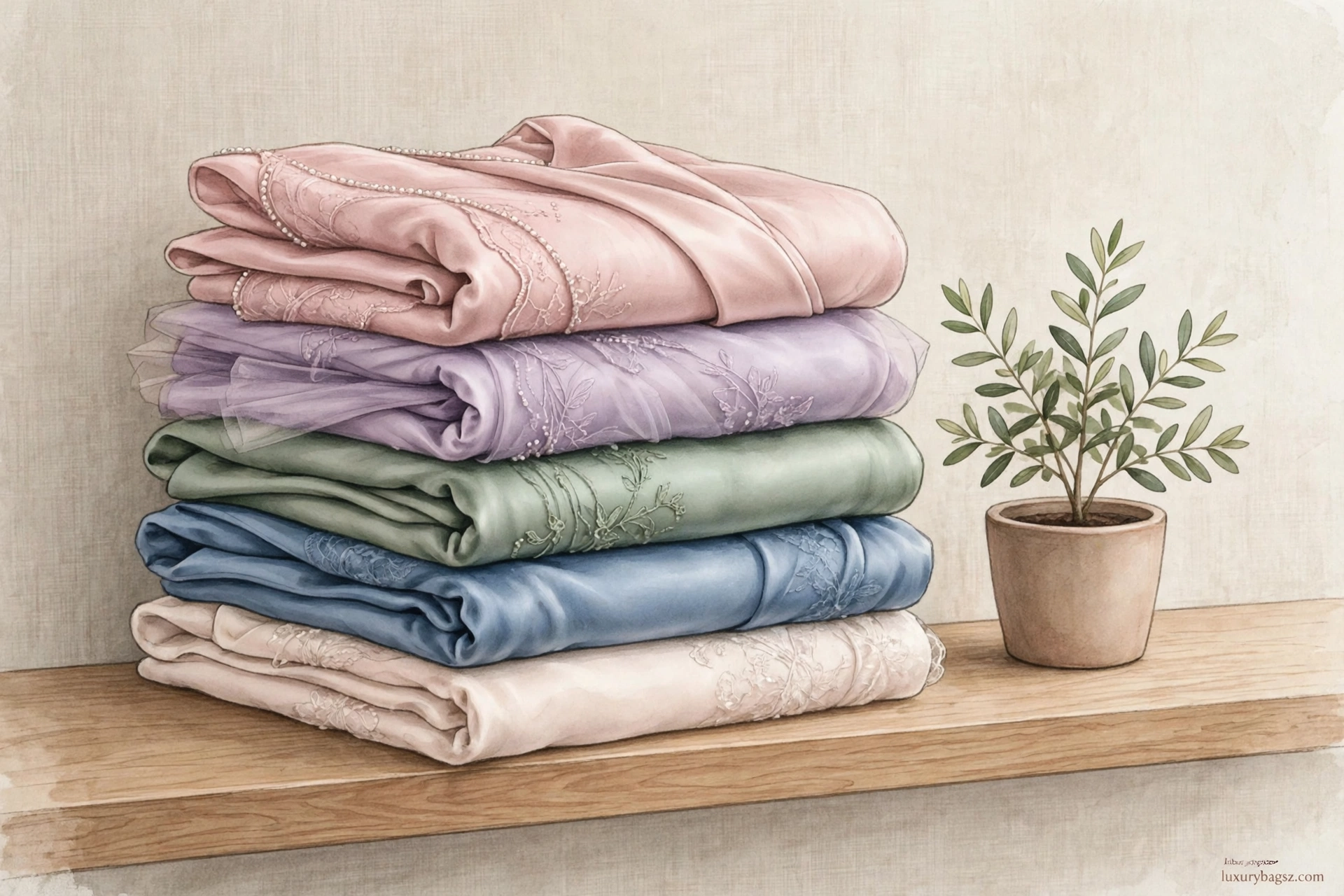
Evening Ramadan palettes run soft then deep: ivory, blush, sage and powder blue early in an evening wardrobe, emerald, burgundy, navy and gold as celebrations build towards Eid. Metallic thread and beadwork appear most on the dressier end, placed at necklines, cuffs and belts where light catches during conversation rather than across the whole cloth. If you buy one colour, choose the one that suits your skin in warm evening light, tested in the shop at night if you can. Daylight flatters different shades than lamplight does.
Plus and petite shoppers should look first to regional labels, whose Ramadan ranges are often cut across wide size spans for a family market, rather than the narrow runs of a global capsule.
Fit Checks Before You Commit
Sit down in the dress, raise your arms, and walk a flight of shop stairs if there is one. Ramadan evenings are long and social; a dress that only works standing still will be retired early. Check sleeves for ease at the elbow, the neckline against your comfort, and the lining's hem, which should not ride above the outer cloth when you move. Leave alteration time. A hem lifted or a sleeve eased by a tailor turns a nearly-right dress into the one you wear for years of Ramadans.
Styling and Caring for the Dresses
Keep accessories small and warm-toned: gold jewellery, a clutch, jewelled flats or a low heel. Long dresses do the visual work; the finishing pieces should support, not compete. Alternate your two dresses across invitations so each airs between wears, and hang embellished pieces inside out in a garment bag to protect beadwork from snagging. Clean before storing after Eid. Food and perfume marks set over a year in a wardrobe, and a dress cleaned promptly returns next Ramadan ready to wear.
Frequently Asked Questions
What is the most popular Ramadan dress style?
The kaftan dress. It is flowing, comfortable for evenings that begin with a meal, and ranges from plain silk for home iftars to fully embroidered versions for grand occasions.
How many Ramadan dresses do I need?
Two serve most women well: one plainer for family evenings and one dressier for restaurants, hotels and Eid. Shared shoes, bag and jewellery make the two feel like four.
Which fabrics are best for Ramadan dresses?
Silk, cotton-silk blends and light crepe for breathability; lined chiffon for float; satin for shine. Check the lining too — a natural-fibre lining keeps a dress cool against the skin.
Can I wear a sleeveless dress during Ramadan?
Many women layer one under an open abaya, a kaftan top or a fine shawl for evenings. Whether you do depends on your own practice and the setting; layering keeps the option open.
What colours should I choose?
Ivory, sage, blush and powder blue for softer evenings; emerald, burgundy, navy and gold as Eid approaches. Test the shade in warm evening light, where you will actually wear it.
How should a kaftan dress fit?
True at the shoulder, free through the body, and hemmed to clear the floor in your evening shoes. It should allow a full, comfortable stride and a relaxed sit at a low table.
Are embellished dresses practical?
Yes, when the beadwork sits at the neckline, cuffs or belt rather than where you sit or lean. Store them inside out in a garment bag and clean them before long storage.
What shoes go with Ramadan dresses?
Jewelled flats, low block heels or elegant mules you can slip off at a home's threshold. Ramadan visiting involves homes as much as hotels, so easy shoes are a kindness.
When should I buy Ramadan dresses?
Before the month begins or in its first days. Capsule ranges are limited, and the most-wanted sizes and colours are often gone by the time Eid shopping peaks.
Can a Ramadan dress double for Eid?
Absolutely — the dressier of your two, restyled with brighter jewellery and a metallic clutch, is a classic Eid evening look. A new shawl or belt makes it feel freshly chosen.
Conclusion: Two Dresses, Worn With Ease
Ramadan dresses succeed on comfort as much as beauty: flowing kaftans, honest fabrics, a waist that forgives a feast and colours that glow at night. Buy two, fit them properly, and the month's evenings dress themselves.