Princess Diana Style and the Auction Story: Signatures, Sales and What Endures
Diana's Style, and Why Her Clothes Still Make News
Princess Diana's style worked in two registers at once: immaculate public tailoring and evening glamour for the cameras, and a strikingly modern off-duty ease of sweatshirts, cycling shorts and loafers that young women still copy today. Her clothes also became history you can bid on. From her own 1997 charity dress auction to record-setting sales decades later, the auction story is part of her fashion legacy, and it deserves honest telling rather than hype.
Key Takeaways
- Diana's signatures: skirt suits, pearl chokers, off-shoulder evening dresses, bold colour.
- Catherine Walker was her most important designer partnership across many years.
- The black dress worn in June 1994 became her most discussed single look.
- In 1997 she auctioned 79 dresses for charity, setting the template for later sales.
- Auction values rest on provenance and photographs, not on cloth alone.
- Her off-duty style is the part most copied today, and the cheapest to borrow.
The Early Years: From Shy Silhouette to Royal Polish
The engagement-era looks of 1981 were soft and romantic: floaty blouses, gentle prints and the famous sheep-pattern knit that signalled a playful private taste. As a working royal she learned the grammar of diplomatic dressing fast: strong colour so crowds could see her, hats for formality, and hemlines and gloves kept correct. British designers shaped this phase, with the Emanuels creating her 1981 wedding dress, a gown whose full skirt and long train defined early-1980s bridal taste. The polish grew year by year, but the warmth stayed. She rewore outfits, carried local designers abroad, and let clothes do diplomatic work in every port.
She also understood the camera's arithmetic early: block colour reads at distance, pattern reads in close-up. Day engagements got the colour, evening portraits got the detail, and both choices were deliberate.
The Catherine Walker Partnership and the Skirt Suit
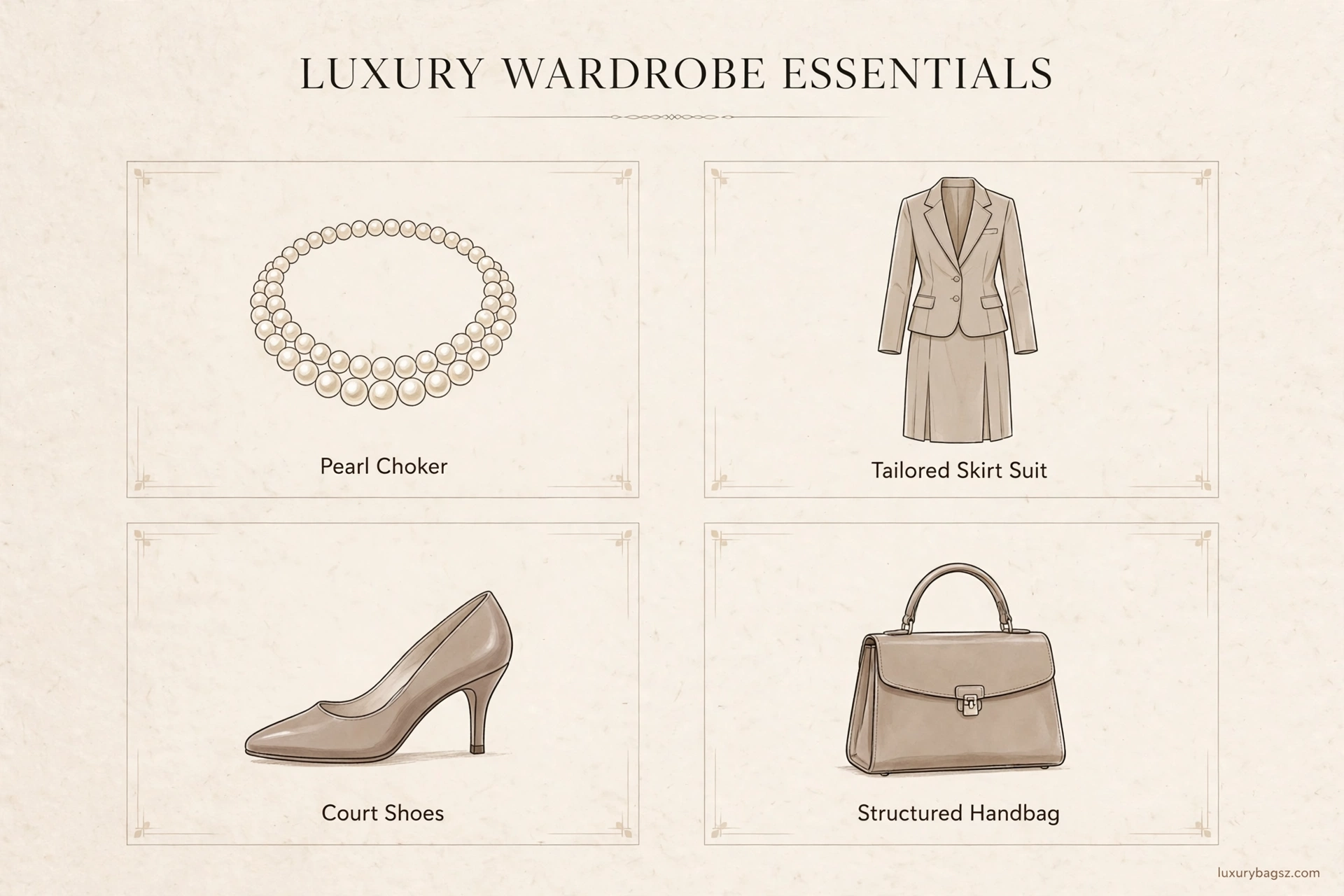
Catherine Walker became Diana's defining designer, creating many of her most remembered tailored looks: clean skirt suits, elegant coat dresses and refined evening wear. The partnership worked because Walker understood restraint. Strong shoulders, a nipped waist, beautiful cloth and almost no decoration let Diana herself carry the picture. Her public uniform settled: a tailored suit or coat dress in a clear colour, pearl earrings, a structured handbag and court shoes. It photographed identically well everywhere. That formula still teaches. When modern royals and public figures dress for daytime duty, the Walker template of colour plus tailoring is usually somewhere in the room.
Repeating outfits was policy, not accident. Diana rewore suits and gowns publicly years before sustainable dressing had a name, and each rewear with new accessories taught the press to look for the styling, not just the dress.
Evening Glamour and the Black Dress of 1994
By the late 1980s and 1990s her evening style had sharpened: off-shoulder necklines, sleek sheaths, beaded gowns and the pearl choker worn as a signature. In June 1994 she wore a short black off-shoulder dress by Christina Stambolian to a dinner at the Serpentine Gallery in London, on an evening of difficult headlines. The press nicknamed it the revenge dress, a label that stuck even though it simplifies her motives. What is certain is the effect: the photographs circled the world overnight. Stylistically it marked the confident final phase: shorter hems, bolder necklines and a wardrobe that looked chosen for herself rather than for an institution.
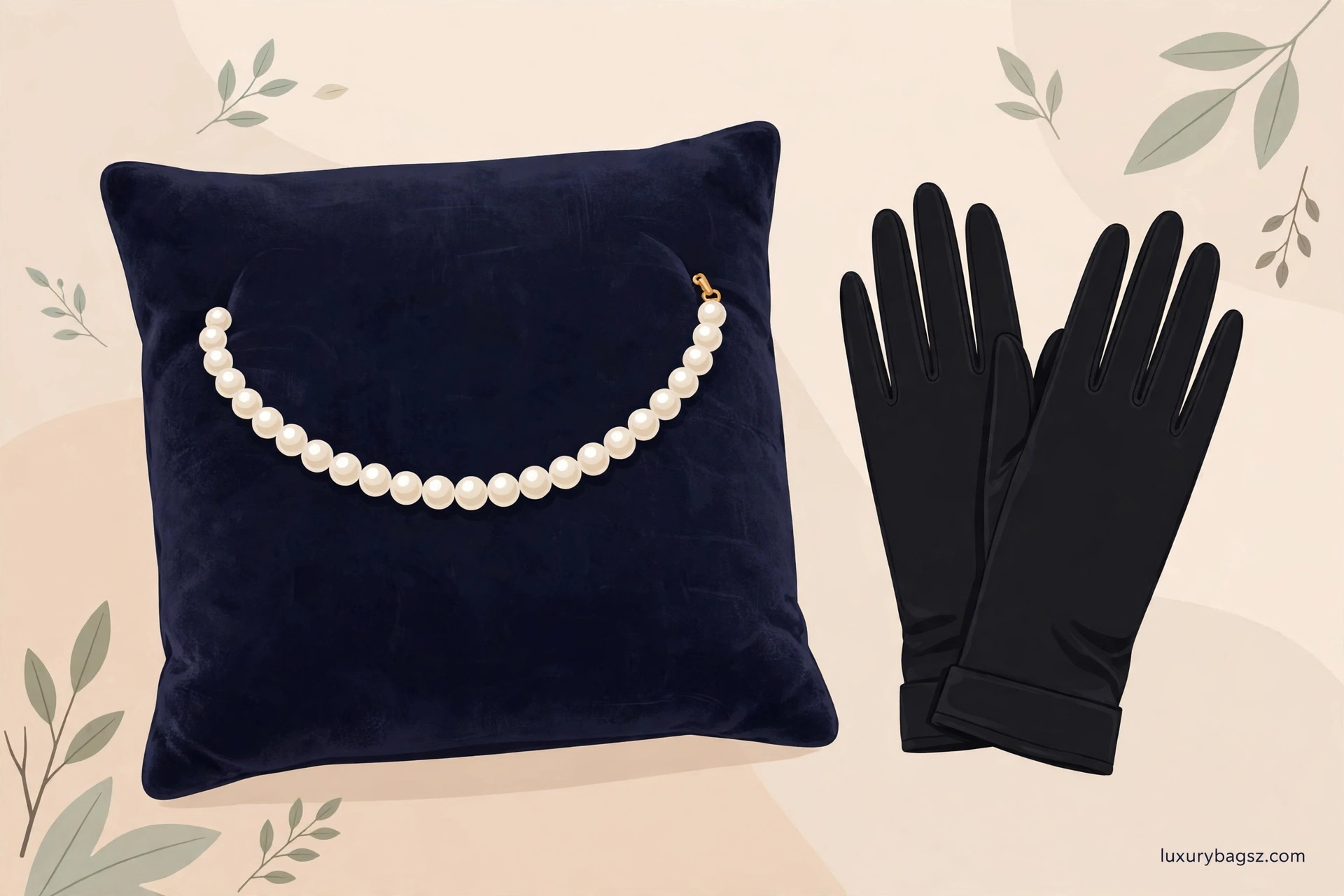
Her jewellery told the same two-register story: grand borrowed pieces and tiaras for state evenings, then her own pearls and a famous sapphire ring for ordinary days. The mix kept the glamour human in scale.
The Bags That Carry Her Name
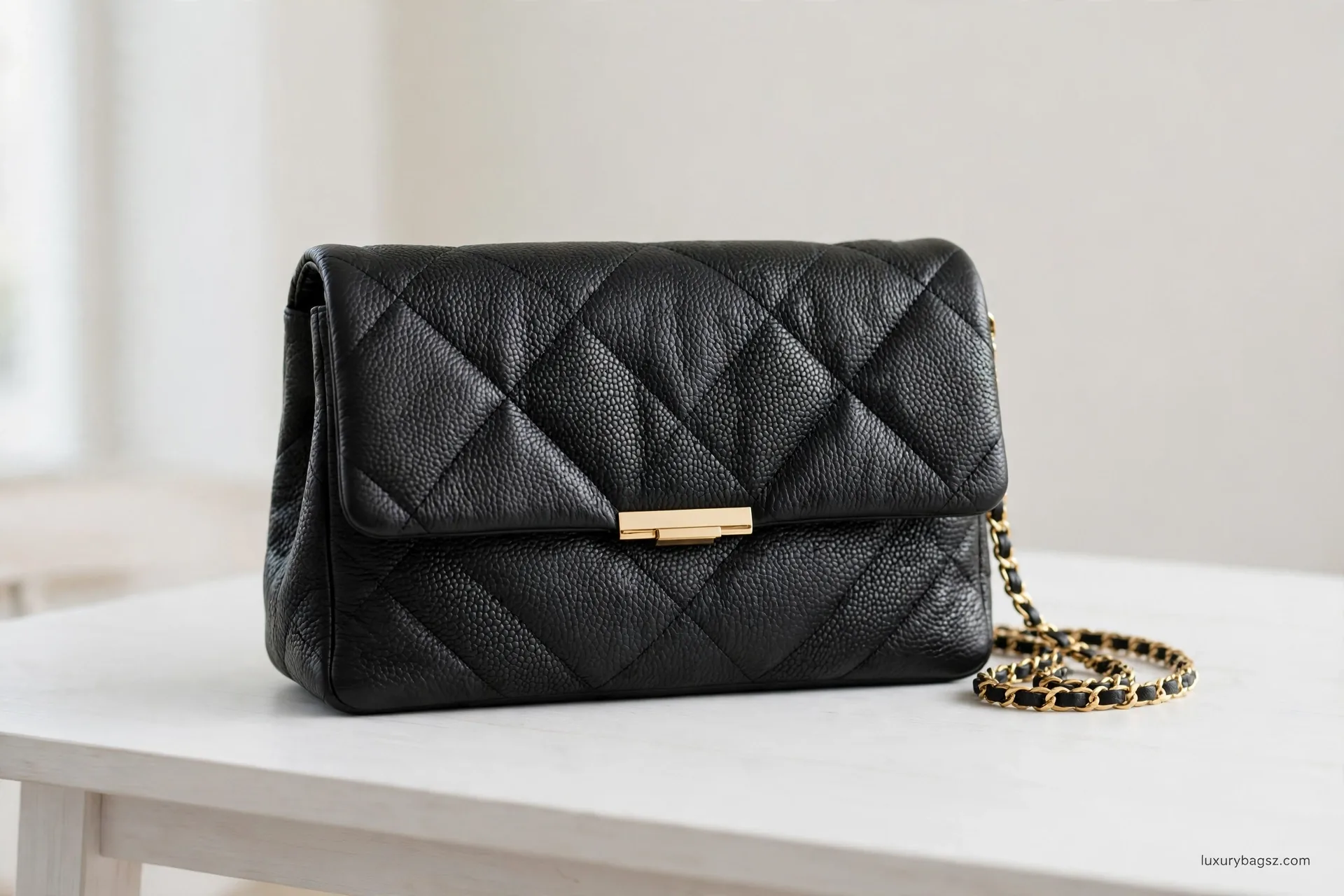
Two famous bags are tied to Diana. The quilted Chanel flap style she carried in the early 1990s is still sold as the Chanel Diana flap bag. Dior's structured top-handle bag, presented to her in Paris in 1995 and carried by her often afterwards, became known as the Lady Dior, a renaming widely reported as a tribute to her. Both stories show her commercial gravity: a bag photographed in her hand could acquire a name, a waiting list and a permanent place in a house's history. Our survey of bags named after famous people puts her in the small company of women whose names became handbag institutions.
The Lady Dior connection shows her instinct for the modern handbag photograph: a structured bag, carried by its handle at the front of the body, centred in the frame. Stylists still stage bags exactly that way today.
The 1997 Charity Auction: Her Idea, Her Terms
In June 1997, weeks before her death, Diana put 79 of her own dresses into a charity auction at Christie's in New York, raising funds for cancer and AIDS charities. The black Stambolian dress was among the lots; contemporary reports record it selling for a five-figure sum to buyers who planned to raise further charity funds with it. The sale was radical for its time: a princess converting her own glamour into donations, and setting the dresses free to be exhibited rather than stored unseen. It also created the provenance chain that drives Diana auctions today. A dress from that sale arrives with paperwork, photographs and a story no copy can match.
Christie's prepared that 1997 sale with Diana's involvement in the selection, and the catalogue photographs of her wearing the dresses became part of each lot's value. The sale raised millions for the charities she chose.
Record Sales and Museum Walls Since
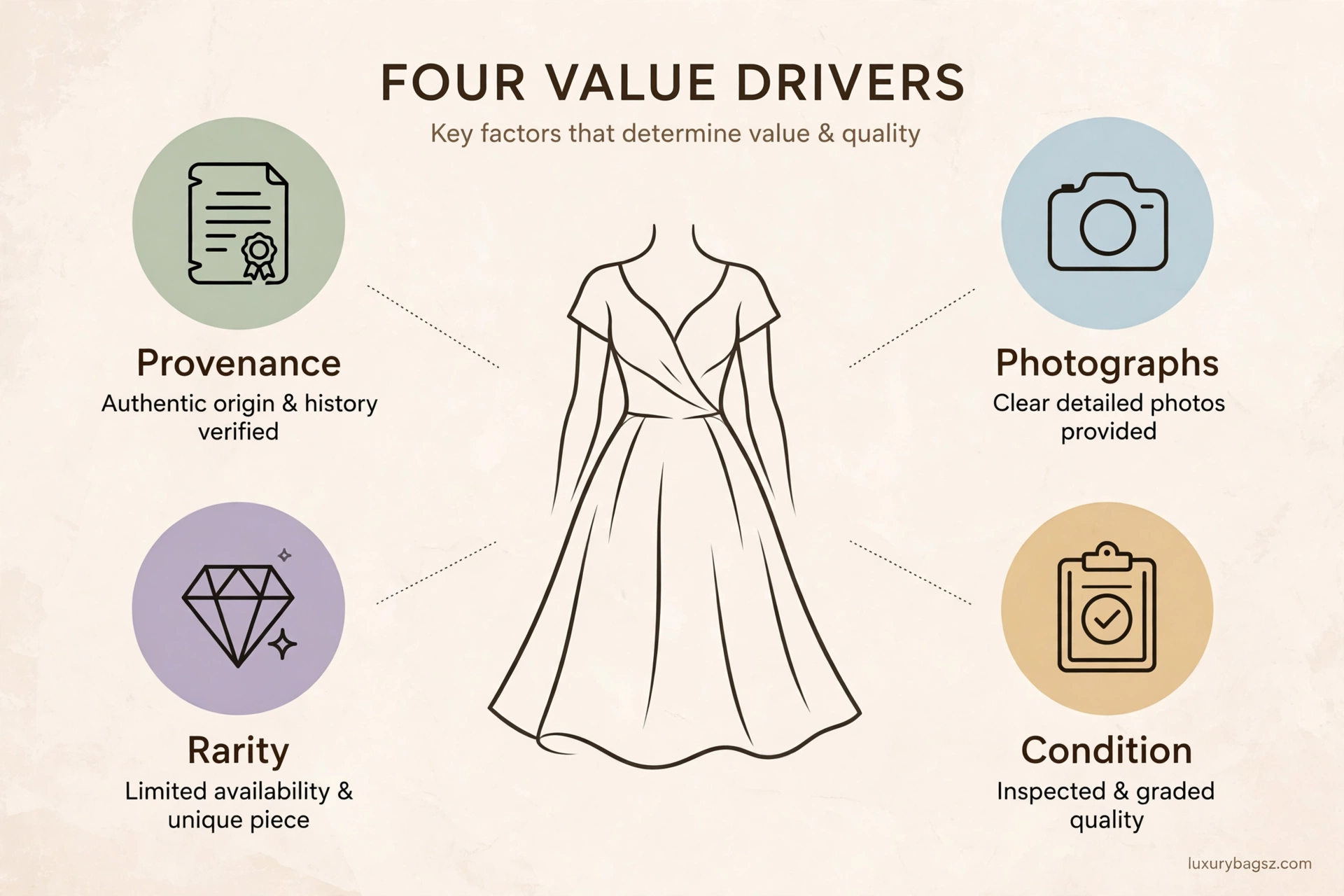
Interest never settled. The Kensington Palace exhibition Diana: Her Fashion Story, which opened in 2017, drew crowds by showing the clothes as a working wardrobe, not relics. Auction houses have since held dedicated Diana sales, and reported results include seven-figure prices for major evening gowns, with a Jacques Azagury dress reported at over a million dollars in 2023. Treat headline figures carefully: they reflect a unique garment, a famous photograph and competitive bidding on one night, not a general price for vintage dresses. For collectors, the durable lesson is that provenance is the value. A documented, photographed Diana garment is a historical artefact; an undocumented similar dress is just a dress.
Museums and auction houses now treat her wardrobe as a shared archive: exhibitions borrow from collectors who bought in 1997 and later, which is why pieces resurface publicly instead of vanishing into vaults.

Borrowing Her Style Without Copying a Costume
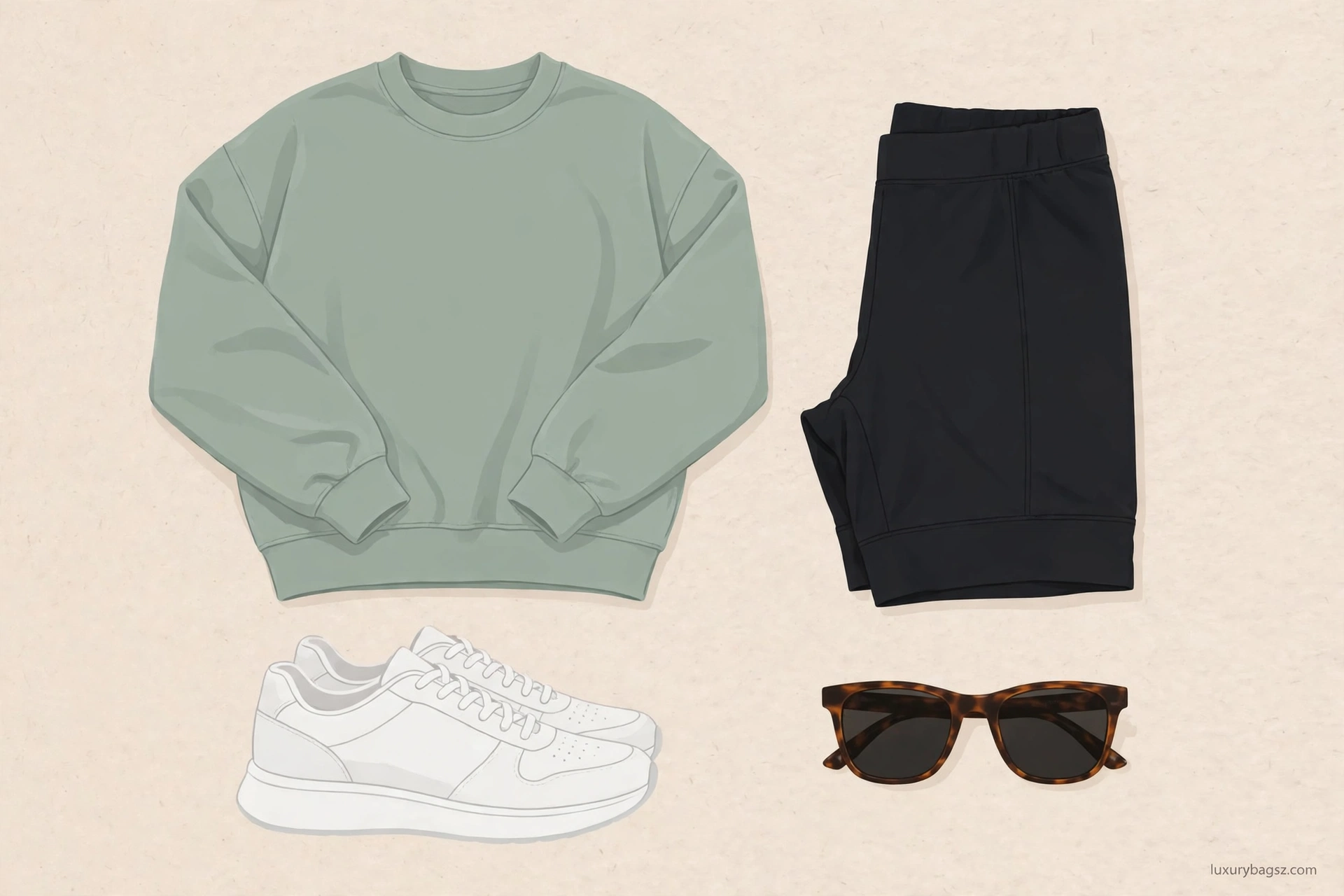
Start with her daytime formula: one clear colour, clean tailoring, pearl studs and a structured bag. It flatters almost everyone and never looks fancy dress. Take the off-duty formula for weekends: oversized sweatshirt, cycling shorts or slim trousers, white trainers and sunglasses. It is her most copied look, and the cheapest. For evening, borrow the neckline, not the whole archive: an off-shoulder black dress with a short pearl necklace channels 1994 without impersonating it. Our breakdown of what lifts prices, in the infographic above, doubles as a shopping warning: pay for cut and cloth in your own wardrobe, not for a famous name alone.
For your own wardrobe the auction story inverts nicely: clothes you love, wear often and keep documented, with receipts and photographs, are the pieces that hold meaning and value. Diana's archive is that principle at royal scale.
Why the Influence Refuses to Fade
Fashion keeps returning to Diana because she solved problems women still have: dressing formally without stiffness, repeating outfits proudly, and looking modern on camera. Designers cite her directly, stylists recreate her off-duty looks each autumn, and every new royal wardrobe is still measured against her instinct for the telling photograph. Set beside the very different discipline of Queen Elizabeth II style, Diana's approach reads as the bridge between old royal dressing and today's media fluency. The auctions will continue, and so will the copying. Both are really the same phenomenon: clothes that carried meaning so clearly that people still want to own, or wear, a piece of the message.
Her influence also survives in small revivals nobody announces: pearl chokers return, cycling shorts return, the oversized sweatshirt never leaves. Each comeback photographs a new generation discovering the same easy formulas.
Frequently Asked Questions
Who was Princess Diana's main designer?
Catherine Walker created many of her most remembered tailored and evening looks over a long partnership. She also wore the Emanuels, Christina Stambolian and Jacques Azagury, among others.
What is the revenge dress?
The black off-shoulder Christina Stambolian dress Diana wore to a Serpentine Gallery dinner in June 1994. The press nickname stuck, though it simplifies a complex evening.
Did Diana really auction her own dresses?
Yes. In June 1997 she placed 79 dresses in a Christie's charity auction in New York, raising money for cancer and AIDS charities, shortly before her death.
Why do Diana's dresses sell for so much?
Provenance: documented ownership, famous photographs and rarity. A verified Diana garment is treated as a historical artefact, which is why prices can reach seven figures.
Which bags are named for Diana?
The Chanel Diana flap reflects the style she carried, and Dior's Lady Dior is widely reported to have been renamed for her after she carried it from 1995 onwards.
What was Diana's off-duty style?
Oversized sweatshirts, cycling shorts, white trainers, loafers and blazers with jeans. It is the most copied part of her wardrobe today because it is comfortable and current.
Where can I see Diana's clothes?
Major pieces appear in museum exhibitions and auction previews. The Kensington Palace exhibition of 2017 to 2019 showed many key garments; touring displays continue.
How can I dress like Diana tastefully today?
Copy formulas, not outfits: clear colour plus tailoring by day, off-shoulder black with pearls by night, sweatshirt and cycling shorts off duty. Never a full replica.
Are all high Diana auction prices typical?
No. Record results involve unique, photographed, well-documented gowns and competitive rooms. Ordinary vintage dresses, even fine ones, sell for far less.
What is Diana's lasting fashion legacy?
Proof that clothes communicate: duty, defiance, warmth and modern ease were all sent through tailoring and timing. Designers and royals still work from her playbook.
Summary: Meaning Is What Endures
Diana's wardrobe lasts because every famous piece carried a message: the Walker suits said duty done beautifully, the black dress said independence, and the 1997 auction said glamour could be given away. Borrow the formulas honestly, respect the provenance behind the prices, and her style keeps teaching.