

Military Chic Trend: Army Details, Sharp Tailoring and How to Wear Them Well
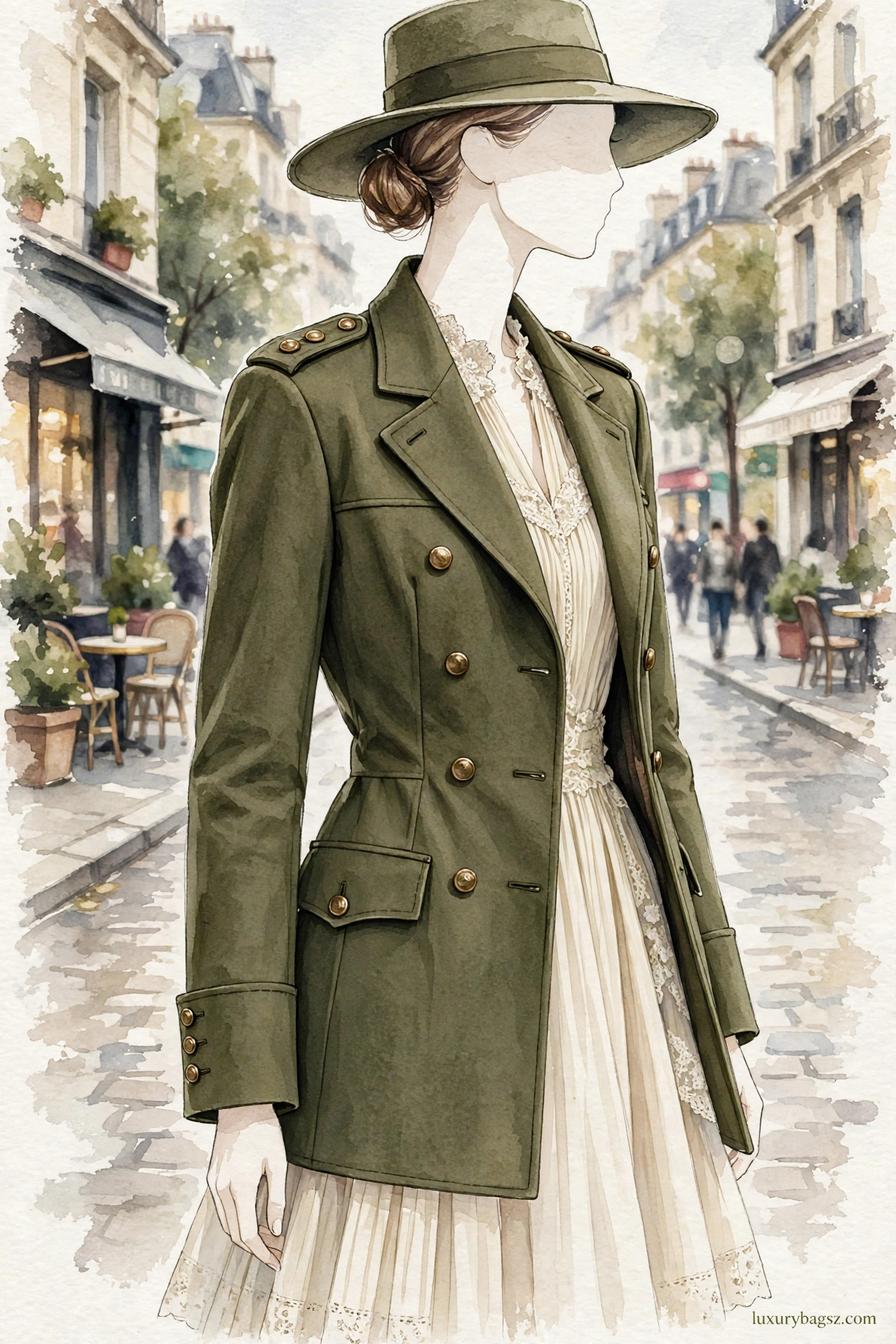
Military Chic, Decoded
Military chic takes the best parts of uniform dressing — sharp shoulders, brass buttons, epaulettes, cargo pockets and an olive-and-khaki palette — and softens them for everyday outfits.
The trend works because the discipline does the styling for you. One tailored, army-inspired piece gives a plain outfit instant structure, so you rarely need much else going on.
The golden rule is dosage. Wear one military piece at a time, keep the rest of the outfit simple, and the look reads polished rather than fancy dress.
Key Takeaways
- One military piece per outfit is enough; two or more tips into costume.
- The core details are epaulettes, brass buttons, cargo pockets, belts and braid.
- Olive, khaki, navy and black are the palette that makes the trend wearable.
- Tailoring matters more than decoration: fit first, hardware second.
- Field jackets and military coats are the easiest entry points.
- Care is simple: brush wool, air coats, and wipe brass before it tarnishes.
What Military Chic Actually Means
Military chic is not camouflage head to toe, and it is not a uniform copy. It borrows the construction language of uniform dressing and applies it to ordinary clothes.
Think of a blazer with shoulder epaulettes, a coat with a double row of brass buttons, or trousers with a neat cargo pocket that sits flat rather than bulging.
The appeal is practical as much as visual. These pieces were designed to move, last and look orderly, which is why they flatter so many body shapes.
If a piece would look at home on a parade ground with nothing changed, it is probably too literal. A small softening — a knit underneath, a skirt instead of trousers — fixes that.
The trend also has a quiet sustainability argument. Military-inspired pieces are built on designs refined over a century of hard use, so they tend to be cut from sturdy cloth with repairable parts: sewn buttons, metal zips, reinforced pockets.
That durability is why vintage and surplus-adjacent pieces mix so well with new ones. A ten-year-old field jacket under a new coat's polish looks intentional, not tired.
The Details That Signal the Trend
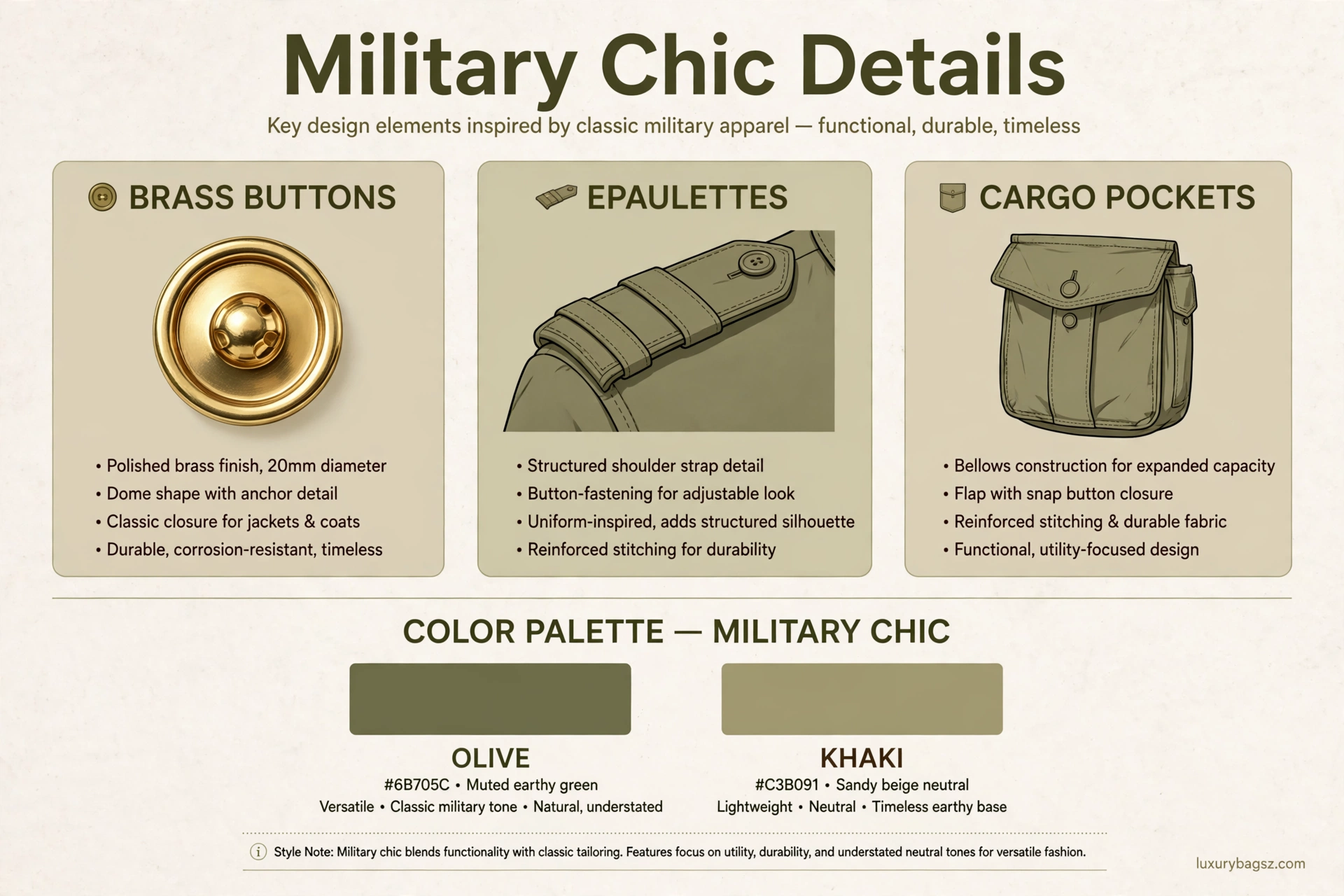
Four details do most of the work. Epaulettes sharpen the shoulder line and draw the eye upward, which balances wider hips and adds presence to a simple coat.
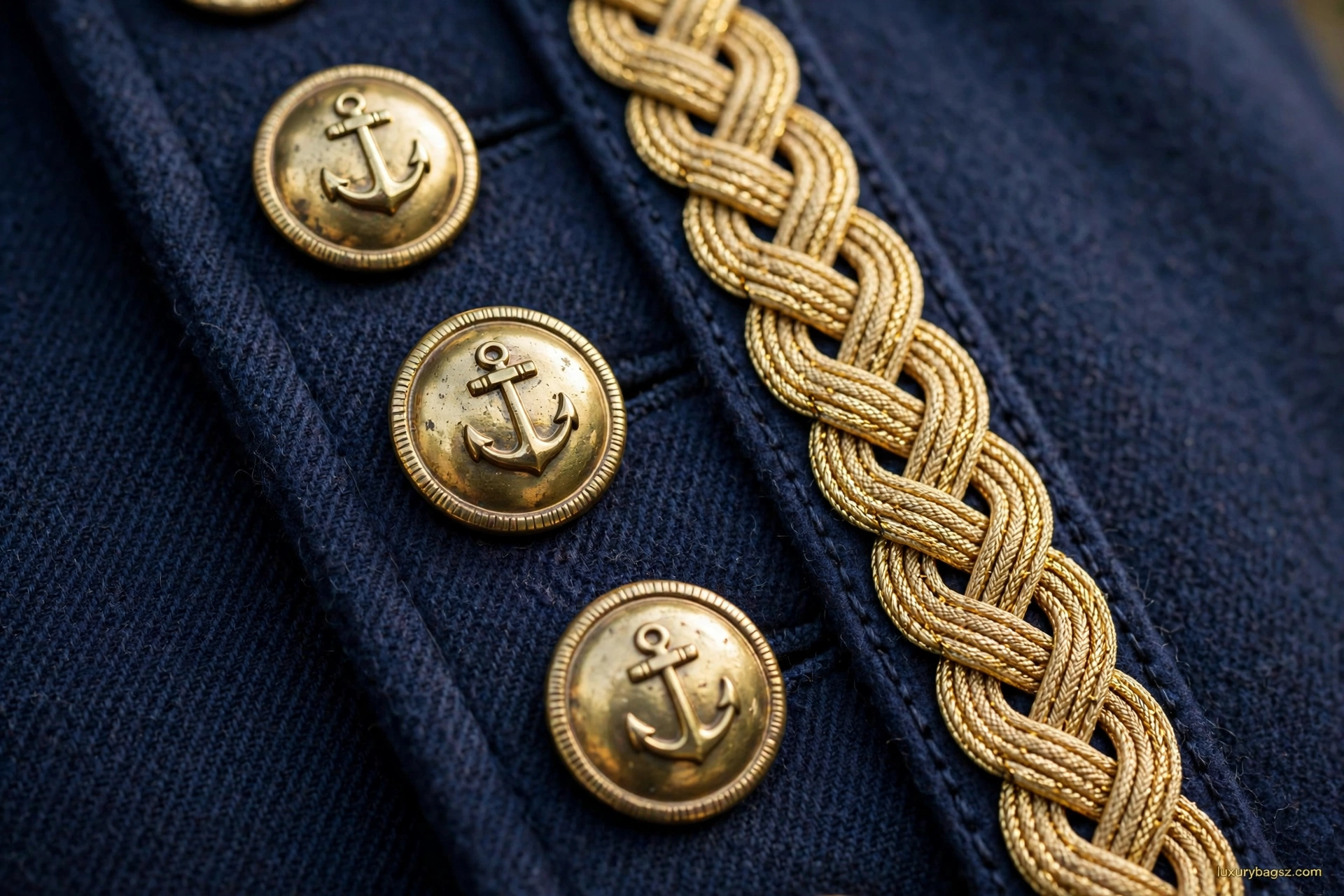
Brass buttons add warmth and a slight shine against matte wool or cotton. They work best in one metal tone per outfit, matched loosely to your jewellery or bag hardware.
Cargo pockets bring the utility note. On modern pieces they sit flat and close to the leg or chest, so they read as design rather than storage.
Belts and braid finish the picture. A belted waist keeps the structure feminine, while a touch of braid on a jacket cuff adds ceremony without bulk.
Start With a Field Jacket or Military Coat
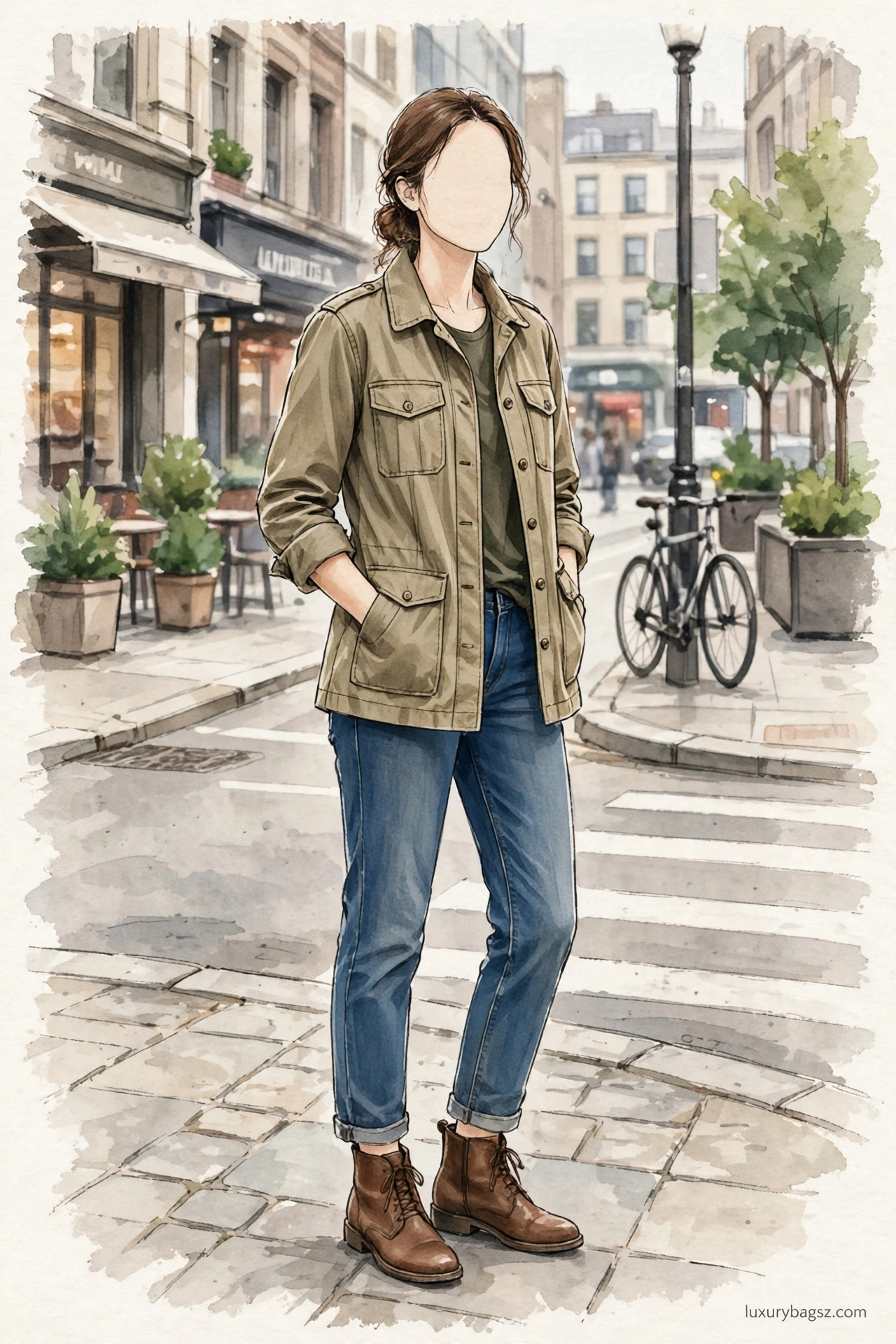
The field jacket is the friendliest first buy. In khaki or olive cotton, it layers over dresses, knitwear and tailoring, and its pockets genuinely earn their keep.
Our guide to wearing fatigues shows how the same jacket moves from weekend denim to a smarter skirt without looking borrowed.
A long military coat is the dressier route. Look for a clean shoulder, buttons that fasten without pulling, and a length that clears your most-worn boots.
Blazers with epaulettes sit between the two. They sharpen office outfits and stop a plain white shirt and trousers from feeling unfinished.
Length decides the mood with coats. A knee-length military coat reads formal and pairs with dresses; a hip-length one belongs with trousers and boots.
Try the coat open as well as closed in the shop. Military coats are often worn open over knitwear, and the lining, buttons and drape should look good in both states.
Build the Palette Around Olive and Khaki
Olive is the trend's anchor colour. It behaves like a neutral, pairing with black, cream, denim blue, burgundy and camel without effort.
Khaki and stone lighten the mood for spring and for paler skin tones. Navy is the smartest option and the easiest to wear to work.
Keep prints out of the base outfit. The clothes already carry detail, so a plain ground lets the buttons, seams and pockets show.
Boots complete the palette story. Lace-up styles such as boondocker boots ground the look, while a polished ankle boot smartens it.
Outfit Formulas That Keep It Chic
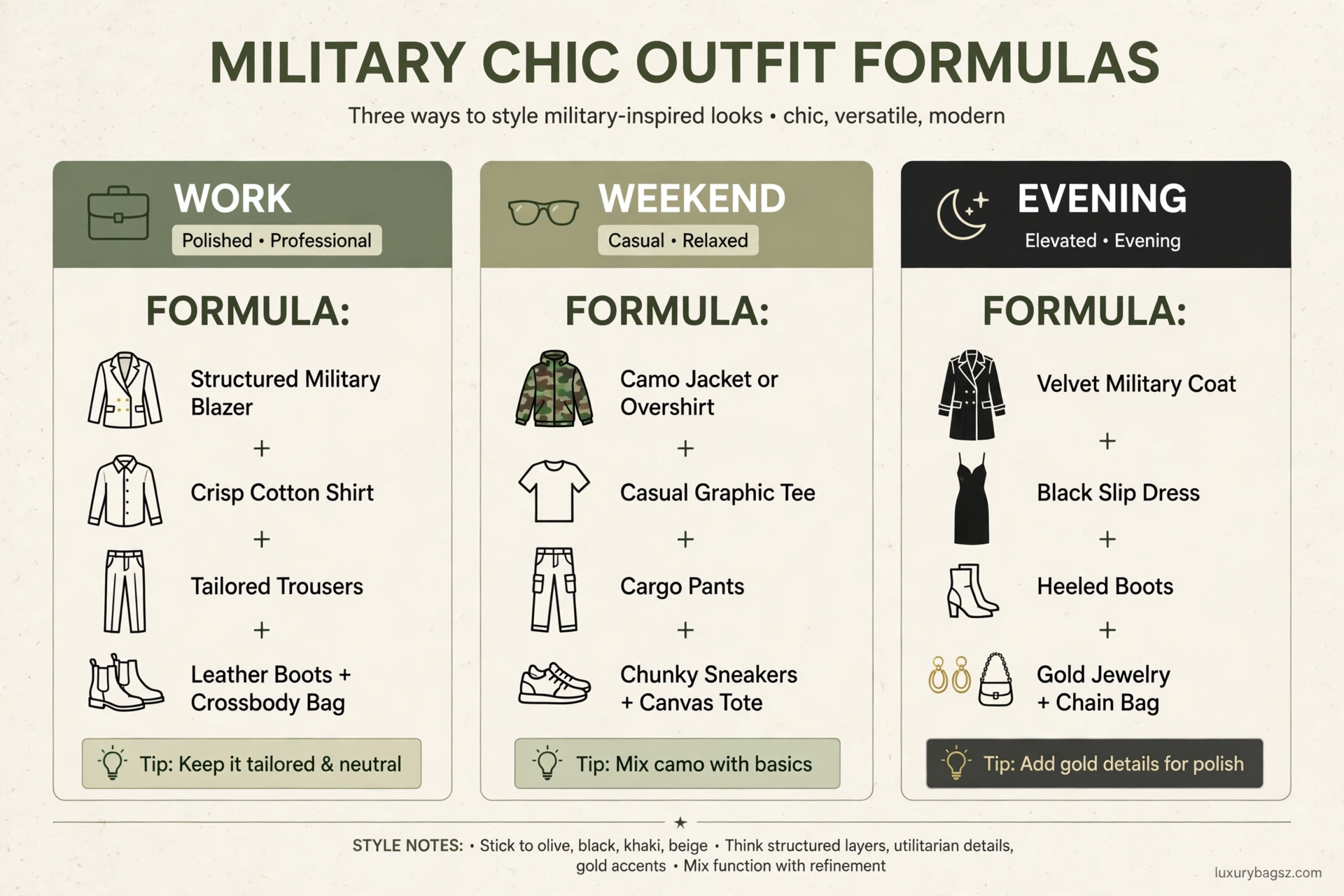
For work, try a structured military blazer, a crisp shirt, tailored trousers and loafers. The blazer supplies all the character the outfit needs.
At the weekend, a field jacket over a plain tee with straight jeans and boots is the classic formula. Roll the sleeves once to keep it relaxed.
For evening, a velvet or navy military coat over a slip dress works beautifully. The coat's structure contrasts with the dress's softness, and gold jewellery echoes the buttons.
If you wear a cargo trouser, pair it with a fitted knit and a heeled boot. Volume on both halves at once is what makes the trend look sloppy.

Fit and Fabric Checks Before You Buy
Shoulders are the first check. Epaulettes should sit on your natural shoulder point; if they droop past it, the whole piece reads oversized in the wrong way.
Fasten every button in the fitting room. Military pieces are cut close, and a coat that pulls across the chest will never sit as sharply as the design intends.
Fabric weight matters. Wool and wool blends hold the tailored line best for coats, while cotton twill suits field jackets and cargo trousers.
Check the hardware closely. Buttons should be firmly sewn, metal rather than plastic where possible, and spare buttons are a good sign of a well-made piece.
Care for Wool, Brass and Boots
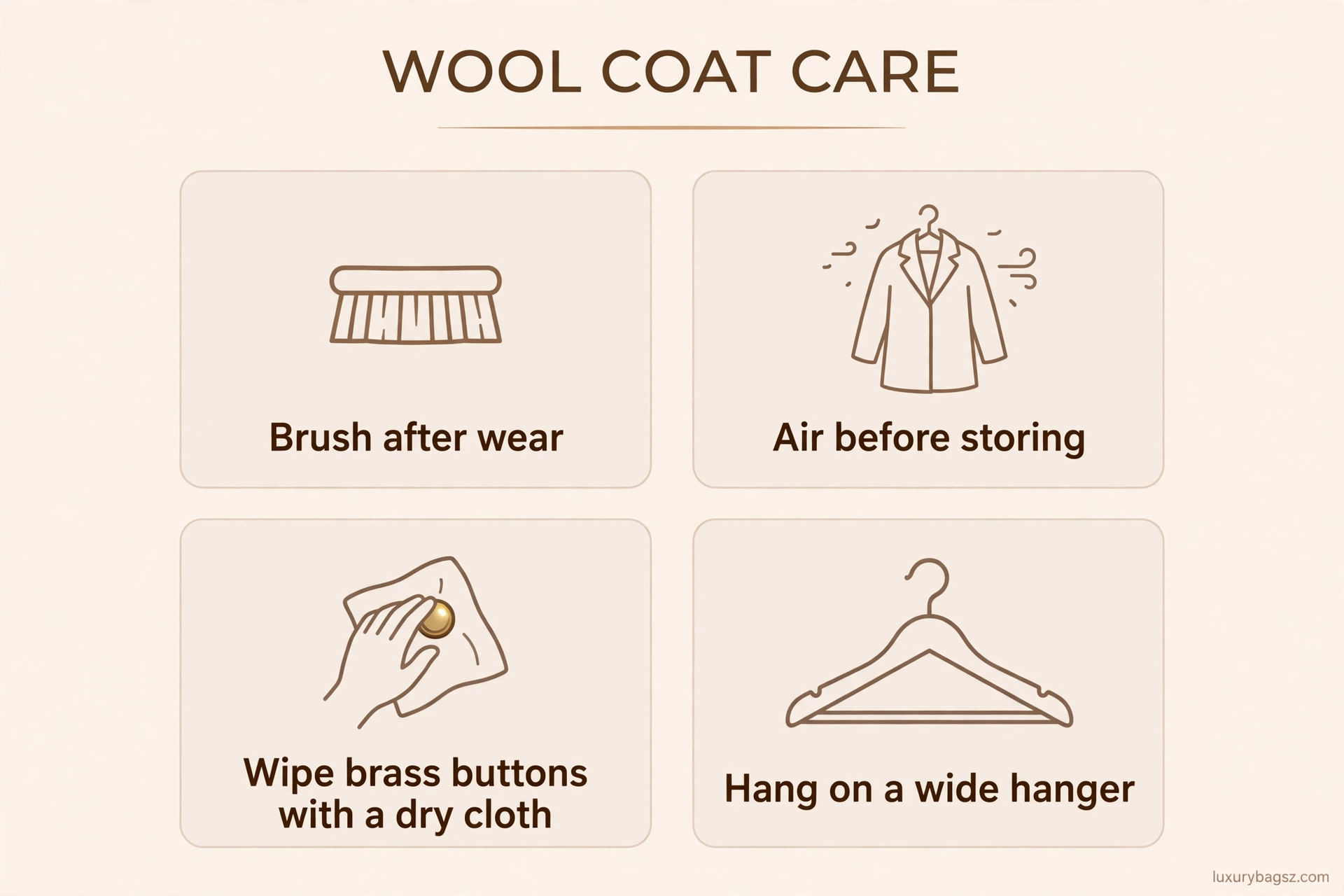
Brush a wool coat after wear with a soft garment brush, working downward. This lifts dust before it settles and keeps the surface smooth.
Air the coat for a day before returning it to the wardrobe, and store it on a wide or padded hanger so the shoulders keep their military line.
Wipe brass buttons with a dry cloth when you notice fingerprints. Catching tarnish early means you rarely need polish at all.
Leather boots reward the same routine, and our steps for polishing cadet boots cover the full method in minutes.
Mistakes That Tip It Into Costume
Wearing camouflage print with a military coat and combat boots is the fastest route to fancy dress. Keep camo as a single accent, or skip it entirely.
Medals, badges and rank-style insignia are best left alone. They borrow meanings the outfit has not earned and they distract from the tailoring.
Too much gold is another trap. Brass buttons plus braid plus gold jewellery plus a chain bag overloads the eye; pick two shiny elements at most.
Finally, avoid the head-to-toe olive outfit unless the shades and fabrics clearly differ. Tonal dressing works, but it needs texture contrast to stay interesting.
Fit is the last costume trap. Uniform dressing is tailored dressing; a sloppy, oversized military piece reads as borrowed fancy dress, while the same piece fitted reads as fashion.
When in doubt, remove one element before leaving the house — a belt, a badge-like brooch, the second brass-toned accessory. Military chic always survives subtraction.
Frequently Asked Questions
Is military chic in fashion every year?
It returns in some form most autumns because the pieces are practical classics. Coats, field jackets and boots never fully leave the shops, so buying well means the trend costs you little to join.
Can I wear military chic to the office?
Yes, if you choose the tailored end of the trend. A military blazer, an epaulette coat or a belted navy jacket all read as smart workwear when the rest of the outfit stays plain.
What colours go with olive clothing?
Cream, black, denim blue, burgundy, camel and white all pair well with olive. Gold-toned jewellery suits it too, because the warmth echoes brass buttons and hardware.
How do I stop the look feeling masculine?
Balance the structure with one softer element: a silk blouse under a blazer, a skirt with a field jacket, or hair and makeup kept natural rather than severe.
Are cargo trousers part of the trend?
Yes, in their modern, flat-pocket form. Choose a straight or tapered leg in olive, khaki or black, and style them like ordinary trousers with knitwear or a blazer.
What shoes work best with military chic?
Lace-up boots are the classic match, but loafers, clean trainers and heeled ankle boots all work. Match the shoe's polish level to the occasion rather than to the jacket.
Is camouflage print necessary for the trend?
No. Most military chic outfits contain no camo at all. The trend is about tailoring, hardware and colour; print is an optional accent for casual pieces only.
What should I buy first on a budget?
A field jacket or a military-style blazer gives the most outfits per pound. Both layer over clothes you already own, so you can test the trend before adding boots or a coat.
How do I clean brass buttons that have tarnished?
Wipe them with a dry cloth first. For heavier tarnish, use a tiny amount of brass polish on a cloth, keep it off the surrounding fabric, and buff dry straight away.
Can older women wear military chic?
Absolutely. The tailoring and structure flatter at any age, and a navy or olive coat with brass buttons is one of the most elegant cold-weather looks available.
Final Verdict
Military chic rewards restraint: one well-cut piece, a disciplined palette and plain partners. Start with a field jacket or coat, keep the hardware count low, and the trend will serve you for seasons rather than a single autumn.






