Milan Fashion Week Recap: Craft, Colour and the Houses That Lead Italy
Milan in Brief: Where Craft Is the Headline
A Milan Fashion Week recap always comes back to making. Milan is the city of leather, weaving, tailoring and family-run houses, and its strongest shows sell skill as much as silhouette. Read any recent season in retrospect and the pattern holds: Prada sets the talking points, Bottega Veneta leads on craft, Fendi plays with its icons, and colour and print arrive via Versace and Dolce and Gabbana.
Key Takeaways
- Milan's identity is craft: leather work, weaving, knitwear and sharp tailoring.
- Prada, Gucci, Bottega Veneta, Fendi, Versace and Dolce and Gabbana anchor the calendar.
- Recaps age fast; judge a Milan season by what reaches shops and resale, not day-one hype.
- Italian colour and print are bold, but the lasting buys are usually the quiet tailored pieces.
- Milan bags travel well: woven, structured and logo-led styles hold demand for years.
- Always check which creative era a recap describes before drawing shopping lessons from it.
What Makes Milan Different
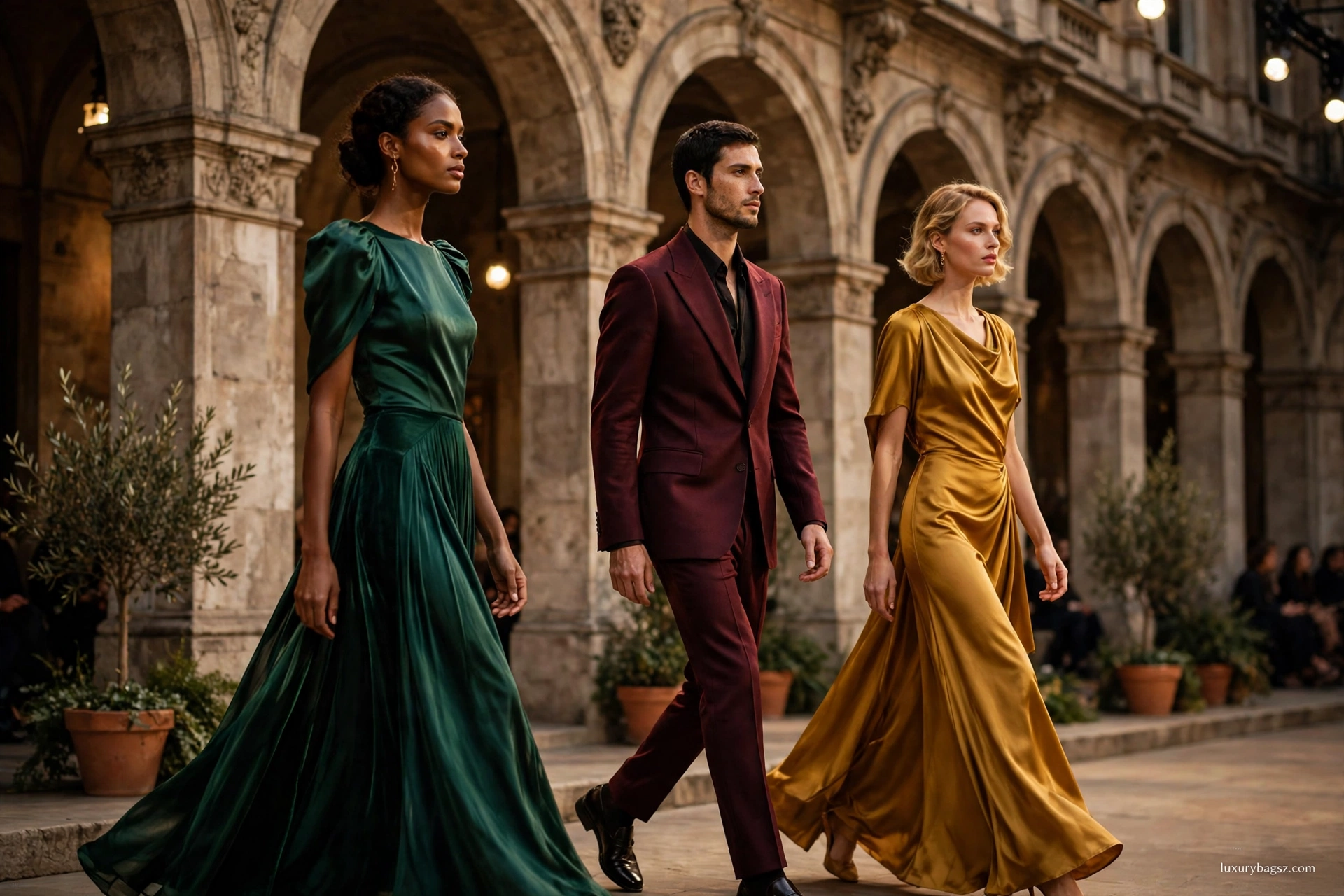
The four-city circuit splits by character. New York sells polish, London sells experiment, Paris sells grandeur, and Milan sells product made to an unusually high standard. That is why a Milan recap reads differently. Reviewers talk about leather grades, knit weights and shoe construction alongside the usual talk of themes and sets. Our wider fashion week trend reports set Milan in the full circuit, which helps explain why its trends often prove the most wearable. Milan is also a trade city. Many collections are designed with buyers in the front row, so what walks usually bears a close family likeness to what later hangs in stores.
The Houses That Anchor the Week
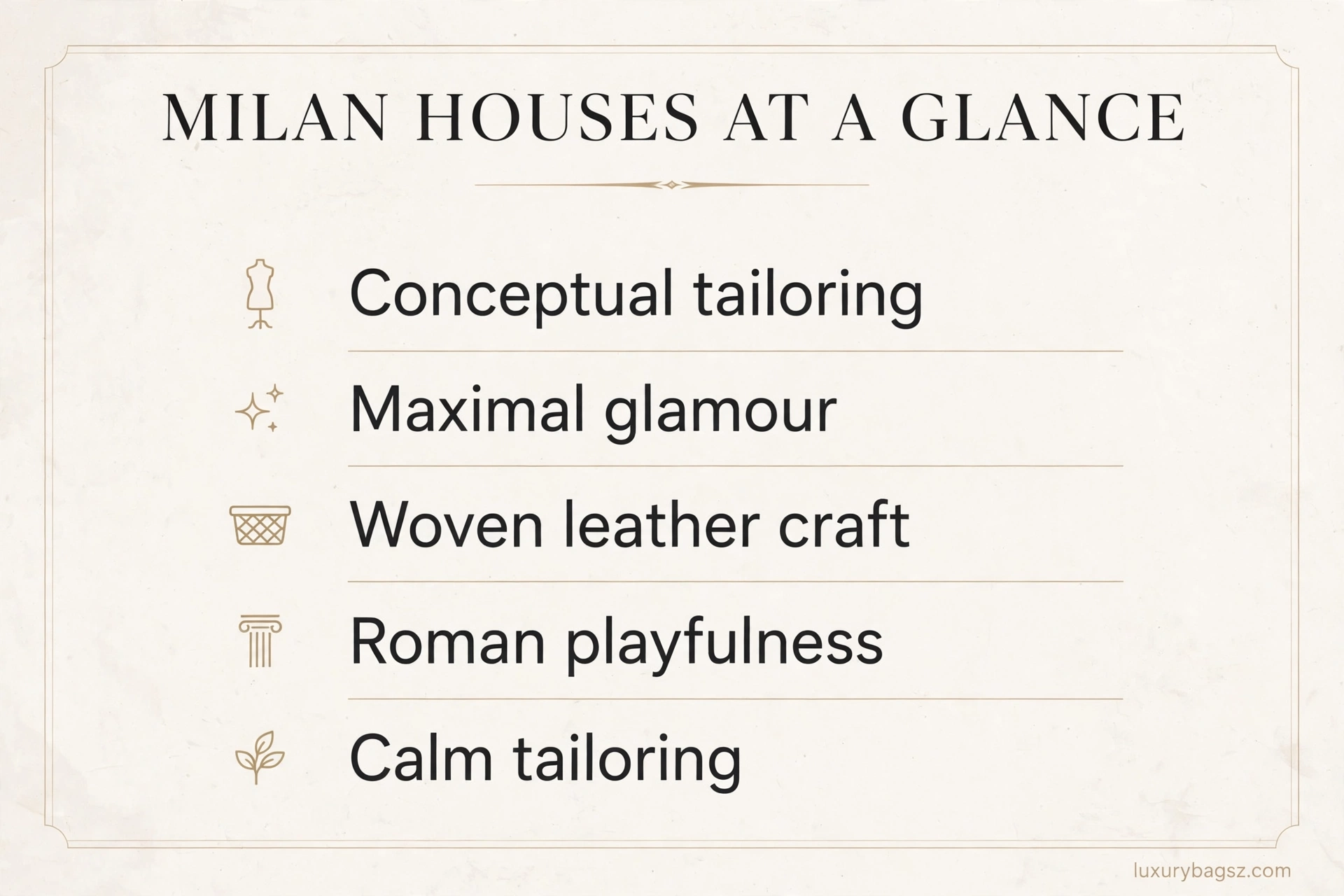
Prada is Milan's pace setter. Whatever Miuccia Prada and her co-designer era shows becomes the talking point other collections are measured against within days. Gucci brings the audience and the noise, with each creative era swinging the house between minimal polish and full maximal colour. Recaps from different years can read like different brands. Bottega Veneta is the craft flagship, famous for woven leather made without logos. Fendi counters with Roman wit, playfulness and some of the most collected bags in fashion. Versace and Dolce and Gabbana supply the glamour end: print, gold, lace and Sicilian drama. Armani, by contrast, closes the loop with calm, soft tailoring season after season.
Craft Moments That Define a Milan Season
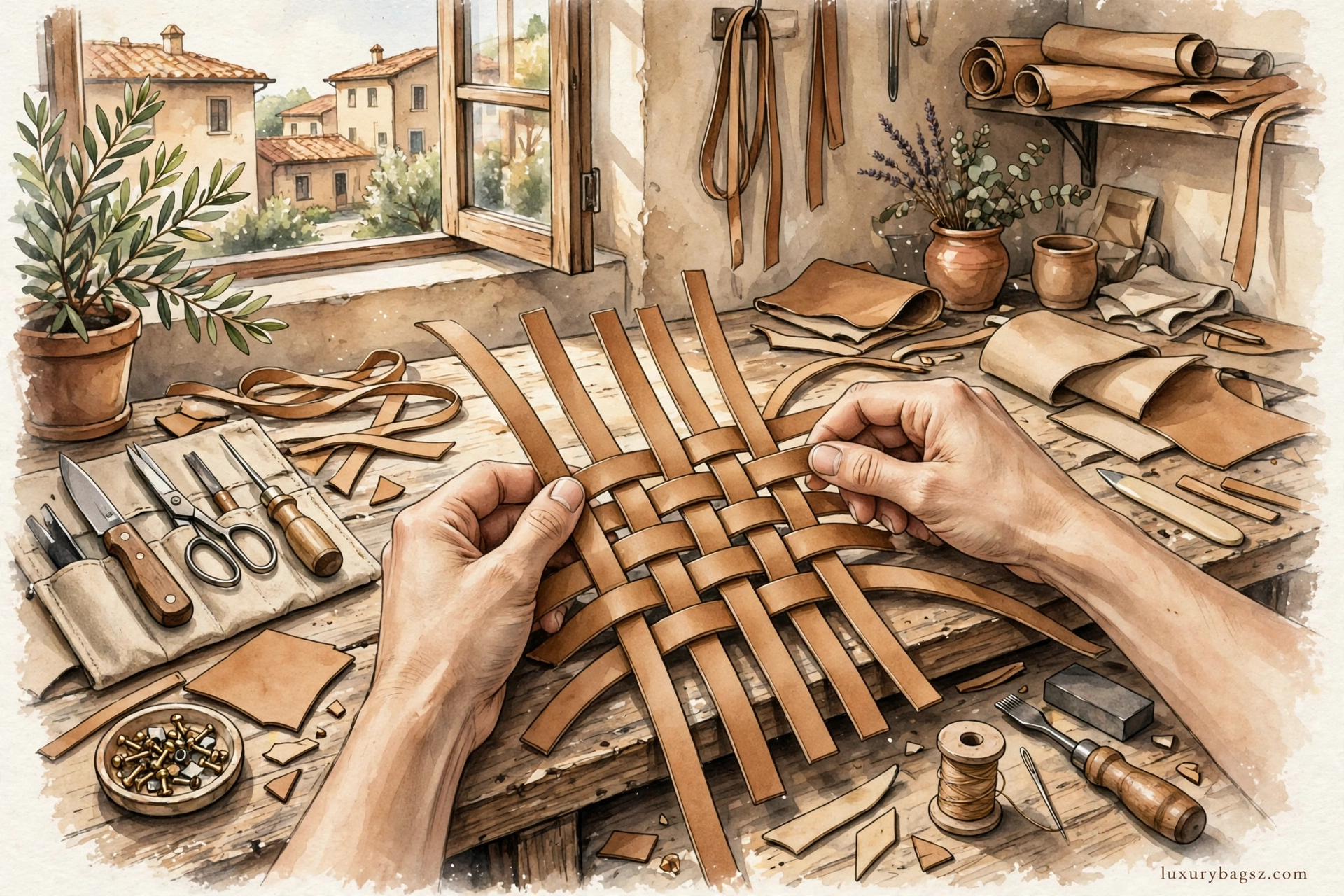
Woven leather is Milan's signature image. Strips of leather worked by hand into bags, shoes and clothing take hours, and the best houses show the process as proudly as the product. Knitwear is the second craft story. Italian mills produce fine, dense knits that drape rather than sag, and Milan shows use them for dresses, sets and tailoring alike. Tailoring itself is the third. Milanese cutting tends to be structured but soft, with shoulders that shape the body instead of armouring it. When a recap praises a collection's richness, this is usually what it means: cloth and leather handled so well that simple shapes look expensive.
Colour, Print and the Italian Temperament
Milan colour is confident. Cobalt, scarlet, emerald and gold appear without apology, often in a single look, where a Paris collection might stop at one accent. Print follows the same logic. Florals, animal patterns and archive motifs are used at full scale, especially by the houses with strong Mediterranean identities. The retrospective lesson is to separate drama from durability. The printed showpiece dates quickly; the same house's plain tailored coat in a strong colour rarely does. Buyers know this, which is why Milan recaps that list only the loudest looks can mislead. The quiet rails behind the runway often carry the season's real sales.

Trends That Recur Season After Season
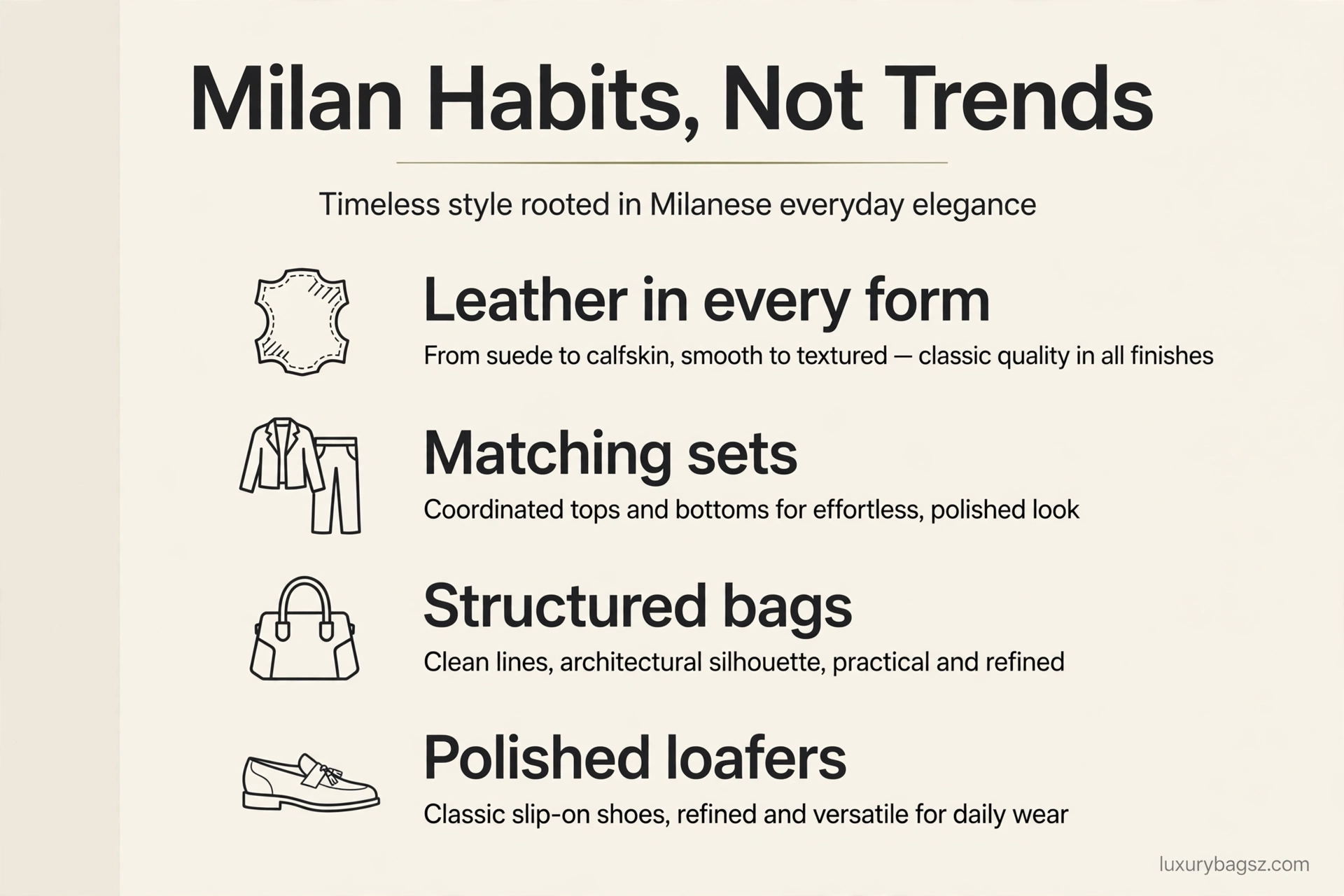
Certain ideas return to Milan so reliably that they are better called habits than trends. Leather in every form, from pencil skirts to full suits, is the first. The second is the matching set: knit twin pieces, skirt suits and coordinated tailoring that make dressing simple. Milan houses cut these better than almost anyone. Third comes polish in accessories: structured bags, loafers, belts and gold-toned jewellery that finish a look rather than fight it. A good recap spots which habit a season refreshed. A bad one announces leather or tailoring as a discovery, when in Milan they never really went away.
Street Style Outside the Palazzi
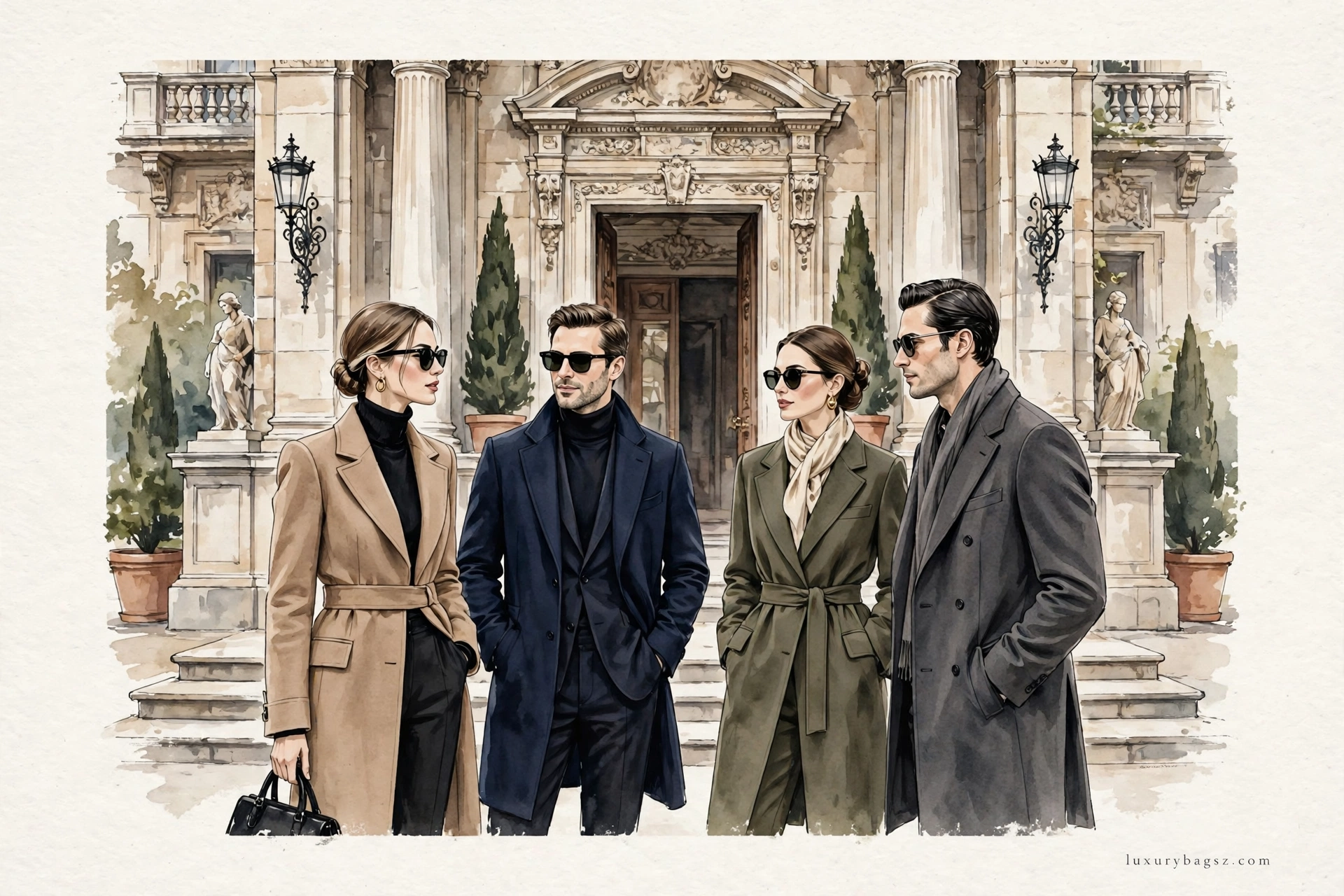
Milan street style is the most tailored of the four cities. Guests favour full suits, long coats, sunglasses and polished shoes, even when the shows themselves turn playful. Photographers gather outside palazzo venues and show spaces across the city, and the guest looks often preview which bags and coats will sell that season. For visitors, the dress code lesson is useful: Milan rewards neatness. A pressed coat, clean leather shoes and one strong accessory will always fit the city's mood. It is also the most watchable city for menswear outside the shows, a theme our men's coverage picks up in more depth elsewhere in this series.
Milan Bags and Their Long Afterlife
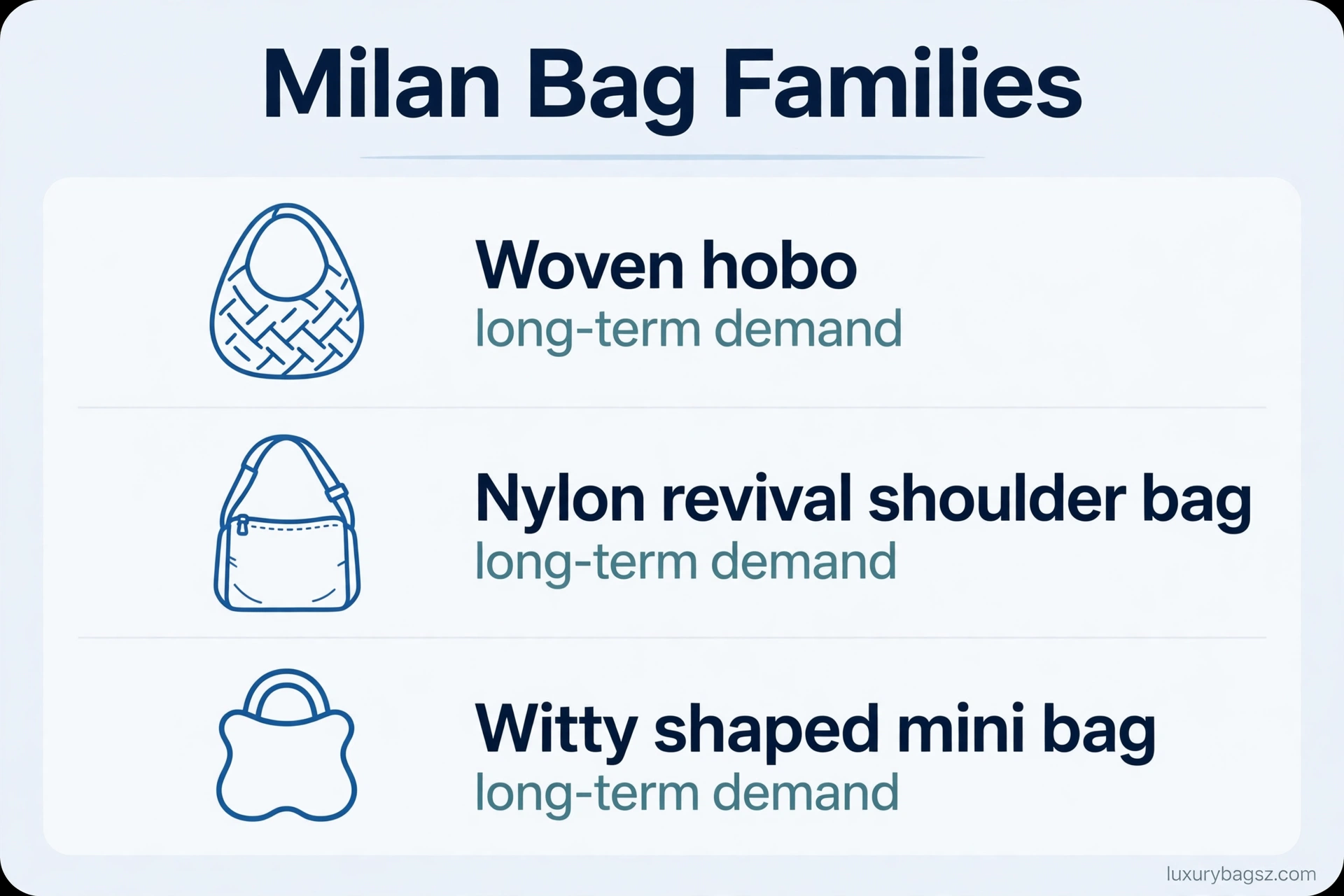
Milan produces an outsized share of the bags collectors chase. Woven styles, nylon revivals and witty shaped bags all began as Milan runway ideas. The Bottega Veneta Jodie bag guide shows how a slouchy woven hobo became a modern staple, while the Prada Re-Edition 2005 guide tracks a nylon archive brought back to huge demand. That afterlife is the real recap metric. A bag still requested five years after its show did more for its house than any single glowing review. When reading older Milan coverage, follow the accessories first. Clothing dates by silhouette, but a strong bag family often survives several creative eras intact.
How to Read a Milan Recap Well
First, note the season and the creative director in charge. Milan houses change direction sharply when leadership changes, and an old recap describes a closed era. Second, split the showpieces from the commercial rail. Both matter, but only one of them will ever meet your wardrobe or your resale search alerts. Third, watch what returns. Our Fendi Baguette bag guide is a case study in a Milan icon that recaps keep rediscovering every few years. Finally, let time grade the season. The Milan collections that matter are the ones still visible in shops, street style and resale listings long after the week ends.
Frequently Asked Questions
When does Milan Fashion Week take place?
Twice a year for womenswear, usually in February and September, with separate menswear weeks typically in January and June. Exact dates shift slightly each season.
Which houses anchor Milan Fashion Week?
Prada, Gucci, Bottega Veneta, Fendi, Versace, Dolce and Gabbana and Giorgio Armani are the long-standing anchors, joined by a changing cast of younger Italian labels.
What is Milan Fashion Week known for?
Craft and product. Leather work, weaving, knitwear and tailoring are the city's strengths, and its collections tend to translate to shop rails more directly than most.
Why do Milan recaps from different years disagree?
Creative leadership changes the story. A house under one designer can be minimal and under the next intensely decorative, so always check which era a recap describes.
Which Milan trends last longest?
Leather clothing, matching tailored sets, structured bags and polished loafers recur so often they are better treated as Milan habits than as passing trends.
Are Milan runway bags good long-term buys?
The strongest families often are. Woven Bottega Veneta styles, Prada nylon revivals and the Fendi Baguette have all held demand well beyond their first seasons.
How should I use an old Milan recap?
As background, not as a shopping list. Use it to understand a house's era and icons, then check current and resale availability before spending anything.
What do guests wear to Milan shows?
Tailoring leads: long coats, suits, sunglasses and polished leather shoes. Milan street style is notably neater and more classic than London or New York.
Is Milan better for clothing or accessories?
Both are strong, but accessories travel furthest. Milan bags and shoes are exported, collected and resold worldwide at a scale its clothing rarely matches piece for piece.
Where does Milan sit in the fashion month order?
Third, after New York and London and before Paris. Its position means Milan trends are often the ones Paris either confirms or deliberately answers a week later.
Conclusion: Milan Rewards the Patient Reader
A Milan recap is best read slowly and sceptically: note the era, honour the craft, and wait to see what survives into shops and resale. Do that, and Milan stops being a blur of shows and becomes what it really is, the working engine room of luxury fashion.