

The Jean Paul Gaultier Edit: Stripes, Corsets and Pieces Worth Buying
The Enfant Terrible, Edited: Gaultier in Brief
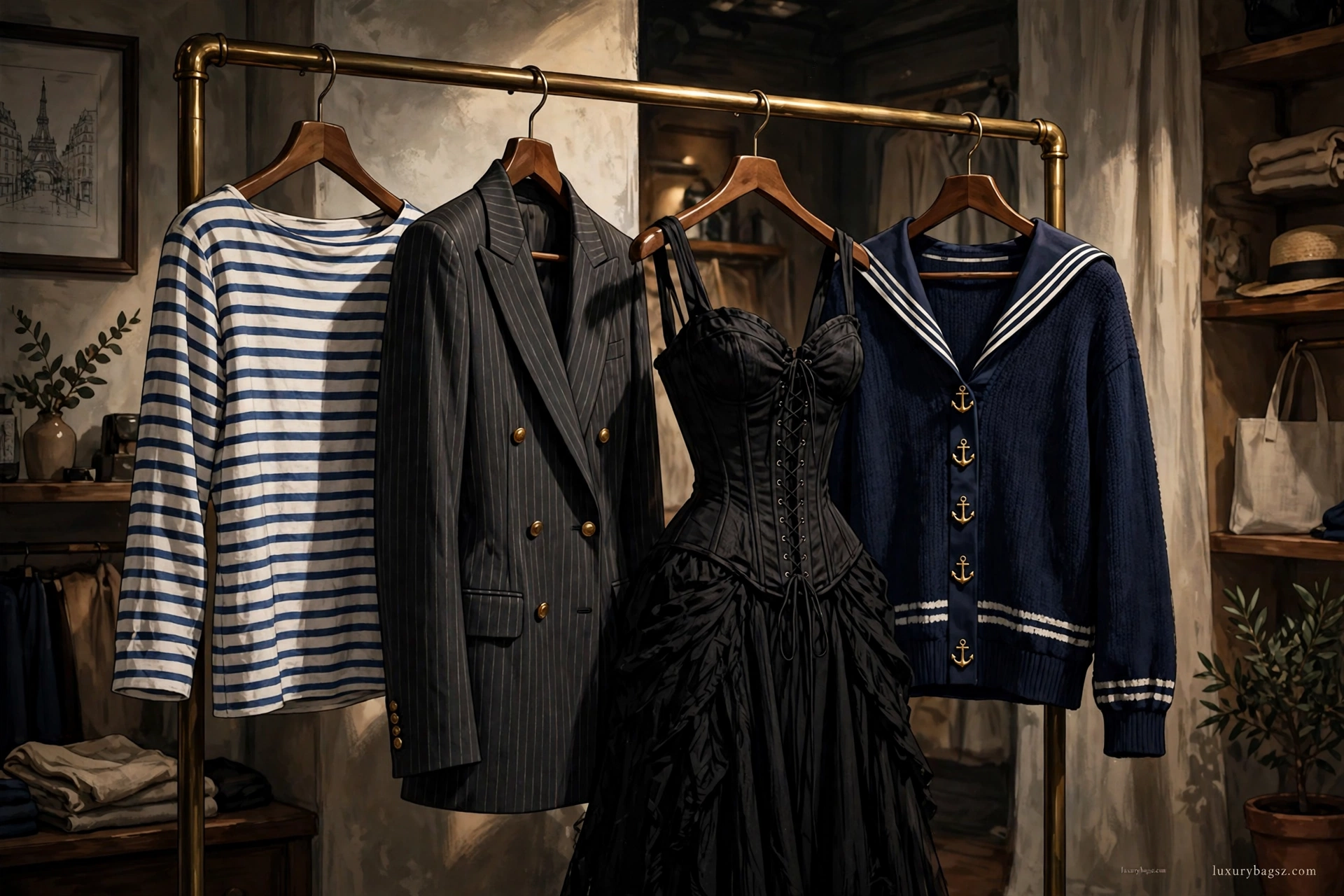
The Gaultier pieces worth owning are the ones built on his five lasting codes: sailor stripes, the corset, pinstripe tailoring, tartan and sculptural silhouettes. Buy those, vintage or new, and you own the house. Skip the novelty prints that date in a season. A Breton top, a corset worn over a shirt and a pinstripe blazer have been fashionable for forty years because they were never really trends.
Key Takeaways
- The marinière stripe is the entry point: timeless, unisex and endlessly restyled.
- Corsetry is the signature; modern versions lace over shirts rather than under dresses.
- Pinstripe tailoring is the most wearable investment and suits every age.
- Vintage Gaultier is plentiful; condition and label checks decide a good buy.
- Typical current pieces run from around $300 to $1,500; archive pieces vary widely.
- Since the founder's final show in 2020, the house works with guest designers.
Why Gaultier Still Matters
Few designers changed everyday dressing as much. Gaultier put underwear on the outside, skirts on men and sailors on the runway, and the high street has copied all three ever since. Start with the name itself: our guide on how to pronounce designer names covers Gaultier and the other French houses that trip up new buyers. His runway career ran from the 1970s to a final couture show in 2020. The label continues with guest designers, so new pieces now carry a rotating point of view. That history is why vintage matters here more than at most houses. The archive is deep, recognisable and still wearable.

His influence hides in plain sight: the striped top in every high-street window, underwear styling in pop videos, perfume bottles shaped like bodies. Owning an original piece is owning the source.
The Codes Behind the Clothes
The sailor stripe came from French naval uniforms and became the house's logo in cloth form. It appears on tops, dresses, knitwear and perfume packaging alike. The corset is the second code, made famous on stage in 1990 and refined for decades. Tartan, kilts and pinstripe suiting pulled from London tailoring complete the set. Our feature on fashion designers inspired by artists shows the wider habit Gaultier shared: treating the body and its coverings as a canvas. Learn the five codes and you can spot a strong piece in a vintage rail in seconds, without reading a single label.
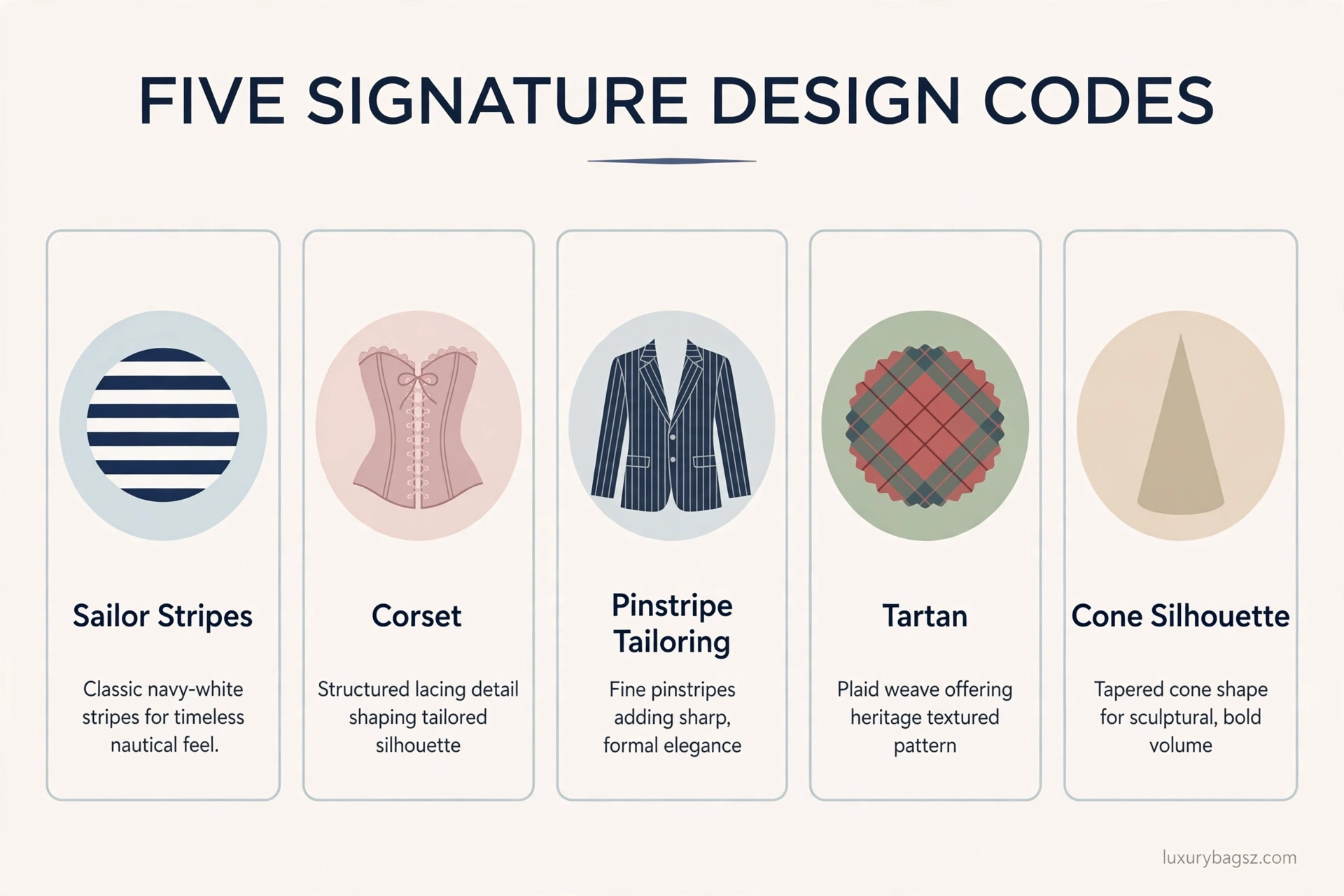
The codes also mix well with plain modern wardrobes because each began as a classic garment: a sailor's top, a tailor's suit, a dancer's corset, a workman's tartan.
Notice how often the codes appear together in the archive photographs: stripes under tailoring, corsetry over shirting. The house styled its own codes in layers long before stylists made it a rule.

The Marinière: Your First Buy
A heavy cotton Breton top is the easiest designer purchase in this whole edit. It goes with jeans, tailoring, skirts and under blazers, in every season. Look for firm cotton that holds its shape, stripes that match at the seams and a boat neck that sits flat. Loose, sliding necklines are the sign of a weaker make. Size it close but not tight. The classic French fit skims; the fashion fit slouches. Both are correct, but own the choice deliberately. Pre-owned marinières are excellent value because the design barely changes. Typical resale prices sit far below current retail for the same cloth.
Care for the cotton properly and it outlives trends entirely: wash cool, reshape while damp and store folded, since hanging stretches a heavy knit or jersey at the shoulders.
Corsetry Without the Costume
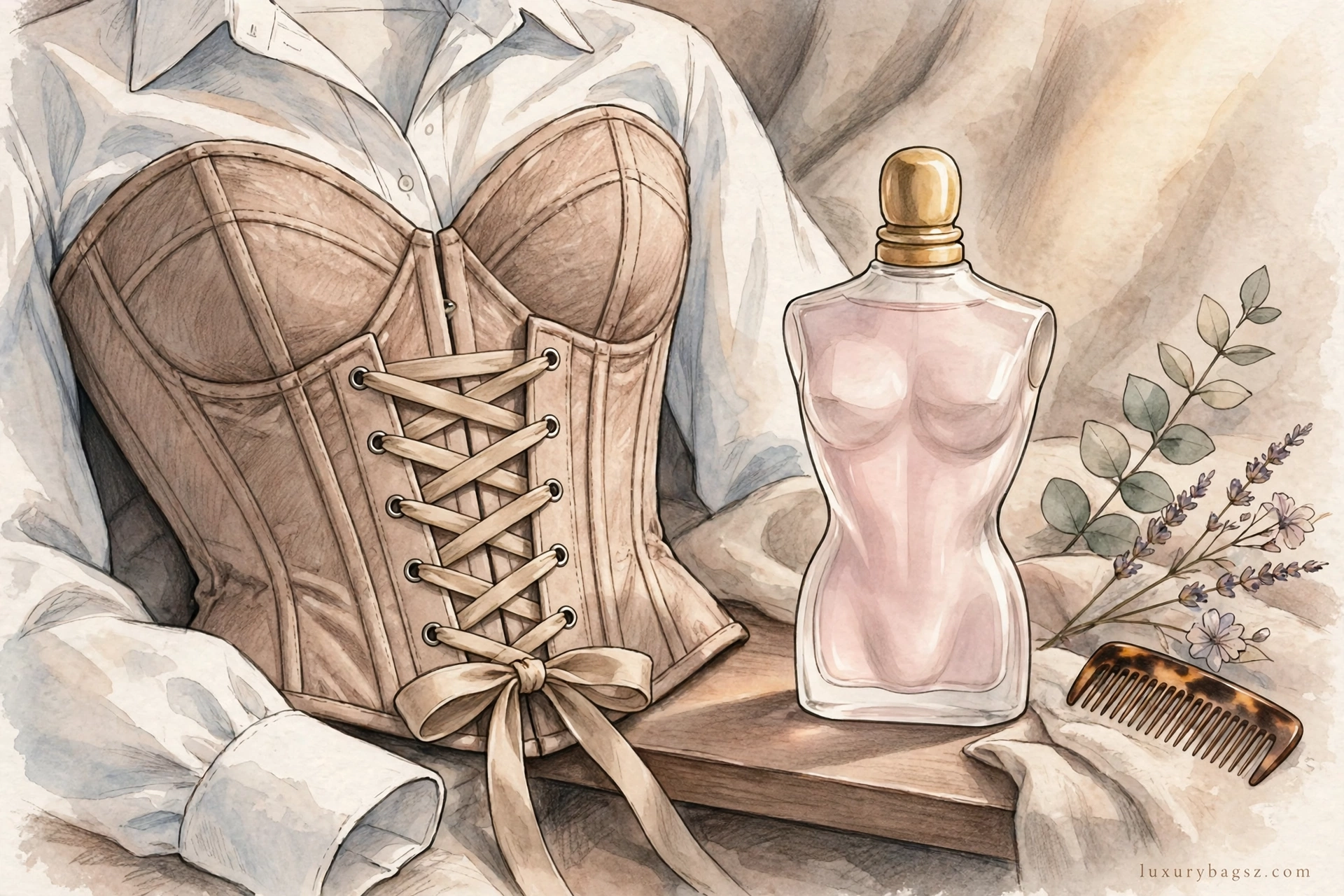
The modern way to wear a Gaultier corset is over something: a white shirt, a fine knit or a slip dress. Worn alone it reads as costume; layered it reads as styling. Boning should feel smooth, never sharp, and lacing should let you breathe and sit. A corset you cannot eat in will not be worn twice. Start with a corset belt or a laced top if a full corset feels like a statement too far. The code works at every volume. Fit matters more than drama. Buy the size that closes comfortably on the middle hooks, not the size that needs the tightest lacing.

Corset dresses exist too, but the layered top is the friendlier entry. It adjusts to your body on the day, rather than demanding your body adjust to it.
Hand-feel separates the copies quickly. Real boning channels are stitched, structured and even; printed corset patterns on jersey are a different, lesser garment wearing the code as decoration.
Pinstripe Tailoring and Tartan
A pinstripe blazer is the grown-up heart of the label. The stripes lengthen, the cut is sharp and the whole thing works with denim as happily as with matching trousers. Tartan appears in kilts, skirts and coats, often mixed with tailoring cloth. It is the punk end of the house and pairs best with plain black elsewhere. Both lines suit the pre-owned market well because suiting cloth ages slowly. Check trouser hems and jacket elbows for shine before buying. For men, the same codes apply: striped knits, tailored jackets and the occasional kilt for the brave. The house dressed men from the start.
Check vintage tailoring at the lining: a clean, intact lining with the house's finishing is a strong sign the jacket was made and kept properly.
Buying Vintage Gaultier Well
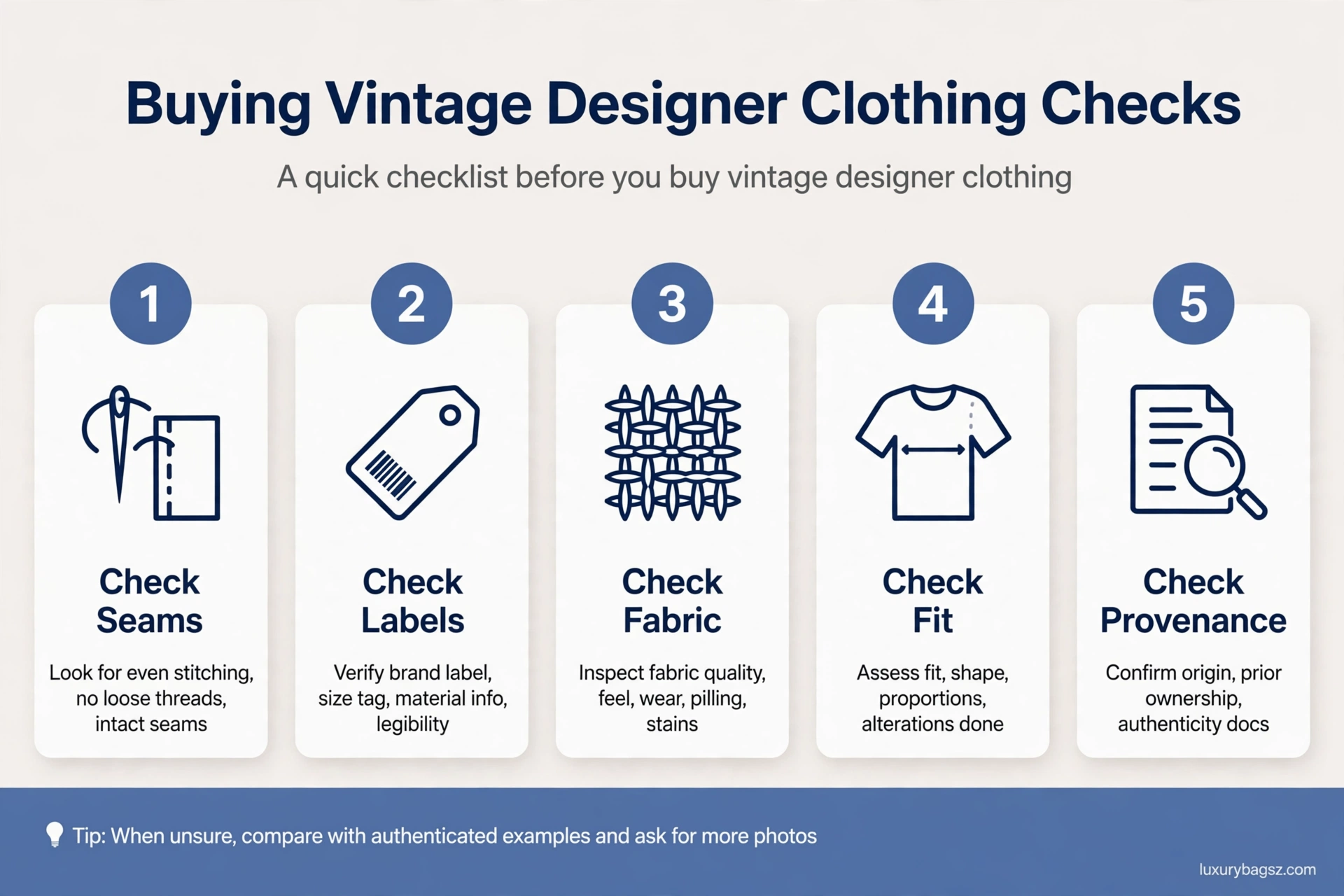
Distinguish true vintage from later retro-styled pieces before paying archive prices; our explainer on vintage vs retro clothing makes the difference plain. Check seams first. Designer construction shows in even stitching and clean finishing, even on decades-old pieces. Read the label and care tags carefully, and compare fonts and layouts with authenticated examples. Labels changed over the years, so era consistency matters. Smell and feel the fabric. Old synthetics can turn sticky or brittle; natural fibres age more kindly and are the safer vintage buy.
Buy from sellers who specialise in designer vintage and answer questions in detail. Their premium over a lucky charity-shop find is the price of certainty.
Era helps pricing: pieces from the house's most inventive decades attract collectors, while later licensed lines need sharper scrutiny before archive prices are paid.
Prices, Old and New
Current ready-to-wear from the house typically runs from around $300 for tops to $1,500 and beyond for tailored and corseted pieces, varying by line and season. Archive and vintage prices vary far more widely. Common striped tops can be found from around $80 pre-owned, while documented runway pieces command serious collector money. Fragrance is the accessible icon: the torso-shaped bottles are display pieces in their own right and typically cost far less than clothing. Never pay a collector price without provenance. A story is not documentation, and the market rewards papers, receipts and clear photographs.
Signatures and documented runway provenance sit at the very top of the market. Most buyers should enjoy that tier as spectators and shop the wearable archive instead.
Styling the Edit Day to Day
One code at a time is the rule. Stripes with plain tailoring, a corset over a plain shirt, tartan with black. Two codes together is a look; three is a tribute act. The Breton top under a navy blazer with wide trousers is the everyday uniform from this edit, worn by half of Paris for good reason. Evening is where the corset earns its keep, over a silk shirt with tailored trousers and a small bag. Keep jewellery simple. The clothes carry enough theatre on their own.
Keep the rest of the outfit current: modern trousers with a vintage corset top, or a vintage blazer over a plain new knit. One era at a time keeps it fashion, not fancy dress.
For evening, swap the blazer for the corset over the same striped top's dress cousin and the day look becomes a night look with one change, which is the edit working as intended.
Frequently Asked Questions
Is Jean Paul Gaultier still designing?
He presented his final couture show in 2020 and stepped back from the runway. The house continues with guest designers creating collections under the label. His influence continues through the guest designers, each invited to reinterpret the codes rather than imitate them.
What is the most iconic Gaultier piece?
The corset, especially the cone-bra corset worn on stage in 1990, is the most famous. The sailor-striped marinière is the most widely worn. The perfume bottle runs it close in recognition, which is why so many dressing tables hold one even when the wardrobe holds none.
Are Gaultier stripes unisex?
Yes. The marinière began as a naval uniform top and the house has always cut stripes for everyone. Choose fit by shoulder and length, not by department. The perfume and the knitwear follow the same principle, which is why the whole brand feels coherent across forty years.
Is vintage Gaultier a good buy?
Often, yes. The designs are recognisable, the better pieces were well made and prices for common items stay reasonable. Condition checks decide each purchase. The strongest buys are the codes in natural fibres: cotton stripes, wool tailoring and silk corsetry, all in clean, wearable condition.
How do I spot a fake vintage piece?
Look for uneven stitching, flimsy cloth, misspelt labels and prints that sit on the surface rather than in the weave. Compare with authenticated photographs. An honest seller will welcome the questions; reluctance to provide photographs or measurements is itself an answer.
What does the torso perfume bottle signify?
The bottle echoes the house's corsetry and its play with the dressed body. It has become a design object in itself and a common first Gaultier purchase. Price is a clue as well: a documented runway piece offered for the price of a high-street top is telling you something.
Can I wear a corset top to dinner?
Yes, layered over a shirt or dress and laced for comfort. If you cannot sit and eat comfortably, loosen the lacing rather than enduring it. Choose a retailer with returns, since evening tailoring and corsetry both punish a guessed fit.
Do Gaultier pieces hold their value?
Documented runway and archive pieces can hold or grow in value. Standard seasonal pieces behave like most designer clothing and depreciate; buy those to wear. Buy to wear first in all cases, and let any appreciation be a pleasant surprise rather than the plan.
What size should I buy in vintage pieces?
Vintage French sizing often runs smaller than modern high-street sizing. Work from garment measurements, not the label, and ask sellers for flat measurements. Sellers who provide flat measurements across the chest, waist and length are the ones worth returning to.
Where should a beginner start?
With the marinière. It is the house in one garment, it suits everyone and it will still be in your wardrobe in twenty years. Follow it with the pinstripe blazer when budget allows; between them, stripes and tailoring cover most of the house's everyday genius.
Summary: Buy the Codes, Skip the Noise
Gaultier endures because his codes were never gimmicks for long: stripes, corsetry, tailoring and tartan are now part of how everyone dresses. Buy the strongest version of one code at a time, vintage or new, and the edit builds itself.






