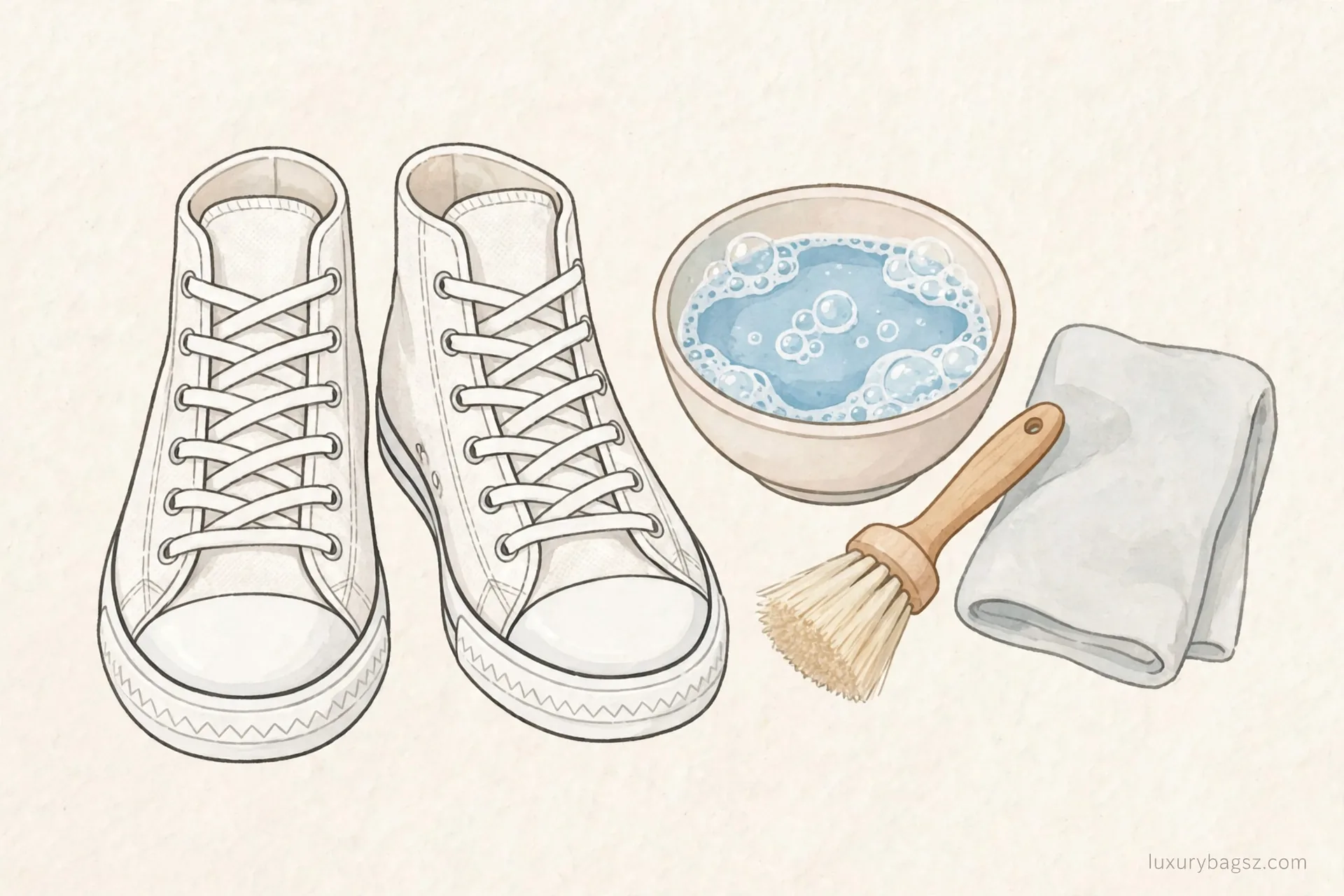
Clean Converse Chuck Taylors by hand, with warm water and mild soap, and let them air-dry indoors. That single sentence covers most of what matters, and it is also what the maker advises: a damp cloth or sponge with mild soap, gentle scrubbing for tough marks, and air drying away from direct sun.
Machine washing works for plain canvas pairs, but it is rougher on glue, shape and prints, and it is the wrong choice for leather, suede, platform or decorated pairs. Hand washing takes a little longer, but it keeps the shoes looking right for far more wears.
Skip bleach, skip the dryer, and skip soaking the whole shoe. Those three shortcuts cause most yellowing, warping and sole separation. The method below takes about 30 minutes of work plus a day of drying, and it suits high-tops, low-tops and Chuck 70s alike.
Key Takeaways
Hand wash with warm water and mild soap. This is the safest method for canvas Chucks.
Remove laces and insoles first, and wash them separately.
Scrub canvas gently with a soft brush or cloth. Hard scrubbing frays canvas and fades prints.
Clean white rubber with baking soda paste, a magic eraser or white toothpaste for scuffs.
Never use bleach on Chucks. It yellows white canvas and weakens fibres over time.
Air-dry indoors, stuffed with paper, for 24 to 48 hours. Never use a dryer or direct sun.
Machine washing is acceptable for plain canvas pairs on a gentle cycle, but it risks shape and glue.
Never machine-wash leather, suede, platform, embroidered or limited-edition pairs.
Prep: What You Need and What to Remove
Gather warm water, a mild soap or laundry detergent, a soft brush or old toothbrush, a clean cloth, baking soda, and white paper towels for stuffing. You do not need special sneaker cleaners for canvas Chucks, and household bleach should stay in the cupboard.
Remove the laces and pull out the insoles if they come out. Laces wash separately in warm soapy water, and insoles can be wiped or hand-washed on their own. Cleaning with laces in leaves dirty lines under the lace path and traps soap in the eyelets.
Brush off loose dirt outdoors first, including dried mud on the soles and canvas. Dry brushing removes most surface dirt, so the wash water stays cleaner and you scrub less. For muddy shoes, let mud dry fully, then brush it off before any water touches the canvas.
Check the shoes for damage before washing. Loose glue, peeling foxing tape or a torn eyelet should be noted, because washing can worsen them. If glue is already lifting, hand wash very gently around that area, and consider a cobbler or a glue repair after drying.
Wash the Canvas Gently
Mix a small amount of mild soap or laundry detergent into warm water. You want lightly soapy water, not a bubble bath, because excess soap is hard to rinse from canvas and leaves stiff, dull patches as it dries.
Dip a soft brush or cloth in the mix and scrub the canvas in small circles, working one area at a time. Use light pressure and let the soap do the work. For printed or coloured canvas, scrub even more gently, because heavy scrubbing fades prints and thins colour.
Rinse by wiping with a clean cloth dampened in plain water, rinsing the cloth often. Repeat until no soap remains, because soap residue attracts dirt and stiffens canvas. Avoid soaking the whole shoe in a basin, which saturates glue and padding unnecessarily.
For stubborn canvas stains, make a paste of baking soda and a little water, spread it on the stain, and leave it for 15 to 20 minutes before brushing gently and wiping away. Baking soda lifts dirt and odour without the yellowing risk that bleach carries.
Whiten the Rubber Toe, Foxing and Soles
White rubber yellows and scuffs faster than canvas, and it needs its own treatment. Baking soda paste is the best starting point: spread it on the rubber toe cap, sidewalls and sole edges, scrub with an old toothbrush, and wipe clean with a damp cloth.
For scuffs that paste leaves behind, a magic eraser, used damp, works well on rubber. Rub lightly, because the eraser is mildly abrasive, and keep it off canvas and prints, where it can fade colour and roughen fibres. Rinse the eraser often and check progress as you go.
White, non-gel toothpaste with a toothbrush is another good rubber cleaner, and it suits small scuffed areas. Apply a thin layer, scrub gently, and wipe away fully. Avoid coloured or gel toothpastes, which can tint white rubber, and never use toothpaste on canvas.
Acetone nail polish remover also cleans rubber, but treat it as a last resort. It is flammable, harsh, and can damage canvas and glue if it spreads. If you use it, apply a tiny amount on a cotton ball to rubber only, in a ventilated spot, and wipe away at once.
Laces, Insoles and Insides
Wash laces separately in warm soapy water, rubbing them between your hands or with a soft brush. White laces brighten well with baking soda paste left for 20 minutes, then rinsed. If laces stay grey after two washes, new laces cost little and transform the whole shoe.
Wipe insoles with a damp cloth and mild soap, then let them dry fully before putting them back. For smelly insoles, sprinkle baking soda on them overnight, shake it out, and wipe clean. Replace insoles that are cracked, flattened or still smelly after cleaning.
Freshen the insides by wiping with a cloth dampened in equal parts water and white vinegar, then airing the shoes well. Vinegar smell fades as the shoes dry, and it cuts odour better than perfume sprays, which only mask it. Never soak the insides, which saturates padding.
Stuff the shoes lightly with paper while they wait for insoles, so they hold their shape. Newspaper works, but plain white paper towels are safer for white canvas, because newsprint ink can transfer onto damp fabric. Change the stuffing once if it gets very damp.
Machine Washing: The Honest Verdict
Plain canvas Chuck Taylors can go in a washing machine, and many owners do it without disaster. Use a gentle or delicate cycle, cold water, mild detergent, and a laundry bag or pillowcase to protect the shoes and the machine. Remove laces and insoles first.
Even so, machine washing is rougher than hand washing. It stresses glue bonds, can warp the toe cap, fades prints, and shortens the life of the foxing tape around the sole. One machine wash rarely ruins a pair, but repeated machine washes add up to a tired-looking shoe sooner.
Never machine-wash leather, suede, platform, embroidered, sequinned or limited-edition Chucks. These materials warp, crack, shed decoration or lose shape in a machine, and the damage is usually permanent. Hand wash these pairs only, and gently.
If you do machine-wash, skip the dryer completely. Take the shoes out at once, stuff them with paper, reshape the toe and collar by hand, and air-dry indoors for 24 to 48 hours. A dryer warps rubber soles, cracks foxing and can shrink canvas unevenly.
Stains, Scuffs and Smell, Solved One by One
Grass stains respond to mild soap and gentle brushing, done promptly. Letting grass dry for days sets the stain, so clean grass marks the same day when you can. Baking soda paste helps on older grass marks, but expect a faint shadow on white canvas.
Mud is easy if you wait: let it dry fully, brush it off, then wash as normal. Washing wet mud smears it into canvas weave, where it dries grey and patchy. Patience with mud saves a second wash and a duller result.
Oil and food stains need blotting at once, then mild soap washing. Do not rub oil stains, which spreads them, and do not use harsh solvents on canvas. A stain that survives two gentle washes is usually set, and living with a faint mark beats damaging the canvas chasing it.
For general smell, baking soda overnight inside the shoes, shaken out in the morning, is the safest freshener. Rotate pairs when you can, and let Chucks air for a day between wears. Shoes worn daily without rest stay damp inside, and damp shoes smell no matter how often you wash them.
Drying Without Yellowing or Warping
Drying is where many clean Chucks are ruined. Air-dry indoors, in a ventilated spot away from direct sun and heat. Stuff the shoes with white paper towels to hold their shape and absorb moisture, and change the stuffing once if it gets soaked.
Drying takes 24 to 48 hours, so plan ahead and do not wear the shoes half-dry. Damp canvas stretches underfoot and dries into a warped shape, and damp padding holds odour. If you need the shoes sooner, a fan at room temperature helps, but heat does not.
Direct sun is the classic yellowing cause for white canvas and rubber. Sun also stiffens canvas and can shrink it unevenly. A shaded indoor spot dries more slowly but keeps white shoes white, which is the whole point of cleaning them.
Never use a dryer, a radiator or a hair dryer on Chucks. Heat warps rubber soles, cracks the foxing tape, loosens glue and can melt or distort synthetic trims. Room-temperature air is slower, but it is the only drying method that does not risk the shoes.
Leather, Suede and Special Chucks, Plus Storage
Leather Chuck Taylors need a different routine: wipe with a barely damp cloth, clean with a leather-specific cleaner, and condition lightly once dry. Never soak leather Chucks, never machine-wash them, and never use canvas methods such as baking soda paste on the leather itself.
Suede Chucks need dry care only: a suede brush and eraser, with a suede protector spray after cleaning. Water, soap and cream darken and flatten suede, and the damage is hard to reverse. Treat suede panels as a separate material, even on a mostly canvas shoe.
For platform Chucks, clean the platform sides like other rubber, but check the platform glue and edges carefully. Platforms add weight and leverage, so loose glue shows sooner. Hand wash platforms gently, and see a cobbler early if a platform edge starts lifting.
Store clean, fully dry Chucks in a cool, dry place, stuffed lightly with paper, out of direct sun. Avoid sealed plastic bags, which trap moisture, and avoid stacking heavy items on canvas shoes, which creases them. A little storage care keeps a clean pair looking clean.
Frequently Asked Questions
Can you wash Converse in the washing machine?
Plain canvas pairs can be machine-washed on a gentle, cold cycle in a laundry bag, but hand washing is safer. Never machine-wash leather, suede, platform or decorated pairs.
How do I clean white Converse without yellowing them?
Hand wash with mild soap, avoid bleach, and air-dry indoors away from sun and heat. Sun, bleach and dryer heat are the three main causes of yellowing.
What is the best way to clean the rubber on Chucks?
Baking soda paste with an old toothbrush works well, followed by a magic eraser for scuffs. White non-gel toothpaste also helps on small scuffed areas.
Can I use bleach on white Converse?
No. Bleach yellows white canvas over time and weakens fibres. Use baking soda paste, mild soap and careful drying instead for a brighter, longer-lasting result.
How long do Converse take to dry after washing?
Usually 24 to 48 hours indoors, stuffed with paper, in a ventilated spot. Never use a dryer or direct heat, which warps soles and cracks the foxing tape.
How do I clean Converse laces?
Wash them separately in warm soapy water, or soak white laces in baking soda paste for 20 minutes before rinsing. Replace laces that stay grey after two washes.
Can I clean leather Converse the same way as canvas?
No. Wipe leather with a barely damp cloth, use a leather cleaner, and condition lightly once dry. Never soak or machine-wash leather Chucks.
How do I get mud off Converse?
Let mud dry fully, brush it off, then hand-wash as normal. Washing wet mud smears it into the canvas weave and leaves grey patches.
Why do my white Converse turn yellow after washing?
Usually sun drying, bleach use, leftover soap residue, or dryer heat. Rinse soap fully, dry indoors away from sun, and skip bleach and heat entirely.
How do I remove smell from Converse?
Sprinkle baking soda inside overnight, shake it out, and wipe insides with diluted vinegar water. Rotate pairs and let shoes air a day between wears to stop smell returning.
Conclusion
Cleaning Chuck Taylors well is mostly about restraint: mild soap, gentle brushing, no bleach, no dryer, and indoor drying. That routine keeps canvas bright, rubber white and glue intact for far more wears than any shortcut method.
Hand wash when you can, machine-wash only plain canvas pairs when you must, and treat leather, suede and special pairs as the different materials they are. Clean shoes, dried patiently, look better and last longer, which is exactly what a classic pair deserves.
Jessica is the founder of Luxury Bagsz and a handbag specialist with more than 10 years in the bag industry. She owns and collects preloved designer bags, has examined over 500 bags by hand, and checks authenticity using the Entrupy app alongside stitching, hardware, engravings and date codes.
The Rolex 1908 is the watch that made people take Rolex dress watches seriously again. Launched at Watches and Wonders in 2023, it replaced the Cellini collection, introduced a brand-new movement, and — for the first time on a standard modern Rolex — showed that movement through a sapphire caseback. It is also a watch…
The Short Answer on Hermès Clothing Prices Most Hermès clothing sits between about $1,000 and $8,000 in the US: shirts and knitwear typically start in the low thousands, tailoring and dresses in the mid thousands, and coats and leather pieces at the top. Nothing in the clothing line is priced casually, but the spread is…
Ready-to-Wear Is Hermès Beyond the Bag Hermès ready-to-wear is the house's clothing: seasonal collections for women and men covering coats, tailoring, knitwear, dresses, shirts, trousers and leather pieces, made to the same hand-finished standard as its bags. It is one of the house's historic crafts, not a side line. Clothing sits inside the ready-to-wear and…
Two Houses, One Wrist The apple watch hermes is the longest-running luxury smartwatch partnership in the world: Apple's technology in a silver titanium Hermès case, with Hermès-made bands, exclusive watch faces and an extra orange Hermès sport band in the box. Current sets centre on 42mm and 46mm cases, with bands from the classic Single…
The Other Anchor-Chain Watch The hermes nantucket watch takes the same anchor chain that inspired Cape Cod and draws a slimmer conclusion from it: a narrow rectangular case whose ends are literally the two halves of a Chaîne d'Ancre link, split and pulled apart. It is a smaller, dressier watch than Cape Cod — mostly…
The Watch That Started Hermès Watchmaking The hermes arceau watch, designed by Henri d'Origny in 1978, is where serious Hermès watchmaking begins: a perfectly round case held by asymmetric lugs shaped like stirrups, with numerals that lean as if galloping. Arceau is the broadest Hermès watch family — quartz and automatic, 25mm to 43mm, plain…