Hermès Cheval d’Orient Tableware: Pieces, Prices and Care
The Short Answer on Cheval d'Orient
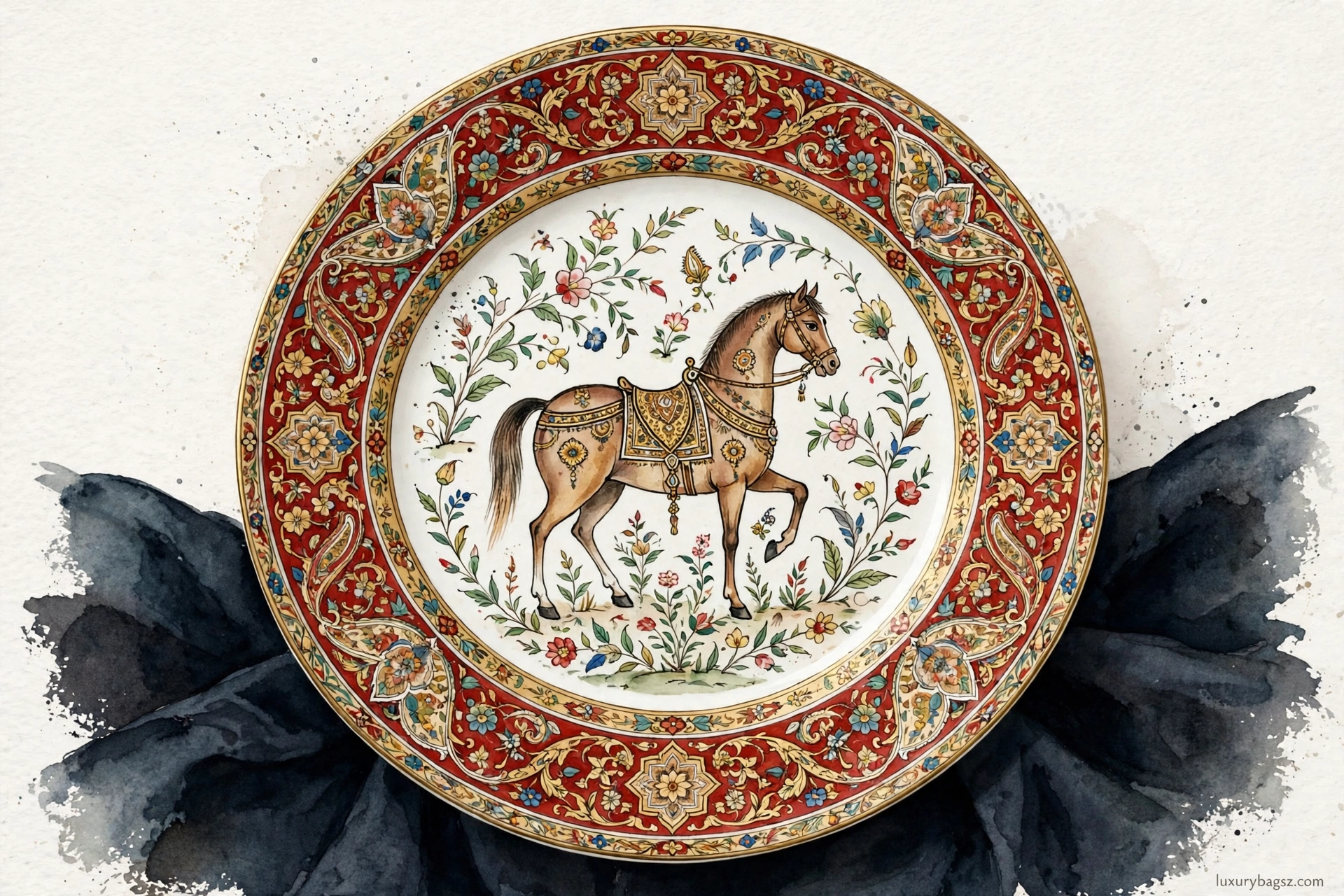
Cheval d'Orient is one of the grandest Hermès porcelain designs: horses and rich borders drawn from Persian miniatures of the 15th and 16th centuries, in deep reds, blues and gold on white porcelain.
The range is wide, running from soy dishes and tea cups to soup tureens, vases and punch bowls. On the US site, tea cups sit around $660, dinner pieces in the low hundreds, and large platters from about $2,600 to $4,800.
It is formal tableware, made in France, and priced as such. Buy it piece by piece if you need to: the pattern's long life means you can build a service over years.
Key Takeaways
- Cheval d'Orient takes its horses and ornate borders from Persian miniature painting, in red, blue and gold.
- The US range spans small pieces like a soy dish to statement pieces like a soup tureen and large platters.
- Indicative US prices: tea cup and saucer around $660, the special n°1 cup around $1,400, large platters $2,600 to $4,800.
- The numbered tea cups, n°1 to n°6, carry different horse scenes and are sold singly or as a set of six.
- Porcelain is made in France with hand-applied decoration; hand washing is the safe care rule.
- Start with dinner or dessert plates, then add the tea service: the pattern mixes happily across courses.
The Design: Persian Miniatures on Porcelain
Cheval d'Orient means horse of the Orient, and the design honours the equestrian art of Persian miniatures. Horses in ceremonial dress stand and gallop among flowers, framed by dense, jewel-like borders.
The palette is rich: crimson and burgundy, deep blues and greens, with gold threading the edges. On a white table the effect is theatrical, which is exactly the intention.
Unlike quieter Hermès patterns, this one is a centrepiece first and a background second. It suits celebratory tables, where the porcelain is part of the occasion.
If you are new to the category, our primer on what Hermès tableware is explains how the house's porcelain ranges are made and priced.
The decoration is screen-printed and applied by hand, with the fine gold line work finished by hand as well. That handwork is why two pieces can differ very slightly, and why prices sit where they do.
The Pieces: Plates, Bowls and Serving Ware
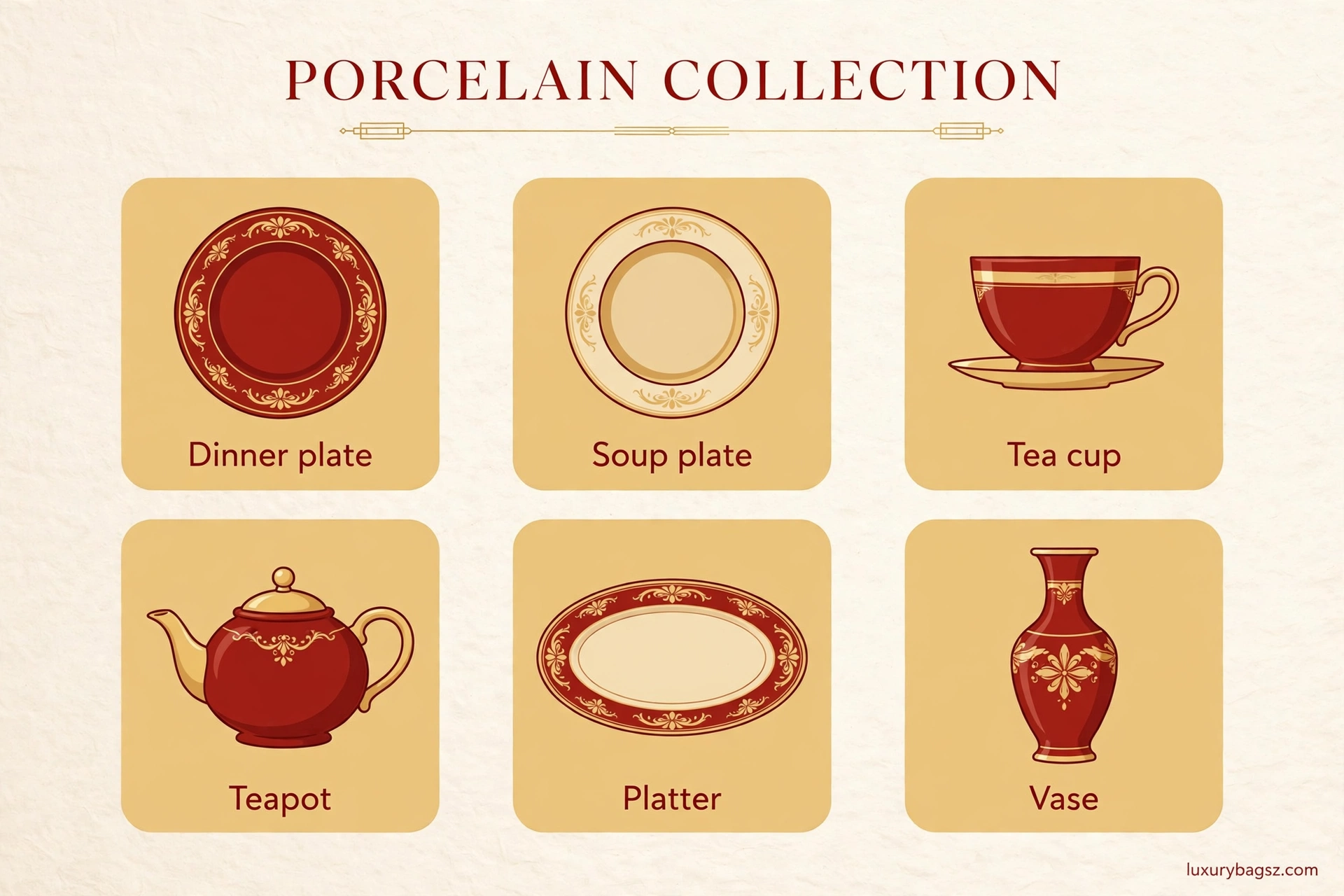
The dining core covers presentation plates, dinner plates, dessert plates, soup plates and bread and butter plates, several in numbered variants with different horse scenes.
Bowls include rice bowls, cereal or soup bowls and small dishes such as the soy dish, which owners often use for salt, sauces or jewellery at the bedside.
Serving pieces are where the range becomes grand: oval and round platters in two sizes, a vegetable dish, a salad bowl, a tart platter and a deep punch bowl for entertaining.
The soup tureen is the summit of the service, priced in Denmark at DKK 47,100 in a recent listing, which gives a sense of its level: a true heirloom piece rather than a casual purchase.
Vases in medium and large models, trays and a set of four mini ashtrays extend the pattern beyond the table, for flowers, desks and side tables.
The Tea and Coffee Service
Tea is a Cheval d'Orient speciality. The tea cups and saucers come in six numbered designs, n°1 to n°6, each with its own horse scene, and they are sold singly or as a complete set of six.
On the US site, most numbered cups sit around $660, while the n°1 cup is priced higher at about $1,400. The full set of six was listed in Denmark at DKK 23,200, so expect a substantial five-figure-adjacent commitment in dollars for the set in some markets.
There is also a large tea cup with lid and saucer, coffee cups and saucers, a teapot (listed in the UK at £1,290), a creamer and a sugar bowl for a complete service.
The numbered cups make unusually good gifts. One cup is a serious present; a pair in complementary numbers is a wedding gift few couples will already own.
Tumblers, about £290 in the UK, give the pattern a more everyday role, and they are often where collectors start before committing to plates.
Prices: A Practical Guide by Piece
Use the US boutique figures as your anchor, and treat them as indicative: Hermès adjusts prices and ranges by market, and listings change as pieces rotate.
Small pieces start the range: a soy dish was listed at MOP 1,520 in Macau, and rice bowls around DKK 2,200 in Denmark. In US terms, think of small pieces in the low hundreds of dollars.
Core dining pieces sit in the middle: a soup plate is £300 in the UK, dessert and dinner plates in Australia run about AU$685 to AU$720, and tea cups are around $660 in the US.
Large pieces climb steeply: the US lists the round platter n°1 at about $2,600, the oval platter at $3,400, the vegetable dish at $3,350 and the round platter n°2 at $4,800.
Statement pieces top the range: large vases were listed at zł 14,300 in Poland, and the soup tureen at €5,700 in Ireland. Budget for these as furniture-level purchases, not tableware.
Setting the Table With Cheval d'Orient
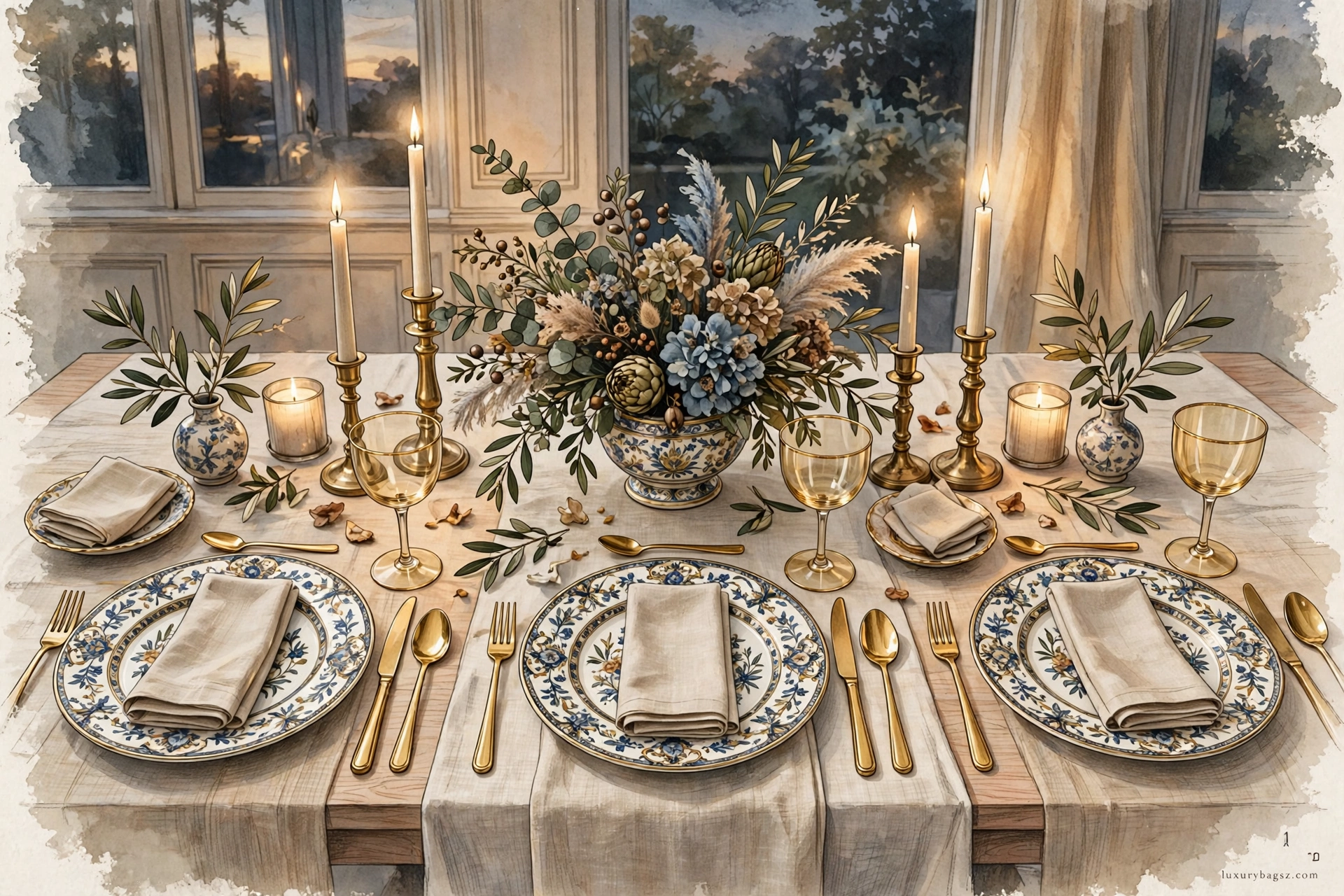
The classic approach is a full pattern table for a celebration: presentation plates under dinner plates, numbered cups for tea, and the platter as the centrepiece.
For everyday elegance, use the plates against plain linen and simple glass. The borders are busy, so napkins and tablecloths should be quiet: white, cream or one deep colour from the pattern.
Mixing within the pattern works well because the numbered pieces differ. A table set with mixed cup designs looks collected rather than matched, which many owners prefer.
Gold flatware echoes the rims, but plain silver keeps the porcelain in charge. Candles suit the miniature-painting mood; low arrangements leave the plates visible.
Do not hide the pattern under food presentation tricks. Simple dishes, served plainly, let the horses do the entertaining.
How It Compares With Other Hermès Patterns
Against the graphic black and white of the Hermès H Deco tableware, Cheval d'Orient is warmer, older in spirit and far more decorative.
Against the green botanical world of the Hermès Passifolia tableware, it is the more formal of the two: Passifolia feels like a garden lunch, Cheval d'Orient like a state dinner.
Collectors often own one pattern for day and another for ceremony. If your entertaining is mostly festive and evening based, Cheval d'Orient is the natural first pattern.
Resale depth is another plus. The pattern has been in the range for years, so replacement pieces and additions appear regularly on the secondary market.
Choose it because you love the horses and the colour. At these prices, affection matters more than versatility: you will set this table for decades.
Care: Washing, Gold and Storage
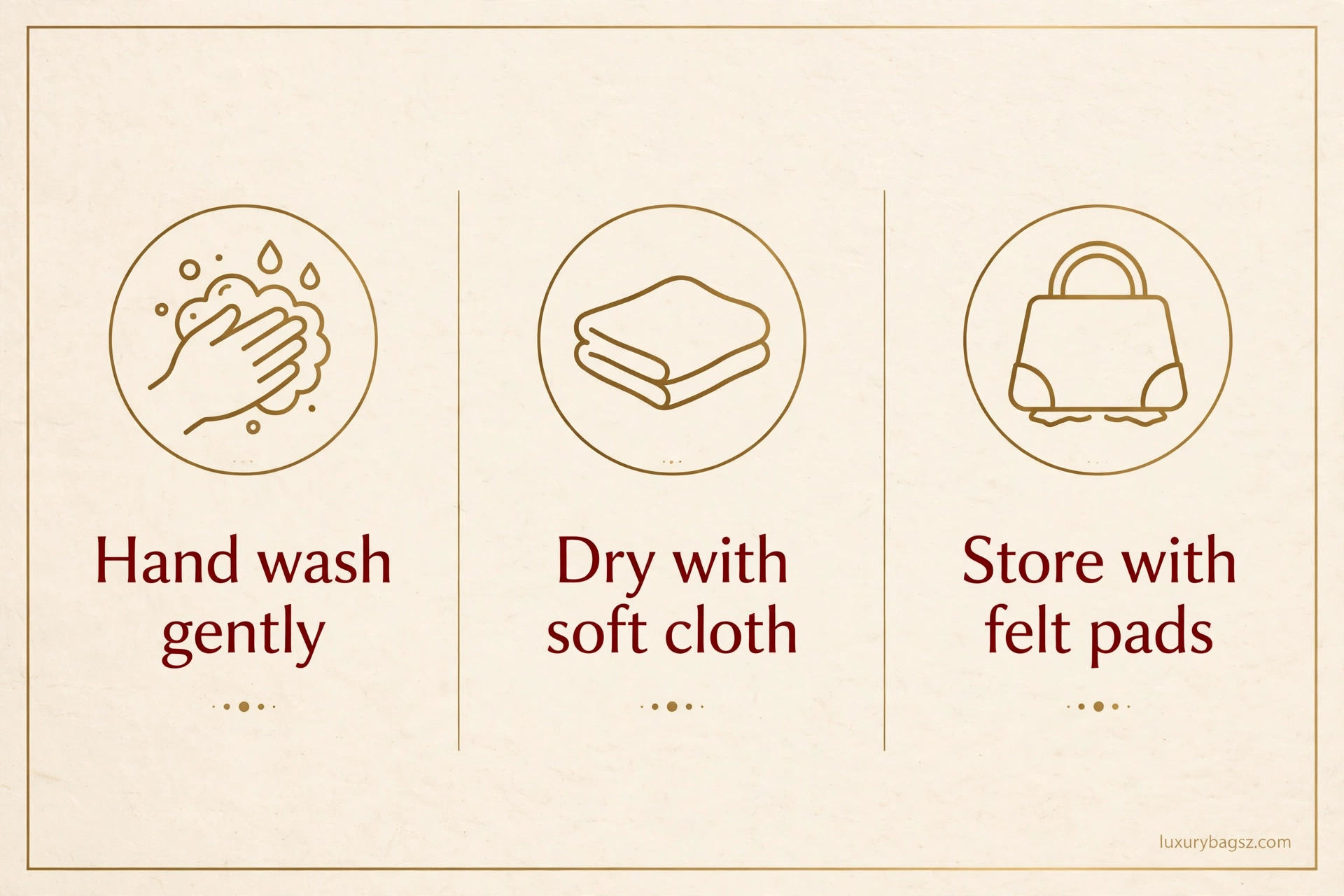
Hand wash in warm water with a mild detergent and a soft sponge. The gold detailing and hand-applied decoration deserve gentler treatment than a dishwasher cycle.
Some owners do use a gentle dishwasher programme for everyday plates, but for numbered cups, gilded pieces and older items, hand washing is the rule that keeps finishes bright.
Dry with a soft cloth rather than air drying, to avoid water spots on the glaze. Never use abrasive pads or bleach-based cleaners on the decoration.
Stack plates with felt pads or cloth between them, and store cups on their rims or hanging, never nested tightly. Rim chips are the commonest damage in porcelain services.
Keep the porcelain away from sudden temperature shocks: a cold plate under very hot food is fine in normal service, but avoid oven and freezer use entirely.
Buying Well: Building a Service Over Time
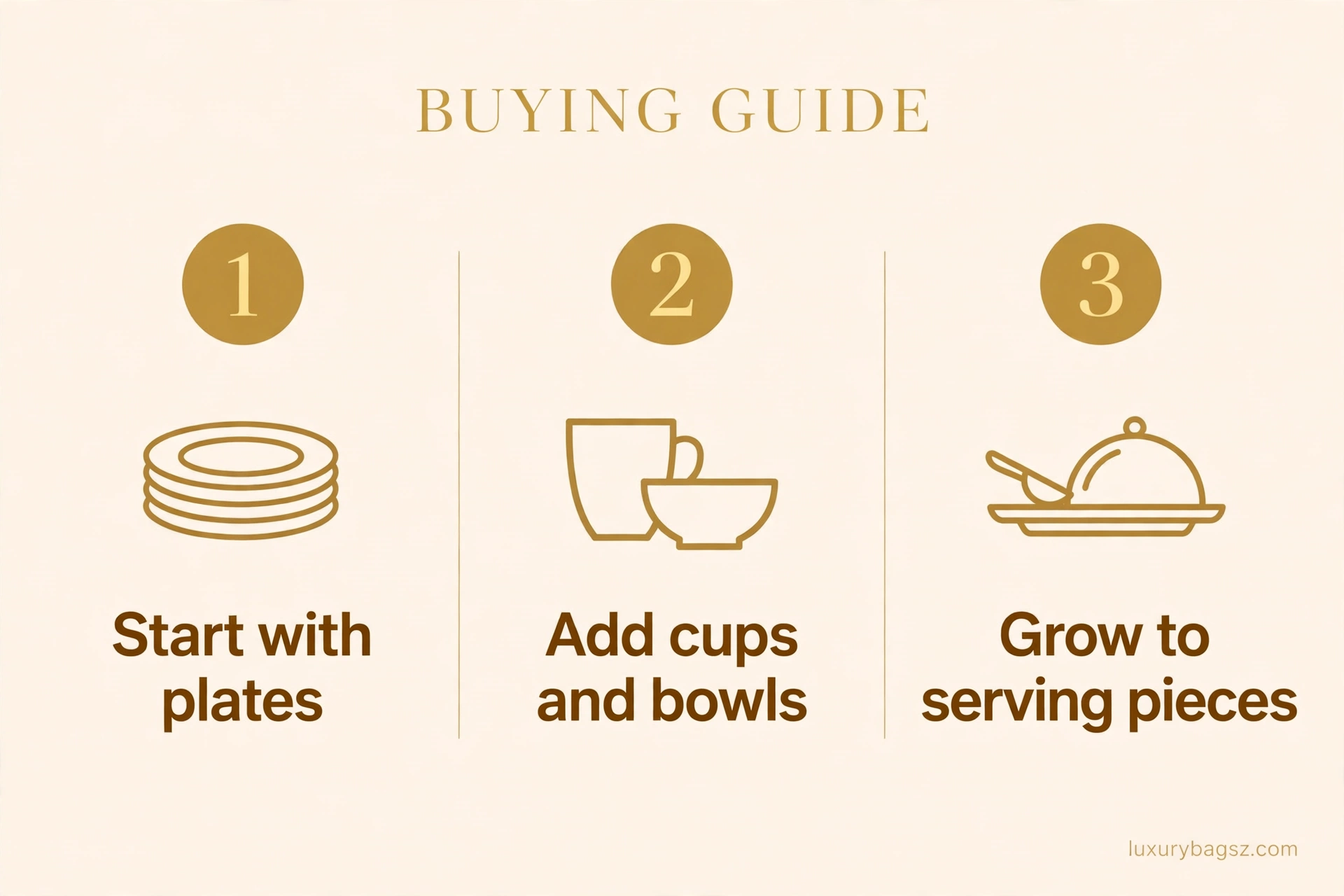
Start with the pieces you will use weekly: dinner plates or dessert plates for most homes, or the tea cups if your ritual is tea rather than dinner parties.
Buy in pairs when a full setting is out of reach. The pattern's longevity means you can add two pieces a year and reach a full service without waste.
Boutiques can order and advise on current availability, and the official site shows the live range for your market. Screenshot prices when you plan, as they move.
On resale, condition language matters: look for pieces described as unused or complete with box for gifts, and check rims and gold for wear in photographs.
Finally, register your own priorities. A tureen is glorious, but six dinner plates will serve you every week. Buy use first, theatre second, and the collection will grow in the right order.
Frequently Asked Questions
What is Cheval d'Orient inspired by?
Persian miniature painting of the 15th and 16th centuries. Horses in ceremonial dress, flowers and dense ornamental borders are translated onto white French porcelain.
How much does a Cheval d'Orient tea cup cost?
On the US site most numbered tea cups and saucers are around $660, while the n°1 design is about $1,400. A set of six carries a correspondingly high price in every market.
What is the most expensive Cheval d'Orient piece?
Large statement pieces lead the range: the soup tureen was listed at €5,700 in Ireland, and large platters reach about $4,800 in the US. Large vases also sit in the top tier.
Is Cheval d'Orient dishwasher safe?
Hand washing is the safe recommendation, especially for gilded and numbered pieces. Gentle cycles are sometimes used for plain plates, but hand care protects the gold and decoration best.
Where is Cheval d'Orient made?
The porcelain is made in France, with decoration screen-printed and applied by hand, including hand-finished gold detailing, in line with the house's other tableware ranges.
Can I buy Cheval d'Orient one piece at a time?
Yes, and most collectors do. Pieces are sold individually, the pattern has been in the range for years, and additions or replacements appear both in boutiques and on resale.
What do the numbers on the tea cups mean?
The tea cups come in six numbered designs, n°1 to n°6, each showing a different horse scene. They are sold singly or as a boxed set of all six numbers.
Does Cheval d'Orient mix with plain tableware?
Beautifully. The plates carry a plain table: white linen, simple glass and plain flatware keep the focus on the pattern, which is how many owners use it daily.
Is Cheval d'Orient a good wedding gift?
The numbered tea cups are an exceptional choice: luxurious, personal and unlikely to be duplicated. A pair is a substantial gift; the set of six is a grand one.
How do I check a resale piece before buying?
Ask for clear photos of the rim, the gold edging and the base stamp, and confirm the exact piece name and number. Rim chips and gold wear are the faults that matter most.
Final Verdict
Cheval d'Orient is Hermès porcelain at its most theatrical: Persian horses, jewel colours and gold, on French porcelain made to be kept for generations.
Anchor your budget on the US figures of about $660 for tea cups and $2,600 to $4,800 for large platters, buy use before theatre, and hand wash what you treasure.