

Fendi Resin Logo Box Clutch: The Black and Silver Spotlight, Honestly Explained
The Honest Answer First: A Rare Vintage-Style Piece, Thinly Documented
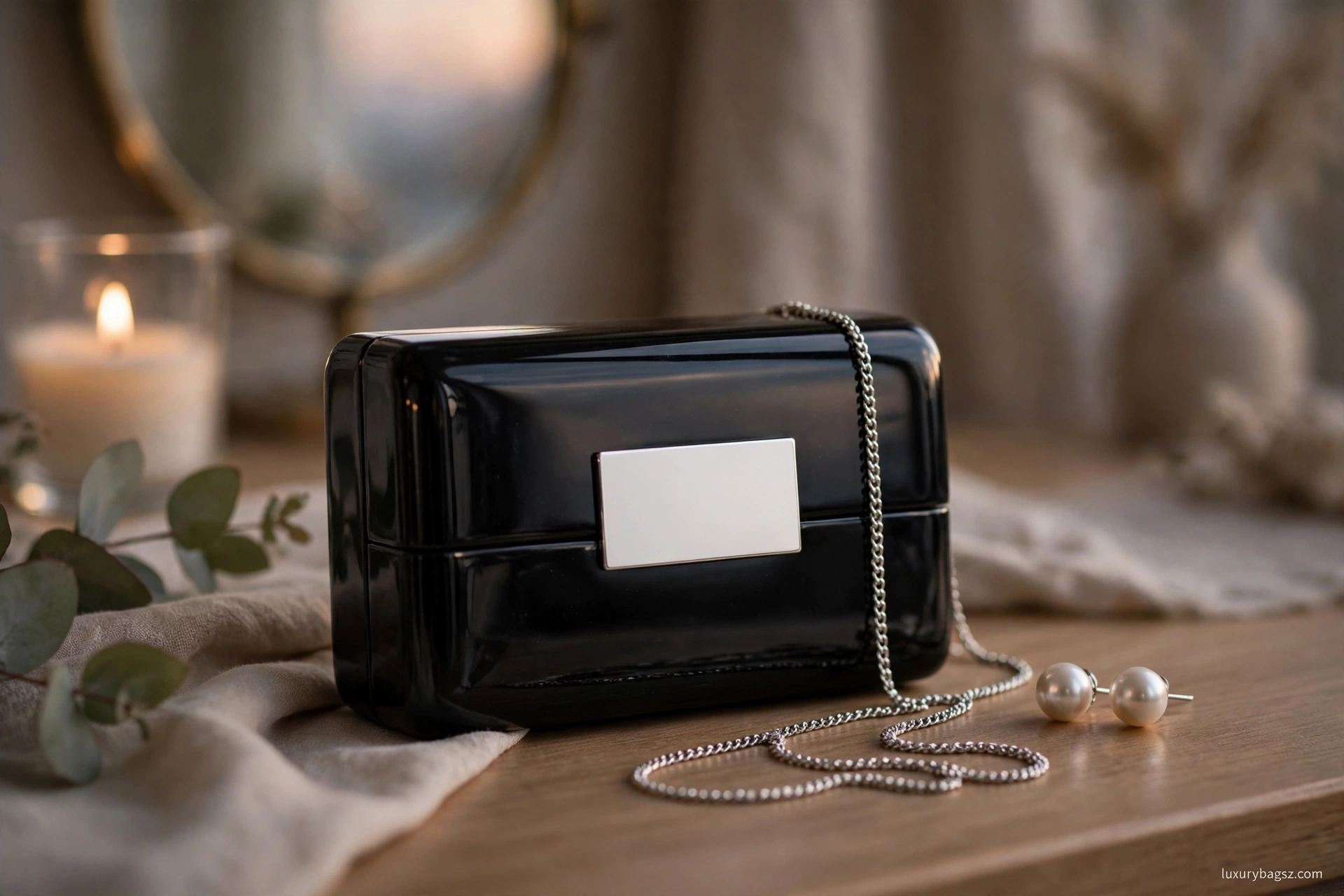
A black resin box clutch with silver-tone Fendi logo detailing is best understood as a vintage-era evening piece, not a current boutique style. We could not verify an exact, officially documented product under this precise name, and this guide says so plainly rather than inventing a launch story. What can be verified is the family it belongs to. Fendi has made resin box clutches before: an auction-documented Sweet Box clutch from around 2008 used marbled resin with an applied leather logo and a delicate silver-gilt chain, at roughly 19 cm wide by 13 cm high. So treat this spotlight as a guide to the style itself: what a resin logo box clutch is, how the black and silver version reads, what fits, how to style it and how to check a vintage example before you pay for it.
Key Takeaways
- The exact black-silver product name could not be independently verified as an official style.
- Fendi resin box clutches are documented from the late 2000s, including a marbled resin Sweet Box.
- Expect a small rigid evening clutch: phone, cards, keys and lipstick, nothing more.
- Resin is glossy and light but can chip, crack and yellow with heat, sun and knocks.
- Vintage value depends on condition of the resin, chain, clasp and logo plaque.
- Buy only with clear photographs and, at higher prices, independent authentication.
What This Clutch Is, and What It Is Not
The description points to a rigid, box-shaped evening clutch in black resin, finished with a silver-tone logo element and typically a fine chain. That format was a genuine late-2000s designer habit, Fendi included. It is not a current-season Fendi clutch with a published price, a product code you can look up and a boutique waiting list. Any listing that presents it that way, with a precise recent launch year and retail price, should be treated with caution. Our popular Fendi handbags roundup shows where a piece like this sits in the house's world: a niche, decorative evening object beside icons such as the Baguette and Peekaboo, not a core line bag. The honest framing matters for price. Documented vintage Fendi box clutches change hands at auction-estimate levels in the low hundreds of pounds for ordinary examples, not at modern icon prices, unless a piece is truly exceptional.
Design Details: Resin, Logo and Silver Hardware
Resin gives the box its deep gloss and its marbled or solid colour. Black resin reads almost like lacquer, and it pairs naturally with silver-tone metal because the contrast is sharp without the warmth of gold. The logo treatment on documented resin pieces is applied rather than structural: a leather or metal logo plaque or lettering fixed to the front. On the black and silver description, that plaque is the whole point of the bag. A fine chain, where fitted, is a carrying aid rather than a true shoulder strap. These clutches are made to be hand-held or tucked under the arm, and the chain on period examples is deliberately delicate. The interior of a rigid box this size is usually a single small compartment, sometimes with a slim slip pocket. There is no organisation to speak of, and the rigid walls mean nothing inside can bulge or stretch to fit.
Size and What Actually Fits
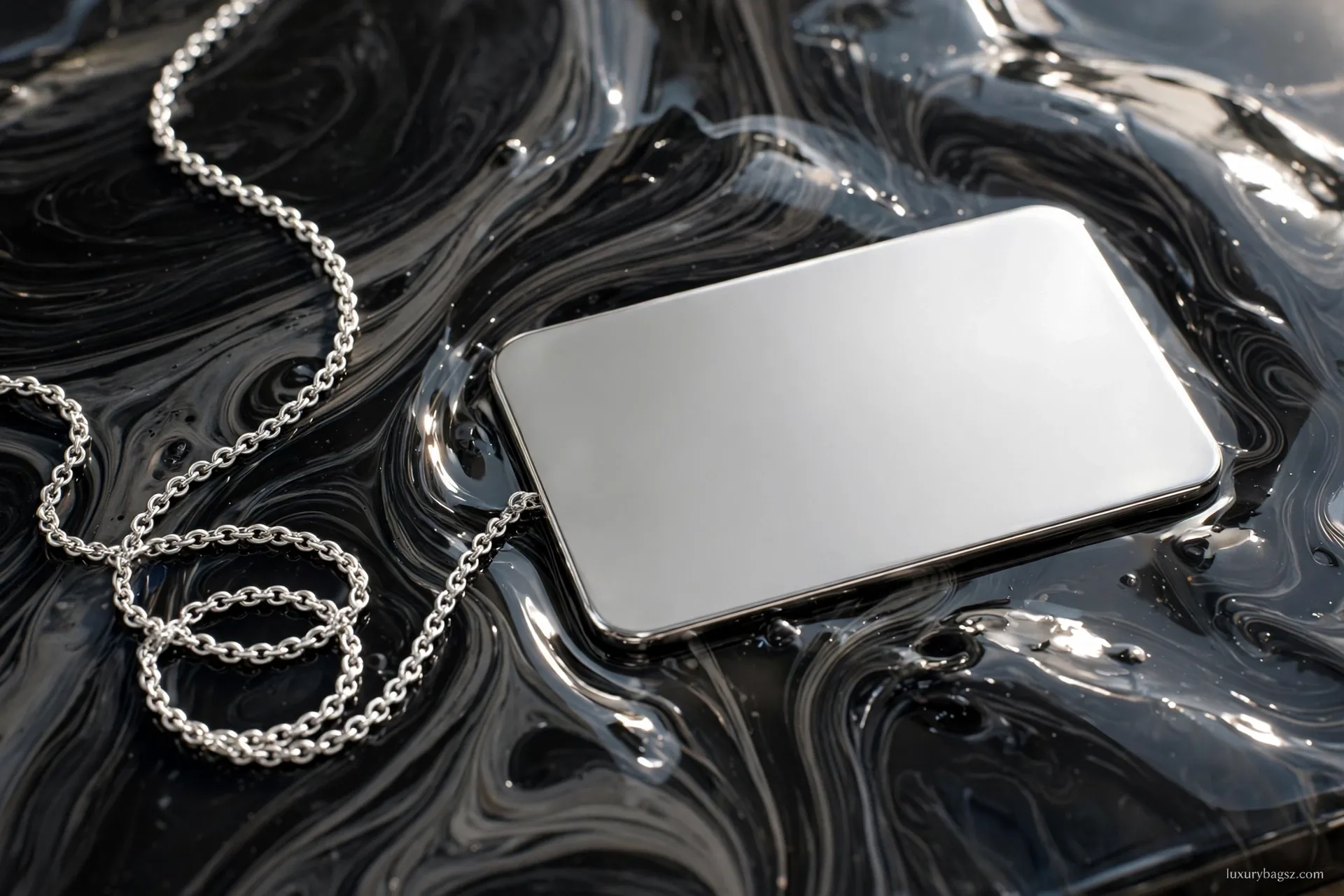
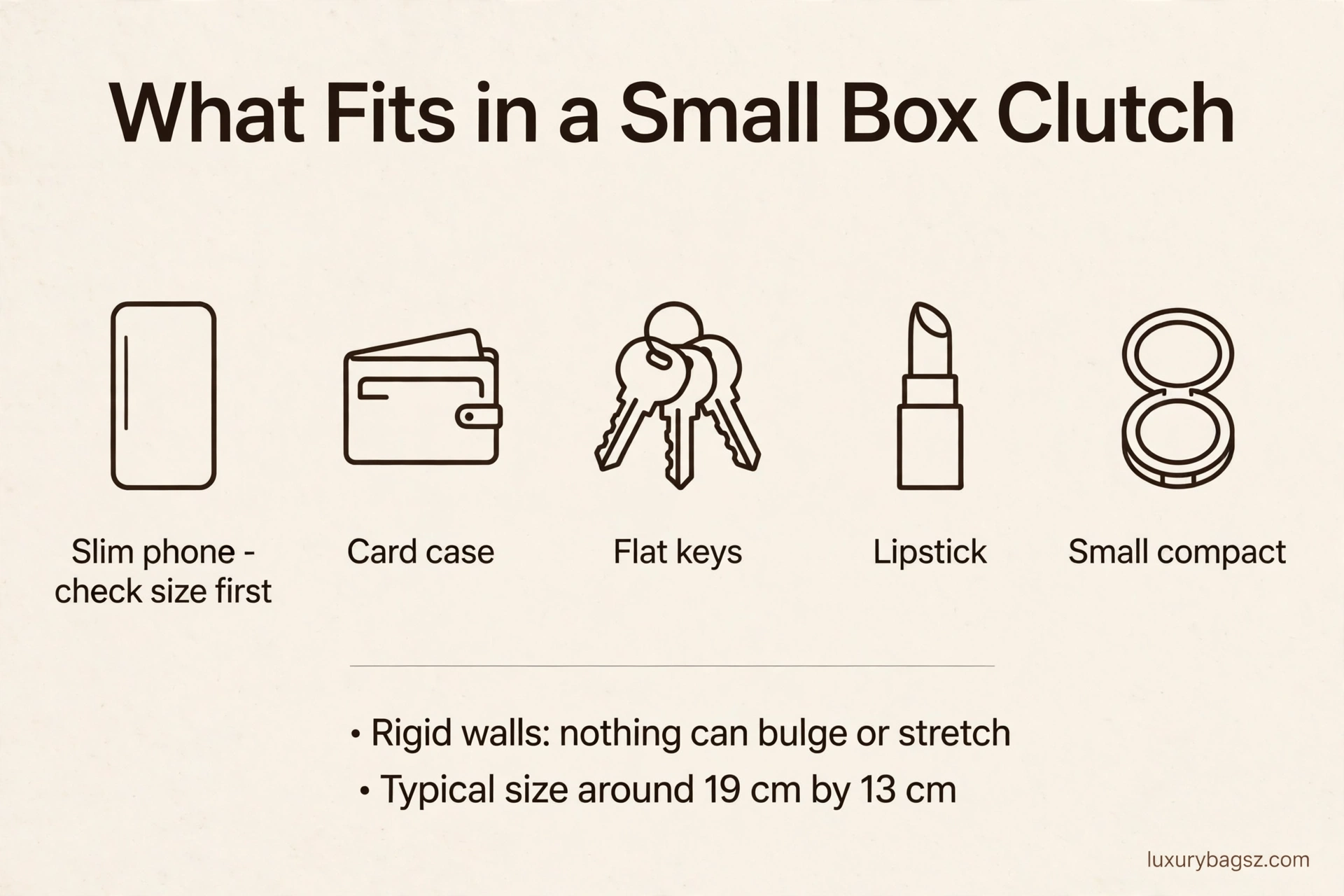
The documented resin Sweet Box reference measures about 19 cm wide by 13 cm high, and a black-silver box clutch in this family should be judged against similar evening dimensions. Always ask a seller for exact measurements rather than assuming them. Inside, plan for a slim modern phone only if the interior length allows it, and check that before buying. Many rigid vintage boxes predate large phones, and a phone that forces the clasp is a phone that will damage the clutch. The realistic load is cards or a very small purse, keys on a flat ring, lipstick and perhaps a compact. Anything thicker, such as a bulky key fob or a full-size sunglasses case, will usually stop the box closing cleanly. Carry a card case instead of a purse, decant keys to the minimum, and treat the clutch as jewellery that happens to hold essentials. That mindset is how these pieces were designed to be used, and it prevents most damage.
How Resin Behaves: Strengths and Weak Points
Resin's strengths are real: it is light, it holds a mirror-like gloss, and it does not crease, slouch or absorb water the way leather and fabric do. A quick wipe restores the shine, which is why resin suits evening use. Its weaknesses are equally real. Resin can chip at corners if dropped on hard floors, crack under point pressure, and scratch across flat faces. Older resin can also warm, yellow or develop fine surface crazing with age and heat. Silver-tone chains and plaques have their own ageing pattern: tarnish in recesses, loosening at solder points and wear where the chain meets the body. None of this is fatal, but all of it should be priced in before you buy. Judge a vintage example in daylight, not listing photographs alone. Tilt the surface: chips, hairline cracks and repairs show as breaks in the reflection, and honest sellers will photograph corners and edges closely when asked.
Styling a Black and Silver Box Clutch
Black resin with silver detailing is the easiest evening combination to wear. It sits naturally with black, white, grey and jewel tones, and it echoes silver jewellery, crystal embellishment and metallic shoes without competing. For a modern alternative with the same evening role, our Fendi Baguette bag guide covers the house's softer option. The box clutch is the sharper, more sculptural choice; the Baguette is the easier, roomier one. Formal dresses suit the box best, since its rigid outline reads as an object rather than an accessory. With tailoring, it sharpens a trouser suit; with a slip dress, it adds the hard edge that keeps the look from softness overload. Our Chanel clutches and minaudières guide explains the wider hard-case evening family. The wearing rule is shared across houses: one statement piece, carried in the hand, with everything else kept quiet.

Authenticity Checks for a Vintage Resin Piece
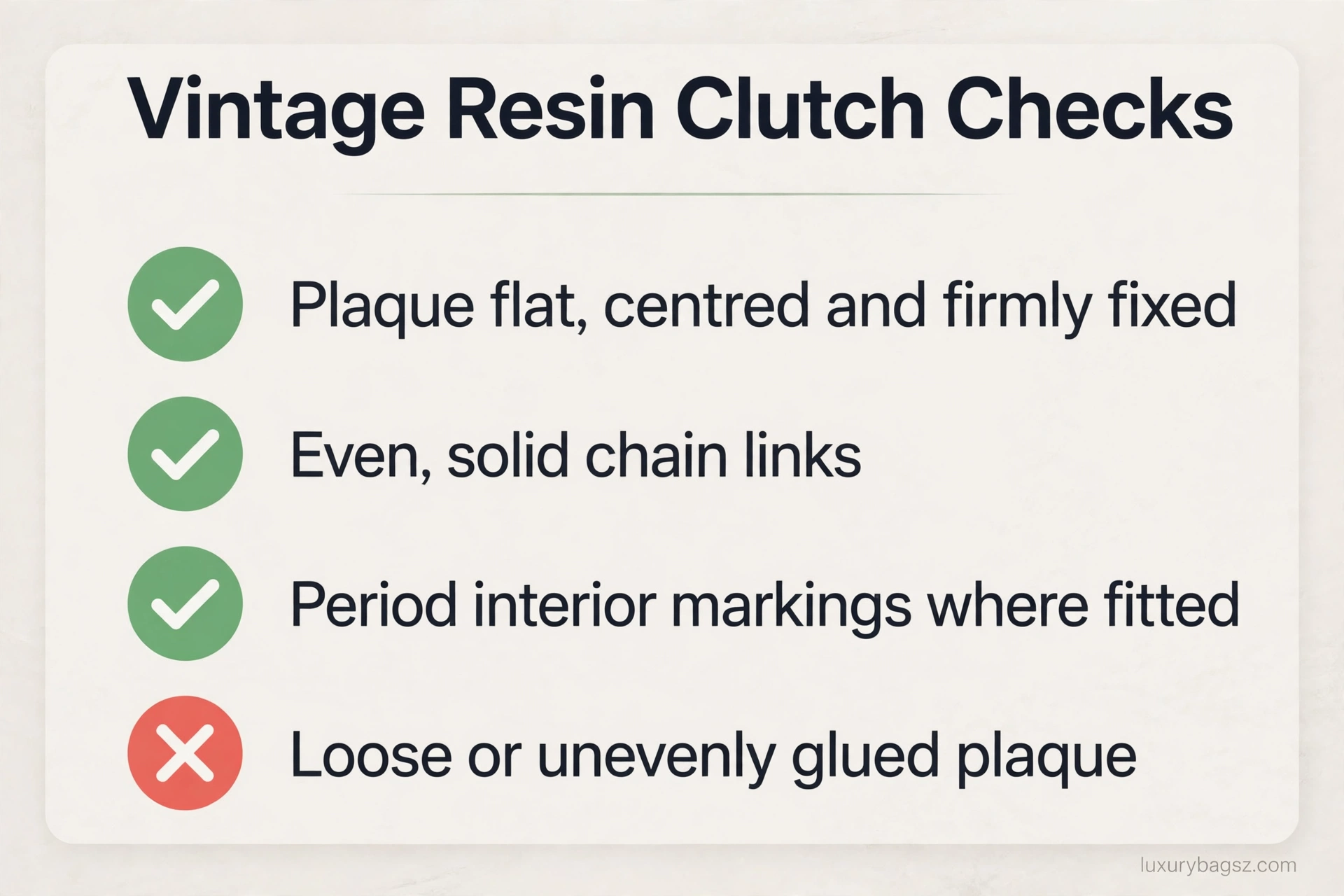
Start with the logo plaque. It should sit flat, centred and firmly fixed, with clean edges and consistent lettering. A plaque that is lifting, glued unevenly or finished with rough edges is a serious warning sign on a piece like this. Check the chain next: period chains feel fine but solid, with even links and secure end fittings. Light, stretchy or irregular chain suggests replacement or worse, and replacements should be disclosed and priced accordingly. Inside, look for period Fendi markings on a leather tab or lining stamp where fitted, and expect the format to match late-2000s production. Absence alone does not condemn a small vintage accessory, but it lowers confidence and price. Our guide to authenticating a pre-owned designer bag sets out the seller, receipt and returns checks to run through. With thinly documented pieces, those process checks matter even more than usual.
Care and Storage for Resin
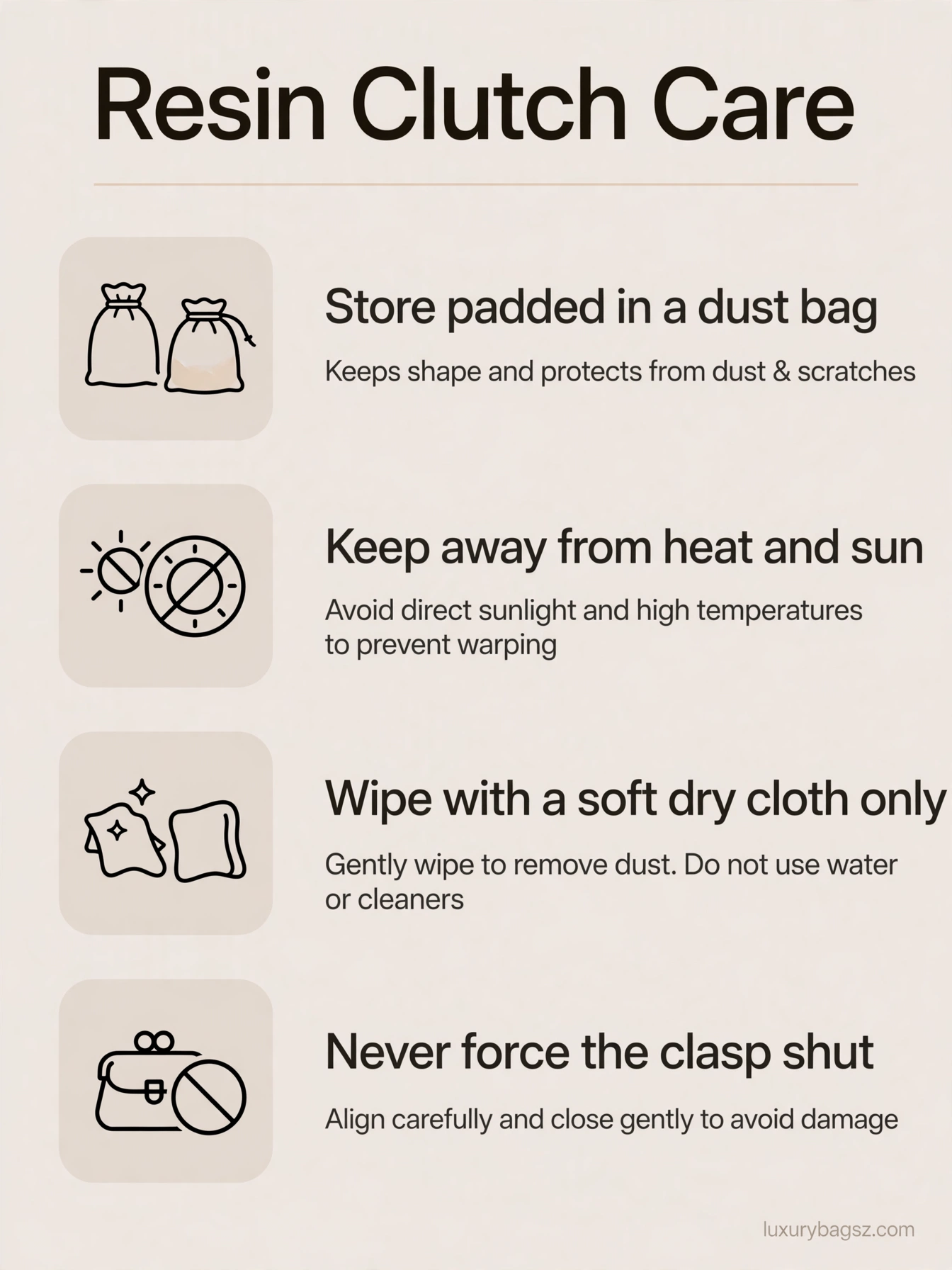
Store the clutch padded, in its dust bag, away from radiators, sunny shelves and attic heat. Heat is resin's quiet enemy: it encourages warping, colour shift and surface tackiness in older pieces over time. Clean with a soft, dry cloth only. Water adds nothing to resin care, and solvents, alcohol wipes and abrasive polishes can cloud the gloss or lift applied detailing, so keep every cleaner away from the plaque and chain joins. Keep the chain stored loosely rather than wound tight against the body, since metal resting on resin under pressure can leave marks. A small pouch for the chain inside the box prevents most storage scratches. Never force the clasp over an overfilled interior. Rigid boxes fail at hinges and closures first, and a clasp bent by overpacking is one of the hardest vintage faults to repair invisibly or cheaply.
Should You Buy One?
Buy this style if you love late-2000s Fendi, collect unusual evening pieces and understand exactly what you are getting: a small, beautiful, fragile object with a thin paper trail, bought for love rather than for guaranteed resale. Do not buy it as an investment icon or as an everyday bag. Documented prices for comparable vintage resin box clutches sit in the modest hundreds at auction, and everyday use will chip away at both the resin and the value. Collectors of novelty evening bags may also enjoy our Judith Leiber bags history, which covers the crystal minaudière tradition this kind of hard-case clutch quietly belongs to. If a listing tempts you, slow down: measurements, corner photographs, clasp video, chain close-ups and a returns promise. A seller who provides all five is selling honestly, whatever the paperwork says.
Frequently Asked Questions
Is the Fendi black-silver resin logo box clutch a real product?
A resin box clutch in this description matches documented vintage Fendi practice, including a marbled resin Sweet Box clutch from around 2008. However, the exact black-silver product name could not be independently verified as an official style, so buy any example on its own evidence.
How much is a Fendi resin box clutch worth?
Documented auction estimates for a comparable vintage Fendi resin box clutch sat around £100 to £150 in one recorded sale, and ordinary vintage examples generally trade in the modest hundreds. Condition, completeness and provenance move the figure more than the logo does.
What fits in a Fendi box clutch?
Expect cards or a very small purse, flat keys, lipstick and perhaps a compact. A slim phone fits only if the interior length allows it, so always confirm measurements before buying a rigid vintage box.
Is resin a durable clutch material?
Resin is light, glossy and water-resistant, but it can chip, crack and scratch, and older resin may yellow with heat and sun. It suits careful evening use rather than daily carrying.
How do I clean a resin clutch?
Wipe it with a soft, dry cloth only. Avoid solvents, alcohol wipes and abrasive polishes, which can cloud the gloss or damage applied logo detailing, and keep the clutch away from heat when storing it.
How can I check a vintage Fendi clutch is authentic?
Inspect the logo plaque for flat, firm, centred fitting, test the chain for even, solid links, and look for period interior markings where fitted. Use independent authentication at higher prices, and insist on a returns promise.
Does the resin box clutch have a shoulder strap?
Period resin box clutches typically carry a fine, delicate chain rather than a true shoulder strap. They are designed to be hand-held or tucked under the arm, with the chain as a carrying aid.
Why can I not find this clutch on Fendi's website?
Because it belongs to the vintage-era evening family rather than the current boutique line. Current Fendi clutches use different names and materials, so a vintage resin piece is found through auctions and resale instead.
What should I ask a seller before buying?
Ask for exact measurements, close photographs of all corners and the plaque, a short video of the clasp opening and closing, chain close-ups and the returns terms. Clear answers to all five are the minimum for a thinly documented piece.
What is a good alternative to this clutch?
Within Fendi, a small Baguette offers the same evening role with more room and far stronger documentation. Across houses, hard-case minaudière styles offer the same sculptural effect with clearer provenance.
Conclusion: A Charming Vintage Curiosity, Bought With Eyes Open
The black and silver resin logo box clutch is best loved for what it is: a glossy, sculptural piece of late-2000s Fendi evening design. Its appeal is real, and so are its limits, from the tiny interior to the fragile corners. Go in with the verification gap understood, the condition checked in daylight and the price set at vintage-curiosity level, and it can be a delightful buy. Ask it to be a documented icon or a daily bag, and it will disappoint you.






