

How to Spot Fake Hermès Chypre Sandals: 12 Checks That Actually Work
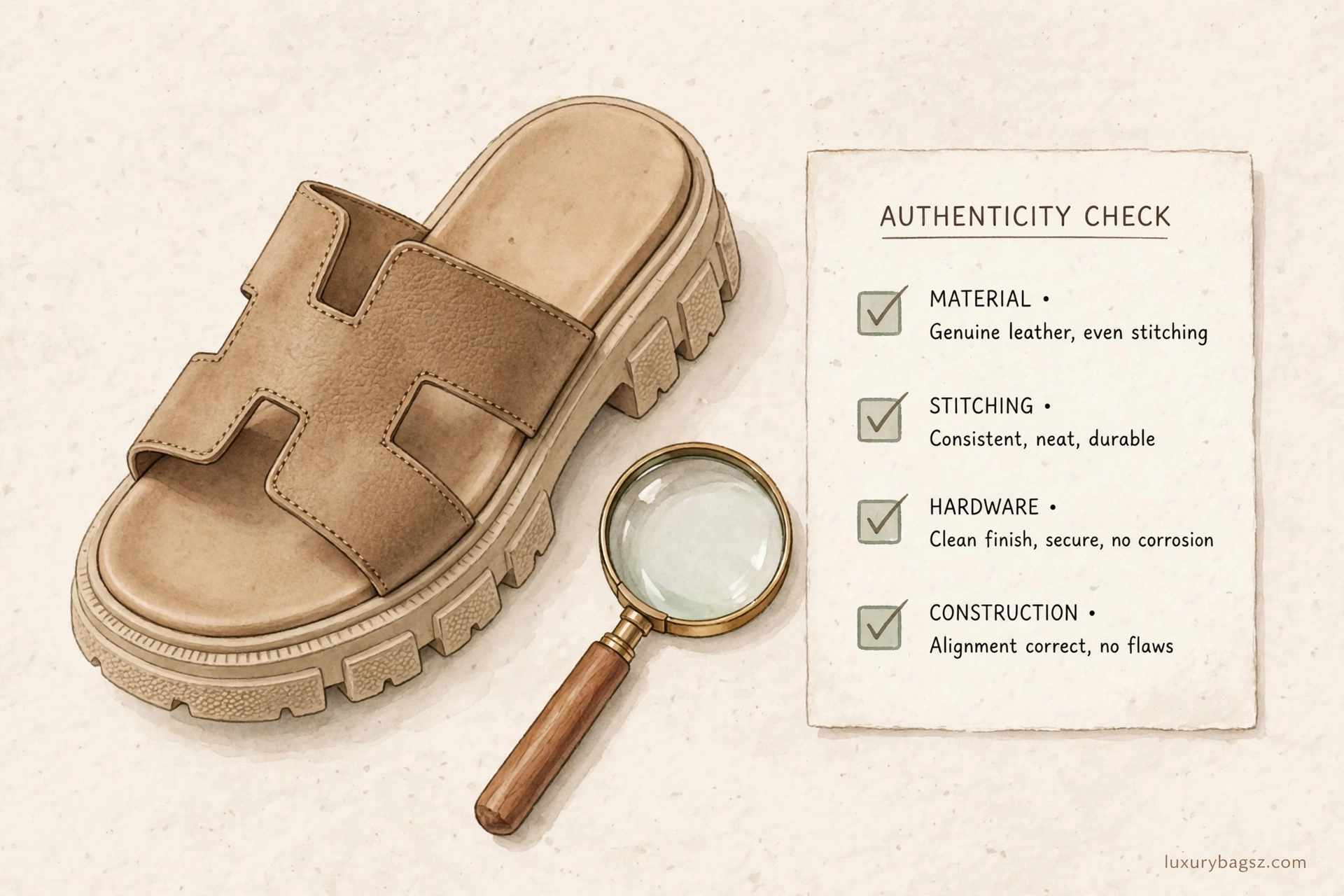
Why Chypre Fakes Need a Different Eye
The Chypre is one of the most copied Hermès shoes ever made, and the fakes improve every year. The good news: the real sandal has moulding, stitching and finishing details that copies still get wrong when you know where to look.
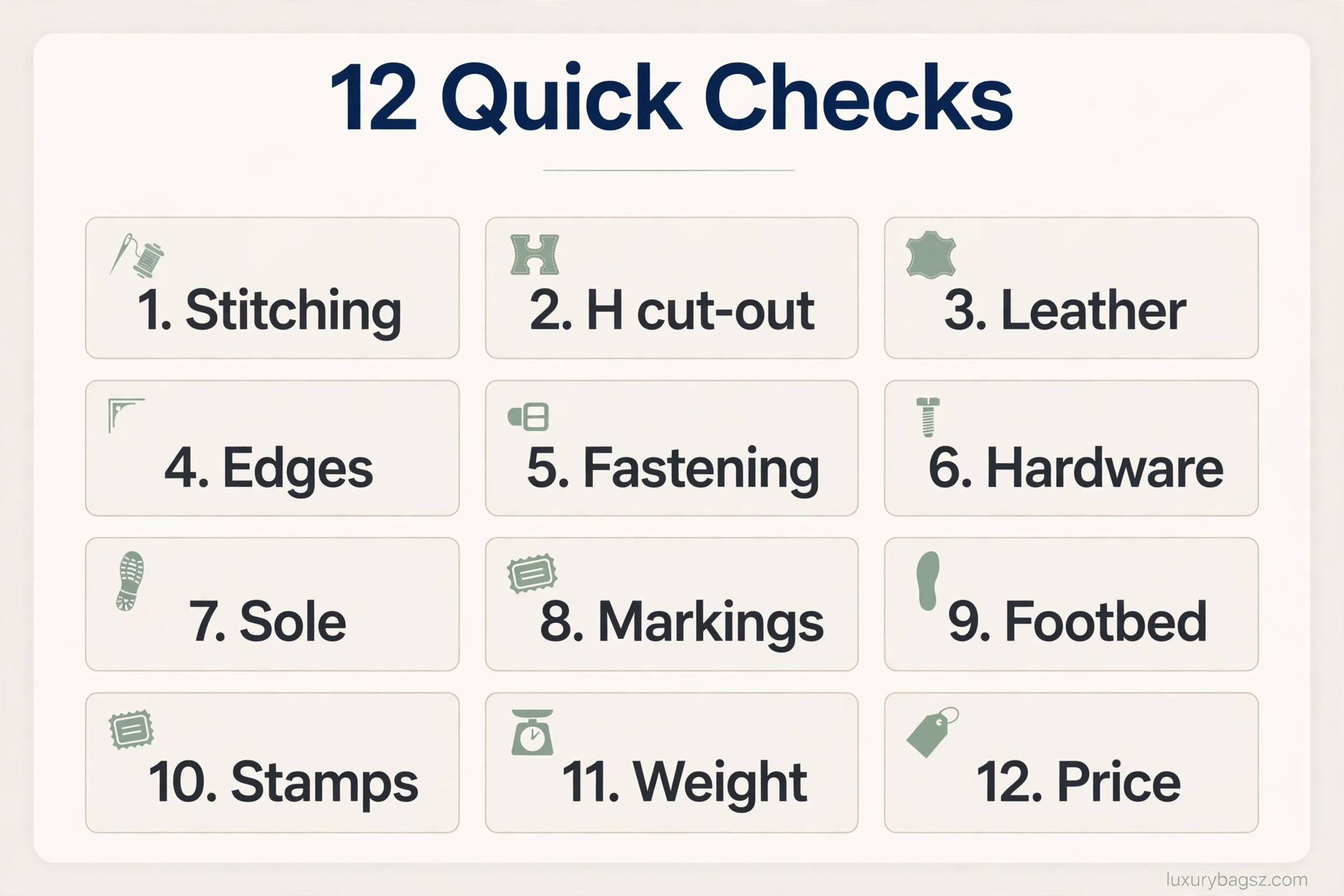
Work through the 12 checks below in order, from the strap to the sole to the stamps. No single check proves a pair, but fakes usually fail several at once, while a genuine pair passes them all calmly.
If you are buying resale, ask for the exact photos these checks need before you pay. A seller who cannot or will not provide them has answered your question already.
Key Takeaways
- Check the strap first: even saddle stitching and a clean-cut H are hard to fake well.
- The moulded sole is the Chypre's fingerprint; copies soften or misplace its details.
- The adjustable fastening should feel engineered, not flimsy or scratchy.
- Footbed stamps on a real pair are crisp, centred and consistent with the size.
- Packaging helps but never decides: boxes and receipts are copied too.
- A price far below the typical $1,125 retail level is itself a check, and it fails.
Check 1 and 2: The Strap and the H Cut-Out
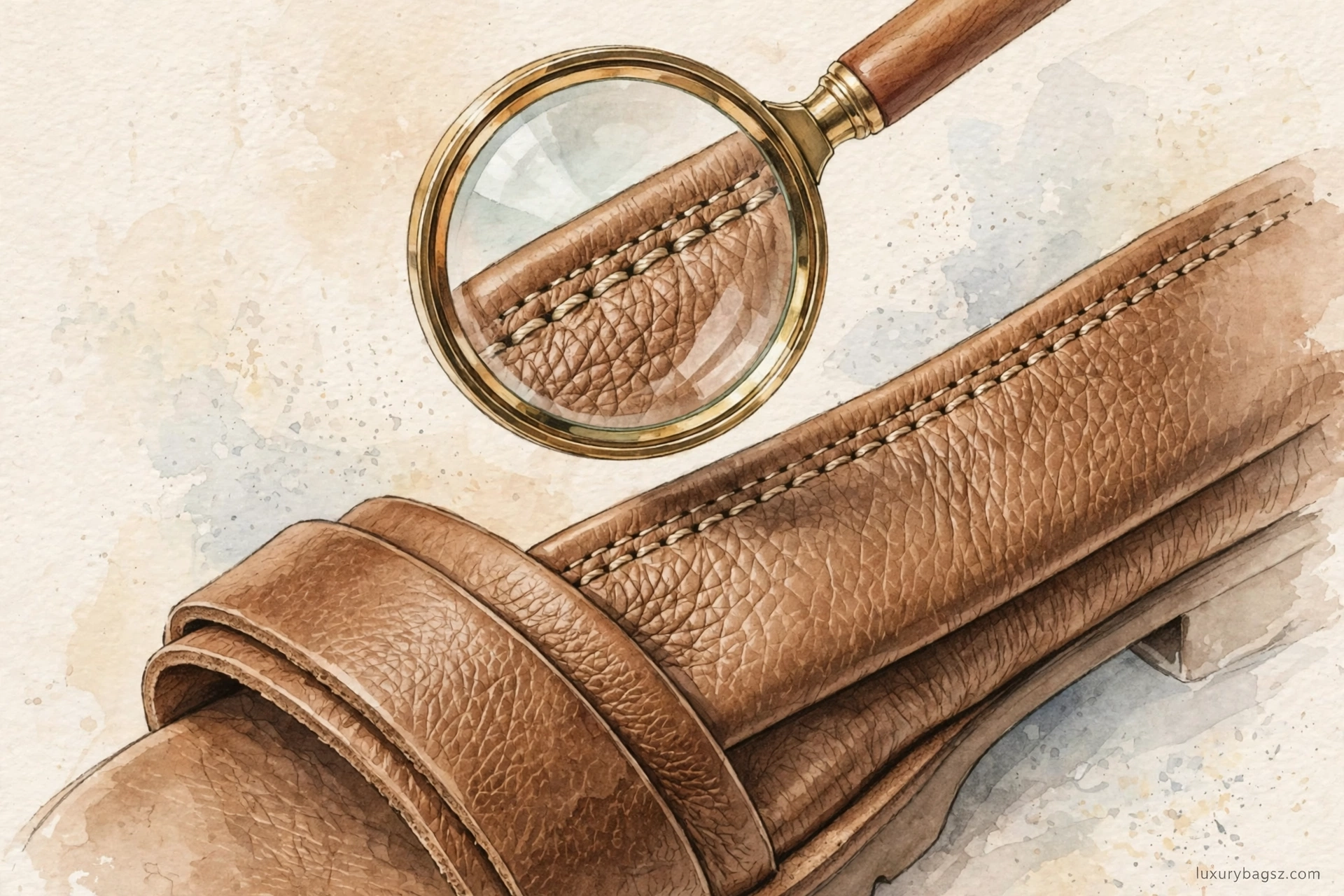
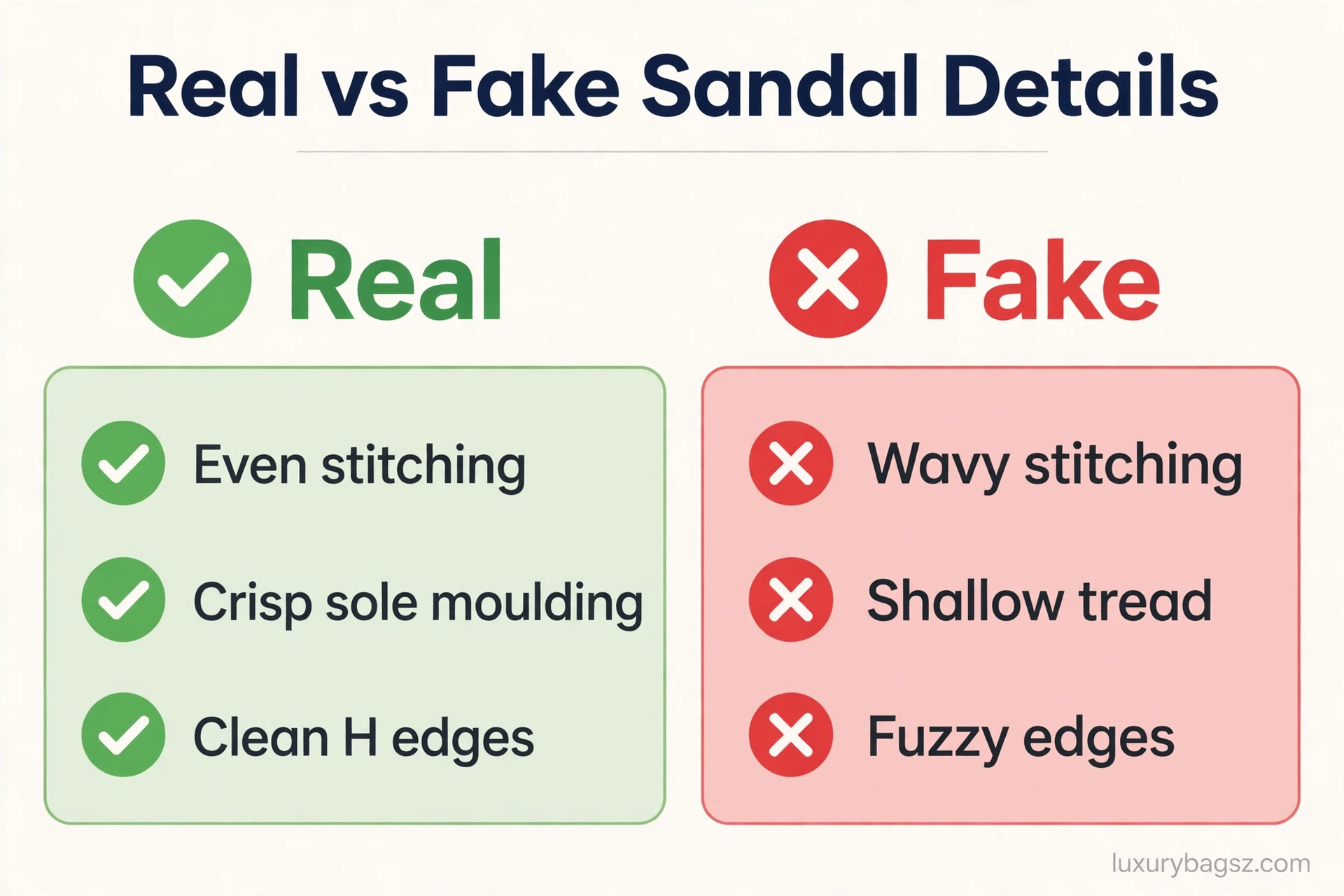
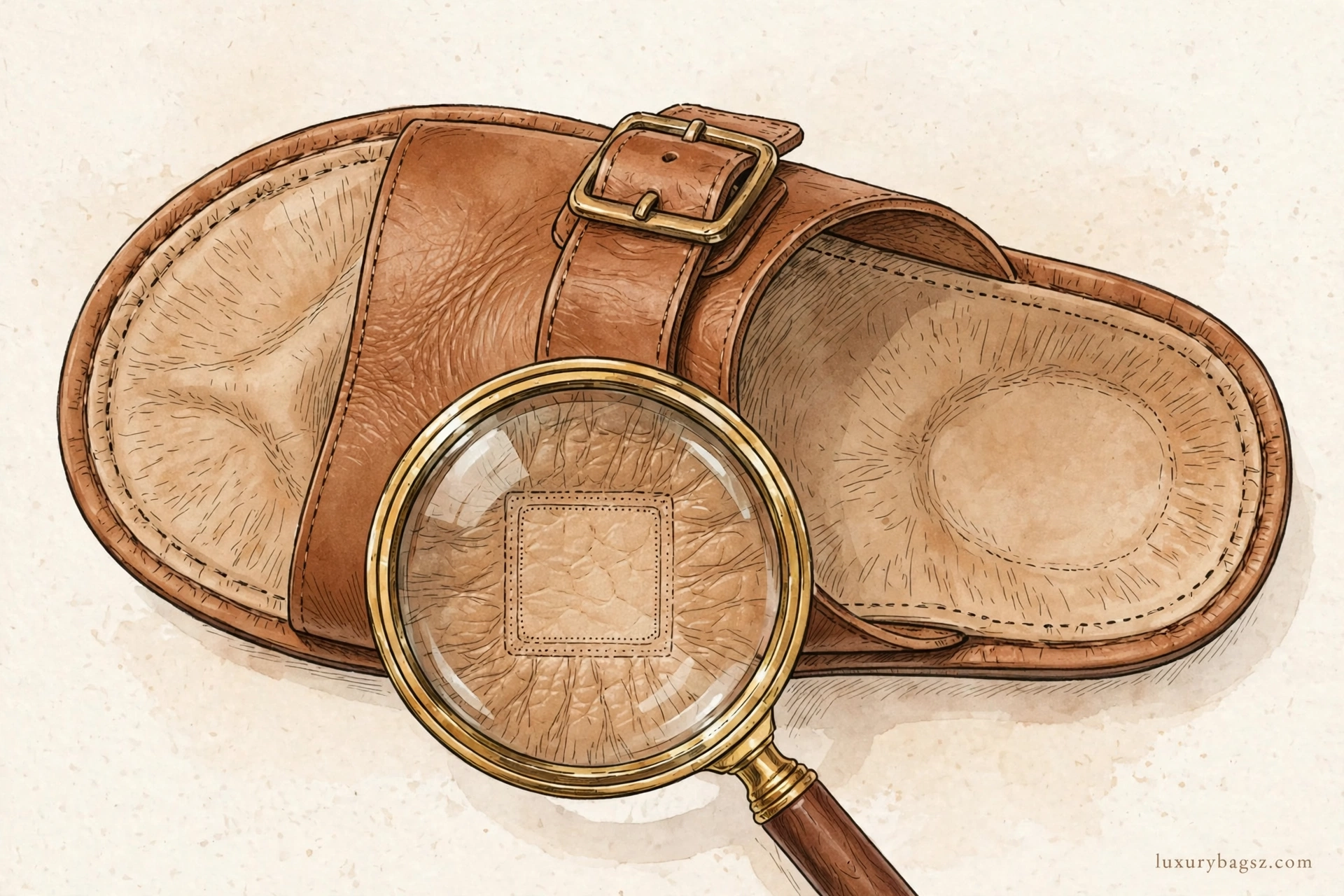
Check 1, stitching. A genuine Chypre strap is stitched evenly, with tight, regular saddle-style stitches that sit at a consistent angle. Wavy lines, loose ends or glue squeeze-out point to a copy.
Check 2, the H cut-out. On a real pair the H is cut cleanly, with sharp inner corners and smooth, finished edges. Rounded, fuzzy or uneven inner corners are a classic fake tell.
Compare both shoes. Hermès quality control works to the pair, so a strap that looks refined on the left and rough on the right is a warning, not a quirk.
Our buying guide to Hermès Chypre sandals shows the genuine strap and sole details to compare against, in calfskin, suede and shearling.
Check 3 and 4: Leather Quality and Edges
Check 3, the leather itself. Real calfskin feels dense and smooth with a fine, even grain, and it smells of leather, not chemicals. Plastic shine or a strong solvent smell fails this check.
Check 4, edge finishing. Strap edges on a genuine pair are painted or finished evenly, with no peeling, bubbling or raw fibres showing along the cut lines.
Press the strap gently: real leather creases finely and recovers; coated splits and synthetic uppers crease coarsely or stay shiny and stiff in the hand.
The flat-sandal version of these tells appears in our guide to how to spot fake Hermès Oran sandals, which pairs well with this one for strap and stamp detail.
Check 5 and 6: The Adjustable Fastening
Check 5, the hook-and-loop fastening. On a real Chypre it grips firmly, aligns with its partner patch and releases with a clean, strong hold. Weak grip or misaligned patches suggest a copy.
Check 6, the strap hardware and finish. Any metal or branded elements should feel weighty, smooth and evenly finished, with no sharp casting lines or flaking coating.
Work the fastening a few times. Genuine parts stay aligned and quiet; copies often drift, twist or show the strap pulling unevenly across the foot.
Photograph the fastening open and closed when you buy remotely. This moving part is where cheap manufacture shows first, and sellers of fakes avoid showing it.
Check 7 and 8: The Moulded Sole
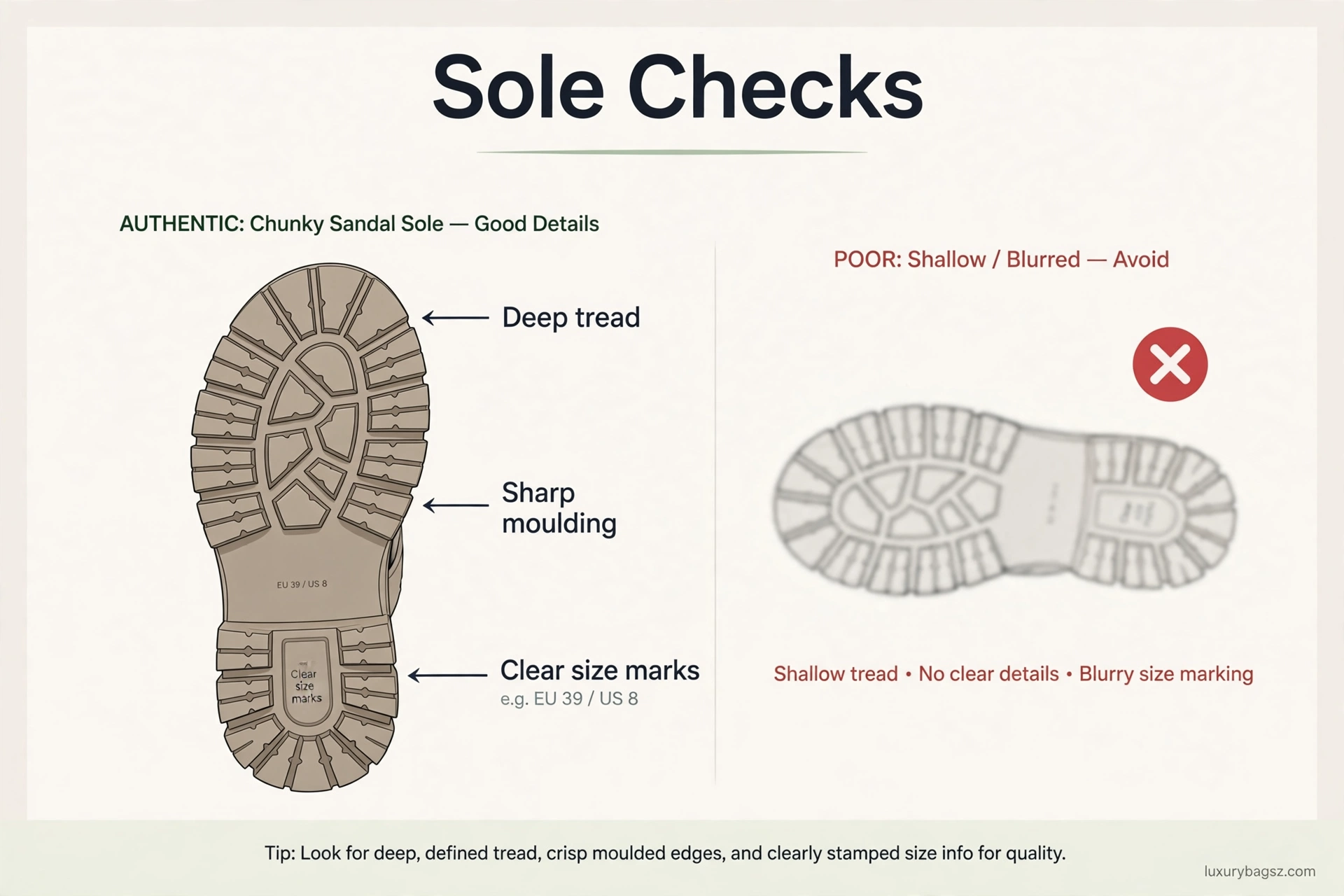
Check 7, sole moulding. The Chypre's anatomical sole has crisp, deep moulding and a defined tread pattern. Copies often look soft-focus: shallow tread, blurred edges and a flatter footbed.
Check 8, sole markings. Size and maker markings moulded or printed on the sole should be sharp, correctly spelt and consistent between the two shoes. Blurred or missing marks fail.
Flex the sole: a genuine sole bends with resistance and springs back evenly. A sole that feels hollow, squeaks or twists easily is not built like the real thing.
Compare the tread against boutique photos of the current model. Fake soles are often moulded from photos, so proportions drift in ways a side-by-side view exposes at once.
Suede versions add one more tell: genuine suede nap moves evenly under a fingertip and recovers. Coated fabric pretending to be suede looks uniform in a way real skins never quite manage.

Check 9 and 10: Footbed, Stamps and Sizing
Check 9, the footbed shape. A real Chypre footbed is anatomically shaped with a defined arch and heel cup. Flat, generic footbeds in a chunky shell are a strong fake signal.
Check 10, stamps and size marks. Branding on the footbed should be crisp, centred and in the house style, and the marked size should match the pair's actual length and fit.
Measure the insole and compare it with the marked European size. Fakes frequently mislabel sizes, and a pair marked 38 that measures like a 36 tells its own story.
Shearling versions add a lining check: real woolskin is dense, even and firmly attached. Thin, patchy or glued-looking lining that sheds in clumps is not genuine.
Age a listing by its photos: if every image is a boutique stock shot and none shows the actual pair's sole, fastening and stamps, assume the checks cannot be run and price that risk at zero.
Check 11: Weight, Balance and Smell
Check 11, overall feel. A genuine Chypre has a reassuring, even weight and stands balanced on a flat surface. Copies often feel oddly light, or heavy at the toe, and may rock slightly.
Smell the pair closely. Leather, wool and rubber have a mild, clean scent on a real pair. A sharp chemical or glue odour that fills the box is a reliable early warning.
Walk a few steps indoors if the seller allows it. Real pairs feel planted and quiet; fakes can creak, slap or twist, because the sole unit is moulded for looks, not for feet.
None of this needs expert kit. Your hands, nose and a flat table catch most of what the camera hides, which is why in-person checks beat listing photos every time.
Keep the checks in the same order every time. A routine protects you from the listing that charms you into skipping the sole because the strap looked convincing in the first photograph.
Check 12: Packaging, Receipts and Price
Check 12, the full picture. A genuine set usually includes the orange box, a pair of dust bags and care material, all neatly printed. Misspellings and thin, flimsy board are bad signs.
Treat receipts as support, not proof: receipts are copied and genuine receipts are paired with fake shoes. Judge the sandals first and the paper second, always in that order.
Price is the final check. With calfskin retail typically around $1,125, a brand-new pair offered at a small fraction of that is not a lucky find; it is the product telling you what it is.
When in doubt, pay for a professional authentication before the return window closes. The fee is small beside the cost of a fake, and reputable services know this model well.
Where Fakes Are Sold and How to Buy Safely
Fakes cluster on social-media sellers, auction listings with stock photos, and sites that copy boutique imagery. Genuine resale sits with established platforms that authenticate physically.
The same discipline protects other Hermès shoes: our guide to how to spot fake Hermès sneakers covers the stamp and sole tells that carry across the shoe range.
Buy the seller before the sandals: trading history, clear ownership photos, a returns policy and willingness to send extra pictures on request. Secrecy is a sales tactic for fakes.
If a deal fails two or more of the 12 checks, walk away even if the price tempts you. Another genuine pair will appear; money sent for a fake rarely comes back.
Keep screenshots of the listing and your questions to the seller. If a pair arrives failing the checks, that record is what makes a platform dispute quick rather than miserable.
Frequently Asked Questions
What is the quickest way to spot a fake Chypre?
Look at the sole moulding and the strap stitching together. Copies usually soften both: shallow tread, a flatter footbed and uneven stitches give them away fastest.
Do all real Chypre sandals have an adjustable strap?
Yes, the adjustable fastening is part of the design. If a pair has a fixed strap only, or the fastening feels weak and misaligned, treat it as a serious warning.
Can packaging prove a Chypre is real?
No. Boxes, dust bags and receipts are all copied. Packaging can support a genuine pair, but the sandals themselves must pass the strap, sole and stamp checks first.
Are superfake Chypre sandals impossible to spot?
The best copies pass casual glances, which is why the checks go deeper: sole moulding depth, fastening quality, footbed shape and size accuracy still separate most of them.
Do fake Chypre sandals use real leather?
Some use low-grade leather, which is why leather alone proves nothing. Judge the stitching, edges, moulding and finishing quality, where cheap production cannot hide for long.
Should the two shoes be identical?
They should match in stitching quality, stamp clarity and finish. Small handmade variation is normal; one refined shoe and one rough shoe is not.
Is a low price always a fake signal?
A used pair can fairly sit below retail, but a new pair at a small fraction of the typical $1,125 level is not credible. Price plus failed checks settles the question.
Can I authenticate a Chypre from photos?
Good photos of the strap, sole, fastening, footbed and stamps allow a strong opinion, and professional services work this way. Blurry or partial photos should delay any purchase.
Do shearling Chypre sandals have extra tells?
Yes: genuine woolskin lining is dense, even and firmly attached. Thin, patchy lining that sheds or peels at the edges is a clear warning sign.
Where is the safest place to buy a Chypre?
Hermès boutiques and the official website first, then established resale platforms that authenticate the physical pair before it reaches you.
Final Verdict: Trust the Sole and the Stitching
Fake Chypre sandals are built to pass a photograph, not an inspection. The moulded sole, the strap stitching and the fastening are where copies run out of budget and skill.
Run all 12 checks, insist on the photos that prove them, and let price sense guard the gate. A genuine pair passes calmly; anything that needs excuses is not the pair to buy.






