Dior Fusion Sneakers: A 2014 Icon Revisited — History, Sizing and Buying Pre-Owned
The Fusion in Brief: Couture Embroidery on a Trainer
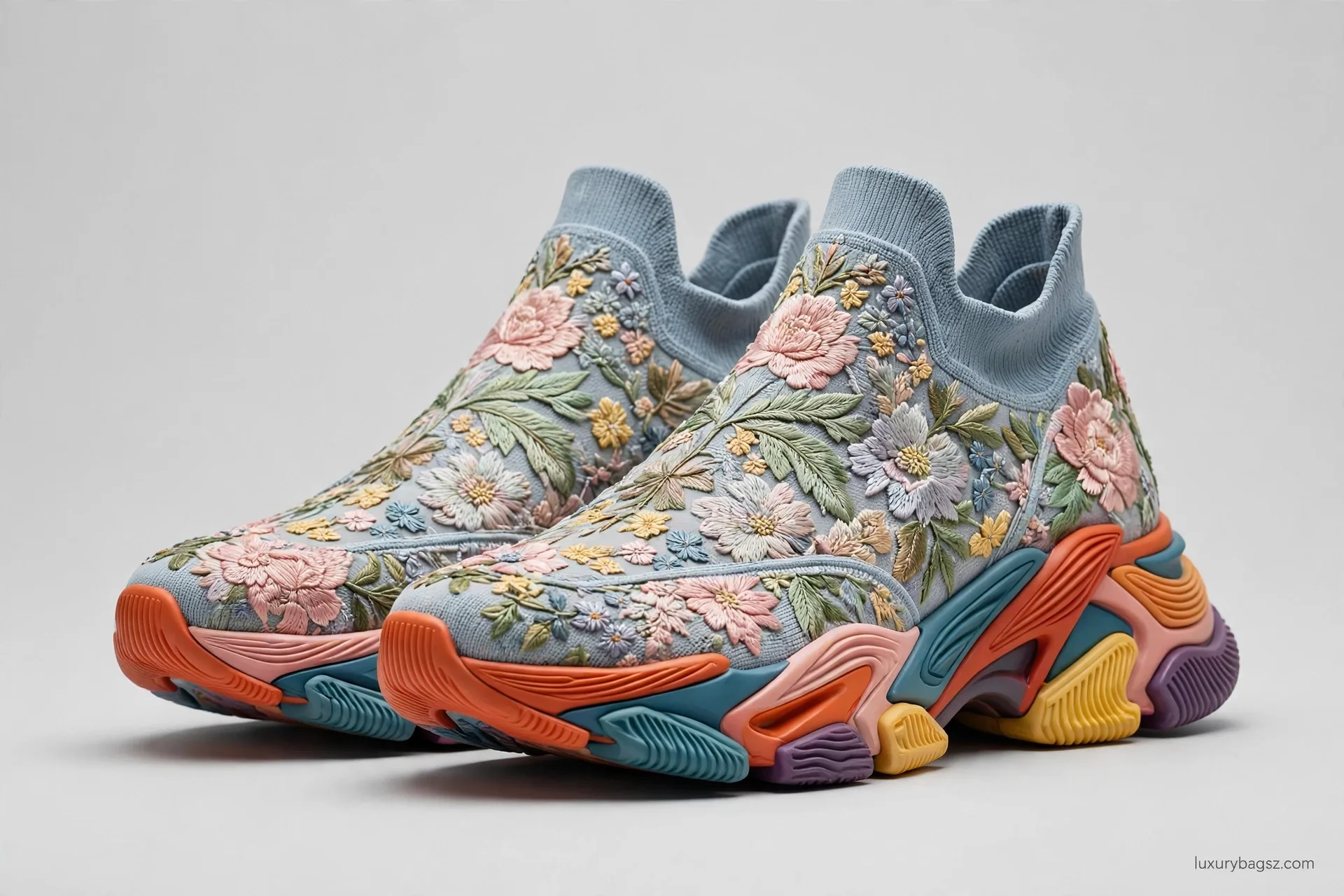
The Dior Fusion was a slip-on sneaker launched in 2014, in the Raf Simons era, with hand-finished floral embroidery over a sculpted, brightly coloured sole. It is retired. There is no current Fusion to buy new, and its original prices belong to 2014 — what matters now is its place in sneaker history and the pre-owned market. It mattered because it treated a trainer like a couture object years before luxury sneakers were normal. Good pairs still trade among collectors today.
Key Takeaways
- Launched in 2014, the Fusion is a retired, archive style — pre-owned only.
- Slip-on construction, floral embroidery and a sculpted rubber sole define it.
- It helped start the luxury sneaker era that every house now works in.
- Sizing is European and snug when new; decade-old pairs have often relaxed.
- Sole condition is the big pre-owned check — old rubber ages regardless of wear.
- Original launch prices are history, not a guide to fair prices today.
What the Fusion Was
Under Raf Simons, Dior put embroidery — sequinned flowers, beads and threadwork — onto a sporty slip-on silhouette with a chunky moulded sole. The contrast was the point: evening decoration on a shoe you could run for a train in, shown on a couture runway. Our Dior sneakers for women guide covers the house's current trainer world, which descends directly from this experiment. At launch it divided opinion, which is usually the sign of a design that will be remembered. Within a few years, every house had an embellished trainer.
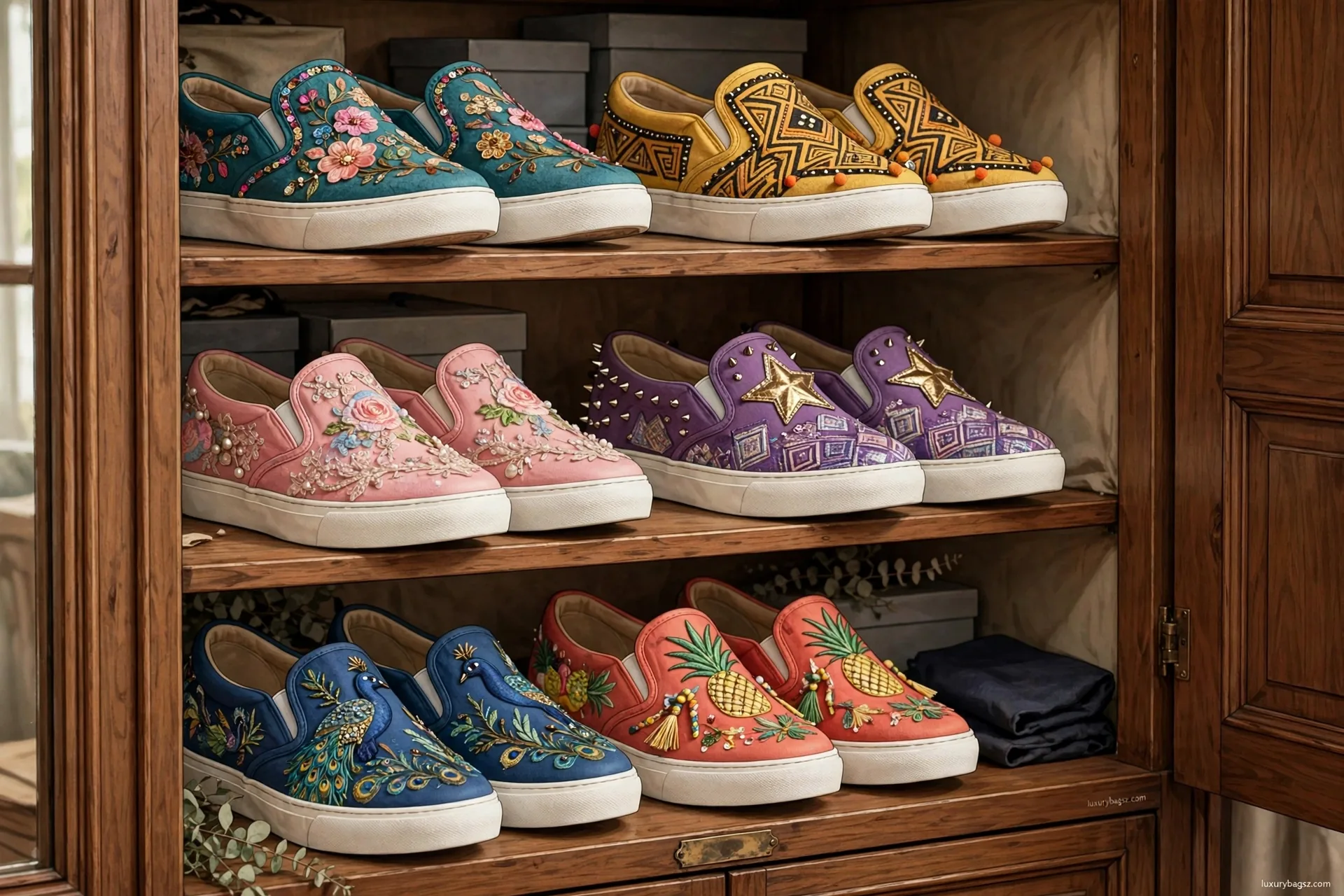
The Fusion was shown as part of the house's couture-adjacent collections, styled with dresses and tailoring rather than sportswear. That styling instruction was radical at the time. Trainers were still barred from many smart settings, and Dior was dressing them for evening. It also arrived in playful colours — pinks, greens and multicoloured embroidery — that treated the sneaker as a canvas, not an uniform.
Why It Changed Luxury Sneakers
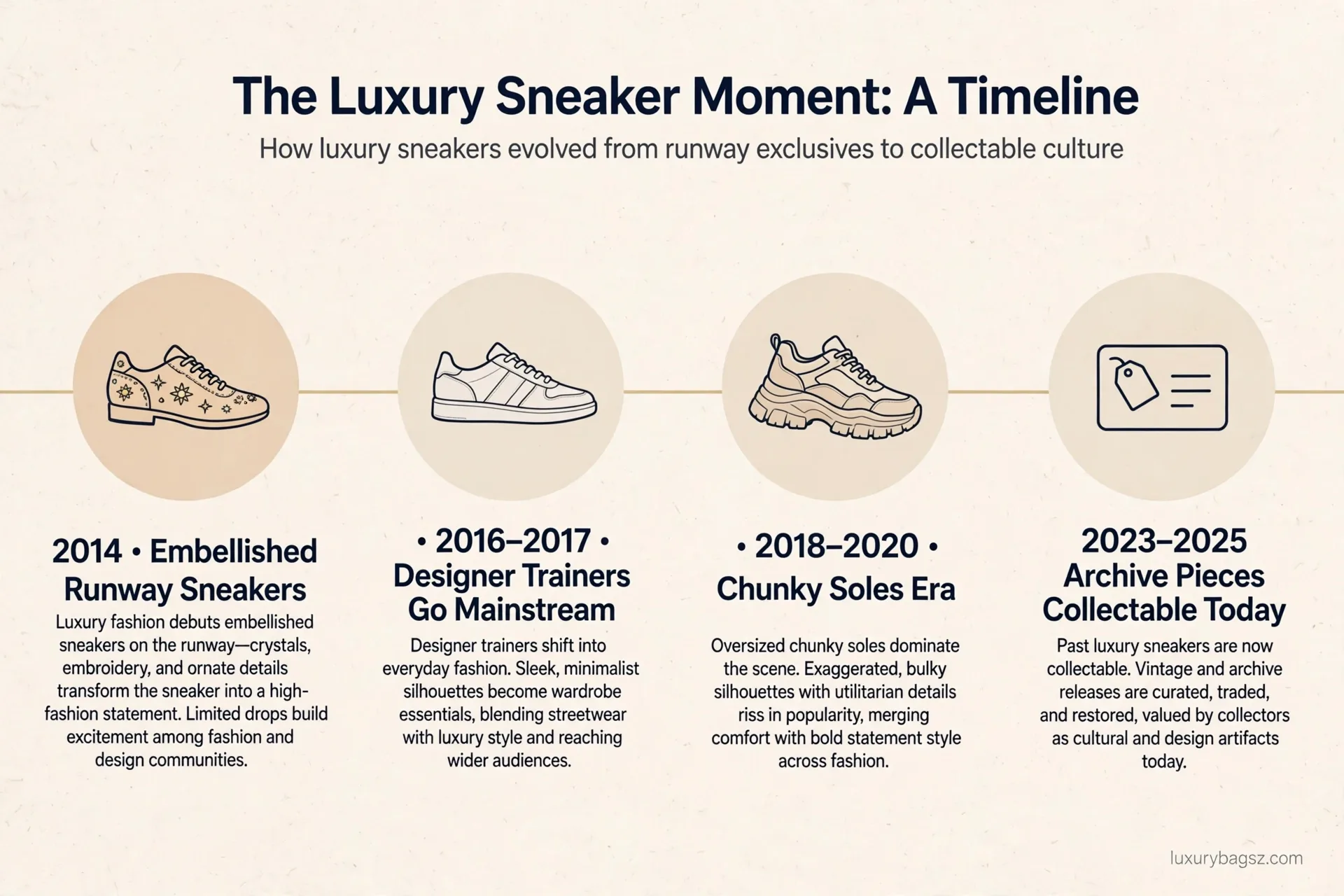
Before the mid-2010s, luxury trainers were mostly plain leather minimalism. The Fusion argued a sneaker could carry craft, colour and decoration. It also proved women would pay couture-level prices for trainers, a lesson the whole industry absorbed quickly and permanently. The chunky sculpted sole deserves credit too. It anticipated the oversized-sole era that arrived a few years later across fashion. Seen from today, the Fusion is a first draft of the modern luxury sneaker — written early, in embroidery thread.
Fashion media at the time called it futuristic, and the chunky sole photographs still look surprisingly current a decade later. Its influence is easiest to see in what followed: embroidered trainers, jewel details and sock sneakers across every luxury house in the late 2010s.

Design Details to Know
The upper is a slip-on, sock-like construction in technical fabric, with embroidered floral panels that vary between colourways. Soles were moulded rubber in contrasting colours, often bright, with a rounded, almost toy-like profile that softens the embroidery's formality. There are no laces to tie or lose — a genuine convenience that made the shoe an easy travel and city pair in its day.
Versions ranged from heavily jewelled runway pairs to quieter embroidered ones, so two shoes called Fusion can look surprisingly different. That range is a trap for careless listings: confirm the exact colourway and embellishment level from photographs, not from the name alone. For context on how rivals answered, our Chanel sneakers and shoes guide shows the other great house's route into trainers.
Sizing and Fit, Then and Now
The Fusion used European sizing and a snug, sock-like fit. New pairs felt close; the knit and fabric gave a little with wear. A decade on, most surviving pairs have relaxed. A listed size may feel more generous than the same size felt in 2014, so ask about actual fit. Slip-ons are unforgiving of wrong sizes because there is nothing to adjust. A heel that lifts out with every step means the pair is too big, full stop. If you sit between sizes, collector experience usually favours the larger size with a thin insole over a tight pair you cannot fix.
Wearing an Archive Sneaker Now
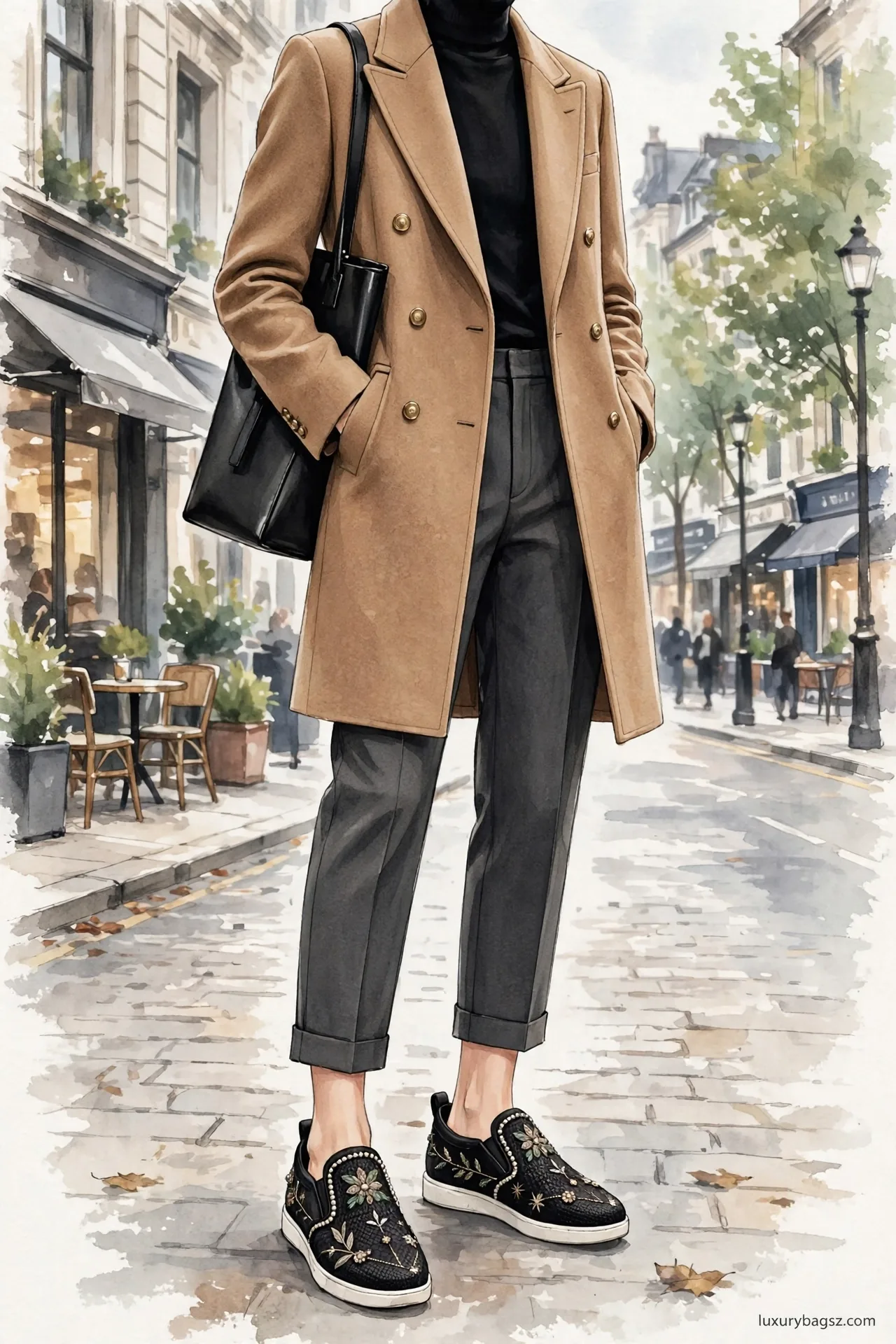
The Fusion's styling sweet spot is contrast: tailored coats, plain trousers and simple dresses that let the embroidery be the colour in the outfit. Worn head-to-toe with other statement pieces it can look costumey. One loud item per outfit is the archive-dressing rule. It also works as a collector's display piece, and there is no shame in that. Some pairs are now bought the way people buy vintage runway clothing. What it no longer is: a sports shoe. The soles have aged, the embroidery is delicate, and brisk city walking is its sensible ceiling.
Buying Pre-Owned: The Checks That Matter
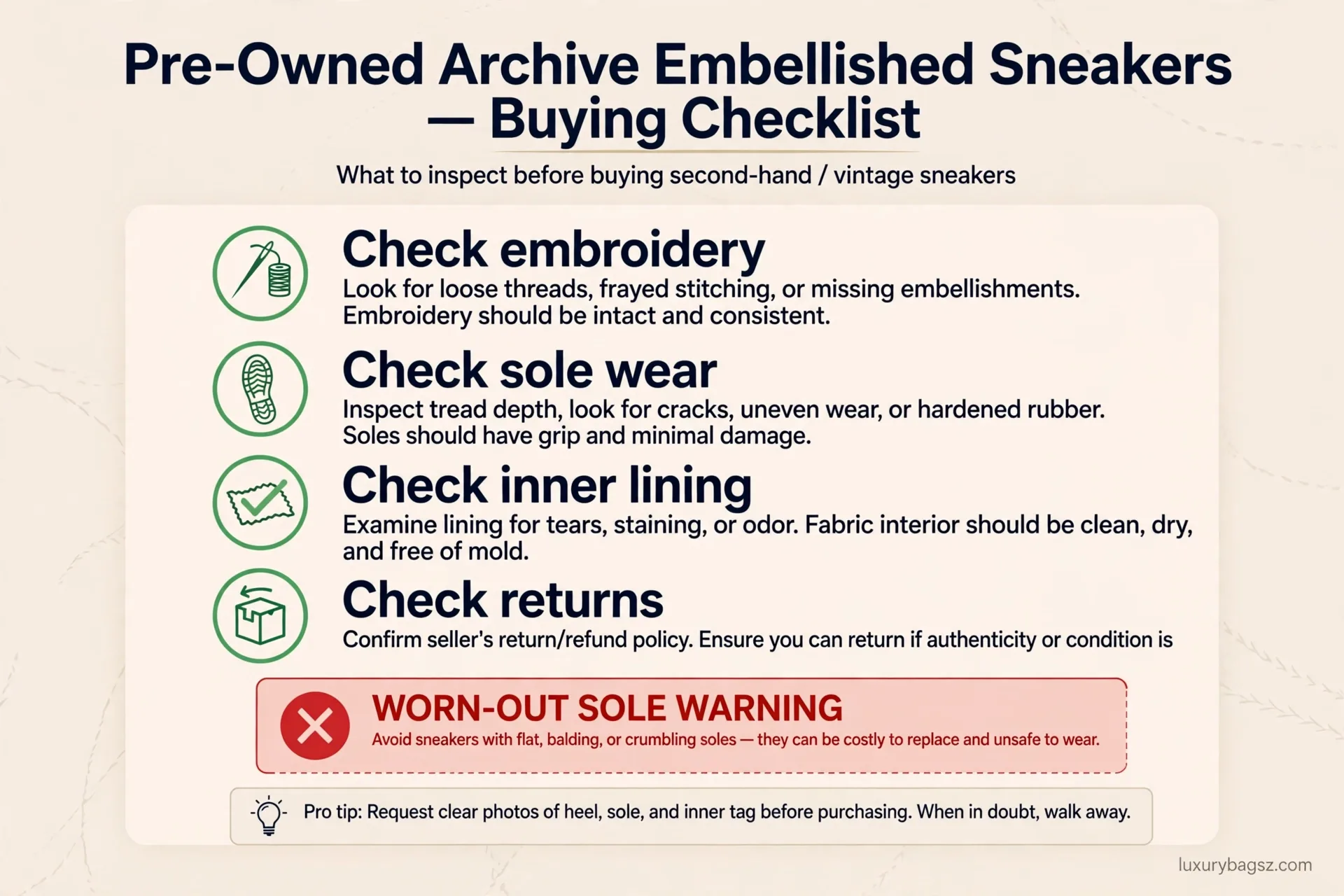
Start with the soles, as our best sneakers buying guide advises for any older trainer. Rubber hardens and cracks with age, even unworn. Flex the shoe gently in photographs or in person: surface crazing and stiff, shiny rubber are warnings of a sole near the end of its life. Then read the embroidery. Missing sequins and loose threads are common, repairable at a price, and should be reflected in the asking figure. Finally check the inner lining and insole print. Heavy wear inside with a clean outside suggests a tidied-up listing; price it accordingly.
Sizing labels fade on older pairs, so ask for the insole measurement as well as the stated size. Archive pairs pass through many hands and many listings. Buy from sellers who specialise in archive fashion where you can. They grade soles and embroidery more honestly than generalist listings usually do.
Care for Embroidered Archive Pairs
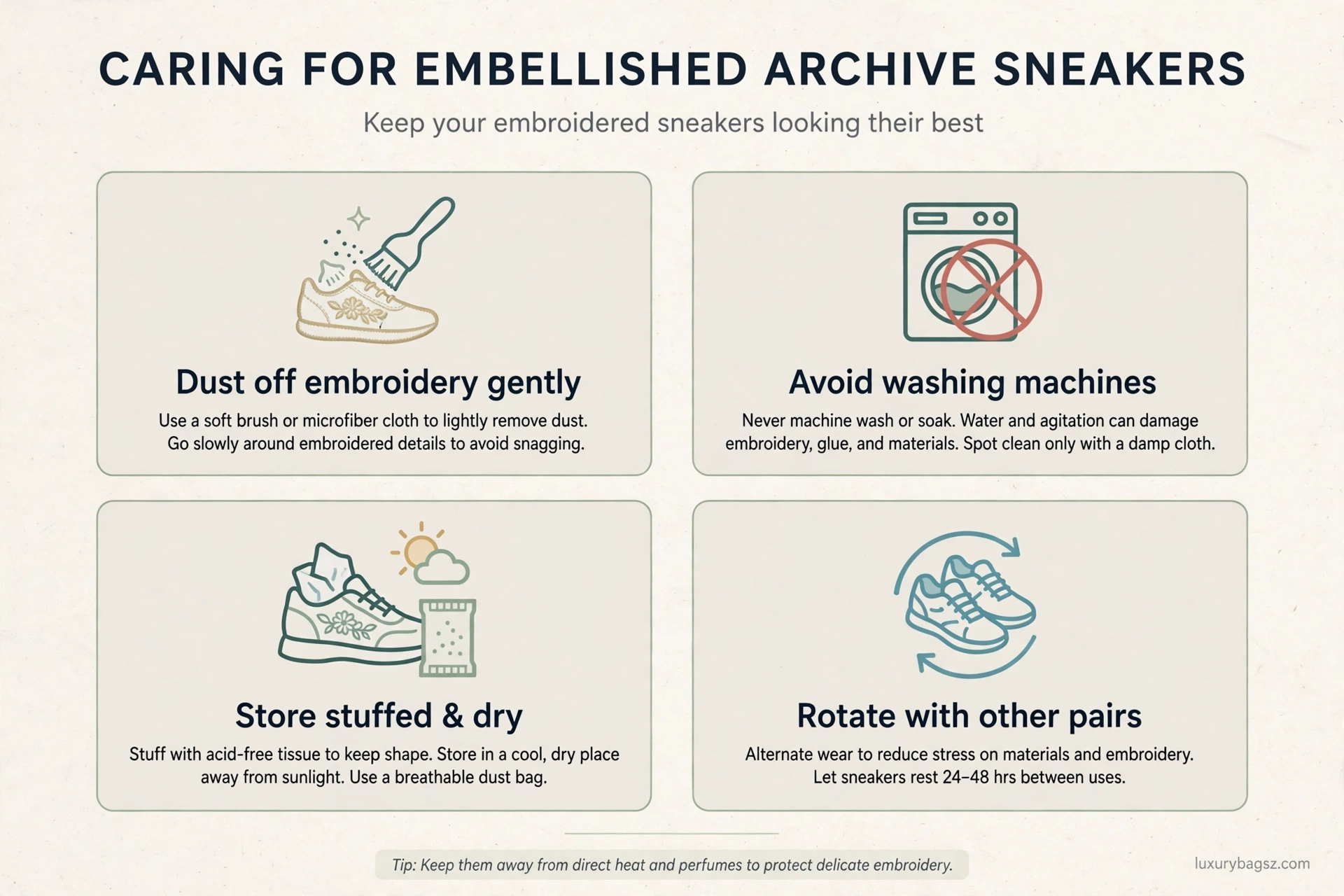
Dust embroidery with a soft, dry brush, working gently around raised work. Never soak an embroidered upper or use a washing machine. Our how to clean sneakers guide covers general trainer care; with the Fusion, use its gentlest methods only. Store pairs stuffed with tissue, in the dark, so the fabric holds its shape and the colours stay true. Rotate wear and avoid long wet walks. Old soles and water are poor partners, and embroidery thread dislikes being drenched.
Is the Fusion Worth Buying Today?
As fashion history you can wear, yes — few shoes mark the start of the luxury sneaker era as clearly, or look as joyful doing it. As a practical daily trainer, no. Modern Dior trainers are built for today's pavements, with today's materials and a returns window. Price a Fusion like a vintage piece: condition, completeness and colourway decide value, not the ghost of its launch price. Buy the best sole you can find. With archive sneakers, the part you cannot see in a mirror is the part that decides how long the story lasts.
Condition spreads are wide with this model: museum-kept pairs and hard-worn pairs carry the same name. Pay for the pair in front of you, never the legend. If wearing them worries you, buy to display and to wear rarely. Archive joy does not require daily miles to be real.
Frequently Asked Questions
When were Dior Fusion sneakers released?
They launched in 2014, during Raf Simons's time at Dior, and became one of the defining shoes of that year's luxury sneaker moment.
Are Fusion sneakers still made?
No. The Fusion is retired, so the only route now is pre-owned, vintage or old stock through resale and consignment.
Why are they called Fusion?
The name fits the design: couture embroidery fused with a sporty slip-on trainer shape and a sculpted rubber sole.
How do Fusion sneakers fit?
They use European sizing and a snug, sock-like fit. Older pairs often feel more relaxed, so ask sellers how the specific pair fits now.
What did they cost new?
Launch prices were at luxury trainer levels of their day, in the region of four figures for embroidered versions. Treat those figures as history only.
What is the biggest pre-owned risk?
The sole. Rubber ages even without wear, so check flexibility and cracking before embroidery, colourway or anything else.
Can the embroidery be repaired?
Loose threads and a few missing sequins can often be restored by a skilled repairer. Extensive loss is costly and should lower the price.
How should I clean them?
Dry, gentle methods only: a soft brush for dust and a barely damp cloth for marks. Never soak them or machine-wash them.
Are they a good investment?
Buy them to enjoy, not to speculate. The best colourways in top condition hold interest, but archive fashion is an unpredictable market.
What should I wear them with?
Plain tailoring and simple dresses. The embroidery supplies the colour and detail, so the rest of the outfit can stay quiet.
Conclusion: The Sneaker That Started an Argument
The Fusion looks playful, but its real legacy is serious: it proved a trainer could carry couture craft and a couture price. Buy pre-owned with your eyes on the sole, wear it with plain clothes, and you own a wearable piece of the moment luxury sneakers began.