Designer Wallets for Women: Must-Have Styles, Sizes and What to Buy
Women's Designer Wallets in Brief: Match the Wallet to Your Bag
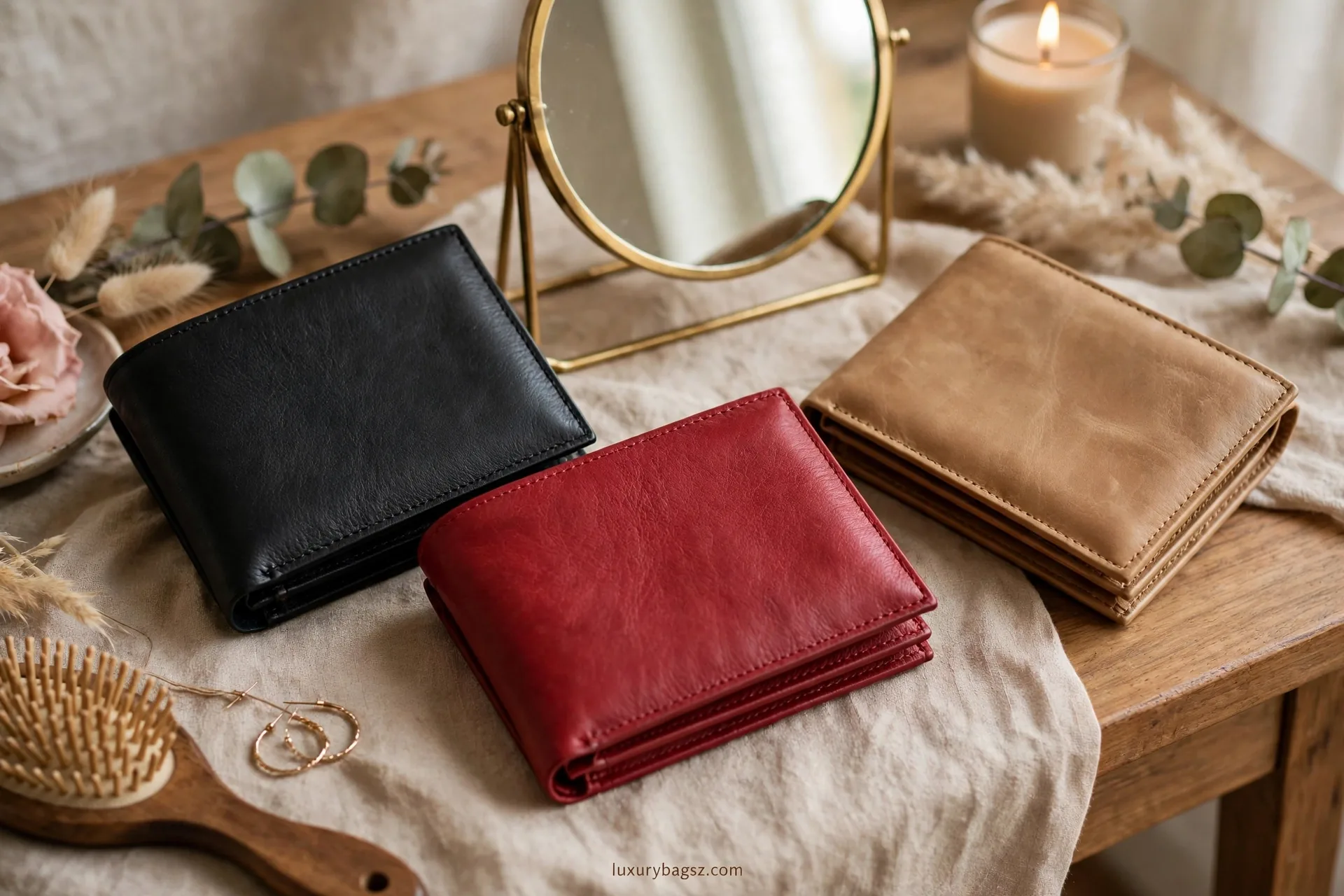
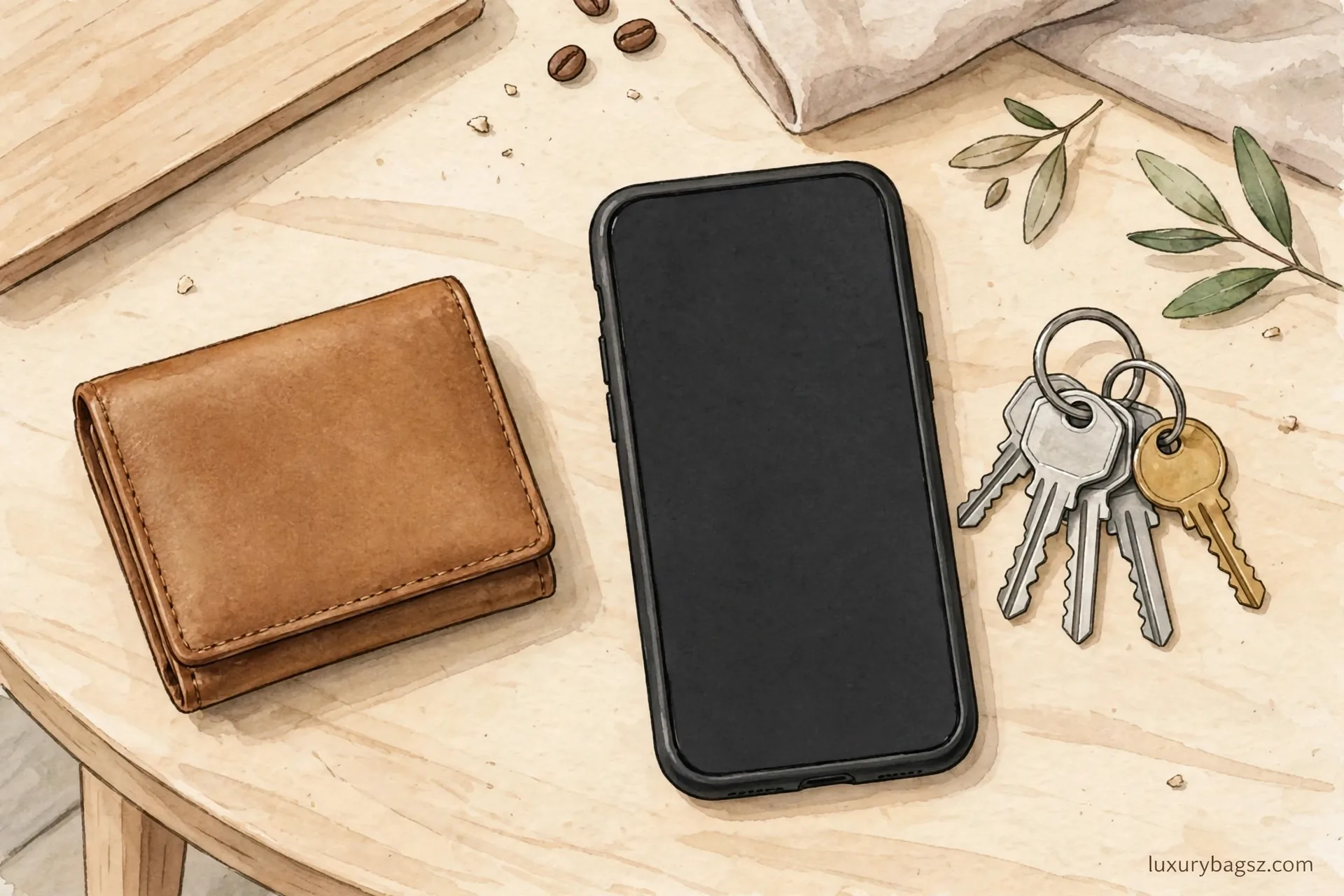
The right designer wallet is the one that fits both your cards and your smallest regular bag. For most women, that is a compact wallet with eight to twelve card slots, a notes part and a coin pocket, in grained leather that survives daily handling. Buy a long wallet only if your main bags are large, and a zip-around if you carry coins and receipts. A wallet that forces you to overstuff its slots will stretch, crack and age years before its time.
Key Takeaways
- Compact wallets with eight to twelve slots suit most women and most bags best.
- Long wallets hold more and lie flat, but they fail in small crossbody bags.
- Zip-around styles keep coins, receipts and cards safest for busy daily use.
- Grained leather and saffiano-style finishes resist scratches and moisture best.
- A wallet on chain can replace a small evening bag as well as hold cards.
- Never overstuff slots, since stretched leather never shrinks back.
Why the Wallet Deserves Real Thought
Your wallet is handled more often than your handbag, opened at tills, cafés and ticket barriers daily. That constant use makes its leather, zip and stitching quality easy to judge within months. A designer wallet also works as an entry point to a house you admire. It delivers the same leather and finishing as a bag, at a fraction of the price and with daily visibility. Choose it as carefully as a bag, starting from your real carry list. Count your essential cards, decide whether you carry coins and notes, and only then look at shapes. The most common mistake is buying for an old bag. If your bags have shrunk in recent years, as most have, your wallet probably needs to shrink with them.
The Main Styles and Their Capacities
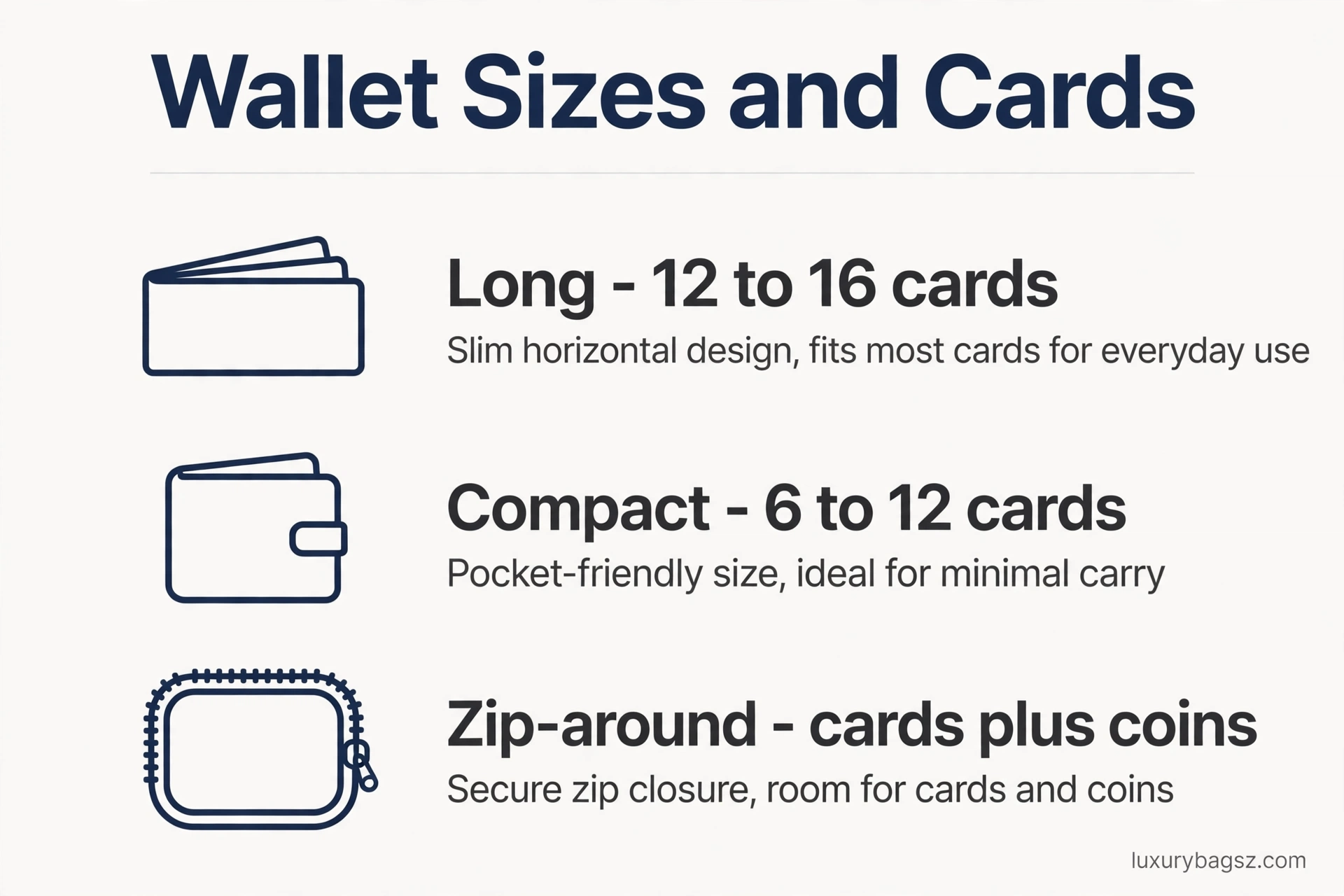
Long wallets, roughly 19 cm wide, typically hold twelve to sixteen cards plus notes laid flat. They suit totes and larger shoulder bags, and they double neatly as slim clutches. Compact wallets, roughly 11 to 14 cm wide, hold six to twelve cards with folded notes. They fit crossbody bags and small shoulder bags, which is why they now dominate sales. Zip-around wallets wrap everything in one secure zip, suiting coin carriers and travellers. Their zips add bulk, so measure your smallest bag before choosing a large zip style. French and flap wallets sit between compact and long, closing with a press stud. They feel elegant and open fast, though coins usually need a separate small pouch.
Materials That Survive Daily Handling
Grained calfskin is the daily champion, hiding the scratches that tills, keys and zips inflict. Our leather types guide explains how grains and finishes change durability. Saffiano-style leather, with its cross-hatch texture, resists water spots and scuffs well. It feels stiffer than grained leather, but wallets benefit from that structure. Lambskin feels luxurious and soft, yet wallet corners rub constantly inside bags. Save lambskin for evening wallets on chain that you carry in your hand, not loose daily wallets. Coated canvas wallets from houses such as Louis Vuitton shrug off damp and dirt. They weigh little and clean easily, though their look is bolder and more casual than plain leather.
Wallets on Chain and Card-First Alternatives
A wallet on chain carries cards, a phone and lipstick, then becomes a tiny evening bag. Our Chanel wallet on chain guide covers prices and authenticity for the most famous example. This hybrid suits women who often go from desk to dinner. By day it sits inside a tote as a wallet, and by night it leaves the tote behind entirely. If you carry five cards or fewer, a card holder may serve you better than any wallet. Our Hermès Calvi card holder guide shows the minimalist end of that idea. Many women now run a two-piece system: a card holder for daily use and a larger wallet kept for travel. It costs less than one oversized wallet and fits small bags better.
Must-Have Features Worth Paying For
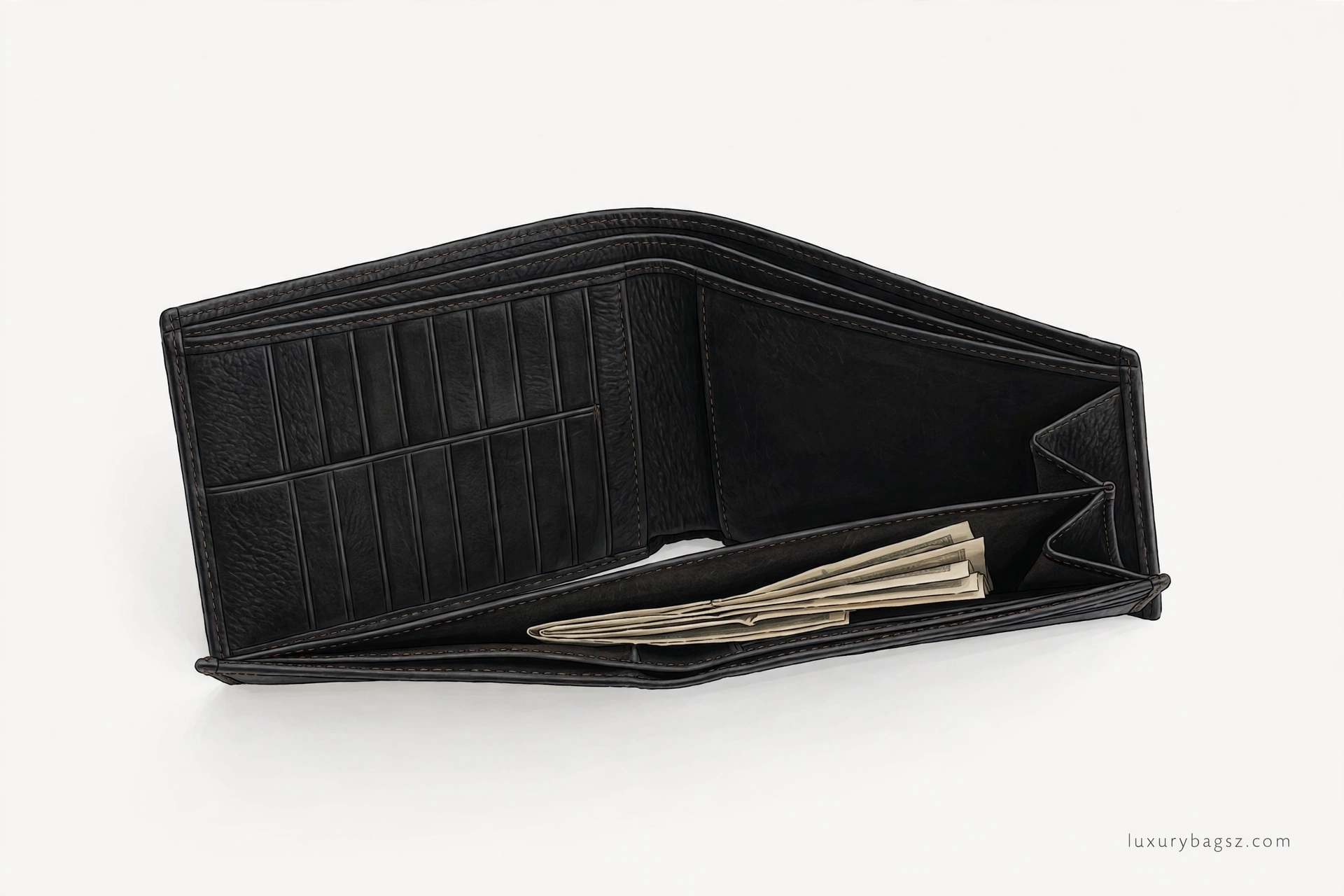
Look for full-length notes space if you carry cash, since folded notes bulge and distort smaller wallets. A separate coin pocket with a secure closure keeps coins from scratching cards. If your card count is low, weigh a card holder alongside the wallets here before you buy. Comparing both formats honestly helps you decide where your own daily carry list truly sits. RFID shielding appears on some contemporary wallets and matters to some travellers. It is a bonus rather than a necessity, so never let it outweigh leather and layout quality. The video with this guide compares leading women's wallets side by side. Watch how each opens and loads, since a wallet's daily pleasure is in its handling, not its photograph.

Prices and Honest Value
New designer wallets typically range from around £200 for contemporary leather to £900 and above for major houses, with wallets on chain reaching bag prices. Long-standing classics hold value best. Our designer bags under $1500 guide puts wallet spending in a wider budget context. A wallet plus a mid-range bag often beats one famous bag with a tired old wallet inside. Pre-owned wallets sell for far less than bags, which makes them tempting. Check corners, slot stretch and zip teeth closely, because wallet repairs are fiddly and rarely cheap. A wallet used daily for five years costs little per use, even at premium prices. That maths favours buying the leather and layout you truly want, once, rather than replacing cheap wallets yearly.
Authenticity Checks and Care Habits
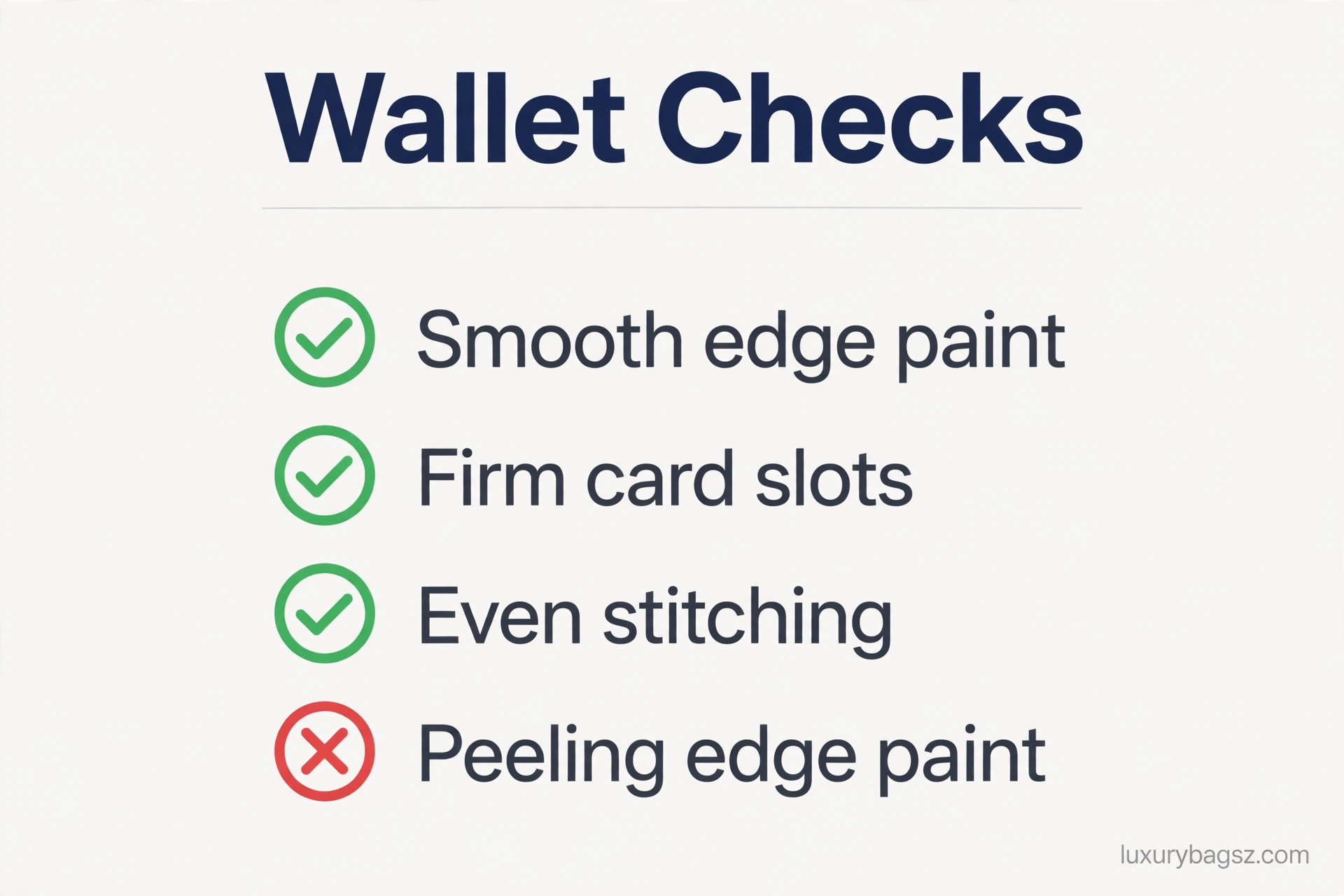
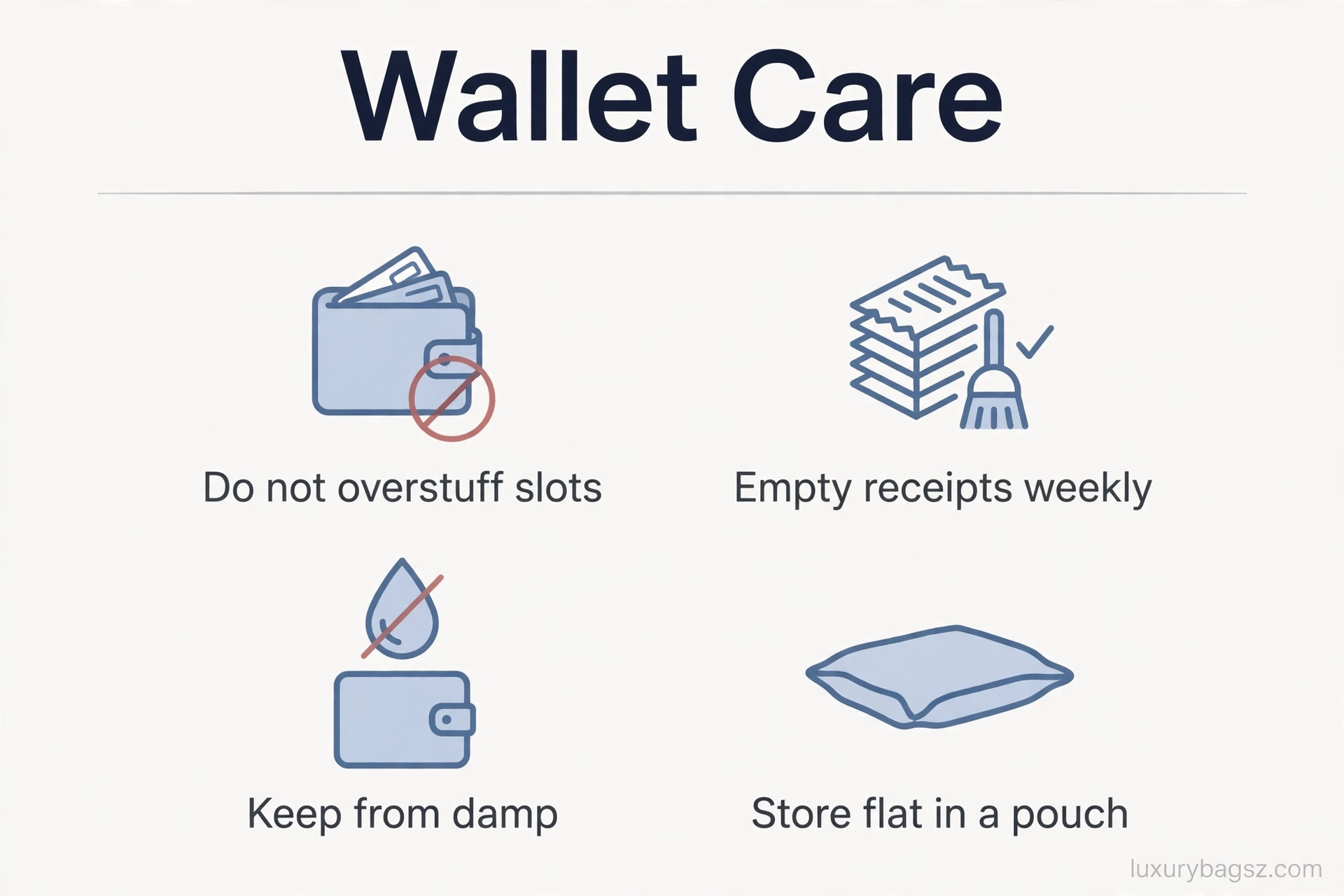
Check edge paint first: it should be smooth, even and firmly attached. Peeling or bubbling edges on a nearly new wallet are a warning sign worth investigating. Slots should grip cards firmly without forcing them. Stretched, curled slots suggest heavy past use or poor leather, and they will only loosen further with your cards. Wipe your wallet weekly with a soft, dry cloth, and empty receipts before they swell its shape. Leather wallets kept slim keep their stitching and corners far longer. Store a spare wallet flat, lightly filled with tissue, in its dust pouch. Keep all wallets from damp bathrooms and direct sun, which dry leather and fade colour quietly.
Choosing Your One Best Wallet
Carry mostly cards and a phone? Choose a compact grained leather wallet with ten slots and a coin pocket, sized for your smallest daily bag. Carry cash, coins and receipts daily? Choose a zip-around in a hard-wearing finish, and accept its extra bulk as the price of calm organisation. Attend evenings straight from work? Choose a wallet on chain in black, which serves as your wallet by day and your bag by night. Love a house but not its bag prices? Choose its classic wallet in a core colour. You will handle that small piece of craftsmanship more than any bag you own.
Frequently Asked Questions
What is the best designer wallet for women?
A compact grained leather wallet with eight to twelve card slots, a notes part and a coin pocket suits most women best. It fits small modern bags and survives daily handling well.
How many card slots do I need?
Count your daily cards, then add two spare slots for loyalty or travel cards. Most women land between eight and twelve. More slots than that usually means unnecessary bulk.
Is a long or compact wallet better?
Compact wallets fit today's smaller bags and suit card-led carrying. Long wallets hold more, keep notes flat and suit tote carriers, but they fail completely in small crossbody bags.
Are zip-around wallets worth it?
Yes, if you carry coins, receipts or multiple currencies. The zip keeps everything contained and secure, though it adds bulk, so check the fit in your smallest regular bag first.
What leather lasts longest in a wallet?
Grained calfskin and saffiano-style finishes last best, resisting scratches, moisture spots and corner wear. Lambskin feels softest but scuffs quickly under daily wallet handling.
Can a wallet on chain replace a bag?
For evenings and light days, yes. A wallet on chain holds cards, a phone and lipstick, and works as a tiny bag. It cannot replace a daily bag for larger loads or laptops.
How much do designer wallets for women cost?
Typically around £200 to £900 for wallets, depending on house and leather, with wallets on chain priced like small bags. Pre-owned examples often cost considerably less.
How do I stop my wallet slots stretching?
Never force extra cards into a slot, and rotate which cards sit in the tightest slots. Once leather stretches it does not shrink back, so prevention is the only cure.
How can I check a pre-owned wallet is genuine?
Inspect edge paint, stitching, slot grip, zips and hardware tone, and buy from sellers offering authentication and returns. Peeling edges or loose slots are strong warning signs.
How do I care for a designer wallet?
Empty receipts weekly, wipe with a soft, dry cloth, keep it from damp and sun, and store spares flat in their dust pouches. Avoid overstuffing above all else.
Conclusion: The Small Piece You Will Touch Most
A designer wallet earns its price through thousands of small, daily handlings. Choose the size that fits your smallest regular bag, the leather that forgives daily life and slots that match your real card count. Do that, and this smallest luxury purchase may quietly become the one you appreciate most.