

Designer Prints Trend Edit: Florals, Checks, Stripes and How Print Cycles Work
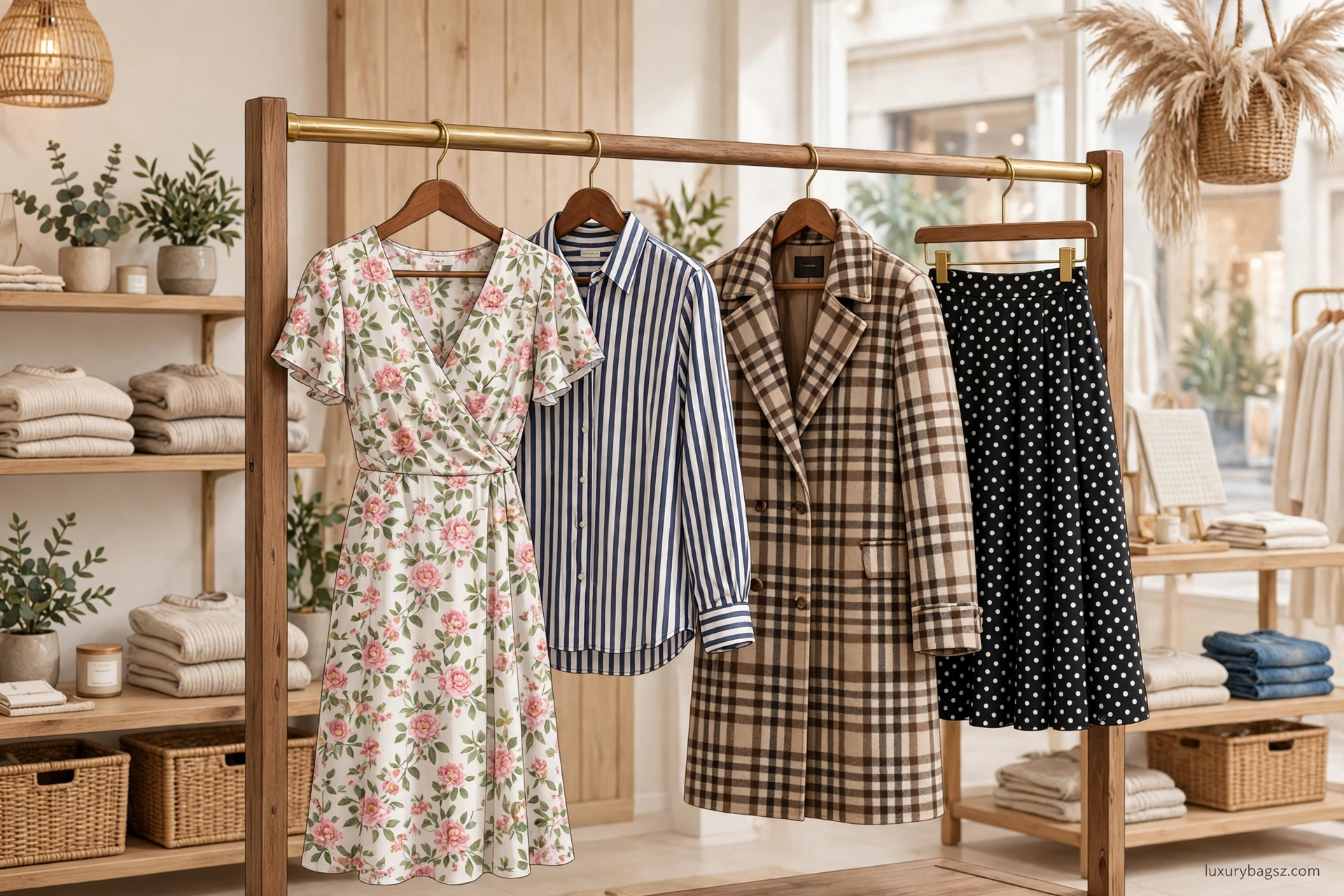
Prints Are a Rotation, Not a Lottery
Designer prints never really disappear — they rotate. Florals bloom, checks sharpen, stripes reset the eye, dots return for playfulness, and each comes back wearing slightly different colours.
Understanding the rotation makes shopping calmer. You stop chasing every "new" print and start collecting the families that suit you, in the scales that flatter you.
This edit walks through the main print families, how they cycle, and the mixing rules that stop prints from wearing you.
Key Takeaways
- Print trends rotate between four families: floral, check, stripe and dot.
- Scale is the fit issue with prints: match the print size to your frame.
- Mixing works when prints share colours and differ in scale.
- One printed hero piece plus printed accessories is the safest formula.
- Heritage prints (house florals and checks) date slowest and resell best.
- Wash prints inside out in cool water and dry them in shade to protect colour.
How the Print Cycle Turns
Prints follow a loose seasonal rhythm. Spring belongs to florals and dots, summer to stripes and tropical motifs, autumn to checks and darker blooms, winter to heritage patterns.
Designers also react against the previous season. After years of minimalism, prints swell in size and colour; after a loud print season, the next one shrinks them to ditsy scale.
That is why a print rarely looks wrong for long. Buy a good floral today, and even if giant blooms pause for a year, smaller florals keep the family in play.
The practical move is to own your favourite families in classic colours, then let seasonal shades refresh them through accessories.
Print also does emotional work that plains cannot. A floral lifts a grey day, a check makes a plain coat look deliberate, and dots can rescue an outfit that felt too serious.
That is why print trends matter beyond novelty: they are the cheapest way to change the mood of clothes you already own, one scarf or shirt at a time.
The Four Families and Their Personalities
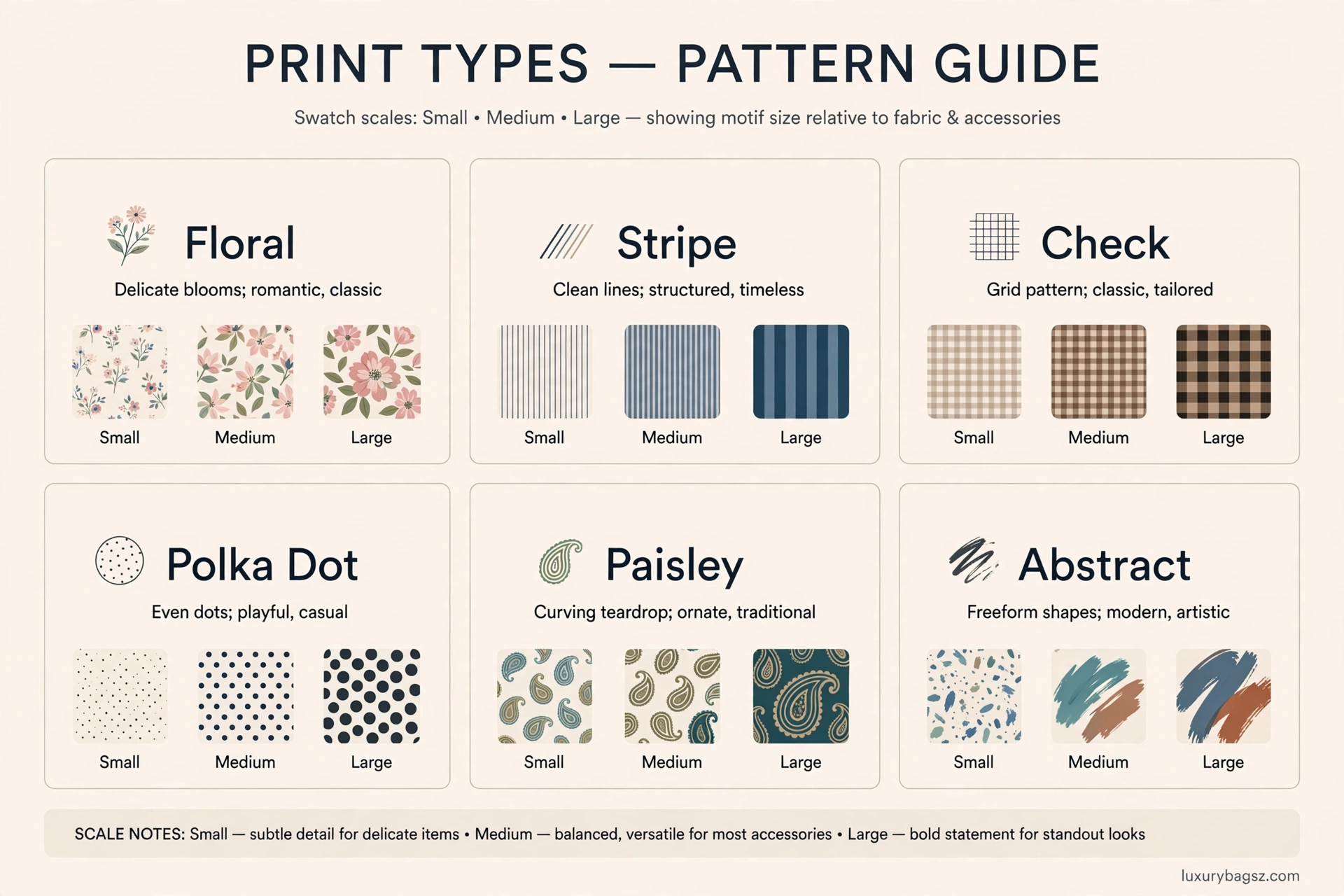
Florals are the romantics: soft, various and forgiving, from tiny ditsy sprigs to bold botanical drawings. They suit dresses, blouses and scarves best.
Checks are the structurals. Tartan, gingham, windowpane and houndstooth each carry a mood, and check print bags show how well the family works in accessories.
Stripes are the editors. They sharpen everything near them, lengthen the body visually, and act almost as a neutral when the colours are classic.
Polka dots are the playful ones. They lighten tailoring, date the least of any print at small scale, and pair with all three other families without friction.
Heritage Prints and Why They Endure
Some prints belong to houses. Reading the Gucci Flora print history shows how a scarf design from the 1960s became a permanent signature rather than a season's experiment.
The Burberry check evolution tells a similar story: a trench lining that grew into one of fashion's most recognised patterns.
Heritage prints endure because the house protects them. Colours shift, scale adjusts, but the core drawing stays, so older pieces keep looking current.
For buyers, that stability means heritage print items — scarves, bags, linings — tend to hold their looks, and often their value, longer than anonymous prints.
Scale: The Fit Rule Nobody Mentions
Print scale should echo body scale. Petite frames are overwhelmed by huge blooms but glow in small to mid-scale prints that repeat often.
Taller or broader frames carry large prints easily, while tiny ditsy prints can look oddly precious on them; mid to large scale keeps the balance.
Placement matters as much as size. A large motif landing awkwardly at the bust or hip draws the eye exactly there, so check the mirror from every angle.
If you are between scales, choose medium. Mid-scale florals and checks are the most forgiving prints in fashion and the easiest to mix with others.
Body placement can be adjusted with styling: a belt breaks a large print at the waist, a jacket covers a loud placement at the shoulder, and a scarf relocates interest towards the face.
When trying printed trousers or skirts, sit down in the fitting room. Prints stretch and shift over knees and hips, and a motif that behaved standing may not behave seated.

Mixing Prints Without the Clash
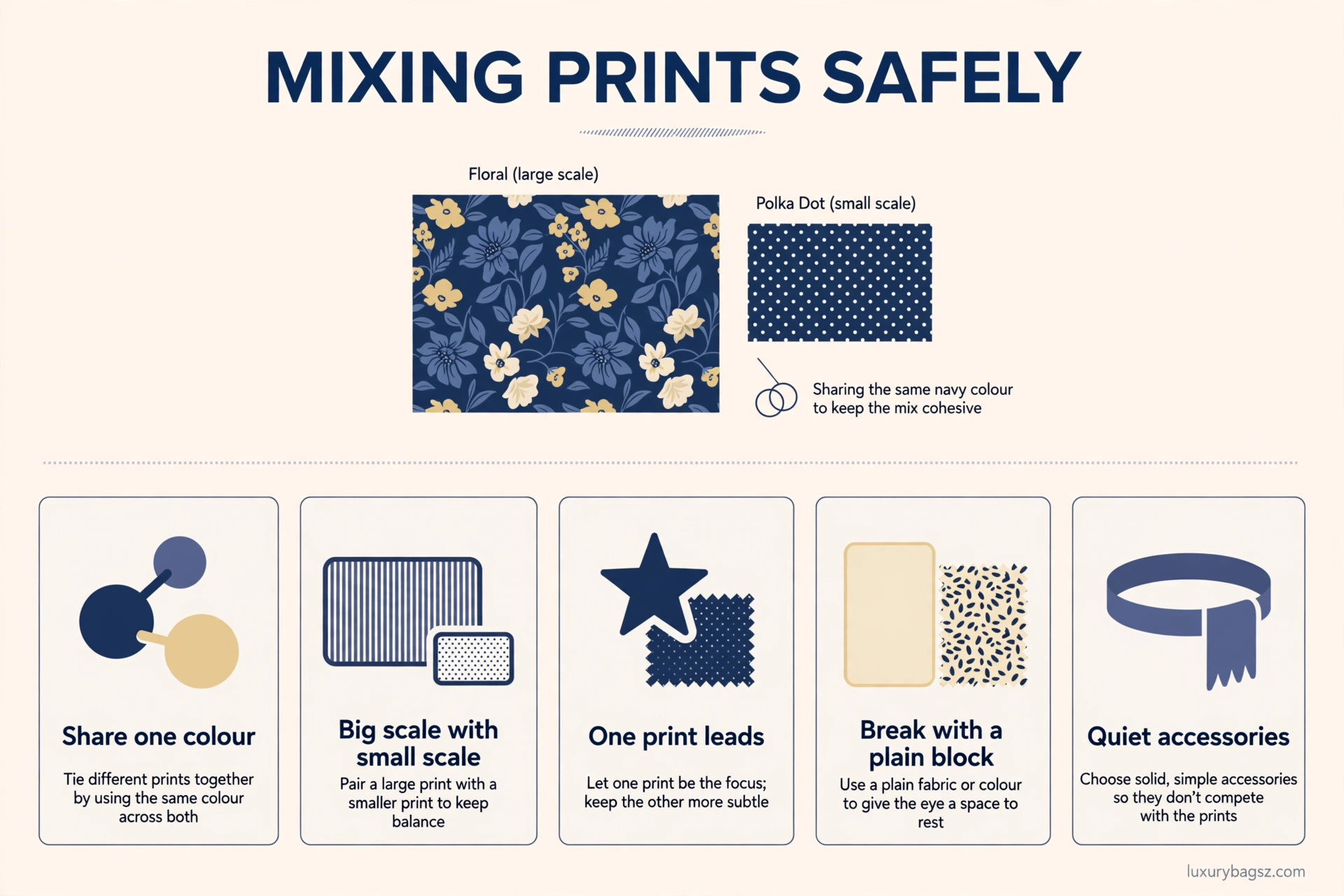
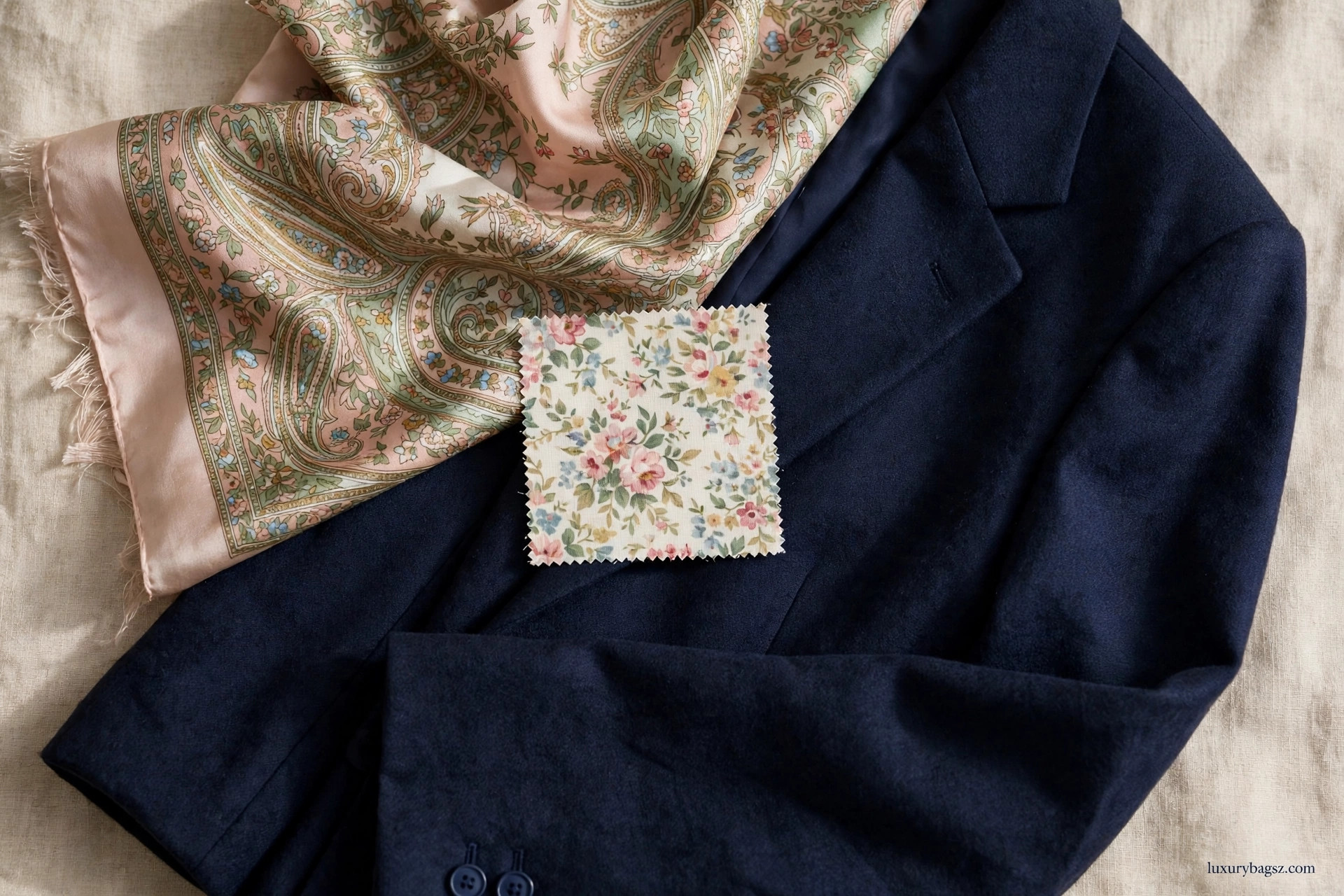
Mixing works on two rules: share a colour, split the scale. A navy floral dress and a navy-white striped jacket agree on colour and differ in pattern size, so they harmonise.
Add a neutral bridge when unsure. A plain belt, bag or shoe between two prints gives the eye a rest and makes the mix look deliberate.
Keep the third print out. Two prints plus plains is stylish; three prints is a gamble that only works when all three share one tight palette.
Dots are the universal mixer. Small dots sit happily beside florals, checks and stripes alike, which is why a dotted scarf earns its drawer space.
Styling Formulas by Family
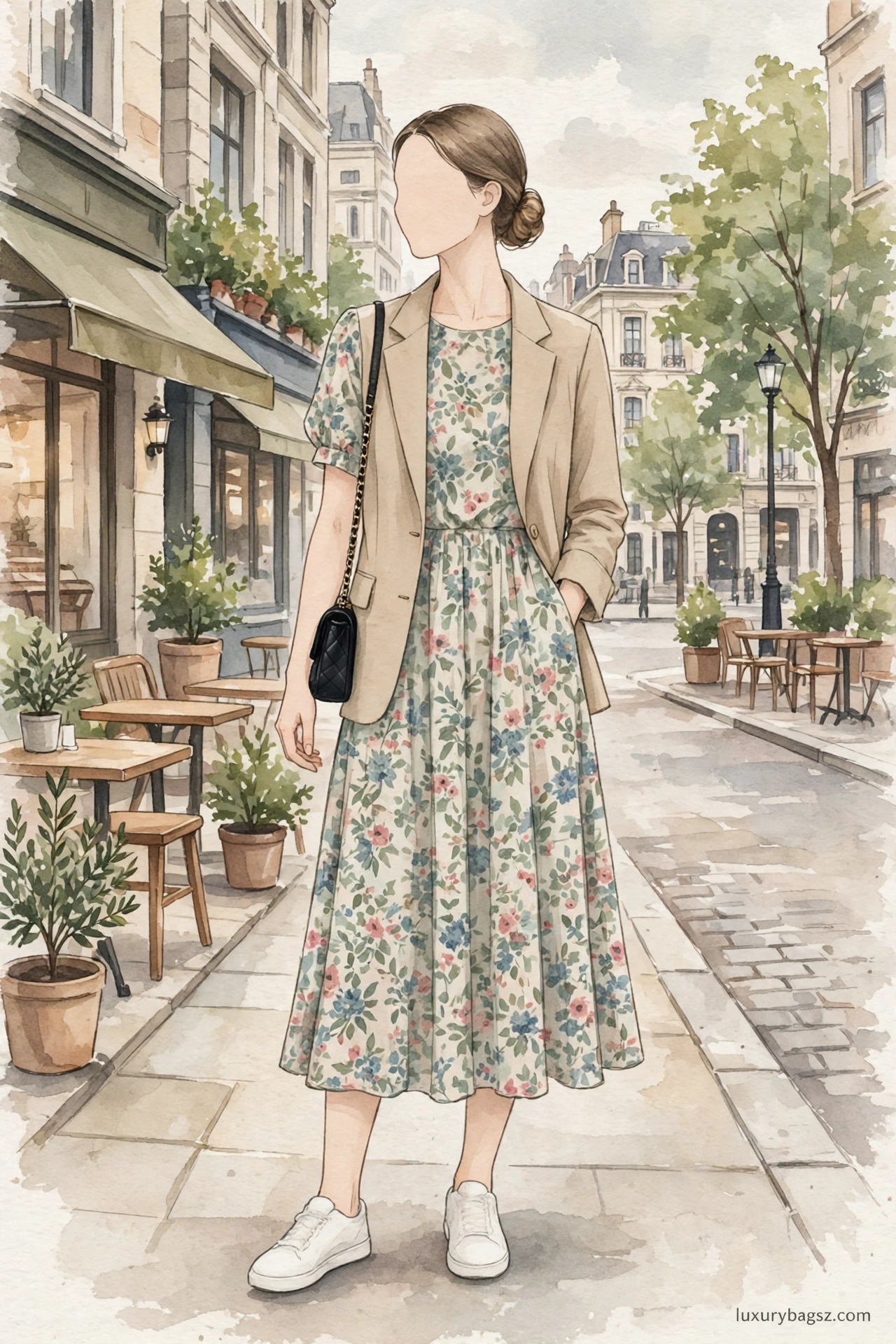
Floral formula: one floral hero — dress, skirt or blouse — with everything else plain and the bag structured. Structure stops florals drifting into sweetness.
Check formula: checked blazer or trousers with a plain knit and clean shoes. Checks already imply tailoring, so lean into neatness rather than softening it.
Stripe formula: striped shirt or knit with solid bottoms, or a striped dress with a plain jacket. Let the lines run uninterrupted for the lengthening effect.
Dot formula: dotted blouse under a suit, or a dotted dress with a leather jacket. Dots love a serious partner; the contrast is the charm.
Keeping Print Colours True
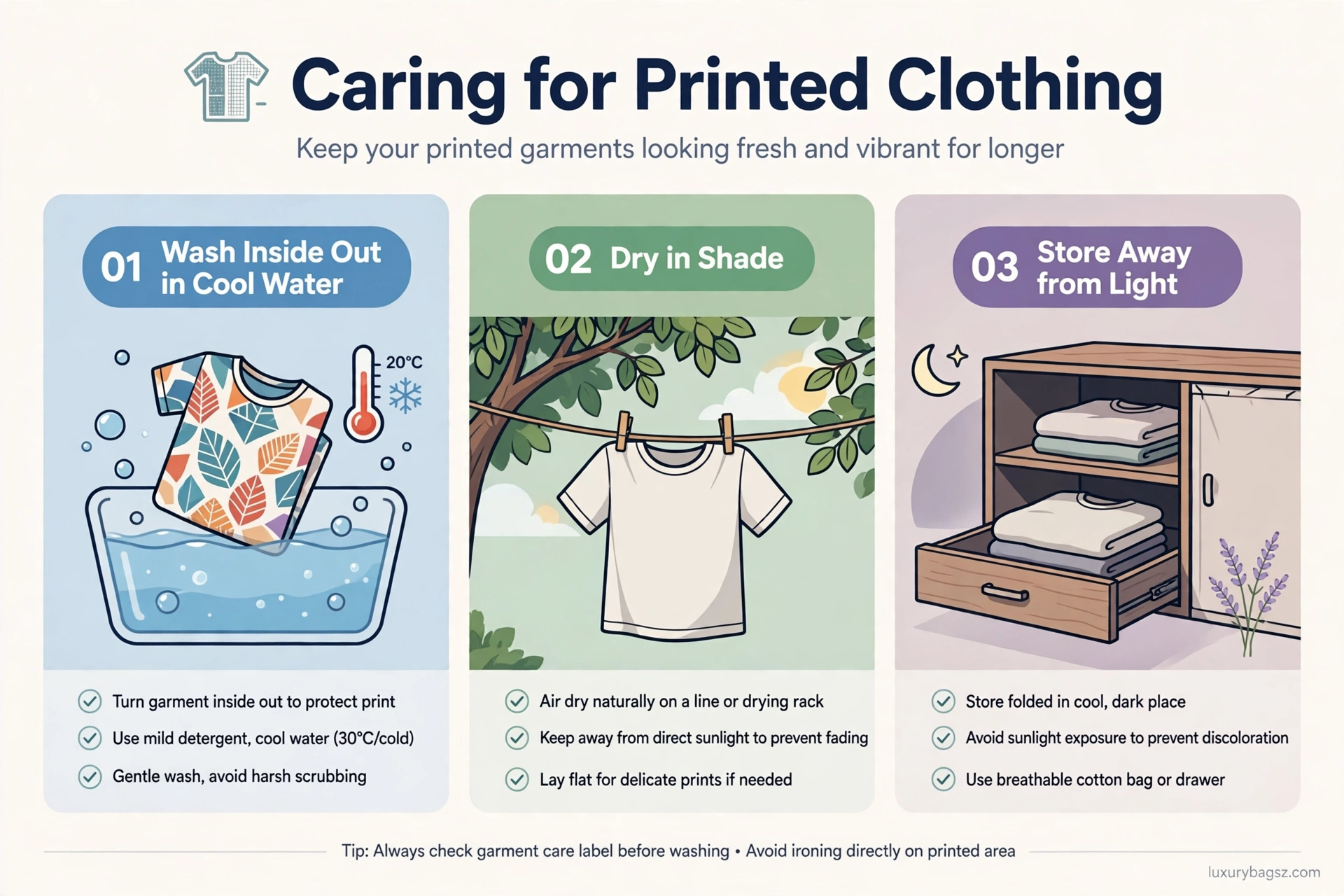
Prints fade faster than plains because the pattern shows every loss of depth. Wash printed garments inside out, in cool water, with similar colours.
Dry them in shade. Direct sun bleaches printed cotton and silk unevenly, and the lightest colours in the design go first, flattening the pattern.
Iron on the reverse side, or use a pressing cloth. Direct heat can shine or crack some print finishes, particularly on coated cottons.
Store prints away from light and from dark, dye-heavy neighbours. A white floral blouse stored against raw denim can pick up colour while it sits.
Buying Prints That Outlast the Cycle
Choose families you genuinely like, not the one shouting loudest this season. If you have always loved stripes, a great striped piece will serve you through every rotation.
Favour classic colourways: navy, red, cream, black and green prints cycle back more faithfully than neon or pastel experiments.
Inspect repeat quality. On a well-made print, motifs line up at seams and the pattern continues logically across pockets and plackets; cheap prints break at every join.
Scarves are the low-risk entry. A printed scarf tests a family against your face and wardrobe for a season before you commit to a dress or coat.
Inspect the print on the inside too. On quality cloth the colour shows through softly; on thin cloth with a one-sided print, the inside looks washed out and the garment will fade unevenly.
Finally, count the colours in the print. Three or more colours that all exist in your wardrobe means the piece will mix widely; a print in orphan colours will wait for partners that never arrive.
Frequently Asked Questions
Which prints are in fashion now?
The rotation currently favours checks and darker florals for autumn, with stripes never far away. All four families stay wearable; the shift is in scale and colour rather than presence.
Can I mix floral and stripes?
Yes — it is the classic mix. Share a colour between them and keep the scales different: a small floral with a bold stripe, or the reverse, and add plain shoes or a plain bag.
What print is most flattering?
Mid-scale prints in colours that suit your skin flatter most people. Very large prints overwhelm small frames; very small ones can look fussy on tall frames.
Do prints date quickly?
Anonymous novelty prints date fastest. Florals, checks, stripes and dots in classic colours, and heritage house prints, stay current for years because the families never fully leave.
How many prints can one outfit hold?
Two, comfortably, following the shared-colour and split-scale rules. Beyond two, keep everything else — bag, shoes, jewellery — completely plain and minimal.
Are prints appropriate for work?
Checks, pinstripes and small dots are office classics. Keep florals smaller in scale and darker in colour for formal workplaces, and let one print lead at a time.
What is a heritage print?
A print owned and protected by a fashion house across decades — a signature floral or check that returns each era with small adjustments, so older pieces still read as current.
Which print should I buy first?
A mid-scale floral or a classic stripe in your best colours. Both mix with plains effortlessly, work across seasons, and test your taste before bigger commitments.
How do I stop prints fading in the wash?
Turn garments inside out, wash cool with similar colours, dry in shade, and iron on the reverse. Sunlight and hot water are the two fastest ways to flatten a print.
Can prints be worn head to toe?
Yes, in a matching set or a single printed dress or jumpsuit, where the pattern flows unbroken. Mixing two different head-to-toe prints rarely works outside a runway.
Conclusion
Prints reward loyalty over novelty: learn the four families, pick your scales, and mix by colour and contrast. Build that small, sure collection and every rotation of the trend will find you already dressed for it.






