Designer Animal Print Pieces: Leopard, Snake and Zebra, Worn at the Right Dosage
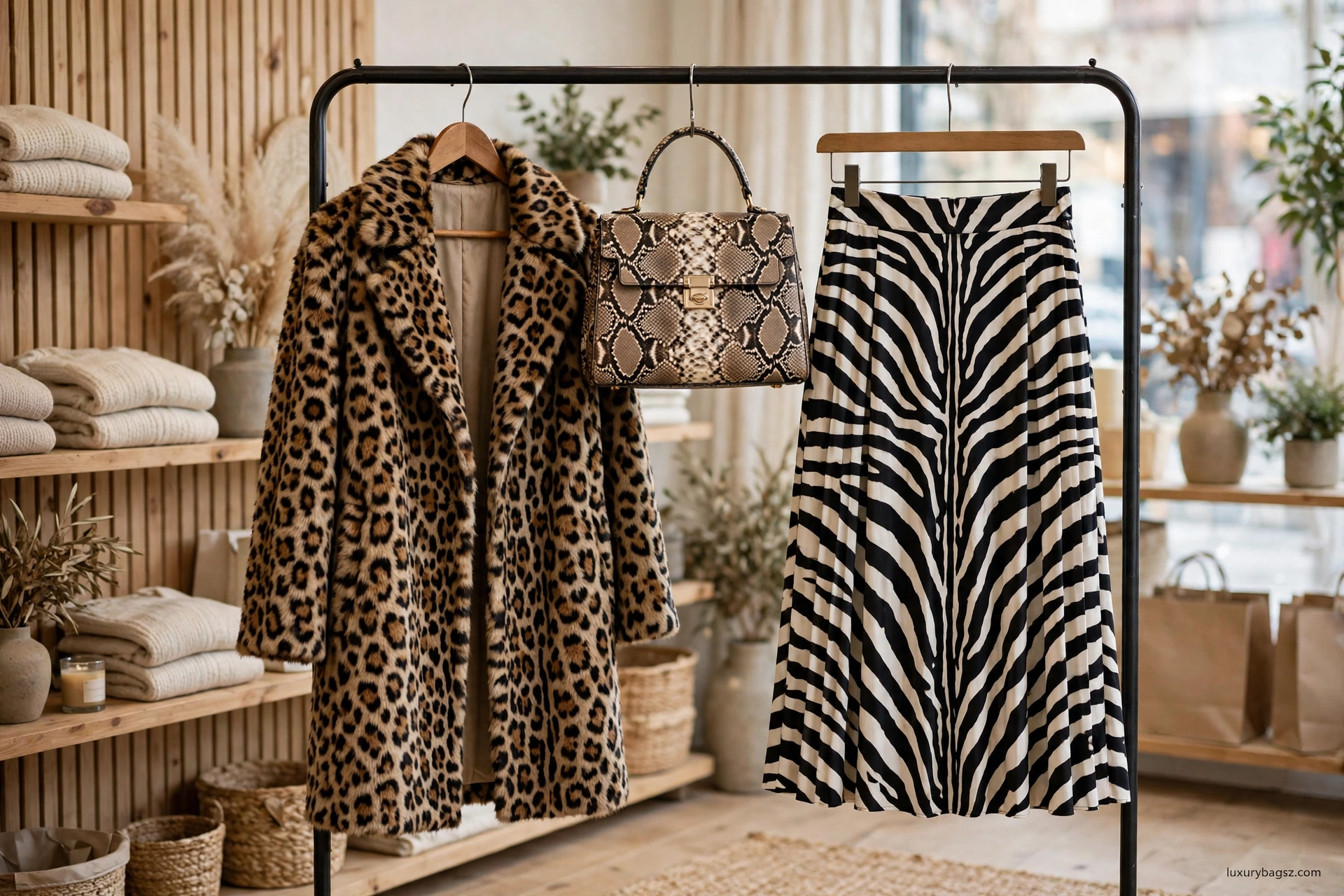
Animal Print Is a Neutral With Teeth
Leopard, snake and zebra prints behave like neutrals in a wardrobe — they go with black, camel, denim, red and cream — but they carry more attitude than any plain colour can.
That is exactly why dosage decides everything. One animal print piece looks intentional and expensive; three competing prints look like a safari gift shop.
This piece-by-piece guide shows where each print works hardest, how much to wear, and how to spot quality before you pay designer prices.
Key Takeaways
- Follow the one-print rule: a single animal print piece per outfit for most occasions.
- Leopard is the most versatile print; snake reads sleekest; zebra is the boldest.
- Natural colourways — tan, brown, black, grey — date far slower than coloured prints.
- Bags and shoes are the safest entry points; coats are the statement buy.
- Quality shows in irregular, hand-drawn-looking spots rather than perfect repeats.
- Brush pony hair gently, keep printed leather dry, and store pieces away from light.
Why Animal Print Never Leaves
Animal print sits inside the wider print rotation covered in our designer prints trend edit, but it behaves differently: it never fully exits, it only changes volume.
The reason is camouflage logic. These patterns evolved to blend into nature, so in clothing they blend into wardrobes instead — leopard works wherever camel or brown would.
Designers return to it whenever outfits need energy without colour. A season of grey and beige tailoring is one leopard coat away from a headline look.
For buyers, that permanence is reassuring. A well-made animal print piece bought today will still be wearable whenever the trend's volume rises again.
It also helps that the print hides real life. Leopard and snake patterns disguise scuffs, small marks and uneven fading far better than plain pale leather ever does.
Age is no barrier with this family of prints. The pattern reads as confidence rather than youth, which is why it appears on coats and bags marketed to every generation at once.
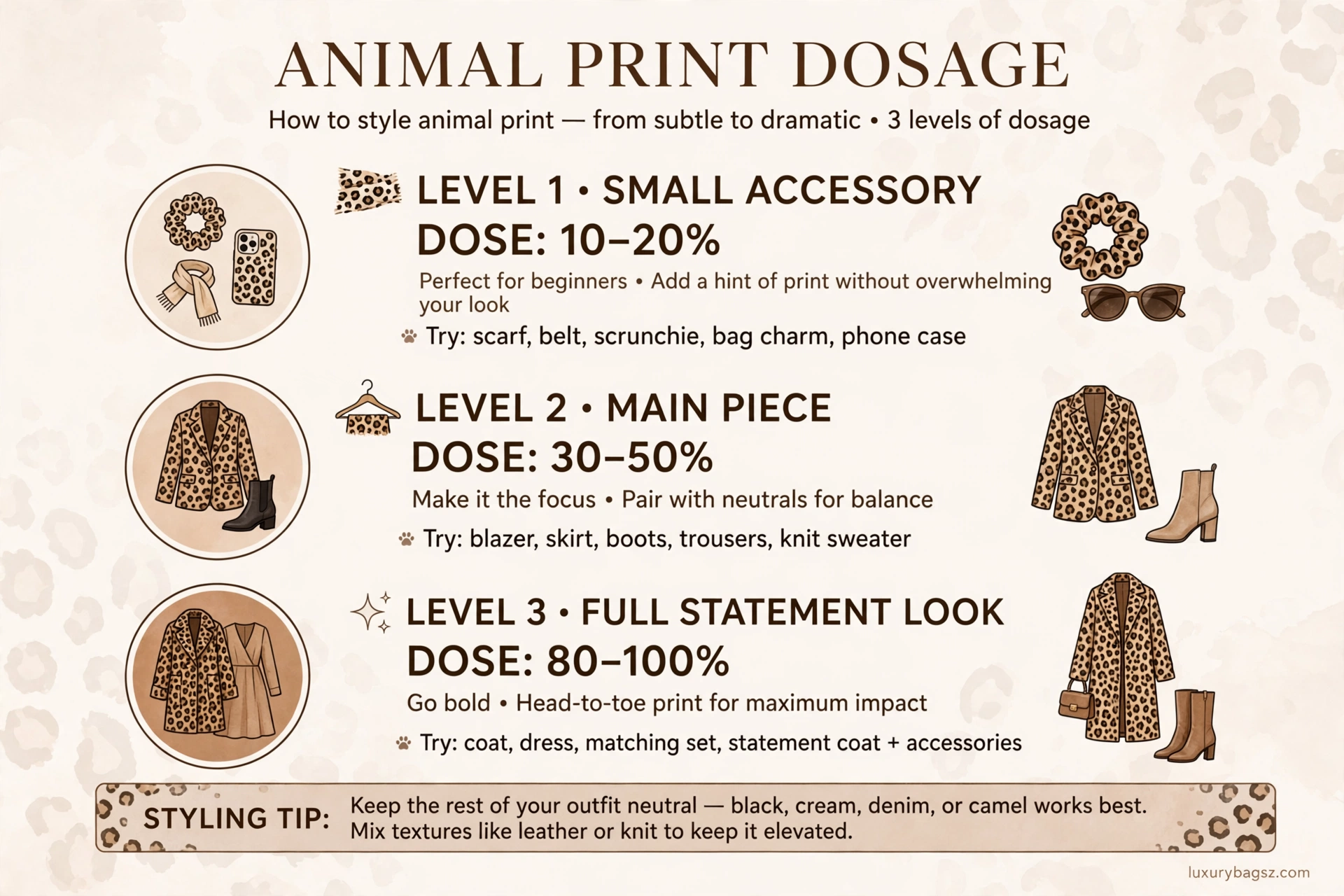
Dosage: Accent, Piece, Statement
Think in three doses. The accent dose is a belt, shoe, scarf or bag — enough print to lift a plain outfit, and the right starting point for beginners.
The piece dose is one garment: a leopard coat, a snake-print skirt, zebra trousers. Everything else in the outfit stays plain and preferably dark or neutral.
The statement dose is a full printed dress or matching set. It works for evenings and confident dressers, but it leaves no room for error in fit or accessories.
Most people live happiest at doses one and two. Choose the dose before you get dressed, not after the mirror starts arguing.
Leopard: The Workhorse Print
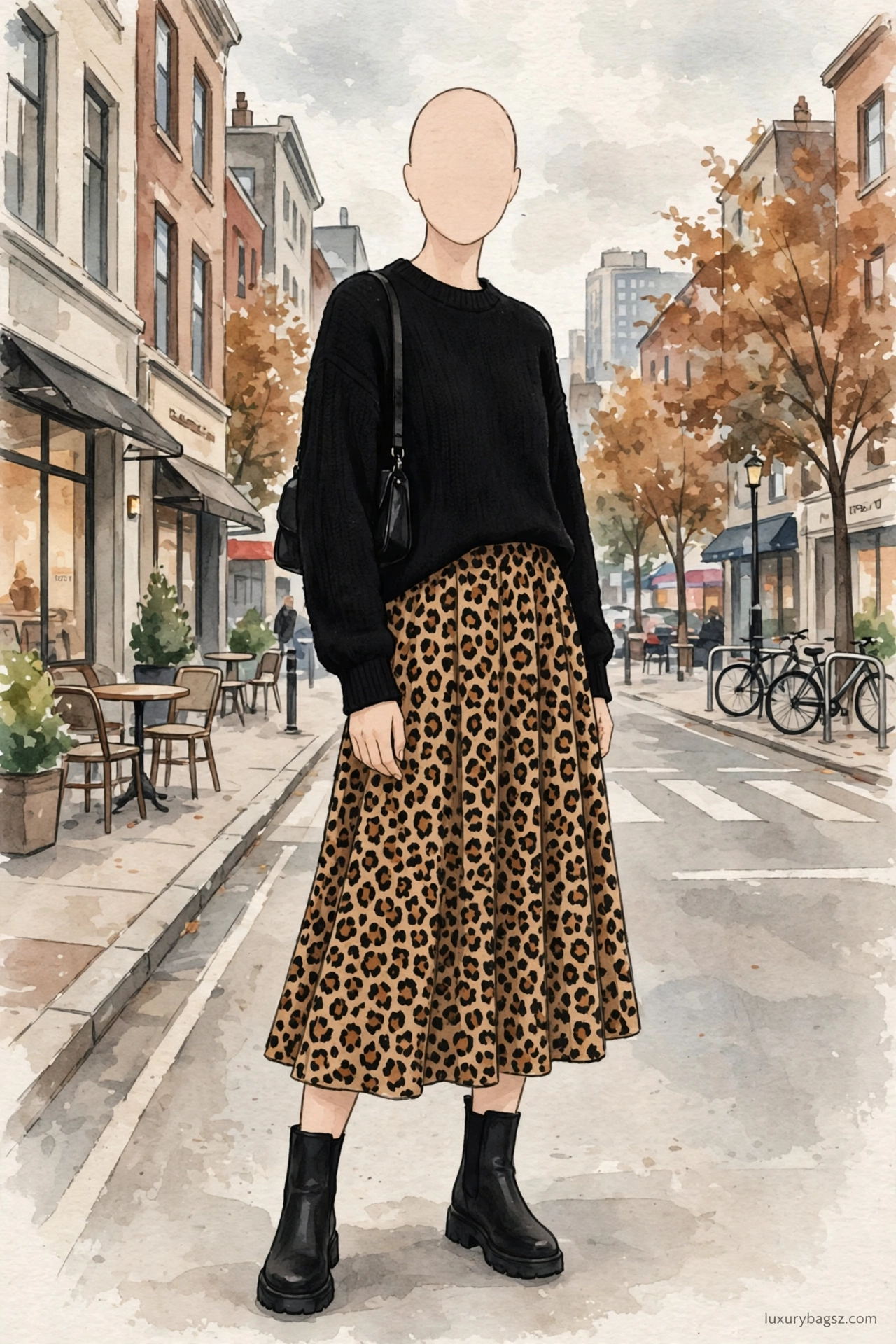
Leopard is the classic for a reason. Its tan, brown and black palette matches most wardrobes, and its irregular rosettes flatter more body shapes than tidy geometric prints.
The leopard coat is the famous piece, and it earns the fame: thrown over black, denim or a plain dress, it finishes an outfit instantly.
Leopard shoes and boots are the quiet achievers. A leopard ankle boot under plain trousers adds interest exactly where outfits usually go dull.
Keep leopard matte where possible. Shiny finishes cheapen the print faster than any other factor, so favour suede, pony hair and woven fabrics over gloss.
Leopard also scales gracefully between garments: the same print family works on a silk blouse for evenings, a knit for weekends and a coat for everything, so one love can stock a wardrobe.
If leopard feels loud, choose the smaller, denser rosette patterns. They read almost as texture at a distance and only declare themselves up close.
Snake and Zebra: The Other Two Moods
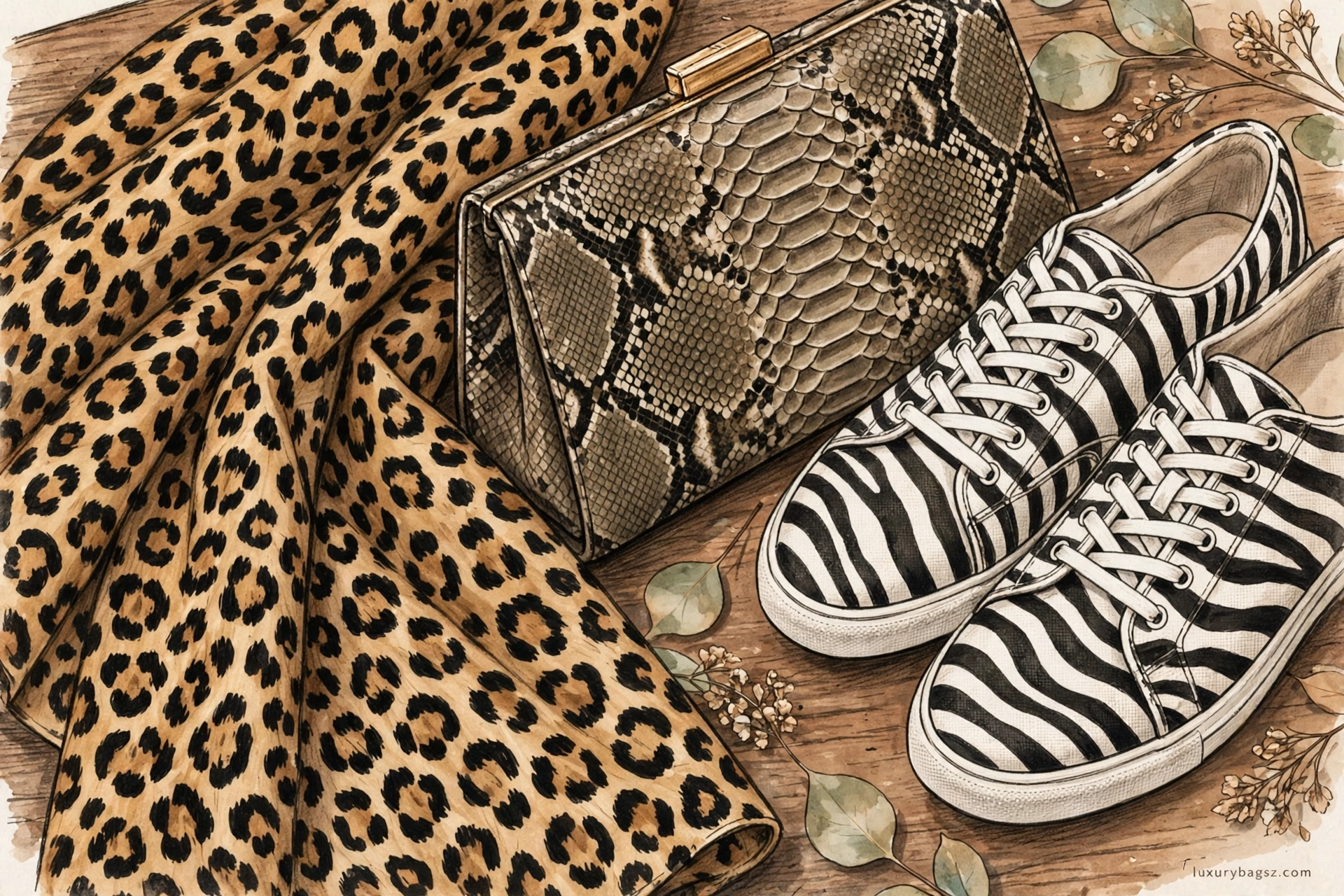
Snake print reads sleeker and cooler than leopard. In grey, stone or black it suits minimal wardrobes, and it looks especially sharp on boots and structured bags.
On the bag side, pieces like the Valentino leopard print chain clutch show how a small printed clutch can carry an entire evening outfit.
Zebra is the graphic one: high-contrast stripes that behave almost like an artwork. It needs the plainest partners and the least jewellery of the three prints.
Smaller wild-cat prints offer a gentler route — the Stella McCartney wild cat crossbody scale of print reads as texture from a distance and pattern up close.

Outfit Formulas That Keep It Expensive
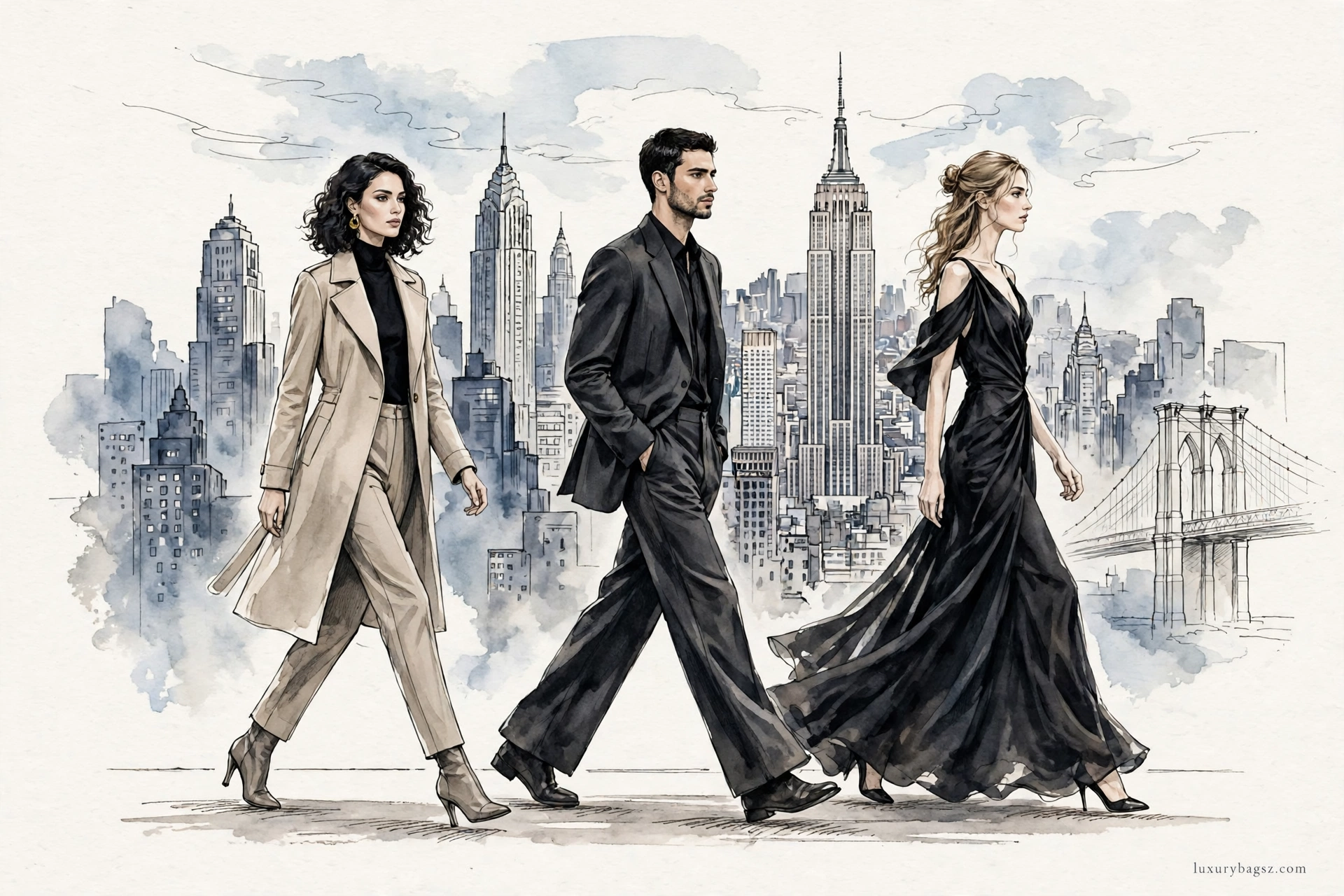
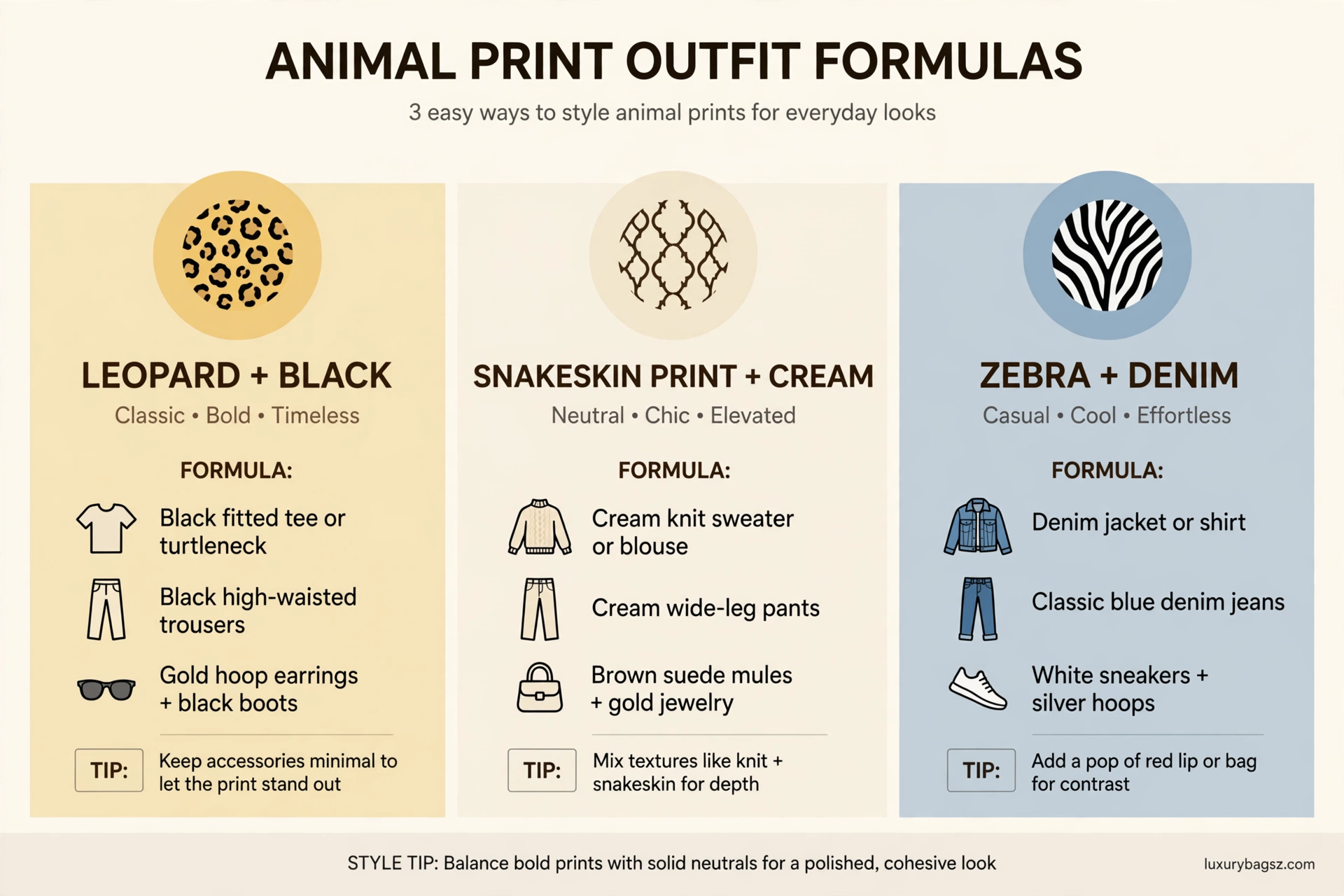
Leopard coat, black dress, black boots: the formula never fails because the print is the only event and everything else is a frame.
Snake boots, straight jeans, a grey knit and a plain coat: the boots smoulder at ankle level while the outfit stays calm above them.
Zebra skirt or trousers, a black or white top, minimal jewellery: high contrast needs silence around it, and monochrome provides it.
For work, use the accent dose only — a leopard belt or shoe with tailoring. It signals personality while the outfit keeps its professional shape.
Quality Checks Before You Pay
Look at the spots. Real leopard patterning is irregular — rosettes vary in size, spacing and openness. A perfectly repeating grid of identical spots is a cheap print's tell.
Colour depth matters too. Quality prints layer several browns and blacks; flat two-colour prints look pasted on, especially in daylight.
On pony hair (printed calf hair), the nap should lie evenly with no bald patches, and the print should follow the hide naturally. Run your palm over it in the shop.
For snake, check whether the scale pattern aligns across seams. On bags, misaligned scales at the flap edge reveal rushed making however good the leather feels.
Care for Printed Leather and Pony Hair
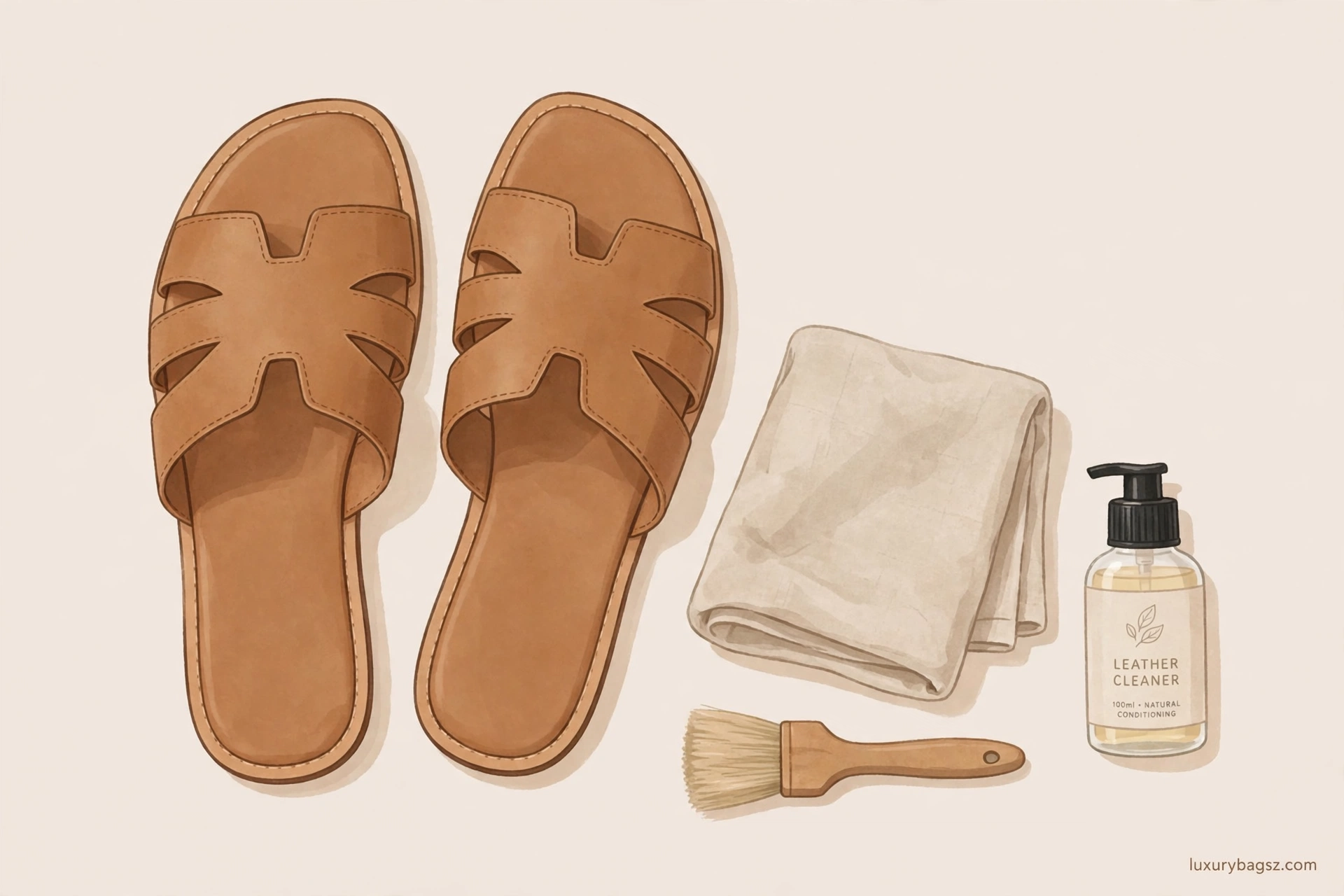
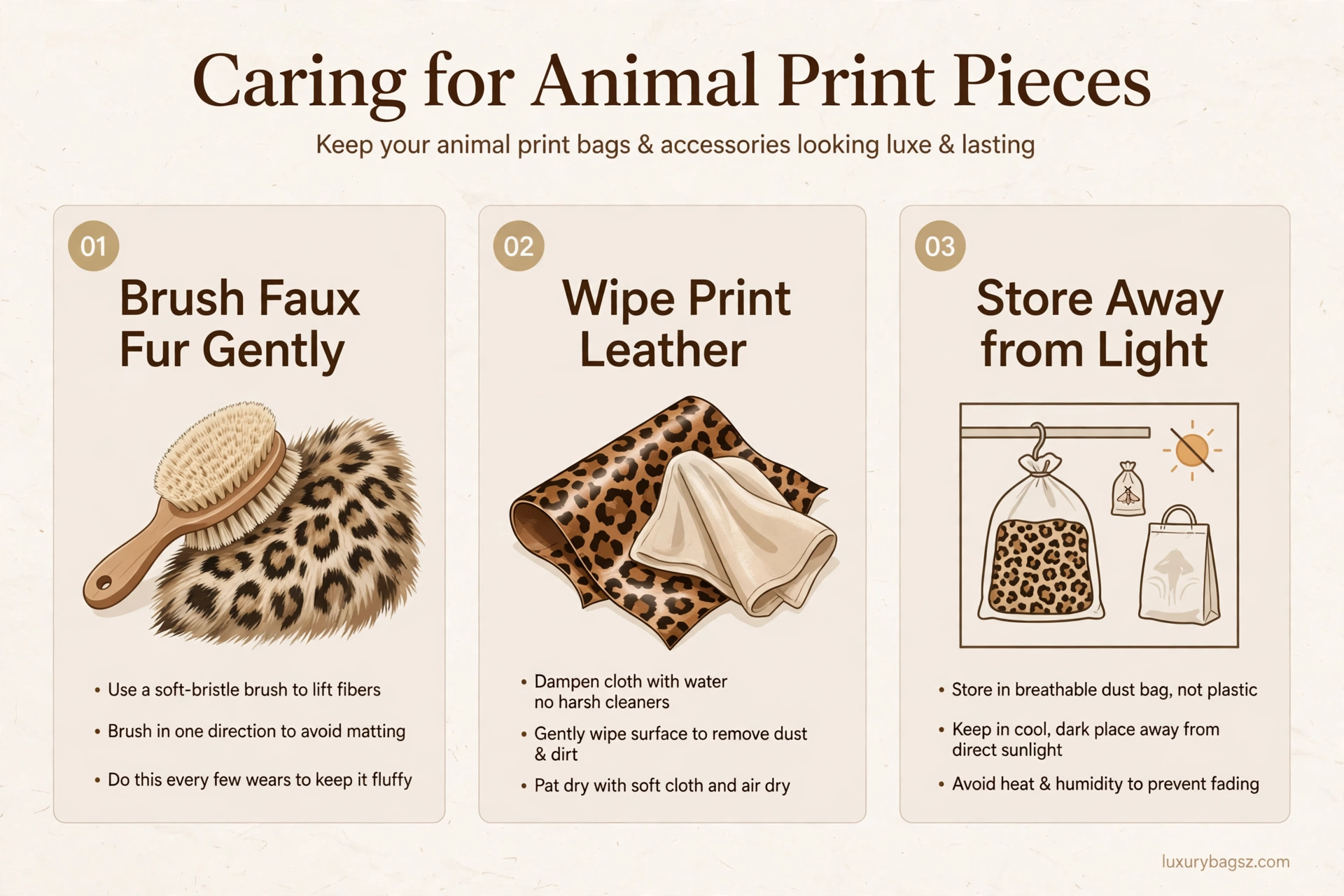
Pony hair pieces need gentle handling: brush softly in the direction of the hair, keep them dry, and never rub a stain — blot it and let it dry naturally.
Printed leather should be wiped with a dry or barely damp cloth only. Creams and sprays can lift or dull printed finishes, so test any product on a hidden edge first.
Store printed bags stuffed lightly, in their dust bags, away from light. Sun fades leopard's warm browns unevenly, and the fade shows against the protected areas.
Keep animal print shoes out of wet weather where you can. If they do get wet, stuff them with paper and dry them away from radiators to protect both shape and print.
Common Mistakes With Animal Print
Mixing two animal prints is the famous error. Leopard with zebra reads as a fight, not a look, unless the scales and colours are expertly matched — and even then, plain is safer.
Coloured animal print dates quickly. Pink leopard and blue zebra have their moments, but natural colourways outlive them by years and mix with far more.
Wrong finish is the third trap: glossy, plasticky print on a big piece cheapens the whole outfit. Matte textures keep the print luxurious at any price.
Finally, never let the print do all the work. Fit, grooming and plain, quality basics around the piece are what separate "designer" from "costume" at any dose.
Watch proportions as well. A wide leopard coat over wide trousers doubles the print's visual weight; one slim line somewhere in the outfit restores the balance.
And respect the setting: animal print at a wedding or formal event should arrive as an accessory or a single elegant piece, never as the loudest garment in the room.
Frequently Asked Questions
Is animal print still in fashion?
Yes — it never fully leaves. Leopard in particular cycles between quiet and loud seasons, but bags, shoes and coats in natural colourways stay wearable throughout.
How much animal print should I wear at once?
One printed piece per outfit is the reliable rule, with an accent (bag, belt or shoe) for formal settings. A full printed dress is fine for evenings if everything else stays minimal.
Which animal print is most versatile?
Leopard. Its tan, brown and black palette works with the widest range of colours and occasions, from denim weekends to black evening dresses.
Can animal print be worn to the office?
At accent dose, yes: a leopard belt, shoe or scarf with plain tailoring. A full leopard garment usually reads too informal for conservative workplaces.
What colours pair best with leopard print?
Black, camel, cream, denim blue, olive and red. Red is the bold classic pairing; camel and cream keep it soft; black keeps it sharp.
Is pony hair the same as leopard print?
Pony hair is calf hair with its natural coat, often dyed and printed with leopard pattern. It gives the softest, most realistic finish, and needs gentle, dry care.
How can I tell a cheap animal print?
Look for perfectly repeating, identical spots, flat two-tone colour, or a shiny finish. Quality prints are irregular, layered in tone and usually matte.
Does zebra print suit everyone?
Zebra's high contrast is dramatic, so it suits confident dressers and simple styling. If it feels too much, use it in a bag or shoe rather than a garment.
How do I store a leopard coat?
Hang it on a wide hanger in a breathable cover, away from light. Brush pony hair versions gently and keep them dry; store printed fabric coats folded only if space forces it.
What is the best first animal print purchase?
A bag or a pair of shoes in natural leopard. They lift dozens of plain outfits, cost less than a coat, and let you test your comfort with the print before bigger buys.
Final Verdict
Animal print is a wardrobe tool, not a gamble: dose it deliberately, keep the colourway natural and the finish matte, and one piece will sharpen plain outfits for years. Start with a bag or shoes, and let confidence decide if a coat follows.