

The Complete Sunglasses Guide: Face Shapes, Fit, Lenses and Care
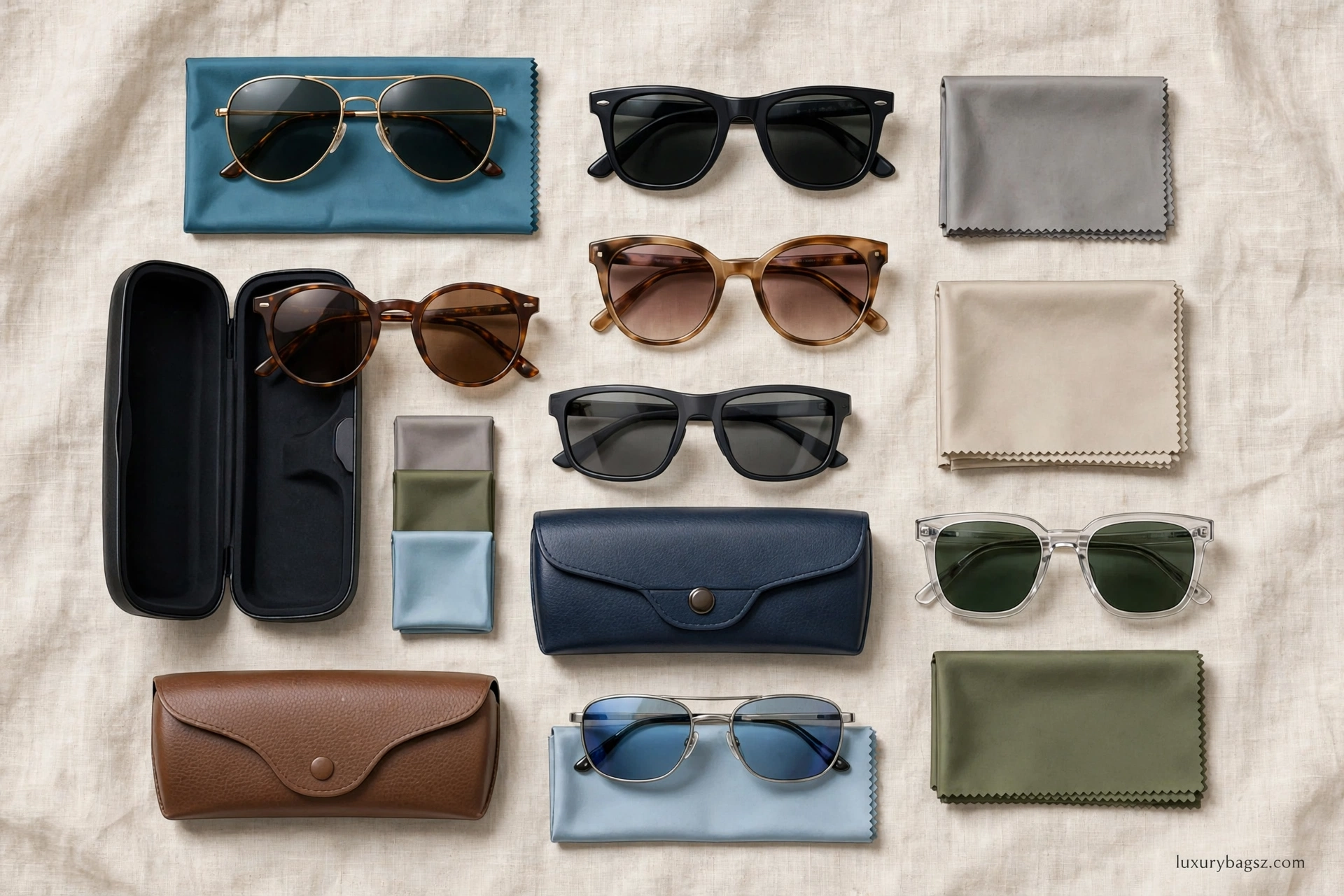
Everything in One Place: The Guide in Brief
The complete rule is simple: choose a shape that balances your face, a size that fits in millimetres, lenses with full UV protection in the right category for your light, and buy from a seller who will adjust them. Everything else is refinement. This reference pulls those refinements together — face shapes, measurements, lens science in plain words, checks and care — so one careful purchase can serve for years instead of one hopeful guess per summer.
Key Takeaways
- Balance your face: angular frames for soft faces, soft frames for angular ones.
- Fit is numbers: lens width, bridge and temple length, printed inside the arm.
- Full UV protection is non-negotiable at every price.
- Category 3 suits bright sun; category 4 is never for driving.
- Buy where fitting and adjustment are offered, in person where possible.
- Clean with water and a microfibre cloth; store cased, always.
Start With Light, Not Fashion
Decide where the pair will mostly live: bright coasts, driving, city shade or mixed travel. That answer sets lens category and tint before any shape is discussed. Bright, reflective settings need category 3 lenses and, ideally, polarised films. Mixed city life suits category 2 or 3 in grey or brown. Fashion tints come last, as a second pair. Only then look at shapes. Starting with light stops the classic error: falling for a pale, pretty frame that cannot cope with the sun you actually live in.
Face Shapes and the Balance Rule
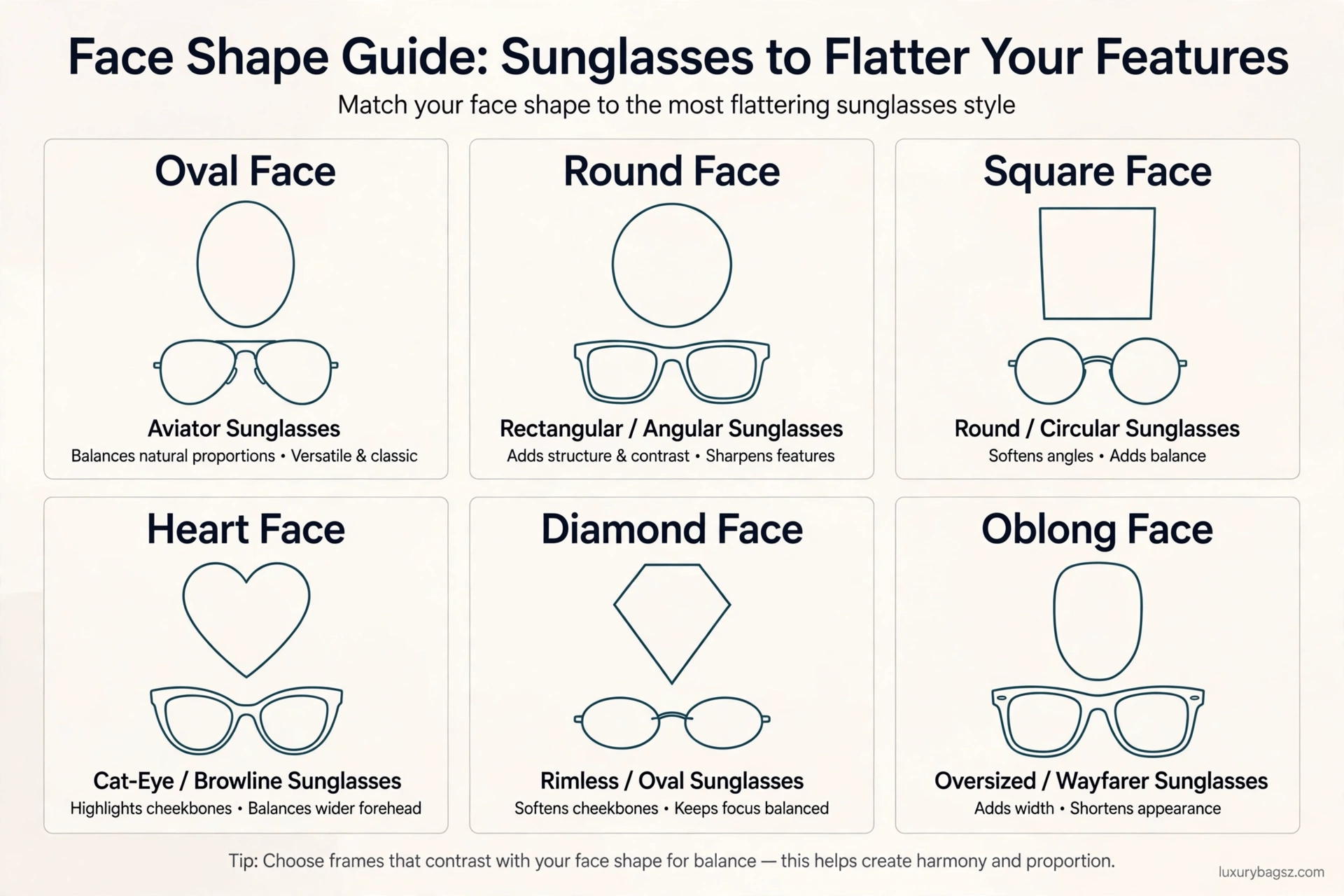
Oval faces suit almost everything; keep frame width near face width. Round faces gain length and edge from squares, rectangles and aviators with straight top lines. Square faces soften with rounds, ovals and cat-eyes whose curves answer a strong jaw. Heart-shaped faces balance with aviators and bottom-weighted frames that echo the chin. Long faces suit deeper lenses and wider frames that shorten visually, while small faces need small frames in fine materials so the eyewear never wears the person.
Fit in Millimetres: The Three Numbers
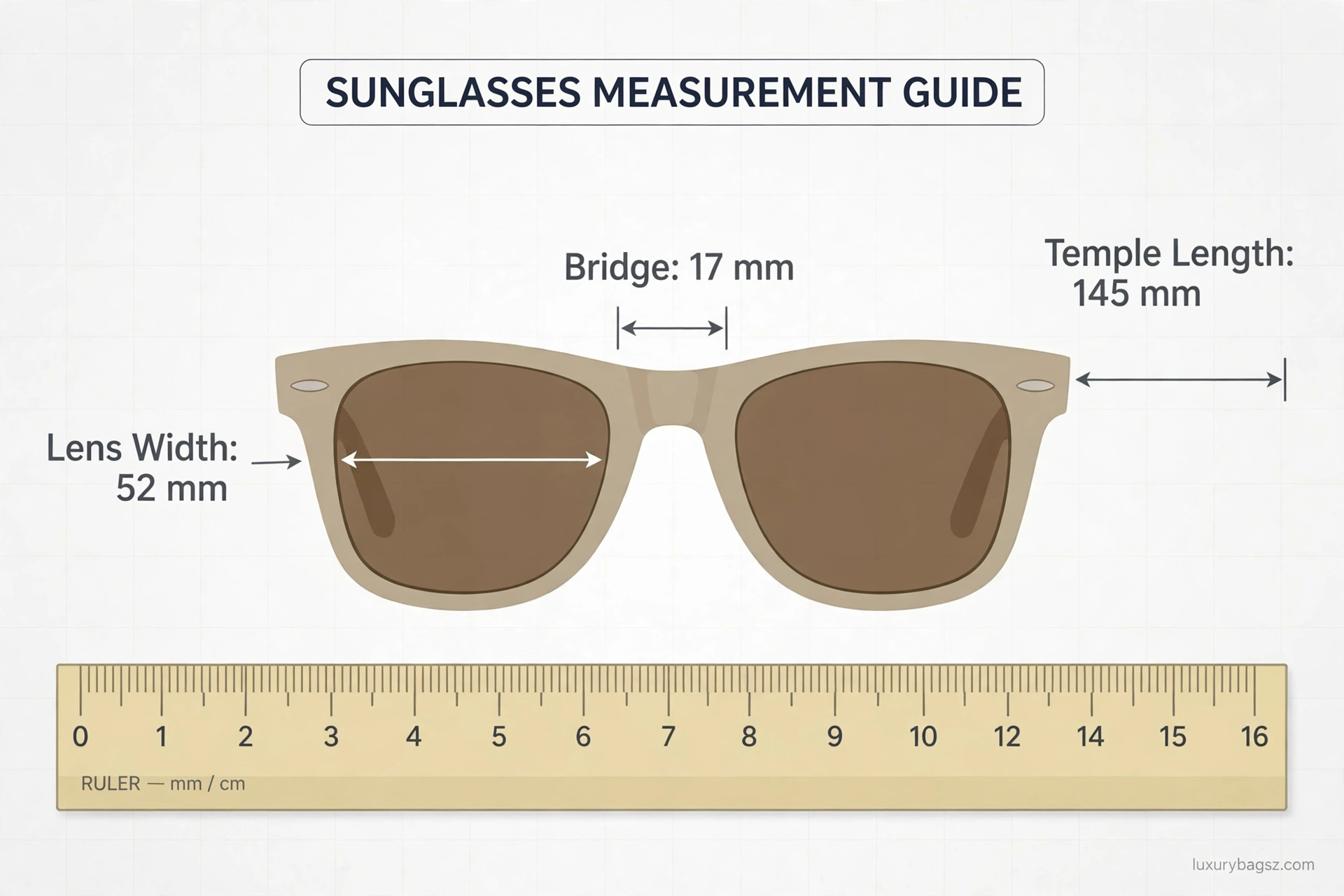
Every frame carries three numbers, usually inside the temple: lens width, bridge width and temple length, all in millimetres. Compare them with a pair you own that fits. Total width matters most for comfort. As a guide, the frame front should sit within the width of your face, with lenses centred over your eyes and no brow gap leaking light. Then the live checks: level sit, light nose pressure, no cheek lift when you smile, no slide when you look down. A good fitter adjusts in minutes; a bad fit never adjusts away.

Frame Shapes and Materials Decoded
Acetate gives colour, depth and warmth, and better grades hold shape for years. Metal gives lightness and fine lines, and suits small faces and formal wear beautifully. The enduring shapes are aviator, square, round, oval and cat-eye. If you want a ranked starting shortlist before choosing, our top 10 summer sunglasses orders those shapes by daily usefulness. Hinges tell the truth about build: smooth, even movement and, on better frames, multi-barrel construction. Squeaks, play and uneven arms on a new pair are reasons to choose another.
Lenses: Tints, Categories and Special Types
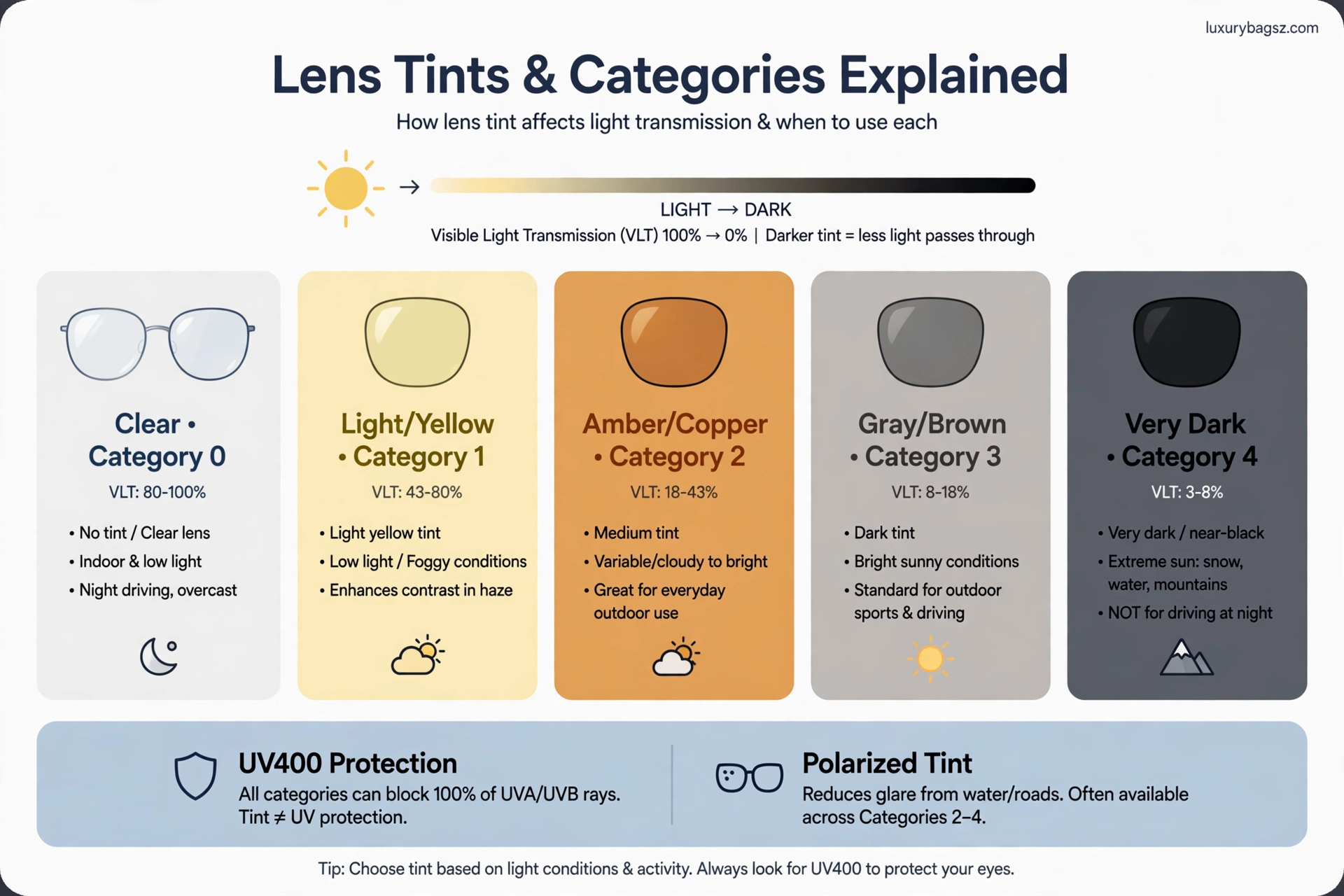
Grey keeps colours true, brown lifts contrast and warmth, green balances both. Mirror coatings cut glare and add privacy, at the cost of showing every fingerprint. Categories run 0 to 4 by darkness. Category 3 is the bright-sun standard; category 4 is for glaciers and must never be used for driving, as it is too dark for safe vision. Polarised lenses block reflected glare from water and roads. Photochromic lenses darken with light and suit changeable days, though they react slowly behind car windscreens.
Buying Routes and Authenticity Checks
Boutiques give ritual and papers, opticians give fitting skill, authorised online sellers give range with returns. Each is safe when the seller is named and reachable. Use the band logic in our designer sunglasses price guide to judge any offer: a price far below band, with vague papers, is the classic fake pattern. Check crisp temple markings, smooth hinges, weight that feels substantial, and a case and cloth set that matches the model. For pre-loved pairs, inspect lenses in daylight for scratches in the sight line.
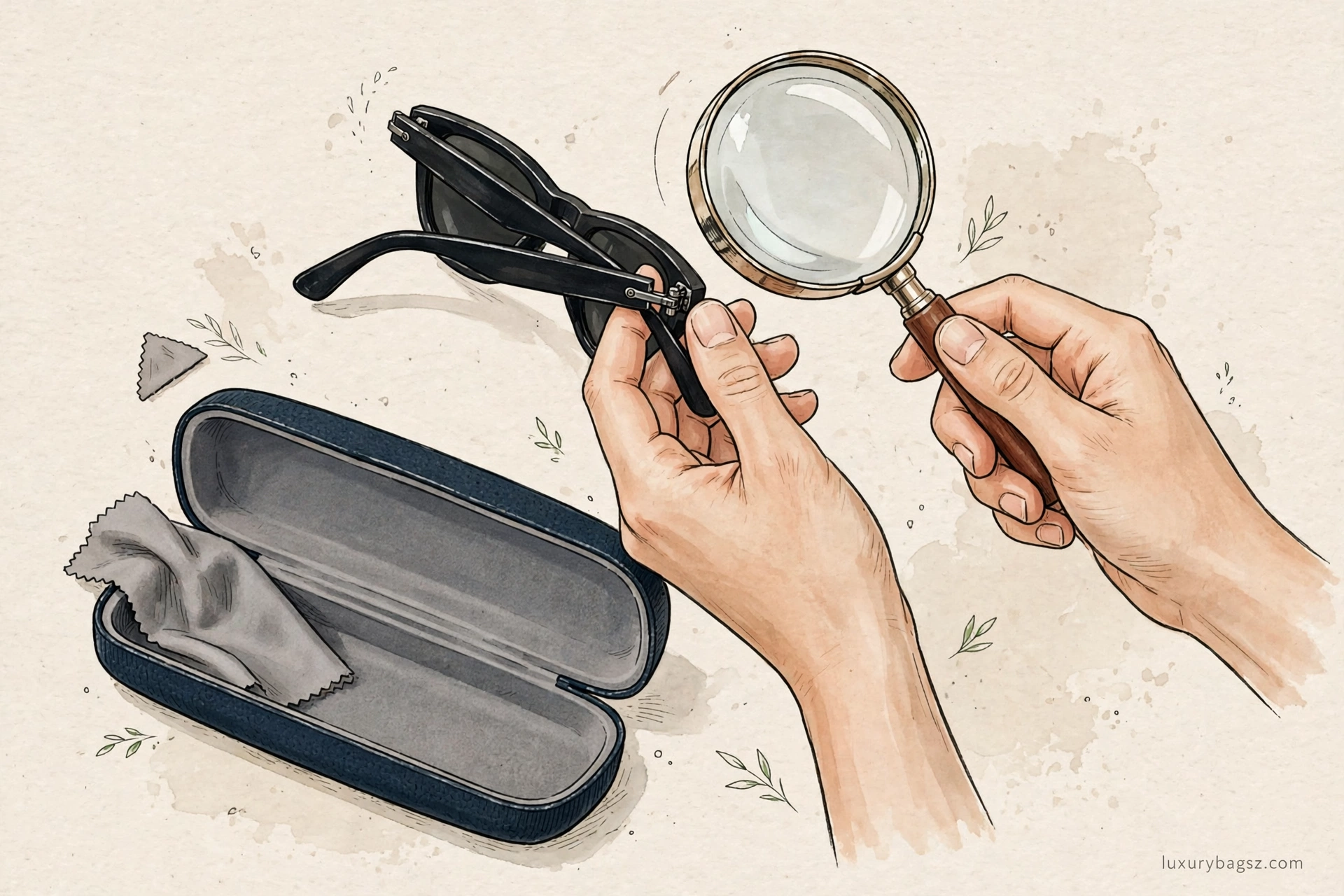
Wearing Them Well, Day to Day
Match the pair to the day as deliberately as you match shoes: driving, beach, events and city wear each ask something different, as our guide to designer sunglasses for every occasion sets out in full. Keep two pairs if you can: one classic for daily and formal life, one tougher or more playful pair for water, sport and travel risk. That pairing covers nearly every diary. Rest them on their case, not on tables, heads or car seats. Most frame damage is not dramatic; it is the slow bend of being sat on, pocketed and tossed, week after week.
Care, Repairs and Long Life
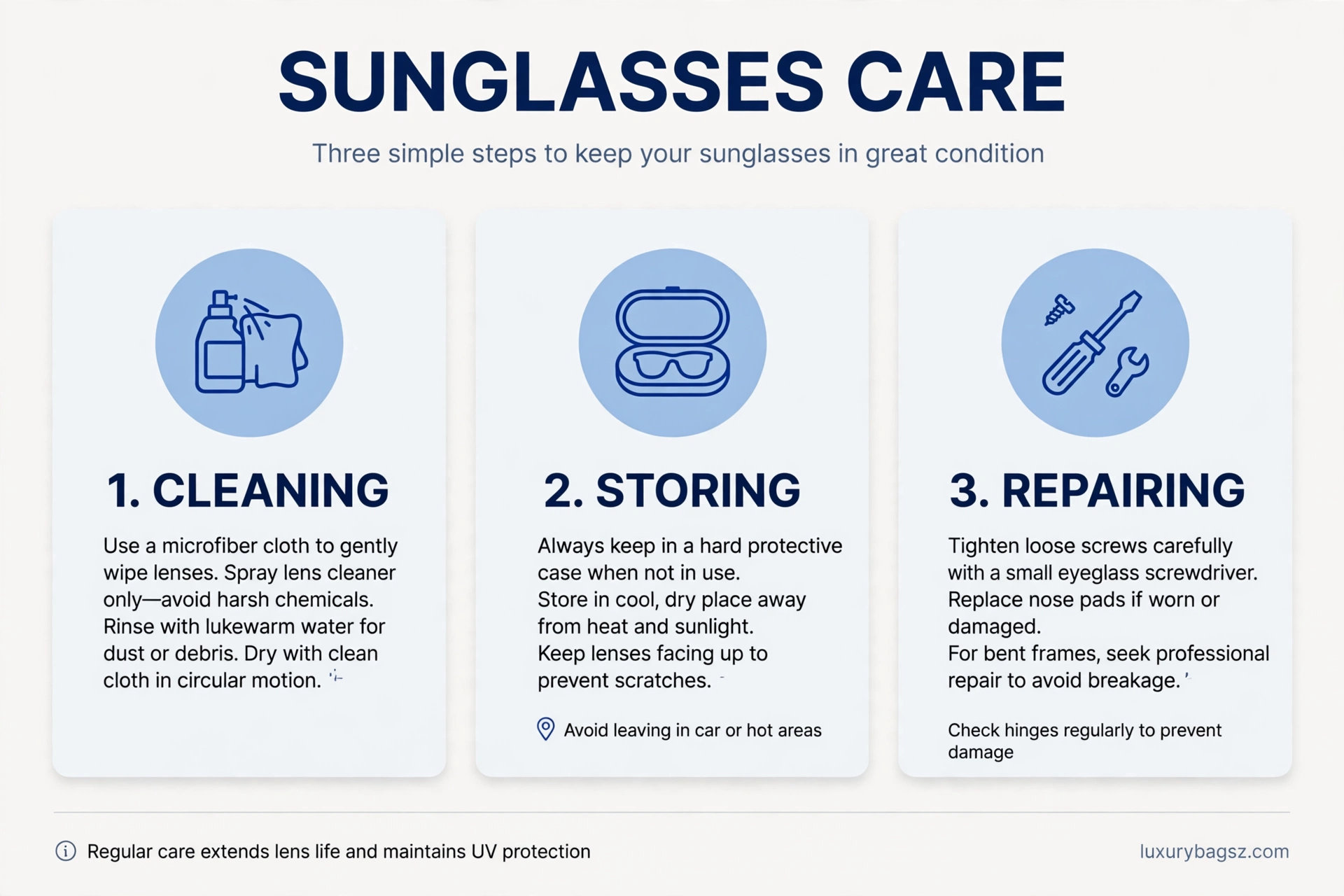
Rinse grit away with water before wiping, use the microfibre cloth only, and wash frames gently with mild soap when sunscreen and salt build up through a season. Store cased, away from heat. Car dashboards warp acetate, loosen screws and age coatings faster than years of honest wearing ever could. Tighten screws with the tiny driver in most repair kits, replace nose pads yearly on daily pairs, and let an optician straighten any bend. Cared for this way, a good pair serves five years easily.
Frequently Asked Questions
How do I find my face shape?
Tie your hair back and trace your outline on a mirror with a washable pen, or study a straight-on photo. Compare forehead, cheekbone and jaw widths to place yourself in a shape family.
What do the three frame numbers mean?
Lens width, bridge width and temple length, in millimetres. Together they predict fit better than any small, medium or large label, so compare them with a pair that fits you now.
Is UV400 the same as full protection?
Yes, in practice. UV400 means lenses block rays up to 400 nanometres, covering all UVA and UVB. Look for UV400 or 100 per cent UV wording on any pair you buy.
Which lens category do I need?
Category 3 for bright sun, beaches and driving in summer. Category 2 suits mixed and city light. Category 4 is for extreme glare only and is never safe or legal for driving.
Are polarised lenses always better?
For glare from water, snow and roads, yes. They can make some screens harder to read and add cost, so for shaded city wear a fine plain tint serves perfectly well.
How should sunglasses fit on the nose?
Firmly but lightly, with weight spread and no red marks after an hour. Adjustable pads suit low or high bridges; a shaped acetate bridge must match your nose from the start.
Can sunglasses be adjusted after buying?
Usually yes. Opticians adjust temple angle, nose pads and frame level with heat and tools. Buy where adjustment is offered, ideally free, and use it within the first weeks.
How do I check a pre-loved pair?
Read temple markings, test hinge smoothness, hold lenses to daylight for scratches, check the case and papers match, and price against the model's normal band before paying.
Why do my sunglasses slide down in summer?
Heat, sunscreen and a loose fit combine. Clean the nose area, have temples adjusted, or add discreet grip pads. A sliding pair is a fit problem, not a face problem.
How long should good sunglasses last?
Five years or more with case storage, gentle cleaning and yearly pad and screw care. Lenses scratched in the sight line or peeling coatings are the usual end point.
Final Verdict: Fit, Lenses, Seller — in That Order
Balance your face shape, fit the three numbers, insist on full UV protection in the right category, and buy from a seller who adjusts. Keep this order and almost any classic shape becomes the right pair; reverse it, and even a beautiful frame will disappoint.






