

Designer Sunglasses Price Guide: What You Pay and Why
What Designer Sunglasses Really Cost: The Guide in Brief
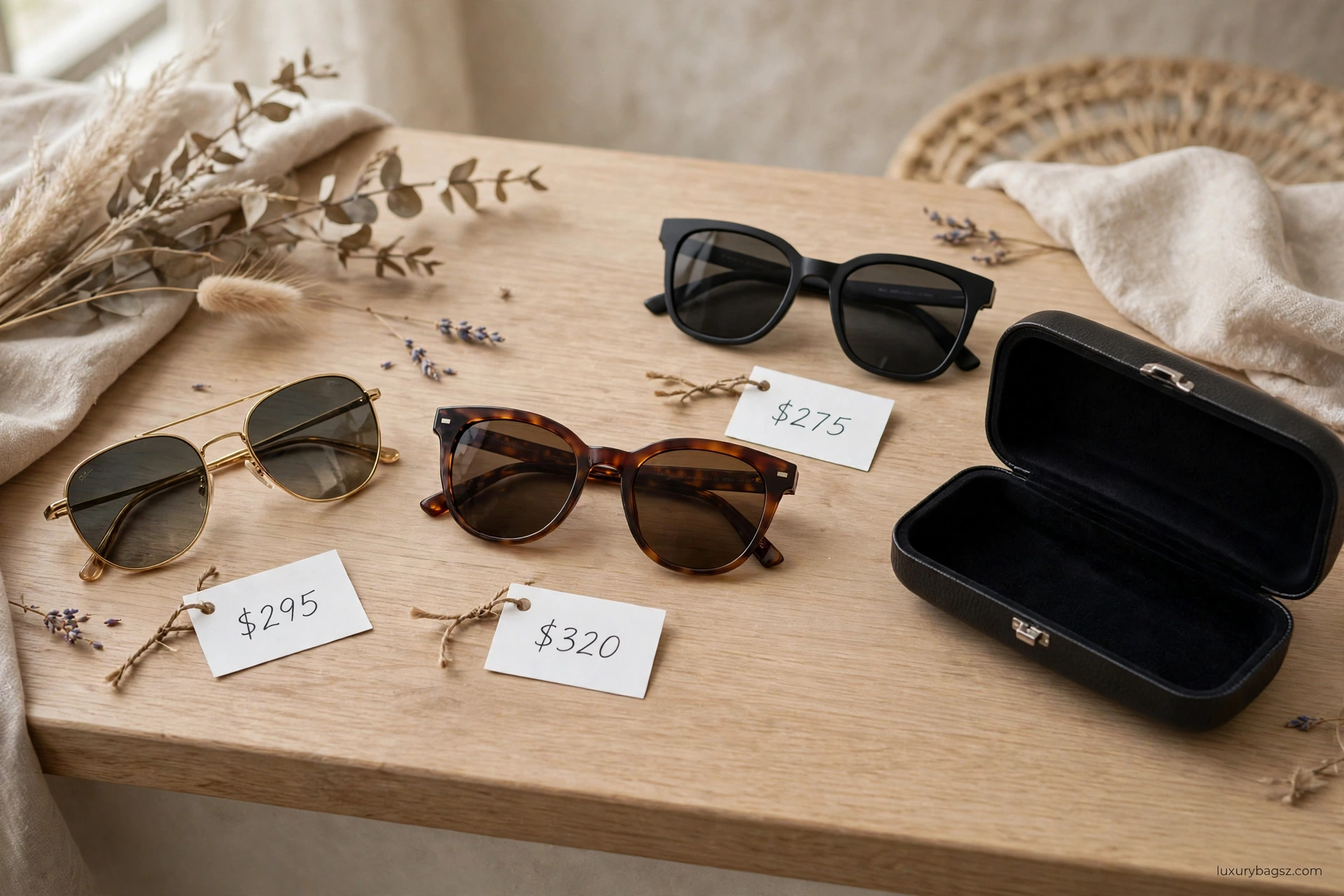
Most designer sunglasses cost between $150 and $450, with jewellery-house and limited pairs running to $600 and beyond. You pay for acetate quality, hand finishing, lens tech and the name, roughly in that order of honesty. Protection does not rise with price: a $180 pair and a $500 pair should both block all UV rays. Spend extra for fit, finish and service, not for imagined extra safety, and buy only from sellers you can return to.
Key Takeaways
- Core designer bands: $150–$250 entry, $250–$450 icons, $450+ special.
- UV protection is equal at honest prices; finish is what rises.
- Hand-finished acetate, five-barrel hinges and coated lenses cost more.
- Boutiques and opticians give fitting and aftercare; outlets give price.
- Pre-loved icons at half price are fine if condition is graded honestly.
- A discount far below band pricing is the loudest warning sign.
The Three Price Bands, Plainly
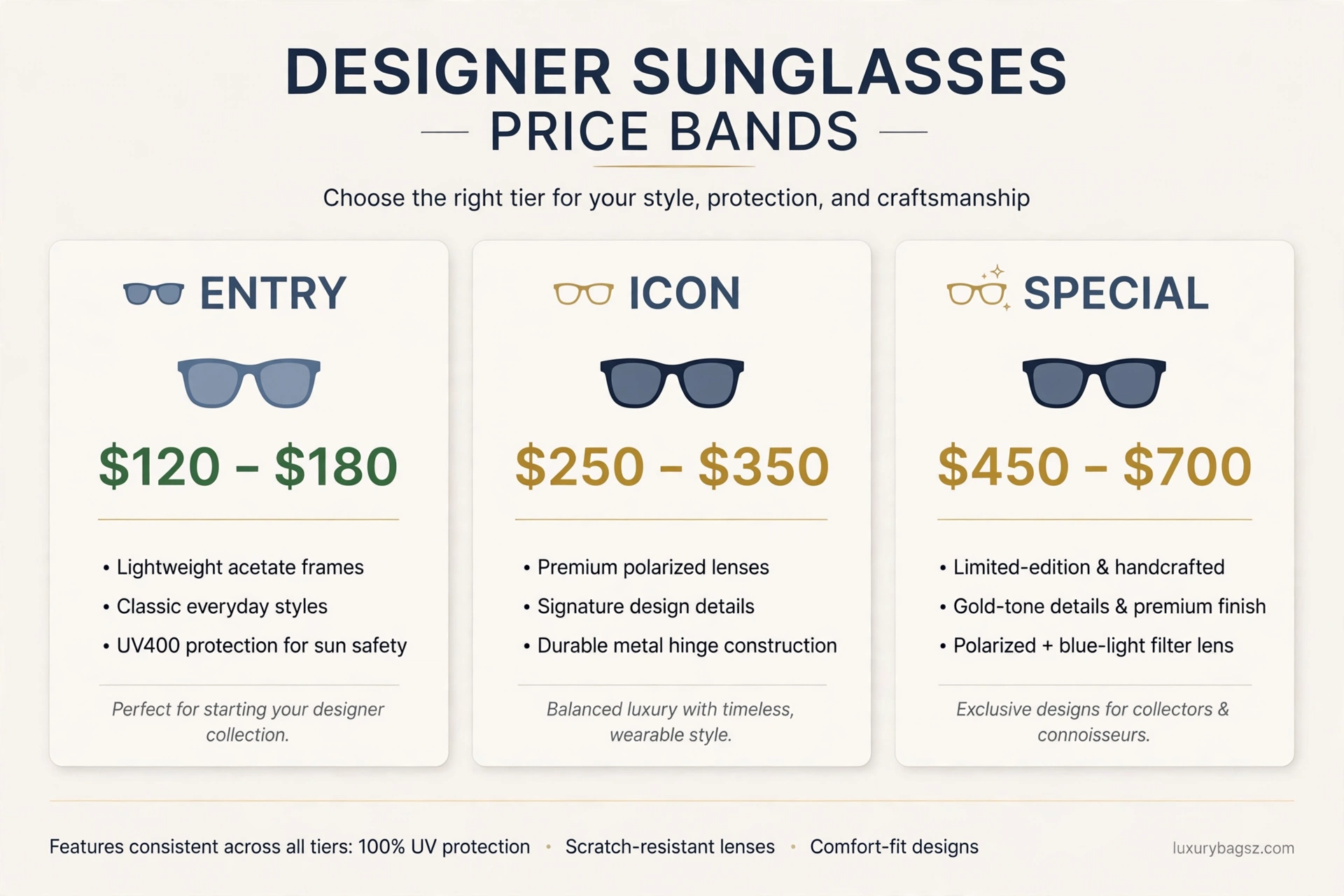
Entry band, roughly $150 to $250: diffusion and fashion-house frames made in large runs, with good lenses and simpler finishing. This is where most sensible buying starts. Icon band, roughly $250 to $450: the classic shapes from the great eyewear names, in better acetate, with stronger hinges and full boutique service. Most of this guide's advice lives here. Special band, $450 upward: jewellery houses, hand-made frames and limited runs. The money buys craft, rarity and detail you can feel, such as polished edges and inlaid temples.
What Actually Drives the Price
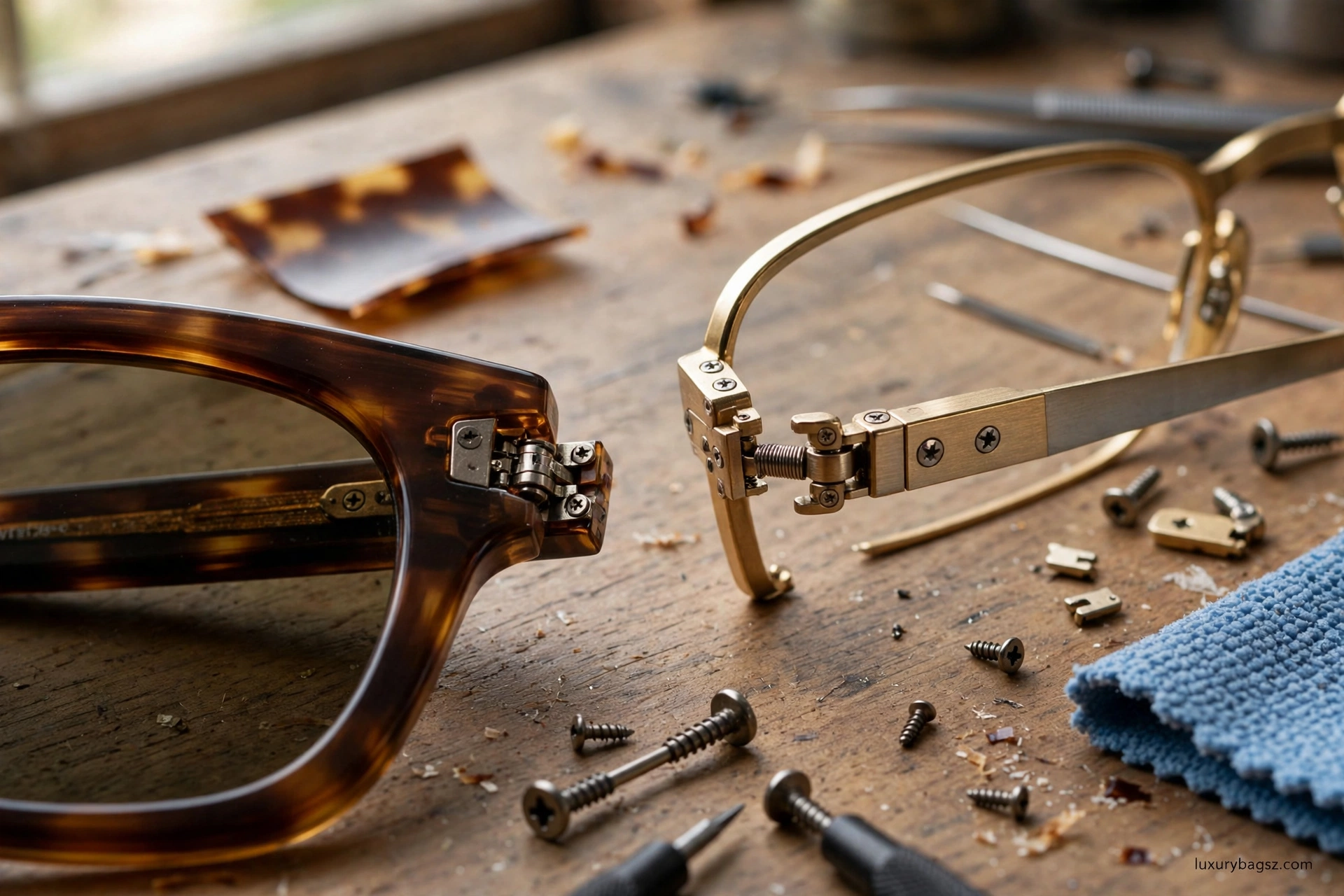
Acetate quality comes first. Fine Italian acetate is cured longer, polishes deeper and holds its shape for years, while cheap board feels light, squeaks at the hinge and warps in heat. Hand finishing comes second: tumbling, polishing and fitting by hand can take days per batch. Machine-finished frames are good; hand-finished frames feel unmistakably smoother on skin. Lenses and coatings come third: polarised films, anti-scratch and anti-glare layers all add cost. The famous name adds the rest, and honest buyers admit that part calmly.
House by House: Where Names Sit
Fashion houses with licensed eyewear tend to sit in the entry and icon bands, with prices moving by material and season. Their frames follow the clothing mood of the moment. Heritage eyewear specialists hold the icon band firmly, charging for optical know-how and shapes refined over decades. For one house in full detail, see our breakdown of Chanel sunglasses price authenticity, including how its prices are structured. Jewellery houses sit highest, treating frames as jewellery for the face. Expect precious trims, small runs and prices that assume a collector rather than a holiday shopper.
Where to Buy: Boutique, Optician, Outlet
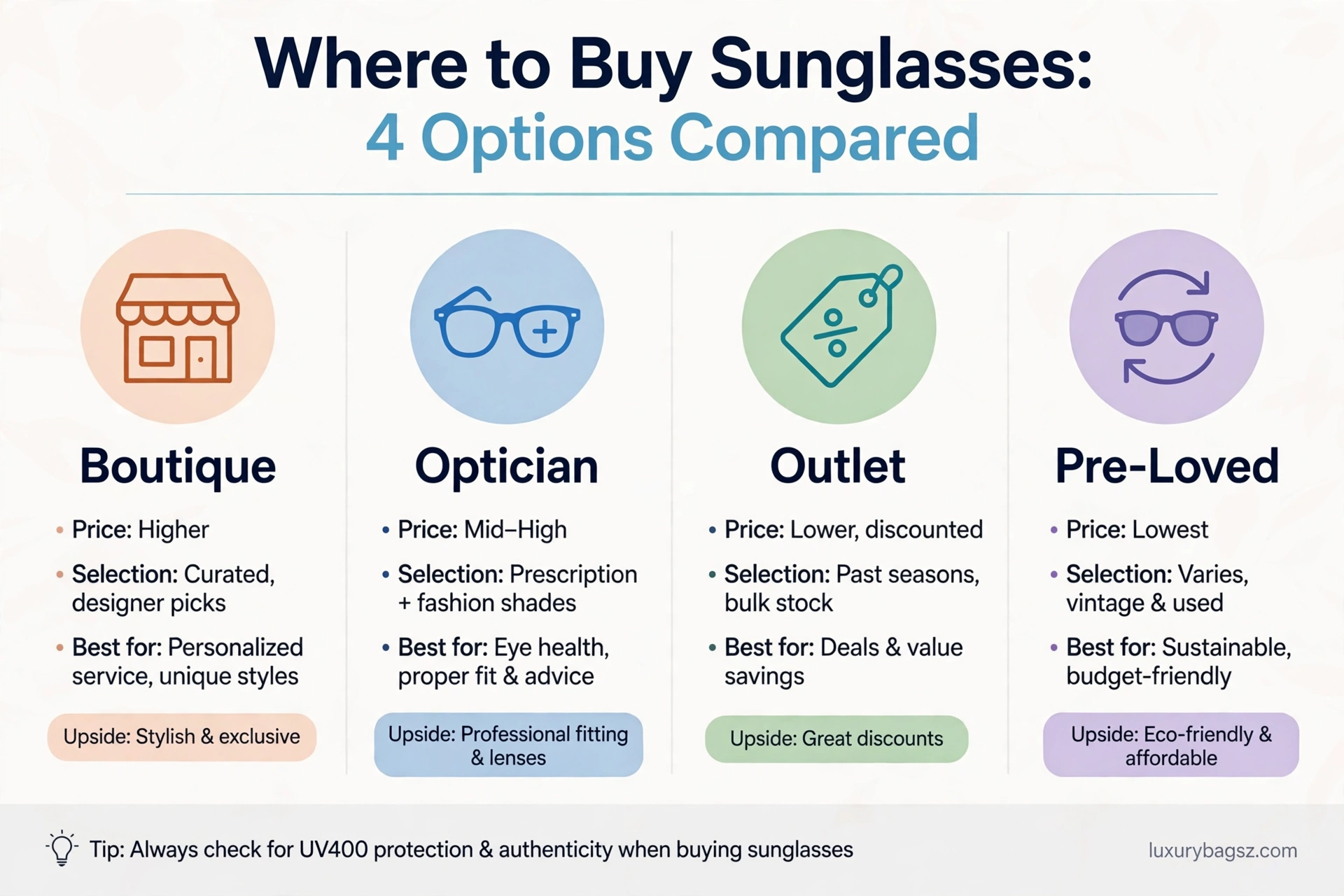
Buy in a boutique for the full ritual: fitting, adjustment and a case and papers set that helps resale. You pay full band price, and for a first icon pair it is money well spent. Buy from an optician when fit matters most or prescription lenses are planned. Their adjustment skill is the difference between a pair worn daily and a pair abandoned by August. Whichever route you choose, start from a shortlist of proven shapes such as our ranked top 10 summer sunglasses, then compare the same shape across sellers rather than chasing random bargains.
Sales, Outlets and End-of-Line Deals
Honest discounts on designer eyewear usually run from 20 to 40 per cent at end of season, when colours retire. Deeper discounts exist, but they cluster on odd colours and small sizes. Outlets sell past-season frames that are optically identical to boutique pairs. Check the model code, try the fit, and accept a plain case where the offer says so. Never let a sale rush the fit checks. A half-price frame that slides off your nose is not half price; it is fully wasted, and returns on sale eyewear can be limited.
Authenticity Checks That Protect Your Money
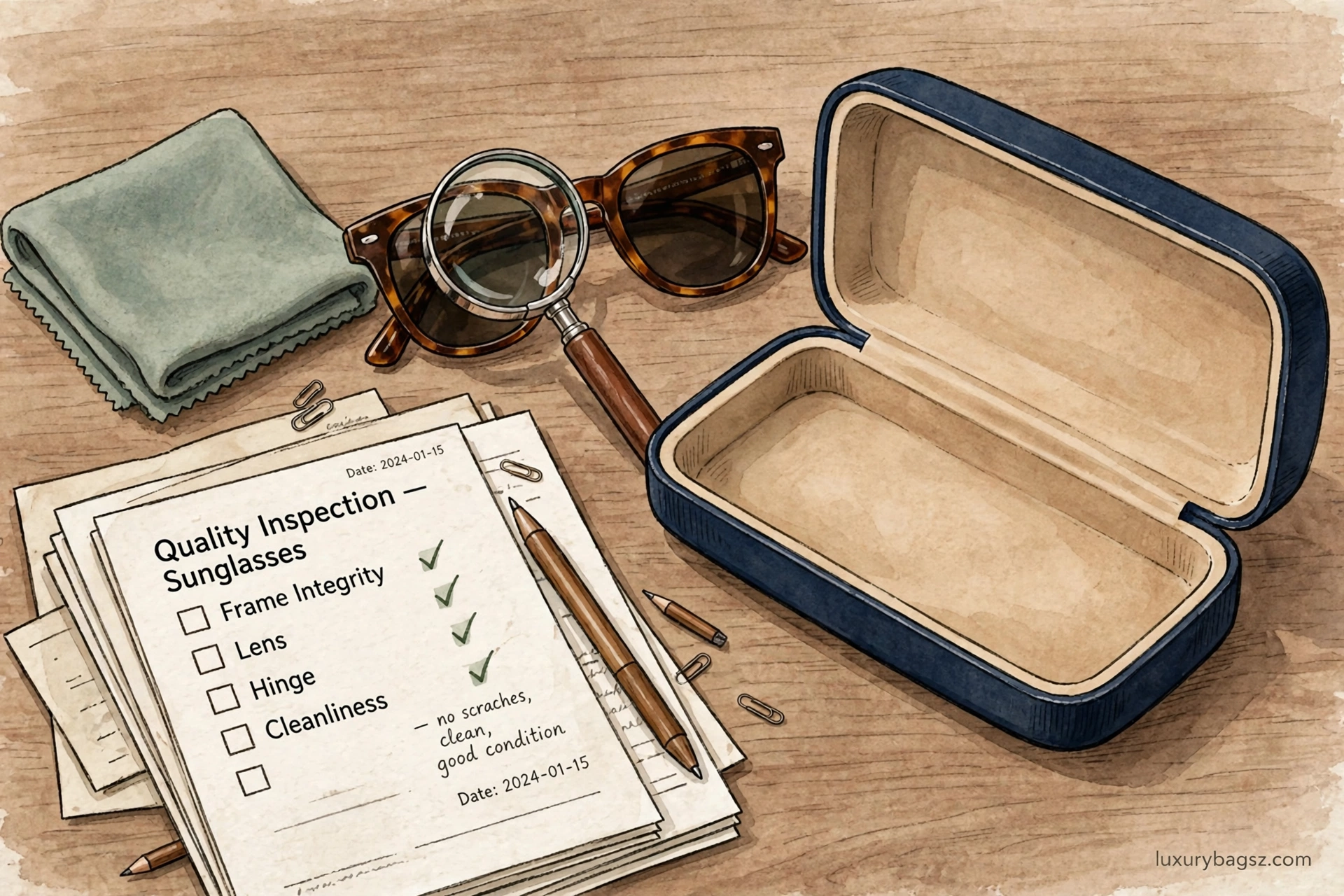
Genuine frames carry crisp model and size markings inside the temple, clean printing with no smudging, and hinges that move smoothly with even resistance on both sides. The set matters: a fitted hard case, a microfibre cloth, and paperwork that matches the model code. Missing papers do not prove a fake, but they should lower the price you accept. For pre-loved pairs, grade condition as you would any luxury piece; our explainer on pre-owned luxury condition grades explained maps neatly onto scratched lenses, loose arms and worn nose pads.
Cost Per Wear: The Honest Maths
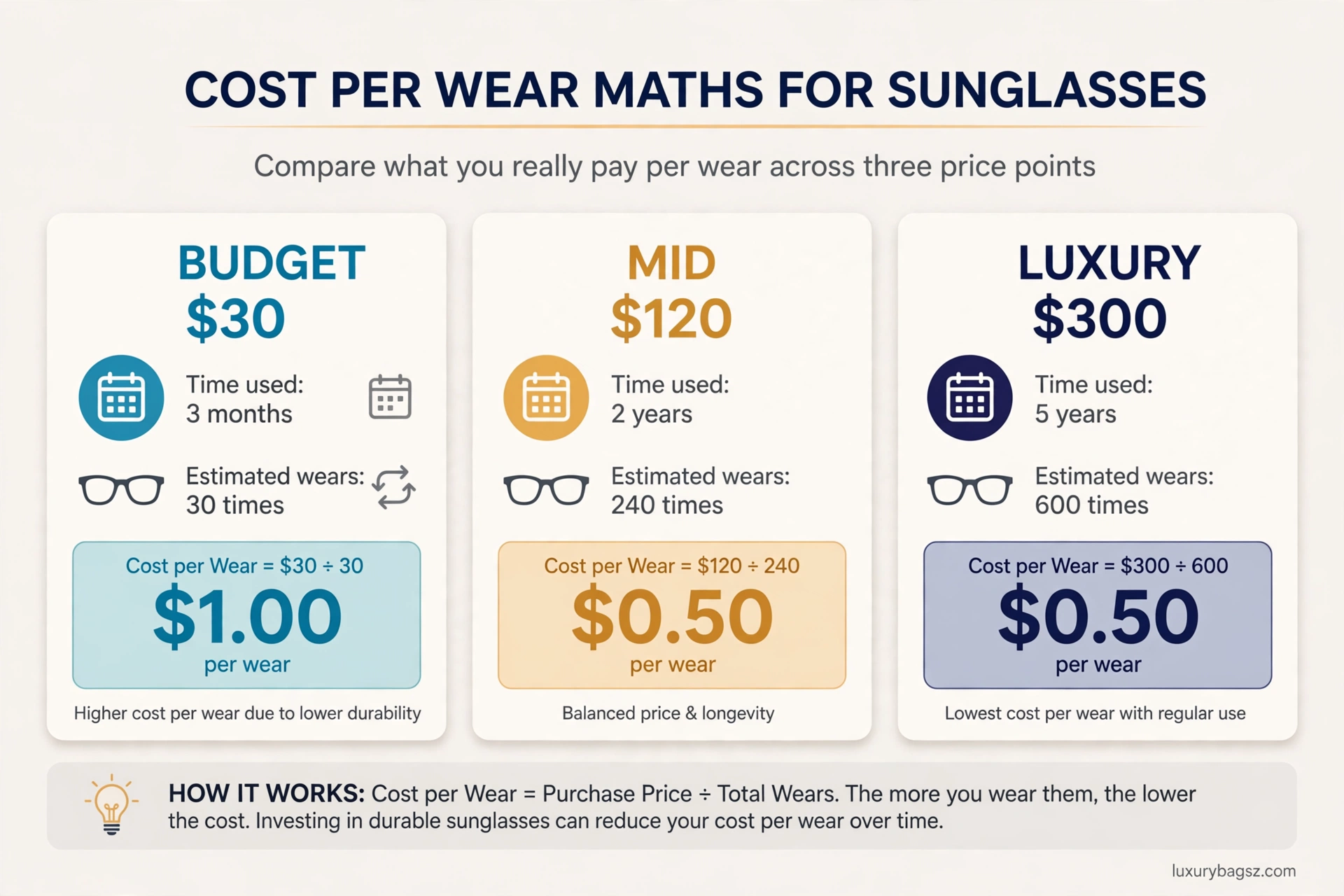
A $350 icon pair worn 150 days a year for four years costs well under a dollar a day. A $120 pair abandoned after one summer of pinching costs more per wear by far. This maths favours fit and classic shapes over novelty. Buy the pair your face will still love in year three, in black, tortoise or gold, and the price band stops mattering. Add care costs honestly: a professional adjustment is often free at the seller, replacement nose pads are cheap, and one lens replacement can rescue an otherwise perfect frame.
When to Pay More, When to Walk Away
Pay more for hand finishing you can feel, for a fit an optician has perfected, and for a classic shape in a core colour. Those three returns arrive every single wearing. Walk away from prices far below band with vague papers, from sellers who refuse returns, and from any frame whose markings you cannot read clearly in good light. Also walk away from pressure. Sunglasses are a considered accessory, not a countdown deal, and any seller who hurries you past the checks is telling you something important.
Frequently Asked Questions
Why are designer sunglasses so expensive, and do expensive ones protect better?
You pay for cured acetate, hand finishing, coated lenses, design and the name. The first three are real costs; the last is real too, but you should pay it knowingly.
No. Honest pairs at every band block all UVA and UVB rays. Higher prices buy finish, fit, materials and service, not a higher grade of UV safety.
What is a fair price for a first designer pair?
Around $200 to $350 suits most first buyers: icon-band quality, classic shapes and proper aftercare, without paying jewellery-house prices for rarity you may not want.
Are outlet sunglasses genuine, and how can I spot fakes?
Blurred temple markings, flimsy hinges, feather-light frames, misspelled paperwork and prices far below band are the classic cluster. Any two together mean walk away.
Usually yes, when the outlet is run by the house or a known group. They are past-season stock. Check model codes and fit exactly as you would at full price.
Do sunglasses go on sale at predictable times?
Yes, at end of summer and after the festive season, when colours and shapes retire. Expect honest cuts of roughly 20 to 40 per cent from reputable sellers.
Is pre-loved eyewear a good buy, and do designer sunglasses hold resale value?
Icons in graded, excellent condition at around half of retail can be excellent value. Budget for new nose pads and a professional clean, and check lenses in daylight.
Classic shapes from major houses in core colours hold a fair share, especially complete sets. Seasonal colours and fashion-led shapes resell for notably less.
Should I pay extra for polarised lenses?
If you drive, sail or fish in bright light, yes; the glare cut is worth a modest premium. For shaded city wear, a quality plain tint serves just as well.
What paperwork should come with new sunglasses?
A fitted case, cleaning cloth and a card or booklet matching the model. Keep your receipt too; together they support warranty claims and any later resale.
Conclusion: Pay for Finish and Fit, Not Fear
Choose your band honestly — entry for fashion fun, icon for a daily classic, special for craft — insist on full UV protection at any price, and buy from a seller who will adjust and stand by the pair. That is the whole price guide in one breath.






