Seasonal Colour Trends: Maroon, Bold Colour and Orange, Worn the Wardrobe Way
Colour From the Rail Out: The Season in Brief
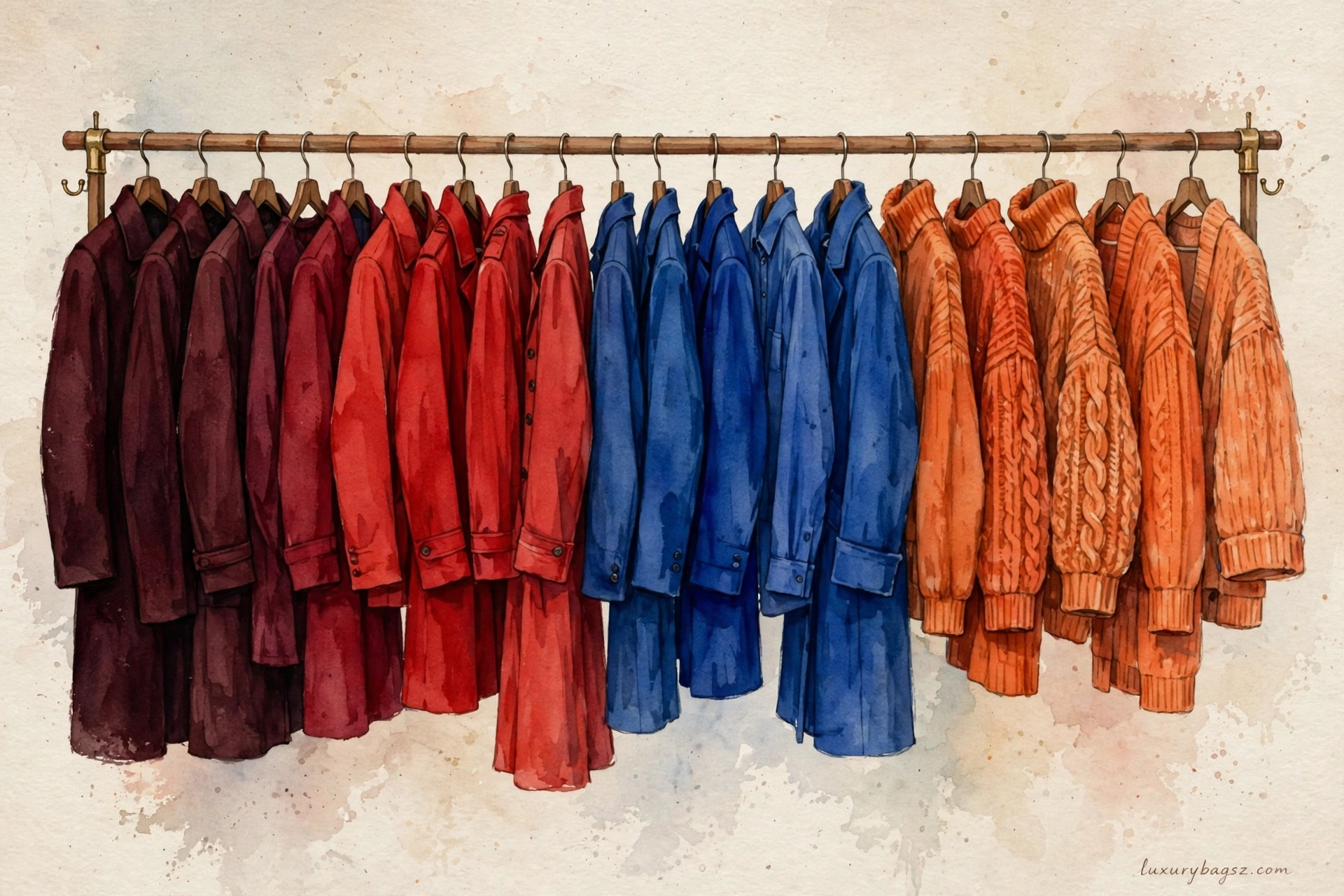
Seasonal colour trends are best read from your own rail: this cycle is led by maroon and its wine-dark family for the cold months, backed by confident bold colour — cobalt, true red, vivid green — and by orange in every register from burnt rust to bright tangerine. Forget matching a forecast swatch exactly. The wearable skill is dosage: one deep piece as an anchor, one bold piece as a statement, or one warm accent against neutrals you already own. Get the dose right and every shade in this report becomes easy.
Key Takeaways
- Maroon is the season's anchor colour: deep, warm and easier than black.
- Bold colour works best as one strong piece against calm neutrals.
- Orange flatters more skin tones than its reputation suggests — shade is everything.
- Texture changes colour: maroon in suede, wool and leather all read differently.
- Buy colour pre-owned to test a shade before paying full price for it.
- A colour you own in three textures is a signature; in one piece, a guest.
Where Seasonal Colours Come From
Wardrobe colour trends bubble up from runways, street style and shop floors together, then settle into the shades retailers actually reorder. Unlike the forecast-led system in our Pantone colour trends guide, this is colour as people genuinely adopt it, one coat and bag at a time. That is why the same families return: maroon each autumn, brights each spring, orange whenever fashion wants warmth without red's formality. The cycle is less about novelty than about which familiar colour gets the spotlight. Your task is simpler than the industry's. Note which of the season's families you already own, which flatter you, and which single addition would join up outfits you currently struggle to finish.
Maroon: The Anchor of the Season
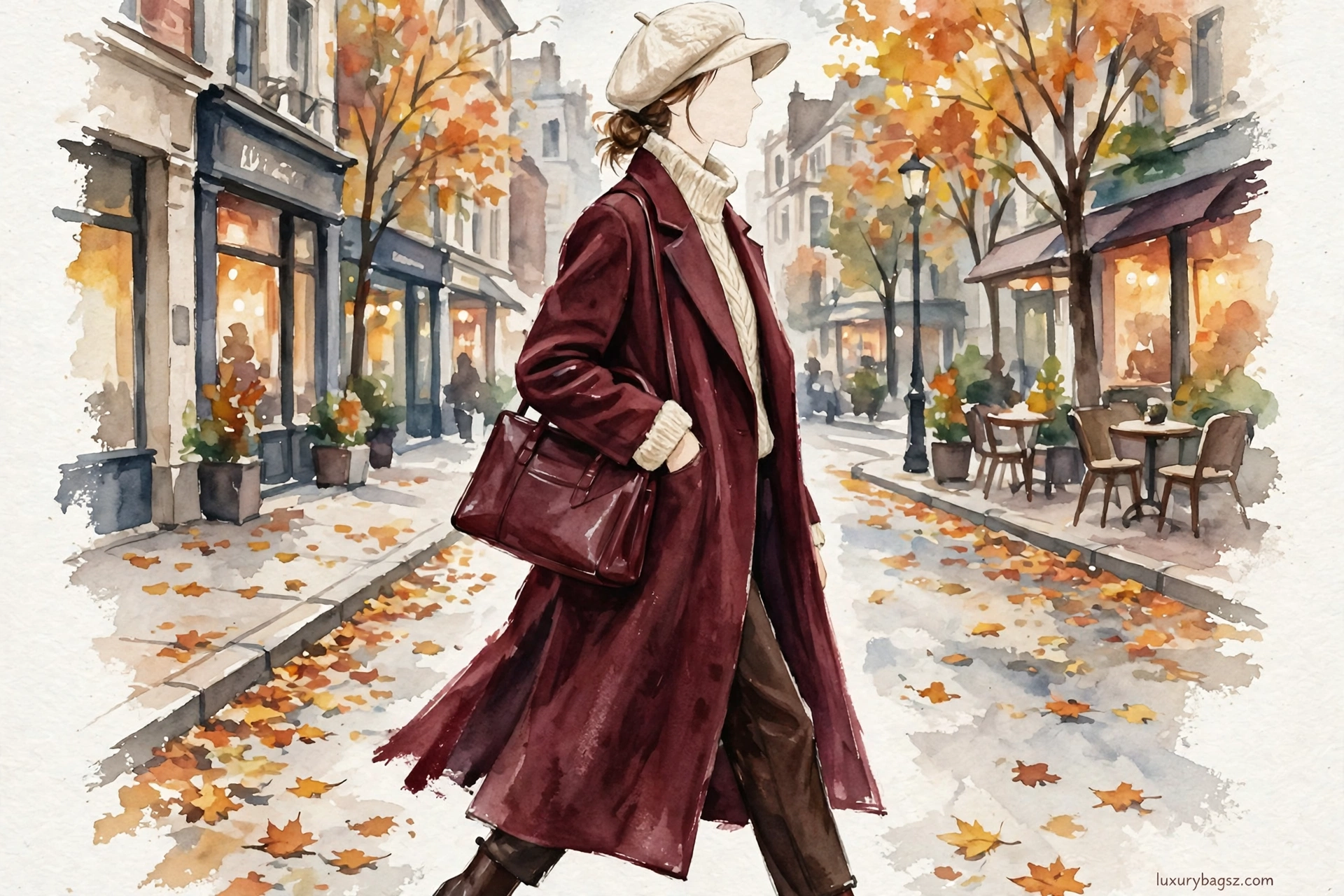
Maroon — deep red-brown, called burgundy, oxblood or wine depending on the label — is the cold season's most useful colour. It carries the richness of red with the manners of a neutral. Wear it in the big pieces: a coat, a long skirt, wide trousers or a substantial knit. Maroon flatters most skin tones, photographs warmly, and hides city grime far better than black or navy. Texture is maroon's best friend. Our edit of suede bags shows the shade at its softest, while maroon leather reads sharper and maroon wool reads cosier — three different moods from one colour.
The Three Families, Sorted
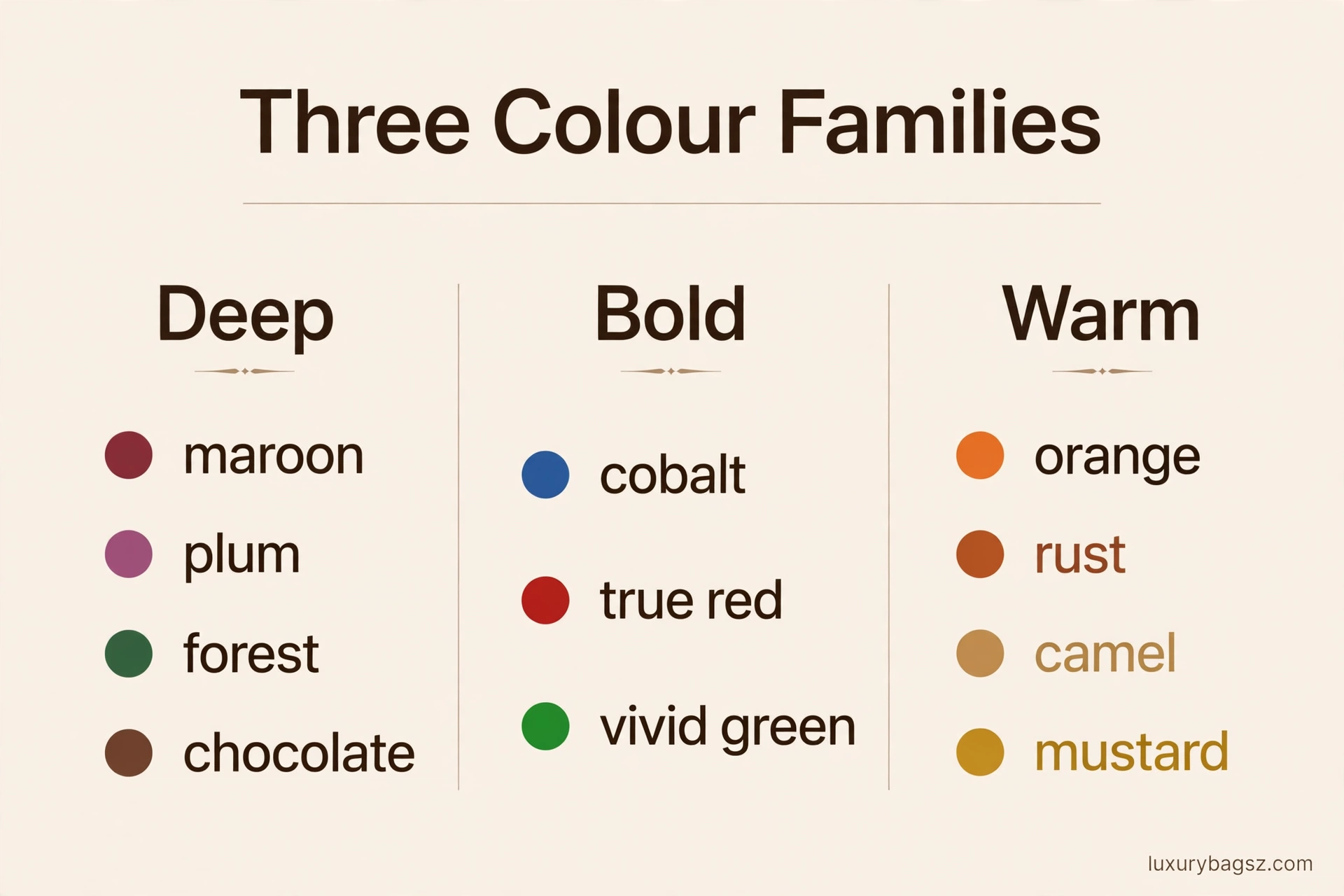
Deep colours — maroon, plum, forest, chocolate — are the season's ground. They replace black in coats, bags and boots and pair with each other surprisingly well. Bold colours — cobalt, true red, vivid green, fuchsia — are the statement layer. They need calm company: one bold piece, everything else quiet. Warm colours — orange, rust, camel, mustard — are the connectors. They warm up denim, grey and navy, and they bridge the deep and bold families without fighting either.
Bold Colour Without the Shout
The secret of bold colour is area. A cobalt dress is a commitment; a cobalt knit under a navy coat is a pleasure. Start with the smaller area and grow only if you reach for it weekly. Saturated shades also reward quality fabric. Strong dye on cheap cloth fades unevenly and looks tired fast, which is why bold designer pieces — like the story told by the Chanel royal blue boy bag — keep their punch for years. Keep bold colour's neighbours simple: white, cream, denim and black. Pattern near a bold piece should be small and in the same family, or the outfit starts arguing with itself.

Orange: The Warm Surprise
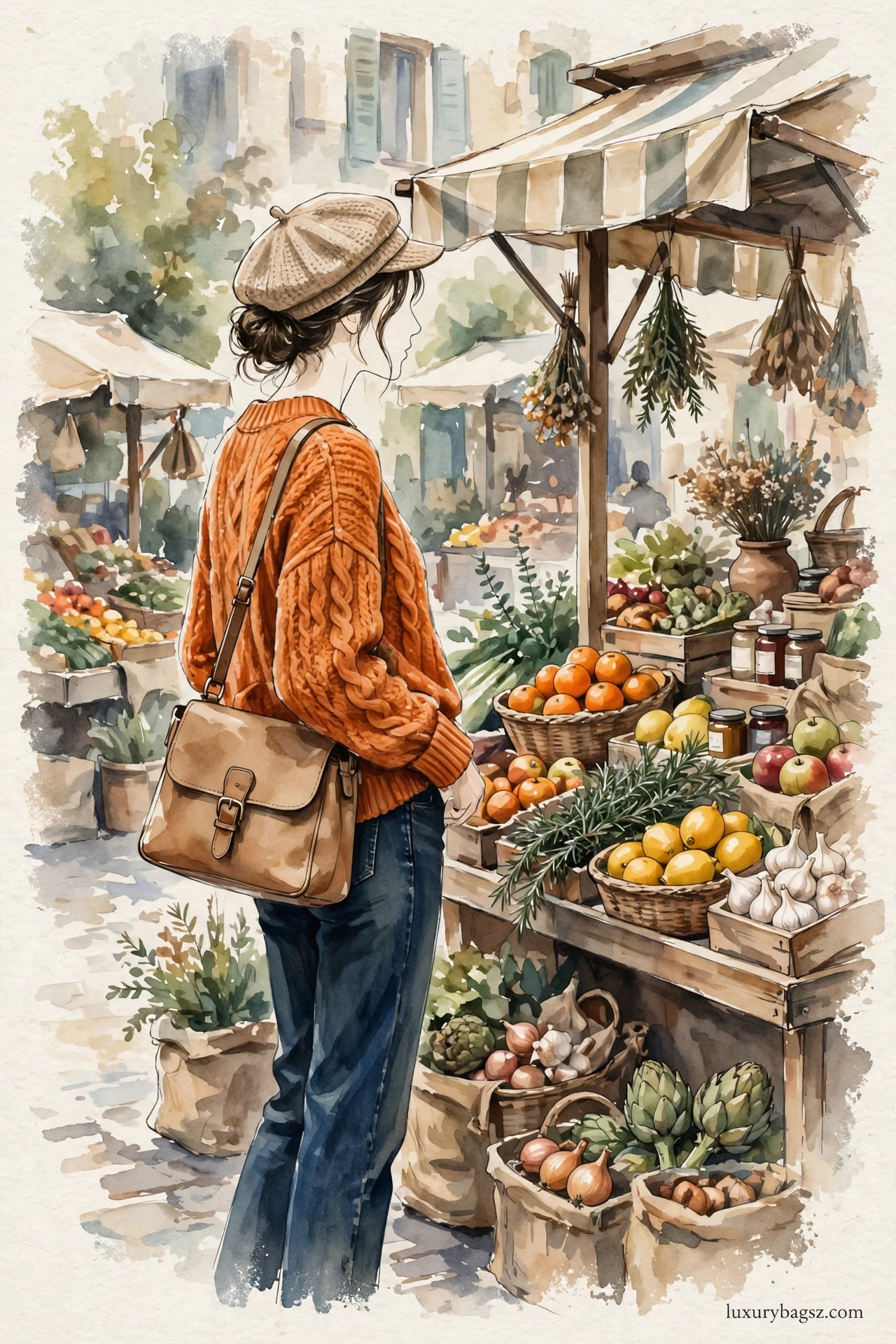
Orange scares shoppers and then delights them. Burnt orange and rust behave almost like neutrals with denim and brown leather; apricot softens tailoring; bright tangerine is a one-piece event and should be styled like one. Warm skin tones carry orange nearest the face best. Cooler tones can keep it lower — a skirt, a bag, a shoe — where it warms the outfit without warming the complexion wrongly. Orange's best partners are navy, cream, chocolate and olive. Avoid pairing bright orange with black in large blocks unless you want the contrast at full volume; brown gives the same depth more kindly.
Dosage: Accent, Statement or Full Colour
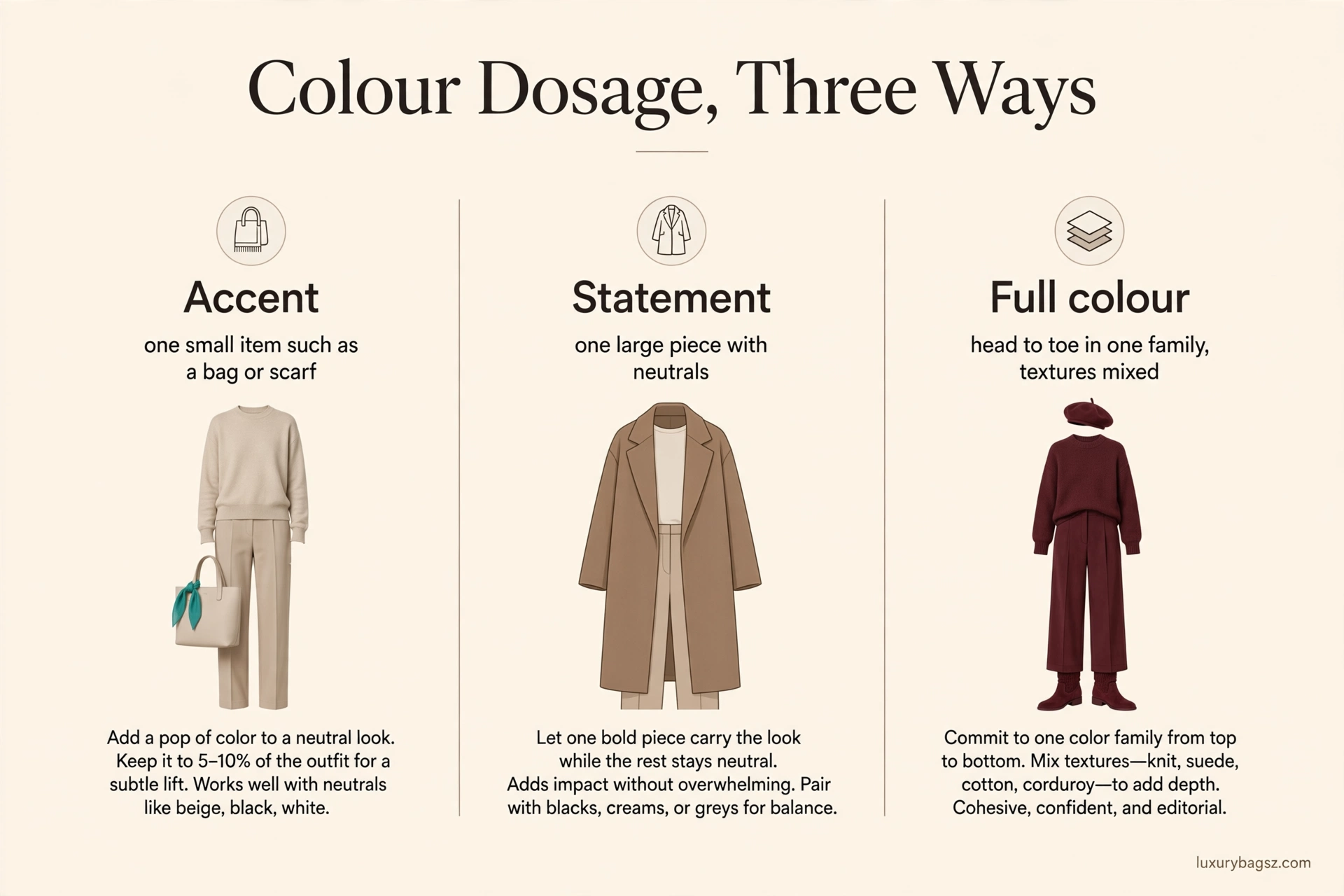
Accent dosage is one item: a maroon bag, orange shoes, a bold scarf. It suits colour beginners and formal workplaces, and it is how most stylish people wear most trends. Statement dosage is one large piece — the coat, the dress, the suit — with neutrals around it. This is the sweet spot for maroon and for orange. Full colour is head-to-toe in one family, mixing textures to keep it alive. It works beautifully in the deep family, looks brave in brights, and should be tried at home before it is trusted outdoors.
Pairings That Never Embarrass
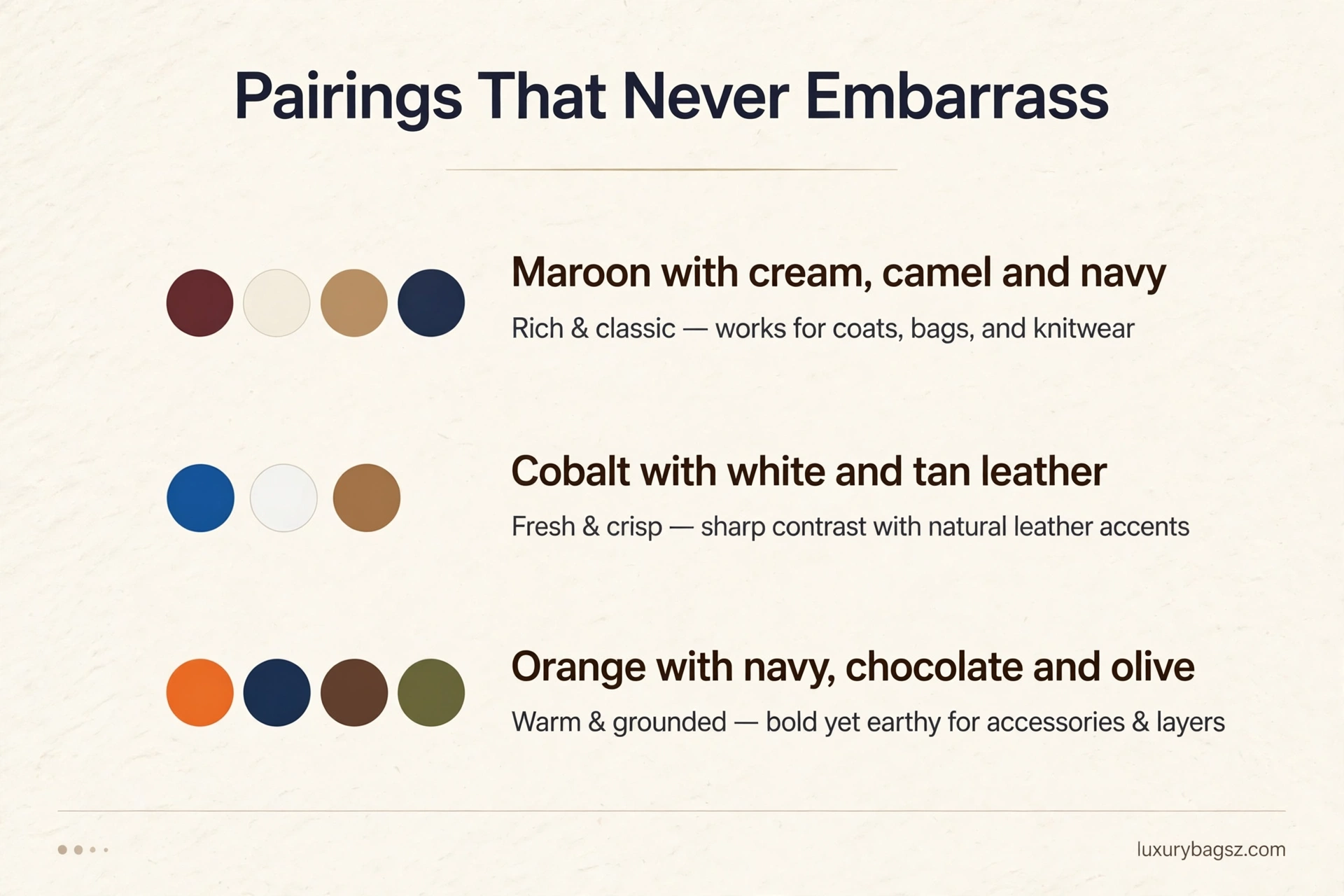
Maroon loves cream, camel, navy, grey and soft pink. With black it turns evening; with denim it turns weekend. Gold jewellery warms it, silver cools it. Bold cobalt and green want white, navy and tan leather. Our piece on the Hermès electric blue bag shows a saturated shade carried entirely by accessories, the boldest colour in the outfit yet the calmest styling. Orange pairs with navy, cream, chocolate and olive, and with maroon itself in autumn's richest combination. When in doubt, let brown leather — bag, belt, boots — mediate between any two strong colours.
Buying Colour That Earns Its Keep
Test a new shade pre-owned or in a small piece first. A colour trend lasts several seasons at wardrobe level, so there is no prize for being first and several for being right. Check the colour in daylight before committing. Shop lighting flatters warm shades in particular, and maroon can turn brown or purple between the fitting room and the street. Finally, count combinations before you buy. A coloured piece that completes three existing outfits is a bargain at almost any price; one that needs new shoes, bag and coat to work is a project, not a purchase.
Frequently Asked Questions
Is maroon the same as burgundy?
They are close cousins. Maroon leans browner and deeper; burgundy leans redder and more wine-like. Labels use the names loosely, so judge the actual shade in daylight rather than trusting the tag.
Which seasonal colour suits everyone?
Maroon comes closest, because its depth flatters most skin tones and it behaves like a neutral in outfits. Chocolate brown and forest green are similarly kind. Bright orange and fuchsia are the most tone-dependent.
How do I wear bold colour to work?
Use statement dosage in a tailored shape: a cobalt knit or true-red dress under calm tailoring, with neutral shoes and bag. Keep the silhouette formal and let the colour do the one loud thing.
Can I wear orange if I have cool skin?
Yes — keep it away from your face. An orange bag, skirt or shoes warm an outfit without sitting against your complexion. If you wear it on top, choose rust over tangerine and add a cool-toned scarf near the face.
What colours go with maroon?
Cream, camel, navy, grey, soft pink and chocolate all work, plus gold jewellery. Maroon with denim is the easy weekend version; maroon with cream knitwear is the polished one.
Should my bag match my coloured outfit?
Matching exactly can look dated. Better to echo: a bag in a neighbouring shade or a brown leather that mediates. Tonal dressing — different depths of one family — is the modern way to coordinate.
How long do colour trends last?
At wardrobe level, several seasons. Deep families like maroon return every autumn, brights rotate each spring, and orange cycles every few years. Buy the shade in a classic shape and it will outlast the headline.
Is it better to buy colour new or pre-owned?
Pre-owned is ideal for testing a shade and for strong colours in good leather, which keep dye well. Buy new when the exact shade matters to you and you have already proved you wear its family.
Can I mix two bold colours together?
Yes, with one rule: keep one clearly in charge and the other in a smaller area, and let a neutral or brown leather separate them. Cobalt with a small true-red bag works; equal blocks of both fight.
What is the cheapest way to join a colour trend?
A scarf, a knit or a pre-owned bag in the season's family. These pieces carry the colour message fully, cost the least, and are the easiest to retire gracefully when the wheel turns.
Final Verdict: Dose the Colour, Keep the Clothes
This season's colour story is generous: maroon to anchor, bold colour to declare, orange to warm. None of it requires a new wardrobe. Choose your family, pick your dosage — accent, statement or full — and buy one good piece that finishes outfits you already own. Colour worn at the right dose never looks like a trend at all; it looks like you.