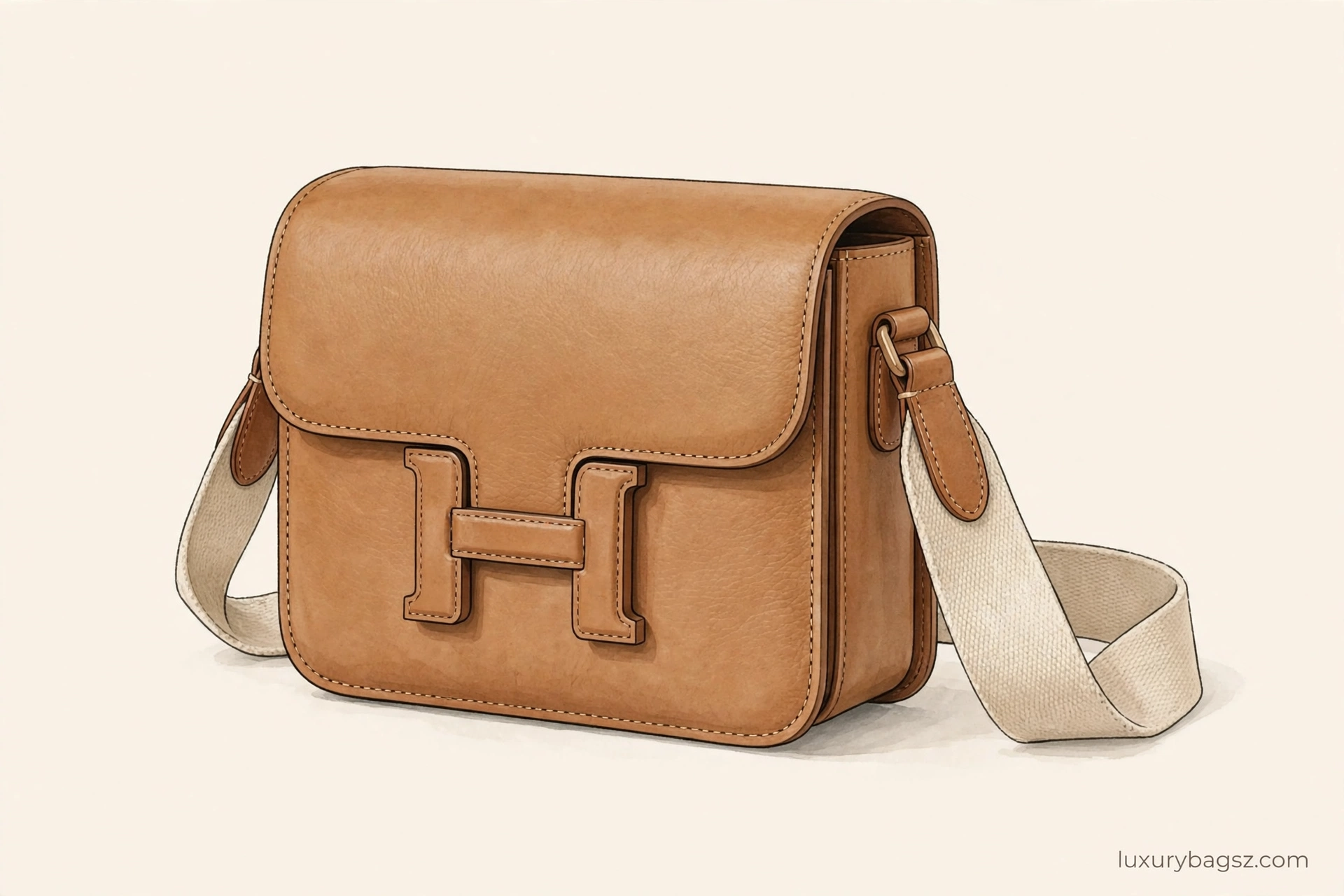
Scandi and Copenhagen Style: The Calm Wardrobe, Explained
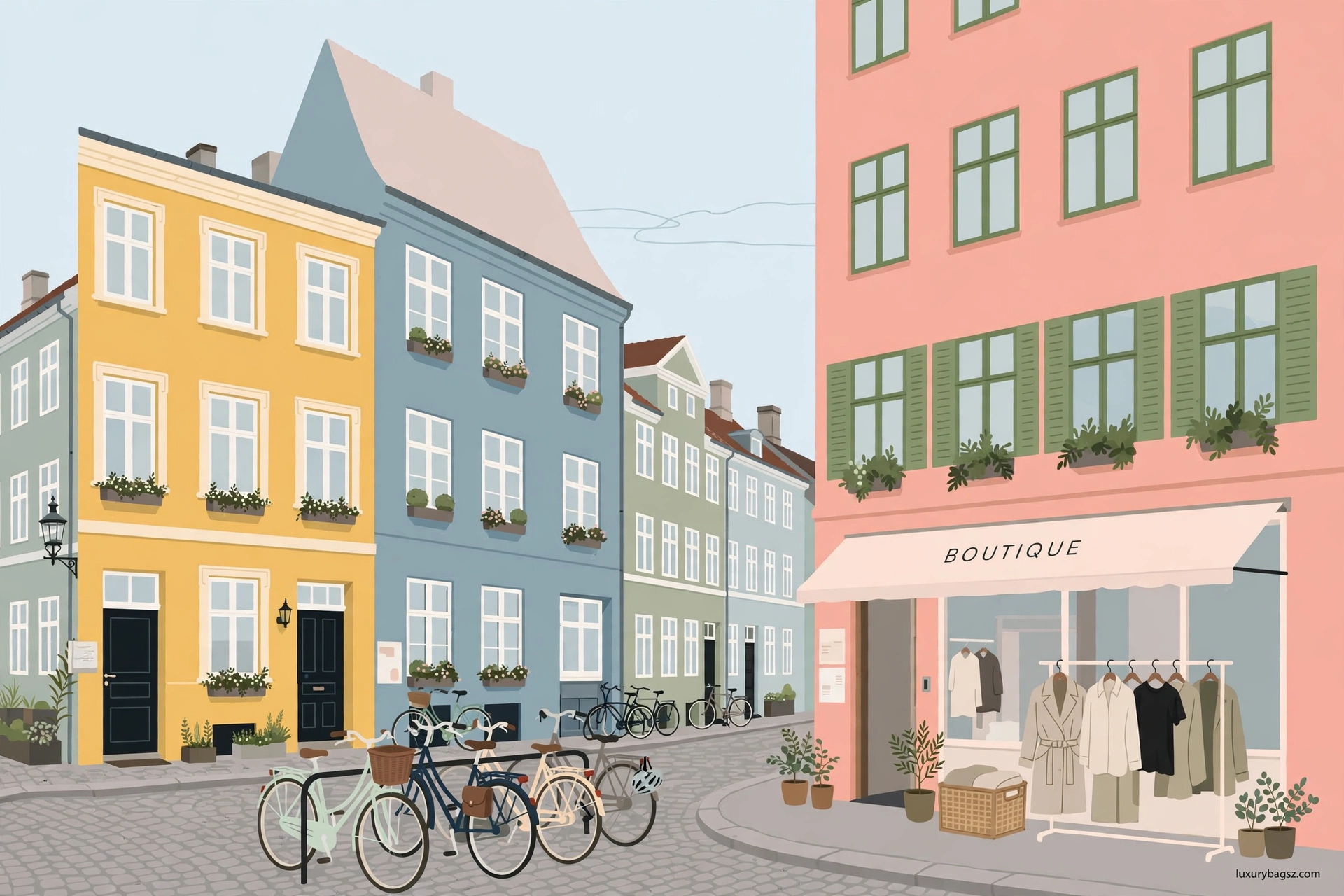
Scandi Style in One Sentence: Fewer, Better, Calmer Pieces
Scandi and Copenhagen style is a wardrobe of relaxed tailoring, flat shoes and neutral colours, built to survive real weather and a bicycle commute while still looking considered. It is minimalism with the stiffness taken out.
Where Parisian style polishes and Italian style decorates, Copenhagen style simply functions beautifully. This profile breaks the look down into its palette, formulas and capsule pieces so you can borrow what suits your own life.
Key Takeaways
- The palette is neutral first — black, white, grey, navy, beige — with one brave colour worn confidently.
- Relaxed tailoring plus flat shoes is the core silhouette; nothing is tight or precious.
- Everything must survive weather and cycling: layers, long coats and practical bags.
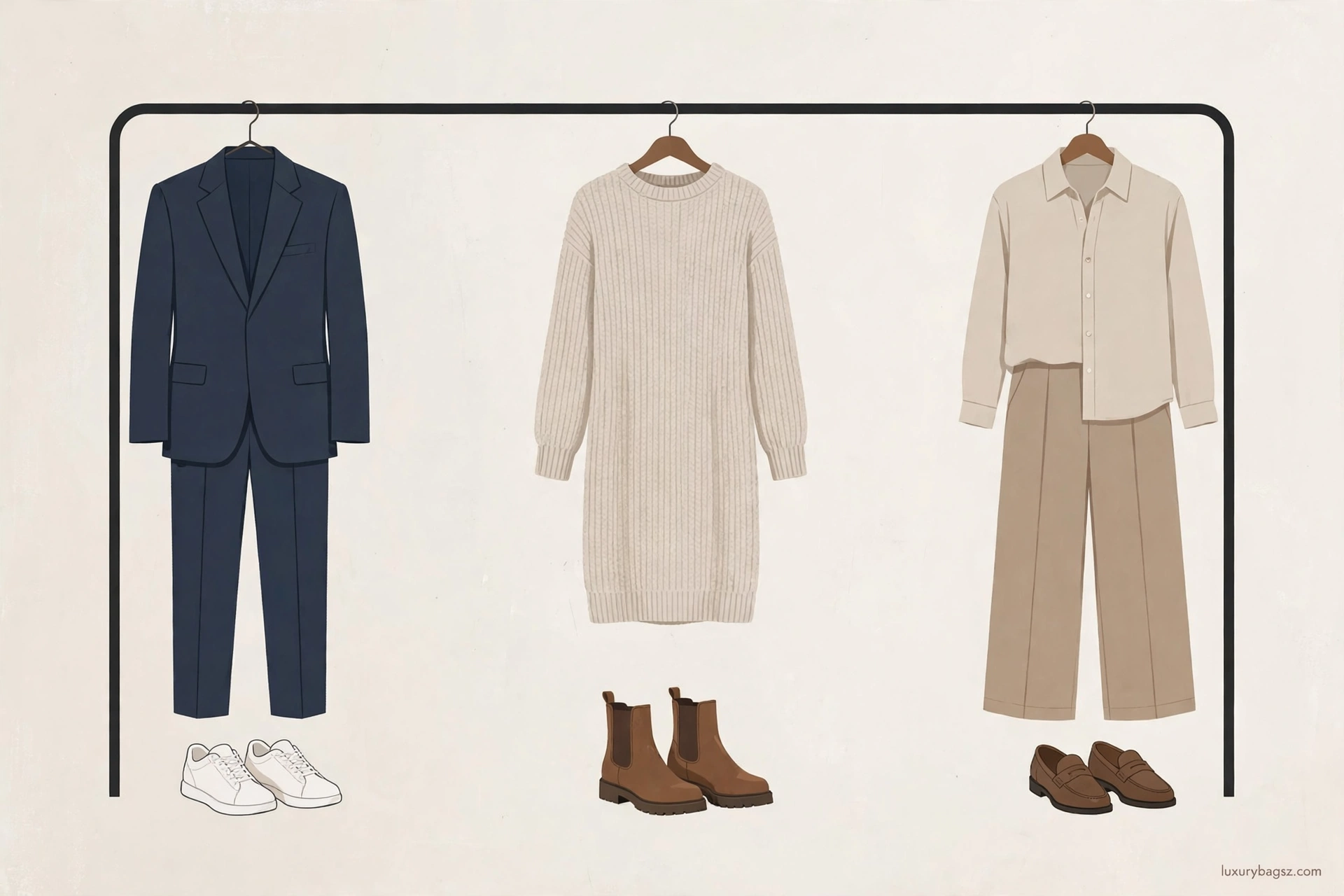
- Three formulas cover the week: suit with trainers, knit dress with boots, shirt with wide trousers.
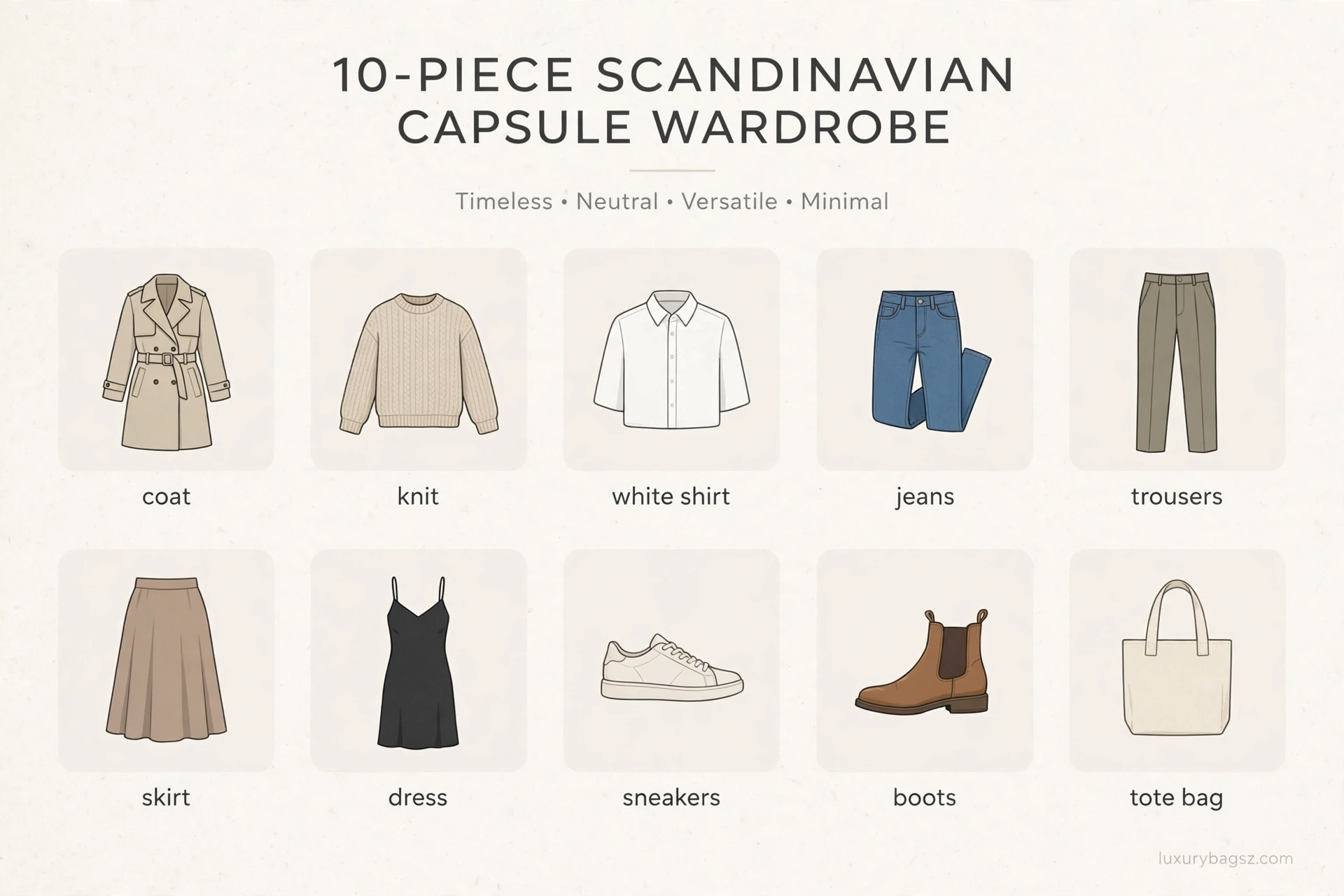
- A ten-piece capsule in this palette mixes into weeks of outfits without repetition fatigue.
Where the Look Comes From
Copenhagen's fashion scene grew up around cycling, changeable weather and a design culture that prizes function. Clothes there are expected to work hard and look calm doing it.
Labels such as Ganni took the look global by adding playfulness to the minimal base — our Ganni brand guide traces how a Copenhagen label turned relaxed shapes and prints into an international uniform.
The result is often mistaken for plainness from a distance. Up close, the interest is in proportion: wide trousers, long coats, sleeves pushed up, everything a size more relaxed than expected.
It is also a democratic look. The same formulas appear on students and executives in Copenhagen, separated by fabric quality rather than by different clothes entirely.
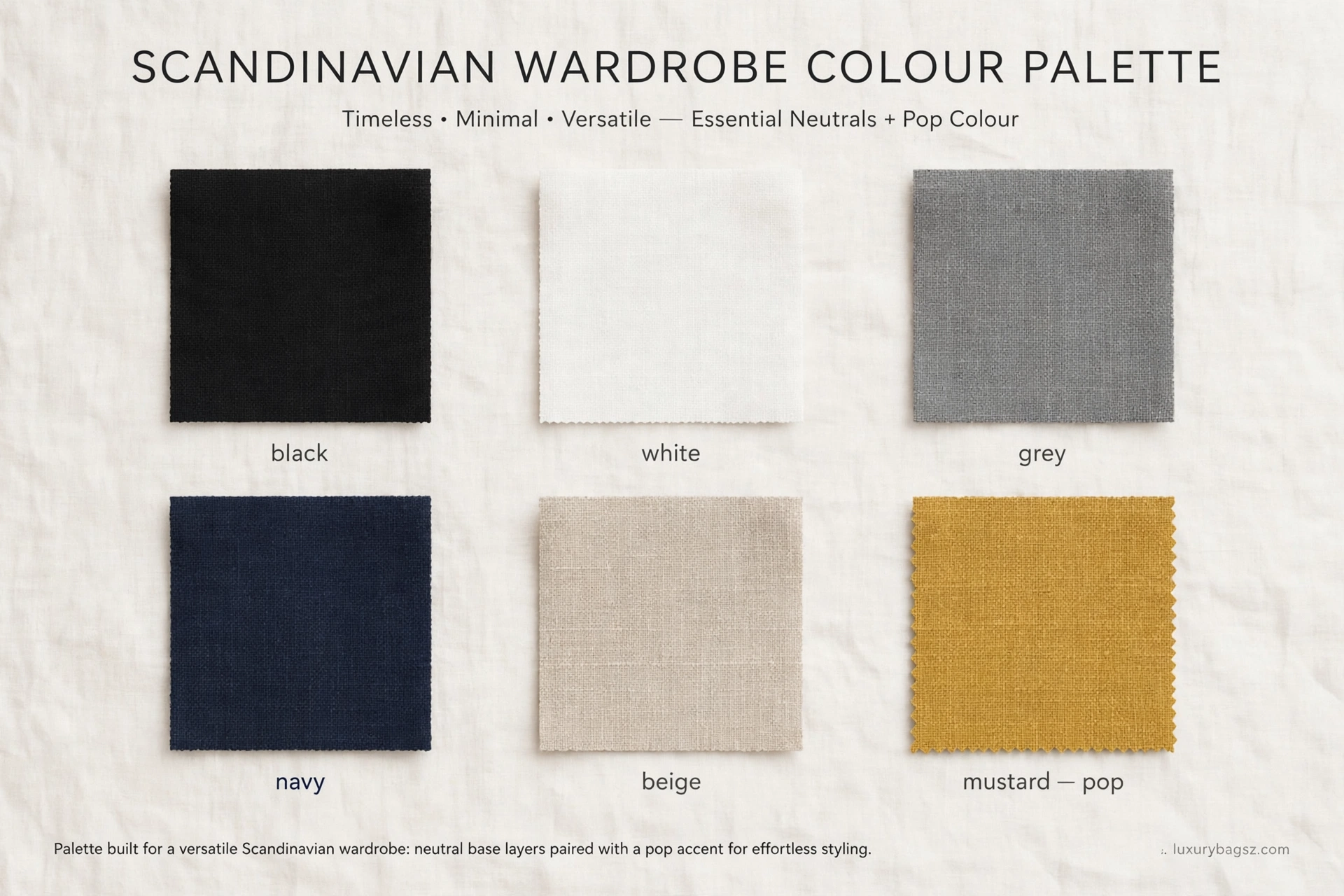
The Palette: Neutrals Plus One Brave Colour
The base is black, white, grey, navy and beige, worn tonally and mixed freely. These shades carry the tailoring and knitwear that make up most of the wardrobe.
On top of that base, Copenhagen dressers wear one strong colour at a time — a mustard knit, a red dress, a cobalt coat — without apology. The neutral base is what makes the bold piece look chic rather than loud.
Prints appear sparingly: a check, a stripe, an occasional floral dress in summer. The palette discipline is what keeps them from clashing with anything else in the cupboard.
Black deserves a special note: Copenhagen wears more of it than the cosy Scandi stereotype suggests, softened with texture and skin rather than with extra colour.
Dressing for Weather and Bicycles
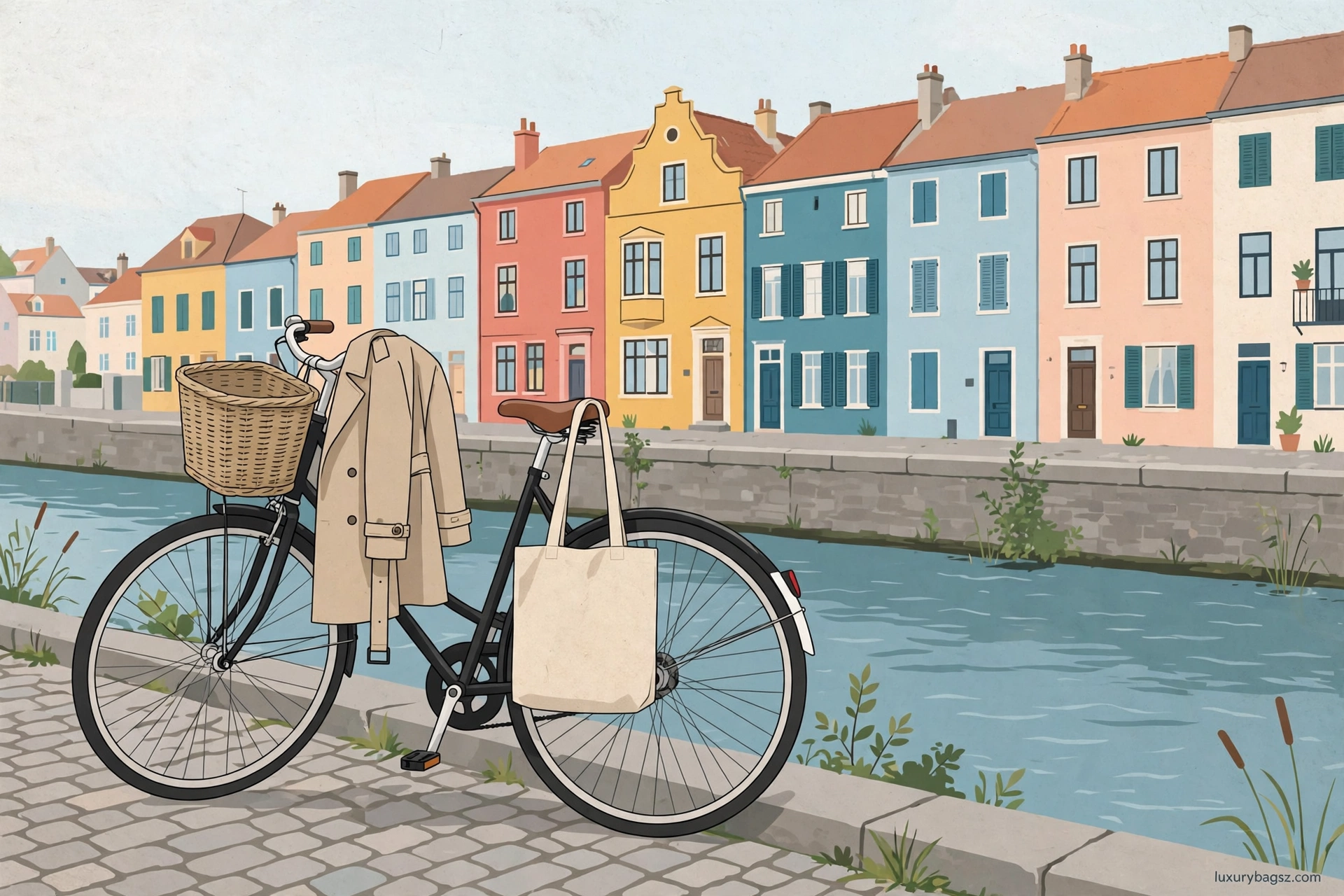
The bicycle is the stylist here. Long coats are cut to ride in, trousers are wide or straight rather than skin-tight, and skirts are midi lengths that stay put on a saddle.
Layers are planned, not improvised: a knit under the coat, a scarf that doubles as a wrap, and shoes that can walk and pedal — trainers, loafers and flat boots dominate.
Bags follow the same logic. A roomy tote or a crossbody that stays against the body beats a delicate handbag that needs a free hand to survive.
Silhouette: Relaxed, Long and Unfussy
The Copenhagen silhouette is long lines with ease through the body. Blazers are soft-shouldered, coats fall straight, and knitwear is worn slightly oversized without drowning the frame.
Waist definition comes from a tuck or a belt, not from tight tailoring. Dresses are smock, shirt or knit shapes that move, worn with flat shoes as often as with boots.
Hair and makeup stay equally unfussy in the classic version of the look: the clothes carry the polish, and nothing appears to have taken longer than twenty minutes.
Fit is checked in motion, not in the mirror alone. If you cannot cycle, stride and sit comfortably in it, a Copenhagen dresser would simply not buy it.

Three Formulas That Define It
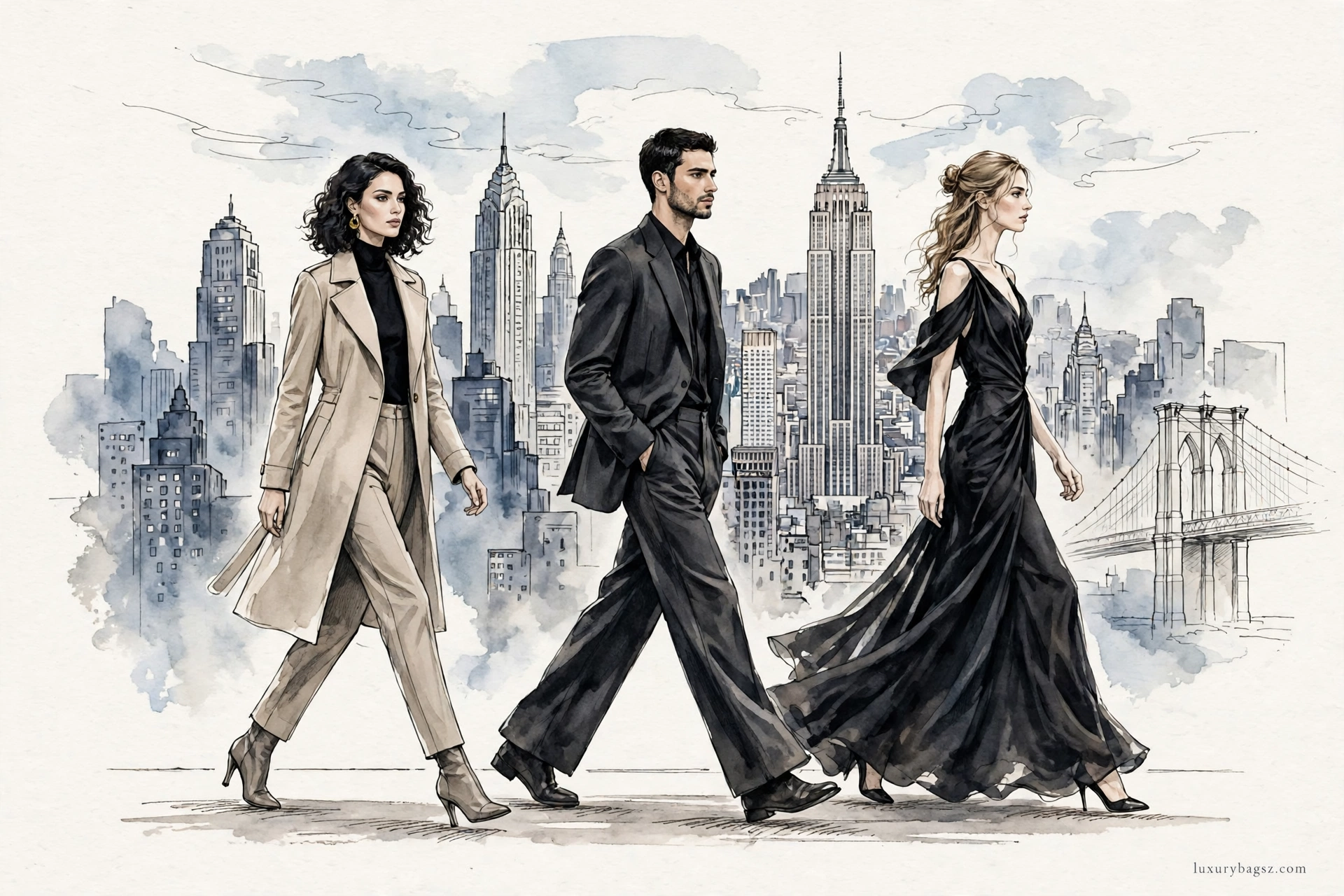
Suit plus trainers: a relaxed two-piece worn with clean white sneakers. It is the formula that announced Copenhagen style to the world, and it still anchors the look.
Knit dress plus boots: a ribbed midi dress with flat ankle or Chelsea boots. One decision, full outfit, works from October to April with a coat over it.
Shirt plus wide trousers plus loafers: the quiet weekday formula. An oversized shirt, half-tucked, over flowing trousers is the shape you will see most often on Copenhagen streets.
Notice what none of the formulas includes: heels, a belt cinching the waist, or a bag carried in the hand. Ease is the constant across all three.
The Details That Keep It Interesting
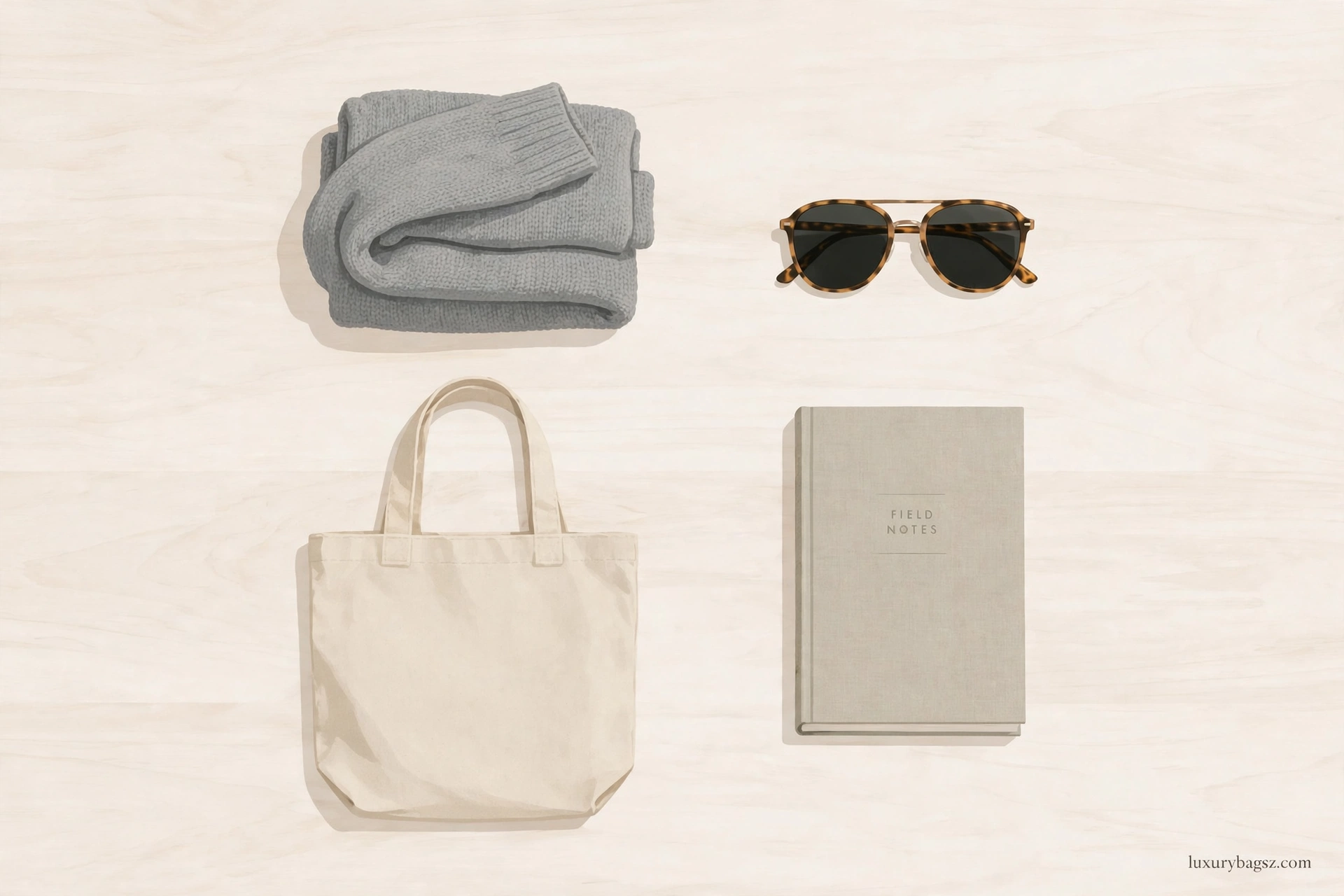
Accessories are few and functional: sunglasses with a strong frame, a canvas or leather tote, simple gold or silver jewellery worn every day rather than saved.
Texture does the decorative work — ribbed knits, brushed wool, crisp cotton shirting and smooth leather, all inside the neutral palette. Nothing matches exactly, and that is deliberate.
One personal item usually breaks the minimalism: a vintage bag, a bright scarf, a pair of coloured trainers. The look reads as a system with a person inside it, not a uniform.
Sunglasses earn their keep even in northern light. A strong, simple frame is the closest thing the look has to a signature accessory after the tote.
The Ten-Piece Copenhagen Capsule
Start with a long coat, a good knit, a white shirt, straight jeans and wide trousers. Add a midi skirt, a simple dress, white trainers, flat boots and a tote that fits a laptop.
Ten pieces, one palette, and the combinations run into weeks: coat over everything, knit with each bottom, dress with both shoe options, shirt under and over the knit.
Buy slowly and well. The capsule only works if each piece earns its place, fits the palette and survives the weather where you live.
Second-hand fits this style naturally. The shapes change so slowly that a five-year-old Copenhagen coat still looks current, which keeps pre-owned rails unusually rewarding.
Borrowing the Look Without Moving to Denmark
Take the principles, not the postcode. Relaxed tailoring, flat shoes, a disciplined palette and one brave colour translate to any city with a pavement and a forecast.
The look overlaps with the wider movement our explainer on what is quiet luxury describes: quality and calm over logos and noise, though Copenhagen adds a practical, playful streak of its own.
Start with what you own. Most wardrobes already hold the coat, the knit and the trainers; the Scandi move is simply to wear them together, often, without overthinking.
Frequently Asked Questions
What is Copenhagen style in simple terms?
Relaxed tailoring, flat shoes and a neutral palette, worn with one confident colour or print at a time. It is minimal but never stiff, and everything is chosen to work in real weather.
Which colours define Scandi style?
Black, white, grey, navy and beige form the base. A single strong colour — mustard, red, cobalt — is worn as one piece against that calm background.
Why do Copenhagen dressers wear trainers with suits?
Because they cycle and walk everywhere. Clean white trainers with a relaxed suit look deliberate rather than casual when the tailoring is soft and the shoes are immaculate.
Is Scandi style the same as minimalism?
Related, not identical. Minimalism removes; Scandi style also adds warmth and play — a printed dress, a coloured knit, a vintage bag — inside a disciplined overall system.
What coat is most typical of the look?
A long, straight coat in black, camel or check, cut generously enough to layer and cycle in. Trench coats take over in spring; wool coats rule the colder months.
Can I wear Scandi style in a hot climate?
Yes, with fabric swaps: linen and cotton instead of wool, the same palette and loose silhouettes, sandals or loafers instead of boots. The system matters more than the season.
What bag suits the Copenhagen look?
A roomy tote or a plain crossbody in leather or sturdy canvas. It must carry real life — laptop, scarf, lock — and sit securely on the body while cycling or walking.
How does Scandi style handle occasion dressing?
With the same pieces, upgraded by fabric and jewellery: a silk or satin dress with boots, or the suit with loafers and gold earrings. Comfort is never sacrificed for the event.
Is the look expensive to copy?
It does not need to be. The palette and proportions matter more than labels, and the style favours fewer, longer-lasting pieces, which suits a slow, considered budget.
What is the biggest mistake when copying it?
Going too plain: all neutrals, no texture, no personal piece. Copenhagen style keeps one playful or bold element in play, and that contrast is the whole point.
Conclusion: Calm Is a System, Not a Shopping List
Palette, proportion, practicality. Build those three and the Copenhagen calm follows — along with a wardrobe where everything, finally, works with everything else.