Luxury Christmas Wishlist: How to Write a List That Actually Works
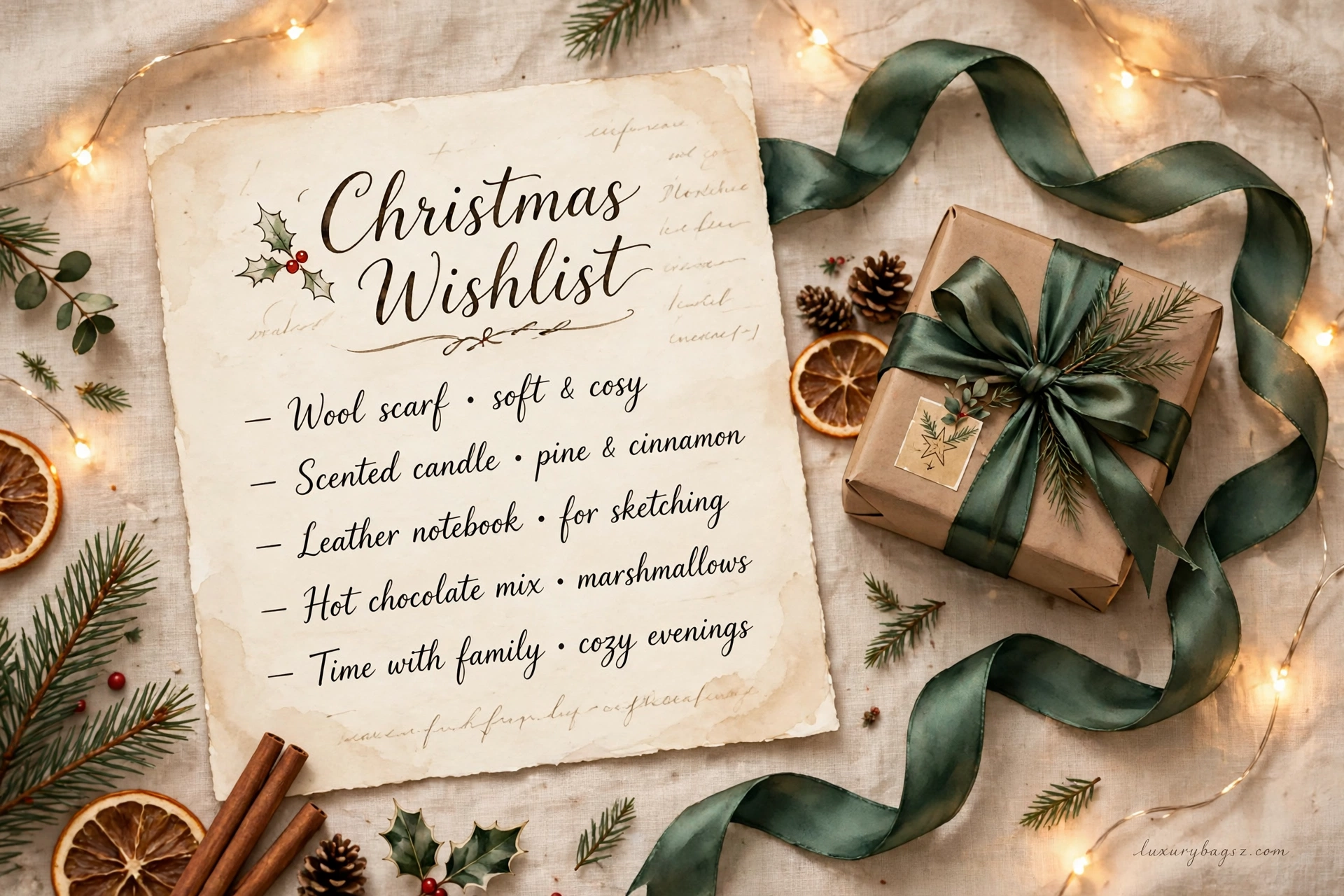
Your Letter to Santa, Grown Up: The Wishlist in Brief
A good luxury Christmas wishlist names the exact item, colour and size, offers three price tiers, and keeps one true hero gift at the top. Vague lists get vague gifts; a clear list gets the scarf, the wallet or the bag you actually wanted. Write it like a kind shopping note, not a demand. Give links or shop names where you can, add one or two easy fallbacks, and share it early. That is the whole secret, and the rest of this guide simply makes it graceful.
Key Takeaways
- Name the exact item, colour and size; never make the giver guess.
- Build three tiers: small treats, mid-range joys and one hero gift.
- One hero gift only; a list of five heroes helps nobody choose.
- Hint kindly and early, ideally before the end of November.
- Add easy fallbacks, such as a voucher or a beauty set, for late shoppers.
- Say thank you properly, whatever arrives; the list is a guide, not a contract.
Why a Wishlist Beats Hinting and Hoping
Most disappointing gifts are not unkind; they are guesses. A giver who adores you still cannot know your ring size, your leather preference or which shade of red you wear. A written list removes the guesswork while keeping the surprise. The giver still chooses which item to buy, wraps it and watches you open it. Only the risk has gone. It also protects the giver's budget. With tiers in front of them, they can spend what suits them without fearing they have spent too little or far too much.
Build Three Tiers, Not One Long List
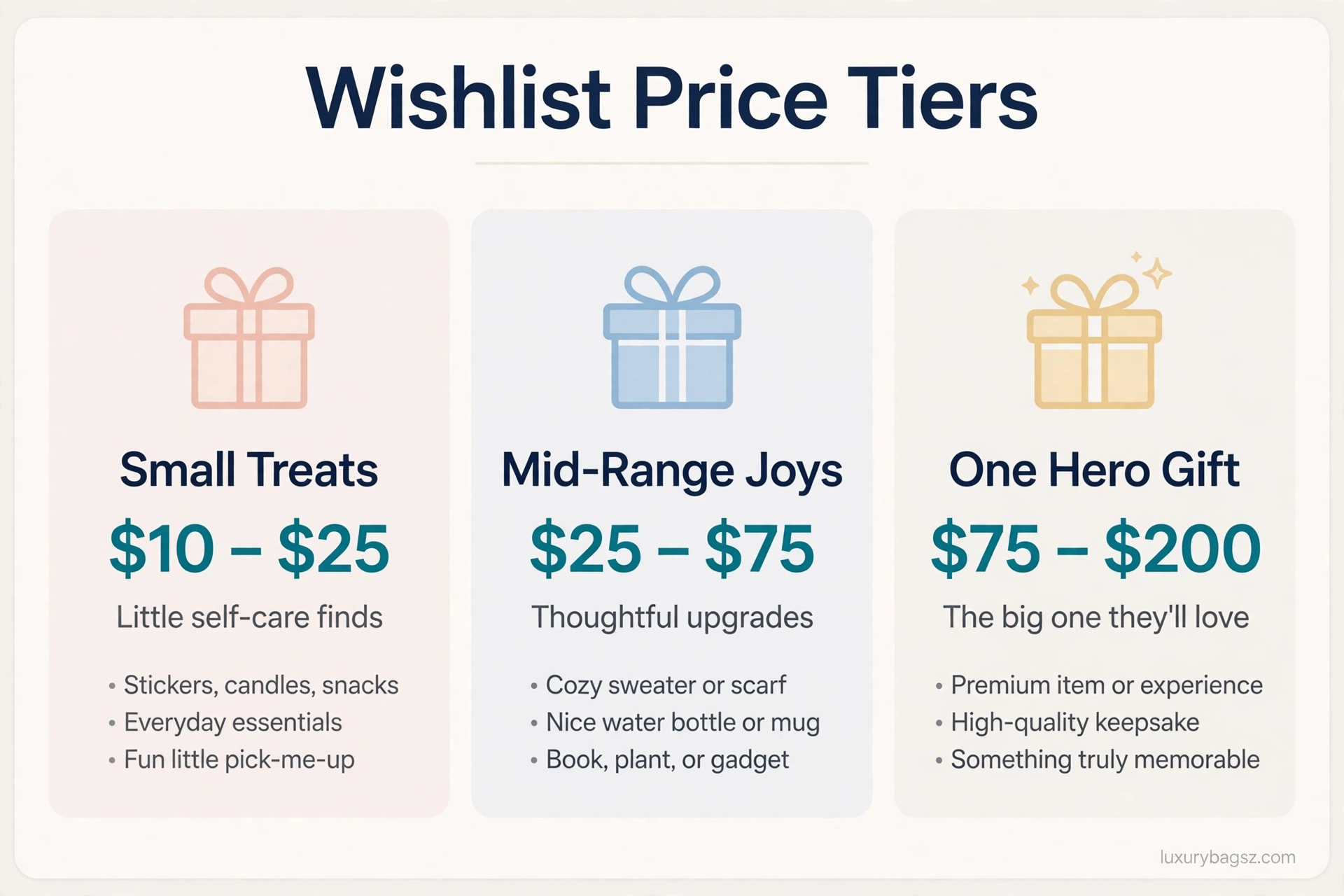
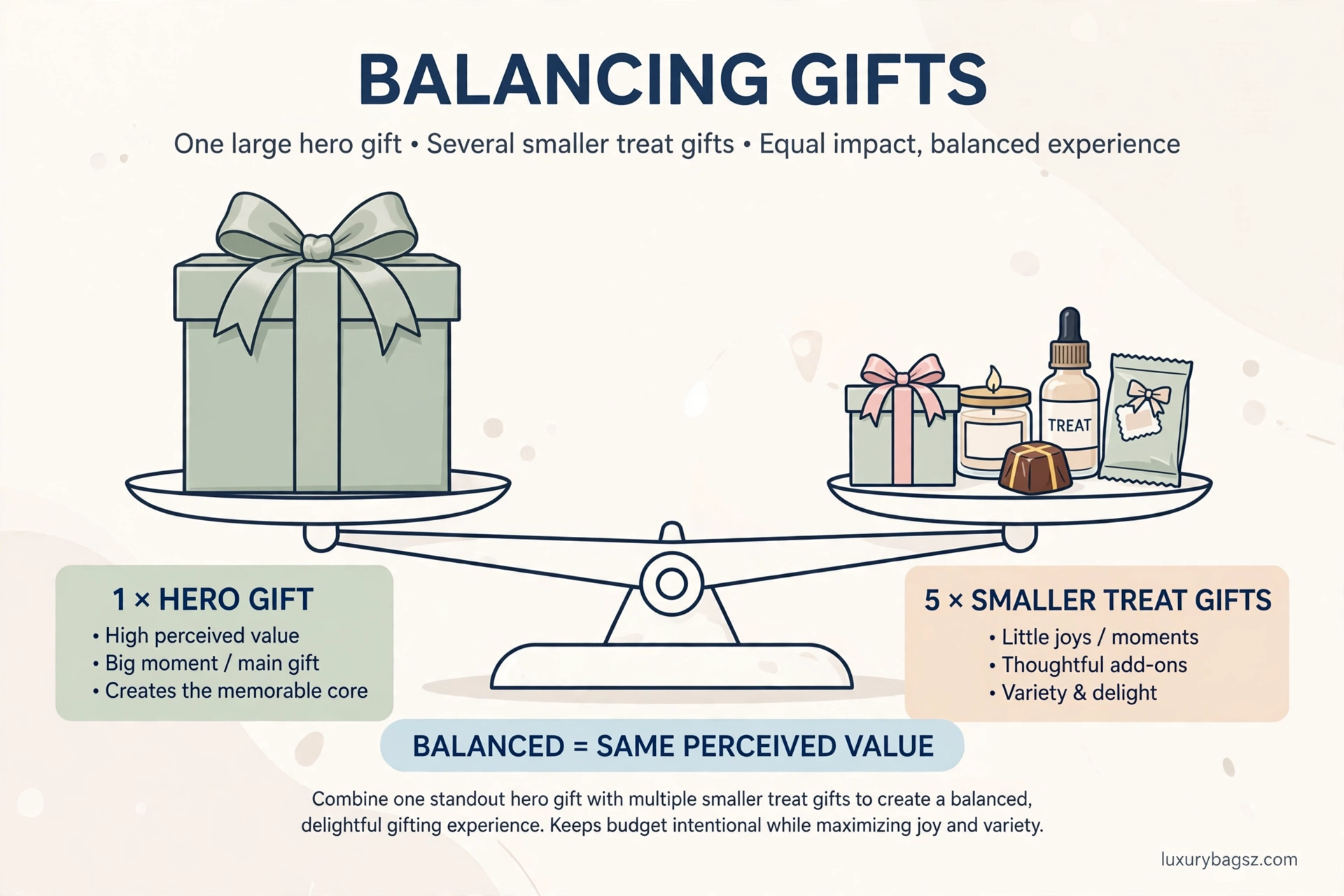
Tier one is small treats, roughly under $100: a silk scrunchie set, a hand cream trio, a candle, a key ring. These suit colleagues, Secret Santa draws and kind extras. Tier two is the happy middle, roughly $100 to $500: a card holder, a scarf, a fragrance, a pair of gloves. Most partners, parents and close friends shop happily here. Tier three holds one hero gift only: the bag, the watch or the coat. One hero keeps the choice clear. Five heroes turn a kind list into a confusing catalogue.
Write the Letter Itself
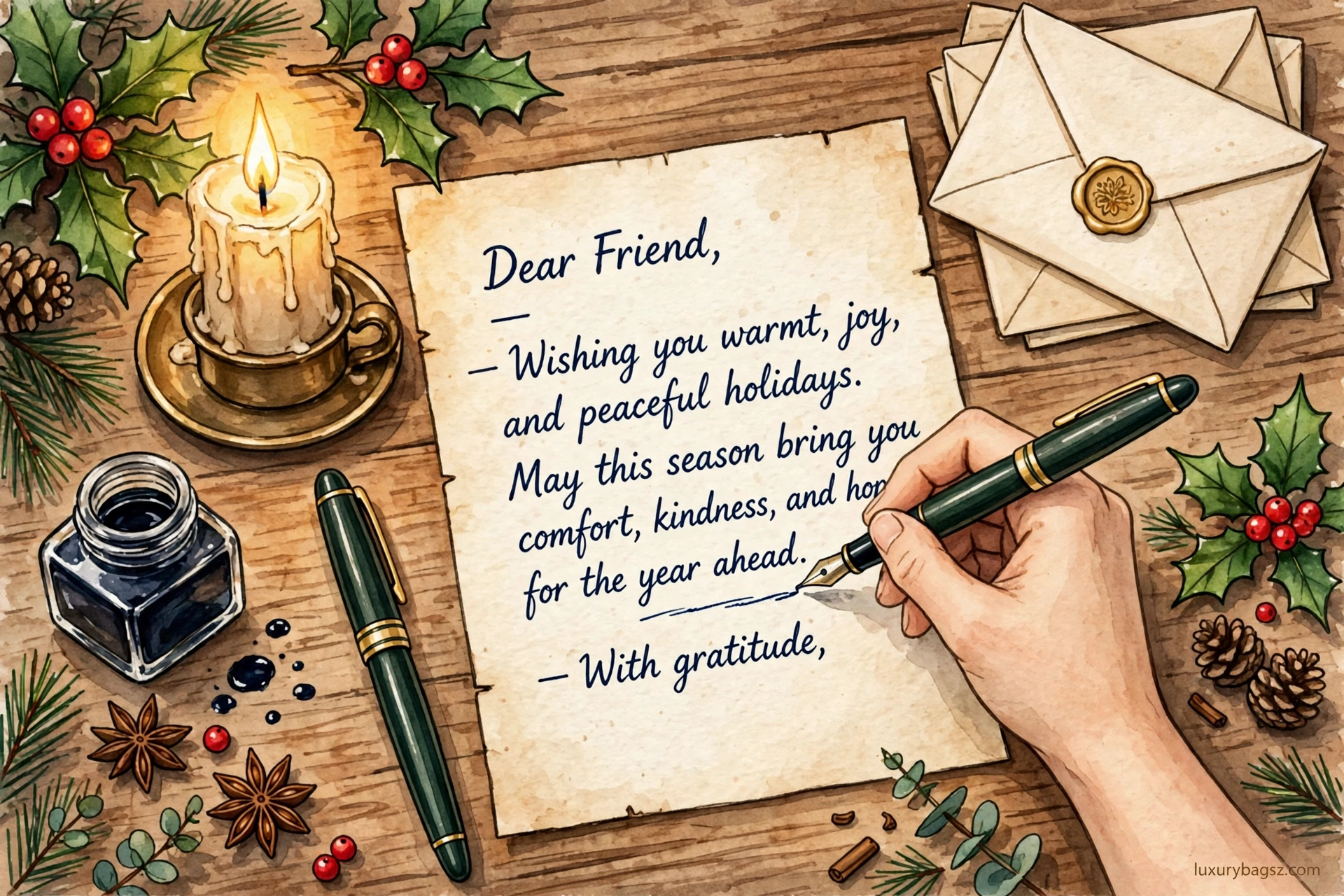
Open warmly, as the old Letters to Santa did: a line about the year, a line of thanks, then the list. Charm is not decoration here; it is what makes a list feel like a gift in itself. Give each item its own line with the exact name, colour and size. Where an item sells out fast, add the shop name too, as our Christmas luxury gift guide does for its own seasonal picks. Close by saying plainly that any single item would delight you. That one sentence frees the giver from feeling they must buy the whole page.
Sizes, Shades and the Details That Matter
Luxury gifts fail on details: the right bag in the wrong leather, the right ring one size small, the right scarf in a colour you never wear. Your list should carry those details. Add shoe size, ring size, glove size and your metal preference, gold or silver tone. Note leathers you love and any you avoid, such as delicate lambskin for a daily bag. If you collect a line, say which pieces you already own. Our year-round designer gift guide makes the same point for givers: known collections are the safest place to add.
How to Drop a Hint Without Dropping a Demand
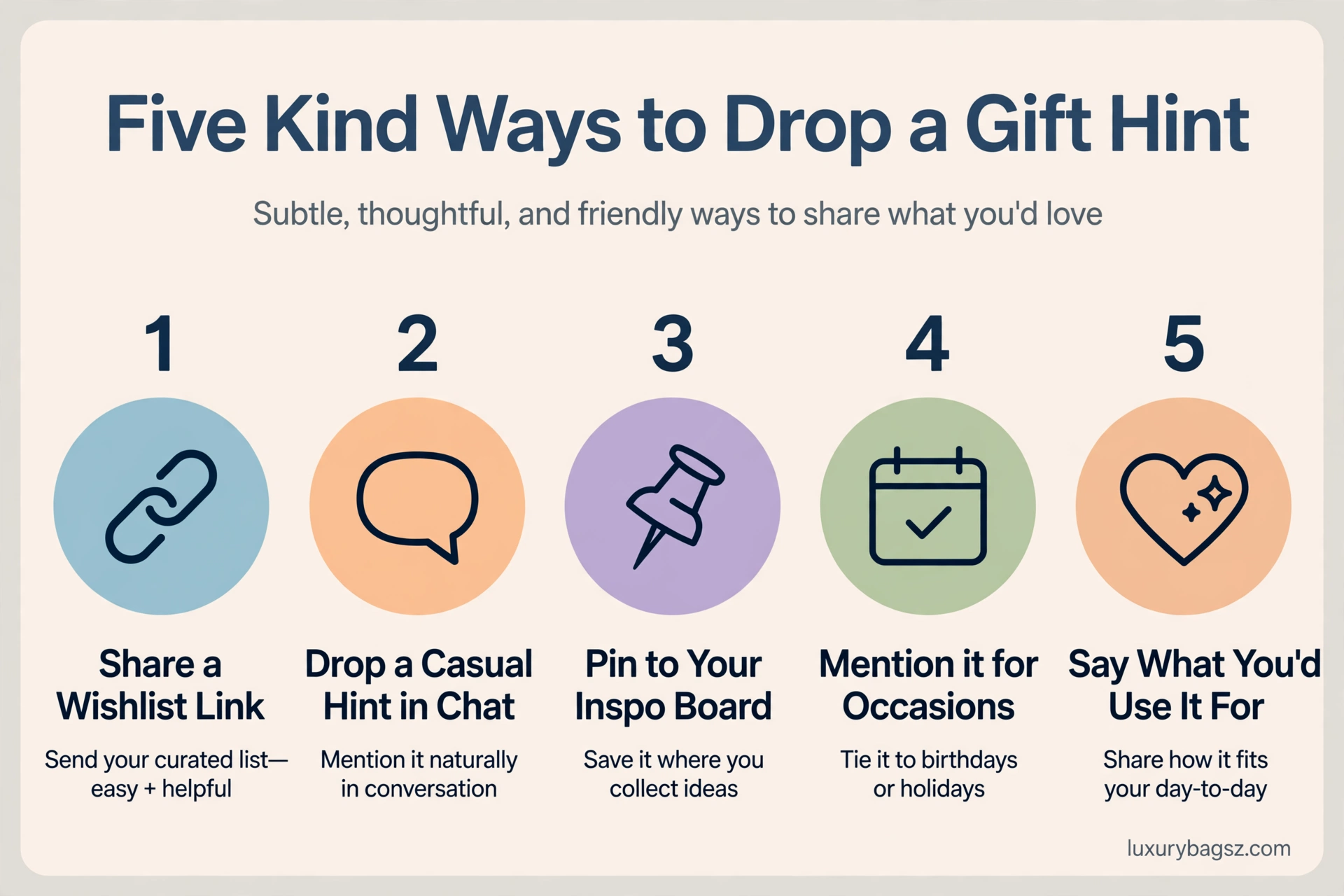
Send the list once, lightly, and early. A short message in November — “in case it helps, here is my little list” — is kind. The same message on 20 December is pressure. Talk about the item, not the price. “I keep thinking about that green scarf” lands softly. Repeating the full cost at dinner does not, and it spoils the fun for everyone. Never hint through a third party unless they offer. Putting a friend in the middle turns a gentle nudge into a errand, and errands rarely survive the telling intact.

What Belongs on a Luxury List
Bags and small leather goods lead most lists for good reason: they are used daily and sized kindly. A compact wallet or card holder in a classic colour is the safest hero-adjacent pick, and our edit of designer wallets for women shows the shapes that last. Beauty earns its place in tier one and two: a lipstick in your exact shade, a hand cream set, a silk pillowcase. These are personal, so name the shade or scent precisely. Jewellery and watches belong in tier three unless they are small. A wish for a watch should name the model and case size, because returns on engraved or sized pieces are rarely simple.

Balance the Hero Against the Treats
A list that is all hero and no treats forces every giver into the top tier or into guilt. Keep at least three small items for every one large item, and the list stays friendly. Think about who will see it. Family may see all three tiers; a work Secret Santa should only ever see tier one. Send the right version to the right reader. Update the list as items are bought, if your family shares lists that way. A small note saying “the scarf is sorted, thank you” stops cheerful duplicates before they happen.
After Christmas: Thanks, Exchanges and Grace
Thank promptly and by name of the gift: “the gloves are perfect with my coat” means far more than a general thank-you. People remember being thanked well. If something is the wrong size, exchange quietly and without a report card. The list was a guide, and a giver who missed one detail still chose, paid and wrapped with love. Keep the list for next year. The items that stayed unbought, plus what you loved most this year, are the honest first draft of next Christmas's letter.
Frequently Asked Questions
Is it rude to share a wishlist?
No, if it is offered lightly and early. Most givers are relieved to be told. It becomes rude only when it is sent late, sent repeatedly, or written as a demand with no cheaper options.
How many items should a wishlist have?
Around eight to twelve works well: three or four small treats, four mid-range pieces and one hero gift. More than that and the giver stops choosing and starts skimming.
Should I include prices on my list?
Tiers are kinder than exact prices. A rough guide such as “small treats” and “one big gift” helps budgeting without turning Christmas morning into an invoice.
What if nobody buys from my list?
Accept it with grace. A list is an offer of help, not a contract. Enjoy what was chosen for you, and note quietly what to phrase more clearly next year.
When should I send my wishlist?
Late October to late November is ideal. It gives givers the sales period to shop in, and it arrives before diaries and budgets fill with December plans.
Can I put a handbag on a wishlist?
Yes, and name it fully: model, size, leather and colour, plus one fallback colour. Bags are the most detail-sensitive luxury gift, so precision here saves real disappointment.
What are good small luxury treats for tier one?
A silk scrunchie set, a scented candle, a hand cream trio, a lipstick in a named shade and a leather key ring all feel luxurious while staying roughly under $100.
How do I hint to a partner without sounding demanding?
Share the list once with a light note, talk about the item rather than its price, then drop the topic. Trust them to choose; repeated hints undo the kindness of the first one.
Should couples share one list or two?
Two short lists are clearer than one merged page. Each person names their own sizes and shades, and givers on both sides can shop without decoding whose item is whose.
What should I do with duplicate gifts?
Keep the one you will use most, exchange the other quietly for something from your own list, and thank both givers fully. Duplicates are a sign of a clear list, not a failure.
Final Verdict: Ask Clearly, Thank Warmly
A luxury Christmas wishlist works when it is exact, tiered and kind: named items, true sizes, one hero gift and plenty of small treats. Share it early, hint once, and thank by name. Do that, and the Letter to Santa trick works just as well at forty as it did at seven.