

Law Roach and Archival Style: The Image Architect’s Method
Why Old Clothes Win New Carpets
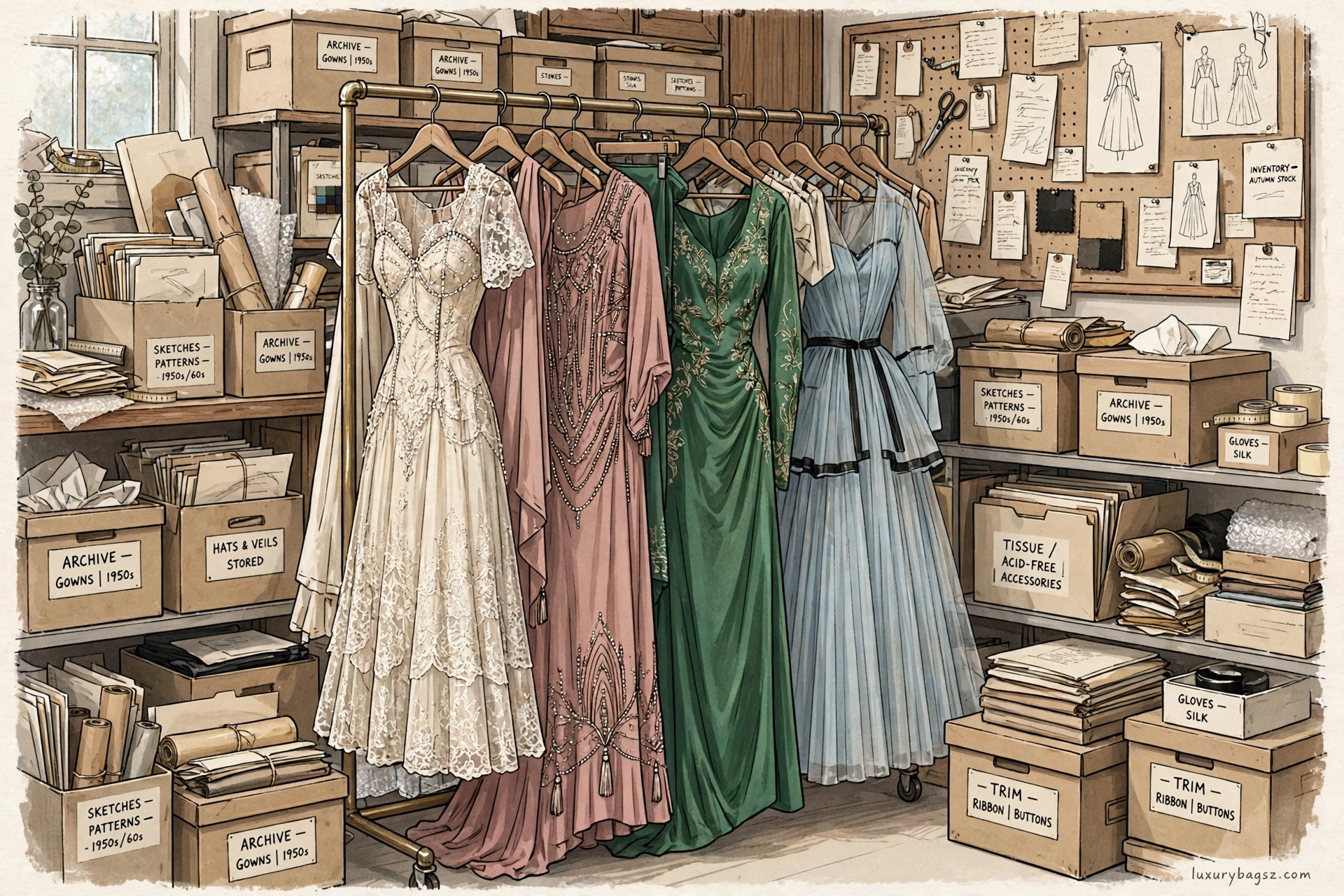
Law Roach built his reputation as an image architect by reaching backwards: placing clients in genuine archive and vintage pieces, with a fashion-history reference behind almost every major look. The method turns a red carpet into a story journalists can retell. This piece explains how archival styling works, where the pieces come from and what ordinary shoppers can borrow from it.
Key Takeaways
- Roach calls himself an image architect: styling as long-term image building.
- Archive pieces carry history that new runway looks cannot match.
- Method dressing links press-tour outfits to the film being promoted.
- Sourcing runs through vintage dealers, auctions, collectors and house archives.
- Fragile garments need gloves, insurance, tailoring limits and careful transport.
- Shoppers can borrow the mindset: buy history and fit, not just novelty.
From Vintage Shops to Image Architect
Roach's career began in vintage retail in Chicago, where selling old clothes taught him fashion history by handling it daily. That grounding still defines his work. He later styled a long list of stars, with his partnership with Zendaya becoming the most discussed stylist-client relationship of its era. The title image architect matters to him: the job is constructing a public image over years, not dressing someone for a single evening. His announced retirement in 2023, followed by selective returns for key clients, only underlined how personal those long partnerships are.
The Archival Method, Step by Step
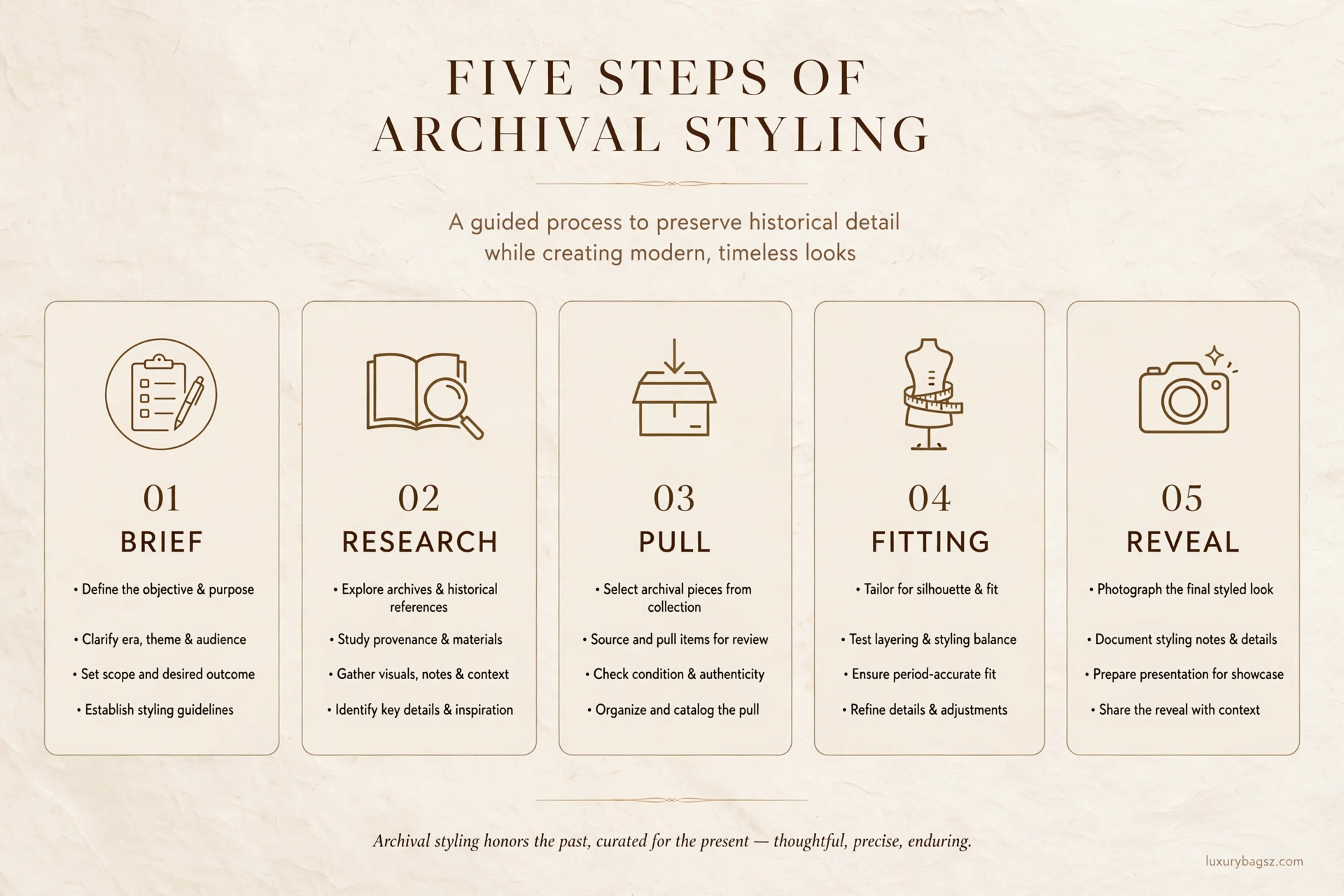
Step one is the brief: the event, the film or the moment the look must serve. Step two is research into references — a past star, a designer era, a character. Step three is the pull: sourcing candidate pieces from archives and dealers, often with several options flown in for a fitting. Step four is the fitting itself, where tailoring possibilities are limited by the garment's age and value. Step five is the reveal, timed for maximum coverage. Nothing in the method is random. Even a seemingly simple vintage dress is chosen because its story supports the client's current chapter.
Method Dressing and the Press Tour
Method dressing means the wardrobe echoes the work being promoted: colours, eras or motifs from a film carried through a whole press tour. Roach's tours with Zendaya made the technique famous, turning each premiere into a chapter of one visual story rather than a disconnected outfit. Archival pieces suit the technique perfectly, because a vintage reference can nod to an earlier film, star or designer with real historical weight. For stylists watching, the lesson is planning: a tour wardrobe designed as a series will always beat a suitcase of unrelated strong looks.

Why Archive Beats New on a Big Night
A new runway dress may be worn by several stars in one season. A genuine archive piece is, by definition, one of very few, and often one of one. It also arrives with a narrative: the year, the designer, the famous earlier wearer. That narrative gives interviews and coverage something to say. Archive dressing signals knowledge. It tells the industry the wearer — and stylist — understand fashion as a history, not just a market. There is a sustainability argument too: the most luxurious choice can be a garment that already exists, preserved and reworn.
Where Archive Pieces Come From
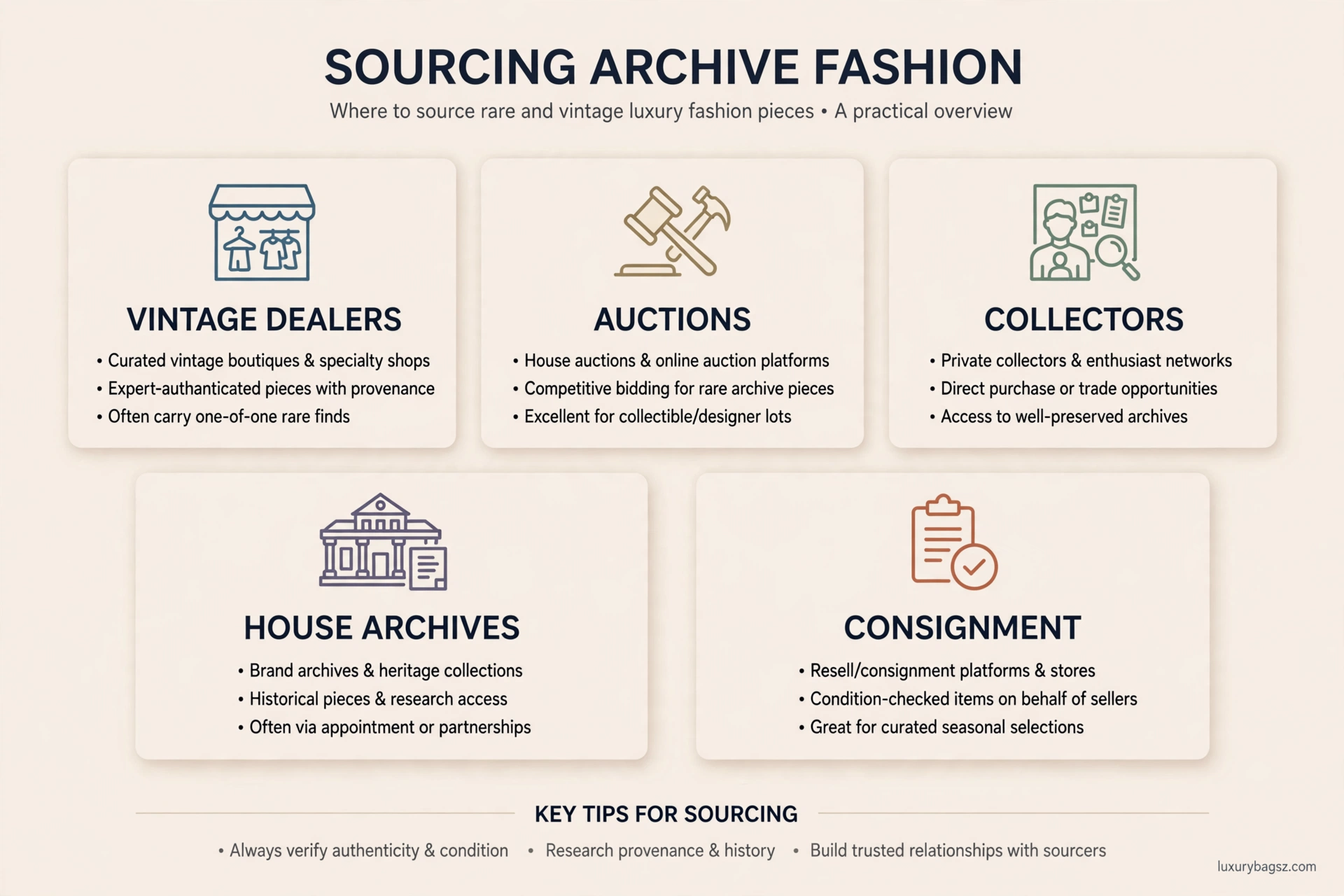
Major vintage dealers and specialist archives hold museum-grade pieces for loan and sale, and top stylists maintain close relationships with them. Auctions move famous garments between collectors, while fashion houses keep their own archives and lend selectively for major moments. Our piece on investing in vintage designer bags explains the same market logic for accessories. Consignment sits at the accessible end: how luxury consignment works shows how verified pieces recirculate to new owners.
Handling Pieces That Cannot Be Replaced
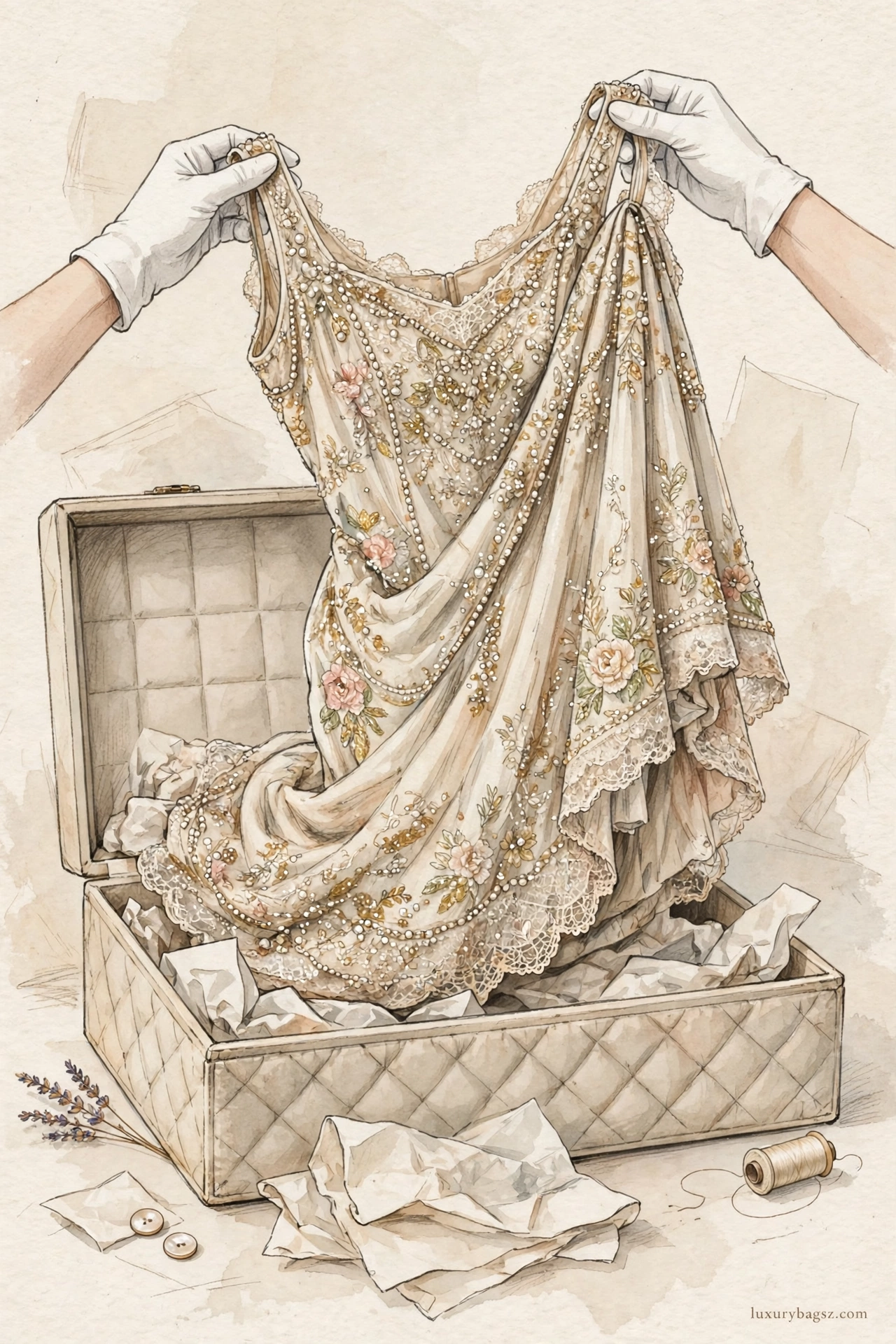
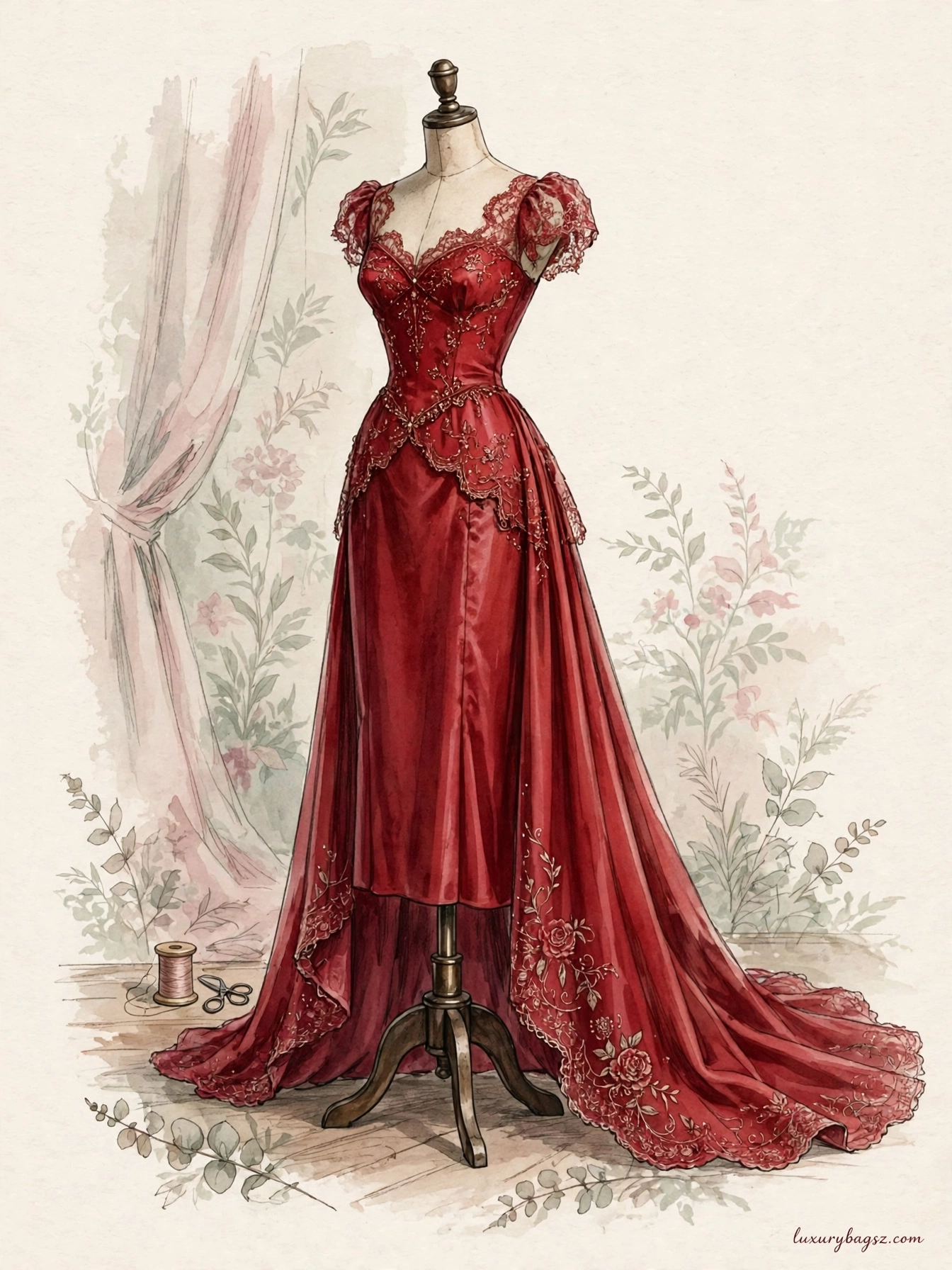
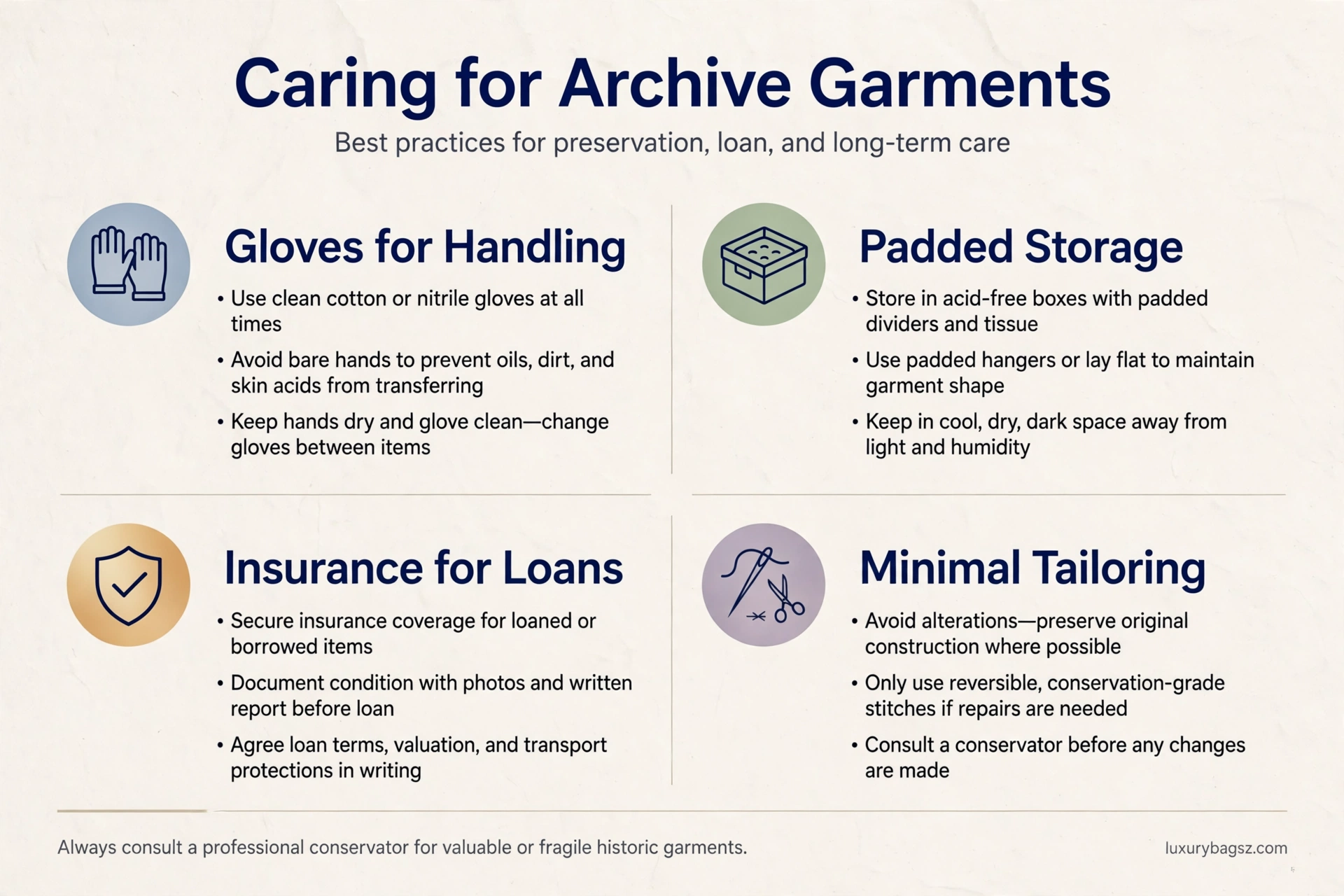
Archive garments are fragile. Beading loosens, silk shatters with age and old zips fail, so handling uses gloves, padding and minimal pinning. Tailoring is conservative: a stylist may use clips and temporary tricks on camera rather than cutting a historic seam. Transport and insurance are part of the job, with couriers and cover arranged for high-value loans, especially across borders. After the event, pieces return to storage quickly. A night out is a brief loan from the archive, not a new life in a celebrity wardrobe.
What It Costs and Who Pays
Loans for major red carpets are often arranged as publicity exchanges, but purchases from dealers and auctions involve serious money for rare pieces. Styling budgets also carry the hidden costs: shipping, insurance, alterations specialists, security and sometimes a dedicated handler. For collectors, the market lesson is that provenance sells. A documented famous wearer can multiply a garment's value beyond its materials. Ordinary buyers should note the reverse: without documentation, a claimed famous history is a story, not a fact, and should not raise the price you pay.
Borrowing the Method at Home
You cannot hire an archive, but you can shop like an archivist: learn eras, handle fabrics, and buy the best older piece you can find in your size. Build outfits around one storied item — a vintage bag, a 1990s blazer — and keep the rest simple, exactly as a stylist frames an archive pull. The Olsen twins style and bags piece shows the consumer end of the same instinct: old luxury, worn without fuss. Above all, keep records. Photograph purchases, save receipts and note alterations; provenance starts with the owner who bothers to document.
Frequently Asked Questions
Why does Law Roach call himself an image architect?
Because his work is long-term image building, not single outfits. The phrase describes constructing how a star is perceived across years of appearances.
What is archival fashion styling?
Styling that uses genuine past-season, vintage or museum-held pieces, chosen for their history and reference value, rather than current runway samples.
What is method dressing?
Dressing that echoes the project being promoted — its colours, era or themes — across a press tour, creating one continuous visual story.
Where do stylists get archive pieces?
From specialist vintage dealers and archives, auctions, private collectors and fashion houses' own archives, usually on loan for major events.
Can archive clothes be tailored?
Only minimally and reversibly, in most cases. Historic seams are not cut casually; stylists use temporary fitting tricks for the camera instead.
Is archival dressing sustainable?
It reuses existing garments and celebrates preservation, which helps. Flights, couriers and single wears complicate the picture, so it is better described as preservation-led.
Which client is Roach most associated with?
Zendaya, whose red-carpet and press-tour looks with Roach became defining examples of archival pulls and method dressing over many years.
How can I start buying archive-style pieces?
Begin with durable categories: tailored blazers, leather bags and coats from respected past decades, bought from reputable vintage or consignment sellers.
Does provenance really add value?
Yes, when documented. Receipts, photographs and auction records support value; undocumented claims about famous wearers should be treated as unverified.
What should I avoid when buying vintage couture?
Fragile fabrics described vaguely, missing condition photographs and prices justified by stories. Buy condition and authenticity first, romance second.
Conclusion: History Is the Strongest Styling Tool
Roach's archival method works because it treats fashion as memory: every great look cites an earlier one. Whether you are dressing a star or yourself, the principle holds — one piece with a real past outshines a rail of forgettable newness.






