

Is Gisou Hair Oil Worth It? The Honest Guide to Price, Drops, Hair Types, and Cheaper Alternatives
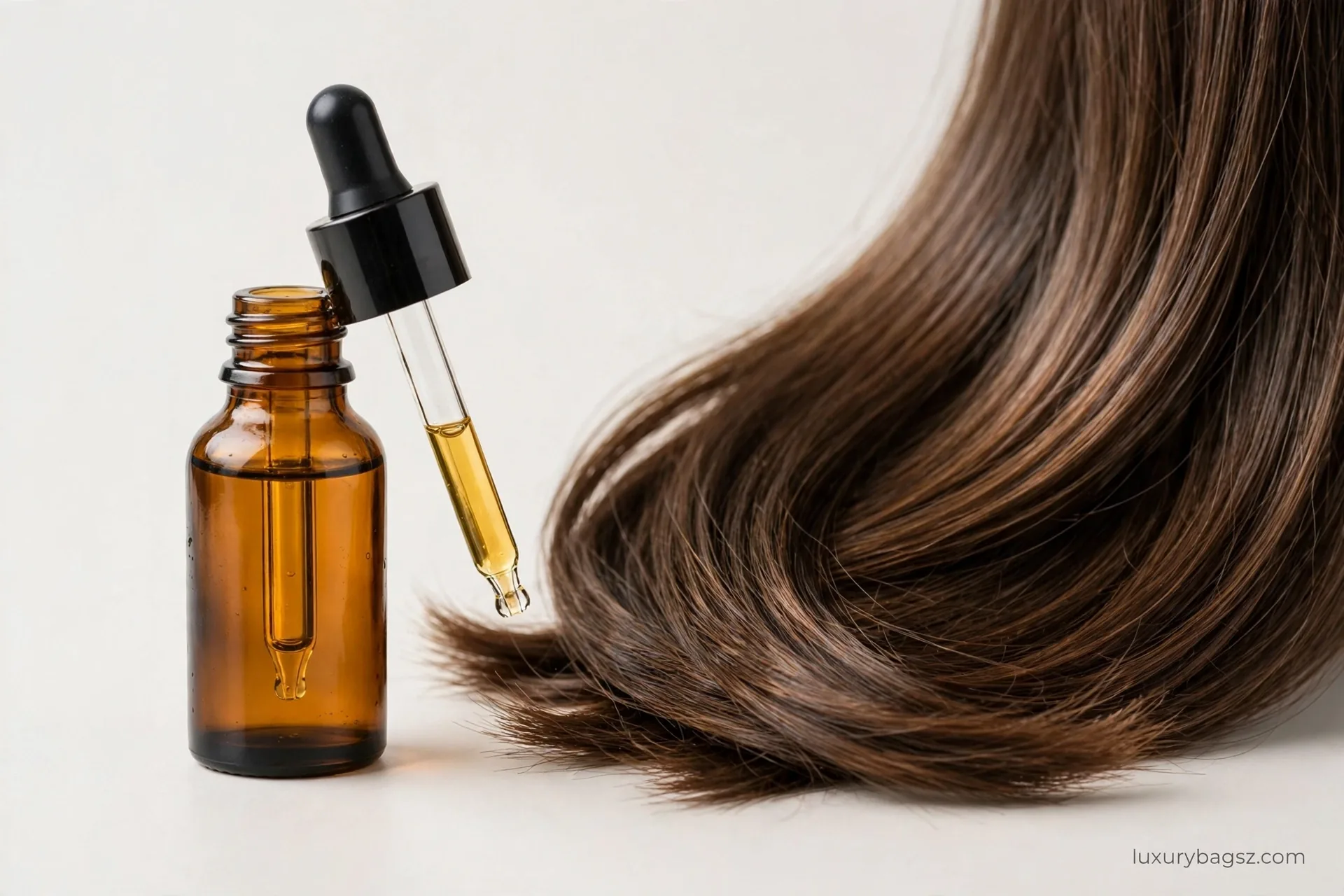
Gisou Honey Infused Hair Oil is one of those products you see before you ever use it: the small amber glass bottle, the golden oil, the honey scent, and a feed full of glossy hair. The question behind the keyword is not really “does it work?” It is “is it worth paying a luxury price for what it does?”
The honest answer is split, and that split is the whole story. For dry, frizzy, medium to thick hair, used in tiny amounts on the ends, it is an excellent finishing oil: instant shine, softer ends, calmer flyaways, and a scent people actually notice. For fine or oily-prone hair, used too generously or too close to the roots, it can look heavy and greasy by lunch. And for anyone expecting it to repair damage, rebuild bonds, or permanently seal split ends, it will disappoint — because no finishing oil does those things, including this one.
This guide separates the honey story from the formula, the price from the value, and the classic oil from Gisou’s newer lighter oil. It gives drop counts by hair type, a humidity and buildup routine, a fair comparison with cheaper and stronger rivals, and a clear buy-or-skip verdict by hair type.
One clarification first, because Gisou’s range causes confusion. This article is about the Honey Infused Hair Oil — the amber bottle with the dropper. It is not the Honey Infused Hair Perfume, not the Honey Infused Hair Mask, and not the Honey Gloss Collagen Drops, although the Drops matter here because they are Gisou’s own lighter alternative for fine hair, and this guide compares them in Section 2.
Table of Contents
Key Takeaways
- The classic oil is a silicone-based finishing and softening oil built around Mirsalehi Honey and a Bee Garden Oil Blend, not a repair treatment that rebuilds damaged hair.
- Price seen in US listings: about $25 for the 20 ml (0.7 oz) bottle and about $46 for the 50 ml (1.7 oz) bottle; some listings also show a 100 ml size at about $78. Check your retailer on the day, because prices differ by region.
- Start with 1 to 2 drops for fine hair, 2 to 3 drops for medium hair, and 3 to 4 drops for thick hair, warmed in your palms and applied to mid-lengths and ends only.
- Gisou now also sells Honey Gloss Collagen Drops, about $25, a lighter oil aimed at fine to medium hair for daily shine without the weight of the classic oil.
- The brand claims heat protection up to 450°F (230°C), plus instant shine and up to 3 days of hydration, frizz, and humidity control. Treat those as brand claims, and still use low or medium heat where you can.
- The most common complaints are not about shine — they are about heaviness on fine hair, oily roots, silicone buildup without clarifying, a leaky glass dropper, and a price that feels high for the bottle size.
- Cheaper oils can match the shine. What they cannot match is Gisou’s exact honey scent and packaging. If scent is not the point, the value case for Gisou gets much weaker.
The 60-Second Answer
What is it? A multipurpose hair oil powered by Mirsalehi Honey from Gisou’s own Bee Garden, plus sweet almond, coconut, argan, and passionflower seed oils. Use it before styling, after styling as a finisher, mixed into a mask, or as an overnight treatment.
Is it worth it? Yes, if you have dry or frizzy medium to thick hair, you love a honey scent, and you will use 1 to 4 drops on the ends only. No, if you have very fine or oily hair and want a daily oil you can use generously, if you avoid silicones or fragrance, or if you want damage repair rather than shine and softness.
What should you buy first? The 20 ml bottle at about $25. It is the cheapest way to learn whether your hair likes it, how many drops it needs, and whether the scent suits you, before you commit to the 50 ml bottle.
What is the biggest mistake? Using too much, too high up. Most “it made my hair greasy” reviews are a dosage and placement problem, not proof the oil can never work. Start with one drop fewer than you think you need, on the ends only, and add a drop next time if the ends still look dry.
What is the cheaper alternative? If shine and frizz control are the job and scent is not, Verb Ghost Oil at about $20 for 2 oz, OGX Renewing + Argan Oil of Morocco at about $8 for 3.3 oz, and Olaplex No. 7 at about $30 for 30 ml are all credible rivals. Section 9 compares them properly, including where Olaplex is actually the better buy for damaged, colour-treated hair.

What Gisou Hair Oil Actually Is — and Which Bottle You Mean
Gisou was founded by Negin Mirsalehi, a sixth-generation beekeeper, and the brand’s story is built on honey from the Mirsalehi Bee Garden. That heritage is real, and it is also marketing. The oil is not pure honey poured into a bottle. Honey is the signature ingredient, but the formula that gives the slip, shine, and smoothness is a blend, and understanding that blend is what makes the “worth it” question answerable.
The classic Honey Infused Hair Oil
The classic oil is described by Gisou as a multipurpose hero that deeply nourishes, moisturises, softens, and smooths hair. In practice, reviewers consistently describe the same three results: instant shine, softer ends, and calmer frizz and flyaways. It is also described as lightweight for a rich oil, but “lightweight” here is relative. Compared with coconut oil or a thick pre-wash oil, it feels light. Compared with a featherlight serum, it feels richer and thicker, and that thickness is why dosage matters so much.
It can be used in five ways, and competitors that only call it a “finishing oil” miss half its uses:
- Before styling, on damp hair: to smooth and add heat protection before blow-drying or straightening.
- After styling, on dry hair: as a finisher for shine and flyaways.
- Between washes: a drop on dull ends or to refresh curls.
- Mixed into a mask: a few drops mixed with the Honey Infused Hair Mask, or another mask, for extra moisture.
- As an overnight treatment: a heavier coat, braided and left in, then washed out in the morning.
The newer Honey Gloss Collagen Drops
Gisou now makes a second, lighter hair oil: Honey Gloss Collagen Drops, about $25 on Gisou’s own site. It is aimed at fine to medium hair that wants daily shine without weight. That distinction matters, because many “Gisou is too heavy” complaints are really “the classic oil is too heavy for daily use on my fine hair” complaints. For fine to medium hair, the sensible split many reviewers and guides now suggest is: Collagen Drops by day, classic oil as an overnight treatment or on very dry ends only. If you buy the classic oil first and find it heavy, you have not necessarily bought the wrong brand — you may have bought the wrong Gisou oil for daily use.
What it is not
It is not a bond builder, not a scalp treatment, not a hair growth product, and not a replacement for a trim. It can make split ends look smoother, because silicone and oil coat the hair shaft and reduce friction and frizz. It cannot glue a split end back together permanently. It is also not the same product as the Honey Infused Hair Perfume, which is a scented mist, or the Honey Infused Lip Oil, which is a lip product. If a review praises “Gisou” for scent alone, check which product it actually tested.
Price and Sizes: What $46 Actually Buys
Prices below are US listing prices seen during research, not a live price check. Retailers, regions, and sales change them, so check on the day you buy. In particular, Sephora Canada has listed the 50 ml bottle at a different local price, and marketplace listings in other currencies will not convert cleanly to US dollars.
Sizes and listing prices
- 20 ml (0.7 oz): about $25. The travel and trial size. This is the smart first bottle for almost everyone, and it lasts a long time on fine hair because fine hair needs only 1 to 2 drops.
- 50 ml (1.7 oz): about $46. The standard size. This is the size most reviews mean when they say “$46 Gisou.” It suits medium to thick hair, daily use, or anyone who already knows the oil works for them.
- 100 ml (3.4 oz): about $78 in some listings. Not every retailer stocks this size, and it is not the size to buy blind. Buy it only after the 50 ml bottle has proved itself on your hair.
Cost per millilitre, honestly
At those listing prices, the maths is simple and it cuts both ways:
- 20 ml at $25 is about $1.25 per ml — the most expensive way to buy it, but the cheapest way to try it.
- 50 ml at $46 is about $0.92 per ml — better value, but only if you finish the bottle.
- 100 ml at $78, where stocked, is about $0.78 per ml — the best per-ml price, but the worst choice if your hair hates it.
The bottle lasts longer than the price suggests, because the dose is drops, not pumps. At 2 drops a day, a 50 ml bottle can last months. At a full dropper for overnight treatments several times a week, it goes much faster. That is why “expensive for the quantity” and “a little goes a long way” can both be true in different reviews: the first reviewer is looking at the bottle, the second is looking at the dose.
Is the 50 ml bottle worth $46?
Compare it with what $46 buys elsewhere, not with a supermarket cooking oil. Olaplex No. 7 is about $30 for 30 ml, Kérastase Elixir Ultime is about $58, Oribe Gold Lust is about $59 for 3.4 oz, Verb Ghost Oil is about $20 for 2 oz, and OGX Argan Oil is about $8 for 3.3 oz. Gisou sits in the middle of the luxury range, not at the top of it, but it is far above drugstore prices. Section 9 works through which of those is actually better for each hair goal, because “cheaper” and “better for you” are not the same thing.
Ingredients: Honey in the Story, Silicones in the Formula
This is the section most “is it worth it” articles soften, and it is the section that most changes the verdict.
What is in it
The headline ingredients are Mirsalehi Honey, described as rich in vitamins, minerals, amino acids, and antioxidants, and a Bee Garden Oil Blend of sweet almond oil, coconut oil, argan oil, and passionflower seed oil. Honey is a natural humectant, which means it helps hair hold moisture. Sweet almond oil is rich in fatty acids, coconut oil can help reduce protein loss in hair, argan oil is known for fatty acids and vitamin E, and passionflower seed oil adds omega-6 fatty acids for conditioning dry hair.
Gisou also lists what the oil is free from, including parabens, sulfates (SLS and SLES), phthalates, mineral oil, and formaldehydes, and describes it as cruelty-free and gluten-free, with less than one percent synthetic fragrance.
The silicone point, stated plainly
Multiple ingredient breakdowns point out the same thing: this is a silicone-based oil, with dimethicone and dimethiconol among the early ingredients. One detailed guide notes that the first three ingredients are silicones, and that is where much of the slip and shine comes from. That does not make silicones “bad.” Silicones coat the hair, smooth the cuticle, reduce frizz, and make hair look instantly glossier. It does mean the shine is not proof that honey alone transformed your hair, and it does mean buildup is a real maintenance issue if you never clarify (see Section 7).
If you follow a silicone-free routine, this oil does not fit it, whatever the honey story says. If you are fine with silicones, the question becomes whether you want to pay a luxury price for a silicone-based shine oil, or buy a cheaper silicone-based oil and spend the difference elsewhere.
Fragrance: the feature and the dealbreaker
The honey scent is, for many buyers, half the product. Reviewers call it luxurious, sweet, honeyed, and long-lasting, and say it doubles as a hair perfume. Other reviewers say the scent fades faster than expected, or that they simply do not love a sweet scent on their hair all day. There is no way to settle that from a review: scent is personal, and it lingers differently on different hair. The practical point is this: if you do not love sweet, honeyed fragrance, do not pay Gisou prices for it, because a cheaper unscented or differently scented oil will give you similar shine without a scent you tolerate rather than enjoy. For the same reason, if you are sensitive to fragrance, patch-test and keep the oil away from your face and scalp, and consider a fragrance-light alternative instead.
For readers who enjoy a scented beauty routine generally, the same “pay for the experience, not just the function” logic applies to other beauty buys too — our guide to Glossier perfume works through that trade-off for fragrance, where scent is the whole point rather than a bonus.
How to Use It Without Making Hair Greasy
Almost every negative Gisou experience follows the same pattern: too much oil, too high up, on hair that did not need it there. The method below is the one Gisou itself and experienced reviewers converge on, with the conflicts flagged rather than hidden.
The drop guide
Gisou’s own starting point, repeated across guides, is:
- Fine hair: 1 to 2 drops.
- Medium hair: 2 to 3 drops.
- Thick hair: 3 to 4 drops.
Treat those as starting points, not rules. Length, porosity, and damage change the dose more than thickness alone. Long, porous, colour-treated hair will drink more oil than short, low-porosity hair of the same thickness. Start one drop lower than the guide, see how the ends look after a few hours, and add a drop next time if they still look dry. It is easy to add oil. It is annoying to wash it out.
The method that works
Warm the drops between your palms and fingers first, so the oil spreads thinly instead of landing in one spot. Then use your fingers like a comb, smoothing from mid-lengths to ends. Do not rub it into the scalp, and do not start at the roots and work down — that is how fine hair goes flat and oily. Press and smooth rather than scrunching and rubbing, especially on the last few inches, which are the oldest, driest, and most frizz-prone part of the hair.
Damp hair or dry hair?
Both work, and they do different jobs:
- On towel-dried, damp hair: the oil spreads more evenly, seals in moisture, and goes on before heat styling, which is when the heat protection claim applies. Blot or wrap hair with a towel or T-shirt rather than rubbing it hard, which can damage wet hair.
- On dry hair: the oil is a finisher. One drop is often enough to tame flyaways and add shine after styling, or as a touch-up during the day.
- Between washes: a drop on dull ends can revive curls and gloss without a full wash, but this is also where buildup starts if you keep adding oil day after day without washing (see Section 7).
Overnight treatment
For a deeper treatment, Gisou’s method is to coat dry hair with two full droppers, adding more for length and thickness, braid it, and leave it for a few hours or overnight. Fine and oily hair types should use one full dropper and focus on the ends. If the hair has not absorbed it all by morning, give it a light rinse or gentle wash. Use an old pillowcase the first time, because a full coat of oil can transfer. This is also the best use of the classic oil for fine hair: enjoy the richness overnight, wash it out, and use a lighter oil or a single drop by day.
Mixed into a mask
Mix a few drops into the Honey Infused Hair Mask, apply from mid-lengths to ends, leave for five to seven minutes, then rinse. This is a wash-day boost, not a daily step. For very dry or colour-treated ends, once a week is a sensible rhythm. More often than that, and you are likely to get buildup rather than extra softness.


By Hair Type: Who It Suits, Who It Fights
Gisou says the oil suits all hair types, and in the narrow sense that it can be used on any hair, that is true. In the practical sense — who will love it daily, who will only love it occasionally, and who should choose something else — the picture is much more divided.
Fine hair
Fine hair is where Gisou divides opinion most sharply. One drop, warmed in the palms and pressed onto the last few inches, is often enough, and many fine-haired reviewers love the shine it gives at that dose. Two or three drops, or any oil near the roots, and fine hair goes flat, looks oily, and needs washing sooner. Humidity makes this worse, because fine hair already loses volume easily.
Verdict for fine hair: worth trying in the 20 ml bottle, or try the Collagen Drops for daily use and keep the classic oil for overnight treatments only. Not worth buying the 50 ml classic bottle blind for daily use.
Medium hair
Medium hair gets the most range from this oil. Two drops on the ends, plus a little extra on frizzy spots, is the sweet spot for most medium-haired reviewers. It works before styling, after styling, or both, and it is the hair type least likely to be disappointed. If you have medium, wavy, frizzy, dry hair, this is the core audience for Gisou, and the value case is strongest here.
Thick, coarse, curly, and coily hair
Thick hair can be generous with this oil, and should work in sections so the oil does not all land on the top layer. Three drops is a starting point, not a limit, for thick or long hair, and curly hair benefits from the oil for curl definition and frizz control. Coily and very dry hair may still want a richer sealing oil or a heavier mask alongside it, because a few drops of a silicone-based finishing oil will not replace deep moisture for very thirsty hair. For thick hair, the 50 ml bottle makes more sense than the 20 ml bottle, because the dose is higher and the bottle will actually be finished.
Colour-treated and damaged hair
Colour-treated hair is a strong use case for shine and softness, and reviewers with colour-treated hair often praise the gloss. But damaged hair needs a distinction: this oil makes damaged ends look and feel better, it does not rebuild them. If your priority is bond repair for bleached or chemically treated hair, Olaplex No. 7 is the better-targeted buy (see Section 9), even though it does not smell like honey. Use Gisou for shine and softness on top of a repair routine, not instead of one.
Oily scalp, dry ends
This combination is common and it is exactly where placement matters. Keep the oil off the scalp entirely. Your scalp already makes its own oil, and adding more at the roots will make hair look greasy fast. Use 1 to 2 drops on the ends only, and wash with a clarifying shampoo when buildup appears. If your ends are dry but your roots are oily within a day, the oil is not necessarily wrong for you — the dose and placement probably are. If even ends-only use makes your hair look oily by lunch, switch to a lighter oil for daily use.
Dry, frizzy, humid-weather hair
Dry and frizzy hair in normal conditions is Gisou’s best case. In high humidity, the picture splits: some reviewers love the frizz control, others find that humidity plus silicones equals greasiness, especially on fine or medium hair in coastal or humid cities. The practical test is simple: try one drop on the ends on a humid day before you commit to daily use. If it holds frizz without heaviness, it works for your humidity. If it goes limp, use it as a pre-wash or overnight treatment instead of a daily finisher.
Humidity, Greasy Roots, and Buildup: The Three Problems, Solved
These three complaints appear in almost every negative Gisou review, and they are all manageable once you know what causes them.
Greasy roots
Cause: oil applied too close to the scalp, too much oil, or oil layered day after day without washing. Fix: ends only, start with fewer drops, and do not reapply to the roots to “refresh” hair. If hair already looks greasy, the fix is not more oil — it is a wash, or dry shampoo at the roots with oil only on the ends.
Humidity heaviness
Cause: humidity already adds moisture and weight to hair, and a rich oil on top of that can flatten it, especially on fine hair. Fix: use the oil on damp hair before styling on humid days, keep the dose to one drop on the ends, or switch to the lighter Collagen Drops by day. Save the classic oil for overnight or for dry, non-humid days.
Silicone buildup
Cause: silicones coat the hair, and if you keep adding oil without washing it out, the coating builds up, hair feels coated, dull, or heavy, and later products stop working as well. Fix: clarify regularly. That does not mean stripping your hair every wash. It means using a clarifying shampoo when hair starts to feel coated, heavy, or dull despite oiling — roughly once every few weeks for regular users, more often if you use the oil daily and rarely wash thoroughly. Silicones are not “bad,” as one honest reviewer puts it, but they do cause buildup if not clarified regularly. If you follow a silicone-free routine, this oil is not for you, and clarifying will not change that.
The leaky dropper
Reviewers on aggregate review sites repeatedly flag a leaky, messy glass dropper, with oil getting gloopy around the cap. That is a packaging complaint, not a formula complaint, but it matters at $46: a luxury bottle should not leak in a bag. Practical fixes are unglamorous but effective: wipe the dropper and neck after use, close it fully, store it upright, and do not travel with it loose in a bag without a sealed pouch. If your bottle leaks badly, contact the retailer rather than accepting it as normal for a premium product.
Heat Protection and Damage Claims: What 450°F Really Means
Gisou claims heat protection up to 450°F (230°C), and multiple guides repeat that figure. That claim is useful, but it is easy to misread.
Heat protection from an oil means it coats the hair and reduces heat damage during styling. It does not mean you can use the highest heat setting safely, and it does not mean the oil replaces a dedicated heat protectant spray for frequent, high-heat straightening. One honest review puts it well: the oil gives light heat protection, but it is not as effective as a dedicated spray for that job alone.
The sensible approach is: use the oil before blow-drying or straightening for smoothness and a layer of protection, keep tools on low or medium heat where you can, and do not rely on any single product to make daily high-heat styling harmless. Hair health guidance consistently advises limiting blow-drying and hot tools, and that matters more than any one product’s temperature claim.
On damage claims generally, be sceptical of roundup language that sounds like a cure. An oil can hydrate, soften, smooth, and protect the appearance of hair. It cannot repair a broken disulfide bond, regrow hair, or permanently mend a split end. If a listing or review promises those things for Gisou, it is overstating what a finishing oil does. A trim remains the only fix for a split end, and a bond builder remains the targeted product for bond damage.
Gisou vs Rivals: When Cheaper Is Better, and When It Is Not
Price alone does not settle this section. The right rival depends on what job you actually want the oil to do.
Olaplex No. 7 Bonding Oil — about $30 for 30 ml
Best for damaged, bleached, or colour-treated hair that needs bond repair and shine. Olaplex’s bonding technology is targeted at damage in a way Gisou’s honey and silicone blend is not. It is also lightweight and does not smell like honey. Choose Olaplex if repair is the priority. Choose Gisou if shine, softness, and scent are the priority and your hair is not badly damaged.
Kérastase Elixir Ultime — about $58
Best for luxury nourishment and a richer, more traditional luxury oil experience. It is more expensive than Gisou, and its scent is camellia and sandalwood rather than honey. Choose it if you want a luxury oil and do not care about honey specifically. Gisou is the better value of the two luxury options, but only if you actually want the honey scent.
Verb Ghost Oil — about $20 for 2 oz
Best for fine hair and for anyone who wants weightless frizz control. Verb is specifically designed to feel lightweight, and at about $20 for a larger bottle, it is much cheaper per millilitre than Gisou. Choose Verb if fine hair, daily use, and budget are your priorities. Choose Gisou if you want the honey scent and a richer finish.
OGX Renewing + Argan Oil of Morocco — about $8 for 3.3 oz
Best for budget shine. It is also silicone-based, with argan oil further down the list, and it smells citrus and woody rather than sweet. Choose OGX if the job is simply shine and frizz control at the lowest price. Choose Gisou if you want the honey scent, the packaging, and a more refined finish — and accept that you are paying for those things, not for a uniquely better shine.
Oribe Gold Lust Nourishing Hair Oil — about $59 for 3.4 oz
Best for very dry, damaged, or colour-treated hair that wants a bigger, richer bottle, and for anyone who prefers a non-honey scent. It is more expensive than Gisou in total, but cheaper per millilitre because the bottle is much larger. Choose Oribe if you already know you love a rich oil and will finish a large bottle. Gisou’s 20 ml trial bottle is the safer first buy if you are unsure.
Moroccanoil Treatment Light — for fine, light-coloured hair
Best for fine hair that wants argan-based shine without weight, and for light-coloured hair that worries about a rich oil darkening or weighing it down. If Gisou feels too rich on your fine hair, Moroccanoil Light is a more targeted alternative than simply using less Gisou and hoping.
The summary table
- Shine + honey scent + luxury feel: Gisou.
- Damage and colour repair: Olaplex No. 7.
- Fine hair, daily, budget: Verb Ghost Oil or Moroccanoil Light.
- Cheapest credible shine: OGX Argan Oil.
- Luxury, non-honey, large bottle: Oribe Gold Lust or Kérastase Elixir Ultime.
If you buy Gisou after reading that table, you are buying it for the right reason: you want its specific combination of shine, softness, and honey scent, not because it is the only oil that works.


Dupes, Fakes, and Buying Safely
“Dupe” and “fake” are not the same thing, and confusing them costs money in both directions.
A dupe is a different, legitimate product that gives a similar result for less money. Verb, OGX, and Moroccanoil Light are dupes in that sense: they are not Gisou, they do not claim to be Gisou, and they can match or beat Gisou on shine for less money. What they cannot match is Gisou’s exact honey scent, because that scent is part of Gisou’s formula and branding.
A fake is a counterfeit bottle sold as Gisou. No verified, Gisou-specific fake-check list was found during research for this guide, so this guide will not invent one — fake markers copied from other products would be misleading. The safe buying rules are therefore general but effective:
- Buy from Gisou’s own site, Sephora, or another authorised retailer where you can.
- Be suspicious of a price far below the going range from an unknown seller, especially for the 50 ml bottle.
- Check the bottle on arrival: sealed, correct size, dropper intact, label clear, and scent as expected. Keep the receipt and packaging until you are sure you are keeping it.
- If a bottle leaks badly, smells wrong, or looks off, contact the retailer rather than using it and hoping.
- Do not buy a “Gisou” bottle from a seller who cannot say where it came from, and do not pay by unprotected transfer for a beauty product.
For beauty splurges generally, the same “buy the experience only if you actually want the experience” test applies — our guide to the Huda foundation stick works through a similar luxury-versus-dupe question for makeup, where shade and finish matter more than the brand name alone.
Mistakes That Make a Good Oil Look Bad
- Using 4 drops on fine hair and blaming the oil for greasiness.
- Applying to the roots, then wondering why hair goes flat.
- Layering oil every day without washing, then calling the buildup a formula failure.
- Expecting it to repair split ends, then being disappointed when a trim is still needed.
- Buying the 50 ml or 100 ml bottle before testing the 20 ml bottle on your hair.
- Using it as your only heat protection for daily high-heat straightening.
- Confusing the hair oil with the hair perfume or the lip oil, and reviewing the wrong product.
- Buying from an unknown seller at a suspicious price, then assuming a bad bottle means the real product is bad.
Frequently Asked Questions
Is Gisou hair oil worth it?
For dry, frizzy, medium to thick hair, used in drops on the ends, yes — especially in the 20 ml trial bottle. For very fine or oily hair used daily, for silicone-free routines, or for damage repair, no — a lighter oil or a bond builder is a better buy.
How many drops should I use?
Start with 1 to 2 drops for fine hair, 2 to 3 for medium hair, and 3 to 4 for thick hair, on mid-lengths and ends only. Add a drop next time if the ends still look dry.
Can I use it every day?
Yes, if your hair tolerates it at your dose, but daily use makes clarifying more important. If hair starts to feel coated or heavy, clarify and reduce the dose before you blame the oil.
Does it work on wet or dry hair?
Both. Damp hair for even spreading and pre-styling protection, dry hair as a finisher for shine and flyaways, and overnight as a heavier treatment washed out in the morning.
Is it good for fine hair?
It can be, at one drop on the ends, or as an overnight treatment. For daily use on fine hair, the lighter Collagen Drops are usually the better Gisou choice.
Does it protect against heat?
Gisou claims protection up to 450°F (230°C). Use it before heat styling, but keep tools on low or medium heat where you can, and do not treat it as a licence for daily high-heat styling.
Is it silicone-free?
No. It is a silicone-based oil with dimethicone and dimethiconol. If you avoid silicones, choose a silicone-free oil instead.
Does it repair split ends or damage?
No. It makes ends look smoother and softer, and it can help prevent further friction damage, but it does not permanently repair split ends or rebuild bonds. Trim split ends, and use a bond builder for bond damage.
What is the difference between the classic oil and Collagen Drops?
The classic oil is richer and multipurpose, including overnight use. Collagen Drops are lighter, aimed at fine to medium hair for daily shine without weight. Fine hair often does best with Drops by day and classic oil overnight.
How long does a bottle last?
At 1 to 3 drops a day, a 50 ml bottle can last months. At full-dropper overnight treatments several times a week, it goes much faster. The 20 ml bottle lasts a long time on fine hair at 1 to 2 drops.
Final Verdict
Is Gisou Hair Oil worth it? For the right hair, at the right dose, yes — but it is a luxury finishing oil, not a miracle, and that distinction should decide the purchase.
Buy it if you have dry or frizzy medium to thick hair, you love a honey scent, you will use drops on the ends only, and you are happy to pay for shine, softness, and experience rather than just for shine alone. Start with the 20 ml bottle at about $25, learn your drop count, and only then decide on the 50 ml bottle.
Skip it, or choose a rival, if you have very fine or oily hair and want a generous daily oil, if you avoid silicones or fragrance, if you want bond repair for damaged hair, or if scent does not matter to you — because Verb, OGX, or Olaplex will give you the result you actually want for less money, or with a better-targeted formula.
The worst way to buy Gisou is blind, in the largest bottle, applied generously to the roots, and then judged on one greasy afternoon. The best way is the opposite: trial size, one drop, ends only, a few washes to judge it fairly, and a clarifying shampoo in your routine. Bought that way, most people who love Gisou love it for exactly what it is — a beautiful, honey-scented, shine-giving oil — and most people who do not love it can say why, without having wasted $46 finding out.






