Hermès Knitwear and Cashmere: Fit, Care and What to Buy First
Why Hermès Knitwear Earns Its Reputation
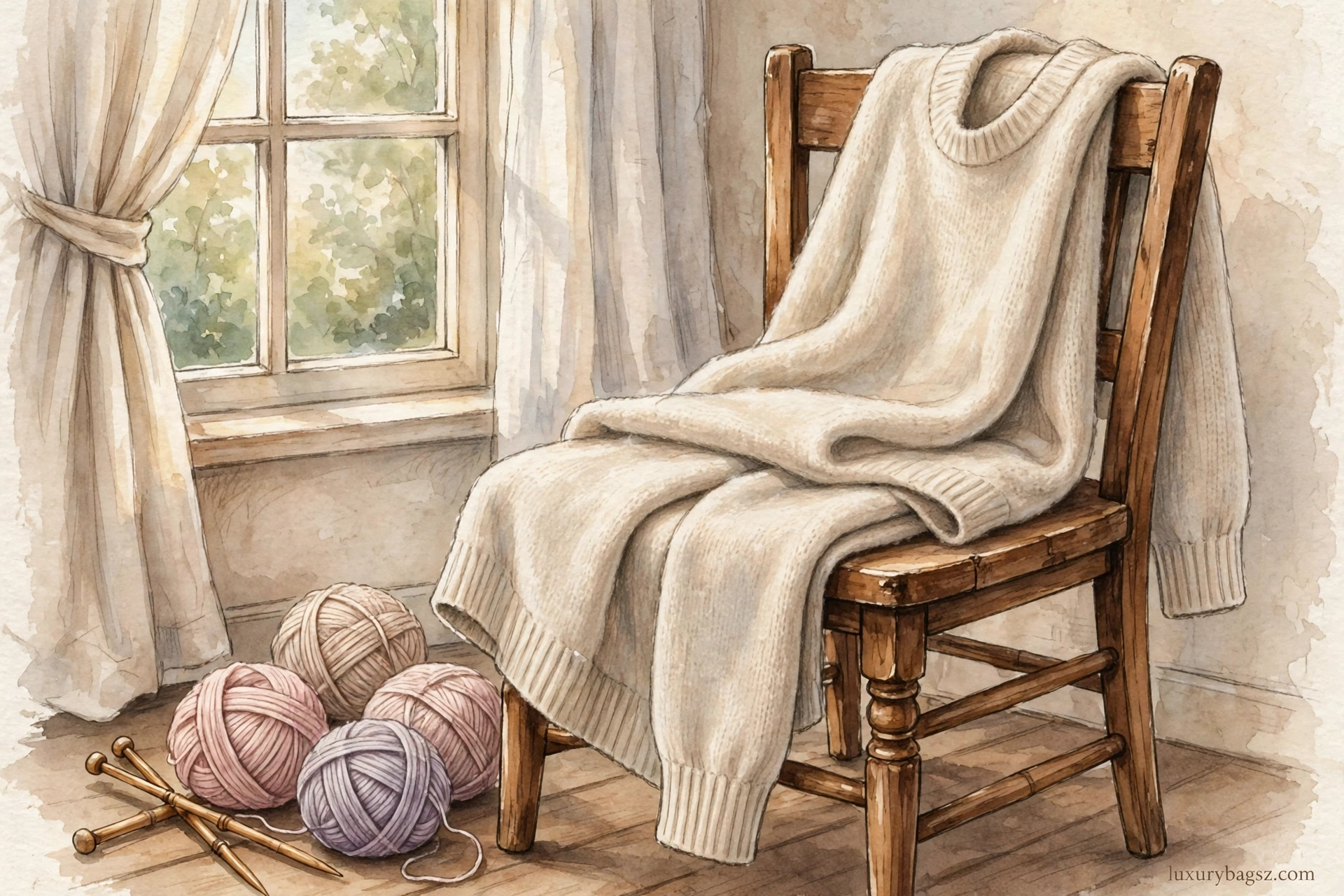
An Hermès cashmere sweater is the quiet core of the house's clothing: exceptionally soft, densely knitted, dyed in the house's deep colours and finished so neatly that the inside looks almost as clean as the outside.
Knitwear is also where most clients should start. It shows the fabric standard honestly, works with everything from tailoring to denim, and costs less than the coats and leather pieces.
This guide covers the range, the fit, realistic prices, and the care routine that keeps a fine knit looking new for a decade rather than a season.
Key Takeaways
- Hermès knitwear spans fine wool, cashmere blends and pure cashmere for women and men, plus leather-detailed statement knits.
- Classic crewnecks and cardigans typically cost around $2,200–$3,500 in the US; simpler wool knits sit lower.
- The fit is neat rather than slouchy; many clients take their usual French size, sizing up for layering.
- Fold, never hang, fine knits; rest them a day or two between wears and protect them from moths.
- Wash cool and gently only when needed, dry flat, and use a specialist for leather-detailed pieces.
- Buy first: a crewneck in a core colour, then a cardigan, then a special knit once your size is proven.
Weight is a useful guide when you shop. A fine single-weight knit layers under tailoring without bulk, while a denser winter knit replaces a jacket indoors. Hermès sells both, and confusing them is the commonest buying mistake.
The Knitwear Range, From Fine Wool to Pure Cashmere
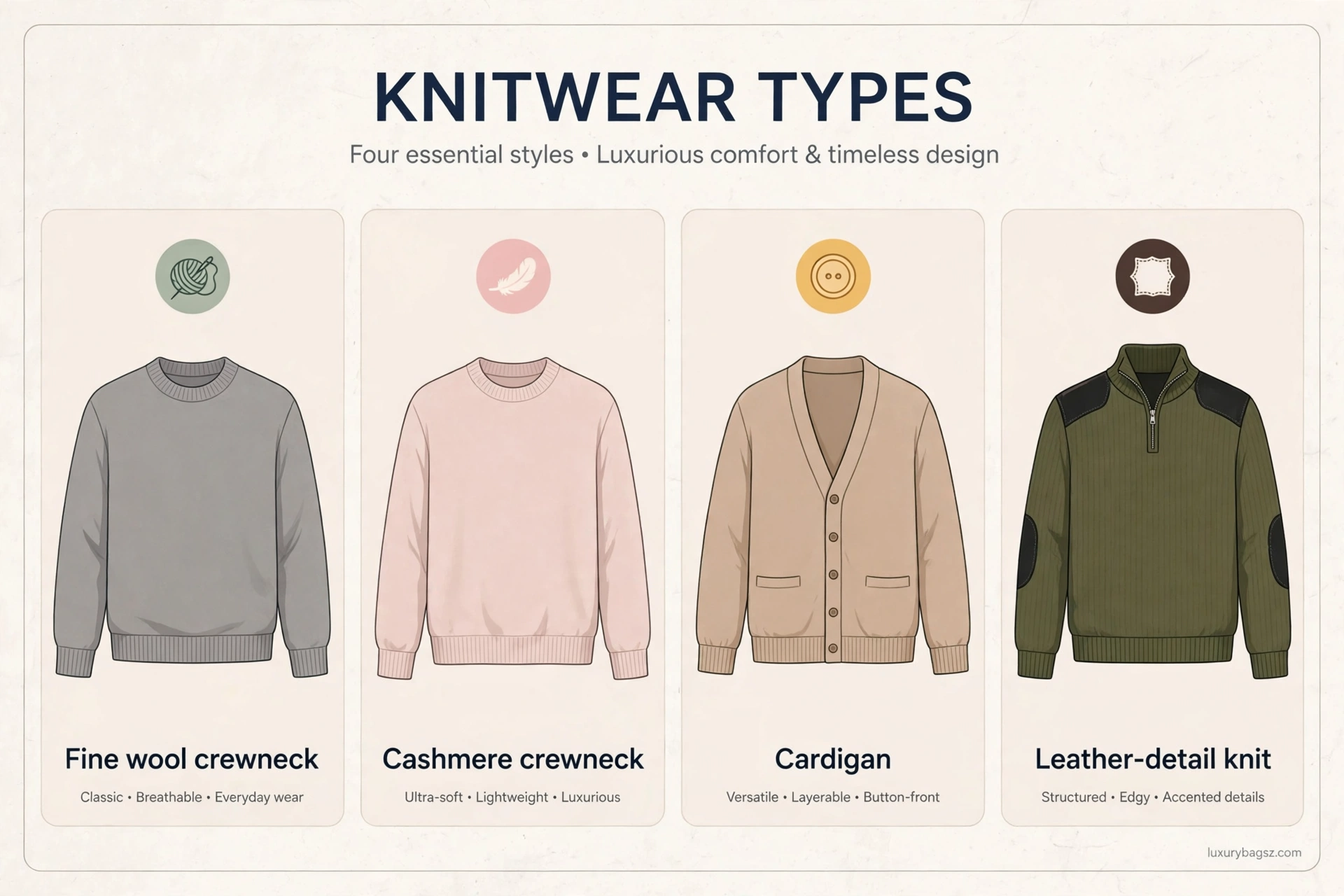
The everyday range starts with fine wool and wool-blend crewnecks, polos and cardigans. These are the workhorses: light, smooth and easy to layer under tailoring.
Pure cashmere sits above them, in crewnecks, V-necks, roll-necks and cardigans for both lines. The hand feel is the giveaway: soft without fluffiness, with a dense, even surface.
At the top sit the special knits: cashmere with leather details, intarsia patterns such as the Chaîne d'ancre motif, and hand-finished runway pieces. These cost the most and need the most careful handling.
Silk and cotton knits appear in summer collections. They wear cooler than cashmere and crease less, but they do not replace a true winter knit.
What the Knits Cost
A classic Hermès cashmere sweater typically sits between about $2,200 and $3,500 in US boutiques, depending on ply, detailing and season. Fine wool knits commonly start lower, in the high one-thousands.
Cardigans and zipped knits with leather trim rise above the crewneck range, and runway or hand-knitted pieces can cost several thousand more.
For the full ladder across coats, tailoring and dresses, see our guide to Hermès clothing prices, which sets knitwear in context.
Sleeve length is the detail to check last: a fine knit should end at the wrist bone, not over the hand. Long sleeves bunch under coats and stretch the cuff ribbing that you checked so carefully in the quality section.
Fit: Neat, Not Slouchy
Hermès knitwear is cut close to the house's tailored line. A crewneck should sit cleanly at the shoulder, skim the body and end near the hip bone, not halfway down the thigh.
Women's knits use French sizing, typically 34 to 46. Men's knitwear runs S to XXL with a similarly neat body and a clean shoulder.
Cashmere relaxes slightly with wear, so a knit that feels snug across the back on day one is too small. If you plan to layer a shirt beneath, try it that way in the boutique.
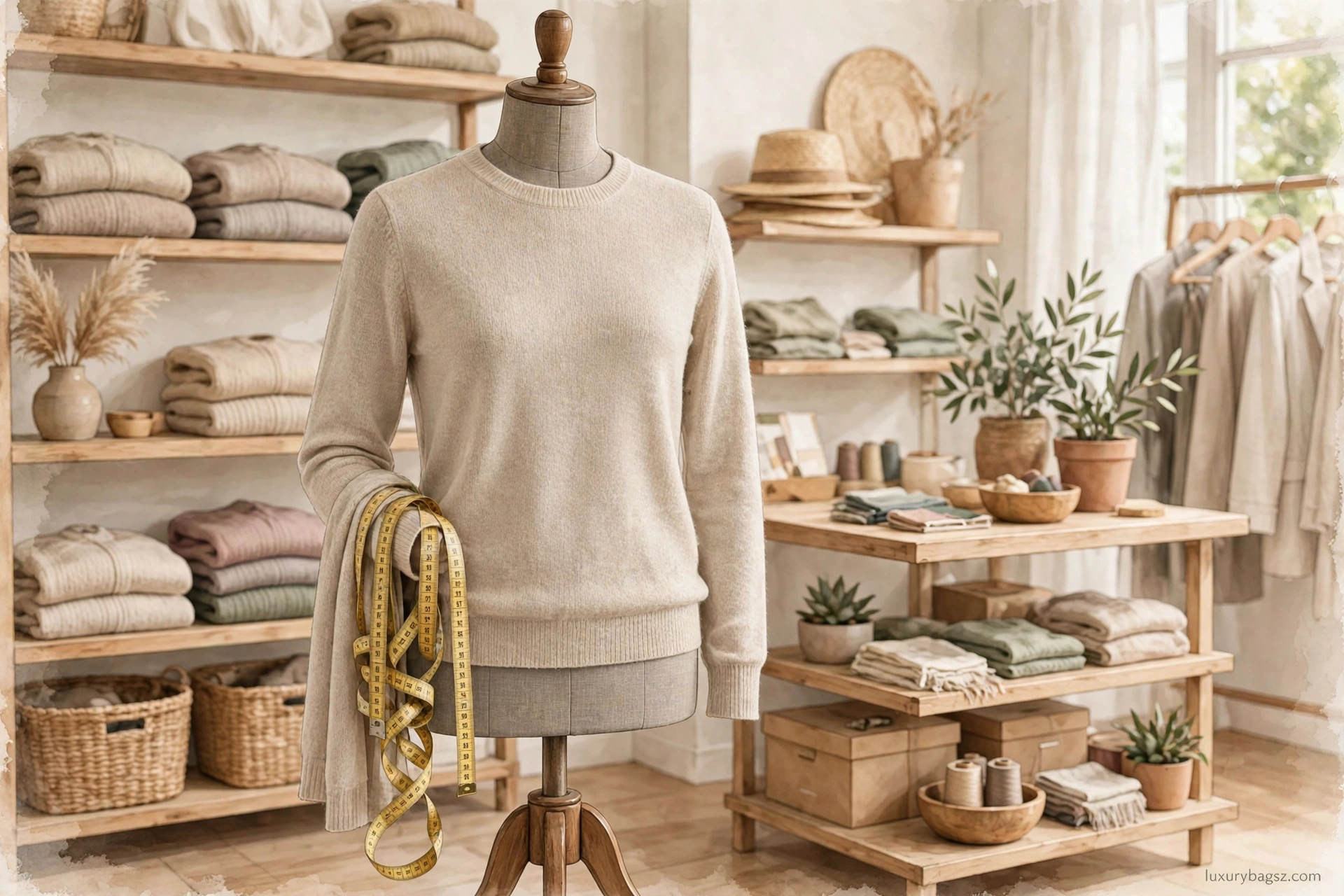
Smell the knit, odd as it sounds. Good cashmere smells faintly of lanolin and dye, never of chemicals. A sharp synthetic smell in a new luxury knit is worth a question before you pay.
How to Judge Quality in the Boutique
Turn the knit inside out. Seams should be smooth and fully fashioned where panels join, with no rough linking lines and no loose ends.
Hold the fabric to the light. An even density with no thin patches suggests a well-made knit; cashmere should feel dry-soft, never slippery or oily.
Check the ribbing at cuffs and hem: it should spring back when stretched gently. Weak ribbing is the first thing to sag on a lesser knit, and it is hard to restore.
Finally, look at colour depth. Hermès dyes are famously rich, and a core colour such as navy, grey or camel should look saturated from every angle.
Washing and Everyday Care
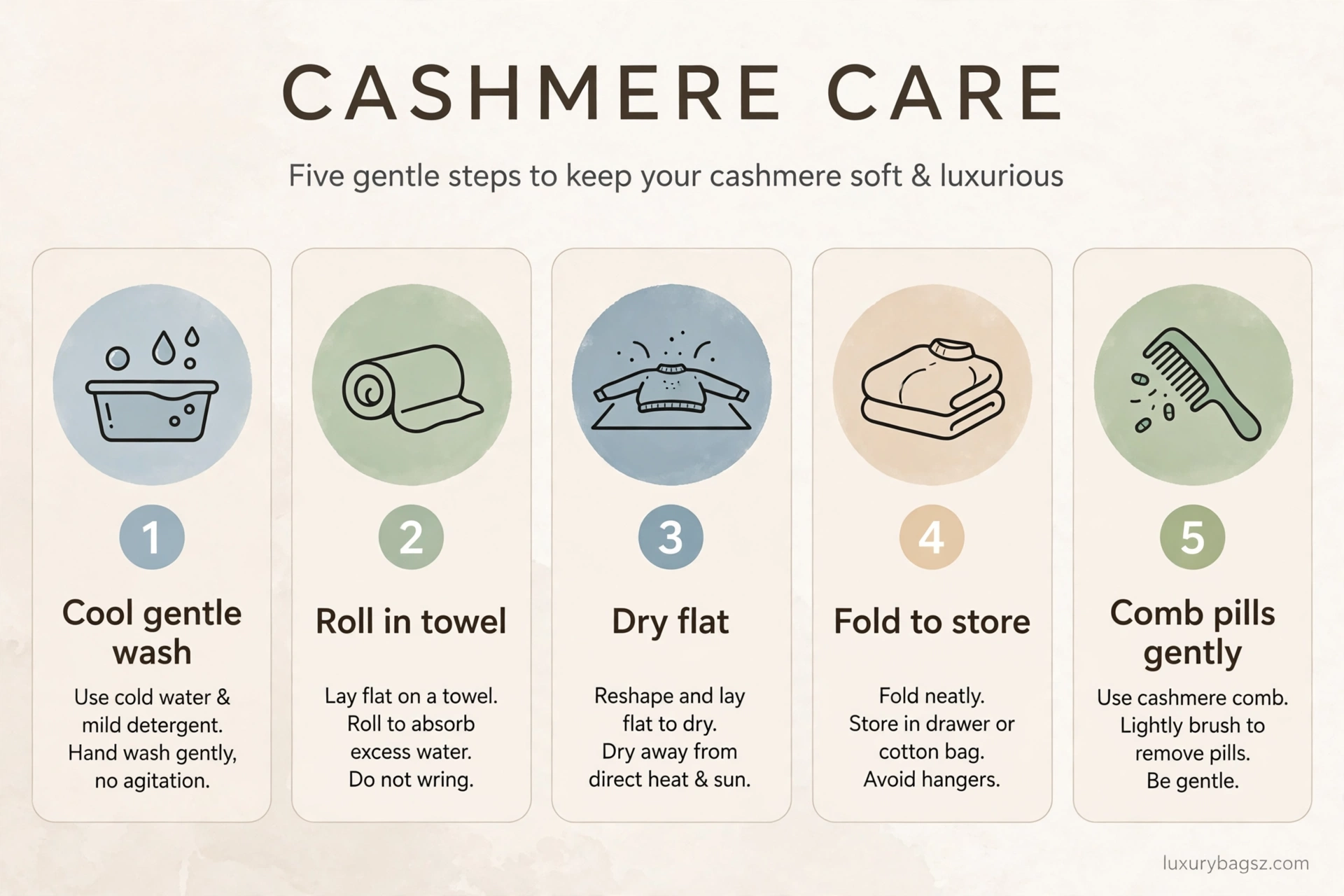
Fine knits need washing far less often than people think. Air a sweater after wearing, rest it flat for a day, and only wash when it truly needs it.
When you do wash, follow the label first. Many plain knits tolerate a cool, gentle hand wash with a specialist wool wash, rinsed cool and rolled in a towel to remove water.
Never wring cashmere, never hang it wet, and dry it flat away from heat and sun. Leather-detailed or embellished knits go to a specialist cleaner instead.
Our broader guide to how to care for designer clothing covers the stain first aid and cleaner questions that apply across fine fabrics.
If you find a moth hole, isolate the knit in a sealed bag and have it professionally cleaned before it returns to the drawer. One affected garment left among others is how a small problem becomes a wardrobe problem.
Storage and Moth Protection
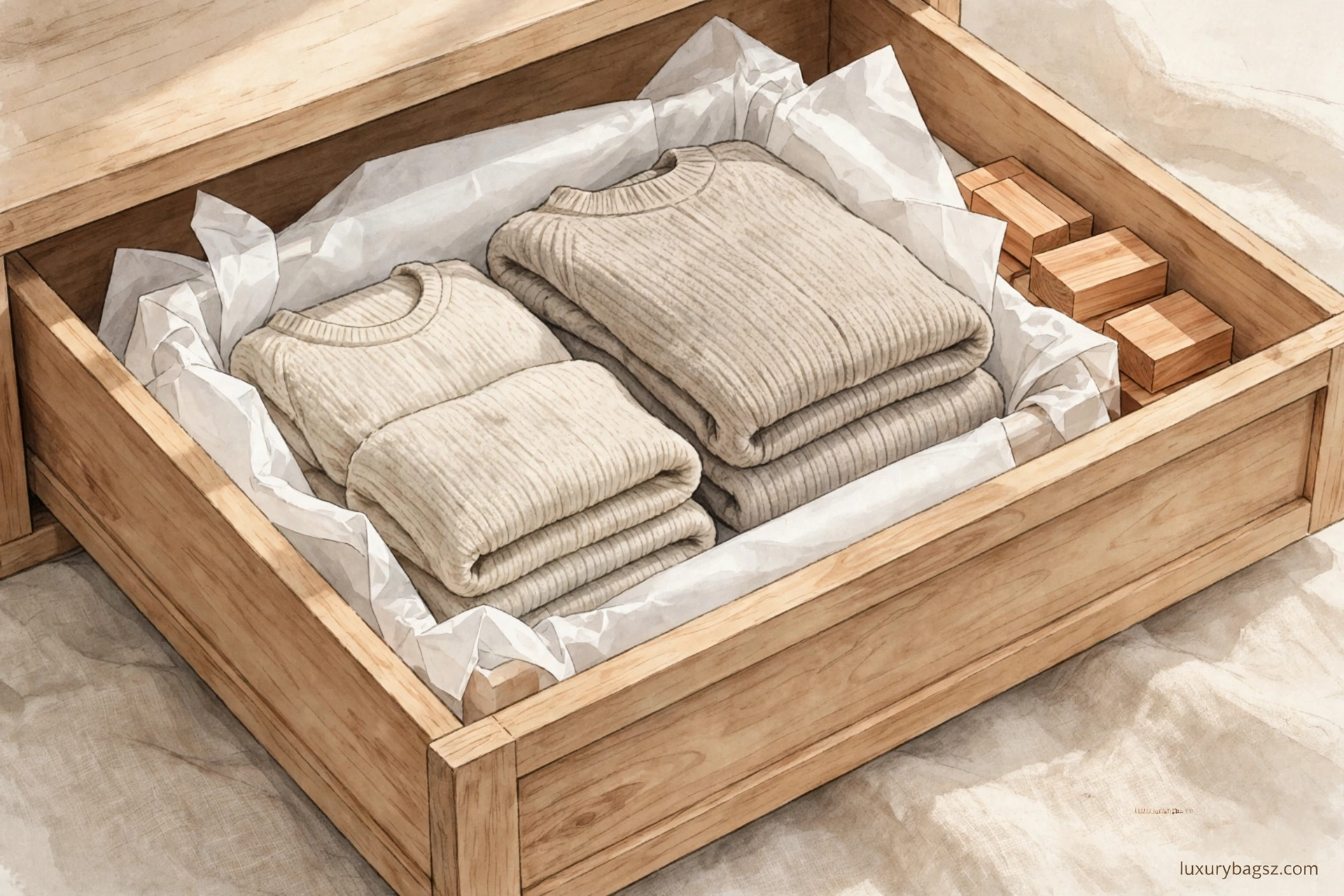
Fold knits with a sheet of acid-free tissue in the fold and store them in a drawer or lidded box. Hangers stretch shoulders and leave points that never fully recover.
Moths are the real enemy. Store knits clean, since moths target worn fibres, and use cedar or lavender protection that you refresh each season.
Give each knit breathing room. Cashmere crushed tightly for months creases and can rub thin where it folds against hardware or zips from neighbouring garments.
What to Buy First
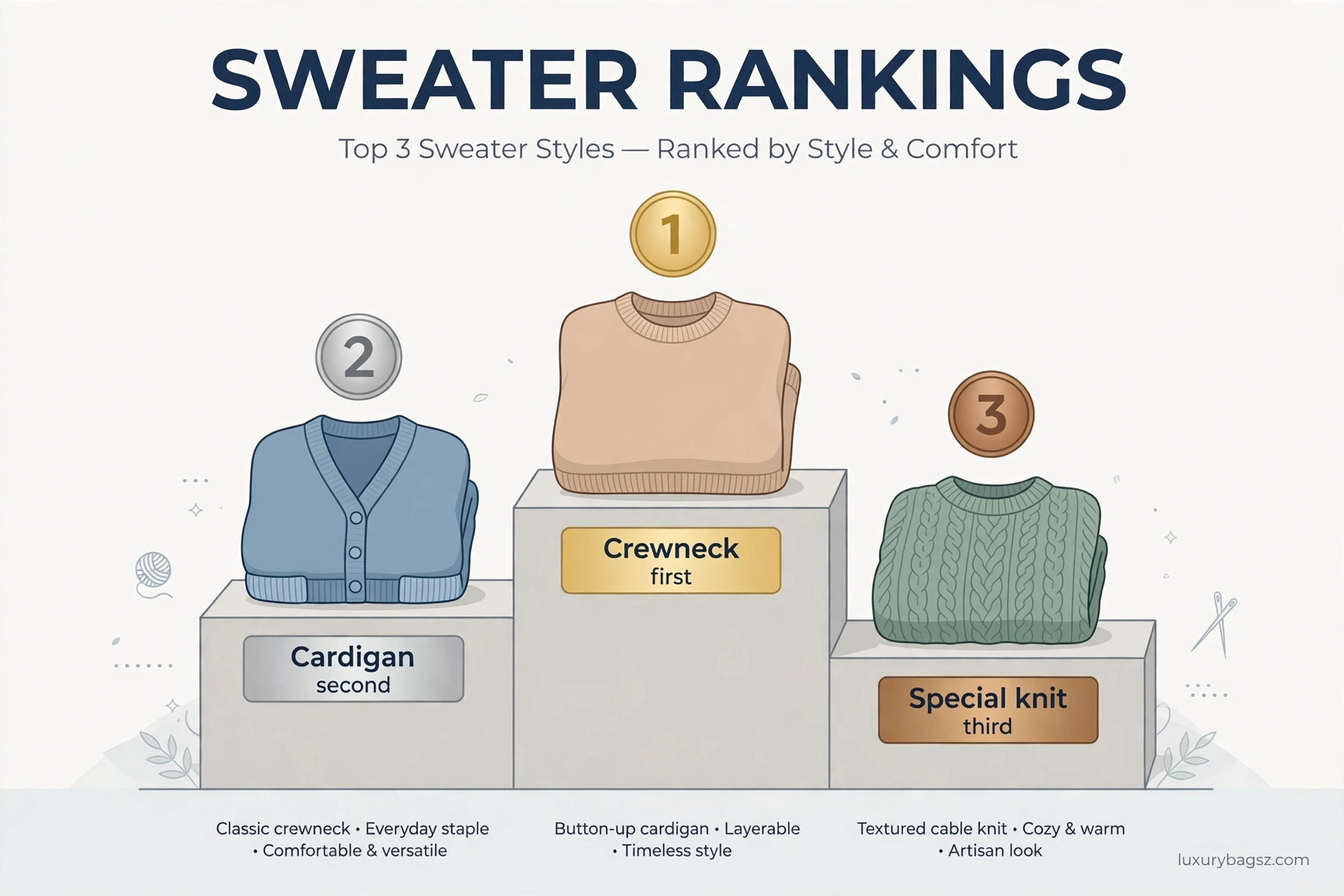
Buy the crewneck first, in navy, grey, black or camel. It layers under coats, works over shirting and shows the house's cashmere quality at the sanest price in the range.
Second, add a cardigan. It covers more styling ground than a second crewneck and doubles as a light jacket in spring and autumn.
Our sweater weather style guide shows how to build outfits around these two shapes so the cost per wear falls quickly.
Keep a simple kit with the knits: a cashmere comb, spare buttons and yarn, and the care labels you cut out. Five minutes of maintenance after a wear is what separates a ten-year sweater from a two-year one.
Pilling, Repairs and Long Life
Some pilling in the first wears is normal where the knit rubs a bag strap or seatbelt. Lift pills gently with a cashmere comb on a flat surface; never pull them off by hand.
Small holes, especially moth nips, can often be invisibly repaired by a specialist reweaver if you act early. Keep the spare yarn and buttons that come with the garment.
Rotate your knits. Two sweaters worn in turn will outlast one worn daily, because the fibres recover their shape and softness during the rest days.
Frequently Asked Questions
How much does an Hermès cashmere sweater cost?
Typically around $2,200 to $3,500 in the US for a classic crewneck or cardigan. Leather-detailed and hand-finished knits cost more, sometimes several thousand more.
Does Hermès knitwear run small?
It runs neat rather than small. Most clients take their usual French size; size up if you want layering room or a relaxed fit.
Can I wash an Hermès cashmere sweater at home?
Plain knits often tolerate a cool, gentle hand wash if the label allows it. Dry flat, never wring, and send leather-detailed or embellished knits to a specialist.
Why does my cashmere pill?
Short surface fibres work loose where the knit rubs straps, belts or arms. A cashmere comb used gently on a flat surface removes pills safely.
Should I hang or fold cashmere?
Always fold. Hanging stretches the shoulders and can permanently distort a fine knit, especially when the garment is freshly washed.
How do I protect knitwear from moths?
Store pieces clean, folded, with cedar or lavender protection refreshed each season. Check stored knits a few times a year for early damage.
Is Hermès cashmere better than high-street cashmere?
The fibre selection, density and finishing are a clear step up, and the knits hold shape longer. The price gap is large, so judge it on how often you will wear the piece.
What ply are Hermès cashmere sweaters?
Ply varies by design and season, from fine single-ply summer knits to denser multi-ply winter pieces. The boutique can confirm the make-up of a specific style.
Can a moth hole be repaired?
Often, yes, if it is small and treated early. A specialist reweaver can rebuild the knit structure; large or multiple holes are harder to hide.
Which colour should I buy first?
Navy, charcoal, black or camel. Core colours pair with the widest range of clothing and return to the collection often, so matching pieces later is easier.
Final Verdict: Buy One Great Knit and Care for It Properly
Hermès knitwear justifies itself through fibre quality and longevity, not logos. Choose a crewneck in a core colour, fold it, rest it and wash it gently, and it should stay in your wardrobe for a decade.