

Hermès Cashmere and Silk Shawl 140: How to Style, Fold and Store It
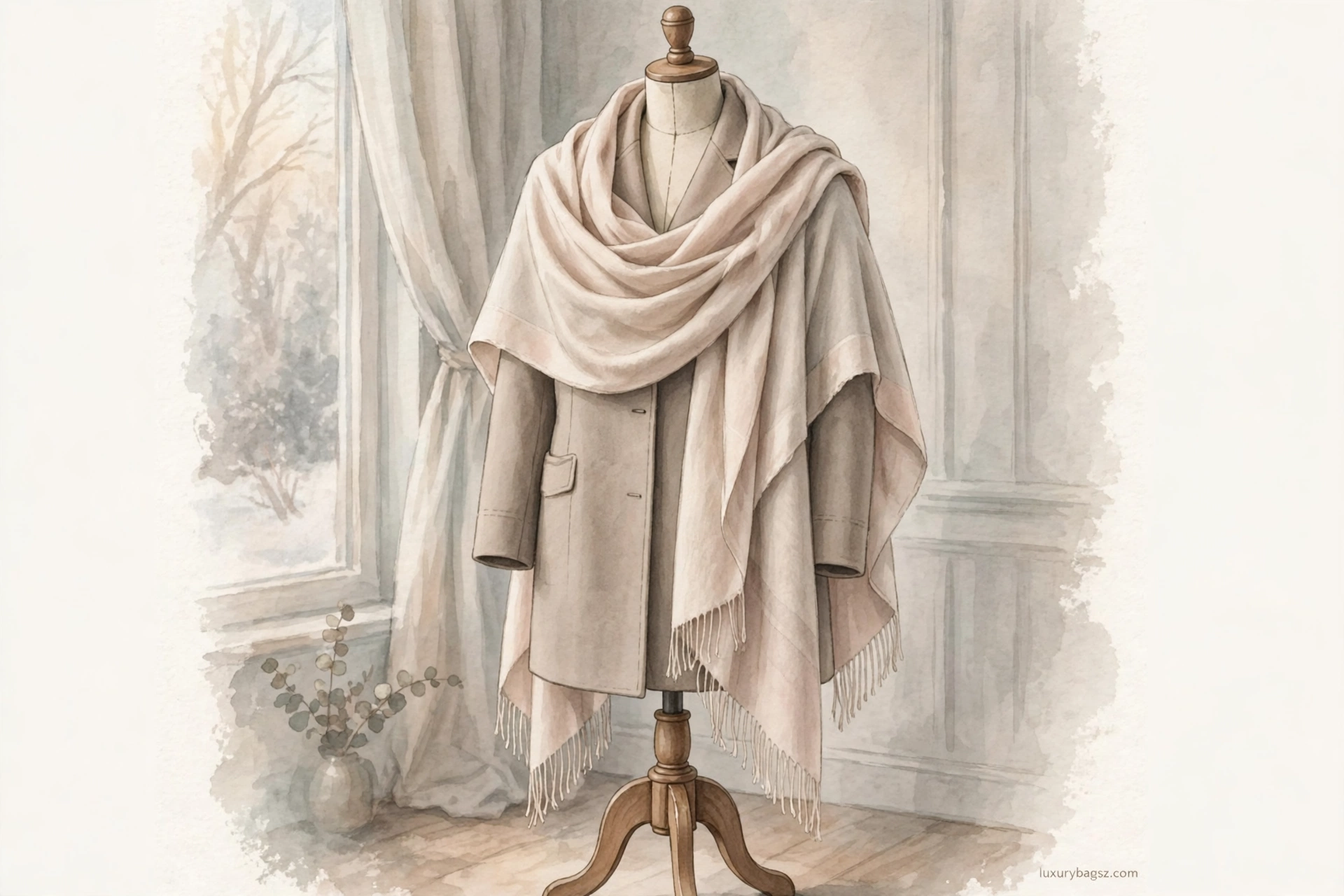
A Shawl That Works as Scarf, Wrap and Travel Blanket
The Hermès cashmere shawl is a 140 cm square in a blend of typically 70 per cent cashmere and 30 per cent silk: warm like a light blanket, fluid like a scarf, and printed with the house's full-scale artwork.
It is the largest everyday format Hermès makes, and the most versatile in cold weather. One shawl covers your shoulders at dinner, wraps twice at the neck and folds into a travel layer on a flight.
This guide covers styling, the folds that make a big square manageable, storage that protects the fibres, and honest notes on cost and care. Our comparison of what is a Hermès cashmere shawl vs silk scarf explains the fabric difference in full.
Key Takeaways
- The shawl 140 measures 140 cm square and is typically woven from 70 per cent cashmere and 30 per cent silk.
- Standard US price reported in late 2026 is about $1,575; see the format ladder before you compare designs.
- Style it four ways: shoulder drape, wrapped scarf, belted over knitwear, or as an evening wrap.
- The bias fold tames the volume for neck wear; the loose storage fold protects fibres between wears.
- Store it folded flat, clean and protected from moths; rest it a day between wears.
- Handle the fringed or rolled edges gently and keep it away from rough jewellery and bag hardware.
What Makes the 140 Different
Scale changes everything. At 140 cm, the print reads as a picture rather than a pattern, and the cloth wraps the shoulders instead of sitting at the neck.
The cashmere brings warmth and a soft matte surface; the silk brings drape, strength and a slight sheen. Together they feel lighter than pure cashmere at this size and less slippery than pure silk.
Edges are finished by hand, and many designs carry fine fringed edges. Treat edges as the delicate part: they catch on jewellery, zips and rough nails first.
What It Costs and How to Choose a Design
A standard shawl 140 costs about $1,575 in the US at recent prices. Our Hermès scarf prices guide shows how that sits against the Twilly, 70, 90 and silk 140 formats.
Choose the design folded, not just flat. A shawl is rarely seen fully open, so the corners and borders matter as much as the centre picture.
Hold the folded shawl against your coats. The colours that survive folding and sit next to your winter wardrobe are the ones you will actually wear.
Style It: Drape, Wrap and Belt
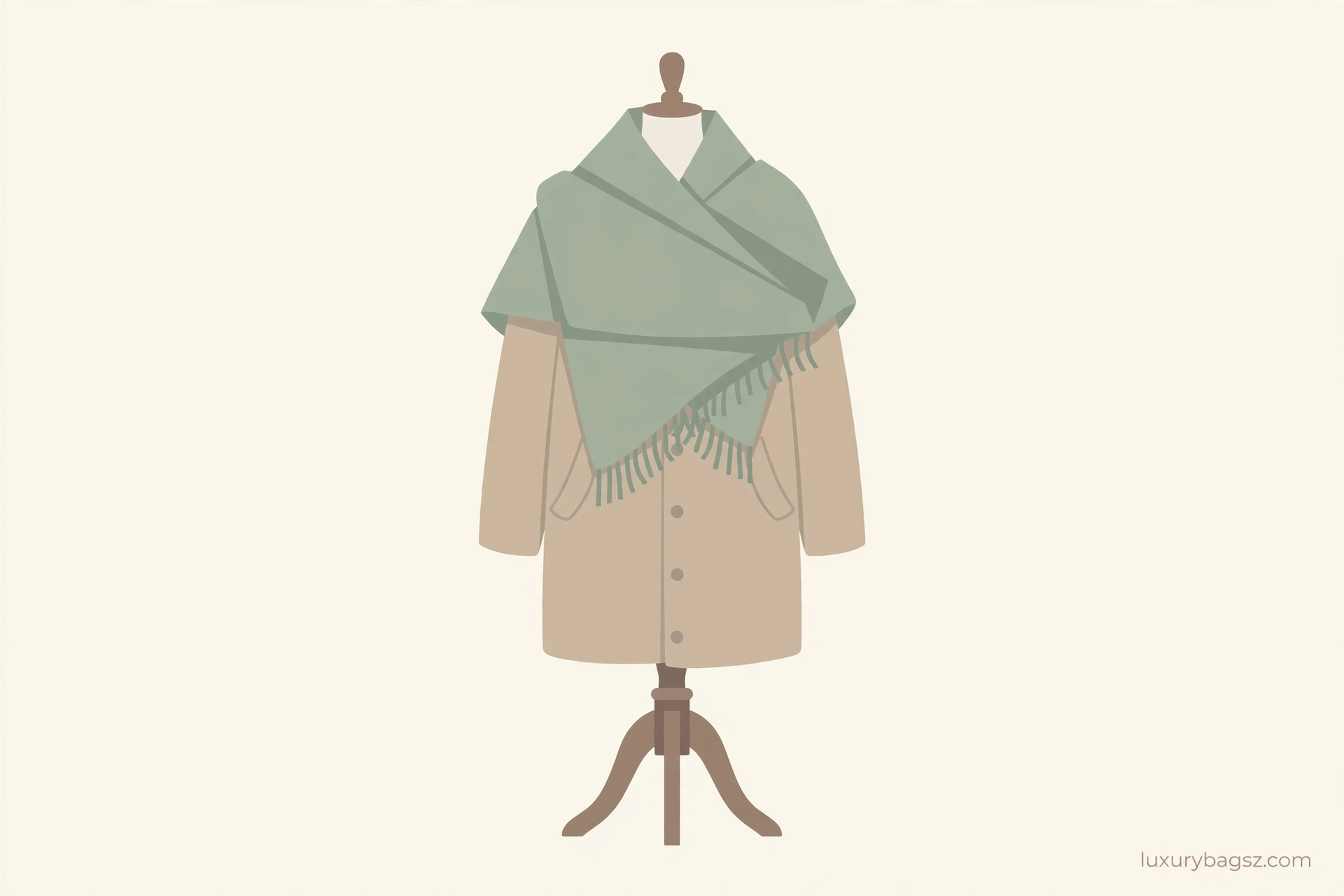
The shoulder drape is the simplest wear: fold the shawl into a triangle, place the point down your back and let the ends fall in front. It warms a dress or a plain knit instantly.
For a wrapped scarf, use the bias fold from the folds section, wrap twice at the neck and tuck or knot the short ends. The volume looks generous without bulk at the throat.
Belted over knitwear, the triangle sits in front with the point down, cinched by a belt at the waist. It turns the shawl into a top layer and keeps the ends secure in wind.
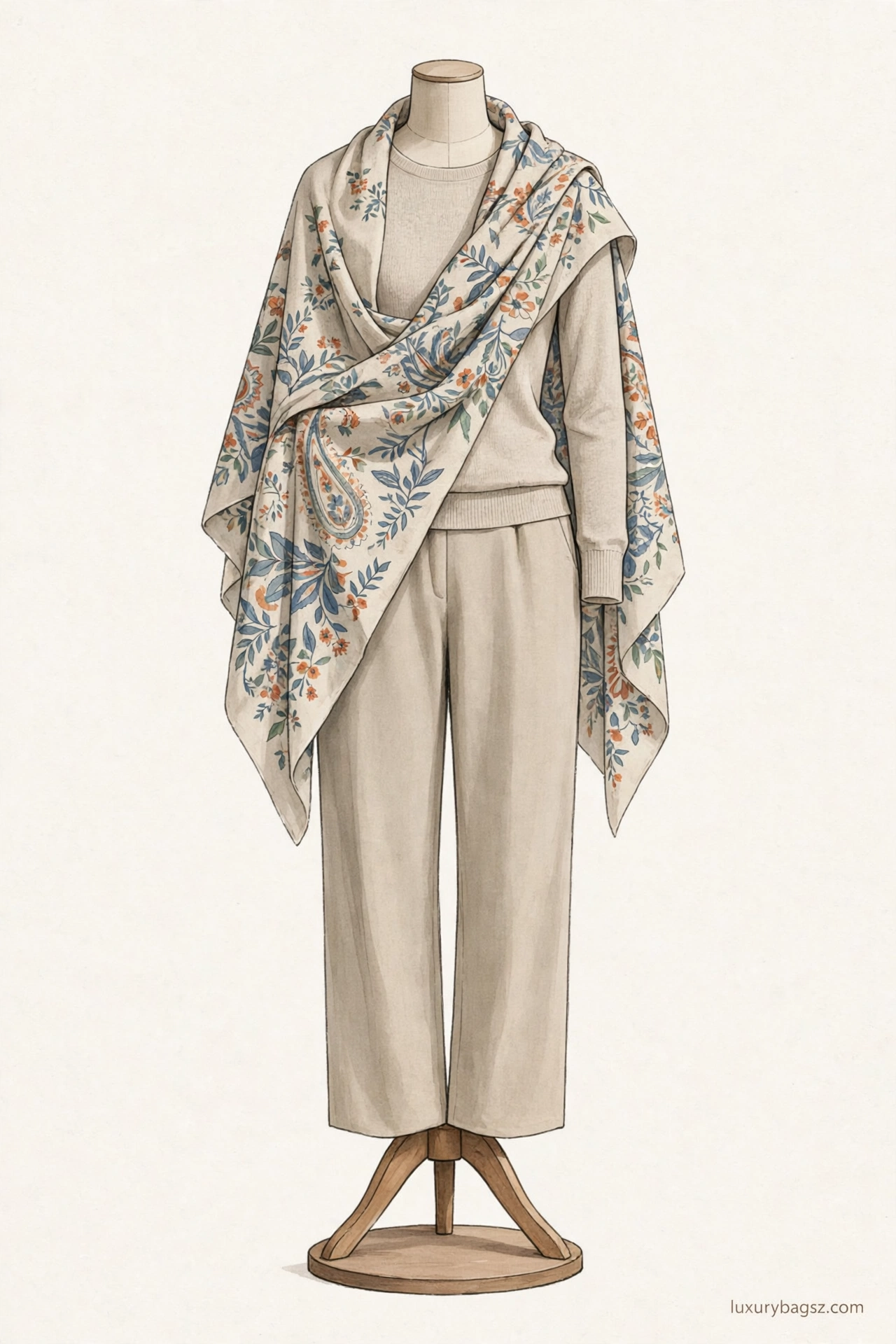
Choose darker, border-led designs for travel: they hide the marks of a long journey better than pale grounds, and the border frames a plain outfit at the other end without any styling effort.
Evening and Travel Wear
As an evening wrap, wear the shawl open over the shoulders with a plain dress and let the border design frame the outfit. Dark grounds with a light border photograph beautifully.
On flights, the shawl earns its keep: a blanket over legs, a pillow cover in its storage pouch, then a smart wrap at arrivals that hides a slept-in outfit.
Keep it in your hand luggage, not the hold. Cabin air and a long delay are exactly when you want it, and checked storage risks crushing and spills.
The Three Folds You Need
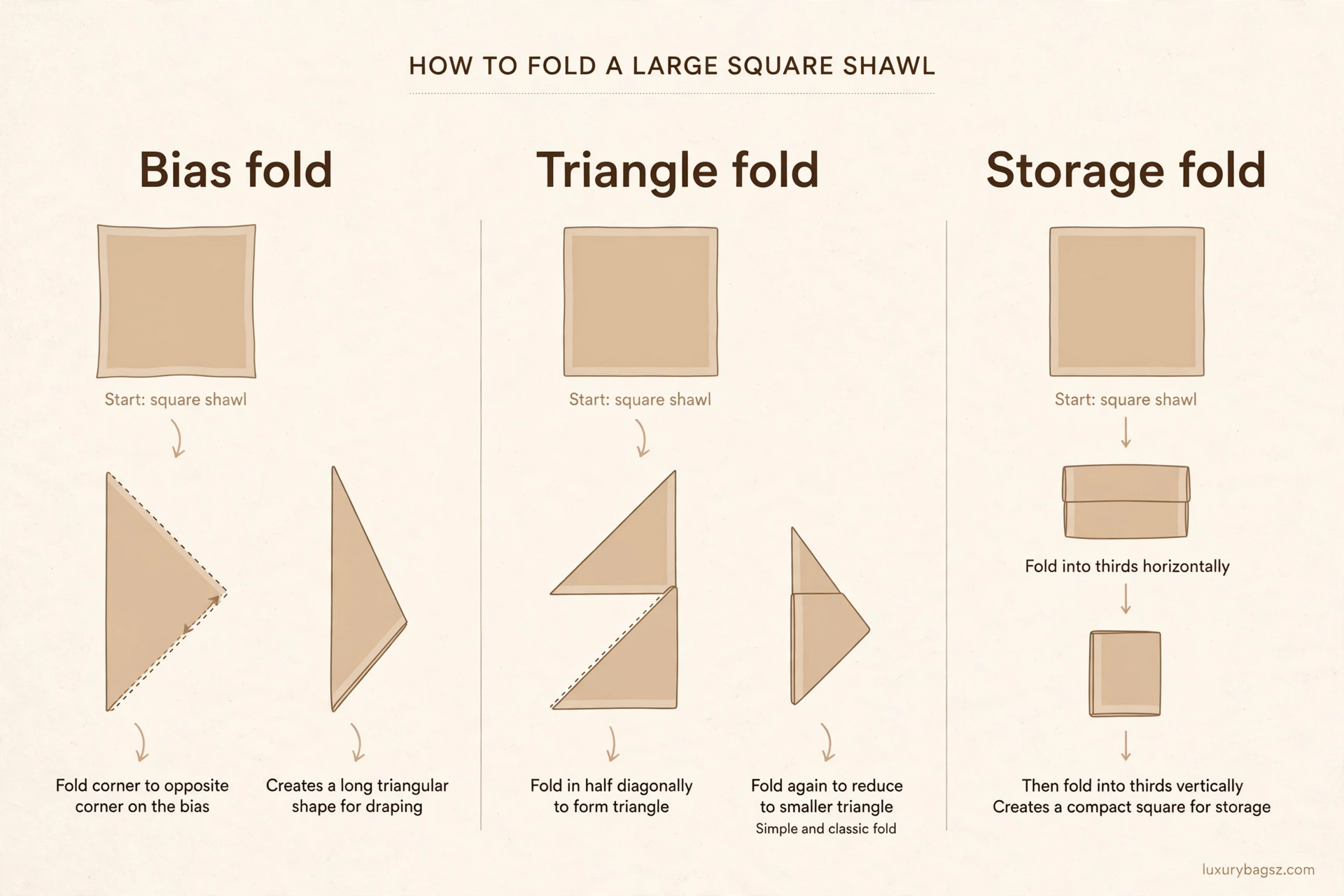
The bias fold: lay the shawl flat, fold opposite corners toward the centre, then fold the long strip in half lengthways. You get a long band that wraps like a scarf and shows the border colours.
The triangle fold is for draping: one diagonal fold, worn point-down at back or front. Shake it out and re-fold loosely after wear so the same crease does not set.
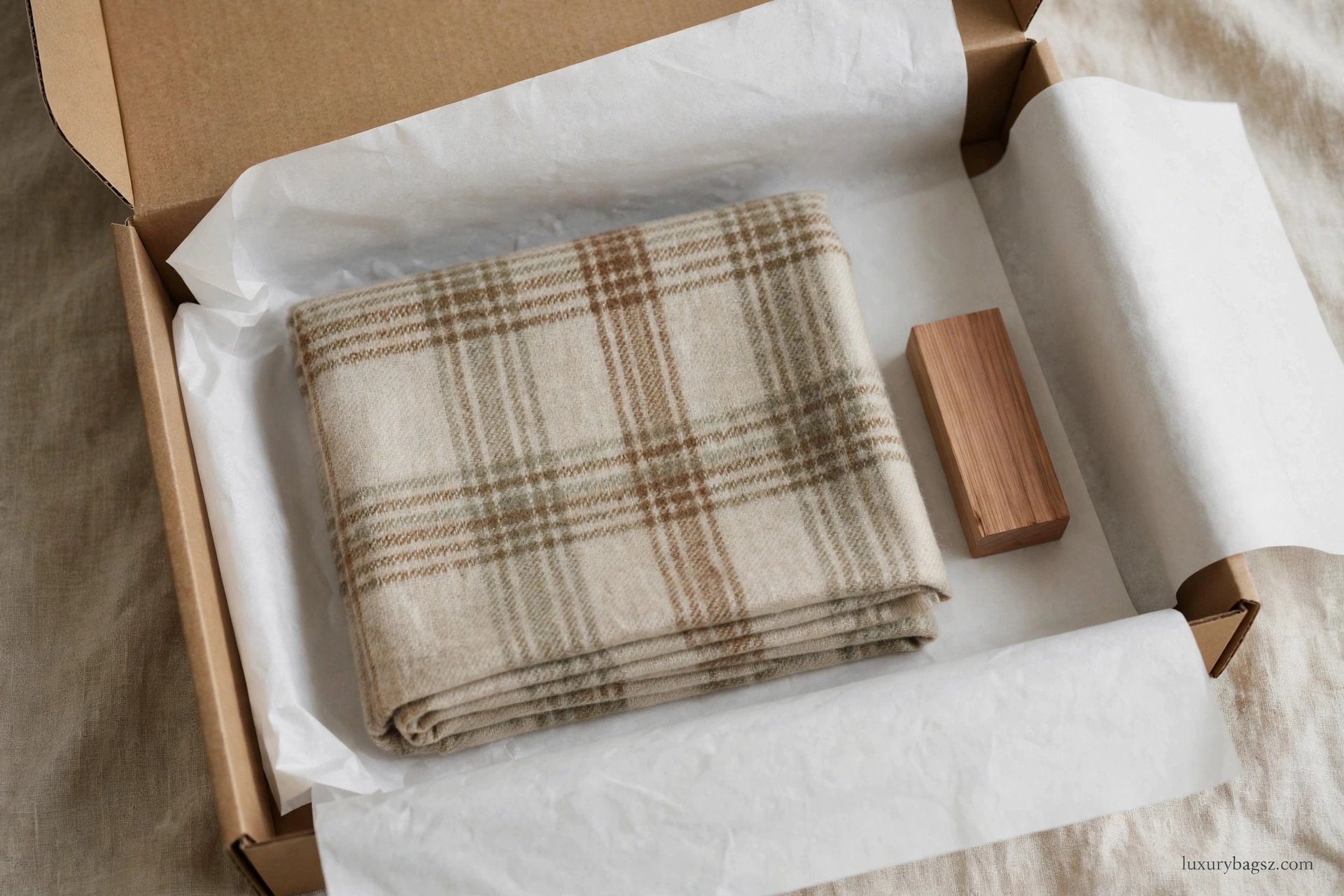
The storage fold is the gentlest: fold in thirds, then in half, with tissue in the folds. Never hang a cashmere shawl; its own weight pulls the weave out of shape.
Storage That Protects the Fibres
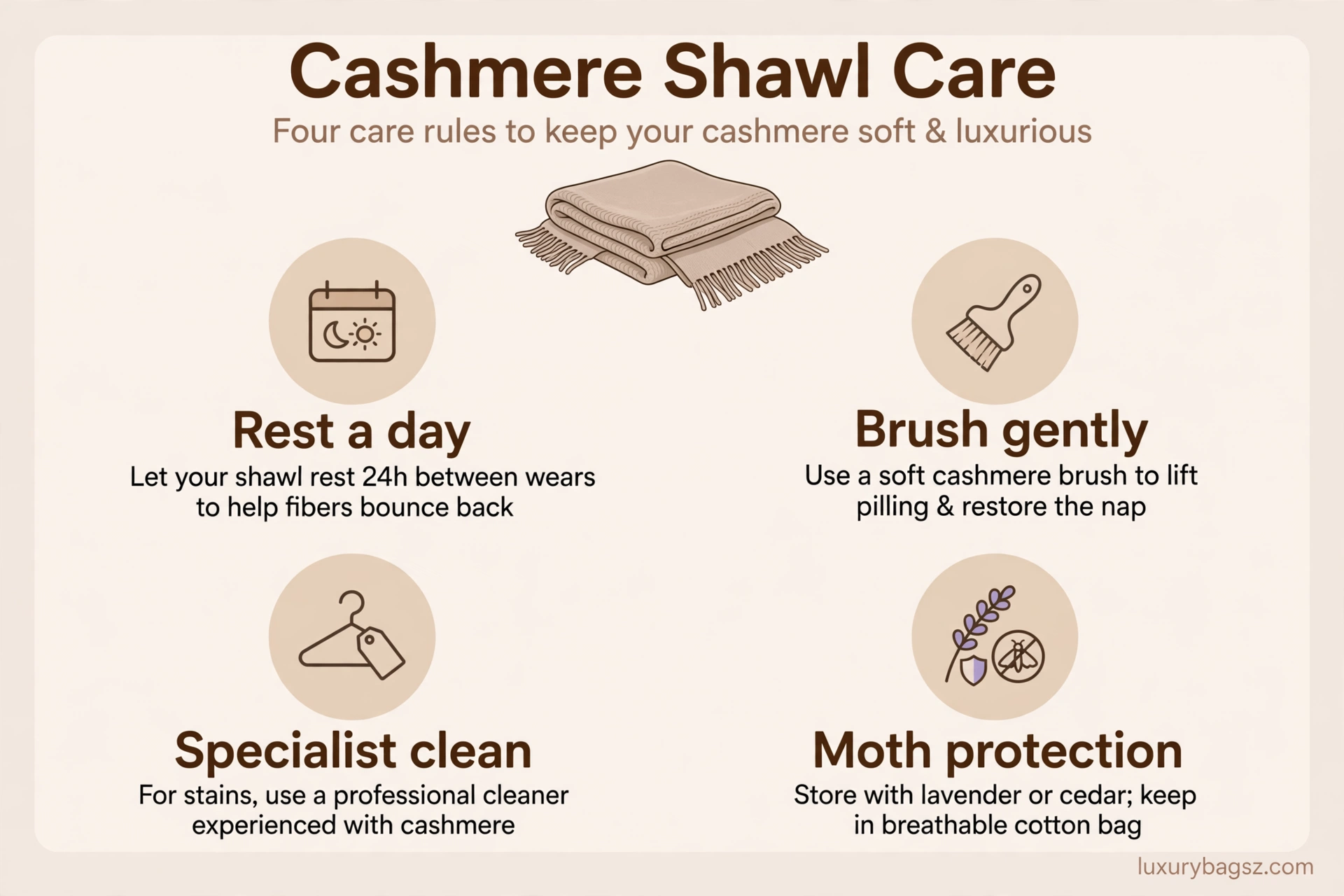
Store the shawl clean, folded with tissue, in its box or a breathable cotton bag. Moths target cashmere, and they target worn fibres most, so never put it away after a day's wear without airing.
Add cedar or lavender protection and refresh it each season. Keep the box away from damp and direct sun, which fade the print and dry the fibres.
The principles mirror our guide to how to store a Hermès silk scarf without creases, with extra weight on moth protection for cashmere.
Care, Cleaning and Small Repairs
Rest the shawl a full day between wears so the fibres recover. Brush it gently with a soft clothes brush after wear to lift dust before it settles.
Clean only when needed, with a specialist used to cashmere and silk blends. Home washing risks felting the cashmere and dulling the silk in a single cycle.
Small pulls should be eased back with a needle from the reverse, never cut. Holes, especially moth nips, go to a specialist reweaver early, while they are still tiny.
Try before you commit if you can: drape the shawl in the boutique over your own coat, not over the outfit you happen to be wearing for shopping. The pairing you test should be the pairing you will live with.
Is the Shawl Right for You?
Choose the shawl if your winters are cold, you travel often, or you wear plain coats that need one strong accessory. It replaces a scarf, a wrap and a light blanket in one piece.
Choose the silk 90 instead if your climate is warm or you mainly want neck and hair styling. Silk gives the artwork without the warmth, at well under half the price.
Either way, buy the design folded against your own coats. A shawl lives folded and draped, and the right one disappears into your wardrobe from the first week.
Frequently Asked Questions
How much does an Hermès cashmere shawl cost?
A standard shawl 140 is about $1,575 in the US at recent reported prices. Embroidered or special-finish designs cost more.
What is the shawl made from?
Typically 70 per cent cashmere and 30 per cent silk. The cashmere gives warmth and softness; the silk adds drape, strength and a slight sheen.
How big is the shawl 140?
It measures 140 cm square, roughly 55 inches. Folded on the bias it wraps like a scarf; worn as a triangle it covers the shoulders fully.
Can I wash a cashmere and silk shawl at home?
It is safer not to. The blend can felt or lose its finish in home washing. Use a specialist cleaner experienced with cashmere and silk.
How do I stop the shawl looking bulky at the neck?
Use the bias fold so the cloth sits in a long band, wrap twice and keep the knot small. The fold, not the shawl, decides the bulk.
Does the shawl pill?
A little surface pilling can appear where it rubs coats and straps. A cashmere comb used gently on a flat surface lifts pills safely.
How should I store it for summer?
Clean, folded with tissue, in its box or a cotton bag, with cedar or lavender protection. Check it once mid-season for any moth activity.
Is the shawl warmer than a wool coat layer?
It is a strong insulating layer over knitwear and under a coat, but it is not a coat substitute in severe cold. Think of it as the flexible middle layer.
What is the difference between a shawl 140 and a silk 140?
Fabric and feel. The shawl blends cashmere for warmth and softness; the silk 140 is pure silk, cooler and crisper, and typically costs less.
Can a damaged edge be repaired?
Fine edge damage and small holes can often be repaired by a specialist reweaver. Act early; worn fringes and large holes are much harder to restore.
Final Verdict: The Hardest-Working Square Hermès Makes
Style it draped, wrapped or belted, fold it on the bias, store it clean with moth protection, and the cashmere shawl 140 will cover more of your winter wardrobe than any other single accessory.






