How to Spot a Fake Hermès Rodeo Charm: 12 Checks
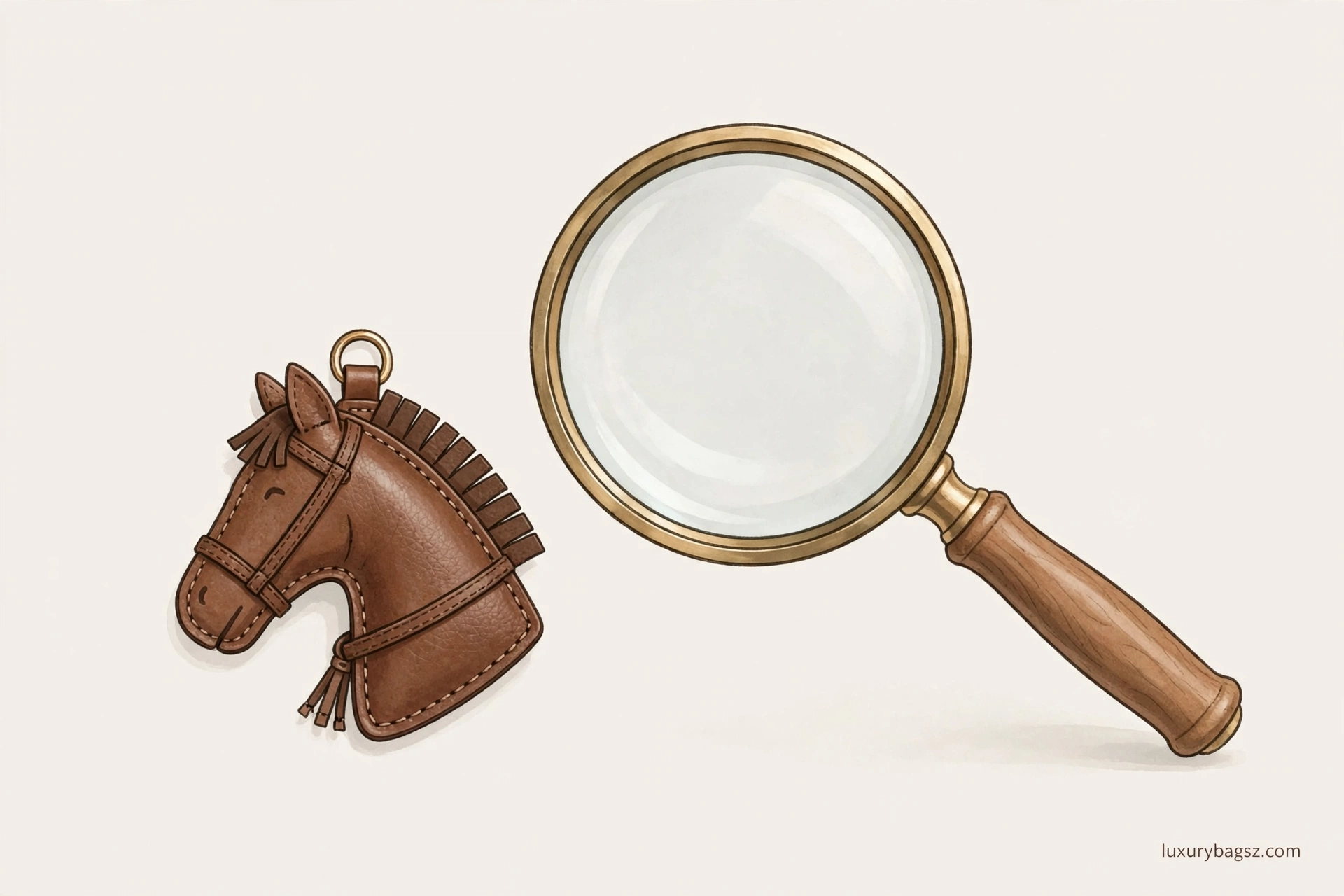
Twelve Checks Before You Pay Resale Money
Ask first whether the charm should exist at all. A genuine Rodeo is sold in a colourway Hermès actually released, in soft Milo lambskin, evenly hand-finished and correctly proportioned — a colourway the house never made settles the question before the leather is even touched.
Then work through the leather, stitching, proportions and stamp in order. Copies fail in layers rather than at one dramatic point, so a charm that misses on two or three checks should be walked away from, however good the price looks.
This guide sets out 12 checks in the order an authenticator would run them. If the sizes and versions are new to you, read our guide to Hermès Rodeo and Pegase bag charms first.
Key Takeaways
- Check 1–3 cover the leather: genuine Milo lambskin feels dry-soft, smells of leather and creases finely, never plasticky.
- Checks 4–6 cover construction: even stitching, clean edges and a mane and tail with real fullness.
- Checks 7–9 cover identity: correct proportions, a crisp heat stamp and a colourway that was actually released.
- Checks 10–12 cover context: weight and strap quality, packaging details and a price and seller story that make sense.
- Details vary by season and version, so compare against the exact size and era, not a generic photo.
- For any charm priced above retail, a professional authentication is cheap insurance.
Start With the Exact Model (Checks 1–2)
Check 1: name the piece precisely. Rodeo or Pegase, PM, MM or GM, standard or Touch: each has its own proportions, price band and colour history, and fakes often mix features from two versions.
Check 2: confirm the size by measurement. Retailer references put PM at roughly 9.7 by 7.8 cm, MM at 12.7 by 10.5 cm and GM at 13.3 by 11.1 cm. A charm sold as MM that measures like a PM is a red flag.
A seller who cannot state the size and version clearly may not know what they have. That uncertainty should lower your confidence, not your price expectations.
Age helps the leather checks. Genuine Milo softens and takes a gentle sheen at contact points with use, while coated fakes tend to crack at folds or stay uniformly shiny in a way real lambskin never does.
The Leather Checks (Checks 3–4)
Check 3: feel the Milo. Genuine lambskin is soft and smooth with a fine, natural grain and a dry, powdery touch. Fake charms often use coated synthetic leather that feels slick, rubbery or overly shiny.
Check 4: test the crease and the smell. Real lambskin creases in fine lines and recovers; coated fakes crease in sharp folds or crack. A strong chemical or glue smell is another classic tell.
Pale colours deserve extra care: genuine Milo shows subtle natural variation, while fake leather often looks flat and printed, with colour sitting on the surface.
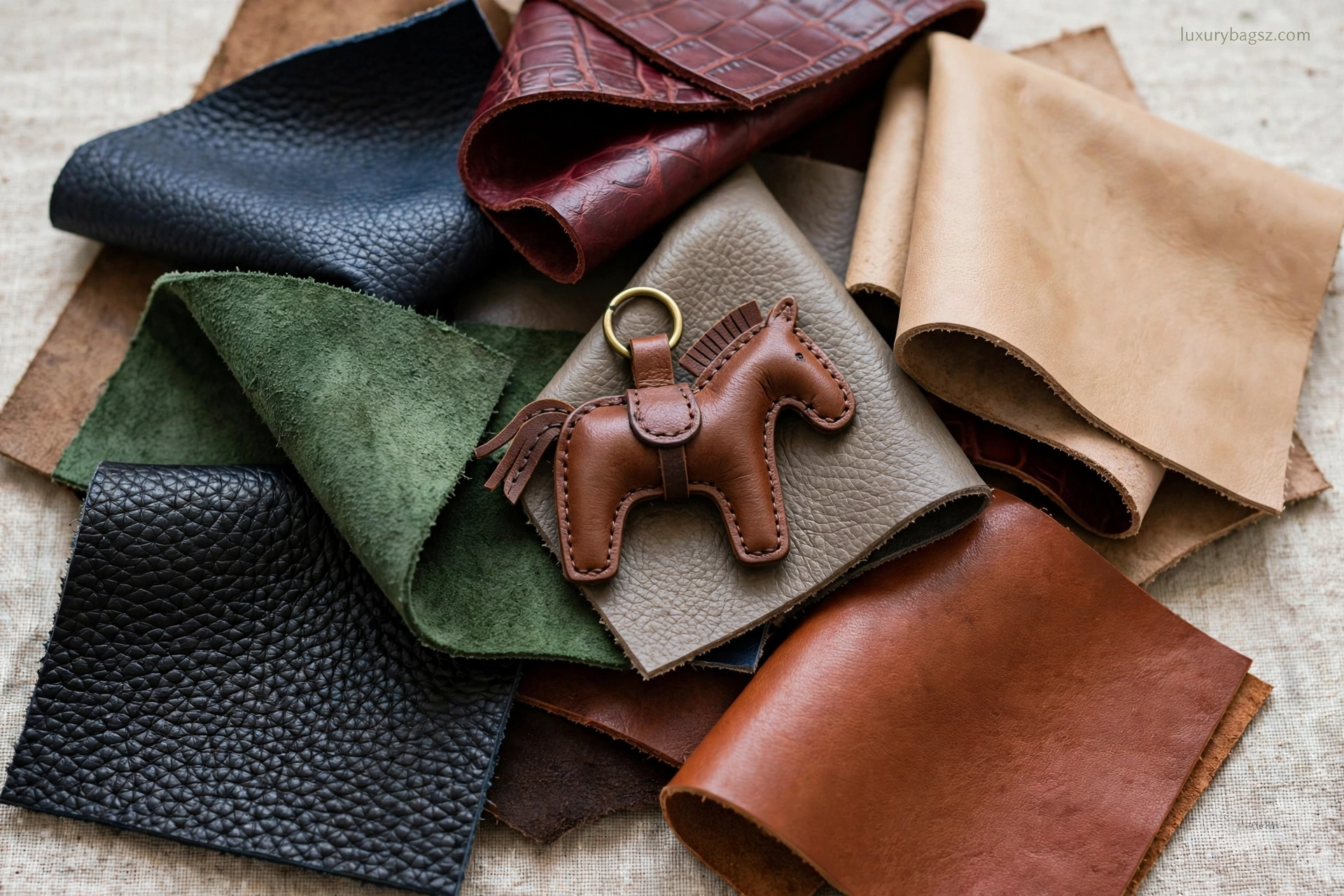
Count the stitches on the saddle if you need a tiebreaker. Consistency matters more than the exact number: a genuine saddle shows the same rhythm from end to end, while copies often rush the final few stitches.
Stitching and Edges (Checks 5–6)
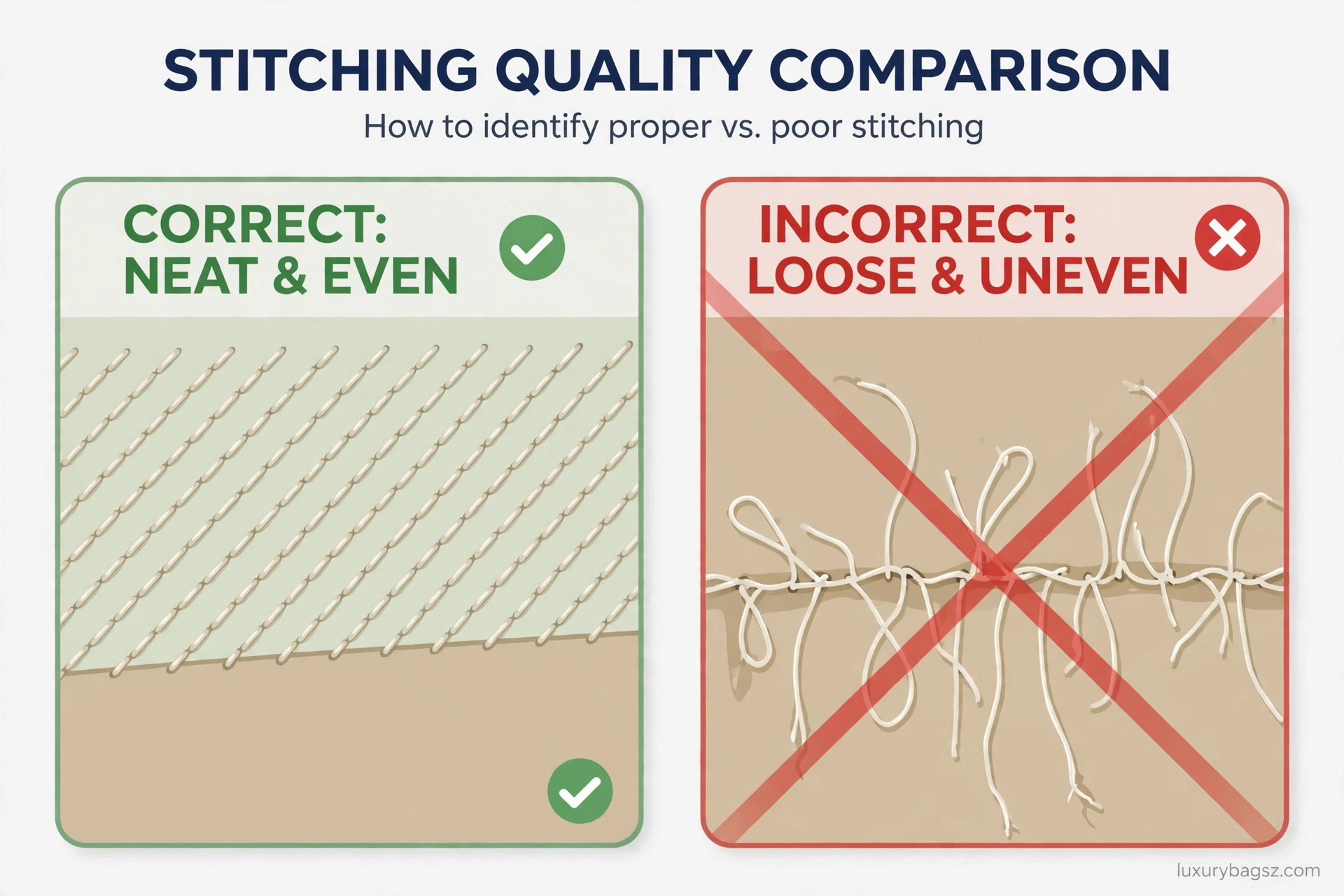
Check 5: read the saddle stitching. On a genuine charm the stitches are small, even and slightly angled, with consistent tension and no loose ends. Wobbly spacing, skipped stitches or fraying thread point to a copy.
Check 6: inspect the edges and joins. The saddle, wings on a Pegase and the strap joins should sit cleanly against the body, with tidy edge paint and no glue squeeze-out or lifting corners.
Turn the charm over. Fakes often save effort on the reverse, where stitching and finishing are visibly rougher than the display side.
Photograph the charm straight-on and compare the silhouette against a verified reference at the same size. Ears, muzzle and leg spacing expose moulding errors that a casual glance forgives.
Shape, Face and Details (Checks 7–8)
Check 7: judge the proportions. A genuine Rodeo has a balanced toy-horse shape: a defined head, a full mane and tail, and legs and body in harmony. Copies often look melted, pinched or cartoonish by comparison.
Check 8: look at the face and mane closely. The eye should be neat and correctly placed, and the mane and tail should have real layered fullness, not flat printed texture or sparse, shiny strands.
Compare side by side with verified photos of the same size and version. Shape errors that are invisible alone become obvious next to a genuine reference.
The Stamp (Check 9)
Check 9: find and read the heat stamp on the strap. It should be crisp, evenly impressed and correctly worded for the piece, with clean letterforms and no spelling errors or smudged depth.
A stamp that is printed rather than impressed, sits at an odd angle or uses the wrong font weight is one of the strongest single warnings on a small leather piece.
Remember that stamps can be copied too. Our explainer on Hermès date codes and blind stamps shows why a correct-looking stamp still needs the leather and stitching to agree with it.
Season matters as well as combination. A trio released for one season should come with the leathers and finishes of that period; a correct trio in the wrong era's materials is still the wrong charm.
Colourway and Season (Check 10)
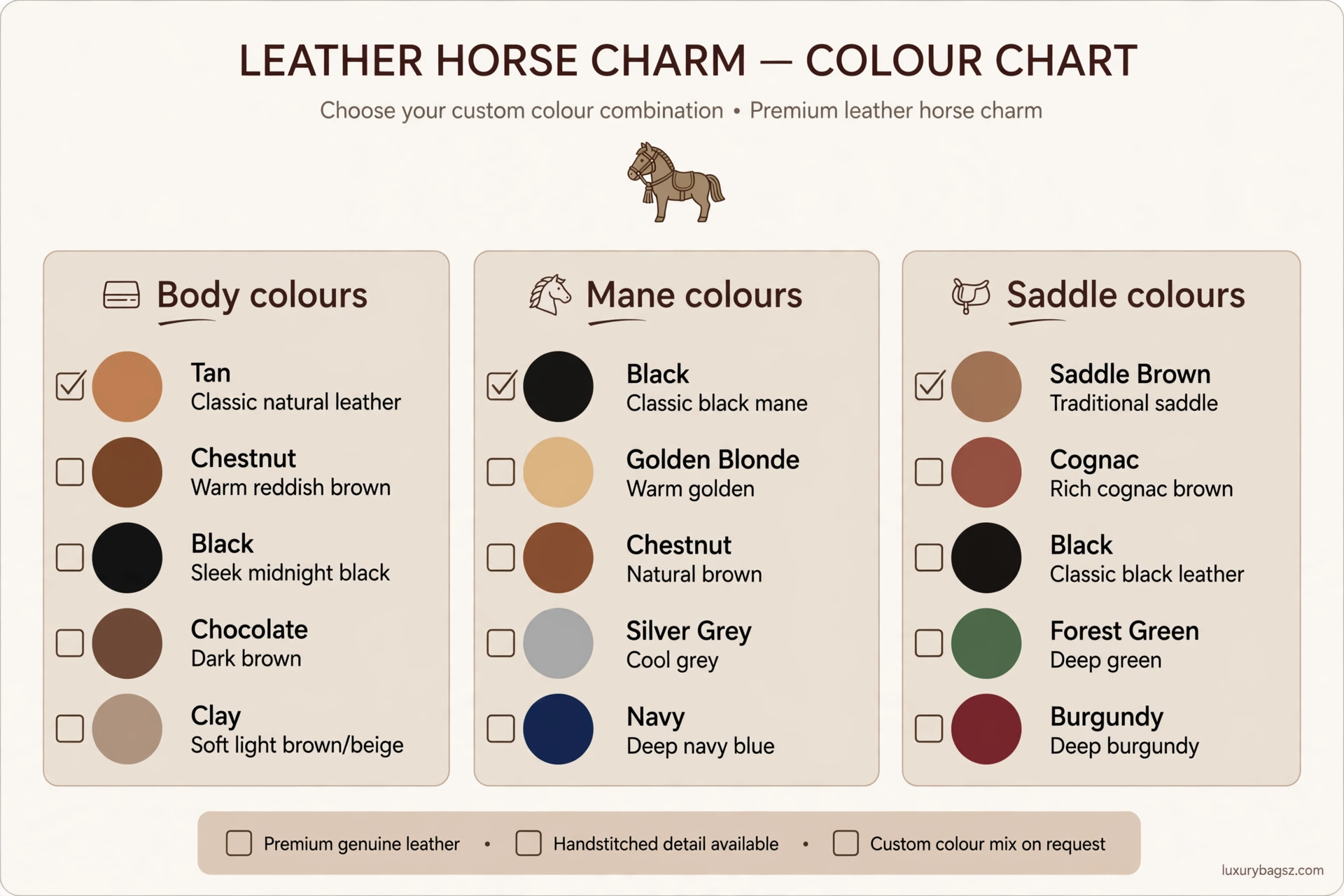
Check 10: verify the colour trio. Hermès releases specific body, mane and saddle combinations each season, and collector guides record more than 90 trios released by 2023.
A combination that never existed is decisive: colours borrowed from different seasons, a saddle colour never paired with that body, or shades that are simply off the house palette.
Ask for the colour names, not just photos. A genuine seller should be able to name the trio, and the names should match a released combination when you search them.
Weight, Strap, Packaging and Price (Checks 11–12)
Check 11: feel the weight and the strap. A genuine charm is light but substantial, with a smooth strap that ties and unties cleanly. Flimsy straps, rough undersides and featherweight bodies suggest cheaper materials.
Check 12: weigh the whole story. Correct packaging helps but proves nothing alone, since boxes are copied and genuine charms are often resold without them. A price far below the going resale level needs an explanation.
Our general method in how to authenticate a pre-owned designer bag applies here too: buy the seller's history and guarantee as much as the object.
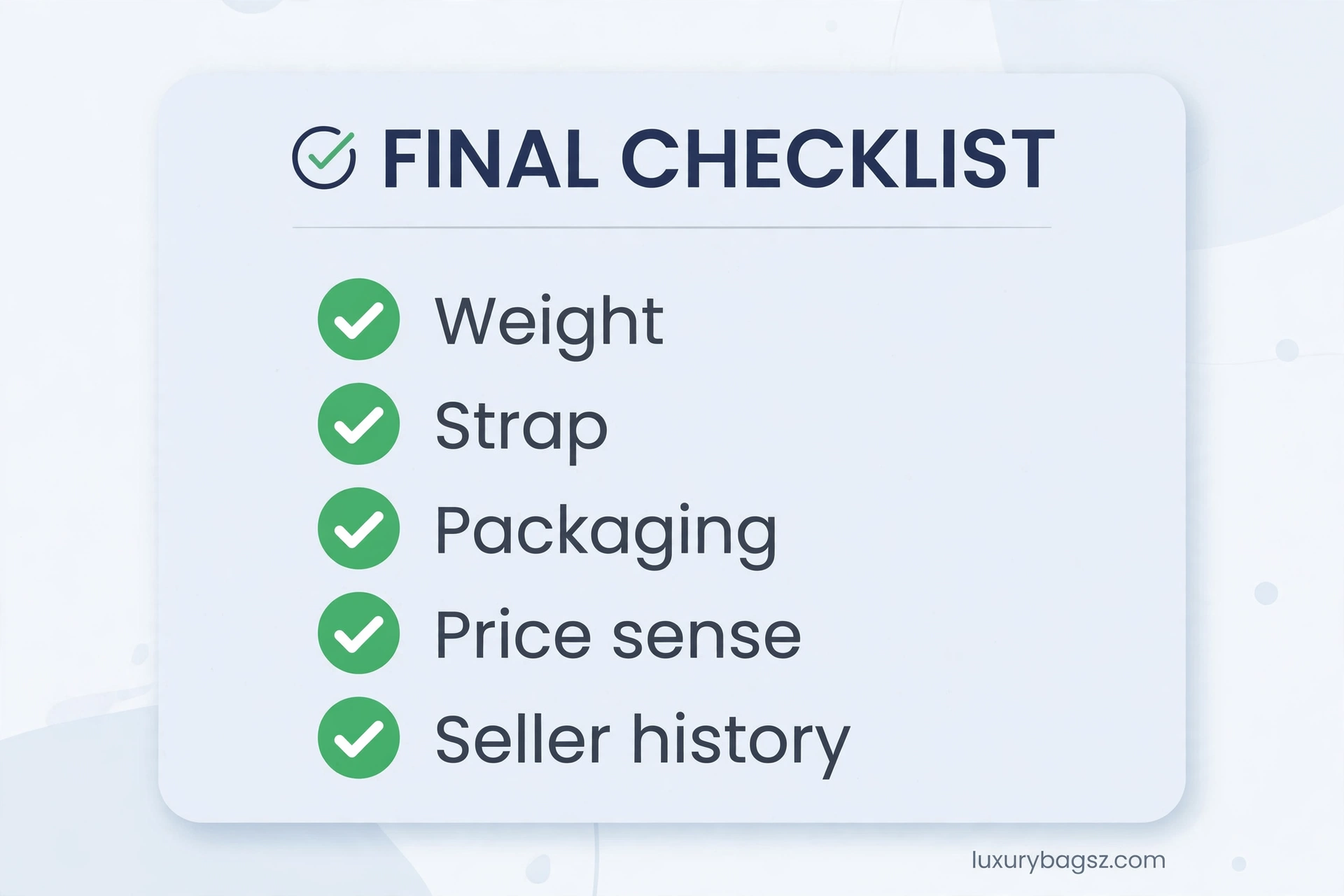
Keep your check notes with the charm if you buy it. A dated record of measurements, colour names and photos supports insurance, resale and any later dispute far better than memory.
When to Get a Professional Opinion
Pay for authentication when the charm is priced above retail, is a So Black or Touch edition, or comes without any purchase history. These are the pieces copies target most.
Send the authenticator clear photos of both sides, the saddle stitching, the strap stamp, the mane and tail, and a measurement against a ruler.
If two or more of the 12 checks fail, do not negotiate: walk away. Genuine charms in honest condition appear regularly, and patience is cheaper than a convincing fake.
Frequently Asked Questions
What is the fastest way to spot a fake Rodeo charm?
Feel the leather and read the stitching. Plasticky, slick leather and uneven saddle stitching fail faster than any other checks on most copies.
Does a genuine Rodeo charm have a stamp?
Yes, the strap carries a heat stamp that should be crisp and correctly worded. A missing, printed or smudged stamp is a serious warning sign.
Can the box prove a charm is real?
No. Boxes and ribbons are widely copied and genuine charms are often resold without packaging. Treat packaging as supporting detail only.
Are all Rodeo colour combinations valid?
No. Hermès releases specific trios of body, mane and saddle colours. A combination that was never released is one of the clearest fake signals.
Why do fakes get the proportions wrong?
Copies are often moulded from photos or from another copy, so the head, mane and body drift out of balance. Side-by-side comparison exposes the drift quickly.
Is a very cheap Rodeo charm ever genuine?
Rarely. Standard versions hold value on resale, and special editions sell above retail. A price far below market usually means a copy or undisclosed damage.
Do Pegase charms need different checks?
The same 12 checks apply, plus the wings: their shape, stitching and attachment should be as clean as the saddle work on a genuine piece.
Can I rely on photos when buying online?
Photos help if they are sharp and complete: both sides, stitching, stamp, mane and a measurement. Blurry or partial sets are a reason to pause, not to buy.
What if only one check fails?
Treat it seriously but in context: one soft detail can reflect wear or a photo angle. Two or more failures across leather, stitching and identity mean walk away.
Where is the safest place to buy a Rodeo charm?
From Hermès directly, or from a reseller offering an authenticity guarantee and returns. At above-retail prices, add a professional authentication before you commit.
Final Verdict: Layers, Not Single Tells
A genuine Rodeo charm agrees with itself at every check: leather, stitching, shape, stamp, colourway and story. Run all 12, compare against the exact version, and let two failures end the conversation.