Bollywood Red-Carpet Looks: Sarees, Lehengas, Gowns and the Styling Rules Behind Them

Two Wardrobes, One Carpet: The Bollywood Brief
Bollywood red-carpet dressing runs on two wardrobes at once: the saree and lehenga, worn with couture-level embroidery and jewellery, and the international gown, worn at Cannes and global premieres with the same jewels-and-drama instinct. The constant is craft. Hand embroidery, heirloom-style jewellery and draping treated as couture construction make even a simple silhouette an event, and stylists, not chance, assemble almost every major look.
Key Takeaways
- The saree is a couture garment on this carpet, draped and styled like a gown.
- Cannes is the global showcase; Mumbai award nights are the home championship.
- Indian couture houses and global houses share the same stars and stylists.
- Jewellery is planned first by many stylists; the outfit follows the jewels.
- Potli bags and embellished clutches finish traditional looks; minaudières finish gowns.
- Borrow the formulas for weddings: drape well, jewel deliberately, carry small.
The Home Carpets: Mumbai Award Nights
Filmfare, IIFA and the big magazine and beauty awards give Bollywood its regular red carpets. The dress code is maximal by design: shimmer, embroidery, trains and colour are the baseline, not the exception. Because the same stars attend monthly, novelty matters. A draped concept saree one night, a sculpted gown the next, a lehenga with a corset blouse after that: variety itself is a styling skill here. Photography is close and unforgiving, streamed and screenshotted within minutes. Finishing, hair and jewellery are therefore planned like a film costume, not an afterthought.
The Saree as Couture
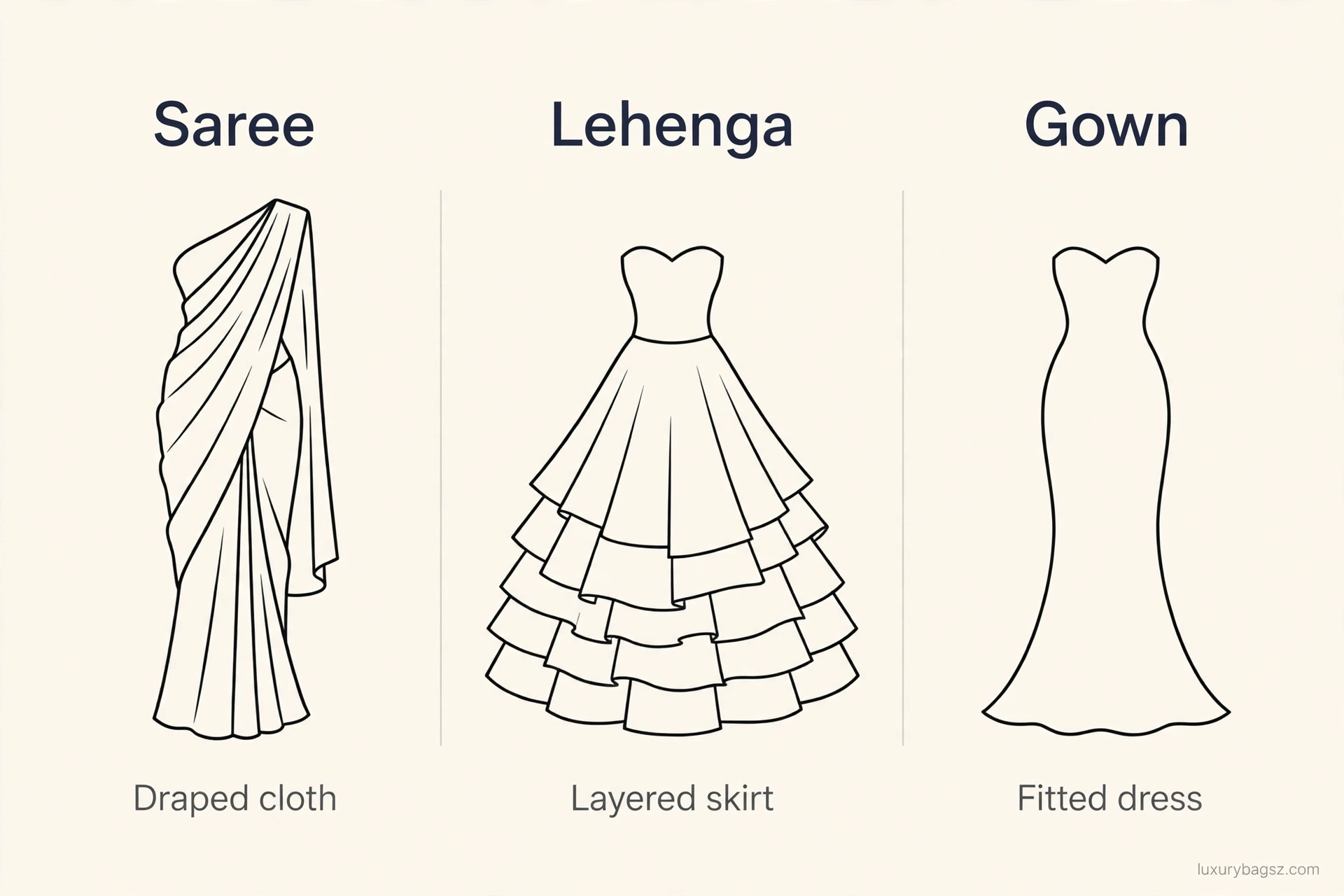
A red-carpet saree is engineered: pre-stitched drapes, sculpted blouses, belts, capes and trails turn six yards of cloth into architecture. Zari, sequin and thread embroidery carry the luxury signal. Silk Kanjeevarams and handloom weaves appear beside chiffon and organza concept drapes, often chosen to honour a designer, a region or a family connection, and widely noted when they do. The blouse does modern work: corsetry, halters, jackets and embellished backs let the saree meet contemporary red-carpet grammar while the drape keeps its identity unmistakable.
Cannes and the Global Stage
Cannes is where Bollywood style is judged worldwide, and its veterans are studied like athletes. Aishwarya Rai Bachchan's long Cannes history, including a widely reported gold couture gown, set the template early. Deepika Padukone and Priyanka Chopra Jonas have each carried both wardrobes abroad: gowns for premieres, sarees for photocalls and cultural events, proving the saree travels as powerfully as any dress. The lesson for readers is confidence in heritage cloth. On the world's most photographed steps, the looks remembered longest are usually the ones that refused to blend in.


The Designers Behind the Looks
Indian couture houses such as Sabyasachi, Manish Malhotra, Anamika Khanna, Abu Jani Sandeep Khosla and Tarun Tahiliani anchor the traditional wardrobe with embroidery ateliers of genuine scale. Global houses share the same clients for gown moments, and stylists move stars between the two worlds night by night. The mix is the signature: no other major cinema dresses this bilingually. Young designers get real chances here too. A single award-night look, well photographed, can build a label, which keeps the carpet more experimental than its glamour suggests.
Jewellery: The First Decision
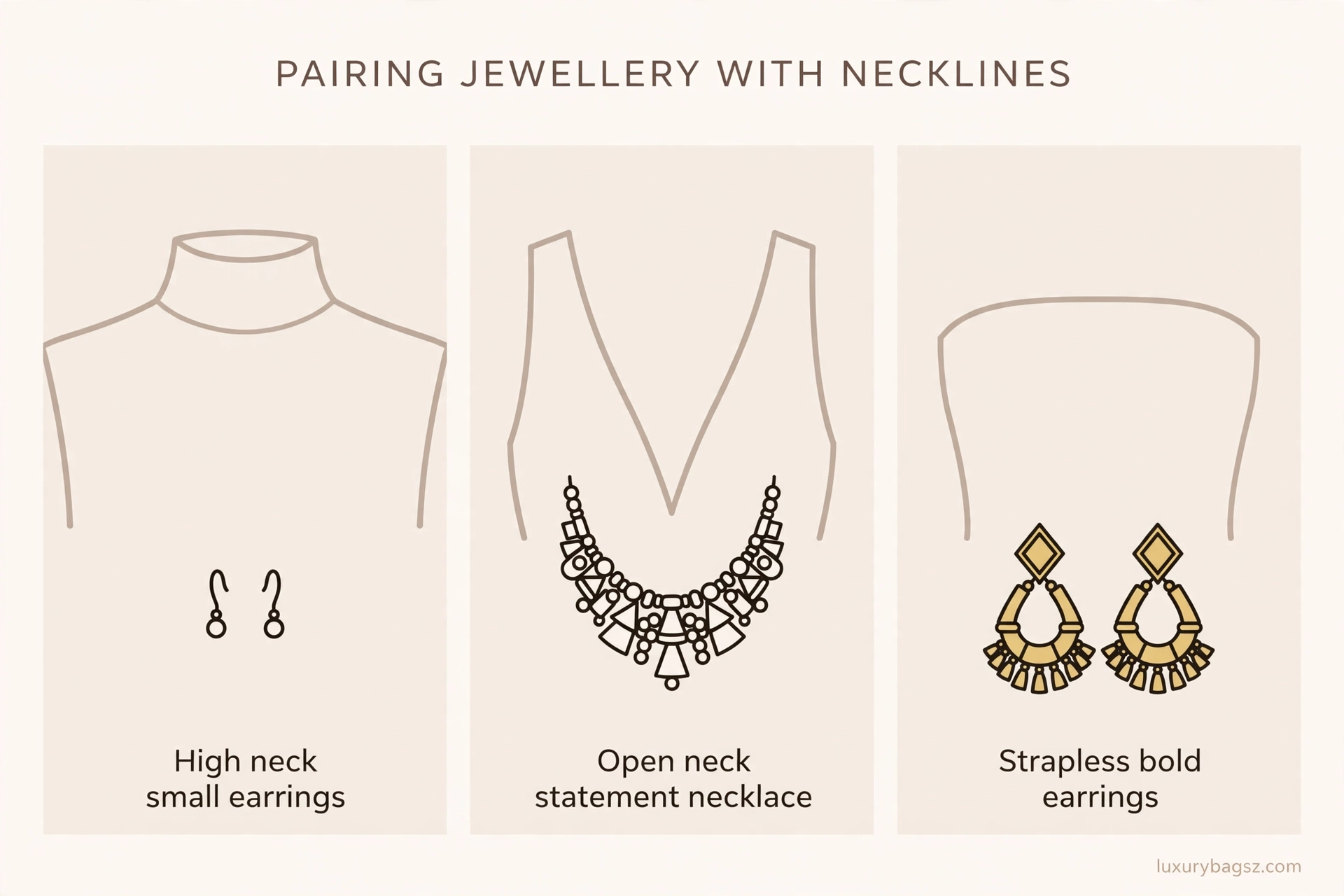
Polki and uncut diamond sets, temple gold, chandbalis and layered necklaces are planned as the look's headline. Many stylists confirm the jewels first, then fit neckline and drape around them. Serpent and animal motifs recur in high jewellery worn by Indian stars; the coiled designs in our Bvlgari Serpenti collection guide show how one motif can carry an entire neckline. For your own dressing, our designer earrings guide helps scale the idea down: one statement earring with a clean neckline beats a full set worn timidly.
Bags: Potlis, Clutches and Minaudières
Traditional looks finish with a potli, the drawstring pouch in silk or embroidery that matches the outfit's craft language and holds exactly a phone, a card and a lipstick. Gown looks take embellished clutches and minaudières in metal, crystal or satin. Our guide to luxury clutches covers the sizes and finishes that photograph best under flash. Colour discipline rules both: the bag either matches the embroidery metal, gold with gold, silver with silver, or disappears into the outfit's deepest tone. It never introduces a new colour story.
Borrowing It for Weddings and Galas
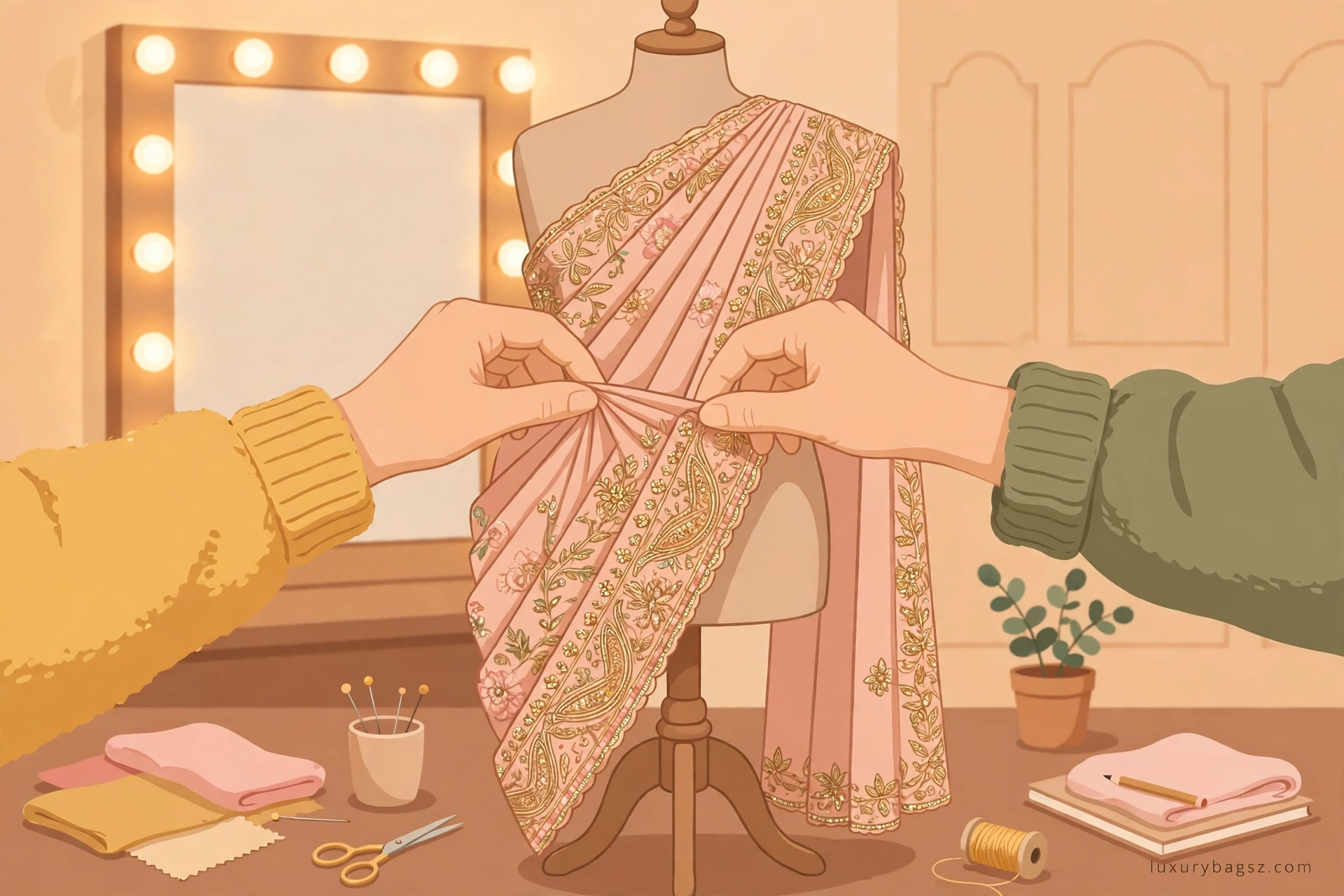
For a wedding, borrow the drape discipline: pin and stitch the pleats, choose the blouse as carefully as the saree, and rehearse sitting and dancing in the full look once at home. For a gala gown, borrow the jewellery order: decide the necklace or the earring first, then neckline, hair and bag around it. That single habit explains most polished photographs. Budgets scale gracefully. One embroidered or heirloom piece, simply styled, outperforms a full imitation look; rental and pre-owned couture are well established routes for one-night grandeur.

What the Carpet Keeps Teaching
Bollywood's carpet argues that heritage and experiment are not opposites. The most praised looks each season tend to be a traditional craft, a weave, an embroidery, a jewel, arranged in a new silhouette. It also argues for dressing at full commitment. Half-hearted glamour reads as apology in photographs; this carpet rewards the wearer who chose the look and meant it. Take that confidence home. Whatever your wardrobe's language, wear its finest version proudly, finish it properly, and walk like the carpet was laid for you.
Frequently Asked Questions
What do Bollywood stars wear on the red carpet?
A mix of couture sarees and lehengas with hand embroidery, and international gowns, finished with statement jewellery and potli bags or embellished clutches.
Why is the saree so important on this carpet?
It carries India's textile and embroidery heritage in a form stylists can sculpt like couture. At home and at Cannes it signals identity as strongly as glamour.
Which events matter most for Bollywood fashion?
Filmfare and IIFA lead at home, alongside major magazine and beauty awards. Cannes is the key global stage, where Indian stars are photographed for worldwide media.
Who are the key Indian couture designers for these looks?
Houses widely associated with red-carpet dressing include Sabyasachi, Manish Malhotra, Anamika Khanna, Abu Jani Sandeep Khosla and Tarun Tahiliani, among others.
How is the jewellery chosen?
Often first. Polki, temple gold and diamond sets set the neckline, drape and hair; stylists then build the garment around the jewels rather than adding them last.
What bag finishes a saree look?
A potli pouch in matching or complementary embroidery is traditional and practical. Gowns take metal, crystal or satin clutches matched to the jewellery's tone.
Can I wear these formulas to a wedding?
Yes. Copy the discipline rather than scale: a well-draped saree, one planned jewellery statement, a small finished bag and a rehearsed, comfortable fit.
Do Bollywood stars wear gowns or sarees abroad?
Both. Stars such as Deepika Padukone and Priyanka Chopra Jonas have worn gowns for premieres and sarees for photocalls and cultural events at the same festivals.
How do stylists create variety across so many events?
By rotating silhouette families, concept saree, gown, lehenga, tailoring, and changing the craft headline each time: embroidery, weave, jewellery or drape.
What is the most common styling mistake to avoid?
Under-finishing: an unplanned drape, jewellery added as an afterthought and a bag in a competing colour. This carpet rewards complete, deliberate looks.
Final Verdict: Craft Is the Dress Code
Bollywood red-carpet looks succeed on craft and commitment: embroidery treated as couture, jewellery treated as architecture, and heritage worn without apology beside global gowns. Borrow the discipline, and any evening wardrobe rises to the occasion.