

Gina Shoes: The British Crystal Evening Shoe, Explained
Gina in Brief: Britain's Evening Shoe Specialist
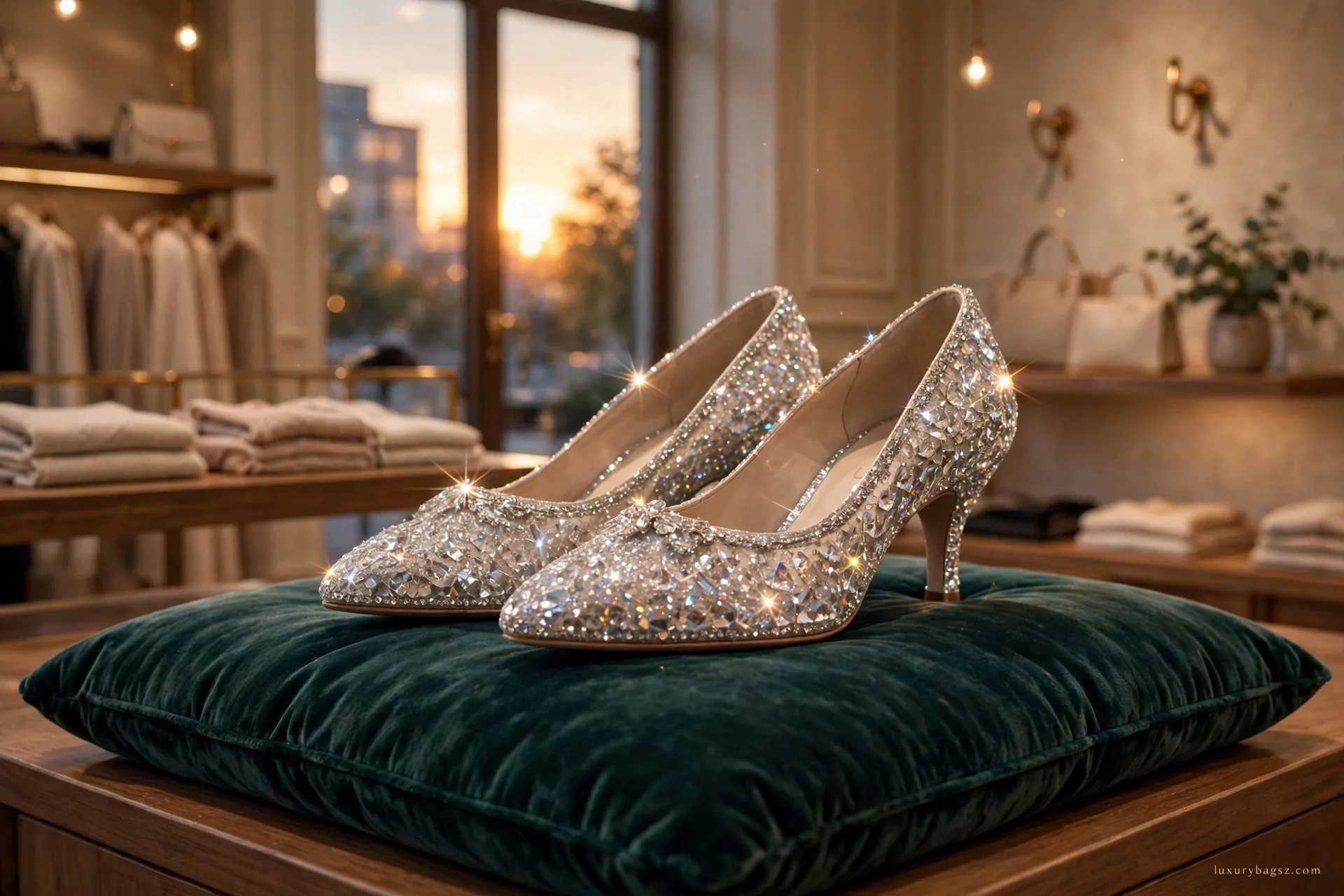
Gina is a British luxury label, founded in London in 1954, that makes almost nothing but evening shoes: crystal-covered courts, sandals and peep toes, hand finished and unapologetically sparkly. Buy Gina when the event is the point — weddings, balls and red carpets. The shoes are occasion pieces rather than daily wear, typically priced in the mid to upper hundreds of pounds.
Key Takeaways
- Gina is a London label specialising in crystal evening shoes since 1954.
- Courts, sandals and peep toes in satin and crystal finishes lead the range.
- Bridal shoes are a major part of the business, in ivory and white satin.
- Fit is generally true to size; straps and peep toes suit narrower feet best.
- Typical prices sit in the mid to upper hundreds of pounds.
- Pre-owned value turns on crystal completeness and satin condition.
A Label That Only Does Evenings
Most shoe brands chase every market. Gina, founded by Mehmet Kurdash in London in 1954, built its name on one: glamorous evening footwear, made with fine crystals and satin. That focus shows in the range. There are no trainers, no loafers and no work pumps to dilute the point, just variations on the dressed-up shoe. It belongs in the world our fairytale special occasion shoes guide describes, where the shoe is closer to jewellery than to clothing. The shoes are designed in London and have long been associated with hand finishing, with crystal work applied piece by piece rather than sprayed on in effect. Longevity matters here. Gina has dressed several generations of wedding parties and ball guests, which gives the label a depth that newer occasion brands cannot copy. Its London store has long been a destination for brides and mothers of brides shopping together, a ritual that says much about who the shoes are for.
The Signature Styles
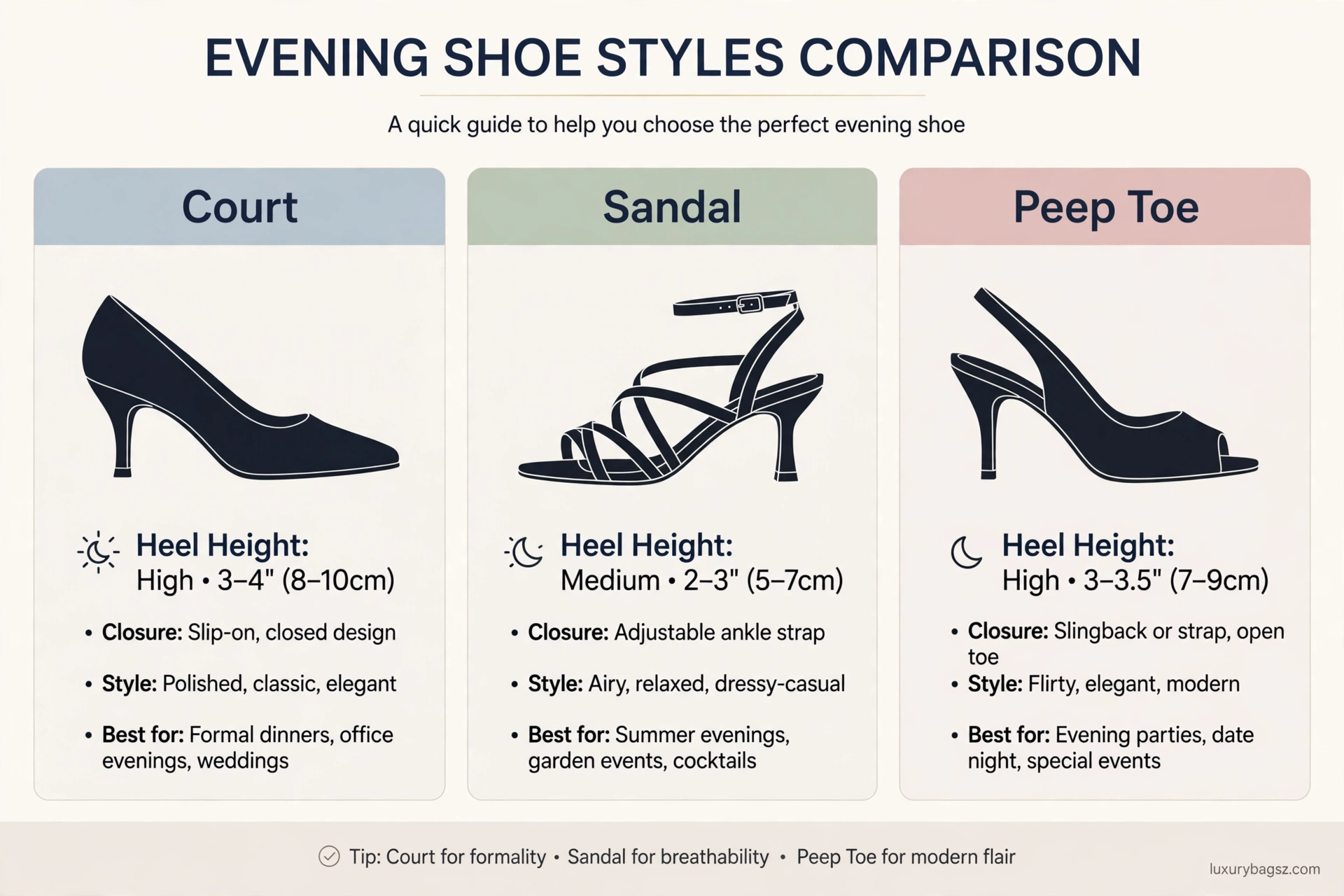
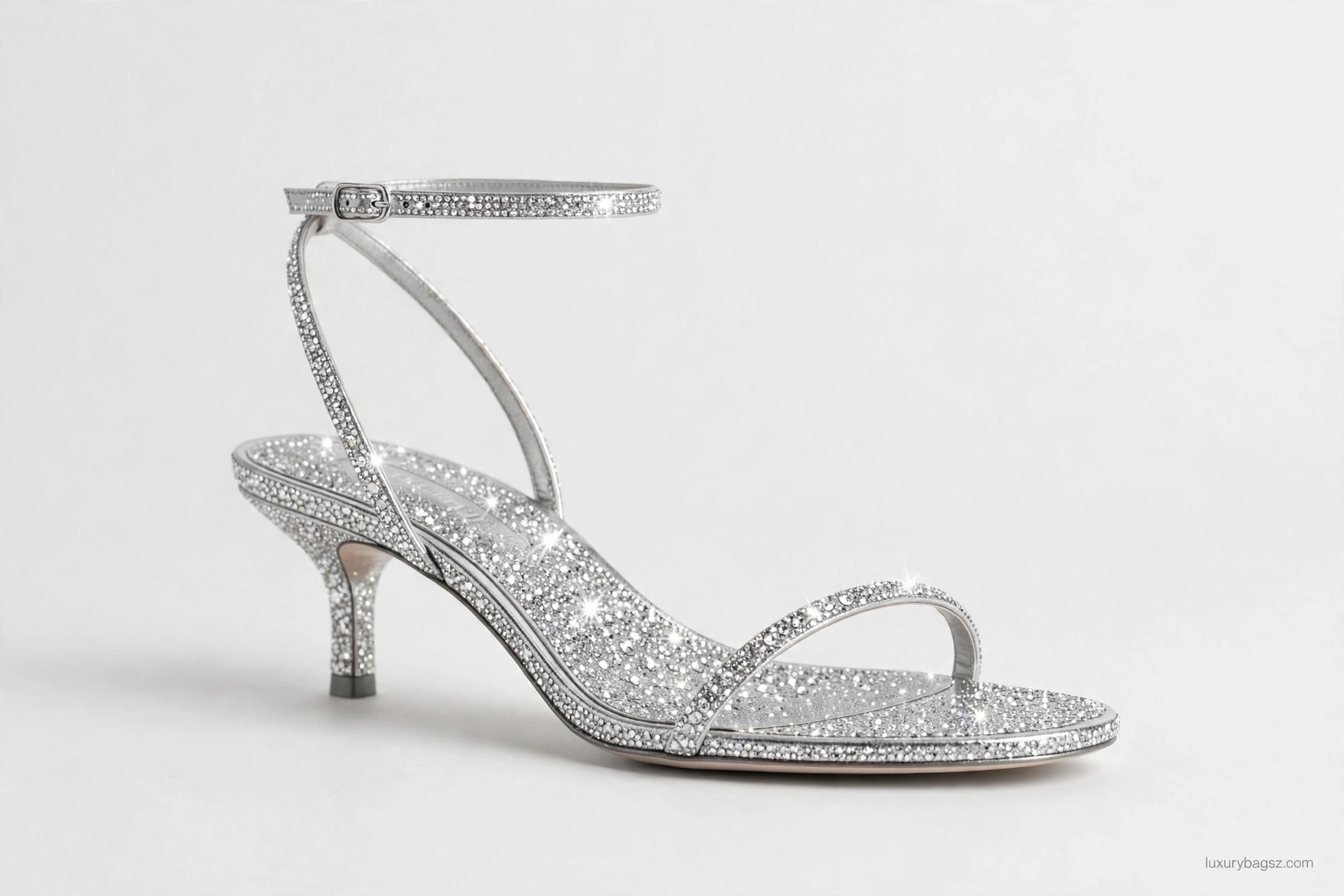
The crystal court shoe is the classic Gina: a closed or peep toe, a mid to high heel and an upper dense with crystals that catch light with every step. Strappy sandals run it close, in silver, gold and nude tones, with fine straps that suit bare evening legs and floor-length dresses. Bridal styles use the same shapes in ivory and white satin, sometimes with crystal detail kept softer for the dress to lead, as our designer wedding shoes guide notes for specialist bridal labels. Seasonal ranges add colour: red, black and jewel tones for winter balls, pastels for summer weddings. The silver crystal sandal, though, is the perennial seller.
Materials and Crystal Work
Satin is the base cloth of the house, dyed in deep, even colour. Crystals are set across it in dense patterns, often covering the whole upper and heel. Leather linings and soles keep the shoe feeling like a luxury product rather than a costume one, and the straps on sandals are finer than high-street equivalents. That density of crystal is the point and the price driver. A fully covered court uses a great many stones, each fixed by hand-guided work. The trade-off is fragility. Crystal uppers dislike rain, rough floors and the crush of a crowded dance floor's edge, and should be worn with that in mind.
Sizing and Comfort, Honestly
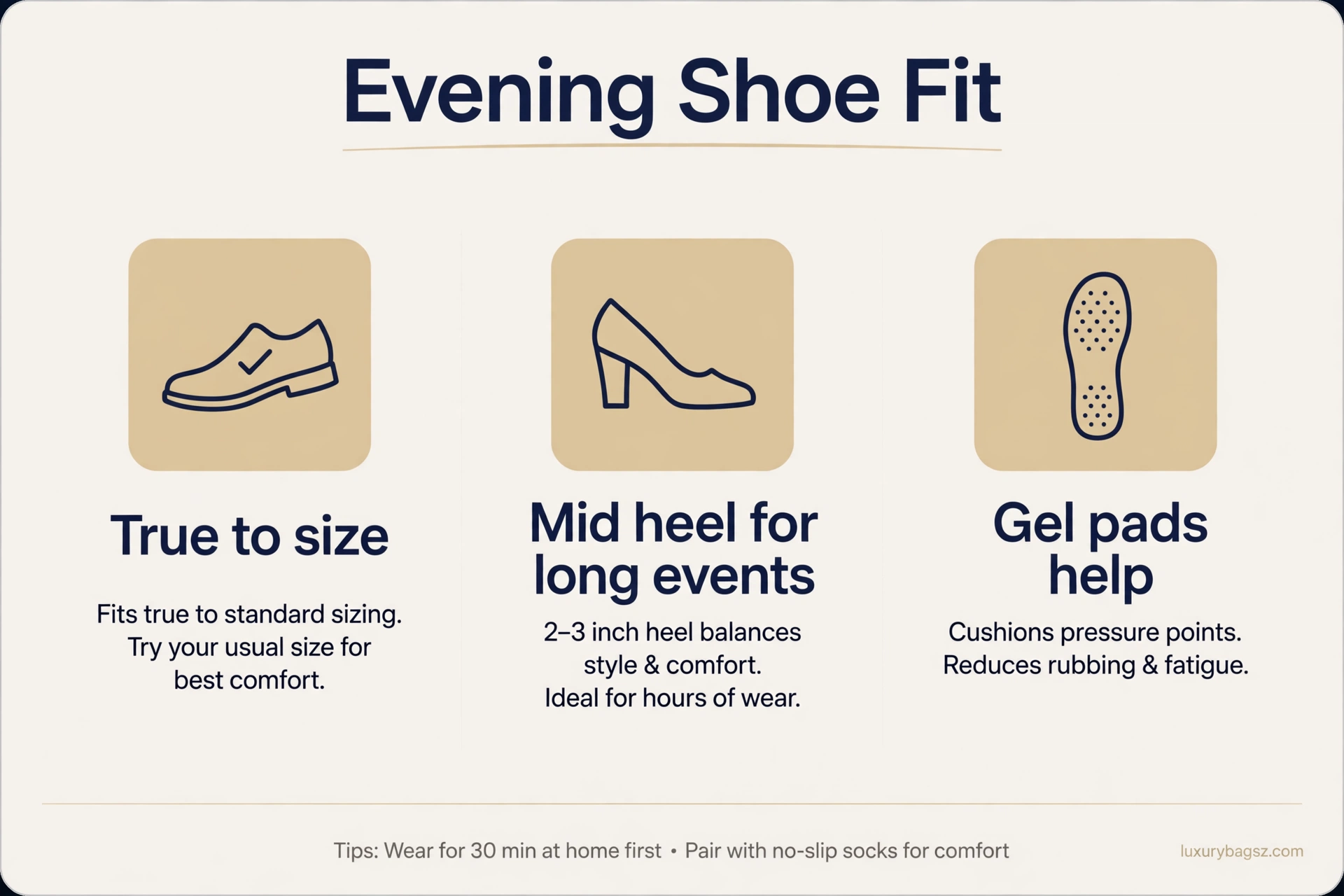
Gina sizing is broadly true to size in UK terms. Peep toes and narrow sandals suit standard to narrow feet best; wide feet often feel the front strap first. Heels run from mid heights suitable for a whole evening to high stilettos best kept for short appearances. Choose by the event's floor time, not its photographs. Evening shoes of this kind offer little padding by design. Thin gel pads under the front of the foot make a real difference and stay invisible. Choose the shoe with the outfit in the room if you can. Crystal tone reads differently against ivory, white and colour, and the wrong silver can look grey. For long events, a mid heel in the same style usually exists. The photographs will look identical; your feet, by midnight, will know the difference. Break new pairs in at home on carpet. Satin and crystal uppers mark easily, so the first outdoor wear should be a decision, not a test run.
Styling Gina Shoes
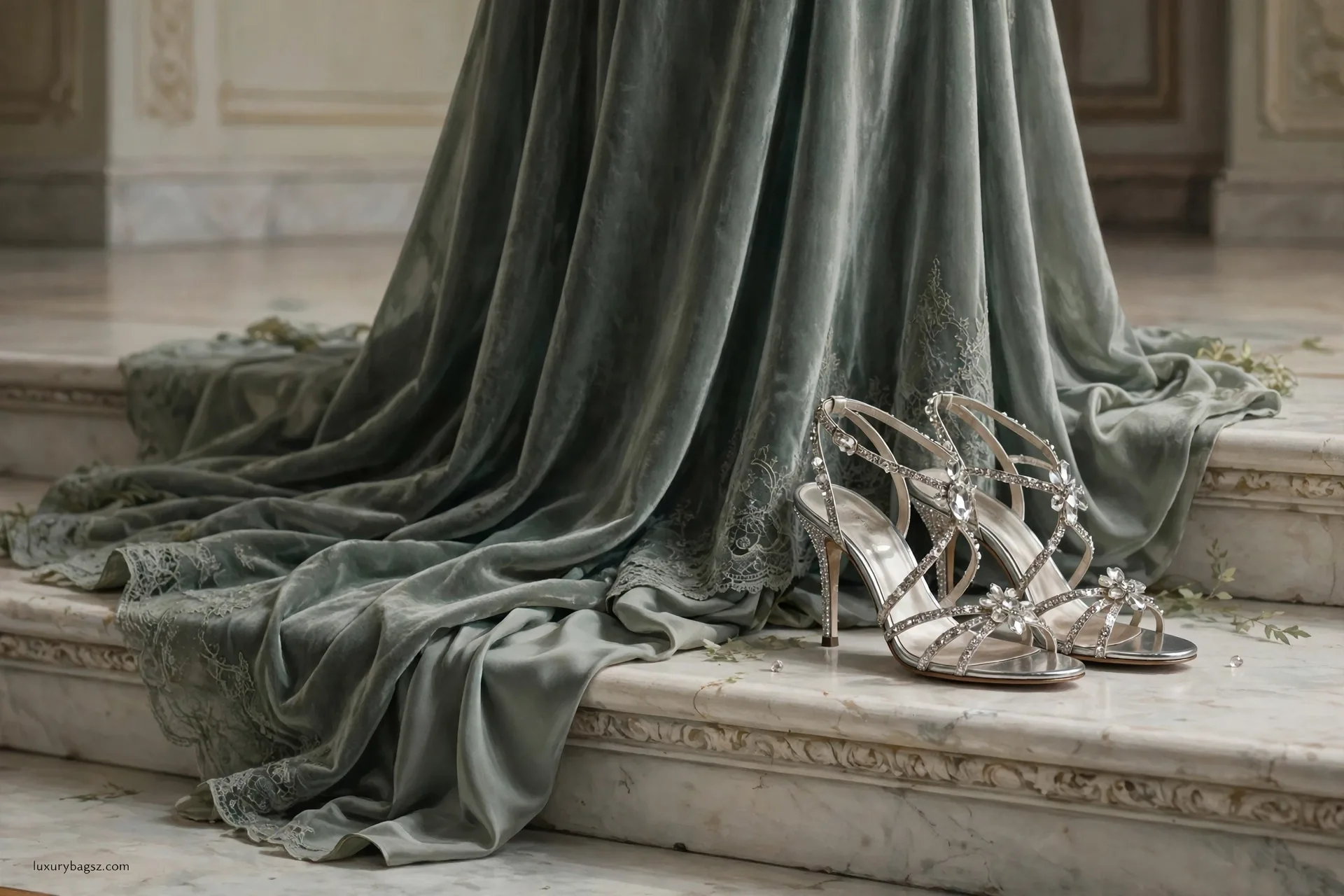
A crystal Gina court finishes a plain gown the way a necklace finishes a plain neckline. Black, navy and deep red dresses all take silver crystal well. Our Sergio Rossi heels guide shows the sleeker Italian route to evening polish; Gina is the more glittering, celebratory one. For playful contrast, our Sophia Webster shoes guide covers wit and colour, while Gina stays with classic glamour. Keep jewellery smaller when the shoes are fully crystal. The eye can hold one field of sparkle at a time, and the shoes are already it.
Prices and Where Gina Sits
New Gina shoes typically sit in the mid to upper hundreds of pounds, with fully crystal courts and sandals at the top of the band. That places the label below the very top tier of Parisian evening shoes and above high-street occasion wear, priced on crystal work and small-scale making. Our perfect party shoes guide puts such shoes in cost-per-wear terms: a pair worn to six events a year earns its price quickly. Sales appear at the label's own store and through luxury retailers at season's end. Core silver and bridal ivory hold price; strong seasonal colours discount most.
Pre-Owned Checks
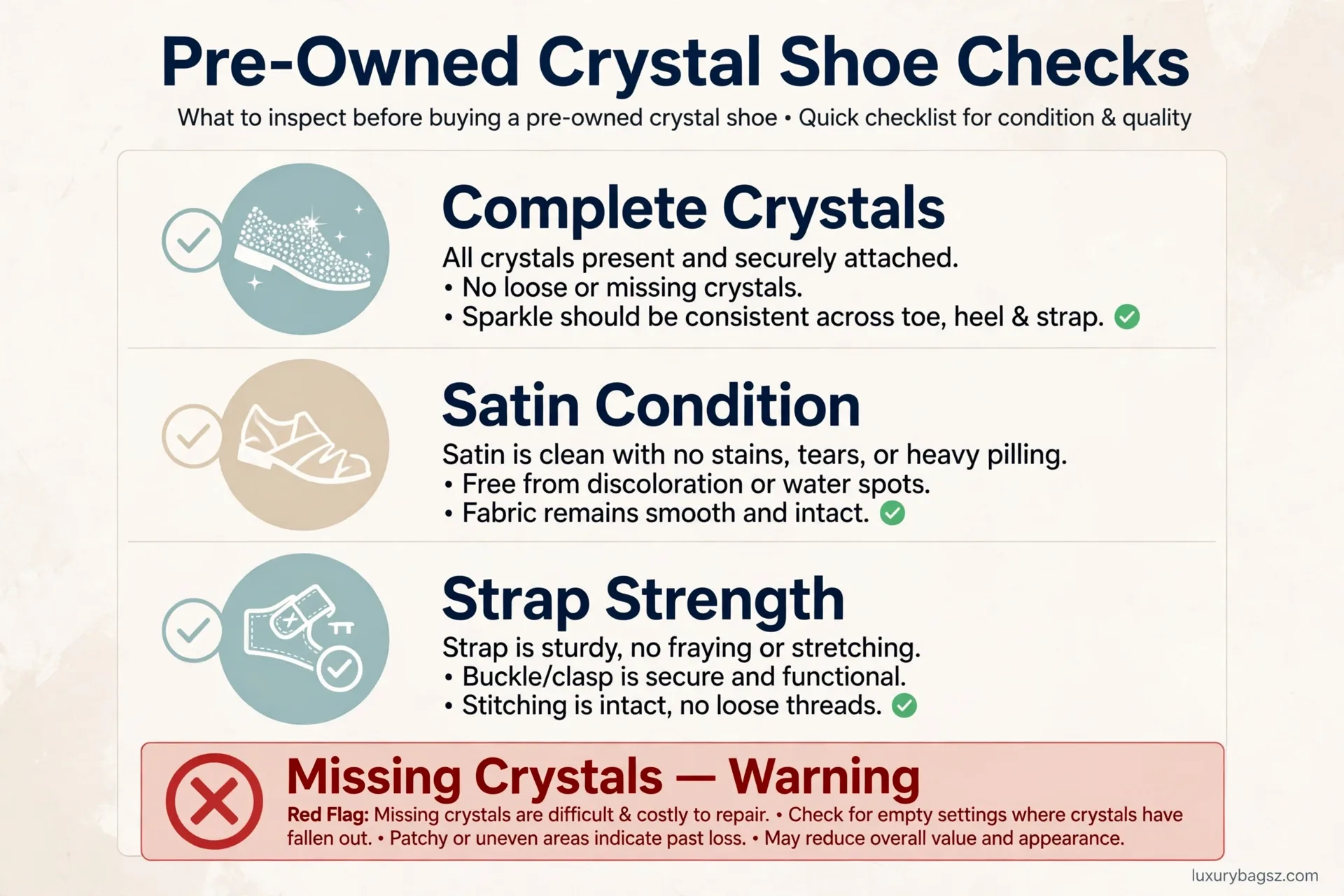
Crystals first, under the brightest light you have. Missing stones appear as dark or dull points in the pattern, and clusters of losses cut value sharply. Check satin at the heel and toe for scuffs and water spots. Satin evening shoes are often worn once, but once can include a wet pavement. Test every strap and its buckle or fastening. Fine straps carry the whole shoe, and a strap repaired with visible glue should be priced as damaged. Confirm both shoes match in crystal tone and satin shade. Display pairs fade unevenly, and evening light hides a mismatch that daylight will not.
Care and Storage
Store Gina shoes in dust bags, each shoe separate, with tissue at the toe. Crystals should never rest against satin, even their own. Brush crystals only with a dry, soft brush to lift dust. Liquids dull the stones' backing and can loosen the setting over time. Keep them for dry venues. If an event threatens rain, a plainer shoe that night protects both the crystals and the satin in one decision. A specialist cobbler can replace small numbers of stones. Ask early, while the pattern around the loss is still complete to copy from.
The Name and the Muse
The label’s name is a love letter. Mehmet Kurdash, a Turkish Cypriot master shoemaker from a family in the trade since the nineteenth century, named his young company after the Italian film star Gina Lollobrigida, his muse and the era’s emblem of glamour.
The choice set the template for everything after: shoes designed as tributes to screen-age femininity, named and styled after famous women, a habit the founder’s design books passed down through the family.
The family still runs the house. Mehmet’s sons, Attila, Aydin and Altan Kurdash, grew the workshop their father founded in 1954 into the modern label, keeping design and making under family control rather than selling the name to a group. In an industry of acquired heritage brands, Gina remains what it began as: a family atelier with boutiques.
Made in London: The Tottenham Factory
Gina’s proudest claim is geographic. The British Footwear Association describes the label as the last and only British designer label creating luxury footwear in London, and the making genuinely happens there: in 2011 the company consolidated production into a 40,000 square foot factory in North London.
Factory accounts describe a few dozen master craftspeople dividing the work by hand: cutting leathers, building soles, sewing diamanté work and setting the Swarovski crystals the house uses, stone by stone. Italian leathers come in; finished evening shoes go out to the label’s own boutiques and to floors such as Harrods and Selfridges.
That structure explains both the price band in this guide and the product’s character. London-made, small-batch and hand-finished is expensive in a way no marketing can fake, and it caps how many pairs can exist, which is why core styles sell through rather than discounting deeply.
Gina Couture: The Bespoke Service
Above the ready-to-wear range sits Gina Couture, the label’s bespoke salon service, run from its Mayfair presence. Clients bring the occasion, and often the outfit itself, and have shoes made to measure and to match: satin dyed or chosen for a specific dress, crystal coverage set at the level the event wants.
The salon’s famous extremes show the ceiling of the craft: mules finished with precious-metal buckles set with diamonds have been produced for clients who wanted jewellery that happened to be footwear. Such pieces are theatre, but they demonstrate the workshop’s range in a way no catalogue copy can.
For brides, the service solves a real problem: the exact ivory of a dress is a specific colour, and a bespoke pair can be made to live with it rather than near it. That is the Couture service’s quiet, practical core beneath the headlines.
Where to Buy: Sloane Street and Beyond
The label sells the way it makes: through its own doors first. Its Knightsbridge presence began in the early 1990s and settled into a Sloane Street flagship, with Mayfair salons following for the Couture service, and a small number of further boutiques including in Dubai, where evening dressing is a serious local industry.
Luxury department stores carry the ready-to-wear range: Harrods and Selfridges are the longstanding London names, giving buyers who cannot reach a boutique a fitting room and a returns desk. Buy pre-owned only where crystal checking is possible before payment, for the reasons the pre-owned chapter set out.
One buying habit suits this label in particular: shop with the event fixed. Gina’s range is a wall of sparkle designed to overwhelm, and the buyer with a dress, a date and a floor surface in mind chooses in minutes what the browser without them cannot decide in an hour.
Frequently Asked Questions
What is Gina the shoe label known for?
Crystal-covered evening shoes: courts, sandals and peep toes in satin, made by a London label founded in 1954 that specialises in occasion footwear.
Are Gina shoes made for everyday wear?
No. They are event shoes by design, with crystal uppers and fine straps that suit weddings, balls and evenings rather than daily use.
Do Gina shoes run true to size?
Generally yes in UK sizing. Narrow styles and peep toes suit standard to narrow feet best, so wider feet should try before buying where possible.
How much do Gina shoes cost?
Typically the mid to upper hundreds of pounds new. Fully crystal styles cost the most; seasonal colours often reach end-of-season sales.
Are Gina shoes good for brides?
Yes. Ivory and white satin styles, with or without crystal detail, are a long-standing part of the range and a favourite with brides wanting sparkle.
What should I check on a pre-owned pair?
Crystal completeness under bright light, satin scuffs and water marks, strap condition, and that both shoes match in tone and shade.
Can lost crystals be replaced?
Usually, yes, by a specialist cobbler or the label's repair route, for small numbers of stones. Large losses are costly and change the shoe's value.
How do I keep the crystals shining?
Dry brushing only, storage in dust bags away from other shoes, and no rain. Liquids and sprays can dull the backing behind the stones.
Which style is the most versatile?
A silver crystal sandal or a mid-heel crystal court. Both work across weddings, balls and evening dresses in most colours.
Is Gina still an independent label?
It remains a London-based specialist label with a long family history, selling through its own channels and luxury retailers rather than chasing mass distribution.
Conclusion: The Specialist's Sparkle
Gina has spent seven decades doing one job: the dressed-up shoe, covered in light. In a market of generalists, that focus is the brand's strength. Choose the heel for the evening you actually have, guard the crystals, and a Gina pair will serve years of celebrations without ever looking out of place.






