Pink-on-Pink Trend: The One-Colour Styling Formula That Always Works
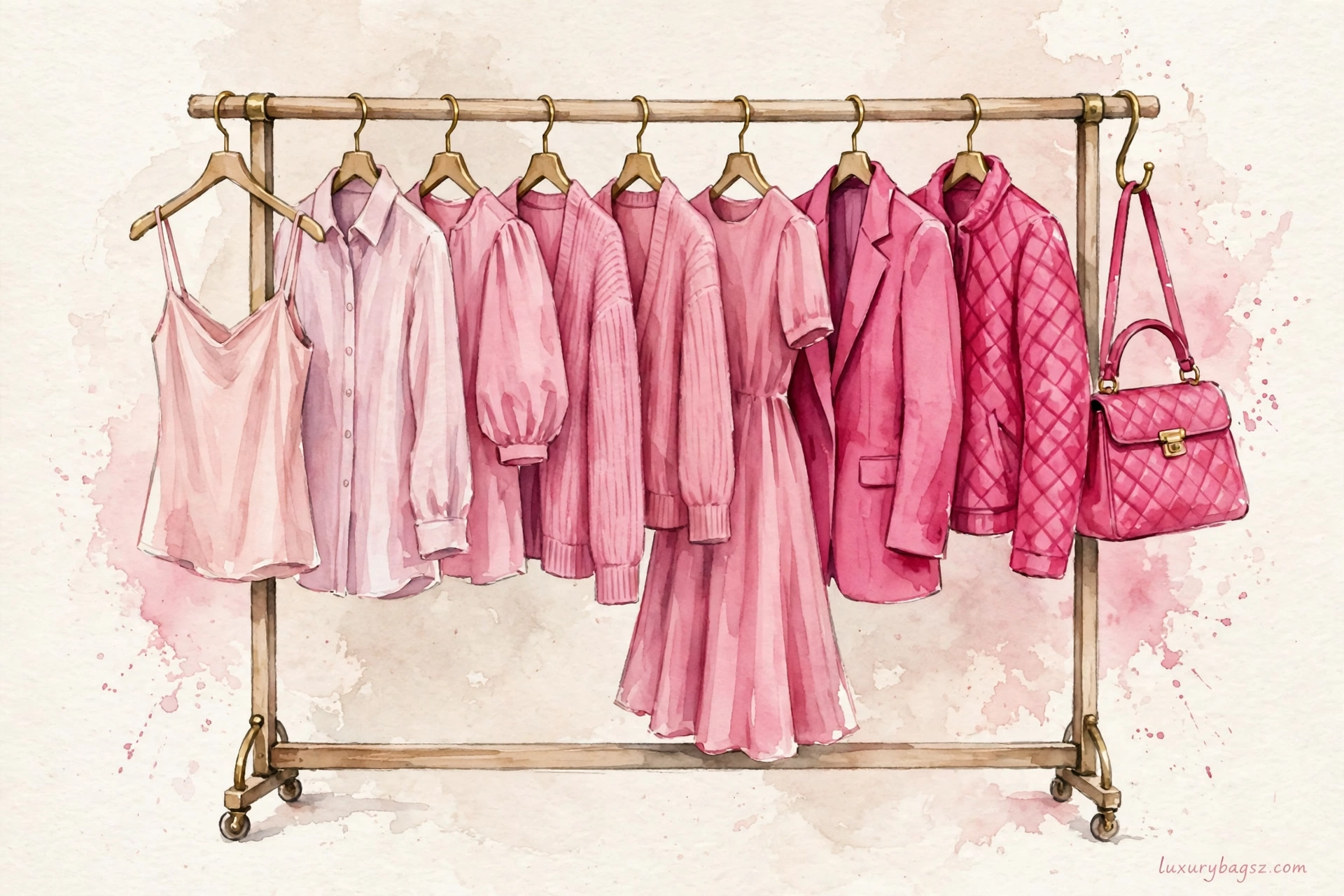
One Colour, Done Five Ways: Pink-on-Pink in Brief
Pink-on-pink is a styling formula, not a colour accident: wear several shades of pink in one outfit, arranged as a ladder from pale to deep, with textures mixed so each piece stays distinct. Done that way, one-colour dressing looks intentional, polished and surprisingly grown-up. The formula has three rules. Stay inside one undertone family, vary the depth from piece to piece, and never let two pieces match exactly unless they are a bought suit. Follow those, and pink-on-pink works for the office as surely as for a party.
Key Takeaways
- Build a tonal ladder: at least three depths of pink in one outfit.
- Keep one undertone — all warm or all cool pinks — or the look splits.
- Mix textures (knit, satin, tailoring, leather) so pieces stay distinct.
- Put the deepest shade where you want the eye: hem, bag or shoe.
- Exact matches flatten; near-matches in different fabrics enrich.
- Break with skin, hair and one metal — gold or silver, not both.
A Formula, Not a Mood
Other pink trends are about a feeling or a product; this one is about construction. Our Rosecore fashion trend guide covers pink as romance, and the bag-led Barbiecore look is a separate pleasure — pink-on-pink is the technique that can organise either. That is why it survives trend cycles. Monochrome dressing works in black, cream and navy in every era; pink is simply its most expressive colour, because the family's range from blush to fuchsia is so wide. Treat this guide as a recipe you can run with pieces you already own. Most wardrobes hold three pinks without knowing it — a knit, a shirt, a bag — and the formula turns that accident into an outfit.
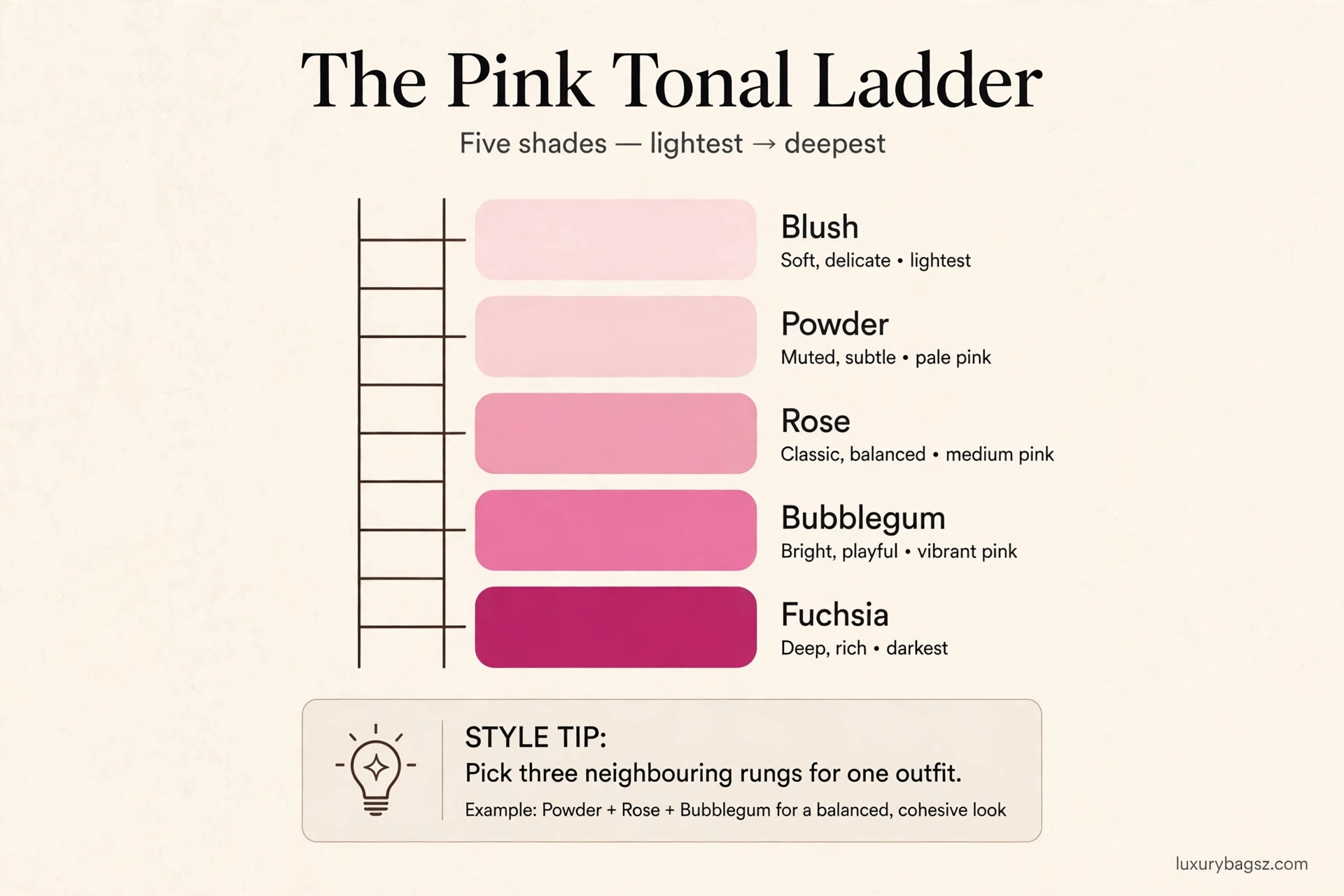
Build the Tonal Ladder
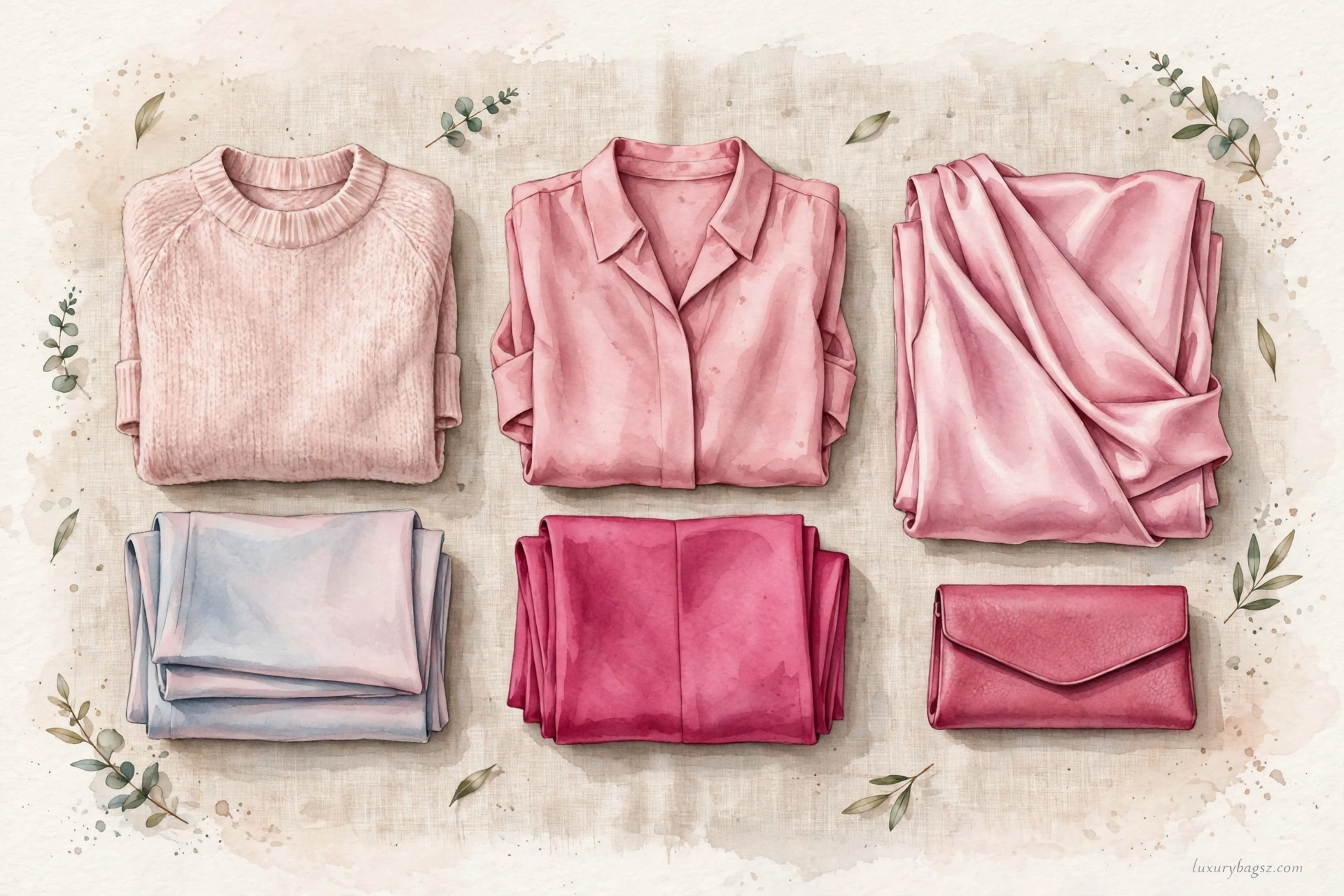
Lay your pinks out together in daylight and order them pale to deep: blush, powder, rose, candy, fuchsia is the typical ladder. You need at least three rungs in an outfit for the effect to read. Two pinks only can look like a near-miss — as if a suit separated in the wash. Three or more depths, clearly different, read as a decision. Mind the undertone while you build. Warm pinks lean peach; cool pinks lean blue. A ladder that mixes the two families looks muddy in photographs, however pretty each piece is alone.
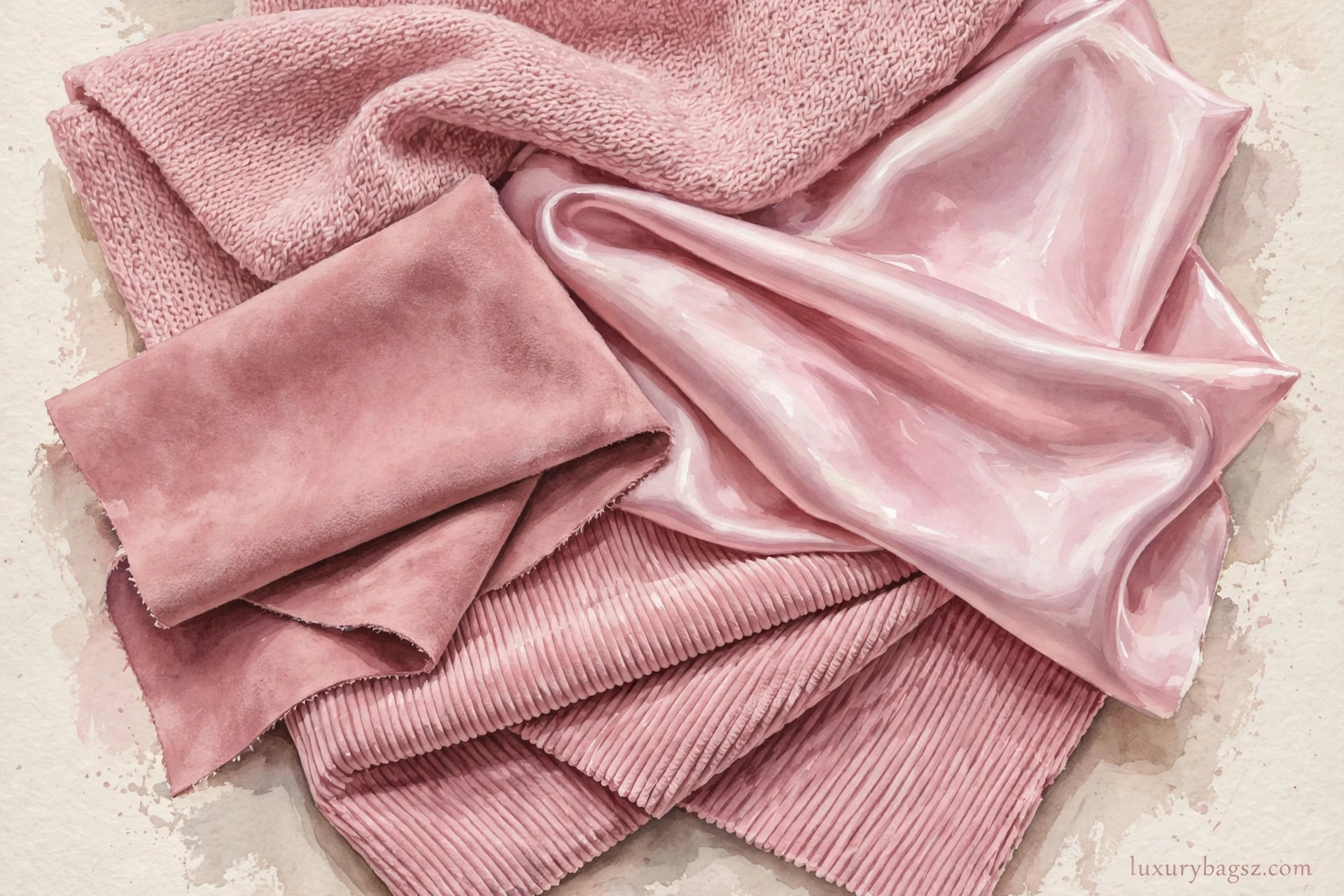
Texture Does the Separating
In one-colour dressing, texture replaces colour contrast. A matte knit against satin, smooth leather against wool tailoring, chiffon over a firm slip — these differences are what let the eye enjoy the sameness. Aim for at least one shine and one matte in every pink-on-pink outfit. All-matte pink can look flat and nursery-like; all-shine pink tips into costume. Denim in a pink wash, pink suede and pink tweed are secret weapons here: their surfaces are so distinct that even close shades separate cleanly on the body.
Placing the Deepest Shade
Decide where the outfit's weight sits. Deepest pink at the hem — a fuchsia skirt or trousers — grounds the look and suits most bodies; deepest at the top suits those who carry colour near the face well. The classic arrangement is pale large pieces, deep small pieces: a blush suit with a fuchsia bag and shoe reads elegant at any age. Reverse it — deep suit, pale accessories — for evening drama. Never place your two deepest pieces far apart with pale between them; the eye bounces. Keep depths in a gradient from head to toe, in either direction, and the outfit flows.

Three Formulas to Copy
Day: powder-pink knit, rose wide trousers, blush trainers or loafers, candy-pink small bag. Soft, mobile, and the ladder is visible without a mirror check. Office: blush tailored suit, deeper rose silk shirt, nude-pink closed shoes. Structure keeps it serious; the colour keeps it human. Add no other colour except your metals. Evening: fuchsia satin dress, paler pink coat or wrap, rose-gold jewellery, a bag one shade deeper than the dress. Evening light forgives — and rewards — the boldest rung of the ladder.
The Bag and Shoes Question
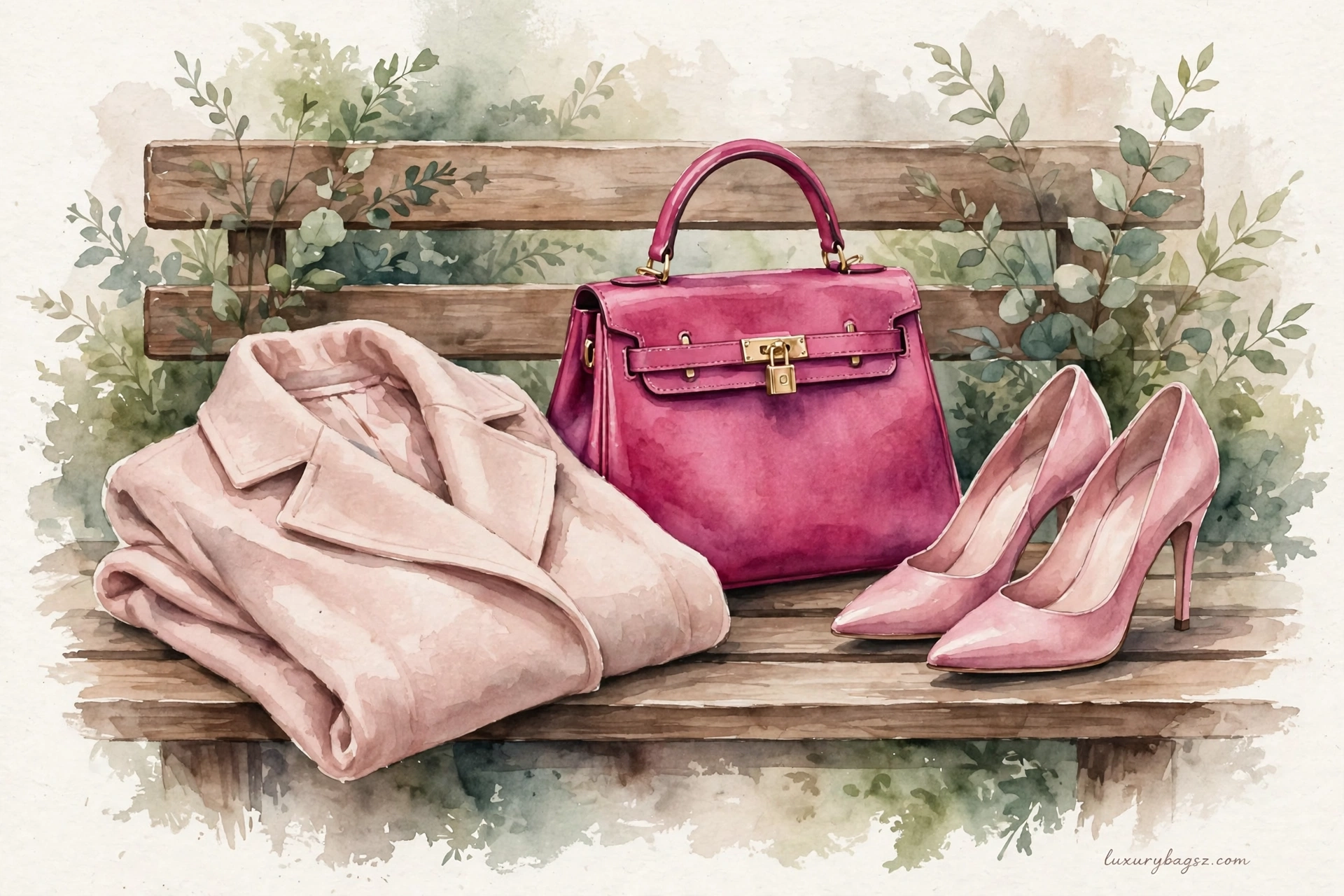
The bag is your ladder's exclamation point. Our edit of pink designer bags and Barbiecore covers the shade ladder in leather; in a pink-on-pink outfit the bag should sit one rung deeper than the largest clothing piece. Structured pink bags hold the formula together best — pieces like the Valentino glam lock bag in pink show how a firm shape stops a soft palette going vague. Shoes can either join the ladder (deepest rung, grounding the outfit) or step off it into nude, cream or metallic. What they should not do is introduce a new colour family; pink-on-pink tolerates neutrals, not guests.
Mistakes That Flatten the Look
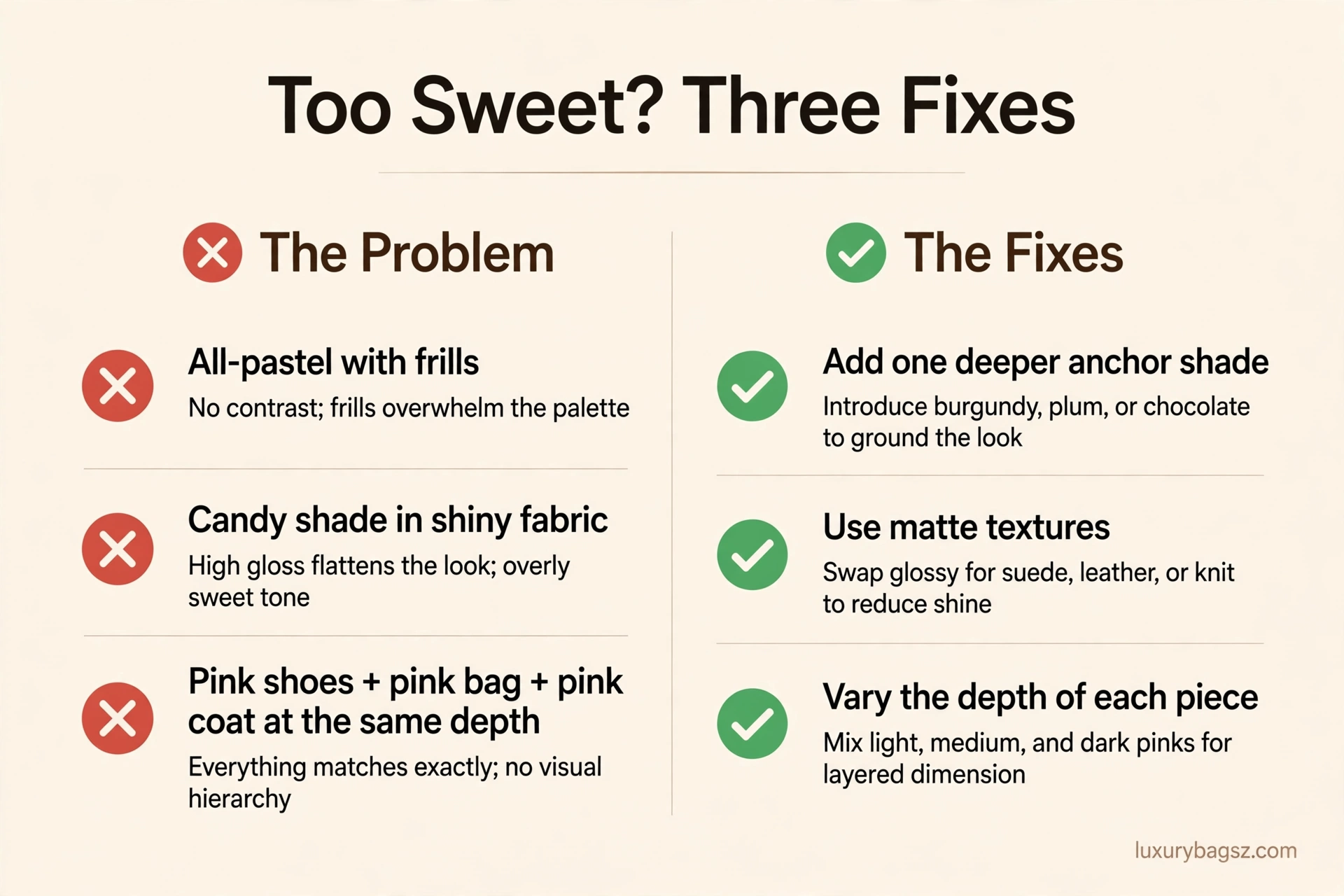
Mistake one: the exact match. A top and trousers in identical pink and identical fabric read as a uniform or pyjamas unless bought as a suit and broken by texture or skin. Mistake two: mixing undertones. One peachy pink among blue pinks looks like a mistake even when it was a choice, because the eye reads undertone clashes as errors. Mistake three: pink makeup at full strength too. When clothes carry the colour, keep makeup fresh and neutral, or the total effect tips from styled to themed.
Scaling the Formula Up and Down
For a first attempt, run the formula at half volume: two clothing pinks plus a pink bag, with shoes neutral. If compliments arrive and mirrors please you, add the third clothing rung next time. For formal events, pink-on-pink in deep registers — rose, wine-pink, fuchsia — with evening fabrics is a genuine alternative to black tie black. Our edit of designer party bags has the small deep-pink clutches that finish it. And when you tire of it, the ladder dismantles gracefully: every rung pairs with white, grey, denim and navy, so a pink-on-pink wardrobe is just a pink wardrobe worn one colour at a time.
Frequently Asked Questions
How many shades of pink do I need for pink-on-pink?
At least three visibly different depths in the outfit as a whole, counting the bag. Two shades tend to look like a mismatched suit; three or more read as a deliberate tonal ladder.
Can pink-on-pink work for the office?
Yes, in the pale-to-mid ladder with tailored shapes: a blush suit, a deeper rose silk shirt and closed shoes. Keep jewellery simple and the silhouette formal, and the colour reads as polish, not play.
What if my pinks are different undertones?
Build two mini-ladders and wear them separately, or bridge with a neutral-heavy outfit and use the odd pink only as the bag. Mixing warm peachy pink with cool blue-pink in one look is the formula's one true failure.
Which pink should go nearest my face?
The depth that flatters you most when worn alone. If bright pink near the face drains you, keep the top pale and put fuchsia at the hem or in the bag; the ladder works in either direction.
Do shoes have to be pink too?
No. Nude, cream and metallic shoes are the formula's approved exits, and they lengthen the leg in a pale outfit. If shoes join the ladder, make them the deepest rung so the outfit is grounded.
Is pink-on-pink only for spring and summer?
Pale ladders peak in spring, but deep ladders — rose, wine-pink, fuchsia in wool, satin and leather — are strong autumn and evening looks. The formula is year-round; only the fabrics change.
How is pink-on-pink different from a pink suit?
A suit matches exactly and is one decision. Pink-on-pink combines separate pieces in graduated shades and textures, which looks richer and lets you build the outfit from a normal wardrobe without buying a set.
Can I add another colour to pink-on-pink?
Only neutrals and metals: white, cream, grey, nude, gold or silver. A second true colour ends the monochrome effect. If you crave contrast, use depth — a much deeper pink — instead of a new hue.
What jewellery suits a pink monochrome outfit?
One metal, kept consistent with bag hardware. Rose gold is the natural partner for warm ladders; silver or white gold sharpens cool ladders. Pearls are the classic non-metal option and soften every rung.
How do I stop pink-on-pink looking childish?
Use tailored shapes, matte textures and the deeper half of the ladder, and avoid frills, bows and novelty prints at the same time. One romantic detail per outfit is charm; four is a costume.
Final Verdict: Run the Ladder, Trust the Formula
Pink-on-pink succeeds when it is built, not stumbled into: three or more depths, one undertone, mixed textures, the deepest shade placed with intent. Start with two clothing pinks and a deeper bag, check it in daylight, and adjust one rung at a time. The result is the rare trend that is also a permanent skill — monochrome dressing, in its happiest colour.