

Hermès Cut Watch: Price, Size and Details
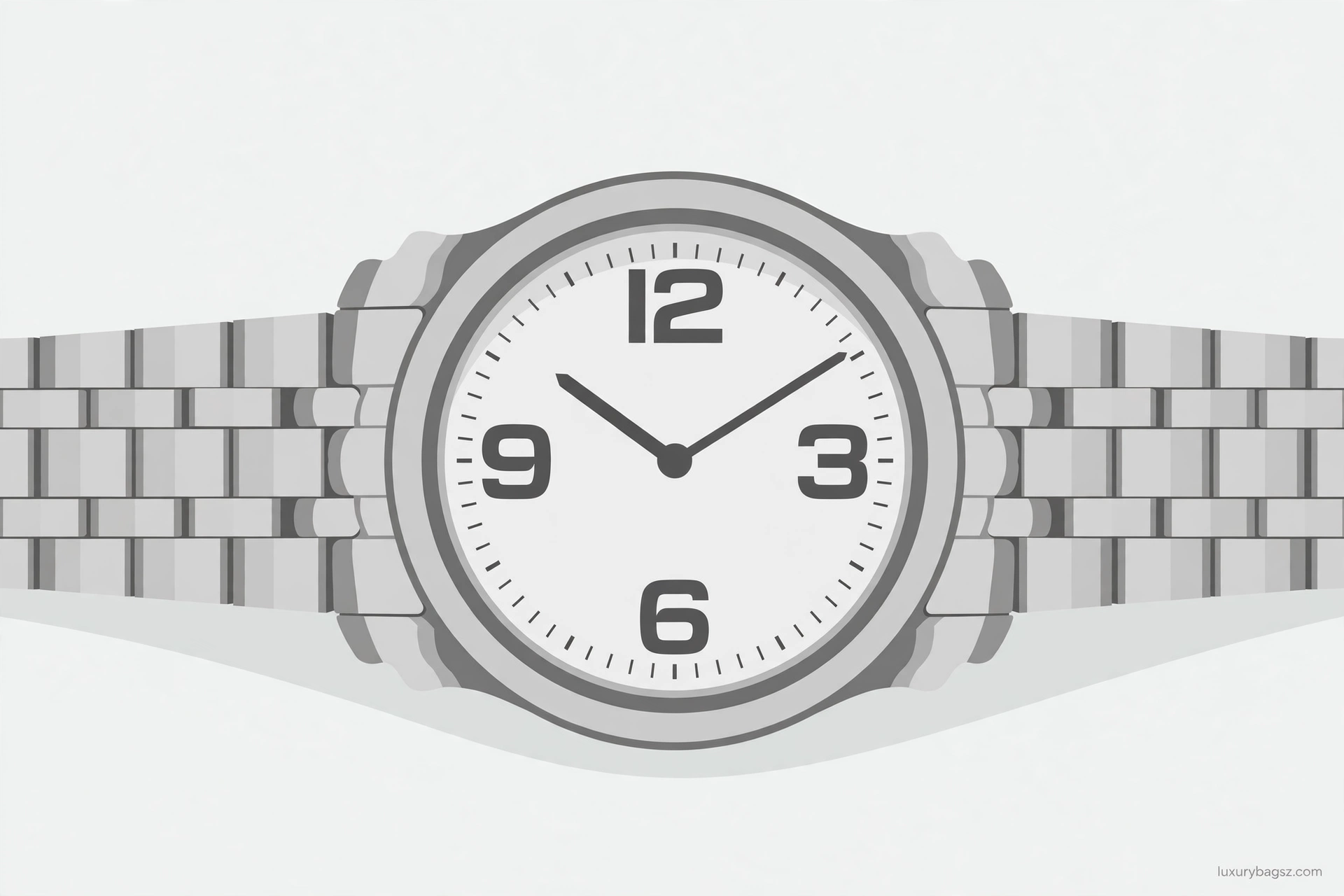
A 36 mm Sports Watch, Cut Into Shape
The Hermès Cut is a 36 mm automatic sports watch launched in 2024, built around a case that is round from a distance and faceted up close, like a pebble with slices removed.
Every standard Cut runs the manufacture H1912 automatic movement with about a 50-hour reserve and 100 metres of water resistance. There is no date; the dial stays clean.
Launch pricing began at €5,400 for steel without diamonds and $6,725 in the US, rising to about $21,900 for the two-tone steel and rose gold version with diamonds.
It was designed as a unisex watch, and that is how it wears. If the bigger H08 feels like a statement, the Cut feels like a well-cut jacket: present, but never loud.
Creative director Philippe Delhotal designed the Cut as a study in geometry: a circle softened by four cuts, so the case feels carved rather than cast, and unmistakably modern.
Key Takeaways
- Launched at Watches and Wonders 2024 in a 36 mm steel case, about 10 mm thick.
- H1912 automatic movement, roughly 50-hour reserve, no date, 100 m resistance.
- The crown sits between 1 and 2 o'clock, marked with an orange lacquered H.
- Versions: steel, steel with diamond bezel, and steel with rose gold, plain or set.
- Prices from €5,400 and $6,725 at launch, up to about $21,900 for two-tone diamond.
- Interchangeable straps in house leather colours make it the playful Hermès sports watch.
What the Cut Is, and Where It Sits
The Cut is the softer sibling of the Hermès H08 watch: same sports brief, smaller case, rounder manners and a design aimed at every wrist.
Hermès described the shape as a circle within a round. Facets cut into the flanks catch light, so the case changes character as your wrist moves through the day.
It arrived as a four-version family in 2024 and has already gained new dial colours. A larger 39 mm version with the Le Temps Suspendu complication followed in 2025.
The timing was deliberate. The Cut joined a booming sports-chic market in 2024 yet refused every cliché of that market, from integrated bulk to skeleton dials and oversized cases.
Philippe Delhotal has described the design process as cutting a circle the way a sculptor roughs out a form, removing material until only the essential shape, and its character, remains.
Case and Dial Details Worth Knowing
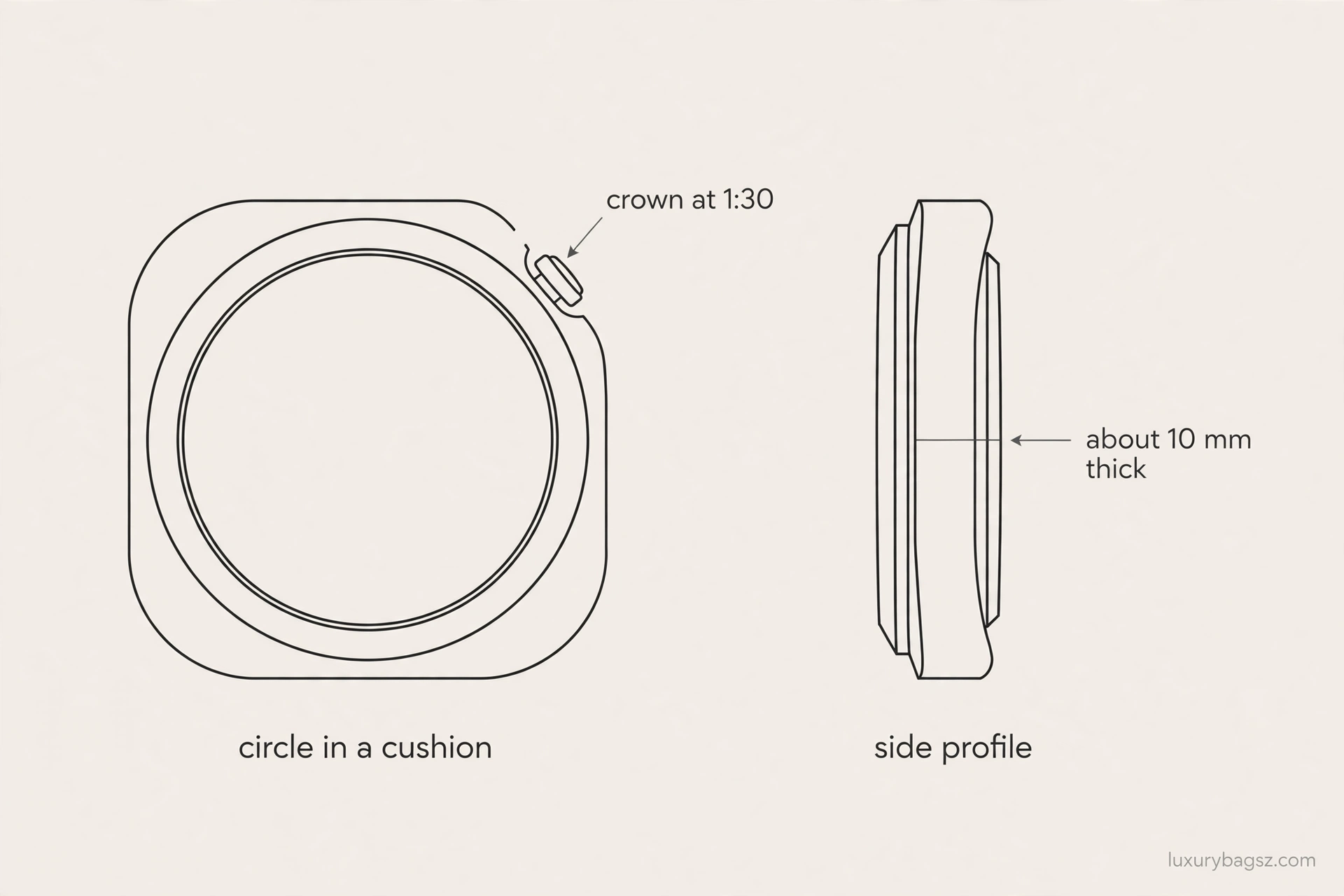
The steel case measures 36 mm across and about 10 mm thick, brushed and polished. The bezel is plain, or set with 56 brilliant-cut diamonds on the gem versions.
The crown sits off-centre, between 1 and 2 o'clock, so it never interrupts the case facets. Its orange lacquered H is the dial-side signature in miniature.
Dials are opaline, silvered or softly coloured, with applied Arabic numerals in a typeface designed for the watch, filled with Super-LumiNova for night reading.
The numerals deserve their own moment: their shapes shift subtly with size, the zero echoing the case itself, a typographic wink that ties dial to architecture in one gesture.
Light blue joined the dial palette later, with dark blue markings and the same luminous numerals, showing how colour, not complication, is the Cut's chosen route to novelty.
Bezel choices change the watch's light more than its size: a plain polished bezel throws clean reflections, while the diamond version scatters light in a fine, jewellery-like halo.
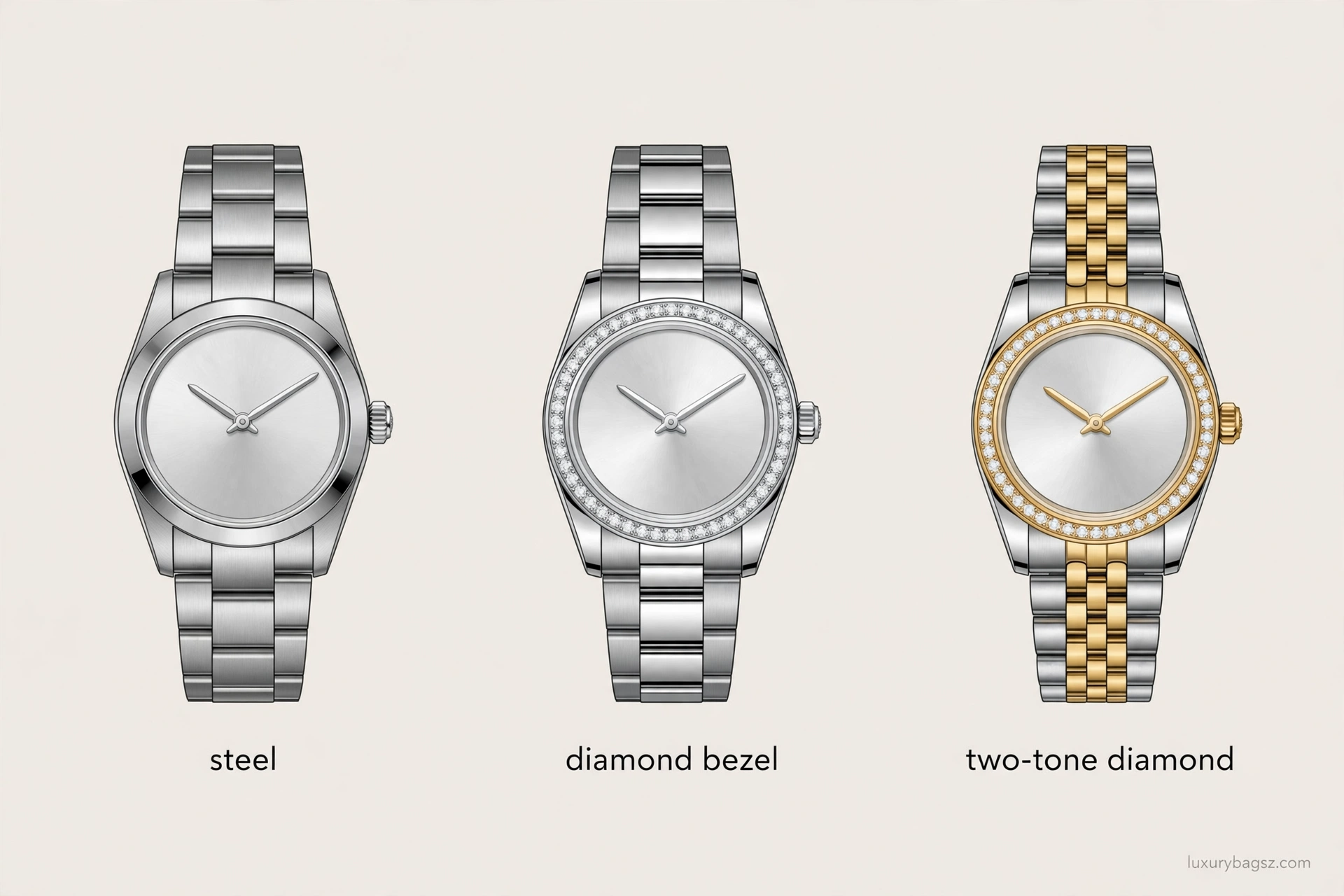
The Versions: Steel, Diamonds, Two-Tone
The entry watch is all steel, on a rubber strap or a steel bracelet. It is the purest read of the design and the one most reviewers reach for first.
Adding a diamond bezel keeps the steel case but lifts the watch into evening territory. The stones are small and bright rather than flashy, in keeping with the shape.
Steel and rose gold versions warm everything up, with gilded numerals and a two-tone bracelet option. With diamonds as well, they top the standard range.
Between the steel and two-tone poles sit the quiet middle options many buyers miss: steel on the bracelet, which dresses the watch up more than any stone on the bezel.
Dial colour is the other versioning lever: silvered opaline for the classic read, soft blue for a fresher mood, each keeping the same luminous numerals and orange-tipped seconds hand.
Two-tone models deserve a second look in person: photographs flatten the contrast between steel and rose gold, while in daylight the warm bezel ring gives the watch a jewellery glow.
Movement: The H1912 Automatic
The H1912 is a manufacture automatic calibre made with Vaucher Manufacture Fleurier. It runs at 28,800 vibrations per hour and holds about 50 hours of reserve.
It drives hours, minutes and a central seconds hand with an orange-tipped counterweight. There is deliberately no date window, which keeps the numerals unbroken.
A sapphire back shows the movement and its H-pattern decoration. For a design-led watch, the mechanical credentials are reassuringly serious and properly Swiss.
The Vaucher connection underpins that credibility: Hermès holds a stake in the movement maker, so the H1912 is a long-term manufacture project, not a bought-in shortcut.
Accuracy in daily wear is what you would expect of a modern Swiss automatic, and the 50-hour reserve means a watch worn on Friday still runs on Monday morning.
Prices From Launch to Now
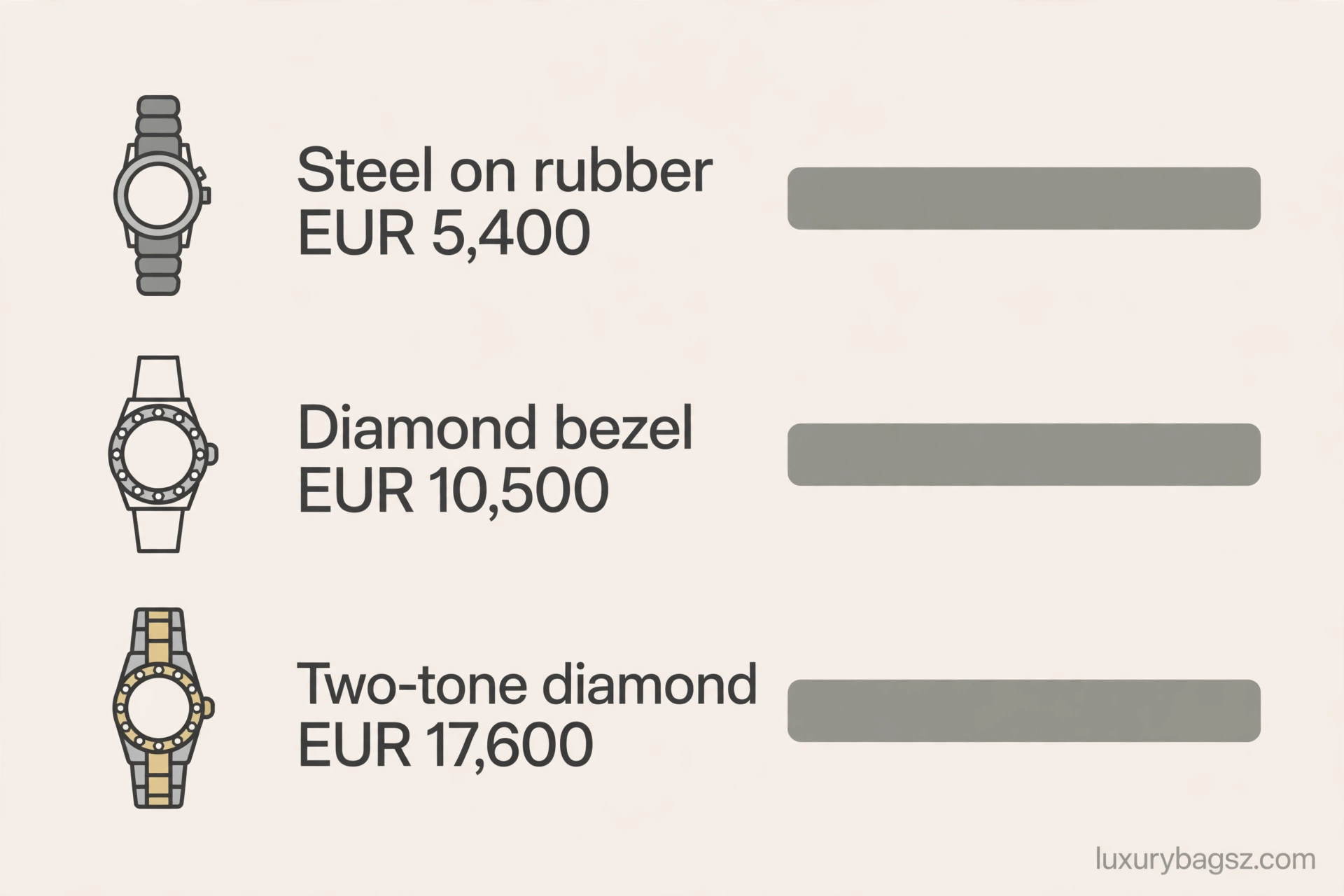
At launch, European pricing started at €5,400 for steel without diamonds and €10,500 with the diamond bezel, rising towards €17,600 for two-tone diamond versions.
Hodinkee reported US pricing from $6,725, capping at about $21,900 for the steel and rose gold watch with diamonds. Later dial colours have kept similar positioning.
In the debate covered by are Hermès watches worth it, the Cut is the easiest Hermès watch to defend: manufacture movement, fresh design, sane entry price.
South African retail through authorised channels recently listed the range from about R122,000 on rubber, a useful reminder that regional pricing spreads widely around the euro figures.
Bracelet pricing follows the usual luxury logic: the watch on its metal bracelet costs more at purchase, yet far less than buying the bracelet later as a separate accessory.
How the Cut Wears
At 36 mm and 10 mm thick, the Cut sits close and balanced. The pebble case has no sharp edges against the wrist, and the short, integrated lugs prevent overhang.
On the bracelet it reads as jewellery with a sports engine; on rubber it becomes a coloured daily watch. Owners often own both and swap with the seasons.
Smaller wrists finally get a Hermès sports watch that looks intentional rather than borrowed. Larger wrists can wear it too, as a deliberate, vintage-leaning proportion.
In wear tests the Cut's party trick is balance: the case sits centred, the bracelet drapes, and the whole watch keeps its composure with sleeves, knitwear and bare summer wrists alike.
The integrated look deserves a caveat: straps are made for this case, so third-party options are limited, and the official colour range becomes part of the ownership fun.
Weight on the bracelet is honest sports-watch weight, never cumbersome, and the rubber versions feel almost absent, which suits the watch's role as an all-day, every-outfit piece.
Straps and the Colour Game
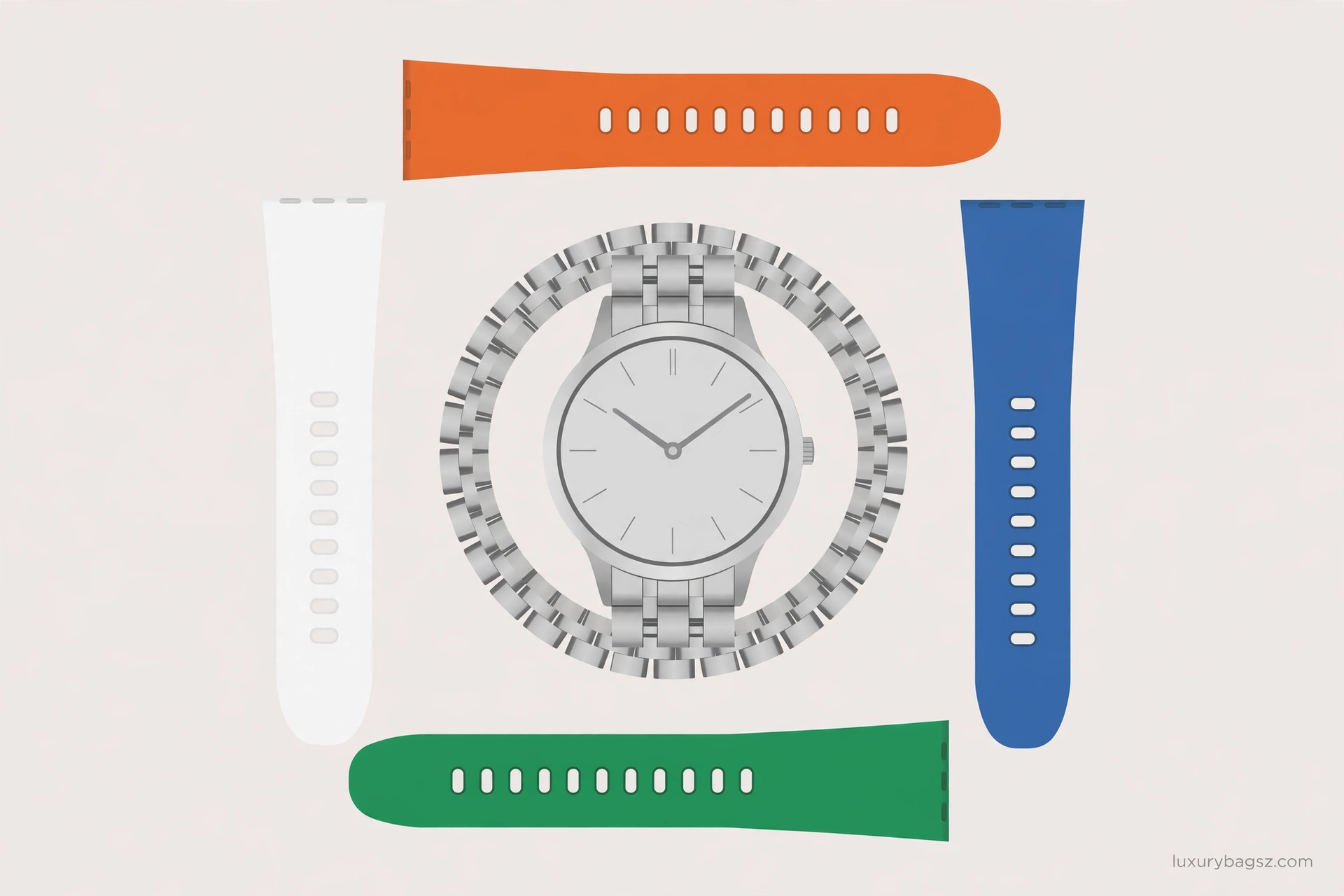
Interchangeable rubber straps come in colours drawn from the house's leather palette, from house orange to soft neutrals. A quick-release system makes swaps easy.
Alligator straps dress the watch up for evening wear, while the steel bracelet remains the most versatile single choice if you only plan to own one configuration.
Buy the bracelet version and add rubber later if budget allows. Bracelets cost far more to add afterwards than straps, a rule that holds across most watch brands.
Colour is the customisation story here: a single Cut on three straps is effectively three watches, sporty in orange, sober in grey, and quietly luxurious in alligator.
Because the straps swap without tools at a boutique level of ease, seasonality becomes a real ownership pattern: bright rubber for summer holidays, alligator for the winter party run.
Cut, H08 or Cape Cod?
Pick the Cut for a unisex sports watch with softness and colour. Pick the H08 for a bigger, more technical presence and the widest material choice in the men's range.
Pick the Hermès Cape Cod watch if your heart belongs to the classic anchor-chain case and a more traditional Hermès look.
As a first Hermès watch, the plain steel Cut on a bracelet is the sweet spot for most buyers: distinctive, mechanical, and priced below the two-tone theatre.
As a gift, the Cut is unusually safe: the size flatters most wrists, the design reads modern rather than trendy, and the plain steel version leaves room to add straps later.
There is a collector angle too: a launch-year steel Cut in a full set is the sort of quiet modern classic that tends to be remembered kindly by the market over time.
Frequently Asked Questions
How much is the Hermès Cut watch?
Launch pricing started at €5,400 in Europe and $6,725 in the US for steel without diamonds. Diamond and two-tone versions rise to about $21,900 at the top. Regional taxes explain much of the spread between the euro and dollar figures quoted at launch.
What size is the Hermès Cut?
The standard Cut is 36 mm across and about 10 mm thick. A larger 39 mm version with the Le Temps Suspendu complication joined the family later. That proportion also explains why the Cut suits smaller wrists that the 42 mm-listed H08 can overwhelm.
Is the Hermès Cut automatic?
Yes. It uses the manufacture H1912 automatic movement, made with Vaucher, with about a 50-hour power reserve and a sapphire case back to view it. The movement is visible through the sapphire back, which is still not a given at this price point.
Is the Cut a women's watch?
It was launched primarily towards women but designed and sized as a unisex watch. The 36 mm case, colours and bracelet options wear well on most wrists. Its designer, Philippe Delhotal, has spoken of it as a watch for everyone, and the sizing backs that up.
Can you swim with the Hermès Cut?
Yes. It is water resistant to 100 metres, or 10 bar. Rinse rubber straps after salt water and have the seals checked at routine service intervals. As with any watch, keep the crown screwed down before it meets water, and rinse straps after swimming.
Why is the crown at 1:30?
The offset crown keeps the case facets clean on both flanks and gives the Cut its recognisable quirk. It is comfortable in use and rarely noticed on the wrist.
Does the Cut have a date?
No. The standard Cut shows hours, minutes and seconds only. The clean dial, with its full set of numerals, is a deliberate part of the design. Time-only purity is a deliberate stance in the range, and many owners cite it as the reason they chose the watch.
What diamonds are on the Cut bezel?
Gem-set versions carry 56 brilliant-cut diamonds on the bezel, about 0.83 carats on quoted blue-dial versions. The setting is bright but restrained in scale.
Cut or H08: which should I buy?
Cut for 36 mm softness, colour and unisex wear. H08 for a larger, more technical sports watch with titanium and composite cases. Try both; the wrist decides. If possible, try both on the same day, on bracelet and on rubber, because the straps change the perceived size.
When was the Hermès Cut launched?
At Watches and Wonders Geneva in 2024, in four steel and two-tone versions. New dial colours and the 39 mm Temps Suspendu version followed afterwards. Its first year also brought a GPHG nomination for a later complicated version, a sign of how seriously it was received.
Final Verdict
The hermes cut watch is the friendliest entry into Hermès watchmaking: a 36 mm automatic with real design ideas, a manufacture movement and prices from $6,725.
Choose plain steel for the purest value, add diamonds or rose gold for occasion wear, and let the strap colours do the seasonal refreshing for you.






